
The Ancient Olympic Games, an athletic festival was originated in ancient Greece and was revived in the late 19th century. The Olympics Games were held every four years at the sanctuary of Zeus in Olympia, Greece until they were abolished in the early Christian era. The revival of the Olympic Games took place in 1896, and since then they have been held every fourth year (except during World War I and World War II
The Modern Olympic Games were held in Athens, Greece, in 1896. The credit to start the modern Olympic games goes to Baron Pierre de Coubertin of France. Having studied political science, he came to know about national and international problems. He thought national and international problems can be easily solved through the Olympic games. It was Coubertin’s imagination to restart the ancient Olympic games at the world level. After many endeavors, Coubertin succeeded in enlisting worldwide support, and the first modern Olympics games were held in Athens in 1896.
In 1896, Athens Olympic games, only nine countries participated in the first modern Olympic games. The number gradually increased and in 1972, Munich Olympic games 122 countries participated.
:max_bytes(150000):strip_icc()/1896-Olympic-opening-56a97d3b5f9b58b7d0fbebd2.jpg)
The Olympic motto was coined by a French educator Father Didon in 1895. It is compromises of three Latin words – Citius, Altius, Fortius which means Faster, Higher, Stronger respectively.
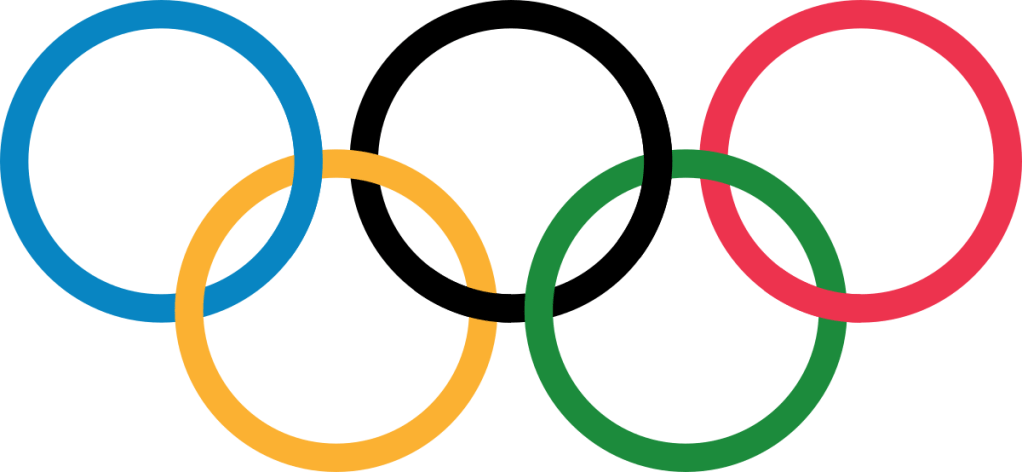
The Olympic flag was created in 1913 at the suggestion of Baron Pierre de Coubertin. The Olympic flag is made of white silk and contains five interlocking rings in five colors representing five continents of the world – America, Europe, Australia, Asia, and Africa. The interlocking of the rings symbolizes cooperation and friendship.
Olympics act as a social force in achieving international brotherhood, fraternity, peace, and solidarity. Olympics provide a broad platform for attaining these values.
Olympic provides the platform for the development of the following values
- Free from discrimination
The most important objective of the Olympic games is that there is no discrimination based on caste, race, and religion. Though exceptions are always there. The racial difference was seen during the 1936 Berlin Olympics when Adolf Hilter refused to honor Jasse Owens who got four gold medals in that Olympics.
- Fair play
Rules and regulations should be applied fairly to each team. But in fact, there is a gap between the words and actions of the officials. Nowadays every team wants to win by hook or crook. The slogan like “stay out for sports and stay out of courts” and “live by code or get out” have become useless as these are not found in practice. Therefore, it can be said that the Olympic games in this respect are not so successful as they should have been.
- International Friendship and Solidarity
Olympic games provide many opportunities to develop international friendships not only among the participants but among the nation also. It also provides ample opportunity to enhance the feeling of brotherhood and unity among various nations.
- Harmony
During Olympic games, the various teams belong to different religions, colors, castes, and social backgrounds but even then the harmony is developed between them. They don’t have any ill-will or malice. They believe in the following Olympic deals :
“The important thing in Olympic is not to win, but to take part; The important thing in life is not the triumph, but to struggle; The essential thing is not to have conquered but to have fought well”.
 Track2Training
You must be logged in to post a comment.