
How to Collect Data for Binary Logit Model

Daily writing prompt
Share a story about someone who had a positive impact on your life.

By Kavita Dehalwar

Collecting data for a binary logit model involves several key steps, each crucial to ensuring the accuracy and reliability of your analysis. Here’s a detailed guide on how to gather and prepare your data:

1. Define the Objective

Before collecting data, clearly define what you aim to analyze or predict. This definition will guide your decisions on what kind of data to collect and the variables to include. For a binary logit model, you need a binary outcome variable (e.g., pass/fail, yes/no, buy/not buy) and several predictor variables that you hypothesize might influence the outcome.

2. Identify Your Variables

  • Dependent Variable: This should be a binary variable representing two mutually exclusive outcomes.
  • Independent Variables: Choose factors that you believe might predict or influence the dependent variable. These could include demographic information, behavioral data, economic factors, etc.

3. Data Collection Methods
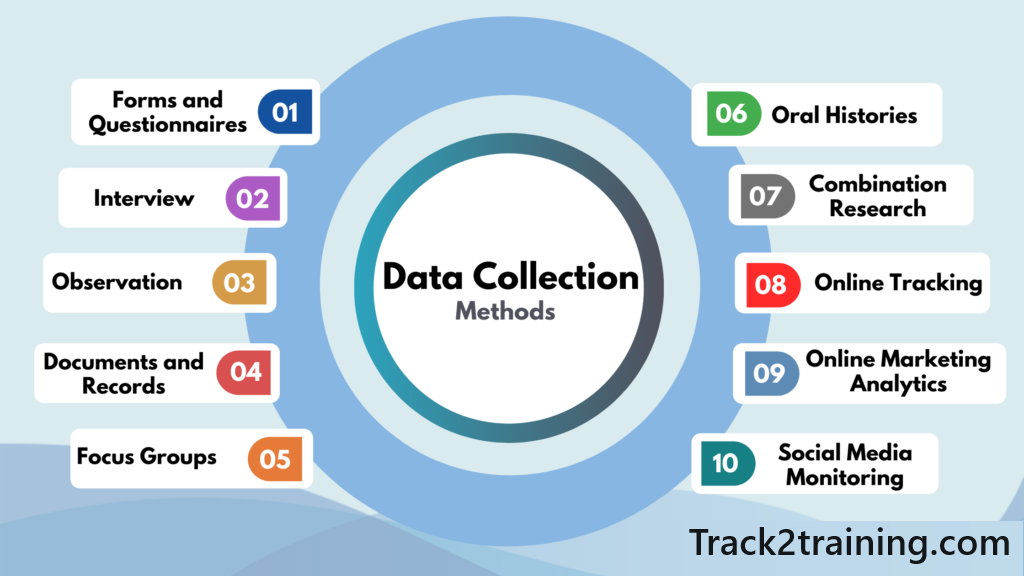
There are several methods you can use to collect data:

  • Surveys and Questionnaires: Useful for gathering qualitative and quantitative data directly from subjects.
  • Experiments: Design an experiment to manipulate predictor variables under controlled conditions and observe the outcomes.
  • Existing Databases: Use data from existing databases or datasets relevant to your research question.
  • Observational Studies: Collect data from observing subjects in natural settings without interference.
  • Administrative Records: Government or organizational records can be a rich source of data.

4. Sampling

Ensure that your sample is representative of the population you intend to study. This can involve:

  • Random Sampling: Every member of the population has an equal chance of being included.
  • Stratified Sampling: The population is divided into subgroups (strata), and random samples are drawn from each stratum.
  • Cluster Sampling: Randomly selecting entire clusters of individuals, where a cluster forms naturally, like geographic areas or institutions.

5. Data Cleaning

Once collected, data often needs to be cleaned and prepared for analysis:

  • Handling Missing Data: Decide how you’ll handle missing values (e.g., imputation, removal).
  • Outlier Detection: Identify and treat outliers as they can skew analysis results.
  • Variable Transformation: You may need to transform variables (e.g., log transformation, categorization) to fit the model requirements or to better capture the nonlinear relationships.
  • Dummy Coding: Convert categorical independent variables into numerical form through dummy coding, especially if they are nominal without an inherent ordering.

6. Data Splitting

If you are also interested in validating the predictive power of your model, you should split your dataset:

  • Training Set: Used to train the model.
  • Test Set: Used to test the model, unseen during the training phase, to evaluate its performance and generalizability.

7. Ethical Considerations

Ensure ethical guidelines are followed, particularly with respect to participant privacy, informed consent, and data security, especially when handling sensitive information.

8. Data Integration

If data is collected from different sources or at different times, integrate it into a consistent format in a single database or spreadsheet. This unified format will simplify the analysis.

9. Preliminary Analysis

Before running the binary logit model, conduct a preliminary analysis to understand the data’s characteristics, including distributions, correlations among variables, and a preliminary check for potential multicollinearity, which might necessitate adjustments in the model.

By following these steps, you can collect robust data that will form a solid foundation for your binary logit model analysis, providing insights into the factors influencing your outcome of interest.

References

Cramer, J. S. (1999). Predictive performance of the binary logit model in unbalanced samples. Journal of the Royal Statistical Society: Series D (The Statistician)48(1), 85-94.

Dehalwar, K., & Sharma, S. N. (2023). Fundamentals of Research Writing and Uses of Research Methodologies. Edupedia Publications Pvt Ltd.

Horowitz, J. L., & Savin, N. E. (2001). Binary response models: Logits, probits and semiparametrics. Journal of economic perspectives15(4), 43-56.

Singh, D., Das, P., & Ghosh, I. (2024). Driver behavior modeling at uncontrolled intersections under Indian traffic conditions. Innovative Infrastructure Solutions9(4), 1-11.

Tranmer, M., & Elliot, M. (2008). Binary logistic regression. Cathie Marsh for census and survey research, paper20.

Wilson, J. R., Lorenz, K. A., Wilson, J. R., & Lorenz, K. A. (2015). Standard binary logistic regression model. Modeling binary correlated responses using SAS, SPSS and R, 25-54.

Young, R. K., & Liesman, J. (2007). Estimating the relationship between measured wind speed and overturning truck crashes using a binary logit model. Accident Analysis & Prevention39(3), 574-580.

Unlocking Insights: The Binary Logit Model Explained

Daily writing prompt
Share a story about someone who had a positive impact on your life.

By Shashikant Nishant Sharma

The binary logit model is a statistical technique widely used in various fields such as economics, marketing, medicine, and political science to analyze decisions where the outcome is binary—having two possible states, typically “yes” or “no.” Understanding the model provides valuable insights into factors influencing decision-making processes.

Key Elements of the Binary Logit Model:

  1. Outcome Variable:
    • This is the dependent variable and is binary. For instance, it can represent whether an individual purchases a product (1) or not (0), whether a patient recovers from an illness (1) or does not (0), or whether a customer renews their subscription (1) or cancels it (0).
  2. Predictor Variables:
    • The independent variables, or predictors, are those factors that might influence the outcome. Examples include age, income, education level, or marketing exposure.
  3. Logit Function:
    • The model uses a logistic (sigmoid) function to transform the predictors’ linear combination into probabilities that lie between 0 and 1. The logit equation typically looks like this:
    𝑝=11+𝑒−(𝛽0+𝛽1𝑋1+𝛽2𝑋2+…+𝛽𝑛𝑋𝑛)p=1+e−(β0​+β1​X1​+β2​X2​+…+βnXn​)1​Here, 𝑝p is the probability of the outcome occurring, and 𝛽𝑖βi​ are the coefficients associated with each predictor variable 𝑋𝑖Xi​.

How It Works:

The graph above illustrates the binary logit model, showing the relationship between the predictor value (horizontal axis) and the predicted probability (vertical axis). This logistic curve, often referred to as an “S-curve,” demonstrates how the logit function transforms a linear combination of predictor variables into probabilities ranging between 0 and 1.

  • The red dashed line represents a probability threshold of 0.5, which is often used to classify the two outcomes: above this threshold, an event is predicted to occur (1), and below it, it’s predicted not to occur (0).
  • The steepest portion of the curve indicates where changes in the predictor value have the most significant impact on the probability.
  • Coefficient Estimation:
    • The coefficients (𝛽β) are estimated using the method of maximum likelihood. The process finds the values that maximize the likelihood of observing the given outcomes in the dataset.
  • Odds and Odds Ratios:
    • The odds represent the ratio of the probability of an event happening to it not happening. The model outputs an odds ratio for each predictor, indicating how a one-unit change in the predictor affects the odds of the outcome.
  • Interpreting Results:
    • Coefficients indicate the direction of the relationship between predictors and outcomes. Positive coefficients suggest that increases in the predictor increase the likelihood of the outcome. Odds ratios greater than one imply higher odds of the event with higher predictor values.

Applications:

  1. Marketing Analysis: Understanding customer responses to a new product or marketing campaign.
  2. Healthcare: Identifying factors influencing recovery or disease progression.
  3. Political Science: Predicting voter behavior or election outcomes.
  4. Economics: Studying consumer behavior in terms of buying decisions or investment choices.

Limitations:

  • Assumptions: The model assumes a linear relationship between the log-odds and predictor variables, which may not always hold.
  • Data Requirements: Requires a sufficient amount of data for meaningful statistical analysis.
  • Model Fit: Goodness-of-fit assessments, such as the Hosmer-Lemeshow test or ROC curves, are crucial for evaluating model accuracy.

Conclusion:

The binary logit model provides a robust framework for analyzing decisions and predicting binary outcomes. By understanding the relationships between predictor variables and outcomes, businesses, researchers, and policymakers can unlock valuable insights to inform strategies and interventions.

References

Cramer, J. S. (1999). Predictive performance of the binary logit model in unbalanced samples. Journal of the Royal Statistical Society: Series D (The Statistician)48(1), 85-94.

Dehalwar, K., & Sharma, S. N. (2023). Fundamentals of Research Writing and Uses of Research Methodologies. Edupedia Publications Pvt Ltd.

Singh, D., Das, P., & Ghosh, I. (2024). Driver behavior modeling at uncontrolled intersections under Indian traffic conditions. Innovative Infrastructure Solutions9(4), 1-11.

Tranmer, M., & Elliot, M. (2008). Binary logistic regression. Cathie Marsh for census and survey research, paper20.

Wilson, J. R., Lorenz, K. A., Wilson, J. R., & Lorenz, K. A. (2015). Standard binary logistic regression model. Modeling binary correlated responses using SAS, SPSS and R, 25-54.

Young, R. K., & Liesman, J. (2007). Estimating the relationship between measured wind speed and overturning truck crashes using a binary logit model. Accident Analysis & Prevention39(3), 574-580.