
Guidelines for Posting Articles on Track2Training

SN Sharma

Track2Training is a platform dedicated to learning, knowledge sharing, and empowering individuals through meaningful content. As a contributor, it’s essential to maintain high-quality standards, consistency, and a professional tone in your articles. This guideline will walk you through the process of writing, formatting, and publishing articles on Track2Training.


1. Article Structure and Formatting

To maintain consistency across the platform, follow this structure:

Headings (H1, H2, H3)

  • Use H1 for the main title of the article.
  • Use H2 for main sections within the article.
  • Use H3 if needed for sub-sections within an H2.

Writing Style

  • Keep the tone informative, engaging, and professional.
  • Write in paragraphs โ€” avoid one-line sentences.
  • Avoid plagiarism at all costs.
  • Aim for a word count of 500โ€“1000+ words.

2. Add an Author Line

  • Right below the title, add your name as the author.

Example:
Title: The Future of Online Education
By Your Name


3. Include Images

  • Use at least one relevant image in each article.
  • You can use free image sites like Pexels or insert a direct image URL.

Example Image Insertion:

![Education Image](https://images.pexels.com/photos/4145190/pexels-photo-4145190.jpeg)

Tip: Always choose high-resolution, copyright-free images.


4. Use Bullet Points or Numbered Lists

When listing items, always format them properly for clarity:

Example:

  • Point 1
  • Point 2
  • Point 3

Or use numbers:

  1. Step One
  2. Step Two
  3. Step Three

5. Add References

Every article must include 4โ€“5 credible references or sources. You can use websites, books, research papers, or verified news sources.

Example of References:

References

  1. https://www.forbes.com/sites/education
  2. https://www.edx.org/
  3. https://elearningindustry.com/
  4. https://www.unesco.org/en/education
  5. https://hbr.org/

6. Daily Publishing Requirement

To maintain contributor status and grow your audience:

  • Post at least 2 articles daily.
  • Ensure that both articles are unique and well-researched.

7. Share Your Article

Once your article is published:

  • Share the live link on your social media platforms:
    • LinkedIn
    • Twitter (X)
    • Facebook
    • Instagram
  • Encourage likes, shares, and comments to increase engagement.

Conclusion

Consistency, quality, and engagement are key to making the most of your time at Track2Training. By following these guidelines, you ensure that your content not only informs but also resonates with the audience. Keep learning, keep writing, and keep growing.

References

Brown, K., & Hood, S. (1989).ย Writing matters: Writing skills and strategies for students of English. Cambridge university press.

Bracewell, R. J. (2020). Investigating the control of writing skills. Inย Reading Empirical Research Studiesย (pp. 436-463). Routledge.

Dehalwar, K., & Sharma, S. N. (2023).ย Fundamentals of research writing and uses of research methodologies. Edupedia Publications Pvt Ltd.

Dehalwar, K. S. S. N., & Sharma, S. N. (2024). Exploring the distinctions between quantitative and qualitative research methods.ย Think India Journal,ย 27(1), 7-15.

Kellogg, R. T., & Raulerson, B. A. (2007). Improving the writing skills of college students.ย Psychonomic bulletin & review,ย 14(2), 237-242.

Sharma, S. N. (2014).ย Participatory Planning in Plan Preparation. BookCountry.

Sharma, S. N., Dehalwar, K., & Singh, J. (2024). Emerging techniques of solid waste management for sustainable and safe living environment. Inย Solid Waste Management: Advances and Trends to Tackle the SDGsย (pp. 29-51). Cham: Springer Nature Switzerland.
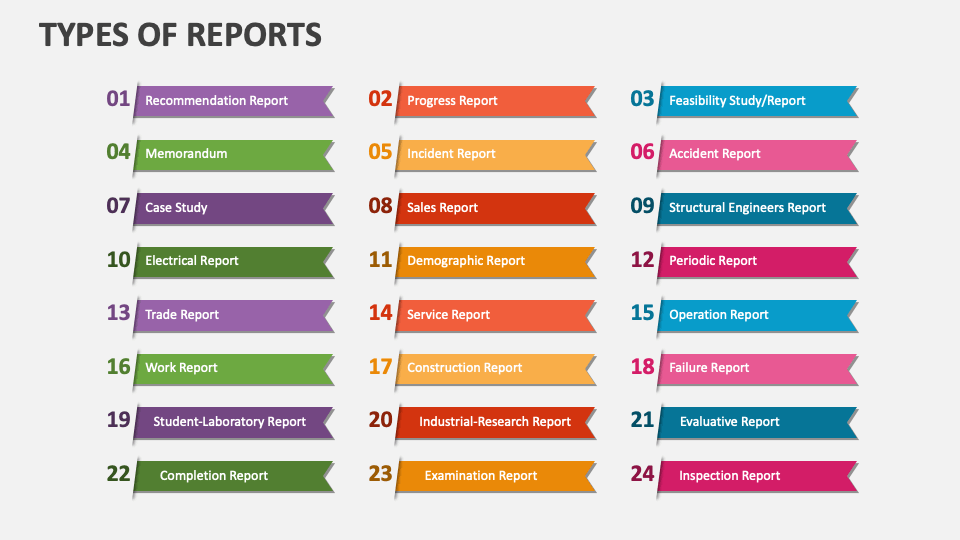
Structure of a Technical Report

A technical report is organized systematically so that readers can follow the work easily. The structure usually consists of three main parts: Front Matter, Main Body, and End Matter.


1. Title Page

The first page of the report.

  • Title of the report (specific and descriptive).
  • Name(s) of author(s).
  • Designation and affiliation (organization, department, or institution).
  • Date of submission.
  • Report number/project name (if applicable).

2. Abstract / Executive Summary

  • A short summary (150โ€“300 words).
  • Includes the purpose, methods, major findings, and conclusions.
  • Allows busy readers to quickly grasp the essence of the report.

3. Acknowledgments (optional)

  • Expression of gratitude to individuals, organizations, or sponsors who helped in preparing the report.

4. Table of Contents (ToC)

  • List of all sections, subsections, and appendices with page numbers.

5. List of Figures and Tables (if applicable)

  • Provides quick access to important visuals included in the report.

6. Introduction

  • Background and context of the problem or project.
  • Objectives of the report.
  • Scope and limitations.
  • Importance/relevance of the work.

7. Literature Review / Background Study (optional, for research reports)

  • Summary of existing studies, theories, or standards related to the topic.
  • Shows how the current work fits into the broader field.

8. Methodology / Experimental Procedure

  • Methods, tools, equipment, and techniques used.
  • Research design, sampling, or testing procedures.
  • Enough detail so the work can be replicated by others.

9. Results / Findings

  • Presentation of data collected through experiments, surveys, or analysis.
  • Often supported by tables, graphs, and charts.
  • Objective โ€” no interpretation here.

10. Discussion / Analysis

  • Interpretation of results.
  • Comparison with expected outcomes, previous research, or standards.
  • Explanation of significance, trends, and implications.

11. Conclusion

  • Summary of main findings.
  • Reflection on whether objectives were achieved.
  • Overall contribution of the work.

12. Recommendations (if needed)

  • Suggestions for improvement, future work, or practical applications.

13. References / Bibliography

  • List of all sources cited in the report (books, journal articles, websites, standards).
  • Must follow a consistent citation style (e.g., APA, IEEE, MLA).

14. Appendices

  • Supplementary material not included in the main text.
  • Examples: raw data, sample calculations, detailed questionnaires, program code.

Sample Flow of Technical Report

Front Matter: Title Page โ†’ Abstract โ†’ Acknowledgments โ†’ Contents โ†’ List of Figures/Tables
Main Body: Introduction โ†’ Methodology โ†’ Results โ†’ Discussion โ†’ Conclusion โ†’ Recommendations
End Matter: References โ†’ Appendices


โœ… This format ensures clarity, professionalism, and logical presentation in technical communication.

Literature Surveys: Use of Libraries, Indexing, and Reference Materials

By Shashikant Nishant Sharma

A literature survey (or literature review) is the systematic process of collecting, analyzing, and summarizing existing research, theories, and reports related to a particular topic. It provides the foundation for any technical report, thesis, or research paper.


1. Use of Libraries

Libraries are primary sources for gathering authentic and reliable information.

  • University/Institution Libraries
    • Access to textbooks, journals, technical reports, conference proceedings, theses, and dissertations.
    • Special collections (archives, maps, standards, government reports).
  • Digital/Online Libraries
    • IEEE Xplore, ACM Digital Library, ScienceDirect, SpringerLink, JSTOR, Wiley Online Library.
    • Access to e-journals, e-books, patents, and databases.
  • Services Offered by Libraries
    • Catalogues & OPAC (Online Public Access Catalogue) โ€“ helps locate books/reports by author, title, or subject.
    • Inter-Library Loan (ILL) โ€“ borrowing materials not available locally.
    • Digital Repositories โ€“ theses, institutional publications, government records.

2. Knowledge of Indexing

Indexing is crucial for locating relevant literature quickly.

  • Types of Indexing Sources
    • Abstracting and Indexing (A&I) Databases โ€“ e.g., Scopus, Web of Science, PubMed, INSPEC.
    • Library Indexing Services โ€“ subject indexes, citation indexes, keyword indexes.
    • Keyword Indexing โ€“ helps identify major terms used in a subject field.
  • Why Indexing is Useful
    • Saves time in identifying relevant sources.
    • Ensures comprehensive coverage of the topic.
    • Helps track citations, impact factor, and research trends.

3. Use of Reference Materials

Reference materials are essential for background study and verification.

  • Primary Reference Sources
    • Research articles, technical reports, standards, patents, theses.
    • Provide first-hand, original data.
  • Secondary Reference Sources
    • Review articles, books, encyclopedias, dictionaries, yearbooks.
    • Provide summarized and interpreted information.
  • Tertiary Reference Sources
    • Bibliographies, indexes, directories, databases.
    • Provide guidance on where to find sources.

4. Process of Conducting a Literature Survey

  1. Define the topic/problem clearly.
  2. Search library catalogues, digital databases, and indexing services.
  3. Select keywords and descriptors for better searching.
  4. Collect reference materials (books, journals, reports).
  5. Read abstracts and summaries to filter relevant works.
  6. Review and analyze critically โ€“ identify gaps, trends, methodologies.
  7. Organize references (using tools like Mendeley, Zotero, EndNote).
  8. Write the survey logically (thematic, chronological, or methodological order).

โœ… In short:

  • Libraries provide access to authentic materials.
  • Indexing enables efficient retrieval of information.
  • Reference materials build the foundation for analysis and synthesis in a literature survey.

References

Bornmann, L. (2013). What is societal impact of research and how can it be assessed? A literature survey.ย Journal of the American Society for information science and technology,ย 64(2), 217-233.

Cline, W. R. (1975). Distribution and development: A survey of literature.ย Journal of Development Economics,ย 1(4), 359-400.

Dehalwar, K., & Sharma, S. N. (2024). Social Injustice Inflicted by Spatial Changes in Vernacular Settings: An Analysis of Published Literature. ISVS e-journal, Vol. 11, Issue 9.ย https://isvshome.com/pdf/ISVS_11-09/ISVSej_11.09.07.pdf

Dehalwar, K., & Sharma, S. N. (2024). Politics in the Name of Womenโ€™s Reservation.ย Contemporary Voice of Dalit, 2455328X241262562.ย https://doi.org/10.1177/2455328X241262562ย 

Knopf, J. W. (2006). Doing a literature review.ย PS: Political Science & Politics,ย 39(1), 127-132.

Sharma, S. N., & Dehalwar, K. (2025). A Systematic Literature Review of Transit-Oriented Development to Assess Its Role in Economic Development of City.ย Transportation in Developing Economies,ย 11(2), 23.ย https://doi.org/10.1007/s40890-025-00245-1

Sharma, S. N. (2019). Review of most used urban growth models.ย International Journal of Advanced Research in Engineering and Technology, 10(3), 397-405.ย https://www.researchgate.net/publication/372478470_Review_of_Most_Used_Urban_Growth_Modelsย 

Sharma, S. N., Singh, S., Kumar, G., Pandey, A. K., & Dehalwar, K. (2025). Role of Green Buildings in Creating Sustainable Neighbourhoods.ย IOP Conference Series: Earth and Environmental Science,ย 1519(1), 012018.ย https://doi.org/10.1088/1755-1315/1519/1/012018

Van Der Waldt, G. (2021). Elucidating the application of literature reviews and literature surveys in social science research.ย Administratio Publica,ย 29(1), 1-20.