
The field of electronics is a branch of physics and electrical engineering that deals with the emission, behaviour and effects of electrons using electronic devices. Electronics uses active devices to control electron flow by amplification and rectification, which distinguishes it from classical electrical engineering, which only uses passive effects such as resistance, capacitance and inductance to control electric current flow.
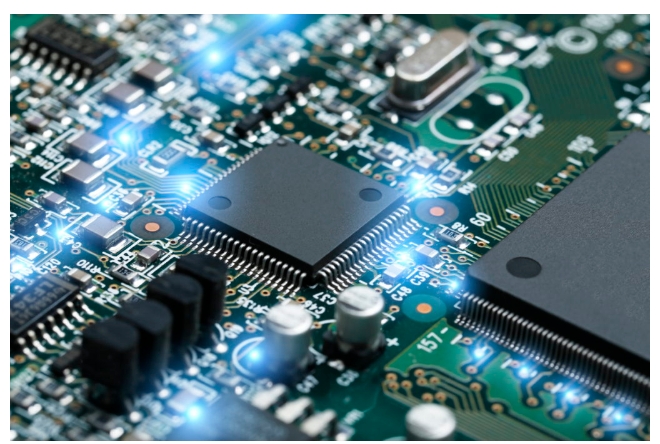
Electronics has hugely influenced the development of modern society. The identification of the electron in 1897, along with the subsequent invention of the vacuum tube which could amplify and rectify small electrical signals, inaugurated the field of electronics and the electron age.Practical applications started with the invention of the diode by Ambrose Fleming and the triode by Lee De Forest in the early 1900s, which made the detection of small electrical voltages such as radio signals from an radio antenna possible with a non-mechanical device. The growth of electronics was rapid, and by the early 1920s commercial radio broadcasting and communications were becoming widespread, and electronic amplifiers were being used in such diverse applications as long distance telephony and the music recording industry.
The next big technological step took several decades to appear, when Solid-state electronics emerged with the first working semiconductor transistor which was invented by William Shockley, Walter Houser Brattain and John Bardeen in 1947. The vacuum tube was no longer the only means of controlling electron flow. The MOSFET (MOS transistor) was subsequently invented in 1959, and was the first compact transistor that could be miniaturised and mass-produced. This played a key role in the emergence of microelectronics and the Digital Revolution. Today, electronic devices are universally used in Computers, telecommunications and signal processing employing Integrated circuits with sometimes millions of transistors on a single chip.
Electronic devices and components:
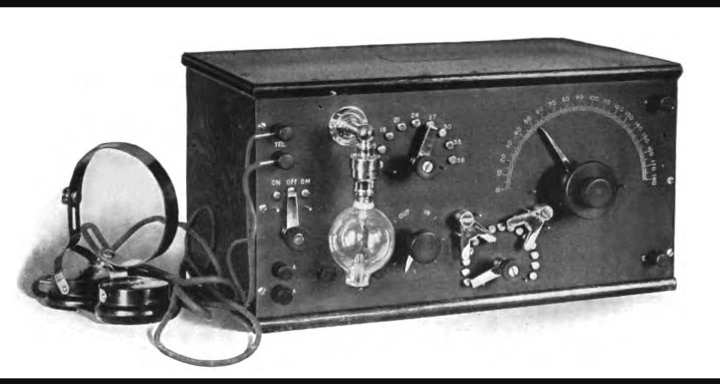
An electronic component is any physical entity in an electronic system used to affect the electrons or their associated fields in a manner consistent with the intended function of the electronic system. Components are generally intended to be connected together, usually by being soldered to a printed circuit board (PCB), to create an electronic circuit with a particular function (for example an amplifier, radio receiver, or oscillator). Components may be packaged singly, or in more complex groups as integrated circuits. Some common electronic components are capacitors, inductors, resistors, diodes, transistors, etc. Components are often categorized as active (e.g. transistors and thyristors) or passive (e.g. resistors, diodes, inductors and capacitors).
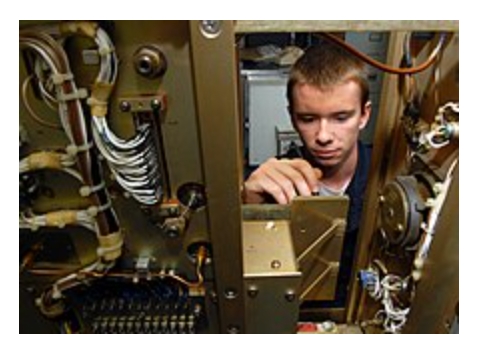
History of electronic components :
Vacuum tubes (Thermionic valves) were among the earliest electronic components. They were almost solely responsible for the electronics revolution of the first half of the twentieth century. They allowed for vastly more complicated systems and gave us radio, television, phonographs, radar, long-distance telephony and much more. They played a leading role in the field of microwave and high power transmission as well as television receivers until the middle of the 1980s. Since that time, solid-state devices have all but completely taken over. Vacuum tubes are still used in some specialist applications such as high power RF amplifiers, cathode ray tubes, specialist audio equipment, guitar amplifiers and some microwave devices.
The first working point-contact transistor was invented by John Bardeen and Walter Houser Brattain at Bell Labs in 1947. In April 1955, the IBM 608 was the first IBM product to use transistor circuits without any vacuum tubes and is believed to be the first all-transistorized calculator to be manufactured for the commercial market. The 608 contained more than 3,000 germanium transistors. Thomas J. Watson Jr. ordered all future IBM products to use transistors in their design. From that time on transistors were almost exclusively used for computer logic and peripherals. However, early junction transistors were relatively bulky devices that were difficult to manufacture on a mass-production basis, which limited them to a number of specialised applications.
Types of circuits:
Circuits and components can be divided into two groups: analog and digital. A particular device may consist of circuitry that has one or the other or a mix of the two types. An important electronic technique in both analog and digital electronics involves the use of feedback. Among many other things this allows very linear amplifiers to be made with high gain, and digital circuits such as registers, computers and oscillators.
Analog circuits:
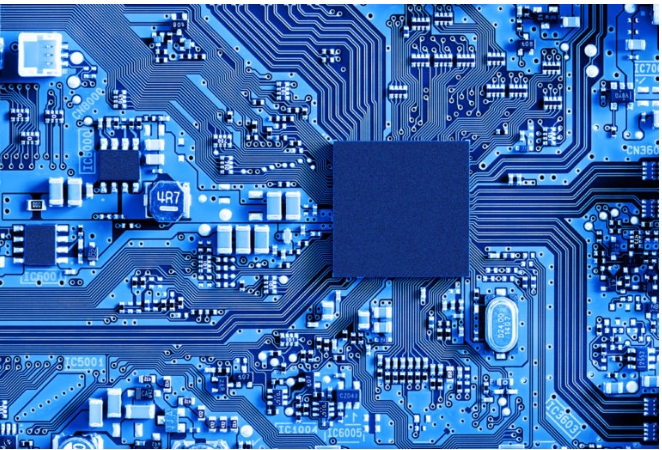
Most analog electronic appliances, such as radio receivers, are constructed from combinations of a few types of basic circuits. Analog circuits use a continuous range of voltage or current as opposed to discrete levels as in digital circuits.

The number of different analog circuits so far devised is huge, especially because a ‘circuit’ can be defined as anything from a single component, to systems containing thousands of components.
Analog circuits are sometimes called linear circuits although many non-linear effects are used in analog circuits such as mixers, modulators, etc. Good examples of analog circuits include vacuum tube and transistor amplifiers, operational amplifiers and oscillators.
Digital circuits:
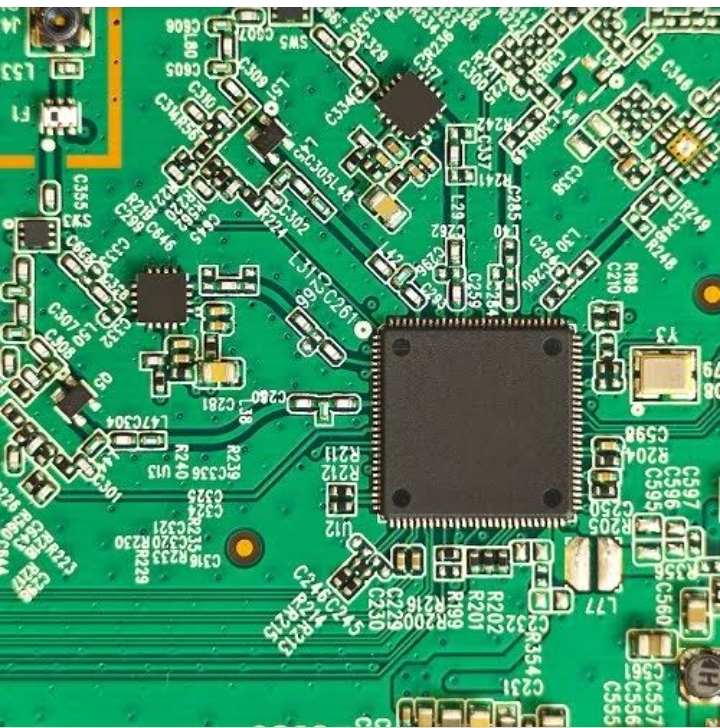
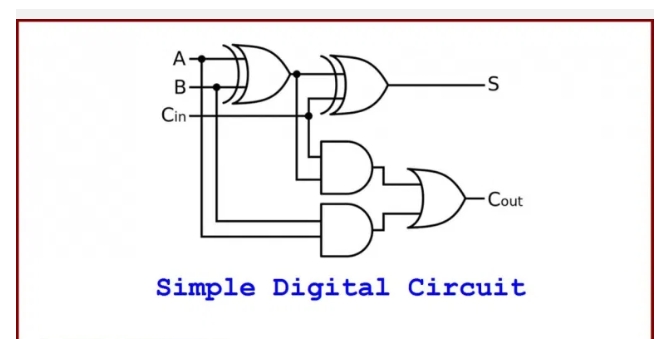
Digital circuits are electric circuits based on a number of discrete voltage levels. Digital circuits are the most common physical representation of Boolean algebra, and are the basis of all digital computers. To most engineers, the terms “digital circuit”, “digital system” and “logic” are interchangeable in the context of digital circuits. Most digital circuits use a binary system with two voltage levels labeled “0” and “1“. Often logic “0” will be a lower voltage and referred to as “Low” while logic “1” is referred to as “High“. However, some systems use the reverse definition (“0” is “High”) or are current based. Quite often the logic designer may reverse these definitions from one circuit to the next as he sees fit to facilitate his design. The definition of the levels as “0” or “1” is arbitrary.
Electronics theory :
Mathematical methods are integral to the study of electronics. To become proficient in electronics it is also necessary to become proficient in the mathematics of circuit analysis.
Circuit analysis is the study of methods of solving generally linear systems for unknown variables such as the voltage at a certain node or the current through a certain branch of a network. A common analytical tool for this is the SPICE circuit simulator.
Also important to electronics is the study and understanding of electromagnetic field theory.
Electronics lab:
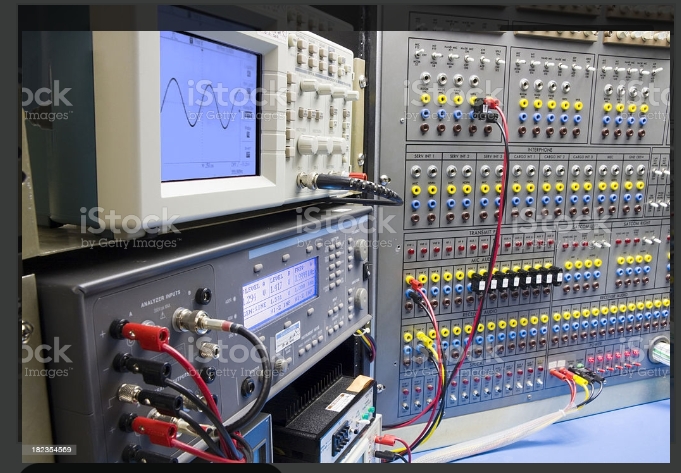
Due to the complex nature of electronics theory, laboratory experimentation is an important part of the development of electronic devices. These experiments are used to test or verify the engineer’s design and detect errors. Historically, electronics labs have consisted of electronics devices and equipment located in a physical space, although in more recent years the trend has been towards electronics lab simulation software, such as CircuitLogix, Multisim, and PSpice.
Electronic systems design:
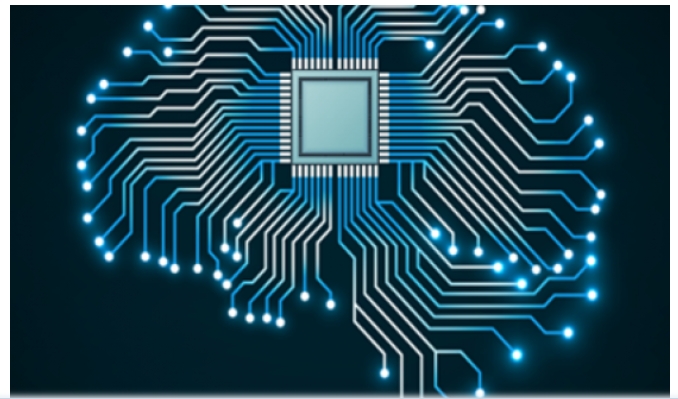
Electronic systems design deals with the multi-disciplinary design issues of complex electronic devices and systems, such as mobile phones and computers. The subject covers a broad spectrum, from the design and development of an electronic system (new product development) to assuring its proper function, service life and disposal. Electronic systems design is therefore the process of defining and developing complex electronic devices to satisfy specified requirements of the user.
Electronics industry :

The electronics industry consists of various sectors. The central driving force behind the entire electronics industry is the semiconductor industry sector, which has annual sales of over $481 billion as of 2018. The largest industry sector is e-commerce, which generated over $29 trillion in 2017. The most widely manufactured electronic device is the metal-oxide-semiconductor field-effect transistor (MOSFET), with an estimated 13 sextillion MOSFETs having been manufactured between 1960 and 2018. In the 1960s, U.S. manufacturers were unable to compete with Japanese companies such as Sony and Hitachi who could produce high-quality goods at lower prices. By the 1980s, however, U.S. manufacturers became the world leaders in semiconductor development and assembly.
The end….







 Track2Training
You must be logged in to post a comment.