
ORGANIC FARMING

An agricultural system that uses fertilizers of organic origin such as compost manure, green manure, and bone meal and involves farming methods such crop rotation and companion planting is Organic Farming. The term ‘Organic’ was popularized by Howard and Rodale. This type of farming is inclusive of usage of biodiversity, while preserving natural resources and ensuring animal welfare. Organic Farming is highly beneficial in all terms.
BENEFITS OF ORGANIC FARMING

MAINTAINS PURITY OF WATER

An extensive use of chemical pesticides and insecticides, contributes in polluting water bodies and underground water. Organic farming replaces such toxic substances with natural fertilizers such as manure, compost, animal waste, which help in soil retention and quality. In places where, the incidences of water pollution are more, organic farming must be brought into practice.

PRODUCTION OF HEALTHY FOOD

Organic Farming enhances the nutrients in the soil because use of toxic elements is prohibited. The quality of food is determined with the amount of vitamins and minerals that are embedded in it. Organic food is much richer in nutrients than food grown through conventional methods.

POCKET FRIENDLY

Organic food products are not grown with the use of inputs like expensive pesticides, chemicals, insecticide sprays, etc. Instead, it makes use of everything that is available naturally with no or minimal capital cost. There is yet a buzz that Organic products are costly, which is not true.

SAFE TO PRACTICE

Organic Farming is safe to practice than conventional methods. Annually 44% of the world’s farming population dies, due to poisoning while using harmful pesticides. Farmers are routinely exposed to high levels of pesticides, usually much greater than those of consumers. Farmers’ exposure mainly occurs during the preparation and application of the pesticide spray solutions and during the cleaning-up of spraying equipment. But, Organic farming is very safe to practice because of it’s natural methods.

BETTER TASTE

Farmers producing organic farm products are extremely careful about the quality of their soil and do practice soil care methods. Soil with high nutritional value tends to produce better farm products. Chefs and food experts actually do believe that organic farm products taste much better than the conventional ones.
METHODS OF ORGANIC FARMING

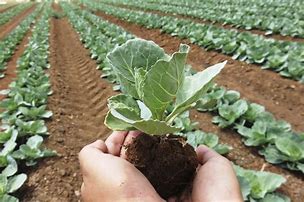
  • Vermicomposting
  • Green Manures
  • Animal Manures
  • Crop Rotation
  • Livestock Management
  • Soil Supervision
  • Weed Control
  • Genetic Modification

Hence, in conclusion, we can state that, Organic Farming is the best alternative for traditional farming. There are so many positives to Organic Farming. Today, Organic Agriculture is practiced in 187 countries by about 1.3 million farmers globally. Environmental consciousness has further given rise to the practice of Organic Farming.

IMPORTANCE OF AGRICULTURE

AGRICULTURE

The art and science of cultivating plants and raising livestock are known as Agriculture. It helps to provide food and fabrics. Over centuries, agriculture remarks the growth of civilization. Before knowing agriculture people spent most of their time for searching food. Agriculture enabled the surplus production of foods to the people. We all know that agriculture is the backbone of the economy of a country. In addition to providing food and raw materials, agriculture also helps in providing several job opportunities. Let’s see why agriculture is important

IMPORTANCE OF AGRICULTURE

  1. SOURCE OF FOOD: About 70% of people rely on agriculture for their livelihood. It’s the source of food supply. No matter what we eat and where we eat. All ingredients in the foods must be from somewhere. All road leads to agriculture. If a country is suffering from food insecurity and malnourishment, then it means that the agricultural sector is suffering in that country. Not only food, but it also provides fodder for domestic animals.
  2. MAIN SOURCE OF RAW MATERIALS: Agriculture is the major source of raw materials to the industries. Many raw materials like cotton, sugar, spices, wood, oil come from agriculture. These materials are essential in the industries to create a product. Agro-based industries contribute about 50% of income to the manufacturing sectors of the country.
  3. BOOSTS THE INTERNATIONAL TRADE: Both the raw materials and the products produced by using the raw materials are exported in each country. Countries with surplus growth of certain products export to the other countries. If a country’s agriculture sector suffers, the prices will go up and the trade will be affected. So, the effect on agriculture will directly affect the country’s trade.
  4. INCREASES NATIONAL REVENUE: Most of the developing countries depend on agriculture to increase their income. However, developed countries do not depend on agriculture for trade.
  5. EMPLOYMENT OPPORTUNITIES: The agricultural sector still provides large employment opportunities for the people. Whether you can work as a farmer or harvester or technician for farm equipment or scientist or researcher there are several jobs available in this sector. The unemployment rate in developing countries can be reduced by agriculture. To eradicate poverty, focusing on agriculture is the most efficient way.
  6. FOR COUNTRY’S ECONOMIC DEVELOPMENT: The country’s agriculture sector is tied with the economic development of the country. When there is an increase in export and national revenue, the country enjoys reduced poverty and boosted economic growth. Focusing on agriculture is one of the best ways to speed up the development and standard of a country.
  7. INCREASES THE TECHNOLOGICAL INNOVATION: For the growing population, the country must possess enough food to reduce hunger. To fasten the growing of crops, several innovations have been made in the growth of crops. Through Blockchain software, artificial intelligence, and gene manipulation, scientists are working to increase production by using less water and avoiding leaving negative impacts on the environment. Agribusiness is the more fascinating field to work on.
  8. REFLECTS OUR FUTURE: When it comes to pollution and climatic changes, the agriculture sector will face the quickest consequences. If effective changes are not made, then the impact on agriculture will directly impact the country’s economy and vanish the food supply. The state of agriculture in a country is a good litmus paper to look at how the future will be.