
New Vande Bharat trains are on the cards

Indian Railways has been consistently putting in efforts in improving the condition of railways in our country. The main reason for that has been the general people of the nation who use it daily. The railways are the main commuter of the general middle public of the country. So, recently Railways has been trying to improve the experience of the people by introducing trains like Vande Bharat. There have also been efforts to run this train on multiple circuits. 

Until now, 6 Vande Bharat trains are running in our country. The trains have been introduced for the people with some attractive features. One of the prominent features has been the ability of the train to run at a top speed of 160 mph. But due to the outdated infrastructure, the trains at running at a much-reduced speed. 

Now, Indian Railways is planning to introduce Vande Bharat 2.0. In this train, there will be an increase of top seed by 20 kmph. But still, there is doubt that whether it will happen in the real world or not.

So, to improve the condition of the infrastructure. The government is planning to invest 17000 crore rupees in the Delhi to Kolkata circuit. This will improve the performance of the Vande Bharat train on the route drastically. But apart from that, there have also been questions regarding the safety of the train. It is because there have been various cattle-related incidents with trains. This has raised various questions related to safety. To counter these discussions are being made that will reduce such incidents in the future. There is also work in progress related to the implementation of Kavach in all the trains. This technology will specially be incorporated into the Vande Bharat trains. This technology will improve the capability of locomotives to avoid train collisions. 

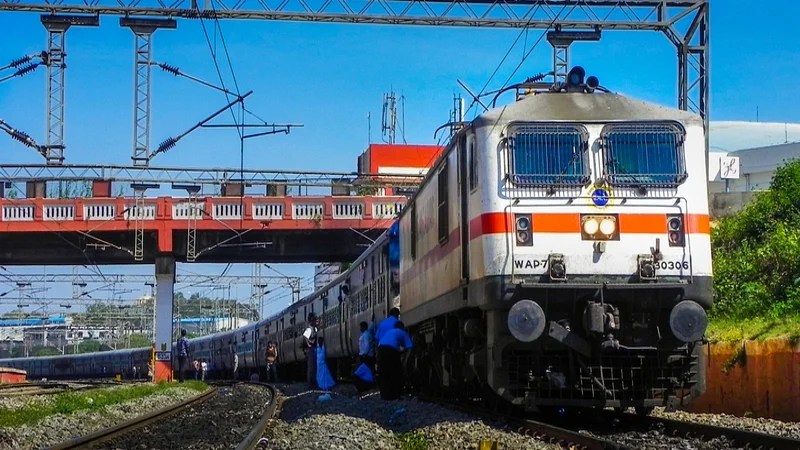
https://unsplash.com/photos/PJUbLL5g9BY

There are also efforts to manufacture sleeper coaches for the Vande Bharat trains. The new version of the prestigious Made in India train will also have a more compact 75-seater chair car coach. These trains are also being considered as a replacement for the ageing Shatabdi trains. It also acts as a flag bearer for the faster future of the Indian Railways. The trains also ensure safe travel for the passengers as they have automatic doors that can only be opened and closed from the locomotive. 

In recent times, there have also been some positive changes in the Indian Railways. The first one is the implementation of electric locomotives all over the country. Now, there are only a very few challenging routes where environmental hurdles are making it difficult. Now, there is also an implementation of 3AC economy class in some trains. This new class will make the journey more comfortable for the public as the new coaches have better seats and better air conditioning. There is also better waste management in these new coaches and there is also a greater number of seats in these coaches.

For a change, there is also a plan for developing various railway stations all across the country. The new railway stations especially in the bigger cities will likely provide an airport-like experience for the passengers. In the end, these passengers will bring about some much-needed freshness to the Indian Railways, the lifeline of the country.
Rail Transport in India

Rail transport is the most commonly used mode of long-distance transportation in India. Indian Railways (IR) is the primary operator of rail operations throughout the country, a state-owned organization of the Ministry of Railways, which historically had its government budget. The rail network traverses the length and width of the country, covering a total of 63,140 km (39,200 miles).

It is one of the world’s largest and busiest rail networks, transporting over 5 billion passengers and over 350 million tonnes of freight annually. Its operations cover 28 states and 3 Union territories and link the neighbouring countries of Nepal, Bangladesh and Pakistan. In March 2020, the national rail network comprised 126,366 km (78,520 mi) of track over a route of 67,368 km (41,861 mi) and 7,325 stations. It is the fourth-largest national railway network in the world (after those of the United States, Russia, and China).

Indian Railways is headed by a Four-member Railway Board whose chairman reports to the Ministry of Railways. The Railway Board also acts as the Ministry of Railways. The officers manning the office of Railway Board are mostly from organised Group A Railway Services and Railway Board Secretariat Service. IR is divided into 18 zones, headed by general managers who report to the Railway Board. The zones are further subdivided into 71 operating divisions headed by divisional railways managers (DRM).

A plan for a rail system in India was first put forward in 1832, but no further steps were taken for more than a decade. In 1844, the Governor-General of India Lord Hardinge allowed private entrepreneurs to set up a rail system in India. Two new railway companies were created and the East India Company was asked to assist them. Interest from a lot of investors in the UK led to the rapid creation of a rail system over the next few years.

Railways were first introduced to India in 1853, and by 1947, the year of India’s independence, they had grown to forty-two rail systems. In 1951 the systems were nationalised as one unit to become one of the largest networks in the world. India’s first passenger train, operated by the Great Indian Peninsula Railway and hauled by three steam locomotives (SahibSindh and Sultan), ran for 34 kilometres (21 mi) with 400 people in 14 carriages on 1,676 mm (5 ft 6 in) broad gauge track between Bori Bunder (Mumbai) and Thane on 16 April 1853.

It was as late as 1895 that India saw the birth of its first locomotive. The locomotive, an F class 0-6-0 metre gauge numbered F-734, was built at Ajmer for the Rajputana Malwa Railway. It weighed 38 tonnes. The locomotive, to be used for hauling mixed trains, was built at a cost of Rs 15,869. This locomotive has outside connecting rods and side rods. It was also used on the Bombay Baroda and Central India Railway (BB&CI) network. Today, the locomotive has been stored as one of the outdoor exhibits at the National Railway Museum, New Delhi.

In June 1950, the Railway Board put forward a plan to divide the railways in India into six zones to get things organized. However, after some formalities, the actual plan was implemented a year later, by April 1951.

On April 14, 1951, the Southern Railway was formed by merging the Madras Railway, the South Marhatta Railway, the South Indian Railway and the Mysore Railway. On November 5, 1951, the Central Railway was constituted by bringing together the Great Indian Peninsula Railway (GIPR), the Nizam Railway, the ScindiaRailway and the Dholpur Railway.

On the same day, the Western Railway was constituted by merging the Bombay Baroda and Central India Railway (BB&CI), the Sourashtra Railway, the Rajasthan Railway and Jaipur Railway. The merger of Eastern Punjab Railway, the Jodhpur Railway, the Bikaner Railway and some upper divisions of the East India Railway led to the formation of the Northern Railway on April 14, 1952.  Oudh Railway, Tirhut Railway and the Assam Railway formed the North Eastern Railway and the remaining divisions of the East India Railway and the Bengal Nagpur Railway constituted the Eastern Railway on the same day. These were the first six zones of Indian Railways.

On March 31, 1978, the railways were split into nine zones. The Northern zone with its headquarters at Delhi (Delhi junction), the North Eastern zone with its headquarters at Gorakhpur, the North East Frontier with its headquarters at Maligaon (Guwahati), the eastern zone with its headquarters at Kolkatta (Howrah junction), the south eastern zone with its headquarters at Kolkatta again (Howrah junction), the south central zone with its head offices at Secunderabad, the southern zone at Chennai (Chennai Central) and the Central and Western Railways with their administrative headquarters at CST and Churchgate respectively.

In 1977, the country’s first railway museum was set up at Chanakyapuri, New Delhi. The first of its kind in the country, this unique museum covers a land area of over 10 acres, comprising an elegantly designed octagonal building housing nine display galleries and a large open area laid out to simulate a Railway Yard. With constant emphasis on improvements and additions, the museum can now boast of being one of the finest rail museums in the world and a very popular tourist attraction of the country’s capital. On an average, this museum has around 1,000 visitors daily.