
SOUTH CHINA SEA DISPUTE

Recently America and Australia have rejected most of china’s claim over the South China Sea as well are its territorial claims over certain islands. So what is this dispute about? The South China Sea is a marginal sea from Karinata and Malacca Straits to the Strait of Taiwan. The sea is the south of China, east of Vietnam, the west of the Philippines and the east of the Malay Peninsula and Sumatra up to the Strait of Singapore. One-third of the world’s shipping passes through it. About 5.3 trillion worth of goods pass through the South China Sea. 1.2 trillion Of trade is with the US.
Because the sea is surrounded by various countries, the various parts of the sea are also claimed by different countries.But China claims most parts of the sea and Vietnam, Brunei, Philippines, Malaysia and Taiwan have contested the Chinese claim.All the claims of all the countries overlap at some point; all these claims are mostly geological claims and historical claim. China claims 80 per cent of the sea and Taiwan claims the islands of Paracel and Spratly. The Philippines claims the Spratly Islands and the Scarborough Shoal comes under Philippine sovereignty Brunei and Malaysia claimed the southern parts of the sea was under their sovereignty. Vietnam in 2009 began reclaiming the 48 islands they had occupied from before. In retaliation, China reclaimed larger portions of the sea it had occupied since the 1980s. China formed the nine-dash line which extends 2000 km from the Chinese mainland. This line almost touches the Indonesian and Malaysian international waters. In July 2016, an arbitration tribunal was formed under the United Nations Convention on the Law of the Sea in Hague. The tribunal ruled against china’s claims over the South China Sea, the case was brought by the Philippines. The People’s Republic of China and the Republic of China; the countries also did not recognize the tribunal. Disregarded the judgment of the tribunal and dismissed the judgment saying that this matter should be solved by negotiating with other claimants.


According to the international laws and the United Nations Convention on the Law of the Sea, every nation in the South China Sea have the right to claim 200 nautical miles of the sea as an exclusive economic zone where they can mine for oil or minerals or exploit the sea and sea bed. When the boundaries overlap usually countries negotiate to agree. But this hasn’t happened in the South China Sea. All countries have historical claim over the sea. China claims most of the sea due to ancient claims of trade, Japan occupied islands of the South China Sea, and the country later recognized Taiwan thus giving Taiwan historical claim over the land. Also, the nine-dash line is not recognized by international law. Taiwan isn’t recognized as a sovereign state, the country isn’t a signatory to the Convention on the Law of the Sea. In international law, for a country to claim part of the sea, the island must be habitable for humans, there was no such island found on Spratly islands.
This sea is important as it houses one-third of the world’s sea trade and the sea is also a huge source of oils and natural gas. The sea also has 80 per cent of China’s sea trade. The situation hasn’t evolved and there is no resolution as no two countries are open to bilateral negotiations as of now.
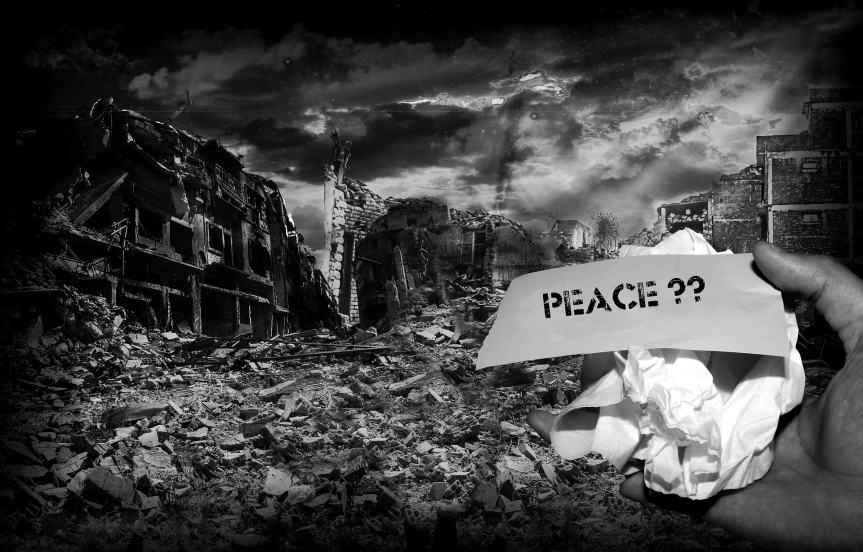
INTERNATIONAL HUMAN RIGHTS

Human nature has proven to be chaotic and even in most civilized times, there have been conflicts and where there is conflict there is a violation of human rights. Human rights are a collection of basic rights that everyone is entitled to. International human rights are a branch of international law that strives to safeguard and to advance human rights at all times. International rights are made up of treaties signed by sovereign states, customary international law. States that ratify it are compelled to agree, protect and empower human rights in their state. Other sources include declarations, conventions which are made by an international organization. The universal declaration of human rights is an authoritative instrument used as a base framework for international human rights. it was proclaimed and adopted by the United Nations general assembly. It is not a legally binding document. Global treaties like the International Covenant of Economic, Social and Cultural Rights and the International Covenant on Civil and Political Rights. All the documents are aimed to prevent violation of human rights. The treaties also prevent torture, degradation of humans, discrimination based on gender, colour or race. it prohibits violation against women and children.
States have to respect the basic rules of both International Humanitarian Law and International Human rights. International Humanitarian Law is applied in times of conflict whereas international human rights are applied at all times regardless of the situation. The states that have ratified the treaties are bound to follow the international human rights as they assume obligations to respect, safeguard human rights The states have to make domestic laws or measures to help combat human rights violation with legislations. Include the right to life, right to religion, right to freedom of speech, right to freedom from degrading treatment, freedom of thought, and right to freedom to opinion and expression, right to freedom of discrimination on basis of race, colour or gender. Right to education is also included in human rights. No human is born racist or unequal but is made. This makes education an important tool to help people understand the importance of human rights.
The threat of terrorism has made a more dangerous society where there is a rampant violation of human rights. Recent wars and violence in the world have made it pretty susceptible to the human rights violation. Human rights are based on basic principles that make society a more civilized place. It revolves around rights and equality between men and women and everything that humanity stands for. Human Rights Council keeps a look for human rights violations. The laws are designed to safeguard human rights and to enforce and empower it. Human rights are spoken in all religions. Governments must take domestic laws to protect their citizens and others. The importance of human rights is incomparable in this world. Human rights are fundamental to human growth and are essential. to make a better society, we need education of human rights. An important part of a civilized society thus making the concept of human rights has to be of universally applicable.

INTERNATIONAL HUMANITARIAN LAW

International humanitarian law is a set of legal laws that regulate the conduct of war. It seeks to protect the people who do not participate in the war and to limit the methods and the repercussions of war. International humanitarian law is a part of public international law. It is made up of a set of treaties, rules, principles and regulations. It also follows the customary war laws that regulate the conduct of participants of the war. Its main purpose is the proportionality between the military necessities of humanity and its humanitarian cause. The sources of international law are international agreements such as the Geneva Convention 1, 2, 3 & 4, protocol 1 and 2, and the Hague regulations. All these agreements aim to protect civilians, non-combatants and medical professionals who are not participants of war but are victims of war.


International law divides conflict into international armed conflict and non-international armed conflict. International armed conflict is strictly between two states only as stated in the article two of all Geneva Convention. The rules regarding combatant status, conduct regulations and methods of war are more conditioned for international armed conflict. Non-international armed conflict is defined in article 3 in all Geneva Convention. Any inclusion of a non-state actor makes the war a non-international conflict. IHL follows some basic rules that every country that had signed or ratified has to agree to. Non-combatants or the civilian population who are not participants of the war shall and must be protected at all times. Any prisoner of war must be protected from violence. It prohibits perfidy. Treatment of the wounded and the sick is done by medical groups or the Red Cross, any attack on medical personnel is considered as a war crime. There must be a clear difference between non-combatants and combatants. There should be special protection given to women, children and medical professionals. International humanitarian law also speaks about the prohibition on certain kind of weapons such as cluster weapons which harms all combatants and non-combatants. It also forbids the conscription of children under the age of 15 into armed forces. The use of protective emblems to attack other parties who are participants of the war is considered illegal.


Crimes such as genocide, attacking civilian population, ethnic cleansing and using child soldiers in war are considered as grave war crimes. Present trends in wars are likely to continue. International human rights bodies should make more stringent laws. Given that most human rights laws are governed by the state and its behaviour. The state must take strict actions against it. International humanitarian laws serve the purpose of keeping a balance of the necessity of war and humanitarian laws. It aims for war to occur without the loss of any non-combatants. Combatants who knowingly break the law are subjected to go under a tribunal for their crimes and these individuals are held accountable for the war crimes that they have committed. It is rightly said that only in total abandonment of human conflict will human rights prevail. The human capacity and to inflict suffering to one and other is inevitable in the history of mankind but when we can’t prevent it then we must regulate it and reduce the amount of suffering.

REFUGEES

There are over 79.5 million people who are forcefully displaced from their homes due to persecution, violence, the outbreak of wars or oppressive regimes to find stability, safety or refuge. The united nations describe a refugee as a person who flees their country and is unable to return due to conflict or ongoing persecution. Refugees are divided into internally displaced persons and refugees. Internally displaced persons are much difficult to help as they don’t come under international law and are much difficult to assist. Refugees seek asylum in different countries where are recognized legally as a refugee and they receive legal and material protection.
The 1951 refugee convention is the main legal instrument for refugee law. The 1967 protocol is also used as one of the documents for refugee law. The convention for the first time gave us the definition of a refugee, its legal protection, material assistance and those displaced persons who don’t classify as refugees. The 1967 protocol expanded the range of the definition and legal assistance. The 1989 convention on rights of the child which isn’t particularly for children but was used while dealing with minor refugees, the convention elucidated the rights of children in a country. The African countries follow the organization of African Unity of Convention Governing the Specific Aspect of refugees. In 1984, the Latin American countries signed the convention to follow the Cartagena Declaration of Refugees.
The process of recognition of displaced persons into refugees depends upon the state. Where the country is unwilling to do the process, UNHRC does the process. Refugees entitled to basic human rights where they have right to freedom from degrading treatment, freedom of rights of freedom of opinion and expression, freedom of thought, religion, right to life and liberty, the right to freedom from discrimination on basis of race, colour or gender and more importantly right to asylum. International law also forbids the countries to resettle the refugees in their own country where they may seemingly be persecuted for their race, religion or by a political group. Refugees are required to keep with them all the time a refugee identity certificate which is either issued by the UNHRC or by the state where they are seeking asylum, this is their legal document for identification. All states that have signed the 1951 refugee convention have to provide refugees with the freedom to the process of an identification certificate. Refugees are also issued with a refugee travel document which substitutes as a passport for international travel because they cannot get a passport for their country. According to the convention of 1951 chapter 3, all refugees are allowed to gain legal employment. But the main goal of a refugee is to return home . as most of them leave their own homes in a hurry to escape wars or violence but they can’t due to the rampant violence in their countries. Refugees either stay in camps with little hope of going back to their countries or they move to different camps in different countries trying to gain asylum.
In conclusion, refugees are the world’s most harrowing humanitarian crisis. There are strides taken to protect the rights of the refugees but it has proven to be difficult. Countries who have used to receive refugees have now at their limit. The efforts made by the international bodies and states are recognized but need more innovative methods to deal with it. The influx of refugees have over the years have increased which only means that violence and war in the world have increased with no signs of slowing down.