
AI is here to improve our lives

Artificial Intelligence is one of the most exciting creations of the modern world. Recently, Satya Nadella said that AI will help to get people together. He said so while giving a session during the World Economic Forum in Switzerland.

The advancements which we see around us in various fields will get even more advanced with the new improvements. Some of those we can already see in the form of ChatGPT. 

In recent times, AI has been able to change our surrounding in various ways. Various websites now have a bot that can talk to us and resolve our queries. The number of automated systems around us has also increased to a large extent. Automated systems are being used in various fields and places. 

There is also automation even in our house. The various IoT devices that we are buying are also communicating with us with the help of AI. The various assistants are answering our questions with the help of an AI. 

AI as a whole is making various sectors completely independent and the dependence on people is decreasing. Also, tech-related jobs are increasing. So indirectly AI is creating jobs in various fields. 

 AI has been able to make changes to the medical field also. Now, several robots help in performing complex surgeries which are generally difficult for surgeons. The diagnosis of diseases is also getting easier due to AI.

https://unsplash.com/photos/LIlsk-UFVxk

Now we even have several robots that help us in keeping our homes clean. The various cars are also having AI assistance in terms of self-driving technology. In the future, we will also see self-driving vehicles that will take us from one place to another.

AI has also done justice to the security sector. As of now, we have face recognition that scans and notifies the concerned authorities of any findings. The use of AI is now also helpful in terms of various fields like content writing and even coding. Now, computers are capable of writing codes and even rectifying errors in a completed program.

The use of AI has also helped in highly sensitive manufacturing sectors. For example, robots are being used in the automotive painting industry. It helps in removing the smallest of errors and the results are excellent. 

So, the upcoming decade is going to be more interesting. If we consider the fact that the last decade was the one in which technology simply exploded. Now, we have devices in our respective homes that are remote-controlled and can be operated from any were in the world. The Internet has pushed the boundaries with the things that we can do now with our gadgets. Now, we can even take consultations with a doctor over a video call.

The improvements in the features that technology offers us are automated, but there are still improvements that we need. There also needs to be clear that AI is not destroying jobs. The number of fields that get affected by AI also needs to ensure that the people who are using should also depend less on machines.
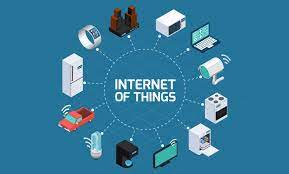
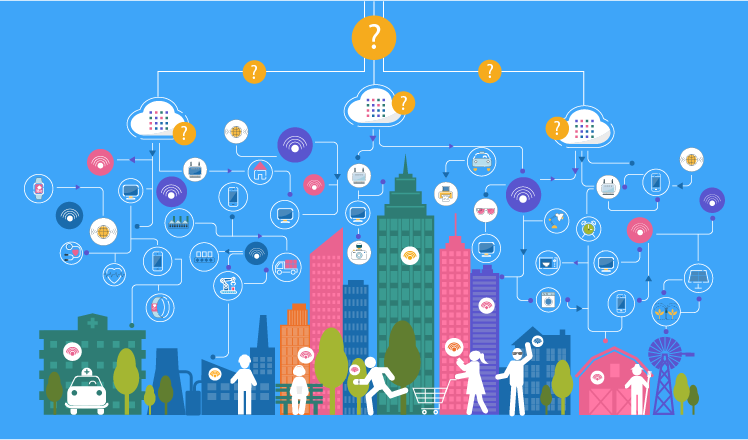
IoT – Internet of Things

Iot is shaping the way we live our lives. It helps us get a better insight into the working of things around us. Iot is a system of interrelated devices connected to the internet to transfer and receive data from one to the other. A smart home is the best example of Iot. Home appliances like the ac, doorbell, thermostats, smoke detectors, water heaters and security alarms can be interconnected to share data with the user over a mobile application.

The user can now get detailed insight into the working of the devices around him. Think about it until recently the internet helped people connect and interact with each other but now inanimate objects or things have the ability to sense the surroundings to interact and collaborate with one another.

For example, in the morning when your alarm goes off. The Iot system can open the window blinds, turn on the coffee pot for you and even turn on the water heater. Although all of this is fascinating there is a lot that goes on in the background to ensure seamless functioning. From effective communication between devices to accurate processing of the data received.

A lot of components are involved in the context of Iot devices hardware can be classified into general devices and sensing devices. The general devices are the main components of the data hub and information exchange. They are connected either by wired or wireless interfaces.

Home appliances are a classic example of such devices, the sensing devices on the other hand include sensors and actuators. They measure the temperature, humidity, light intensity and other parameters. These Iot devices are connected to the network with the help of gateways.

These gateways or processing nodes process the information collected from the sensors and transfer it to the cloud. The cloud acts as both the storage and processing unit. Actions are performed on the collected data for further learning and inferences.

Wired and wireless interfaces like wi-fi, bluetooth, zigbee, gsms and so on are used to provide connectivity to ensure its ubiquity. Applications need to support a diverse set of devices and communication protocols from tiny sensors capable of sensing and reporting the desired factor to powerful back-end servers that are utilized for data analysis and knowledge extraction.

Let’s take a simple scenario, suppose you want to water your garden every time the moisture level in the soil drops. Instead of doing it manually you could automate it using Iot, the sensors and actuators installed gauge the soil for its moisture.

This information is sent to the Iot gateway with the help of communication protocols like mqtt or http the gateway significantly aggregates data and feeds it to the cloud with the help of wi-fi lan.

Once the moisture level drops, the system is immediately triggered and the sprinklers are turned on however. With the information stored in the cloud, a detailed analysis like the time of the day the sprinkler was turned on.

The rate at which the moisture in the soil reduces can be done and the report could be sent over to you on your smartphone over an app. The improved response monitoring and analytical capabilities.

Iot is being adopted in almost all industries and domains opening doors to endless applications.

Today Iot is being used extensively to lessen the burden on humans to name a few Iot is deployed for smart homes, wearables watches, bracelets, smart cars, smart farming, smart retail smart grids, smart city and smart healthcare etc.

Wide spectrum of applications and the future of it looks more promising than ever before. In 2018 there were about 23 billion connected devices which was more than double the world population.

According to experts there will be over 80 billion devices by 2025. Iot is a vision to connect all devices with the power of the internet always learning and always growing.

The integration of Iot with other technologies like cloud computing, machine learning and artificial intelligence is paving the way for many new and exciting innovations and that is the internet of things.

Big Data and IoT Explained

How Big Data Influences Your IoT Solution

Technology has been advancing and lives are getting improved everyday now. Businesses are doing everything to exceed the expectations of their customers and IoT is the next promising step towards the same. Internet of Things, IoT in short, is a platform that collects and analyses data from our regular use appliances with the aid of the internet and gives out information to both the manufacturer and user. This information could be about the servicing that is required or a part that has become dysfunctional and needs to be replaced. The huge amount of data that is generated by these sensor equipped machines is called the Big Data (no surprise there, hopefully).

Big Data has always been present but in earlier times, it was simple and could be easily recorded on Excel spreadsheets and analysed as such. The type of data wasn’t as complex back then and it could be easily filled into the cells of spreadsheets. Now, however, the format of data that is being transmitted is not very fixed and it could be in forms like audio, video and pictures. This data cannot be collected and analysed by traditional programs. New softwares (Cloud) are getting developed that can help separate the valuable information and recognise the trends or patterns if there are any. Examples of the same can be seen in apps like Netflix and Amazon Prime when they give you recommendations on the basis of your previous watch.

The big data is characterised by 4 Vs: volume, velocity, variety and veracity. The volume of data could be trillions of gigabytes and has to be stored at multiple locations. The velocity of transmission and collection of data currently, is unprecedented. ‘Variety’ refers to the format of data that can be both structured and unstructured but equally important. Veracity or the accuracy of the set of data that has been generated by a source and needs to be verified in case of redundancy or just to check if the data is suitable for analysis by a particular software. The role of data analyst becomes important with this discussion and it will be the most sought after profession eventually.

IoT and Big Data are very similar but yet very distinct at the same time. IoT seeks to analyse the data when it is transmitted and the data then contributes to the Big Data. A company can use both the technologies at the same time. For example, a sensor in a car could emit a signal that the car is in need of servicing and the owner might get a notification reminder for the same. The data of the times all the cars of the same company required servicing can be stored and used for predictive analysis for newly manufactured cars. 

The integration of the two technologies can help the both consumer and seller in the long run. The businesses will make more profits as they will become more efficient in catering to the needs of their customer and the overall costs will get reduced as well. The customer might be hesitant at first, for the idea of their appliances tracking their usage behavior seems like invasion of privacy, but it will save their time and money in maintenance and replacement.