Her presence at the Grammy Awards in an ivory kimono dress earlier this year may have turned heads for all the wrong reasons but there was way more to Priyanka Chopra Jonas attending one of the four biggest annual entertainment awards in the US.
Priyanka Chopra Jonas in a still from ‘Quantico’. She is the first south Asian to headline an American network drama series.
Priyanka Chopra Jonas, the first South Asian to headline an American network drama series when she starred in ABC thriller Quantico in 2015, is reflective of the slow evolution in the representation of Indians in US cinema and television. The change, though not entirely remarkable, is evident both in the token presence of Bollywood stars such as Amitabh Bachchan, Anil Kapoor, Aishwarya Rai Bachchan, and Deepika Padukone in Hollywood films and Indian-born foreigners such as Mindy Kaling, Dev Patel, and Hasan Minhaj making waves.
The well-known trope to include an Asian character, often unnecessarily, as part of the broader narrative of American films and series, goes back to the fairness doctrine introduced by the United States Federal Communications Commission in 1949, that required the holders of broadcast licences to present controversial issues of public importance in an honest, equitable, and balanced manner, thus requiring the mandatory presence of ethnic minorities.
“I have always felt that in addition to a mandatory black face and then a Hispanic one, they (Hollywood films) have a mandatory Asian too, in their bid to look inclusive,” film critic Bharathi Pradhan said. The earliest depictions of Asians were as greedy, illiterate foreigners though they did evolve into doctors, professionals, and more educated immigrants by the 1980s.
However, the inherent Orientalism refuses to die. The first American company to recruit Indian faces for its projects was Merchant Ivory Productions where actor Shashi Kapoor was a regular with films such as The Householder and Shakespeare Wallah in the 1960s. Over the years, several Bollywood actors have crossed over to Hollywood, such as Amitabh Bachchan (The Great Gatsby), Anil Kapoor (Mission: Impossible- Ghost Protocol), Aishwarya Rai Bachchan (The Last Legion, The Pink Panther 2), and Deepika Padukone (xXx: Return of Xander Cage).
“They are all quite unidimensional characters and a classic example of tokenism as far as social representation goes,” said Uma Vangal, filmmaker and professor at the L.V. Prasad Film and TV Academy. It is disappointing to see such talented actors being reduced to caricatures in a narrative to which their presence or absence would not make a difference, said Vangal.
Representation matters. Disability in the media matters.
According to PBS, “Portrayals of [marginalized people] in the media not only affect how others see them, but it affects how they see themselves.”
People with disabilities have yet to reach proportional representation on screen. More often than not, show producers seem to miss the mark on writing and casting disabled characters. Perhaps the storyline adheres to incorrect stereotypes and offensive tropes, or the show casts non-disabled people to portray disabled characters. In either case, it’s a form of ableism, “the discrimination of and social prejudice against people with disabilities based on the belief that typical abilities are superior.” Show makers must veer away from upholding ableism in media, as it’s not an adequate or appropriate representation for disabled individuals.
In this post, we’re highlighting shows that recognised the importance of disability in the media and cast actors with disabilities to play characters with disabilities.
Crip Camp: A Disability Revolution
Crip Camp: A Disability Revolution is an American documentary film that won the Audience Award at the Sundance Film Festival premiere.
The film follows Larry Allison, Judith Heumann, James LeBrecht, Denise Sherer Jacobson, and Stephen Hofmann, a group of Camp Jened campers. Camp Janed was based in upstate New York and described as a “loose, free-spirited camp designed for teens with disabilities.”
The viewer is given a glimpse into the teen group’s journey to becoming activists for the 1970s disability rights movement and fight for accessibility legislation.
Watch a story of activism and advocacy unfold in Crip Camp: A Disability Revolution, available to stream on Netflix.
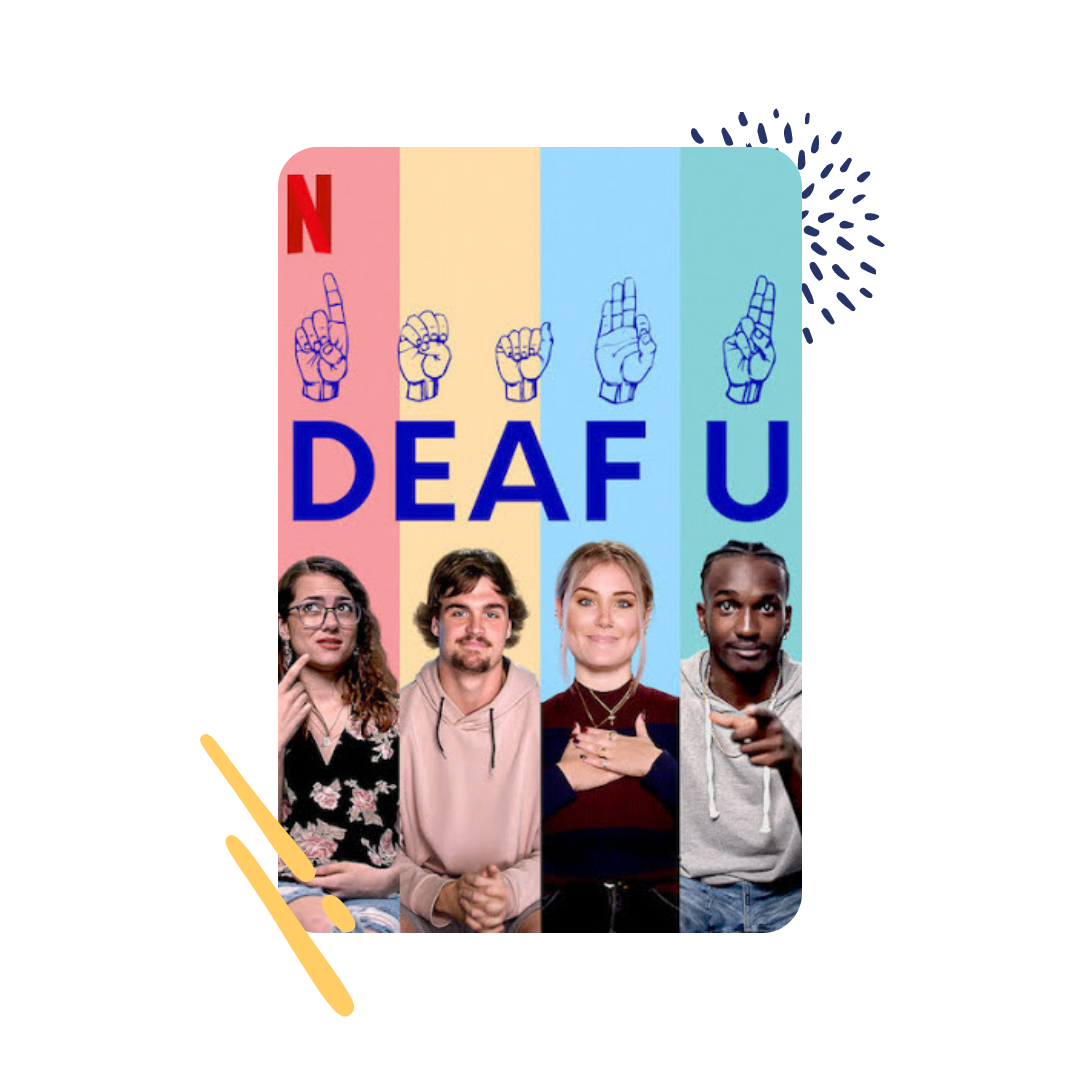
Deaf U
Deaf U is a Netflix reality docu-series that follows a group of deaf and hard of hearing students at Gallaudet University in Washington, DC. One of the series executive producers is Nyle DiMarco, a deaf activist, model, and actor, advocates for disability in the media and wanted to show various deaf experiences. His goal was “to show deaf people as humans, from all walks of life.”
The show introduces cast members Cheyenna Clearbrook, Rodney Burford, Tessa Lewis, Alexa Paulay-Simmons, Renate Rose, Daequan Taylor, and Dalton Taylor – each with different backgrounds, experiences, and stories to tell.
Overall, Deaf U offers much to both hearing and deaf individuals and provides a unique viewing experience. One must rely heavily on the captions and subtitles if they don’t know ASL (a usual experience for deaf and hard of hearing people).
Meet the Gallaudet University students in Deaf U, available to stream on Netflix.
The Politician
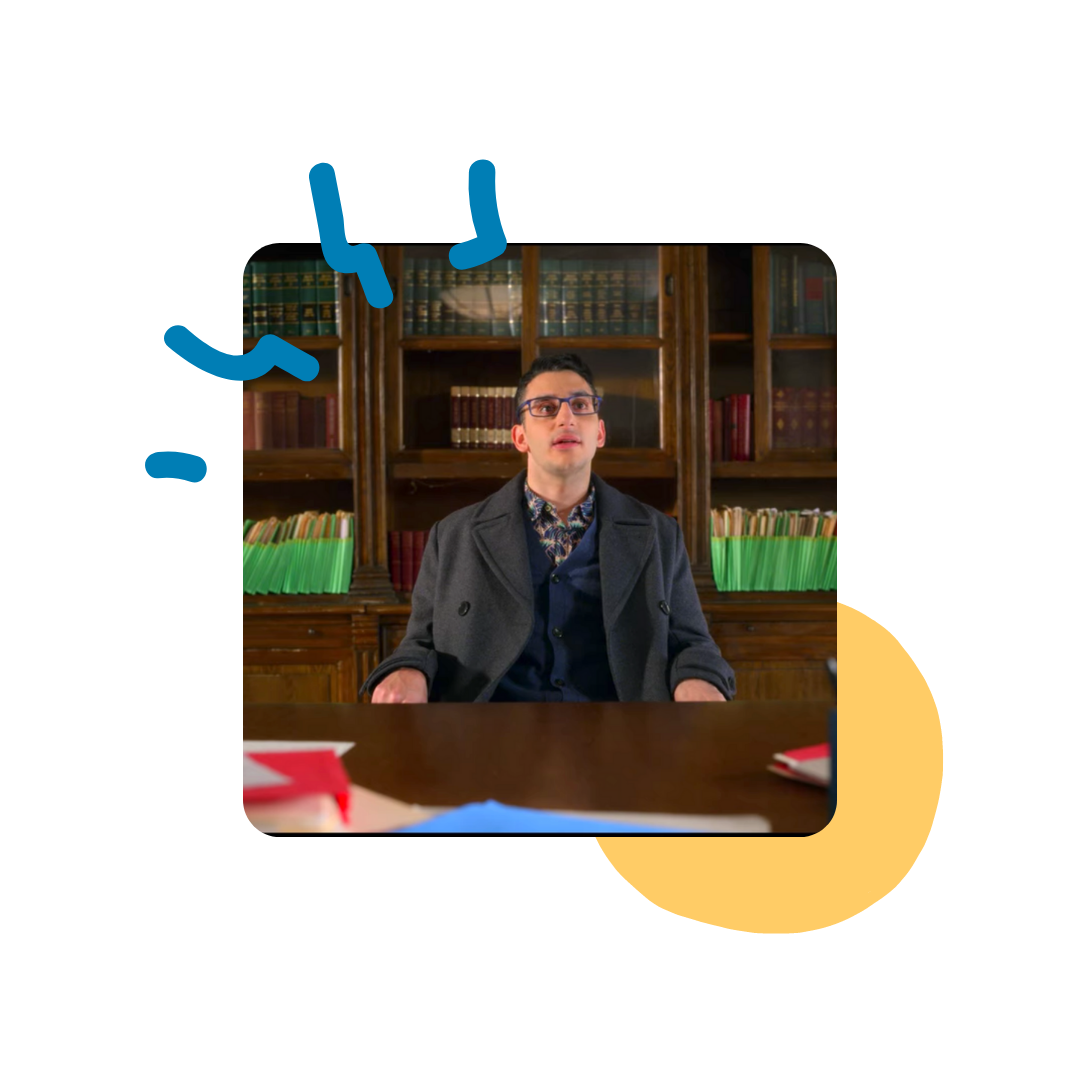
The Politician is a comedy series on Netflix that follows upper-class Santa Barbaran, Payton Hobart, in several of his political races, including a run for high school class president and New York State Senator. Payton’s ultimate goal is to become the President of the United States one day, and his group of closest friends and political advisors will do anything to help him.
One of the series recurring characters, Andrew Cashman, is a former classmate of Payton’s with cerebral palsy who helps him run in the New York State Senate race. Andrew Cashman, played by Ryan Haddad, who has cerebral palsy, is a cunning and charismatic character with the primary goal of impressing his high school crush, Infinity Jackson.
Catch Ryan Haddad’s performance in The Politician, available to stream on Netflix.
Sex Education
Sex Education is a British comedy-drama series about a socially awkward teenage boy and friends who set up an underground sex therapy clinic at their high school. The series is authentic, hilarious, and relatable, doing its best to depict the unchartered territory many high school students struggle to navigate, including relationships, identity, home-life, and mental health.
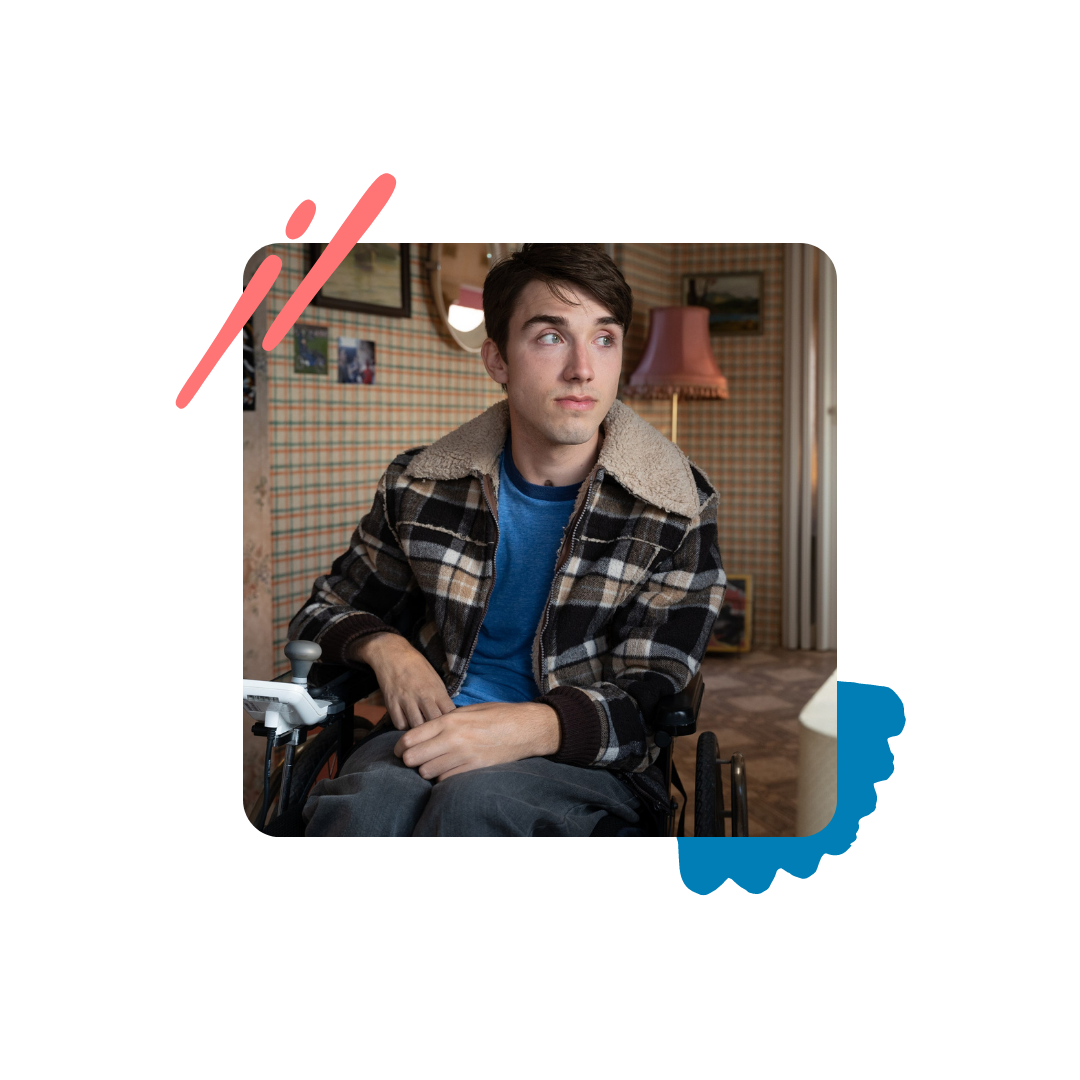
In season two, the audience meets Isaac, a disabled teenage boy. Isaac, who uses a wheelchair, is a troublemaker with a massive crush on one of the series main characters, Maeve. Isaac’s character is played by George Robinson, who developed tetraplegia a few years ago after a rugby accident. With just a few appearances in Season 2 of the series, we’ll hopefully get to see more of Isaac’s storyline in Season 3, set to release in late 2021.
Binge the first two seasons and get to know Isaac in Sex Education, streaming now on Netflix.
When one sees a person on screen who looks like them or has had similar life experiences, it can make a lasting impact.
These movies and television series took steps to accurately represent disability in the media by hiring actors with disabilities and avoiding harmful tropes and stereotypes. Many of the shows recognized their lack of knowledge in the space and consulted with the disabled actors when writing for their characters. This created a space for a realistic and authentic portrayal of a person with a disability, rather than one fabricated by non-disabled people.
As the saying goes, “Nothing about us without us.” The phrase, used by disability activists and advocates, rings true in the media and our society as a whole.



 Track2Training
You must be logged in to post a comment.