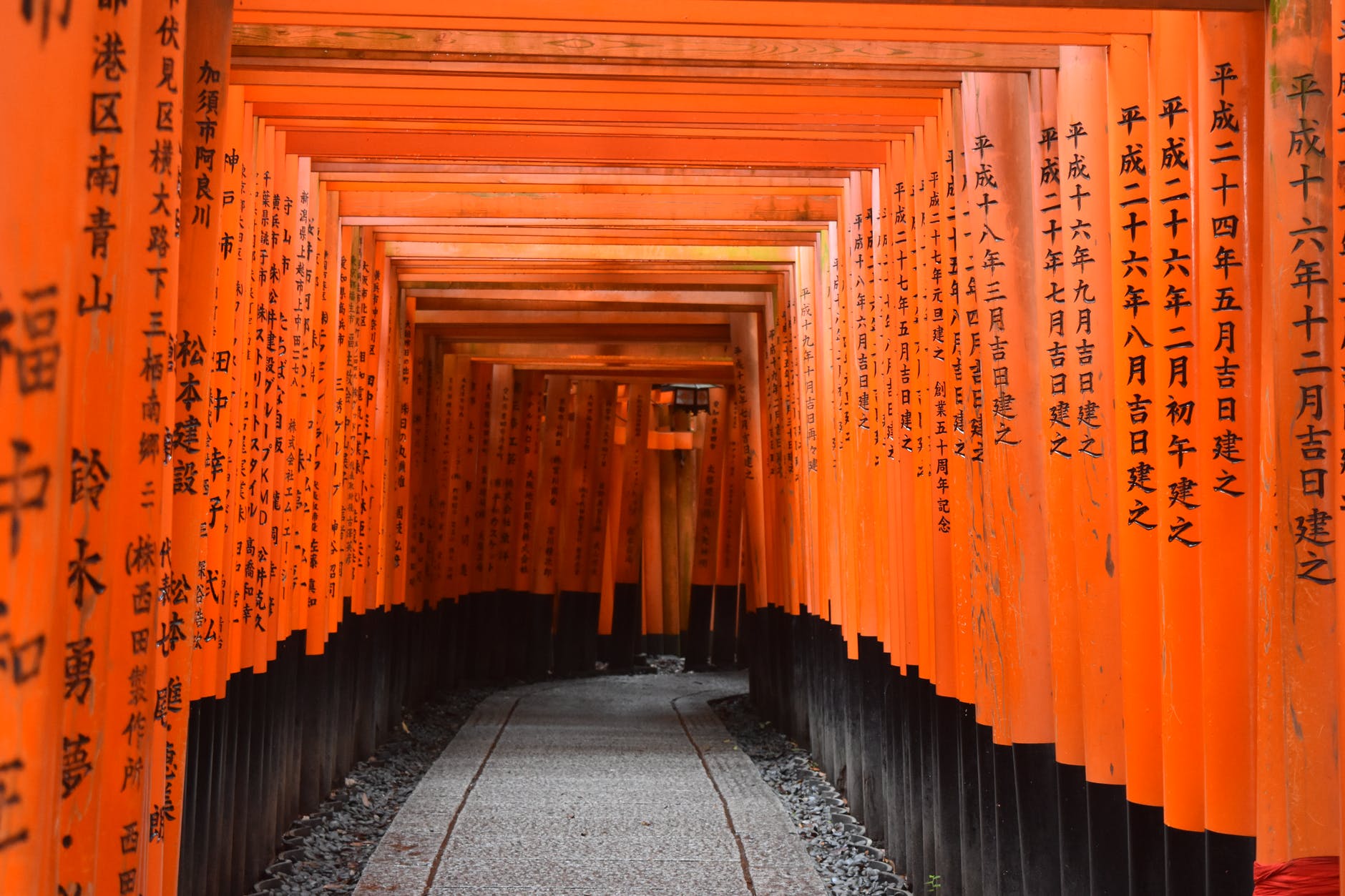
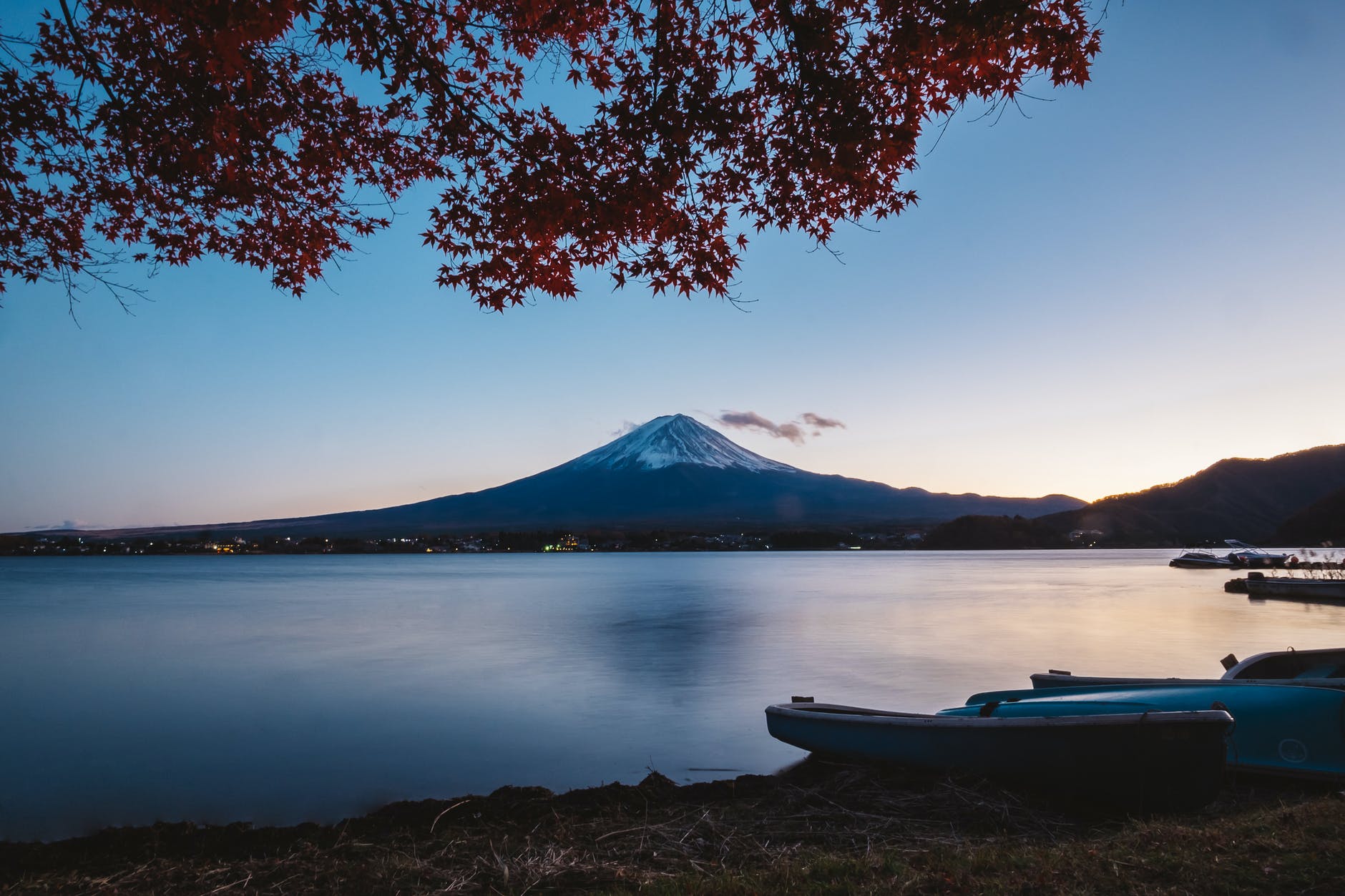
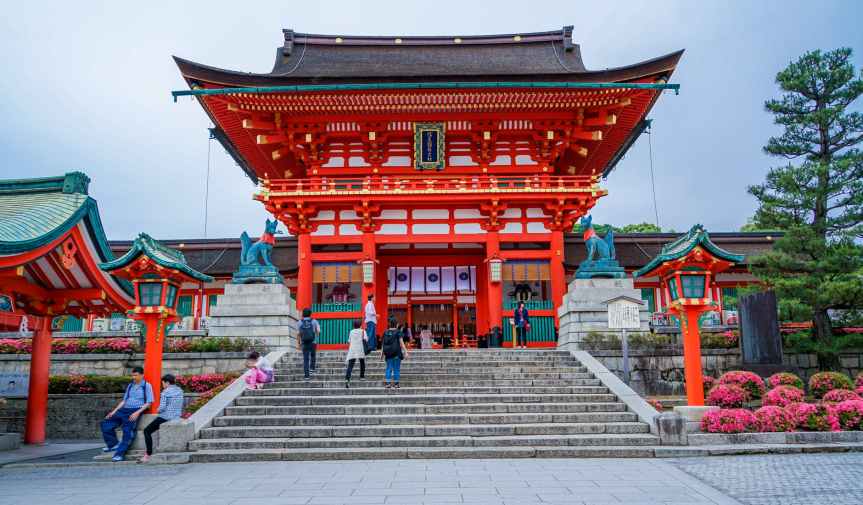
Shinto is a religion of shrines, festivals, and rituals. Large, medium, and small Shinto shrines with their torii gates are found all across Japan. Shrines are considered to be the homes of kami and are located around scenic natural surroundings, near banks of rivers or at the foot of a mountain. Many of the sites of the older shrines were considered to be sacred spaces long before the erection of any structure. Japanese considered Shinto to be an optimistic and happy religion and can be found in everyday practices or lifestyle of people.
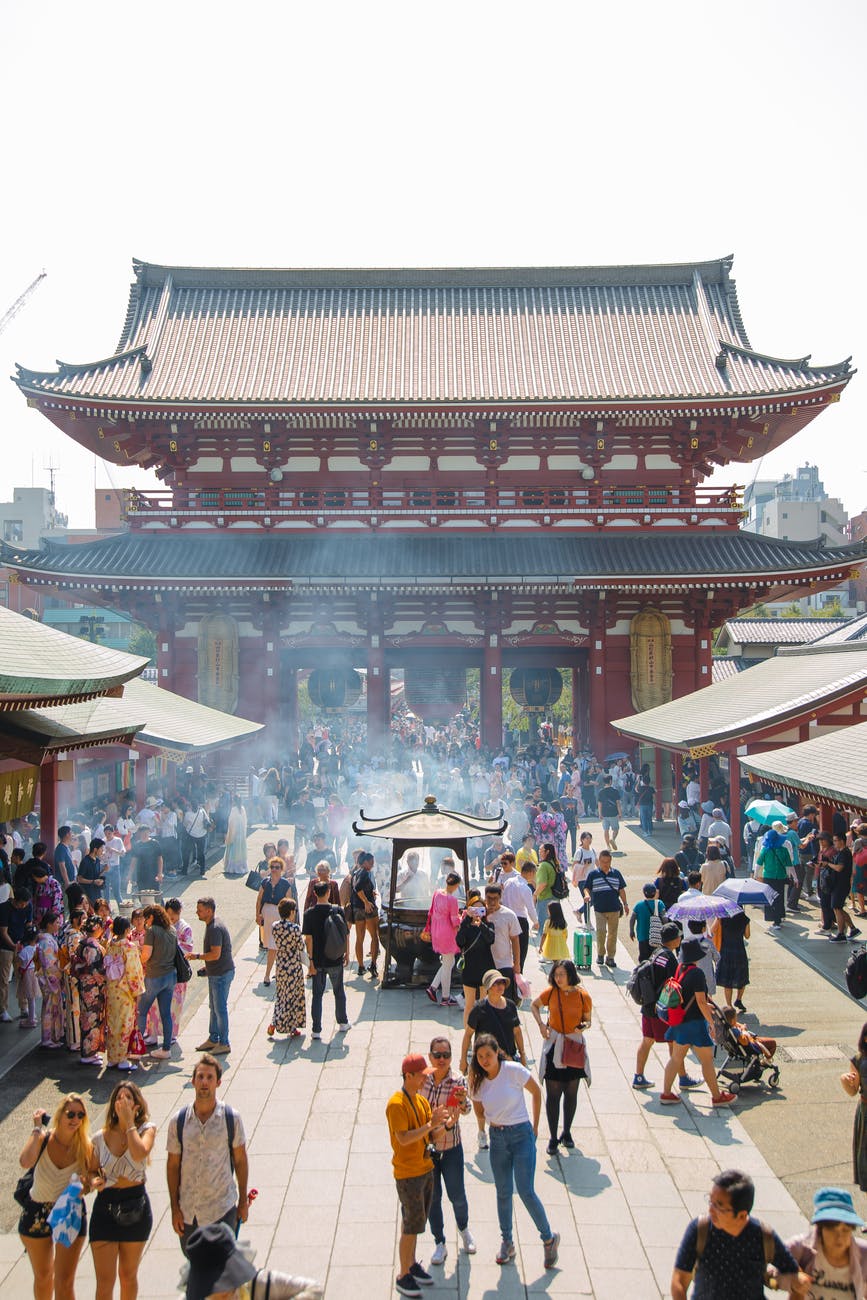
Children are christened at shrines and many couples have Shinto weddings. Shinto-related festivities take place during rice planting and harvesting cycles. Millions of Japanese visit Shinto shrines on New Year’s Day. Some shrines do a small business all around the year by selling good-luck charms for granting various prayers. A large number of Shinto shrines hold annual matsuri, or festivals, where people carry large portable shrines to transport the local kami all around shrine.
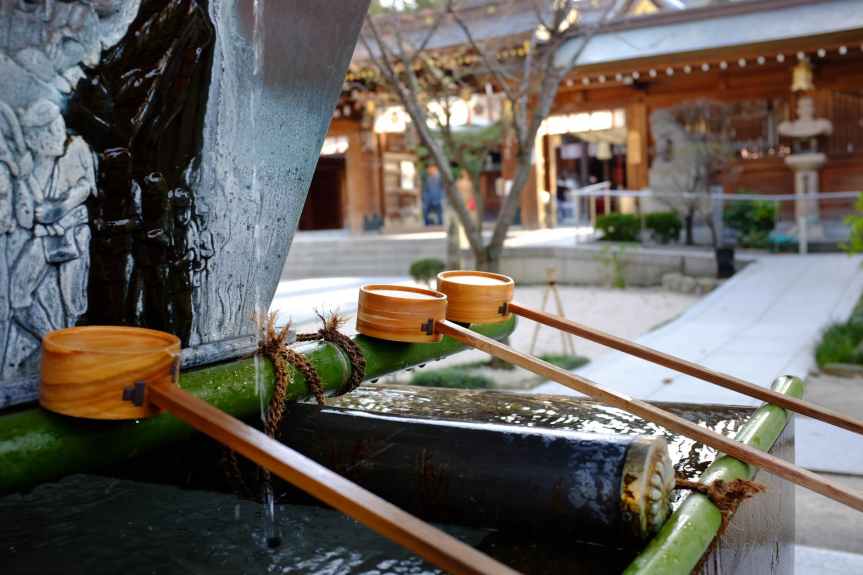
Individuals or groups who visit shrines to worship complete three processes: purification, making an offering, and praying or making a request of the local kami. Before entering the shrine, the people use water to wash one’s hands or wash out one’s mouth to purify themselves. Then an offering is presented to the kami, followed by the prayer.
Values common to most Japanese people today, originated from early religious practices including love for bathing and deep respect for nature.
To pay respects at a Shinto shrine, stand in front of the cashbox and the long ropes dangling from a gong. The shrine may contain offerings of food and sake that are placed in front of the kami. People toss a coin in the box, sound the gong a couple of times, bow deeply twice, clap hands twice, bow once deeply, once lightly and then back away politely and avoid turning their back to the shrine.
What makes shinto different from other religions? if wanna know then read on. But first you should know what is shinto. To learn what is shinto read my last blog.
The belief that everything has a life of its own. All the objects, places and creatures all possess a distinct spiritual essence. The wind, rain, rivers, mountains, trees everything that is important for life are worshipped as kami. As Shinto developed, not only spirits living in nature but also ancestors’ spirits were enshrined as gods. After death, ancestors’ spirits were believed to become guardian gods, watching over and protecting their living descendants. The main theme in the Shinto religion is love for nature and all living beings. So a waterfall or a special rock might come to be regarded as a spirit (kami) of that place; so might abstract things like growth and fertility. Sacred objects, such as rocks or trees, can be recognized by the special ropes (shimenawa) and they have white paper strips attached to them.
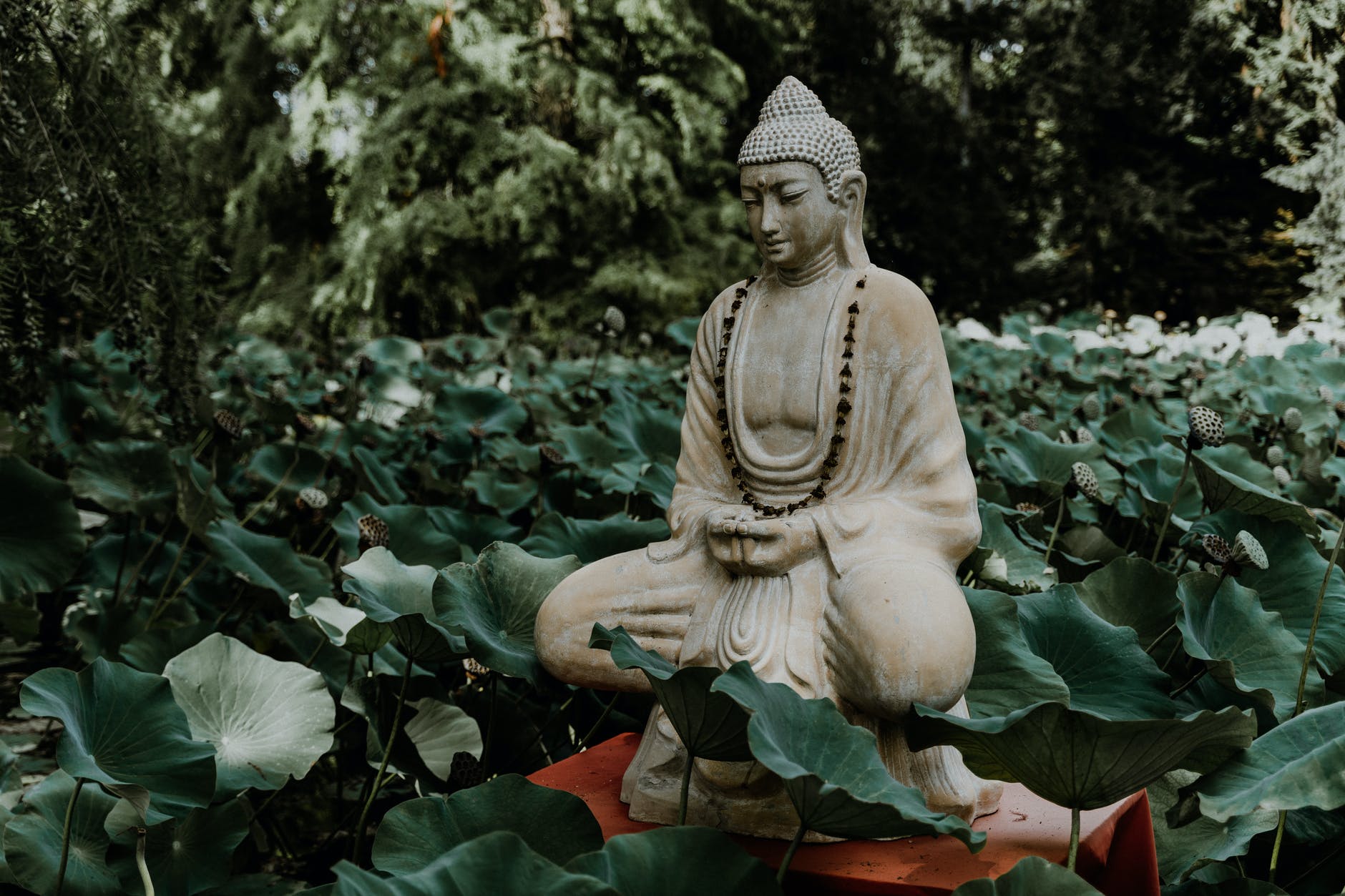
Shintoism is a polytheistic religion. Polytheism is the belief or worshipping more than one god. Shinto gods are basically spirits that are everywhere in nature and also in men, hence the assumption of many gods. The Japanese feared the natural forces and believed those forces came from the power of spirits living in various natural entities. In Shinto, the subjects of worship are not visible idols but spirits that are believed to have supernatural power. Both malevolent and benevolent spirits are called ‘Kami’ in singular and ‘Kamigami’ (神々) in plural. The arrival of Buddhism, however, brought with it stylistic carved figural icons, an art form that influenced images of gods in Shinto , and as Shinto-Buddhism started to merge together, many Shinto shrines and their deities were combined with Buddhist temples and figures.
EMPHASIS ON PURITY AND POLLUTION
The central aspect of Shinto ritual is purification. Shinto ceremonies are designed to appeal to the kami for benevolent treatment and protection and consist of abstinence (imi), offerings, prayers and purification.
Purification has two forms ‘Misogi’ and ‘Harae’.
Misogi, the purification from contact with sullying elements such as disease and death. Misogi is said to have originated from the myth of ‘Izanagi no Mikoto’ who followed ‘Izanami no Mikoto’ to the ‘Yomi no Kuni’ only to find her in the state of decomposition. After returning to the world cleans himself in a stream. The purification of his left eye leads to the appearance of the solar divinity Amaterasu Omikami. The purification of his right eye leads to the appearance of the lunar divinity Tsukuyomi no Mikoto. The purification of his nose leads to the appearance of the storm divinity Susanoo no Mikoto.
Harae, the restoration of proper relationships after wrongdoings, through the offering of compensation. The second type of purification, harae, has been derived from the myth of Susanoo no Mikoto, after he rampaged through the palace of his sister Amaterasu. And then he is compelled to make recompose by offering up a great quantity of goods and having his beard cut and nails pulled off.
There is no outer influence of any kind in Shinto rituals and practices. Shinto has no founders, no official sacred scriptures and no fixed creeds but it has preserved its main beliefs and rituals throughout the ages. When the Japanese people and Japanese culture became aware of themselves, Shinto was already there.
When Buddhism entered Japan in 552 AD (officially) and Shinto kami were made equivalent to ‘Deva’ (Buddhist term for gods) and in the late 8th century kami were being considered as the incarnations of Buddha and bodhisattvas; bodhisattvas names were given to kami and Buddhist statues were placed even in the inner sanctuaries of the Shinto shrines. But there were always attempts to separate Buddhism from Shintoism. Several attempts were made to make Shintoism pure again far from any Buddhist influence so that there was no outer influence on Shintoism of any kind.
LACKS PHILOSOPHY OR ANY MORAL INJUNCTIONS
There are no absolute right or wrongs in Shintoism. Shinto has no moral absolutes and assesses the good or bad of an action or thought in the context in which it occurs: circumstances, intention, purpose, time, location, are all relevant in assessing whether an action is bad. Specifically Shinto ethics are not based on a set of commandments or laws that tell the faithful how to behave, but on following the will of the kami. Shinto ethics start from the basic idea that human beings are good, and that the world is good. Evil enters the world from outside, that is, it is brought by evil spirits. These affect human beings in a similar way to disease, and reduce their ability to resist temptation. When human beings act wrongly, they bring pollution and sin upon themselves, which obstructs the flow of life and blessing from the kami. Because Shinto coexists with Buddhism and Confucianism and their ethical values, it’s hard, and not very useful, to isolate the distinctly Shinto elements in Japanese ethics.
In my last blog I talked about the creation myth of Japan, which is a part of Japanese mythology; their religion. Then let’s delve deeper into Shintoism, the indigenous religion of Japan.
The word Shinto is made up of two Chinese characters ‘Shin’ and ‘to’. ‘Shin’ meaning ‘Kami’ (神) and ‘To’ meaning ‘Michi’ (道). Together it forms ‘Kami no Michi’ or ‘The way of Gods’. It is the indigenous faith of the Japanese people; the indigenous religion of Japan. The word ‘Shinto’ first appeared in the ‘Nihon Shoki’ (日本事紀) that came into existence in 720 A.D. It is the second oldest book of classical Japanese history.
Shinto came about as a religion in the 6th century CE. Worship of ‘Kami’ emerged. ‘Shinto Gods’ are called ‘Kami’ (神). Kami are sacred spirits which take the form of things and concepts important to life, such as wind, trees, rain, mountains, rivers and fertility. Each Kami has an efficient force called ‘Tama’, that is, object of religious activity. The Tama can either be positive and peaceful, that is, Nigimitama and negative and violent, that is, Ara-mitama. Tama resides in beings as ‘Tamashii’ and leaves at the time of death. Humans become kami after they die and are revered by their families as ‘Ancestral Kami’. The Sun Goddess ‘Amaterasu’ is considered Shinto’s most important kami.
In contrast to many other religions, there are no absolute right and wrongs; no distinction between good and bad. The main purpose of most Shinto rituals is to keep the evil spirits away by purification, prayers and offerings to the kami.
Shinto is involved in every aspect of Japanese culture: It touches ethics, politics, family life and social structures, artistic life and sporting life, as well as spiritual life.
And there was an interaction of Shinto with Buddhism and Confucianism.
Buddhism was introduced into Japan in either 538 CE or 552 CE (traditional date) from the Korean kingdom of Baekje.
Shinto, especially, with its emphasis on the here and now and this life, left a significant gap regarding what happens after death and here Buddhism was able to complete the religious picture for most people. As a consequence, both religions co-existed, many people practiced both, and even temples of both faiths existed together on the same site. Many Buddhist deities and figures from Indian mythology were readily incorporated into Shinto. At the same time Shinto gods acquired Buddhist names, for example, the sun goddess Amaterasu was considered an avatar of Dainichi; and Hachiman, the god of war and culture, was the avatar of the Amida Buddha.
As death is still considered to be impure so it is left to Buddhism. The afterlife, and belief, are not major concerns in Shinto; the emphasis is on fitting into this world instead of preparing for the next, and on ritual and observance rather than on faith. While weddings are often Shinto or Christian ceremonies, funerals (soshiki) are almost always Buddhist. The body is cleaned, dressed in white robes.
At the funeral the next day, mourners gather at a photograph of the person who has passed on to the next life and priest from any local temple recites sutras.


 Track2Training
You must be logged in to post a comment.