

The United Nations (UN) is one of the largest and most familiar international organizations. It is an intergovernmental organization responsible for maintaining international peace and security and international cooperation among nations. The organization’s objectives include maintaining international peace and security, protecting human rights, delivering humanitarian aid, promoting sustainable development, and upholding international law.
The UN succeeded the ineffective League of Nations, the first worldwide intergovernmental organization whose mission was to maintain world peace. The League of Nations was created by the Treaty of Versailles in 1919 and disbanded in 1946. The League lasted for 26 years; after which the United Nations (UN) replaced it in 1946 and inherited several agencies and organizations founded by the League. The UN was established after WWII to prevent future wars.
At its founding, the UN had 51 member states; with the addition of South Sudan in 2011, membership is now 193, representing almost all of the world’s sovereign states. UN is headquartered in New York City and has other main offices in Geneva, Nairobi, Vienna, and The Hague.
Charter of the United Nations:
The Charter of the United Nations, also known as the UN Charter, is the founding document of the United Nations. The Charter establishes the purposes, governing structure, and the overall framework of the UN system. It was signed on 26 June 1945, in San Francisco, after the United Nations Conference on International Organization, and came into force on 24 October 1945. The United Nations can take action on many issues due to its unique international character and the powers vested in its Charter, which is considered an international treaty. As a charter, its rules and obligations are binding on all members.
The UN has four main purposes:
- To maintain peace throughout the world.
- To develop friendly relations among nations.
- To help countries work together to improve people’s lives, to conquer hunger, disease and illiteracy.
- To be a centre for harmonizing the actions of nations to achieve these goals.
The Main Bodies of the United Nations:
The United Nations is part of a broader framework called the UN System, which includes many institutions and entities. It has six principal organs –
The General Assembly:
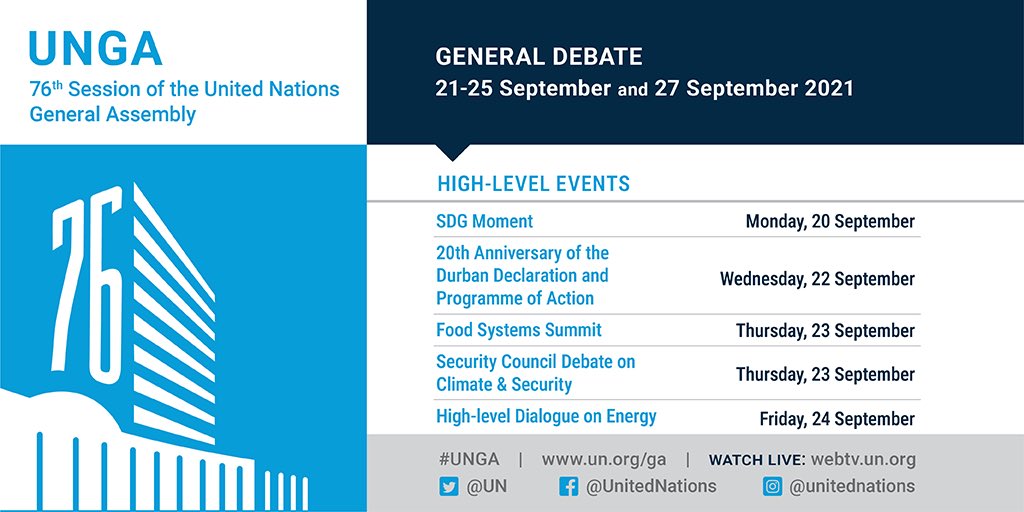
The United Nations General Assembly (UNGA) is the main deliberative, policymaking and representative organ. All 193 Member States of the UN are represented in the General Assembly, making it the only UN body with universal representation.
The six committees of the general assembly include: (1) Disarmament and International Security, (2) Economic and Financial, (3) Social, Humanitarian, and Cultural, (4) Special Political and Decolonization, (5) Administrative and Budgetary, and (6) Legal.
The Security Council:
The United Nations Security Council (UNSC) has primary responsibility for maintaining international peace and security. It is responsible for establishing peacekeeping operations, international sanctions and authorization of military action. It has 15 Members (5 permanent and 10 non-permanent members) with each member having one vote.
The Economic and Social Council:
The United Nations Economic and Social Council (ECOSOC) is a central forum responsible for discussing and coordinating international economic and social issues and formulating policy recommendations. It is the central platform for reflection, debate, and innovative thinking on sustainable development. It has 54 member states, and over 1,600 NGOs have consultative status with the council to participate in the works of the UN.
The International Court of Justice (ICJ):
The International Court of Justice (ICJ), sometimes known as the World Court, is the primary judicial organ of the UN. It is a universal court for international law; its functions are to settle legal disputes between states following international law and gives advisory opinions on legal issues. The ICJ consists of a panel of 15 judges elected by the UN General Assembly and Security Council for nine-year terms.
The UN Secretariat:
The United Nations Secretariat is the administrative organ of the UN, headed by the United Nations Secretary-General and assisted by a staff of international civil servants worldwide. It provides studies, information, and facilities needed by United Nations bodies for their meetings. It also carries out tasks as directed by the Security Council, the General Assembly, the Economic and Social Council, and other bodies.
The Trusteeship Council:
The Trusteeship Council was established in 1945 to provide international supervision for 11 Trust Territories under the administration of seven Member States. It also aimed to prepare the Territories for self-government and independence. By 1994, all Trust Territories had attained self-government or independence. The Trusteeship Council suspended operation on 1 November 1994.
Specialized Agencies of the UN:
The UN specialized agencies are autonomous organizations working with the United Nations. All were brought into relationship with the UN through negotiated agreement, some of which include –
United Nations Educational, Scientific and Cultural Organization (UNESCO)
The International Monetary Fund (IMF)
World Health Organization (WHO)
The World Bank Group (WBG)
International Bank for Reconstruction and Development (IBRD)
Food and Agriculture Organization (FAO)
World Tourism Organization (UNWTO)
World Intellectual Property Organization (WIPO)
World Meteorological Organization (WMO)
United Nations Industrial Development Organization (UNIDO)
Programmes and Funds of the UN:
The United Nations Development Programme (UNDP)
The United Nations Children’s Fund (UNICEF)
The United Nations High Commissioner for Refugees (UNHCR)
The World Food Programme (WFP)
The United Nations Office on Drugs and Crime (UNODC)
The United Nations Population Fund (UNFPA)
The United Nations Conference on Trade and Development (UNCTAD)
The United Nations Environment Programme (UNEP)
The United Nations Relief and Works Agency for Palestine Refugees (UNRWA)
UN Women
UN-Habitat
Successes and Failures of the United Nations:
The U.N. is credited with helping negotiate 172 peaceful settlements and helping more than 30 million refugees. It has provided safe drinking water to more than a billion people and food to millions of people across 80 nations. It has assisted countries with their elections, provided vaccinations for children, helped millions of women with maternal health and protected human rights through some 80 treatise and declarations.
Currently, approximately 100,000 peacekeepers from 120 countries are serving in 13 missions. The U.N. and its agencies have had success in coordinating global efforts against diseases such as HIV/AIDS, Ebola, cholera, influenza, yellow fever, meningitis and COVID-19, and has helped eradicate smallpox and polio from most of the world. Ten U.N. agencies and U.N. personnel have received Nobel prizes for peace.
UN inaction is responsible for a number of ongoing crisis, including Russia’s takeover of part of Ukraine; China occupying disputed territories in South China Sea; the Iraq War; the Israel-Palestine conflict; civil wars in Syria, Yemen, Libya and the Democratic Republic of Congo; and the treatment of Rohingyas in Myanmar, Ughyurs in China and Kashmiris in India.
Despite having many short-comings, the United Nations plays a crucial role in the world. The work of the United Nations reaches every corner of the globe. Although it is best known for peacekeeping, peacebuilding, conflict prevention and humanitarian assistance, there are many other ways the United Nations and its System (specialized agencies, funds and programmes) affect our lives and make a change in the world.

 Track2Training
You must be logged in to post a comment.