
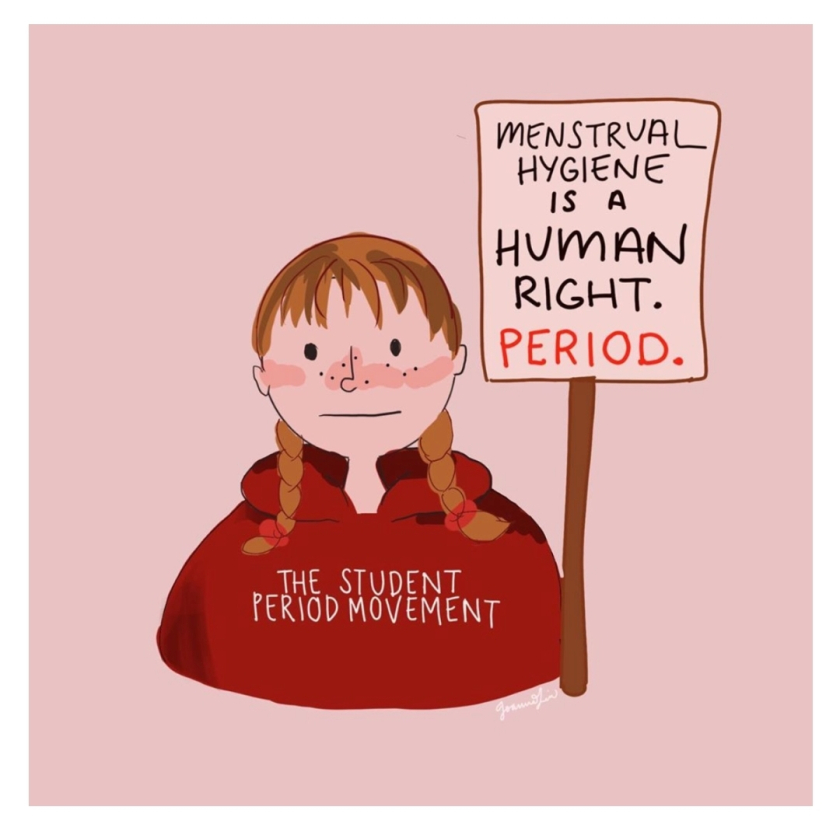
A period should end a sentence, not a girl’s education.
Sadly, in a country where 70% of reproductive diseases are caused by pitiable menstrual hygiene conditions, we’re still missing out on addressing the ‘period poverty’. Period poverty refers to the lack of access to sanitary products due to financial constraints. Lack of access to clean water, lack of toilets with doors, and difficulties disposing of used products are just some of the challenges that women face when trying to manage their periods in a private, safe and dignified manner. The inadequate access to menstrual products and education around hygiene had been a serious barrier in working towards menstrual equity. Period stigma is both a cause and consequence of gender inequality, cultural shame, internalized taboo and dogmatic religious practices that have made initiating a discourse on menstruation a catch-22. The most direct cause-cum-consequence of it is menstruation blood being strictly distinguished from other bodily fluids and being culturally portrayed as dirty, unclean and impure.
Another example of consequence of period stigma can be seen in the famous Ambubachi Mela which celebrates the menstrual time of Goddess Kamakhya where rice holds a huge significance denoted by dhan. However, it’s accompanied by the absurd myth is that when a menstruating woman touches the rice container in her household, then she and her family faces the wrath of Goddess Lakshmi. It is believed that the influx of dhan or wealth gets negatively affected in that particular household. Us, women, live a life of irony don’t we? While Ambubachi signifies fertility and celebrates the child bearing capabilities of women, the ground reality of menstruating women portray a different tale altogether.
It’s unfortunate that even though we’re living in today’s 21st century and everyone knows about it, no one is allowed to talk about it publicly. Films are being made on this, numerous campaigns are going on but the fact is that people still hesitate to utter this word in front of others looms large.
To add further to this paradoxical situation, sanitation facilities are unaffordable by most. Approximately 70 million people in India live in extreme poverty on less than $1.90 dollars per day. Hence for low-income households, the cost of sanitary pads is often unattainable. An average of more than 40% of students in India resort to missing school while menstruating as a consequence of social stigma, isolation, embarrassment and inaccessibility of products. The instances of avoiding school are also ramification for the lack of proper sanitation facilities across the country.
Government has intervened to tackle this issue several times, but to no avail. In fact, in 2017, the Indian government had labelled menstrual products as luxury goods, but fortunately enough, in July of 2018, the Indian government removed the tax, to make the sanitary products more accessible to everyone. Other than this there’s the Janaushadhi Suvidha scheme which aims to provide women with oxo-biodegradable sanitary napkins at a meagre cost of Rs. 2.50/pad across 3,600 Janaushadhi Kendras in the country.
The pandemic has made the situation even more challenging than it already was. It’s well known that the coronavirus outbreak is having a devastating impact on family finances all over the world, but now we see that girls and women are also facing widespread shortages and price hikes on period products, with the result that many are being forced to make do with whatever they can find to manage their period. This can pose a real threat to their health and may increase the risk of infection. Thus, is about time we realise that menstruation is just a biological process and the secrecy surrounding it must go. It is important to normalise and de-stigmatise menstruation, and destroy taboos around this natural process.
 Track2Training
You must be logged in to post a comment.