
“I believe it’s worth thinking about what accountability looks like beyond simply exiling someone. In doing so, we can position ourselves more firmly within the values of social justice.”
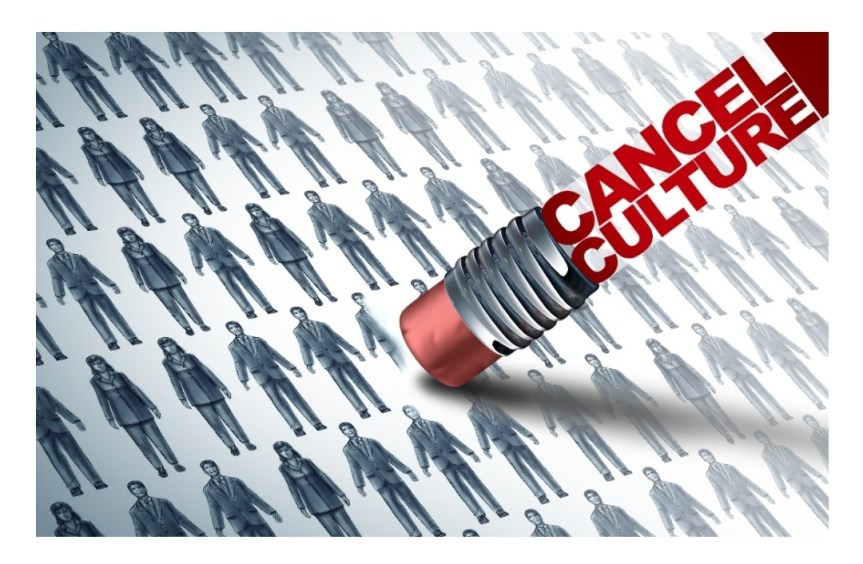
Cancel. It’s dictionary definition is “to destroy the force, effectiveness, or validity of.” Cancel culture, originally started as a means to correct or inform the misguided. However, it has become something much worse. People go along with it because they think it’s a cool trend to follow. They have gone down this spiral of cancel culture and the idea that everything is offensive. Nowadays, anyone and everyone is getting cancelled. It has become so widespread that by now people think of it to be a normality.
But it shouldn’t be.
The problem arises when it turns into a bunch of people only doing it so that they can show everyone else how good of a person they are. Then everyone tries to out-do each other and ultimately, you end up with a bunch of people wasting their time going through years and years of tweets to find the one wrong thing that someone said and call them out on that. All this, despite the fact that society didn’t care about those things at the time and the person has clearly changed since then. It’s quintessential to realize that today’s morals cannot be applied to something that happened ten years ago.
It should be understood that there’s a huge difference between “I dislike or disagree with this person, and it’s important enough to me that I will not personally patronize them” and “I dislike or disagree with this person, therefore they shouldn’t have a career at all.” Lamentably, the latter view pretty much plagues the minds of most social media users.
Cancel culture is based on the premise that anyone who offends you does so with deliberation, intention, and (usually) malignant motivation. Cancel culture uses public shaming and group complaining to attempt to induce permanent harm to those with whom they take exception. It uses the legal system to induce financial crisis, uses the publicity system to amplify their voice, and generally acts like that kid you see in kindergarten who has to play alone because they can’t be around other people without attacking them for not submitting to their desire to dominate a cultural or economic space. These kinds of people tend to regularly miss noticing that the world and other people (by and large) could not possibly care less about them, if they even know they exist. These kinds of people tend to assume that their own perspective is always the most important and relevant one, and try to get attention by amplifying outrage to culturally blackmail perspectives and people with whom they disagree. Then, they refuse to accept the concerned person’s apology when they do apologize and admit it was wrong and insensitive. It just ends up turning into virtue signalling for selfish reasons. Worst of all, they are willing to injure others and ruin lives to do it.
Personally, I find it to be an appalling display of self- absorption and egotism by people who, I think, behave and seem to be so emotionally insensitive that they just stop caring about anyone but themselves. The worst of the lot always seems to be the same personality. Cancel culture will die the moment this becomes more apparent. The good news is, that’s probably not that far off. The sad news is that in the meanwhile, they’re deriding and tarnishing a far longer and better tradition of social and cultural discourse that actually delivers on change.
It’s generally organized by malicious people who only gather together to form groups of hatred and intolerance for anything that they deem unfit. They probably have never let go of a grudge in their life and are also very likely to be the ones who take a sick pride in that. Their circles are usually only held together by common bonds of hatred, but quickly implode upon themselves the moment they can gather a group to harm one another. They tend to be ruthless, claiming virtue but displaying a twisted set of morals that only fit their own bill. They try and sell you a picture they’ve created from fragments of reality, out of desperation to advance their narrative (i.e., that their upset is more important than anything else in the world) and, sadly, most will probably buy into it if they are not aware of their intentions.
Their logic, too, struggles to hold up, for example, the “once a racist, always a racist” argument. From this perspective, an ignorant 15 year old cannot possibly change and become more educated or grown as a human being. Their comments imply that the people they’re fighting to stop never grow, never change their views on particular topics and are social scum because of comments, posts, tweets, etc. from years ago. It’s embarrassing to say the least. The best part is the likely hypocrisy. I’m willing to wager that even they, themselves, have committed ignorance acts in the past, which just haven’t been exposed, but they don’t think about that.
These people are willing and happy to see others suffer and that’s pretty much the antithesis of the intent of public discourse and even public protest. Some of them, however, outgrow this behavior and learn more productive ways to advance change. Then again, these would be the ones that are actually interested in change, not retribution.
We need to become a more tolerant society not only in matters of differences in sex, sexual preference, race, religion, and nationality but also in showing the willingness to allow the existence of opinions or behavior that one does not necessarily agree with and not seek to harm the offender. It may be a fine line that we walk between a legitimate cancel and ill-advised one, but it’s a line that must be drawn to bring civility back to society.
We need to come up with ways to hold people accountable for their wrongdoing and yet at the same time remain in touch with their humanity enough to believe in their capacity to be transformed.
– Bell Hooks
 Track2Training