
In today’s digital research ecosystem, a researcher’s identity is just as important as the quality of their work. With thousands of researchers sharing similar names, multiple institutional affiliations, and publications spread across different journals and databases, maintaining a consistent academic profile has become increasingly challenging. This is where ORCID (Open Researcher and Contributor ID) plays a crucial role.
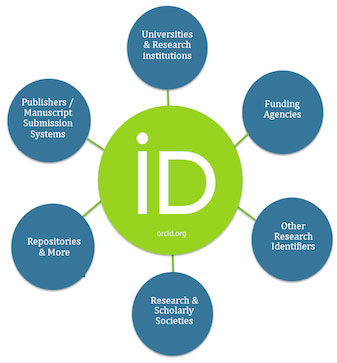
An ORCID iD is a unique, persistent digital identifier that distinguishes you from every other researcher in the world. Whether you are an undergraduate student beginning your first research project, a postgraduate student, a PhD scholar, a faculty member, or an experienced scientist, creating an ORCID iD should be one of your first steps in building a professional research identity.
This article explains what ORCID is, why every researcher should have one, how to create an ORCID account, and how to make the most of its features.
What is ORCID?
ORCID stands for Open Researcher and Contributor ID. It is a non-profit organization that provides researchers with a permanent 16-digit digital identifier, known as an ORCID iD.
A typical ORCID iD looks like this:
https://orcid.org/0000-0002-1825-0097
Unlike an institutional email or university profile, your ORCID iD remains with you throughout your career, regardless of where you study or work.
The primary purpose of ORCID is to eliminate confusion caused by:
- Researchers with identical or similar names
- Name changes after marriage or other personal reasons
- Different spellings of names across journals
- Multiple institutional affiliations
- Publications indexed in different databases
Your ORCID iD acts as your lifelong academic identity.
Why ORCID is Essential for Every Researcher
1. Unique Research Identity
Many researchers share common names. For example, searching for “S. Sharma” or “A. Kumar” may produce thousands of results across various databases.
ORCID assigns you a globally unique identifier that permanently links all your scholarly activities to you and only you.
2. Required by Leading Publishers
Today, many international publishers either recommend or require authors to provide an ORCID iD during manuscript submission.
Leading publishers and journals recognize ORCID because it ensures accurate attribution of research outputs and author identities.
3. Simplifies Manuscript Submission
Instead of repeatedly entering your personal information for every journal submission, ORCID can automatically populate:
- Name
- Affiliation
- Publications
- Funding information
- Employment history
This saves time and reduces errors.
4. Improves Research Visibility
An ORCID profile serves as an online academic portfolio that showcases your:
- Journal articles
- Conference papers
- Books
- Book chapters
- Datasets
- Software
- Peer review contributions
- Awards
- Grants
Because ORCID is recognized worldwide, collaborators and institutions can easily discover your work.
5. Connects Multiple Research Platforms
ORCID integrates seamlessly with major scholarly databases and platforms, including:
- Crossref
- DataCite
- Scopus
- Web of Science
- Europe PMC
- Zenodo
- Figshare
- Dimensions
- OpenAlex
This allows publications and other research outputs to be added automatically to your ORCID record.
6. Supports Grant Applications
Many funding agencies now request ORCID during grant submissions.
Since your ORCID profile already contains your education, employment history, publications, and research outputs, completing grant applications becomes much easier.
7. Facilitates International Collaboration
Potential collaborators often verify researchers using ORCID before initiating partnerships.
Having a complete ORCID profile demonstrates professionalism and transparency.
8. Ensures Long-Term Academic Recognition
Even if you:
- Change universities
- Move to another country
- Change your email address
- Change your surname
- Retire
Your ORCID iD remains the same.
This permanence makes ORCID one of the most reliable academic identifiers available.
How to Create an ORCID iD
Creating an ORCID account is completely free and takes only a few minutes.
Step 1: Visit the ORCID Website
Go to the official ORCID website:
Click Register.
Step 2: Enter Personal Information
Fill in:
- First name
- Last name
- Email address
- Additional email (recommended)
- Password
Using two email addresses is advisable so that you retain access even if one account becomes inactive.
Step 3: Set Privacy Preferences
Choose whether your information is:
- Public
- Trusted parties only
- Private
Most researchers keep their professional information public to maximize visibility.
Step 4: Accept Terms and Create Account
Verify your email address.
Your ORCID iD is now created and can immediately be used in journal submissions, conference registrations, and grant applications.
Completing Your ORCID Profile
Creating an account is only the first step. A well-maintained ORCID profile is significantly more valuable.
Add the following information:
Personal Information
- Biography
- Keywords
- Research interests
- Website
- Social media (optional)
Education
Include:
- Bachelor’s degree
- Master’s degree
- PhD
- Postdoctoral positions
Employment
List:
- Universities
- Research institutes
- Government organizations
- Industry affiliations
Publications
Import publications automatically from supported databases or add them manually if needed.
Funding
Add grants, fellowships, scholarships, and funded research projects.
Professional Activities
Include:
- Editorial board memberships
- Peer review work
- Conference organization
- Invited talks
- Professional memberships
Best Practices for Using ORCID
To maximize the value of your ORCID profile:
- Include your ORCID iD in every manuscript submission.
- Add it to your institutional profile.
- Mention it in your CV and resume.
- Include it in conference abstracts.
- Display it on your personal website.
- Add it to grant applications.
- Include it in your email signature.
- Link it to your researcher profiles where supported.
- Review and update your profile regularly.
Keeping your ORCID profile current ensures that your scholarly record remains accurate and comprehensive.
Common Mistakes to Avoid
Many researchers create an ORCID iD but fail to use it effectively. Avoid these common pitfalls:
- Leaving the profile incomplete.
- Forgetting to verify your email address.
- Not importing your publications.
- Creating multiple ORCID accounts.
- Neglecting to update employment or affiliation changes.
- Omitting your ORCID iD from manuscript submissions and grant applications.
A well-maintained profile is far more useful than an empty one.
ORCID Throughout Your Research Career
ORCID provides value at every career stage:
- Students can establish a professional identity before publishing their first paper.
- Master’s and PhD scholars can connect theses, conference papers, and journal articles.
- Early-career researchers can build a visible portfolio that supports job and funding applications.
- Faculty members can showcase publications, supervision, grants, and professional service.
- Senior researchers can maintain a complete and authoritative scholarly record that reflects decades of contributions.
The Future of Research Identity
As scholarly communication becomes increasingly digital and interconnected, persistent identifiers are becoming essential. ORCID is no longer just an optional profile—it is a foundational component of modern research infrastructure. Universities, publishers, funding agencies, repositories, and indexing services are steadily integrating ORCID into their workflows to improve transparency, reduce administrative burden, and ensure accurate attribution of scholarly work.
Researchers who adopt ORCID early are better positioned to manage their academic record, enhance discoverability, and demonstrate the full breadth of their contributions to the global research community.
Final Thoughts
Creating an ORCID iD is one of the simplest yet most impactful steps a researcher can take. It is free, globally recognized, easy to maintain, and increasingly expected by journals, publishers, and funding organizations. Beyond simplifying administrative tasks, ORCID strengthens your professional identity, increases the visibility of your research, and ensures that your scholarly contributions are accurately attributed throughout your career.
Whether you are preparing your first research paper or have an extensive publication record, an ORCID iD serves as your permanent digital identity in the academic world. If you have not created one yet, now is the perfect time to do so. Investing a few minutes today can save countless hours in the future while helping your research receive the recognition it deserves.


You must be logged in to post a comment.