
Introduction
The rapid urbanization and industrialization of the nineteenth and early twentieth centuries created overcrowded cities, poor housing conditions, pollution, traffic congestion, and social inequality. In response, several planners, architects, and social reformers proposed visionary or utopian concepts for creating healthier, more organized, and aesthetically pleasing cities. These concepts laid the foundation of modern town planning and continue to influence contemporary urban development. Among the most influential planning concepts are the Garden City, City Beautiful, Linear City, Broadacre City, Radiant City, and Neighborhood Unit.
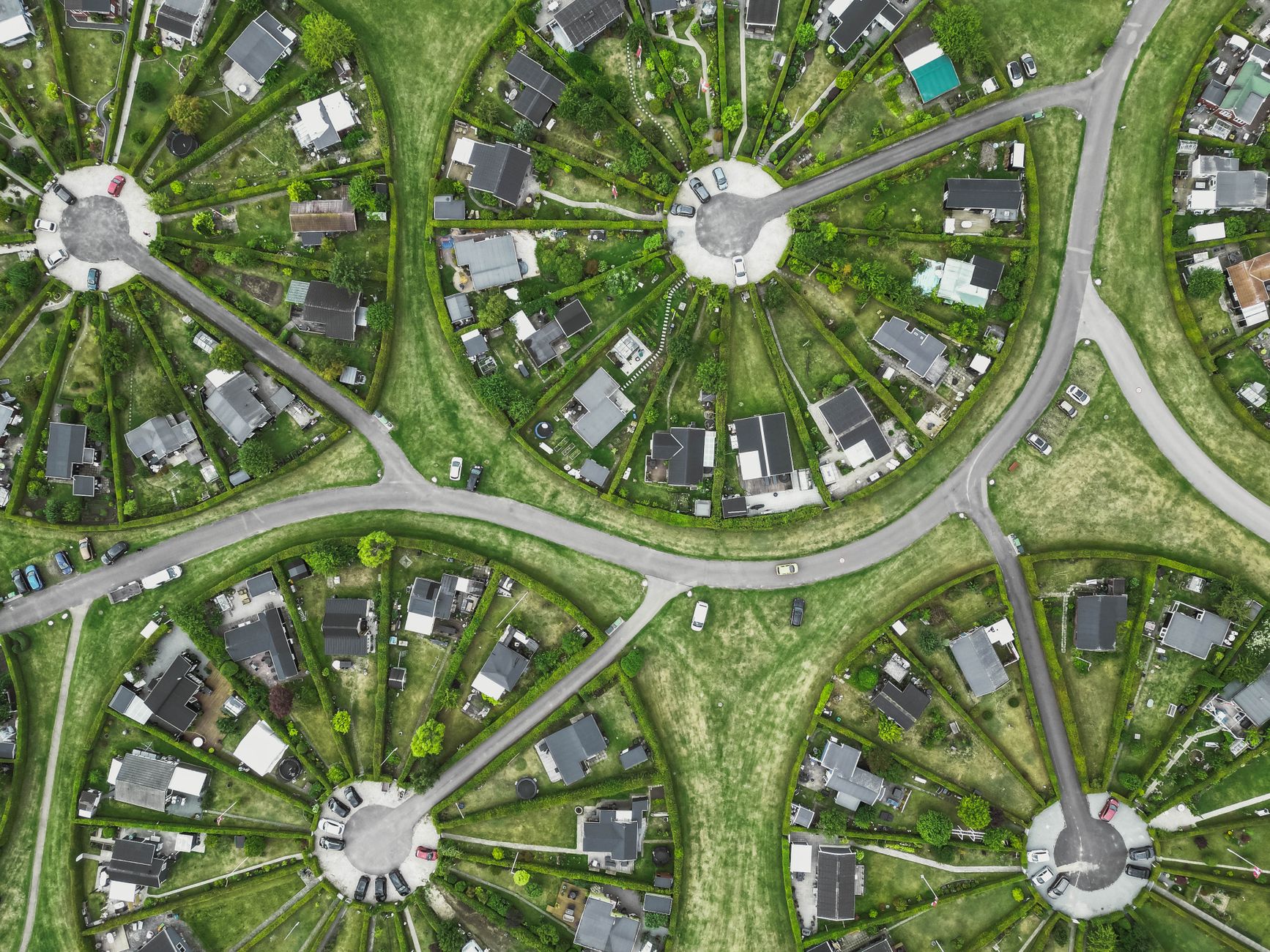
1. Utopian Planning Concepts
A utopian city refers to an ideal or model settlement designed to achieve social harmony, economic prosperity, environmental sustainability, and improved quality of life. Utopian planners believed that the physical form of a city could shape human behavior, promote social welfare, and reduce urban problems.
Objectives
- Improve living conditions.
- Eliminate overcrowding.
- Promote social equality.
- Integrate nature with urban development.
- Enhance public health.
- Encourage balanced economic growth.
- Create aesthetically attractive cities.
2. Garden City Concept
Proponent
Sir Ebenezer Howard (1850–1928)
Year
1898
Publication
Garden Cities of To-morrow
Background
Howard developed the Garden City concept as a response to the poor environmental and social conditions created by the Industrial Revolution. He proposed self-contained communities combining the advantages of urban and rural life while avoiding their disadvantages.
The Three Magnets Theory
Howard explained migration using three “magnets”:
- Town – Employment, industries, entertainment, but overcrowding and pollution.
- Country – Fresh air, open spaces, agriculture, but limited employment.
- Town-Country – Combines the advantages of both while eliminating their disadvantages.
Planning Principles
- Population limited to approximately 32,000.
- City surrounded by a permanent green belt.
- Mixed land use.
- Self-contained community.
- Public ownership of land.
- Radial road network.
- Central public park.
- Industrial zone located at the periphery.
- Efficient public transport.
- Agricultural land surrounding the city.
Advantages
- Healthy living environment.
- Reduced congestion.
- Balanced development.
- Self-sufficiency.
- Environmental conservation.
- Better quality of life.
Limitations
- Difficult to implement in rapidly growing cities.
- High land acquisition costs.
- Limited employment opportunities in smaller towns.
- Urban expansion often exceeded planned population limits.
Examples
- Letchworth Garden City (England)
- Welwyn Garden City (England)
3. City Beautiful Movement
Proponent
Daniel Burnham
Period
Late nineteenth and early twentieth century
Background
The City Beautiful Movement emerged in the United States after the 1893 World’s Columbian Exposition in Chicago. It emphasized beautification, monumental architecture, and civic design, believing that beautiful cities would inspire civic pride and moral improvement.
Principles
- Grand boulevards.
- Monumental public buildings.
- Wide avenues.
- Public parks.
- Civic centers.
- Symmetrical layouts.
- Landscaped open spaces.
- Formal urban design.
Objectives
- Improve city aesthetics.
- Promote civic pride.
- Encourage orderly development.
- Attract investment and tourism.
- Enhance public spaces.
Advantages
- Attractive urban landscapes.
- Improved public spaces.
- Better civic identity.
- Encouraged investment.
- Enhanced tourism.
Limitations
- Focused more on aesthetics than social issues.
- Neglected affordable housing.
- Expensive implementation.
- Limited attention to environmental sustainability.
Examples
- Washington, D.C. (McMillan Plan)
- Chicago Plan (1909)
- Canberra, Australia (partly influenced)
4. Linear City Concept
Proponent
Arturo Soria y Mata
Year
1882
Background
The Linear City concept proposed that urban development should occur in a long, narrow corridor along major transportation routes instead of expanding in all directions.
Planning Principles
- Development follows a linear transport corridor.
- Railway or road forms the central spine.
- Residential, commercial, and industrial uses arranged along the corridor.
- Green spaces on both sides.
- Unlimited linear expansion.
- Equal accessibility for all residents.
Advantages
- Efficient transportation.
- Reduced traffic congestion.
- Controlled urban expansion.
- Better infrastructure provision.
- Easy access to services.
- Preservation of agricultural land.
Limitations
- Long travel distances across the corridor.
- Difficult utility management over long distances.
- Limited flexibility.
- Unsuitable for very high-density development.
Examples
- Madrid suburban developments (Spain)
- Volgograd (Russia) exhibits partial linear characteristics.
5. Radiant City (Ville Radieuse)
Proponent
Le Corbusier
Year
1924–1935
Background
Le Corbusier proposed the Radiant City to accommodate increasing urban populations using modern architecture and advanced transportation systems.
Principles
- High-rise residential towers.
- Large open green spaces.
- Functional zoning.
- Wide roads.
- Separation of pedestrian and vehicular traffic.
- Modern infrastructure.
- High-density development.
Advantages
- Efficient land utilization.
- Large green open spaces.
- Improved sunlight and ventilation.
- Organized transportation.
- Modern infrastructure.
Limitations
- Reduced human-scale interaction.
- Excessive dependence on automobiles.
- Monotonous urban form.
- Weak neighborhood identity.
Influence
The Radiant City influenced Chandigarh, Brasília, and several post-war housing projects.
6. Broadacre City
Proponent
Frank Lloyd Wright
Year
1932
Background
Broadacre City proposed decentralized development where every family would own approximately one acre of land.
Principles
- Low-density development.
- Individual land ownership.
- Automobile-oriented planning.
- Decentralized employment.
- Green open spaces.
- Self-reliant communities.
Advantages
- Healthy environment.
- Privacy.
- Large open spaces.
- Reduced congestion.
Limitations
- Urban sprawl.
- High infrastructure costs.
- Automobile dependency.
- Inefficient public transport.
7. Neighborhood Unit Concept
Proponent
Clarence Arthur Perry
Year
1929
Background
The Neighborhood Unit concept focused on designing residential communities around the daily needs of residents, particularly children.
Principles
- Population of approximately 5,000–9,000.
- Elementary school at the center.
- Walking distance to public facilities.
- Local shopping centers.
- Internal road hierarchy.
- Parks and playgrounds.
- Community facilities within easy reach.
Advantages
- Strong community identity.
- Safe residential environment.
- Reduced through traffic.
- Better accessibility.
- Walkable neighborhoods.
Limitations
- May reduce mixed land uses.
- Less adaptable to rapid urban growth.
- Can increase commuting if employment is distant.
Comparison of Major Planning Concepts
| Concept | Proponent | Main Objective | Major Features | Limitations |
|---|---|---|---|---|
| Garden City | Ebenezer Howard | Balance town and country | Green belt, self-contained city, mixed land use | Population limits, costly implementation |
| City Beautiful | Daniel Burnham | Beautification | Boulevards, parks, monumental buildings | Limited social focus |
| Linear City | Arturo Soria y Mata | Controlled expansion | Development along transport corridor | Long infrastructure networks |
| Radiant City | Le Corbusier | High-density modern city | Towers, zoning, open spaces | Weak community interaction |
| Broadacre City | Frank Lloyd Wright | Decentralized living | Low density, individual plots | Urban sprawl |
| Neighborhood Unit | Clarence Perry | Community planning | School-centered, walkable neighborhoods | Limited employment integration |
Influence on Modern Planning
Many principles from these planning concepts continue to shape contemporary urban planning:
- Garden City → Green belts, satellite towns, eco-cities.
- City Beautiful → Urban design, public squares, heritage conservation.
- Linear City → Corridor development and Transit-Oriented Development (TOD).
- Radiant City → High-rise housing and functional zoning.
- Neighborhood Unit → Residential planning, walkable communities, and mixed-use neighborhoods.
- Broadacre City → Suburban development and low-density residential planning.
Modern planning integrates these ideas with sustainability, climate resilience, smart technologies, and participatory governance to create more inclusive and livable cities.
Conclusion
The utopian planning concepts developed by visionaries such as Ebenezer Howard, Daniel Burnham, Arturo Soria y Mata, Le Corbusier, Frank Lloyd Wright, and Clarence Perry represent milestones in the evolution of town planning. Although each concept emerged in response to the specific challenges of its time, their principles continue to influence urban development across the world. Contemporary planning combines the environmental sustainability of the Garden City, the aesthetic vision of the City Beautiful Movement, the transport efficiency of the Linear City, the functional organization of the Radiant City, and the community-oriented approach of the Neighborhood Unit. Together, these concepts provide valuable lessons for designing cities that are sustainable, resilient, inclusive, and responsive to the needs of future generations.


You must be logged in to post a comment.