
By Shashikant Nishant Sharma
A Bachelor of Planning (B.Plan) is no longer limited to preparing conventional master plans. Today, planning graduates are increasingly working at the intersection of urban development, GIS, mobility, climate resilience, housing, infrastructure, data analytics, digital governance and real estate.
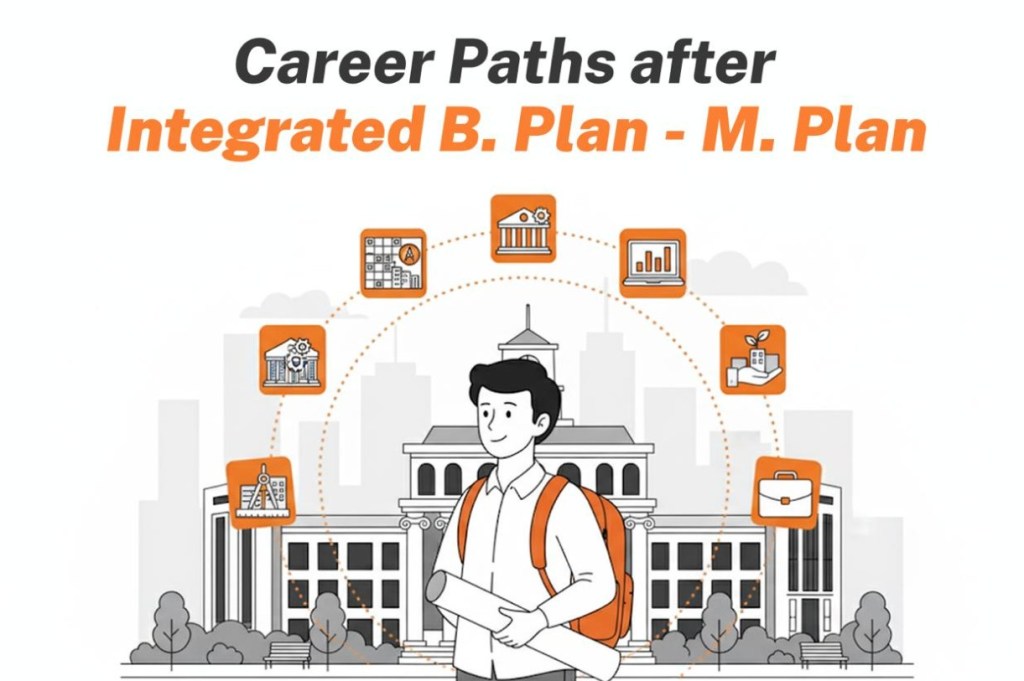
India’s continuing urban transformation is creating demand for professionals who can understand cities as complex systems and convert spatial data, policies and community needs into practical development strategies. Current programmes such as AMRUT 2.0, PMAY-U 2.0 and the National Urban Digital Mission (NUDM) demonstrate the growing importance of urban infrastructure, affordable housing, water management, spatial planning and digital urban governance.
Where Can a B.Plan Graduate Build a Career?
1. Urban & Development Planning
B.Plan graduates can work with:
- Urban Local Bodies and Development Authorities
- Town and Country Planning Departments
- Planning consultancies
- Infrastructure and real-estate companies
- Urban development programmes and projects
Typical roles include Assistant Planner, Junior Planner, Urban Planner, Development Planner and Planning Consultant.
2. GIS, Geoinformatics & Spatial Analytics
GIS has become one of the strongest career-enhancing skills for planning graduates. Professionals can work in:
- GIS mapping and spatial analysis
- Land-use and land-cover analysis
- Urban growth modelling
- Development plan preparation
- Remote sensing and satellite-image analysis
- Spatial databases and geospatial decision support
The growing digitalisation of urban governance through NUDM further strengthens the relevance of geospatial and digital skills in the urban sector.
3. Transport & Mobility Planning
With expanding metropolitan regions, metro systems, public transport and sustainable mobility initiatives, transport planning is becoming an important specialization.
Career areas include:
Transport Planner, Mobility Analyst, Traffic & Accessibility Analyst, Transit Planner, TOD Consultant and Transport Data Analyst.
Students interested in this field should develop skills in GIS, transport modelling, accessibility analysis, travel behaviour and Transit-Oriented Development (TOD).
4. Housing & Real Estate Planning
Affordable housing, redevelopment, land management and township development create opportunities in both the public and private sectors.
Graduates can work in:
Housing Planning, Real Estate Consulting, Township Planning, Community Development, Land Development and Urban Redevelopment.
PMAY-U 2.0 continues to provide a major policy and implementation framework for urban housing, including affordable housing initiatives and project-level implementation.
5. Environmental & Climate-Resilient Planning
Cities are increasingly dealing with heat stress, flooding, water scarcity, air pollution and ecological degradation. This is expanding opportunities for planners with environmental and climate expertise.
Career areas include:
Climate Resilience Planning, Environmental Planning, Disaster Risk Reduction, Blue-Green Infrastructure, Urban Water Management, Sustainable Development and Nature-Based Solutions.
6. Smart Cities, Urban Technology & Digital Planning
The future planner will increasingly work with technology.
Emerging areas include:
Urban Data Analytics, Digital Twins, Artificial Intelligence in Planning, IoT-enabled urban systems, digital mapping, urban dashboards and smart infrastructure.
NUDM is developing shared digital infrastructure, standards and platforms for India’s urban ecosystem, making digital skills increasingly relevant for planning professionals.
7. Infrastructure & Project Consultancy
Large urban projects require planners who can work with architects, engineers, economists, environmental professionals and government agencies.
Opportunities exist in:
- Infrastructure consultancy
- Urban and regional development projects
- Water and sanitation projects
- Urban transport projects
- Project planning and monitoring
- DPR preparation
- Feasibility and impact studies
- PPP and implementation support
AMRUT 2.0, for example, includes substantial work related to water supply, sewerage/septage management, water-body rejuvenation, parks and urban planning reforms, creating multidisciplinary project environments in which planning expertise is relevant.
8. Policy, Research & Development Sector
Planning is also a strong career path for students interested in research and public policy.
Graduates can work with:
Research institutions, think tanks, NGOs, development organisations, universities, government programmes and international development projects.
Possible roles include:
Research Associate, Policy Analyst, Project Coordinator, Urban Development Specialist and Planning Researcher.
9. Government Career Opportunities
B.Plan graduates can explore opportunities in:
Municipal corporations, development authorities, state planning departments, urban development agencies, transport agencies and government-funded urban programmes, depending on the eligibility criteria of individual recruitment notifications.
Government careers may provide opportunities in planning, implementation, monitoring, GIS, infrastructure development and policy support.
Skills That Can Make a B.Plan Graduate More Employable
A planning degree provides the foundation, but employability increasingly depends on the ability to combine planning knowledge with practical digital and analytical skills.
A strong B.Plan graduate should aim to develop:
Core Planning
- Land-use planning
- Development control regulations
- Urban and regional planning
- Housing and community planning
- Planning legislation and policy
Digital & Analytical
- QGIS / ArcGIS
- AutoCAD
- Remote Sensing
- Spatial analysis
- Excel and data analysis
- Basic statistics
- Python/R for planning analytics
- Urban data visualisation
Emerging Skills
- Artificial Intelligence for planning
- Digital twins
- Climate-risk assessment
- Urban mobility analytics
- TOD and accessibility analysis
- Sustainable infrastructure
- Participatory planning
Professional Skills
- Report writing
- Presentation and communication
- Stakeholder consultation
- Project management
- Research and critical thinking
What Salary Can a B.Plan Graduate Expect?
There is no single salary figure for planning graduates because compensation varies significantly by city, employer, role, software skills, project experience and specialization.
Fresh graduates commonly begin in junior planning, GIS, research, consultancy, infrastructure or project-support positions. With experience and specialization, career progression can move toward Senior Planner, Project Manager, Urban Development Specialist, GIS/Spatial Analyst, Transport Planner, Consultant or Policy Specialist.
Rather than choosing a career based only on the starting package, students should evaluate skills gained, project exposure, portfolio quality and long-term specialization.
What Should You Do During B.Plan?
The most employable graduates are not those who only complete studio assignments; they are those who build evidence of what they can actually do.
During the degree, try to develop:
1 strong GIS portfolio + 1 planning/research project + 1 internship + 1 real-world case study + proficiency in key planning software + strong presentation and report-writing skills.
A portfolio demonstrating land-use analysis, GIS mapping, urban growth analysis, mobility studies, neighbourhood planning or development proposals can significantly strengthen applications.
Higher Studies After B.Plan
After B.Plan, students can pursue an M.Plan or other specialised postgraduate programmes in areas such as:
- Urban Planning
- Regional Planning
- Transport Planning
- Environmental Planning
- Housing
- Urban Design
- Infrastructure Planning
- GIS & Geoinformatics
- Urban Development
- Disaster Management
Students interested in research and academia can subsequently pursue a Ph.D. in Planning, Urban Studies, Geography, Architecture, Transport or related fields, subject to programme eligibility.
The Future of Planning Is Interdisciplinary
The planner of 2026 and beyond will not work in isolation.
Tomorrow’s planning professional may need to understand GIS + mobility + climate + data + AI + housing + infrastructure + governance + community participation.
India’s urban transformation is creating a need for planners who can move beyond conventional map-making and contribute to evidence-based, inclusive, climate-responsive and technology-enabled development. India is also expected to experience a major increase in its urban population over the coming decades, reinforcing the long-term importance of effective urban and regional planning.
Final Takeaway
B.Plan is not just a degree for becoming an “urban planner.”
It can be a gateway to careers in urban planning, GIS, transport and mobility, housing, real estate, infrastructure, environmental planning, climate resilience, smart urban technology, policy, research and project consultancy.
The degree gives you the foundation.
Your specialization, technical skills, internships, portfolio, research experience and ability to work with real urban problems will determine how far you can take your planning career.
Build the skills. Build the portfolio. Understand the city. Shape the future.
#BPlan #UrbanPlanning #TownPlanning #CareerInPlanning #UrbanPlanner #GIS #TransportPlanning #SmartCities #ClimateResilience #UrbanDevelopment #PlanningStudents #ArchitectureAndPlanning #SpatialPlanning #UrbanMobility #GISCareer


You must be logged in to post a comment.