Beginning the School Year With Connections: 2018

I have written before about the beginning of the school year, Beginning the School Year: It’s About Connections Not Content.

I begin all classes focusing on having the students make connections between each other and with me.  I want students to learn about one another in a personal way. I want to learn about my students so my instructional strategies can be more personalized and tailored to their needs and interests.

As we begin this new school year, I want to share my own ideas for what I believe represent best practices for doing so. I have the following goals for beginning the school year:

  • To have the learners get to know one another and if they do know one another, to deepen that understanding.
  • To have the learners get to know me as an educator.
  • To set the climate that the classroom will experiential, engaging, fun, and student-centric.
  • To begin the process of having learners learn to solve problems as a group and work cooperatively with one another.
  • To begin creating a supportive climate – where learners support one another and I support their learning efforts.
  • To give the message that social-emotional learning is important.
  • To give the message that we will use our bodies, art, team building, problem solving, and interactions with classmates in the classroom.
  • To have the learners take ownership of their classroom.

What should also be obvious from this list is what is not on it – namely a focus on content-driven instruction during the first days of school.

These are the activities I used on the first day of school with my 2018 gifted classes of 2nd to 6th grade students (some similar to past beginning of the year activities and some new ones):

Thumball Ice Breaker

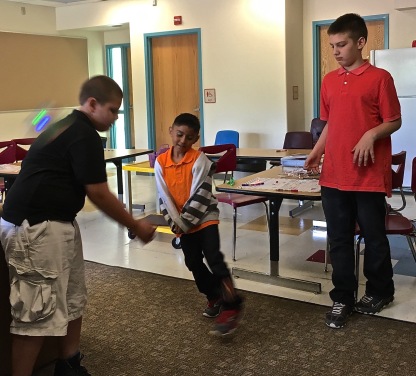
Learners arere asked to form a circle to participate in a Thumball Ice Breaker.

1004_top

A learner tosses it to another learner. The catcher then responds to the prompt closest to her or his left them. After doing so, the learner throws it to another learner. I typically do two to three rounds where each learner gets the ball during a round. Example prompts include:

  • Three Wishes
  • Happiest Memory
  • Three Yummy Foods
  • Three Gross Foods
  • Favorite TV Show or Movie
  • Best Book or Author
  • Great Vacation Place
  • Funniest Cartoon

Warp Speed

As a former adventure educator, I have a fondness for team building and group problem solving activities, and regularly incorporate them into my classroom. A good list of these types of activities can be found on Teampedia.

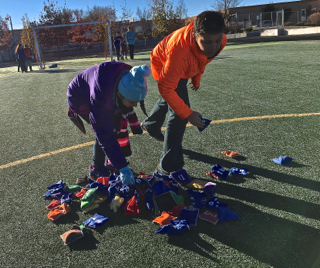
Toss the ball around the circle until everyone has caught it once and it is returned to the leader. For Warp Speed, you need to establish a pattern of tossing one object around the group. Once the pattern has been established, ask the group to see how quickly they can move the object through the pattern with each person touching it in the order that has been established. Time this, and give the group several opportunities to improve their time (http://www.lifeway.com/studentministry/2014/07/07/game-warp-speed/).

IMG_4901

As each effort is timed with the 3 second penalties per drop, I have them practice mental math. I show them their times as recorded via my iPhone, ask them to multiple the number of drops times 3 and then add this total to their time. On subsequent efforts, I ask them to subtract the difference. Later they compare their improvements.

Time to Take a Selfie Icebreaker

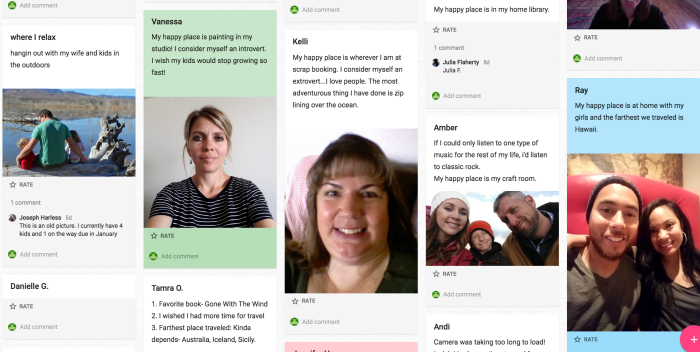
I found this activity via Caitlin Tucker’s post Padlet: Time to Take a Selfie Icebreaker https://catlintucker.com/2018/07/selfie-icebreaker/

First, teachers create a Padlet wall, title it “Time to Take a Selfie,” and provide a prompt with questions for students to answer. Below is a list of questions I have used to encourage students to share something about themselves.:

  • Where is your happy place?
  • What is the most adventurous thing you have ever done?
  • What is the furthest place you have traveled?
  • What is something you like about yourself?
  • What is your favorite story (book or movie)?
  • Do you consider yourself an introvert, an extrovert, or a mix? Explain.
  • What is one thing you wish you had more time for in your life?
  • What do you do to relax?
  • When you are not at school, what do you spend most of your time doing?
  • What is your most prized possession? Where did it come from and why do you love it?
  • If you could only listen to one genre/type of music for the rest of your life, what would it be?
  • Think about the best class you’ve ever had. What made that class so special?

2018-08-12_1139

(from my student teachers)

Jenga Ice Breaker

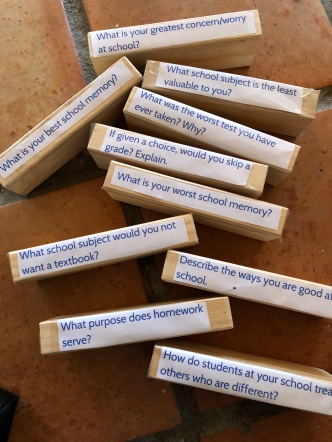
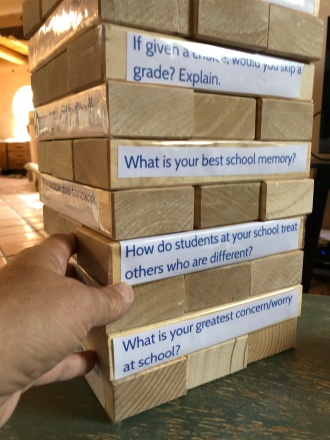
This is the Jenga game with the addition of icebreaker questions. It’s very simple to make. I used the Giant Tumbling Timbers for increased suspense but a smaller, generic Jenga game can be used. I found and typed up some icebreaker questions (examples can be found at https://funattic.com/76-fun-icebreaker-questions.htm), and taped them to the game pieces. It’s played like regular Jenga, but you have to answer the question on whatever piece you pull.

IMG_1311.jpgIMG_1308.jpg

LED Enhanced All About Me Posters

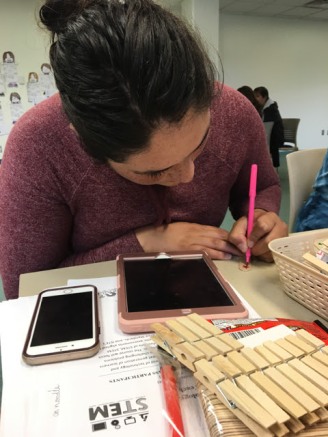
IMG_4906IMG_4899

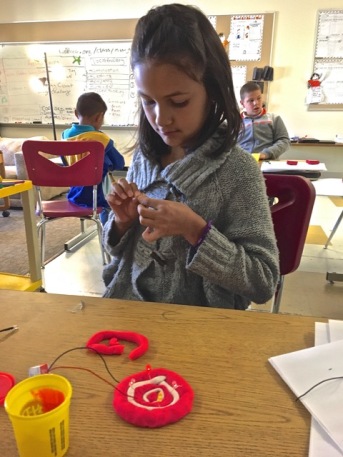
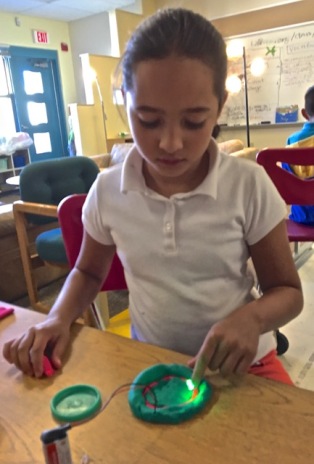
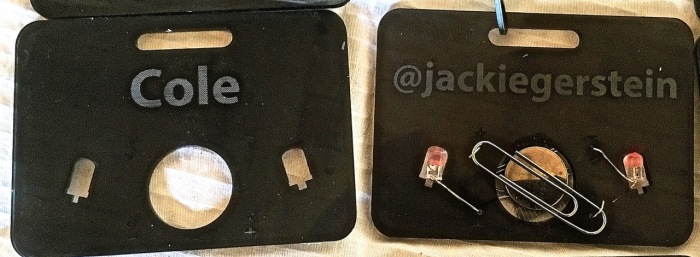
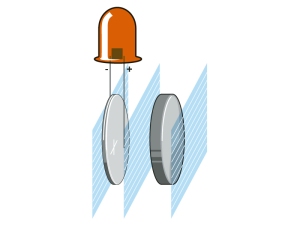
I like using the All About Me posters at the beginning of the school year as it lets me know a lot about the learners in a very short time. I also use them to decorate my classroom walls. Since I have been involved in maker education, I show the kids how to use LED lights creating circuits with copper tape. They use these materials to create LED enhanced All About me Posters.

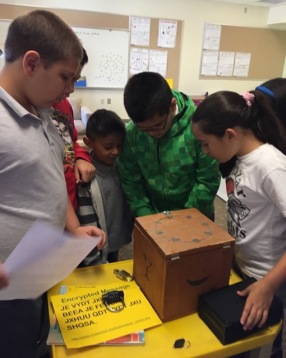
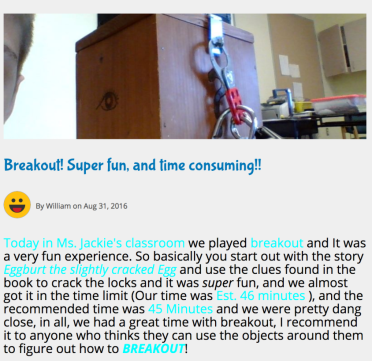
Eggbert the Slightly Cracked Egg: A Breakout Game

Story: Uses the children’s story, Eggbert: The Slightly Cracked Egg. Cast out of the refrigerator because of a small crack, Eggbert sets out into the world, using his talent for painting to try to blend in. Eventually he realizes that cracks are everywhere and reminds us all that our flaws are perfectly natural.

Topic Theme: This cross-curricular BreakoutEDU activities incorporates English, Math, and Social Studies standards as well as skills such as problem-solving and team building. I use this in the beginning of the year with my gifted students to reinforce that being different has its advantages.

Here are the specific details how to set-up and facilitate this Breakout Edu game: https://usergeneratededucation.wordpress.com/2016/09/04/eggbert-the-slightly-cracked-egg-a-breakout-edu-game/

img_49572016-08-31_1726.png

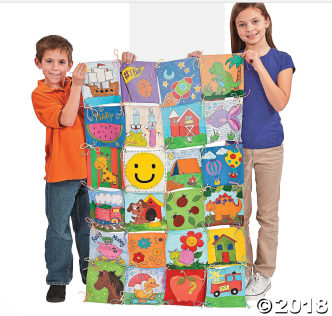
DIY Operation Cooperation Classroom Quilt

This kit can be purchased from Oriental Trading Post – http://www.orientaltrading.com/diy-operation-cooperation-classroom-quilt-a2-57_9111.fltr Students get their own individual squares and are asked to decorate their individual pieces with symbols of their personal strengths. The class then figures out how to combine all of the pieces to form a class quilt.

2018-08-12_12132018-08-12_1211

A STEM Camp for Young Learners

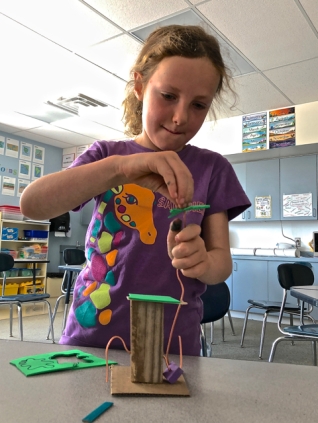
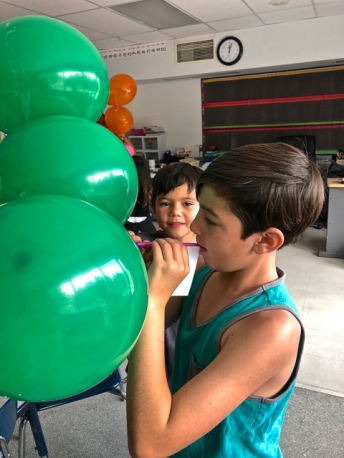
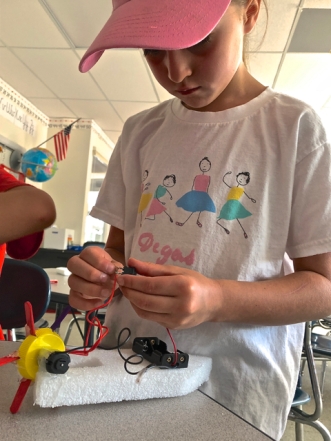
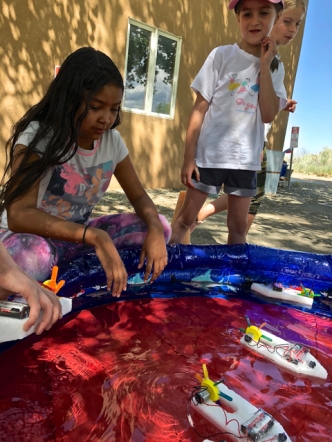
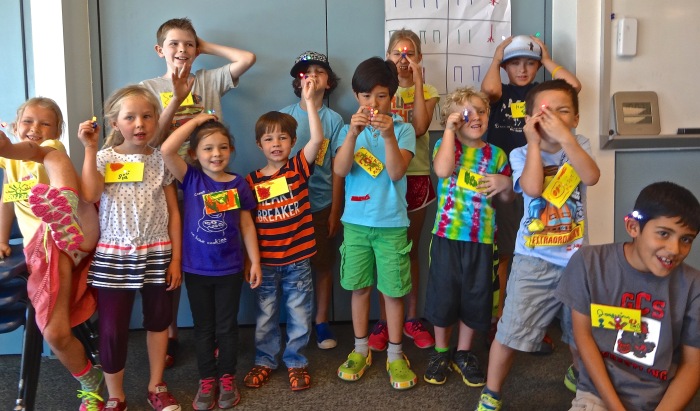
I just finished a week long – half day STEM camp for learners, ages 7 through 12, half girls and half boys. The energy in the room throughout the week was pretty incredible. There was close to 100% engagement the entire time which is always my goal in teaching. I love turning kids onto STEM, and there is evidence that exposure at a younger age increases the chances of later interest.

Some Evidence of the Importance of STEM in the Early Years

Research tells us that children’s early experience builds brain architecture and lays the foundation for one’s lifelong thinking skills and approach to learning, both critical roots of STEM success. After all, the STEM disciplines require not only content knowledge but also robust thinking dispositions—such as curiosity and inquiry, questioning and skepticism, assessment and analysis—as well as a strong learning mindset and confidence when encountering new information or challenges. These need to be developed in a child’s early education, beginning in infancy and continuing through third grade to lay the roots for STEM success. (McClure et al., 2017) (The Roots of STEM Success: Changing Early Learning Experiences to Build Lifelong Thinking Skills)

According to a new research project, children who engage in scientific activities at an early age (between birth and age 8) develop positive attitudes toward science, build up their STEM “vocabularies” and do better at problem solving, meeting challenges and acquiring new skills. “STEM starts early: Grounding science, technology, engineering and math education in early childhood,” published by the Joan Ganz Cooney Center at Sesame Workshop and New America and supported by a National Science Foundation grant, has asserted that “the seeds of STEM must be planted early,” right alongside the “seeds of literacy.” Together, the report said, “these mutually enhancing, interwoven strands of learning will grow well informed, critical citizens prepared for a digital tomorrow.”  (Research: Let’s Move STEM Learning Earlier)

The Camp

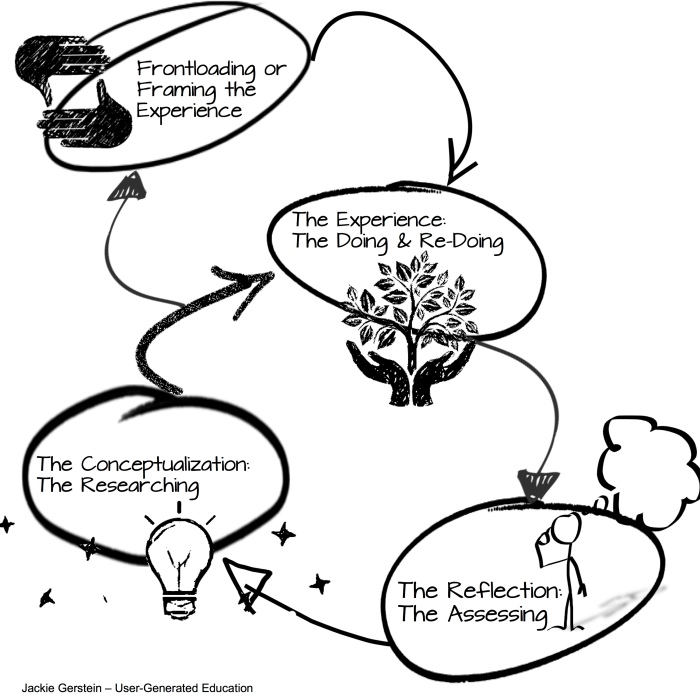
Due to the experiential nature of most of my instruction, I use an experiential cycle of learning:

CycleofLearning2.jpg

What follows is how I applied it during the STEM camp.

Framing the Activities

The STEM activities were introduced through (1) the use of Brainpop videos and their accompanying quizzes, and (2) tutorial videos and/or webpages with directions. Brainpop videos, due to their animation and humor, have a high interest value for kids, and their follow-up quizzes help to create more active learning. After the Brainpop video introduction, the campers were given an overview of the specific activities through the tutorials. I then would show them the tutorial step-by-step. For some campers, seeing the tutorial in its entirety was enough for them to do the project. Others needed me to go over the project step-by-step using the tutorials as guides. I prefer using online tutorials rather than doing them myself as demonstrations because the tutorials can be projected for a larger image and better viewing by all of the learners.

These specific resources can be found in the slide deck below:

The Doing

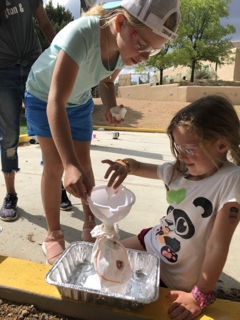
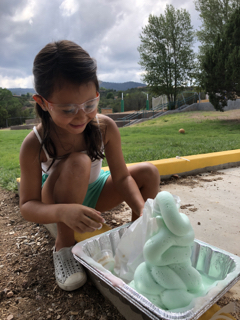
The camp consisted mostly of campers DOING the STEM activities. See below for a photographic journey of their engagement in the activities.

Reflection

Activity reflections occurred after the completion of the day’s activities using science journals:

hh258

https://www.lakeshorelearning.com/products/el/s/HH258

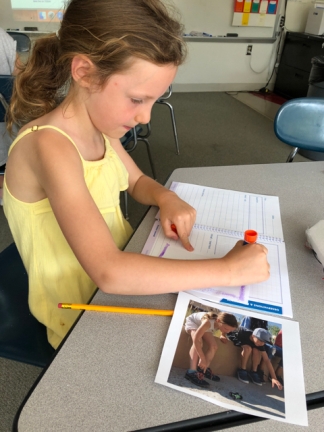
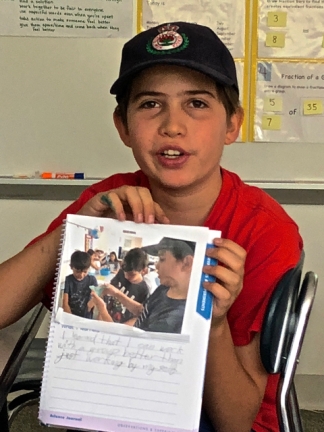
Journals such as these not only benefit the learners but the educator, too. They provide such good activity evaluation information. For example, the last day of camp, students selected two photos from the week from all of the week’s photos that represented their favorite activities. These were printed for them and they then glued the images into their journals and wrote about them. They then did a verbal check-in to tell the rest of us which ones they selected and why.

IMG_0967.jpgIMG_0972.jpg

When they were sharing these with the rest of the group, one of the girls mentioned that the DIY crystals was her favorite. I was totally surprised. I thought this activity was a dude as the kids didn’t seem that excited about them. I was thinking about dropping it as a STEM activity in the future but now I will, due to her comment, consider using it again.

Our Week in Images

Chemistry – Elephant Toothpaste

IMG_0651IMG_0668

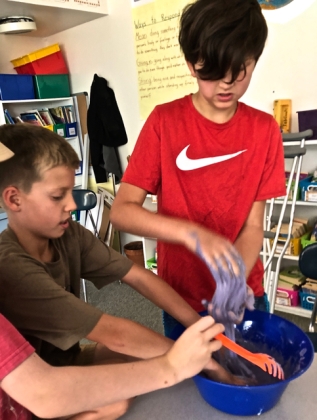
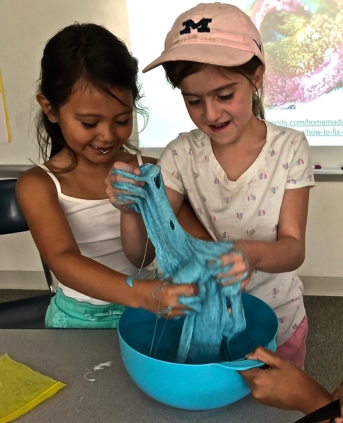
Chemistry – Slime

IMG_0685IMG_0679

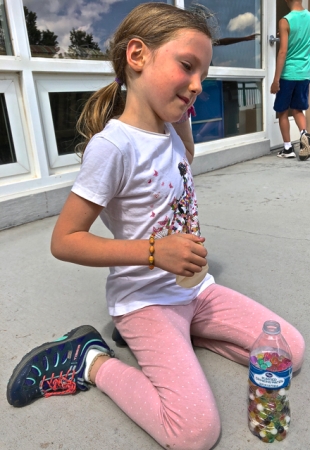
Chemistry – Orbeez Stress Balls

IMG_0718IMG_0719.jpg

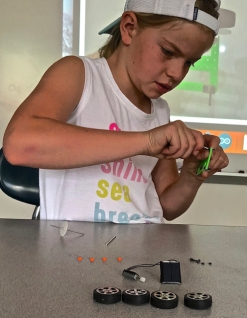
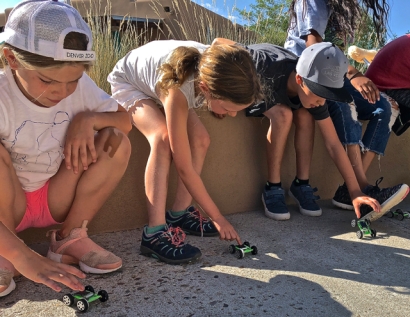
Solar – Solar Cars

IMG_0736IMG_0768

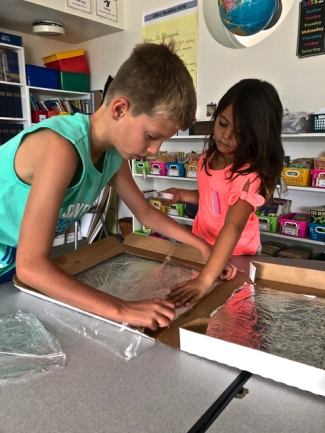
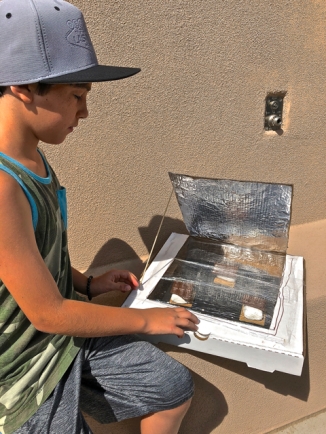
Solar – Solar Ovens

IMG_0705.jpgIMG_0715

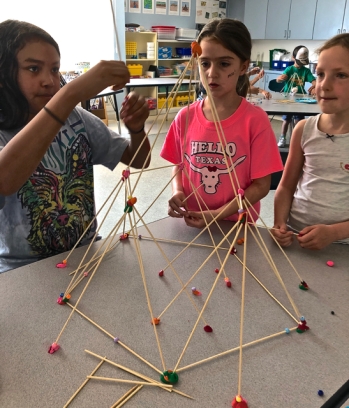
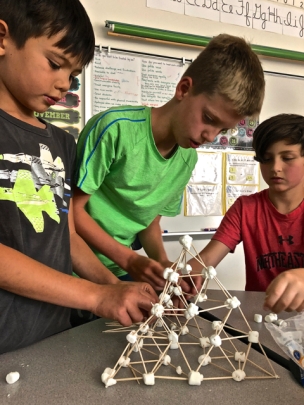
Art and Science – Geometric Structures

IMG_0797IMG_0815.jpg

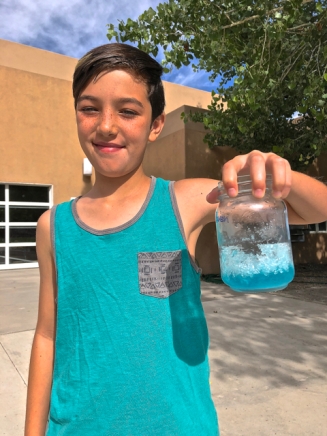
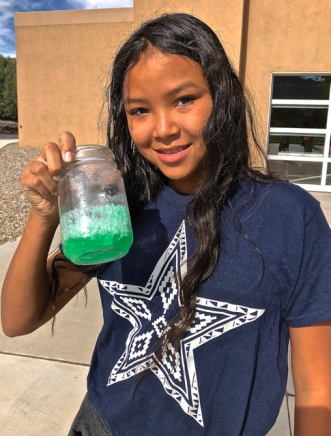
Art and Science – DIY Crystals

IMG_0830IMG_0832.jpg

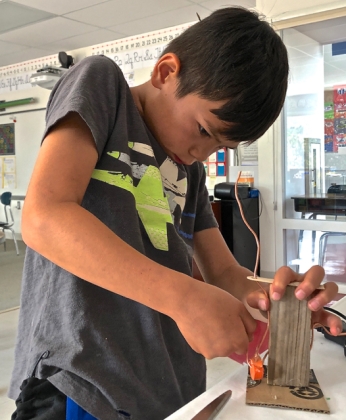
Kinetic Projects – Cranky Contraptions

IMG_0852.jpgIMG_0859.jpg

Kinetic Projects – Helium Balloon Blimp

IMG_0924IMG_0928.jpg

Kinetic Projects – Motor Boats

IMG_0954.jpgIMG_0962.jpg

Integrating Maker Education into the Curriculum

Rather than the maker experiences being an after school program, an add on activity, or an activity that is implemented when students have done their regular lessons work, it should be part of the regular, day-to-day curriculum. As noted in USC Rossier Online, “In order for your school and students to be fully invested in maker education, it has to be integrated into your curriculum, not squeezed in” (https://rossieronline.usc.edu/maker-education/sync-with-curriculum/).  Ayah Bdeir, who invented and runs littleBits, had this to say about integrating maker education into the curriculum:

It’s time for maker ed to move into the mainstream. Making should not be relegated to the times spent outside of class, e.g. lunch or after school. Nor should it only flourish in private schools, which don’t have to teach to standards. We need to work to show how making is a rigorous process that leads to valuable new technologies, products and experiences. Specifically, we need to tie maker projects to standards-based curriculum and show clearly the kinds of knowledge, skills and practices students learn as part of making (https://www.edsurge.com/news/2015-09-24-building-connections-between-maker-ed-and-standards)

Albemarle County Public School District is very intentional in their implementation of maker projects:

Maker projects can be created to support just about any subject area, from science to history to language arts. Maker education can be a tool for teaching the curriculum that you already have, At a glance, maker projects may appear disconnected from the curriculum. What may look like an arts and crafts activity, or just a bunch of kids playing with Legos, is actually a way to teach about ancient Rome or how to write a persuasive essay. (https://www.edutopia.org/practice/maker-education-reaching-all-learners)

To do this, though, the educator needs to approach his or her curriculum and lessons with a maker mindset. With this mindset, he or she figures out creative ways to integrate maker activities into existing lessons and instructional activities. The educator in these situations starts with the standards and objectives of their lessons, as they typically do with their regular lessons, and then designs and/or locates maker activities that fit the lesson. It simply becomes, “How can I add a making element to my lessons to reinforce concepts being learned?”

For subjects like science, this is a little easier as the labs that often accompany science lessons often have a hint of STEM or maker education. With a little tweaking, these labs can become more of a maker education type of activity. For example, if students are learning about circuits, they could wire cardboard model houses with lights and fans.  

For subjects like language arts, this integration is a little more challenging but with a little creativity, it is possible and exciting. An example is Tufts University Center for Engineering Education and Outreach’s program, Novel Engineering:

Novel Engineering is an innovative approach to integrate engineering and literacy in elementary and middle school. Students use existing classroom literature – stories, novels, and expository texts – as the basis for engineering design challenges that help them identify problems, design realistic solutions, and engage in the Engineering Design Process while reinforcing their literacy skills.

Example books that offer engineering or maker education challenges include:

The benefits of this type of curriculum integration include all those benefits described for maker education, in general, but also include:

  • Increased learner interest in and engagement with content rich lesson activities.
  • Lesson activities may become a gateway to content areas for learners who may not have been interested in that content area in the past. For example, making in language arts may spark a STEM interest for students who have previously only been interested in language arts; spark the interest of STEM-oriented students in language arts.

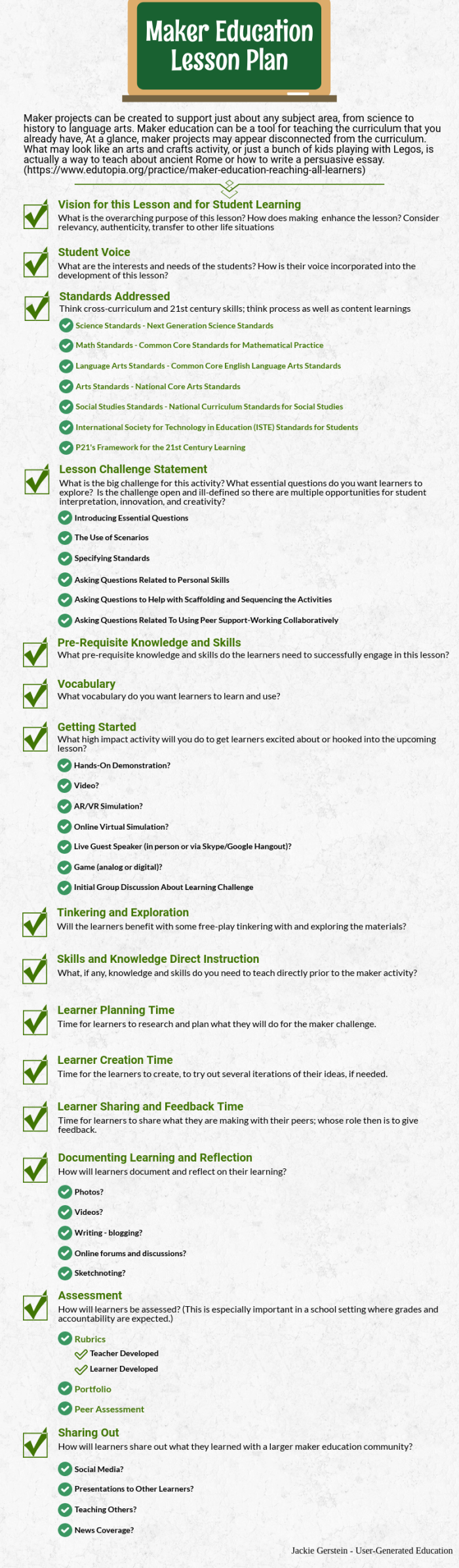
To help integrate maker education into the curriculum, I developed the following lesson plan template to assist teachers with this process.

Maker Lesson Plan

Example Maker Education Lesson Plan

Vision for this Lesson and for Student Learning (What is the overarching purpose of this lesson? How does making  enhance the lesson? Consider relevancy, authenticity, transfer to other life situations):

Student Voice  (What are the interests and needs of the students? How is their voice incorporated into the development of this lesson?):

Standards Addressed (Think cross-curriculum and 21st century skills; think process as well as content learnings):

  • ISTE Standards for Students (for detailed descriptions and sub-standards, see https://www.iste.org/standards/for-students):
    • Empowered Learner: Students leverage technology to take an active role in choosing, achieving and demonstrating competency in their learning goals, informed by the learning sciences.
    • Digital Citizen: Students recognize the rights, responsibilities and opportunities of living, learning and working in an interconnected digital world, and they act and model in ways that are safe, legal and ethical.
    • Knowledge Constructor: Students critically curate a variety of resources using digital tools to construct knowledge, produce creative artifacts and make meaningful learning experiences for themselves and others.
    • Innovative Designer: Students use a variety of technologies within a design process to identify and solve problems by creating new, useful or imaginative solutions.
    • Computational Thinker: Students develop and employ strategies for understanding and solving problems in ways that leverage the power of technological methods to develop and test solutions.
    • Creative Communicator: Students communicate clearly and express themselves creatively for a variety of purposes using the platforms, tools, styles, formats and digital media appropriate to their goals.
    • Global Collaborator: Students use digital tools to broaden their perspectives and enrich their learning by collaborating with others and working effectively in teams locally and globally.
  • 21st Century Skills (see for detailed descriptions at http://www.p21.org/our-work/p21-framework to add specifics):
    • Global Awareness: _________________________________________________
    • Financial, Economic: _______________________________________________
    • Business and Entrepreneurial Literacy: _________________________________
    • Civic Literacy: _____________________________________________________
    • Health Literacy: ___________________________________________________
    • Environmental Literacy: _____________________________________________
    • Creativity and Innovation: ___________________________________________
    • Critical Thinking and Problem Solving: _________________________________
    • Communication: ___________________________________________________
    • Collaboration: _____________________________________________________
    • Information Literacy: _______________________________________________
    • Media Literacy: ____________________________________________________  
    • ICT Literacy: ______________________________________________________
    • Flexibility and Adaptability: ___________________________________________
    • Initiative and Self-Direction: __________________________________________
    • Social and Cross-Cultural Skills: ______________________________________
    • Productivity and Accountability: _______________________________________
    • Leadership and Responsibility: _______________________________________

Lesson Challenge Statement – Framing the Experience: (How will the maker lesson be framed or frontloaded?  – What is the big challenge for this activity? What essential questions do you want learners to explore? What overarching concepts do you want learners to investigate? Is the challenge open and ill-defined so there are multiple opportunities for student interpretation, innovation, and creativity?) The maker lesson can be framed or frontloaded through:

  • Introducing Essential Questions
  • The Use of Scenarios
  • Specifying the Standards
  • Asking Questions Related To Personal Skills
  • Asking Questions to Help with Scaffolding and Sequencing the Activities
  • Asking Questions Related To Using Peer Support-Working Collaboratively

(More information about frontloading the maker experience can be found at https://usergeneratededucation.wordpress.com/2016/03/16/framing-and-frontloading-maker-activities/)

Required Prerequisite Knowledge and Skills:

Vocabulary: (What vocabulary do you want learners to learn and use?)

Getting Started: (What high impact activity will you do to get learners excited about or hooked into the upcoming lesson?)

  • Video: _________________________________________________________________
  • Hands-On Demonstration: _________________________________________________
  • AR/VR Simulation: _______________________________________________________
  • Online Virtual Simulation: _________________________________________________
  • Live Guest Speaker (in person or via Skype/Google Hangout): ____________________
  • Game (analog or digital): __________________________________________________
  • Group Discussion About the Learning Challenge

Tinkering and Exploration: (Will the learners benefit with some free-play tinkering with and exploring the materials?)

Skills and Knowledge Direct Instruction: (What, if any, knowledge and skills do you need to teach directly prior to the maker activity?)

Learner Planning Time: Time for learners to research and plan what they will do for the maker challenge.

Learner Creation Time: Time for the learners to create, to try out several iterations of their ideas, if needed.

Learner Sharing and Feedback Time: Time for learners to share what they are making with their peers; whose role then is to give feedback.

Documenting Learning and Reflection: How will learners document and reflect on their learning? Possible reflection questions include:

  • What new skills have you learned because of the maker experience?
  • What are the most important learning moments you take with you from this maker experience?
  • Would you do this or a similar maker project again? Why or why not?
  • Has this maker experience changed you? If yes, how?
  • Describe what you have learned about yourself as a result of your maker experience.
  • What would you like to change about your maker experience?
  • What were the benefits from you participating in this making activity?
  • What surprised you the most during your maker experience?
  • What did you do that seemed to be effective?
  • What did you do that seemed to be ineffective?
  • What were the most difficult parts of the maker experience? Why?
  • What were the most satisfying parts of the maker experience? Why?
  • What personal characteristics made this maker experience successful for you?
  • Describe an awareness about a personal characteristic that has been enhanced by your maker experience.
  • How does the maker experience relate to your long-term goals?
  • How have you been challenged during the maker experience?
  • How do you feel about what you made? What parts of it do you particularly like? Dislike?
  • What lessons can you learn from the maker experience?
  • What positives can you take away from the maker experience?
  • How can you apply what you learned from maker experience in your life?
  • What advice would you give to someone else working on the maker activities?
  • What did you learn through this experience and how can you use it in the future?
  • Looking back on the maker experience, what two things stand out to you the most and why?

(For more on reflecting on the maker experience, see https://usergeneratededucation.wordpress.com/2018/03/10/reflecting-on-maker-experiences-with-reflection-cards/.) 

Assessment: How will learners be assessed? (This is especially important in a school setting where grades and accountability are expected.)

  • Rubric – Based on Standards and Objectives
    • Teacher Generated
    • Student Generated
  • Portfolio Artifact
    • Submitted to a Blog
    • Submitted to a web platform like Seesaw
  • Peer Assessments

Sharing Out Findings: How will learners share out what they learned with a larger maker education community? Adam Savage of Mythbusters fame stated: Sharing is s a vital aspect of maker culture that is intrinsic to the underlying ethos of what it means to be a maker and by extension, in my opinion, a human being (https://boingboing.net/2018/05/23/adam-savage-at-maker-faire-th.html).

  • Use of Social Media?
  • Presentations to Local Students and Community Members?
  • News Coverage?
  • Teaching Others?

Egyptian Civilization (Nile Valley): Development, Settlement, and Planning Principles

The Egyptian Civilization is one of the oldest and most enduring civilizations in human history, flourishing along the fertile banks of the Nile River around 3000 BCE. Often referred to as the “Gift of the Nile,” this civilization developed in a unique environmental setting that profoundly influenced its settlement patterns, urban planning, economy, and governance.

Understanding Egyptian civilization is important from a planning perspective because it demonstrates early examples of environmental adaptation, linear settlement development, centralized planning, and integration of religion with urban form.


1. Geographical Context and Significance of the Nile

https://images.openai.com/static-rsc-4/33X_ndIkaIPSl8tU8fqhSVF4f6J8cY1FIfppxs_7ljIyuRlWUreuaPTQjbr2T1Ip9BRwowqls8x2nCefrgNH7RwRz-MYPVNZL-znGDWth41erKgoG6Wozwso0TgjJvo-_Btw0zjUaCQLrfQ4xsZIyKSdRCjHkL_A4BTXIgWOC_VZIQWFWlkku7Gy6V-v5vgx?purpose=fullsize
https://images.openai.com/static-rsc-4/bSUKg_xR_g1omARhUfNzeeod49tNnPIlMb6AHzMh4CjgKGTRyaIOHmsS5hVLuiCvDoQIwp9kYmbicGU4_RumYmwGUc9uNkYdaYKd181ObY3t8ksgRAwEq9q8kdfQs6Oe2X4d1hTm0zObjKJGjvpKOBrkn9CENRxHppLllLTNKxNdLrdDP-XRxNsBY5-9-4zo?purpose=fullsize
https://images.openai.com/static-rsc-4/HFsiRU8N6TWNULfwcQSnLOE7uLPPi3IbeP6Njhss_qOcHMGPyk4Knzo4pEOXU7UDMVLSVEpKqLPt5_mnkYwZ0h2DICwuDesGf4S0Ofn1NHVgqBY7w71itxenrWjV-pNw6fgvfWL6zHH0-n65YJIWKRnOMQ4hsvGmOaT02P3uFj5OuJQwhsKbEBSr7IkzRoCZ?purpose=fullsize

6

The entire Egyptian civilization was centered around the Nile River.

Key Features of the Nile:

  • Annual flooding deposited fertile alluvial soil
  • Provided a reliable water source
  • Served as a natural transport corridor
  • Created a narrow habitable strip surrounded by desert

Planning Implication:

  • Settlements developed in a linear pattern along the river
  • Strong dependence on natural cycles shaped planning decisions

👉 This reflects one of the earliest examples of water-based regional planning.


2. Development of Egyptian Civilization

2.1 Early Settlements

  • Small agricultural villages along the Nile
  • Subsistence farming based on flood cycles

2.2 Formation of Kingdoms

  • Unification of Upper and Lower Egypt
  • Emergence of centralized governance under Pharaohs

2.3 Urban Development

  • Growth of cities such as:
    • Memphis
    • Thebes
    • Amarna

These cities functioned as administrative, religious, and economic centers.


3. Settlement Pattern in Egyptian Civilization

https://images.openai.com/static-rsc-4/pkyqFpikIx56NpPDSP6-mfWJVIZqMiTkDe5218jLgBZEr2B7cqcj4q_Lq2dGMmLo-cnixWJJz3v0uPzcoXGG_XXM-fIwr3FBuN3syf0k6QqJa7noxTidxS1x3Bmy1PkMluGqPrymzz2q6aO5nl73ekT-NrWe26pHz9Zpi_cqH5eiMnkoYyoone8M9u3WOtPz?purpose=fullsize
https://images.openai.com/static-rsc-4/IMysTW1032s76jrGexX9gUccKrsk7xT509HVcwhbnFvYWlnHSJ9awKB743FragxJRmrdUMSs7vRttGB0c4fvlm0JruArajXCU0nf6g4KHvfvoYxjI8D5hjNKobRSdd3QmKn2ukhZBGZy5ZyfBlMtOEXqjzahlzD7-SiWJQy-MTN0AWD2iay7a6oZMT_4BTV0?purpose=fullsize
https://images.openai.com/static-rsc-4/zRJ5-TkjIsmqbI8TwG_WneOxgKKGDQRhgu-ZEObC4cvF7Oj_5lS6C5-D2N2pqh_YL0rMj3OjZak16bH4B8YD2BYuoZIAcOAmxRMQU9OQ9Za9UTsdLMEb2j_9lvNErK2ha1SBDH9ssztmZSLsu2RN7elTLd5Eb9JDcV6DtLgWBUtlcTb8Mccc8l0HxQkQR5LT?purpose=fullsize

6

3.1 Linear Pattern

  • Settlements aligned along the Nile River
  • Agricultural fields located adjacent to the river

3.2 Clustered Settlements

  • Villages grouped near fertile land and water sources

3.3 Planned Workers’ Settlements

  • Example: Deir el-Medina (workers’ village)
  • Organized layout with uniform housing

Planning Principle:

  • Proximity to water and agriculture
  • Efficient use of fertile land

4. Urban Structure and Land Use

Egyptian cities had a distinct internal structure influenced by religion and governance.

4.1 Functional Zoning

  • Religious Areas: Temples and pyramids
  • Administrative Areas: Palaces and government buildings
  • Residential Areas: Houses of workers and elites
  • Agricultural Zones: Surrounding fields

4.2 Social Hierarchy in Space

  • Elite classes lived in larger, well-planned houses
  • Workers and laborers lived in compact settlements

Planning Principle:

  • Spatial organization based on function and social hierarchy

5. Architecture and Housing

https://images.openai.com/static-rsc-4/__o5jdL_ylabPXIQ-SWYBz9Ks5TyR6pAJdwlwwzwDNodyhk20kSj6Uy8il_q1O-w5KFF3Ap2O8yD5065DX2fRNRGqauYZKaXH0VpEwFn-R22Uik3UTotCOZNBwlXKJFPMejFxJQFL6XCFN_0fEhiwzqPGzRiCgmHbocel9d6BEKxORwhbpoFjG8ROHDmfWYi?purpose=fullsize
https://images.openai.com/static-rsc-4/YVjpSqQUZueWbulUloGvXkU5YV3WykKOG0DDhbaZ6g9OZWb8E6wLJV4TiyD-3nemr_CDXBTw2U3kj-UPCRolWbOipcCpaenEa_EWTvd8JOz-lrde_qeDQZhoQA1TVUUeEQlfMDPcCiQvyWBS2Z1vqddvKoouRzW1x_J61N_-K0fN10LH7INxhsYubpJLf6kW?purpose=fullsize
https://images.openai.com/static-rsc-4/zuKLPRwHRDQmqLlrOx4C1-TJa2l-_gxfo9-gObdeVGEkv-0t6ZX4Zt04XakKim-xj5qw-KCstmf3g4m5N7d9YfbbZwjNIpQqKtF9dTurKTELAiMg7n4DLciPrTWY_rMQzjwoUx1EEulx5Zntp4NxnOvqGOA2GD_RK6vPzLmn8e1MdMcLtZmI_MZFWcagAoIc?purpose=fullsize

6

Housing Characteristics:

  • Built with mud bricks (locally available material)
  • Flat roofs and small windows (climate adaptation)
  • Courtyard houses for ventilation

Monumental Architecture:

  • Pyramids (e.g., Giza)
  • Temples (Luxor, Karnak)

Planning Principle:

  • Climate-responsive design
  • Use of local materials
  • Monumentality reflecting power and religion

6. Infrastructure and Water Management

6.1 Irrigation Systems

  • Basin irrigation using floodwaters
  • Canals and embankments

6.2 Transport

  • Nile as the main transport route
  • Boats used for trade and communication

6.3 Storage and Granaries

  • Storage of surplus food for drought periods

Planning Principle:

  • Efficient resource management
  • Integration of natural and built systems

7. Religious Influence on Planning

Religion played a central role in Egyptian urban planning.

Key Aspects:

  • Temples as focal points of cities
  • Alignment of structures with celestial bodies
  • Sacred landscapes (west bank for burial, east for living)

Planning Principle:

  • Integration of cosmology and spatial planning
  • Symbolic orientation and sacred geography

8. Governance and Administration

The Egyptian state was highly centralized under the Pharaoh.

Planning Implications:

  • Large-scale construction projects (pyramids, temples)
  • Organized labor and resource allocation
  • Standardization in construction

Planning Principle:

  • Centralized control and administrative efficiency

9. Environmental Adaptation

Egyptian planning shows a strong understanding of environmental conditions:

  • Settlements located above flood levels
  • Use of natural topography
  • Adaptation to desert climate

Planning Principle:

  • Resilience and sustainability through environmental adaptation

10. Key Planning Principles of Egyptian Civilization

From the above discussion, the major principles can be summarized:

  1. Water-Based Planning (dependence on the Nile)
  2. Linear Settlement Pattern
  3. Functional Zoning
  4. Centralized Governance and Control
  5. Religious and Symbolic Planning
  6. Climate-Responsive Architecture
  7. Efficient Irrigation and Resource Management
  8. Social Hierarchy Reflected in Space

11. Relevance to Modern Planning

Egyptian planning principles remain relevant today:

  • River-based planning → Waterfront and riverfront development
  • Climate-responsive design → Sustainable architecture
  • Compact settlements → Efficient land use
  • Integrated water management → Urban resilience

In contemporary contexts, especially in developing countries, these principles can guide:

  • Floodplain management
  • Water-sensitive urban design
  • Sustainable settlement planning

Conclusion

The Egyptian civilization, centered along the Nile River, represents one of the earliest examples of environmentally adaptive and functionally organized urban development. Its settlements were shaped by the rhythms of the river, the authority of centralized governance, and the deep influence of religion and culture.

The planning principles derived from Egyptian cities—such as water-centric development, linear settlement patterns, functional zoning, and climate-responsive design—demonstrate a sophisticated understanding of the relationship between humans and their environment.

These principles continue to hold relevance in modern planning, particularly in the context of sustainability and resilience, making Egyptian civilization not only historically significant but also practically instructive for contemporary urban development.

Five-Year Plans in India (Development Approaches)

1. Introduction

After gaining independence in 1947, India adopted a planned development strategy to address the challenges of poverty, economic backwardness, unemployment, and regional disparities. To guide national development, the Government of India introduced Five-Year Plans, which were comprehensive economic development programs prepared for a period of five years.

The Five-Year Plans were formulated by the Planning Commission, established in 1950. These plans focused on the systematic allocation of resources and implementation of policies to achieve economic growth, social welfare, and balanced regional development. Each plan emphasized specific development priorities depending on the economic and social conditions of the country at the time.

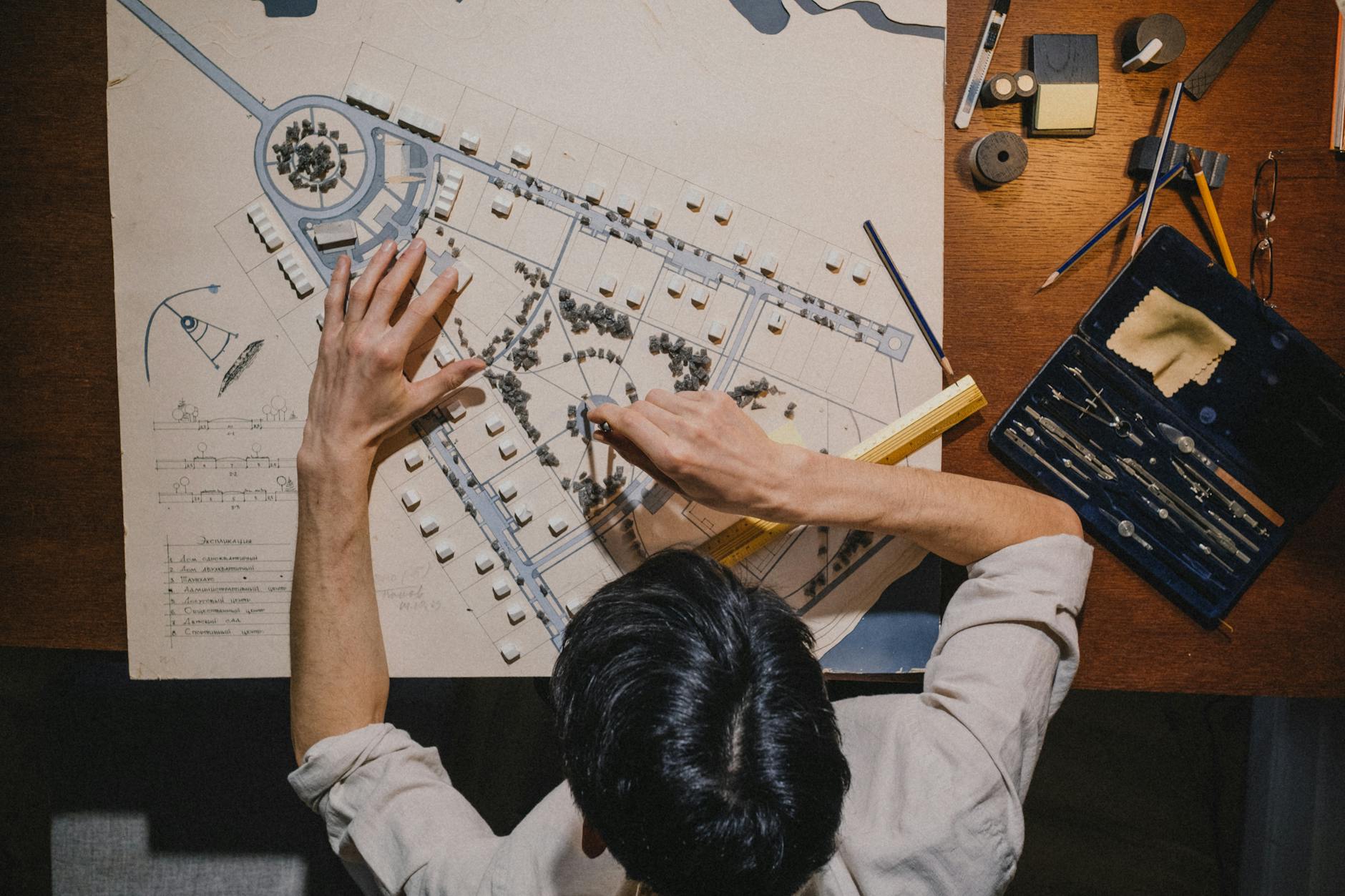
Photo by Tima Miroshnichenko on Pexels.com

The Five-Year Planning model was inspired by the planning system used in the Soviet Union, but India adopted a mixed economic approach, combining public sector planning with private sector participation.


2. Objectives of Five-Year Plans

The Five-Year Plans were designed to achieve several key development objectives, including:

  • Economic growth and industrial development
  • Reduction of poverty and unemployment
  • Improvement of agriculture and food production
  • Development of infrastructure such as transportation, energy, and irrigation
  • Balanced regional development
  • Improvement of education, healthcare, and social welfare

These objectives aimed to improve the overall quality of life for the population and promote national development.


3. Development Approaches in Five-Year Plans

Over time, the development approach of the Five-Year Plans evolved depending on the economic priorities and challenges faced by the country.

Major approaches included:

  • Agricultural development
  • Industrialization
  • Poverty alleviation
  • Infrastructure development
  • Human development and inclusive growth

4. First Five-Year Plan (1951–1956)

Development Approach: Agricultural Development

The First Five-Year Plan focused primarily on agriculture and irrigation because India faced severe food shortages after independence.

Key priorities included:

  • Agricultural development
  • Irrigation and flood control projects
  • Community development programs
  • Improvement of rural infrastructure

Major projects such as Bhakra-Nangal Dam and Hirakud Dam were initiated during this period.

The plan was largely successful and helped stabilize the Indian economy.


5. Second Five-Year Plan (1956–1961)

Development Approach: Industrialization

The Second Plan emphasized rapid industrialization, particularly the development of heavy industries.

It was based on the Mahalanobis Model, which focused on expanding the public sector and building industrial capacity.

Key initiatives included:

  • Development of steel plants
  • Expansion of heavy industries
  • Growth of machine-building industries

Major steel plants were established in Bhilai, Rourkela, and Durgapur.


6. Third Five-Year Plan (1961–1966)

Development Approach: Self-Sufficiency

The Third Plan aimed to achieve self-sufficiency in food production and economic growth.

Major priorities included:

  • Agricultural development
  • Expansion of industries
  • Strengthening of infrastructure

However, the plan was affected by wars with China (1962) and Pakistan (1965) and severe droughts.

Due to economic difficulties, the plan did not achieve its targets.


7. Plan Holiday (1966–1969)

After the Third Plan, India experienced economic instability. Instead of launching a new Five-Year Plan, the government introduced three annual plans between 1966 and 1969.

The focus during this period was on stabilizing the economy and improving agricultural production.


8. Fourth Five-Year Plan (1969–1974)

Development Approach: Growth with Stability

The Fourth Plan aimed to achieve economic growth while maintaining stability and controlling inflation.

Key priorities included:

  • Agricultural development
  • Industrial growth
  • Poverty reduction

During this period, the Green Revolution significantly increased agricultural productivity.


9. Fifth Five-Year Plan (1974–1979)

Development Approach: Poverty Removal

The Fifth Plan emphasized poverty alleviation and self-reliance.

The major slogan of the plan was “Garibi Hatao” (Remove Poverty).

Key initiatives included:

  • Employment generation programs
  • Expansion of agricultural production
  • Public distribution systems

The plan was terminated early due to political changes.


10. Sixth Five-Year Plan (1980–1985)

Development Approach: Poverty Reduction and Technological Development

The Sixth Plan focused on reducing poverty and improving technological capabilities.

Major priorities included:

  • Rural development
  • Employment generation
  • Infrastructure expansion
  • Technological modernization

Economic growth improved during this period.


11. Seventh Five-Year Plan (1985–1990)

Development Approach: Productivity and Employment

The Seventh Plan focused on improving productivity, employment, and modernization of industries.

Key sectors included:

  • Agriculture
  • Energy
  • Transportation
  • Social services

The plan aimed to strengthen the economy and improve living standards.


12. Eighth Five-Year Plan (1992–1997)

Development Approach: Economic Liberalization

The Eighth Plan was implemented after economic reforms introduced in 1991.

It emphasized:

  • Economic liberalization
  • Private sector participation
  • Human development
  • Expansion of infrastructure

The plan encouraged market-oriented economic policies.


13. Ninth Five-Year Plan (1997–2002)

Development Approach: Growth with Social Justice

The Ninth Plan aimed to promote economic growth while ensuring social equity.

Key priorities included:

  • Poverty reduction
  • Rural development
  • Agricultural growth
  • Employment generation

The plan focused on improving living standards in rural areas.


14. Tenth Five-Year Plan (2002–2007)

Development Approach: High Economic Growth

The Tenth Plan aimed to achieve 8% annual economic growth and reduce poverty.

Key objectives included:

  • Improving infrastructure
  • Expanding education and healthcare
  • Increasing employment opportunities

15. Eleventh Five-Year Plan (2007–2012)

Development Approach: Inclusive Growth

The Eleventh Plan emphasized inclusive growth, ensuring that economic benefits reach all sections of society.

Key areas included:

  • Education and health services
  • Rural development
  • Infrastructure expansion
  • Environmental sustainability

16. Twelfth Five-Year Plan (2012–2017)

Development Approach: Faster, Sustainable and More Inclusive Growth

The Twelfth Plan focused on sustainable and inclusive development.

Major priorities included:

  • Infrastructure development
  • Energy security
  • Skill development
  • Environmental protection

After 2017, the Five-Year Plan system was discontinued, and the Planning Commission was replaced by NITI Aayog.


17. Importance of Five-Year Plans

The Five-Year Plans played an important role in shaping India’s development strategy.

They helped:

  • Promote industrial and agricultural growth
  • Develop infrastructure such as roads, dams, and power plants
  • Reduce poverty and unemployment
  • Improve social services like education and healthcare

These plans laid the foundation for India’s economic development.


18. Conclusion

The Five-Year Plans were central to India’s development strategy after independence. Through systematic planning and resource allocation, these plans guided economic growth, agricultural development, industrial expansion, and social welfare programs.

Over time, the development approach evolved from agricultural development to industrialization, poverty reduction, economic liberalization, and inclusive growth. Although the Five-Year Plan system has now been replaced by new policy frameworks under NITI Aayog, its contributions remain significant in shaping India’s economic and developmental trajectory.

Daily writing prompt
Which animal would you compare yourself to and why?

Urbanisation in India

Urbanisation in India

1. Introduction

Urbanisation refers to the process by which an increasing proportion of a country’s population lives in urban areas such as cities and towns. It involves the growth and expansion of urban settlements due to factors such as industrialization, economic development, improved infrastructure, and migration from rural areas. Urbanisation is considered an important indicator of economic and social development because cities serve as centers of trade, industry, education, and innovation.

In India, urbanisation has been steadily increasing since independence. Although India still has a large rural population, cities are expanding rapidly due to economic opportunities and improved connectivity. Urbanisation has contributed significantly to economic growth, but it has also created challenges related to housing, infrastructure, environment, and social inequality.


2. Meaning of Urbanisation

Urbanisation can be defined as the increase in the proportion of population living in urban areas and the expansion of urban settlements due to economic and social changes.

Urbanisation involves several processes such as:

  • Growth of cities and towns
  • Rural-to-urban migration
  • Expansion of urban boundaries
  • Transformation of rural settlements into urban areas
  • Increase in urban economic activities

It reflects the shift from an agricultural economy to an industrial and service-based economy.


3. Trends of Urbanisation in India

Urbanisation in India has increased gradually over the last century. At the time of independence in 1947, India was largely rural with a small percentage of the population living in urban areas. However, economic development, industrialization, and modernization have accelerated urban growth.

Growth of Urban Population

The urban population of India has grown steadily due to natural population increase and migration from rural areas. Large metropolitan cities have experienced rapid expansion, while many small towns have also developed into urban centers.

Growth of Metropolitan Cities

Major cities such as:

  • Delhi
  • Mumbai
  • Kolkata
  • Chennai
  • Bengaluru
  • Hyderabad

have become major economic and administrative centers with large populations and extensive infrastructure.

Emergence of Megacities

Several Indian cities have developed into megacities with populations exceeding ten million. These cities play a significant role in national economic development.

Expansion of Urban Areas

Urban areas are expanding beyond their traditional boundaries into surrounding rural regions. This process, known as urban sprawl, leads to the development of suburban areas and peri-urban zones.


4. Causes of Urbanisation in India

Urbanisation in India is influenced by several economic, social, and technological factors.

Industrialization

Industrial development attracts workers from rural areas seeking employment in factories and industries. Industrial zones and manufacturing hubs contribute to the growth of cities.

Economic Opportunities

Cities offer better job opportunities in sectors such as services, information technology, trade, and finance. This attracts people from rural areas and smaller towns.

Rural–Urban Migration

Many people migrate to cities in search of improved living standards, education, healthcare, and employment opportunities.

Educational and Healthcare Facilities

Urban areas provide better access to educational institutions, hospitals, and specialized services.

Infrastructure Development

Improved transportation networks, communication systems, and public services encourage the growth of cities.

Government Policies

Government initiatives such as industrial corridors, special economic zones, and urban development programs also contribute to urban growth.


5. Characteristics of Urbanisation in India

Urbanisation in India has several distinctive features.

Rapid Growth of Large Cities

A significant proportion of the urban population is concentrated in large metropolitan cities.

Growth of Informal Settlements

Due to housing shortages and rapid migration, many urban residents live in informal settlements or slums.

Expansion of Urban Peripheries

Cities are expanding outward into rural areas, leading to the growth of suburban settlements.

Increasing Role of Service Sector

The service sector has become a major contributor to urban employment and economic growth.


6. Urban Problems Associated with Urbanisation

Rapid and unplanned urbanisation has created several challenges for Indian cities.

Housing Shortage and Slums

The rapid influx of migrants increases the demand for housing. Many people are unable to afford formal housing and live in slums or informal settlements.

Traffic Congestion

Increasing numbers of vehicles and inadequate public transportation systems lead to severe traffic congestion in major cities.

Inadequate Infrastructure

Urban infrastructure such as water supply, sewage systems, and waste management often fails to keep pace with population growth.

Environmental Pollution

Urbanisation contributes to air pollution, water pollution, and solid waste problems.

Urban Poverty

Despite economic growth, many urban residents live in poverty and work in the informal sector with low wages and limited job security.

Urban Sprawl

Uncontrolled expansion of cities leads to inefficient land use, loss of agricultural land, and increased transportation costs.


7. Role of Urban Planning in Managing Urbanisation

Urban planning plays a crucial role in managing the challenges of urbanisation.

Planning strategies include:

  • Preparation of master plans and development plans
  • Promotion of affordable housing programs
  • Development of public transportation systems
  • Protection of green spaces and natural resources
  • Improvement of urban infrastructure and services

Planning initiatives such as smart cities, sustainable mobility plans, and transit-oriented development (TOD) are being implemented to improve urban living conditions.


8. Government Initiatives for Urban Development

The Government of India has launched several programs to improve urban infrastructure and governance.

Examples include:

  • Smart Cities Mission
  • AMRUT (Atal Mission for Rejuvenation and Urban Transformation)
  • Pradhan Mantri Awas Yojana (Housing for All)
  • Swachh Bharat Mission

These programs aim to enhance urban infrastructure, housing, sanitation, and service delivery.


9. Conclusion

Urbanisation in India is a significant process that reflects the country’s economic transformation and social development. The growth of cities has contributed to economic opportunities, technological advancement, and improved access to services. However, rapid and unplanned urbanisation has also created serious challenges such as housing shortages, infrastructure pressure, environmental degradation, and social inequality.

Effective urban planning, sustainable development strategies, and strong governance are essential to manage urban growth and improve the quality of life in cities. By adopting integrated planning approaches and investing in infrastructure and social services, India can ensure that urbanisation becomes a driver of inclusive and sustainable development.

Daily writing prompt
Which animal would you compare yourself to and why?

Focusing on the Process: Letting Go of Product Expectations

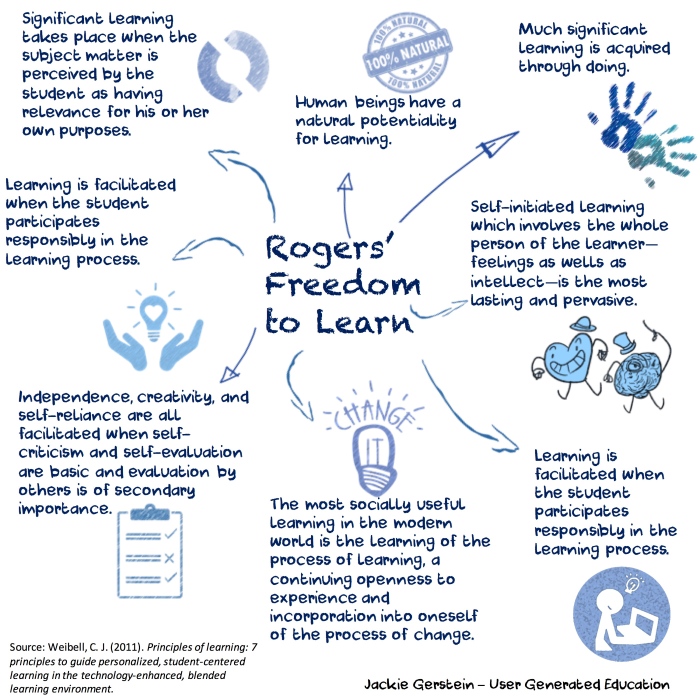
I am a process-oriented educator. I focus on how to learn rather than what to learn. I’ve addressed this in Freedom to Learn:

freedom-to-learn

In order to facilitate these desired elements of learning, I believe it is important to focus on the process of learning rather than the products of learning.

When learning is viewed as a product, and the same performance measure applies to all students, learning facilitation can be reduced to cookie-cutter teaching: same pieces of information and instruction are seen sufficient for all students. In a product-centered learning environment emphasis is often in doing activities – worksheets, charts, pre-designed projects – that are either teacher-made or provided by the publisher of the curriculum. The important part of completing these products is getting them right because these products are usually graded! Skilled and obedient students comply with these requests and try hard to get their tasks done right, yet there are many students who just leave them undone.

What about viewing learning as a process? Because students begin their daily/weekly/yearly learning from different levels of knowledge and understanding, they also will end up in different competency levels. And that is okay, honestly. We are not clones. Students shouldn’t be treated like ones. When learning is understood primarily as a process of acquisition and elaboration of information, the natural consequences in the classroom are ongoing differentiation and individualization. Approaching learning as an individual process helps us refocus learning and teaching: the student is in the nexus of her/his own learning, (Is Learning a Product or a Process?)

The following principles from Rogers’ Freedom to Learn are directly addressed when the process of learning becomes the intent of instructional practices:

Much significant learning is acquired through doing. “Placing the student in direct experiential confrontation with practical problems, social problems, ethical and philosophical problems, personal issues, and research problems, is one of the most effective modes of promoting learning” (p. 162).

Learning is facilitated when the student participates responsibly in the learning process. “When he chooses his own directions, helps to discover his own learning resources, formulates his own problems, decides his own course of action, lives with the consequences of these choices, then significant learning is maximized” (p. 162).

The most socially useful learning in the modern world is the learning of the process of learning, a continuing openness to experience and incorporation into oneself of the process of change. If our present culture survives, it will be because we have been able to develop individuals for whom change is the central fact of life and who have been able to live comfortably with this central fact. They will instead have the comfortable expectation that it will be continuously necessary to incorporate new and challenging learnings about ever-changing situations. (pp. 163-164)

Weibell, C. J. (2011). Principles of learning: 7 principles to guide personalized, student-centered learning in the technology-enhanced, blended learning environment. Retrieved from https://principlesoflearning.wordpress.com.

To truly focus on the process rather than products of learning, the educator needs to let go of expectations about the specific products that should be produced by the students. There are expectations regarding some of the processes in which learners should engage (e.g., divergent thinking, questioning, researching, creating, innovating) but the educator lets go of the pictures in her or his mind about what the products should look like.

The benefits for my learners include:

  • They are not limited by my expectations nor the expectations of a lesson or assessment developed by an outside entity (e.g., textbook or testing company).
  • Their engagement, motivation, curiosity, and excitement increase.
  • They learn to tolerate and then embrace ambiguity.
  • Natural differentiation and individualization result.
  • They learn skills such as self-directed learning, taking initiative, locating resources, asking for help that can be transferred to all learning endeavors.
  • It reflects and models how learning occurs outside of school.
  • There is an increased investment and pride in their work.
  • They develop both a sense of confidence and a sense of competence.

The benefits for me, as the educator, include:

  • I work hard to pre-plan process-oriented classroom activities but the learners work harder than me during class time. Students should work harder than the educator during class time.
  • I am continually surprised at and elated about what learners produce. Because of this, I get to learn from them, too. We become a learning community.
  • I get to directly observe how each individual student approaches learning tasks. This furthers my ability to plan learning tasks tailored to the learners’ unique abilities and interests.
  • I get to experience the joy with them as they accomplish a learning task on their own using their own personal abilities, intelligence, learning strategies, and struggles. This joy rarely occurs with standardized curriculum and assessments.

Here are some examples of process-oriented learning activities I have done with my students:

  • Design Thinking Activities for Elementary Students
  • Designing a Video Game
  • Maker Education Activities
  • Halloween Wars

Exploring Wealth Inequities: An Experiential Learning Activity

One of the legacies I want to leave with my students (of all ages) is a desire to engage in global stewardship. For more about this see my post, Empathy and Global Stewardship: The Other 21st Century Skills.

As part of my gifted education classes, I am asking my 5th and 6th graders to choose, explore, research, and report via their own Google Sites on one or two of the 17 Global Goals found at The World’s Largest Lesson. Here is the list of global goals selected by my students:

IMG_2591

To supplement their online work, I am doing a series of experiential activities with them (FYI – this also supports my desire to balance technology and no technology activities, where student need to communicate and collaborate with one another without the use of devices). We began these activities with Exploring Wealth Inequalities, which I explain below.

Goals

  • Explore inequalities of wealth and better understand experiences of economic inequality.
  • To graphically demonstrate the vast differences in wealth between different areas of the world.
  • Generate ideas for action towards economic equality.

The Task

To use the supplies given to your group to create a model city.

Materials

  • Masking Tape – both for creating the boundaries and for building
  • Paper or Plastic Cups
  • Straws
  • Index Cards
  • Candy such as M&Ms, Skittles, Hersey’s Kisses.
  • Paper Bags

The Set-Up

The setting below is set up prior to the learners’ arrival.

setup

Randomly separate learners into three different groups. Bring them to their area one group at a time and explain the task.

The Wealthy Group:

The wealthy group has more area in which to work, more supplies, and bags of candy with much more than enough for each learner. The facilitator explains the task offering lots of help if they ask for it. They can leave the boundaries of their area. If they ask for more supplies or goods, the facilitator will get it for them – taking it from another group if needed. An unspoken, hidden rule is that they can offer and give any of their supplies to the lower income groups.

This slideshow requires JavaScript.

The Middle Income Group:

The middle group has everything in moderation – a moderate amount of area to work in – a moderate amount of supplies to build their city.  They each get a bag of candy with a few pieces of candy per bag. The facilitator explains the task but doesn’t offer support.

This slideshow requires JavaScript.

The Poorest Income Group:

This group is given a taped off area in which there is very little room to move; very limited supplies; and a few pieces of candy to share among the group members. The facilitator briefly and impatiently explains the directions to build a model city with the supplies provided.

This slideshow requires JavaScript.

Debriefing

Students are shown the following video:

. . . and then discuss the following questions:

  • Were you treated fairly?
  • What aspects of this game represented how the world’s wealth and power are distributed?
  • How did the members of the different groups feel about their situation?
  • After playing this game do you have a better understanding of the situation or attitude of poor people/nations? Of the situation or attitude of wealthy people/nations?
  • Who are the “haves” and the “have nots” in the world today? Who are the “haves” and “have nots” in our country today? In our state or community? Why?
  • Should the “haves” be concerned about the situation of the “have nots?” For what reasons? economic? moral/religious? political? Why might the “haves” give money or resources to the “have nots”? Is this a way to solve the problems of poverty?
  • What might the “have-nots” do to improve their situation? What are some actions that “have-nots” have taken around the globe and at home to address the inequalities of wealth and power?
  • Do you think there should be a redistribution of wealth and power in this country? Why or why not? If yes, how would you propose to accomplish this? What principles would guide your proposals for change?
  • Do you think there should be a redistribution of wealth and power throughout the world? Why or why not? If yes, how would you propose to accomplish this? What principles would guide your proposals for change?

(http://hrlibrary.umn.edu/edumat/hreduseries/tb1b/Section2/activity2.html)

Here are some of the comments from my students during the debrief.

Scaffolding Maker Education Learning Experiences

I often read via social media about the importance of student centered, student-driven instruction. I wholeheartedly agree. My blog post is called User-Generated Education for a reason. I also believe one of the roles of an educator, in the context of maker education, is to scaffold learning experiences so the end result is students becoming self-determined learning.

Thinking about the importance of learner autonomy and independence reminded me of my early career when I did counseling work with at-risk youth in wilderness settings, taking them on 2 to 3 week wilderness trips. We did what was called Huddle-Up Circles. Huddle-ups were called by the instructors and/or the youth participants any time a concern or problem arose. Everyone stopped what they were doing to gather in a circle to discuss the problem and generate solutions. Needless to say, the instructors were the ones who most often called and facilitated the huddle-ups at beginning of our trips.  Our goal, as instructors and counselors, was to have the young people run the huddle-ups themselves. We knew we were successful when we asked to step out of the huddle-ups by the young people because they wanted to run their own huddle-ups. During these times, we would stand outside of the huddle-up circles and silently observe their processes, only stepping in upon their request. The results not only included the development of skills and strategies for their own social-emotional development, but their success with their earned independence boosted their self-esteems.

This is how I approach facilitating maker education activities. Direct instruction is provided through structured and prescribed activities with the goal of learners then being able to eventually go into self-determined directions. There has been some criticism leveraged against out-of-the-box maker education kits, programmable robots, and step-by-step maker activities. My contention is that learners often don’t know what they don’t know; and that giving them the basic skills frees them to then use their creativity and innovation to take these tools into self-determined directions.

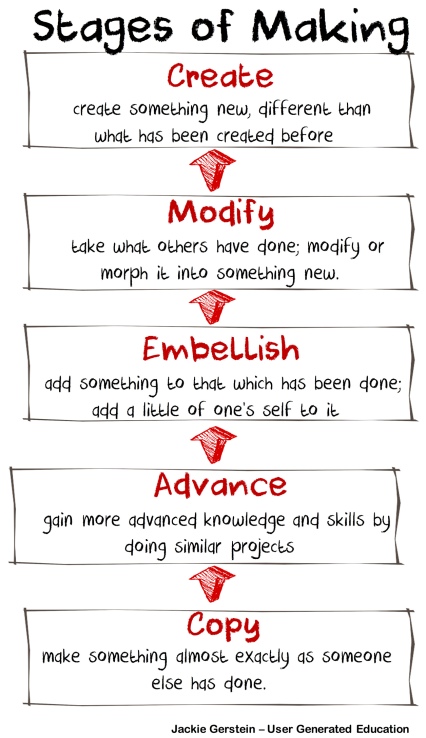
In response, I created and proposed Stages of Maker Education:

makeredmodel1

In my robotics and coding classes, I use Ozobot, Spheros, Dash and Dot, microbits, Scratch, to name of few. I use a full spectrum of activities starting with direct instruction associated with the Copying stage, then assisting learners to move through the Advance, Modify, and Embellish stages by providing them with examples and resources, and finally, encouraging them to move into the Create stage. Sometimes I show them examples of possibilities for the Create stage. I show such examples to spark and ignite their creative juices. Because almost all of my learners have not had the freedom to create, these examples help to get them motivated and going. Here some are examples of two ends of the spectrum – Prescribed/Copy and Create – of some of these robotic and coding activities to show how learning basic skills can lead to creative activities:

My ultimate goal is to have students drive their own learning and I want to help them learn skills to be successful in their self-determined learning.

What Learners Want

I teach gifted students, grades 2 through 6, part time at two Title 1 schools. I pull them out of their regular classes for 3 hours of gifted programming each week. Sadly, but predictably, even though they are classified as gifted, they lack some basic skills in language arts and math (ones like basic grammar and math that they should have by this time in their educational timeline). This makes me question lots of things:

  • Is this because of a form of experiences-deficit during their early years? Their parents often lack the funds and time (working several jobs) to take their children to after school classes, visits to local museums and cultural events, and/or go on out-of-city and out-of-state trips.
  • Is it due to a lack of academic rigor and vigor in their classrooms? Schools with a higher number of students living in poverty tend to do more grill and drill in an effort to raise their test scores.  My personal belief is that grill and drill does not translate into academic vigor and rigor.
  • Do the teachers have lower expectations for the students given their backgrounds?
  • Do their parents have different expectations for their children in terms of academic achievement and college attendance?

I witnessed a conversation between my students yesterday that I found surprising and further had me wondering about the questions I posed above. In one of my schools, where I serve a class of 4th though 6th graders, I have three students from one of the 5th grades and another three students from the other 5th grade. One of the 5th grades has a teacher who is friendly with the students and does fun things in class with the students like showing them clips from major sports events. The other 5th grade class has a very strict teacher. She has a strict and rigorous class schedule and demands that the students work hard in her class. Personally, I like him better. He is friendly to me and often checks in with me about how the students are doing. She is not friendly with me, never checks in with me. I assumed that the students would also like him better and rave about him as a teacher. Yesterday, the kids started talking about the two teachers. One of the 6th grade boys, who had the nice guy teacher last year, had this to say, “I had Mr. Nice Guy as a teacher last year. If you want a friend, then Mr. Nice Guy is the best class but if you want a teacher, then Ms. Strict and Rigorous is the best class. I didn’t learn a single thing in my entire 5th grade year with him.” It was a short conversation as I don’t talk about teachers with the students and directed them to their computer assignments.  But it was a huge shock to me. I really expected the kids to rave about Mr. Nice Guy during this conversation.

I shouldn’t be that surprised. Students often know what it is best for them but sometimes have trouble expressing it. This 6th grader (who, by the way, is far from compliant – way too often talking to his male friends about sports during our class activities) is very articulate so he was able to clearly express his needs. What did surprise me, though, is that his need to learn is stronger than his need for fun and relationship with the teacher. So even with what some might classify as having some disadvantages, he still recognizes the importance of learning.

I went to Google to explore the topic of what students want in their classes and from their teachers. Most of the posts and articles were from educators – not from the students, themselves. So even though I think I know what students want, I may not. What I did re-realize, though, is that what I can do as an educator is keep the lines of communication open with my students, continually inviting them to give me feedback about our learning activities, facilitating conversations about what they are actually learning.

Introduction to Design Thinking for Educators Workshop

I had the opportunity to facilitate a workshop on design thinking for educators at the New Mexico Association for the Gifted Fall Institute. Here is a round-up of what we did.

Warm Up: Instant Challenge

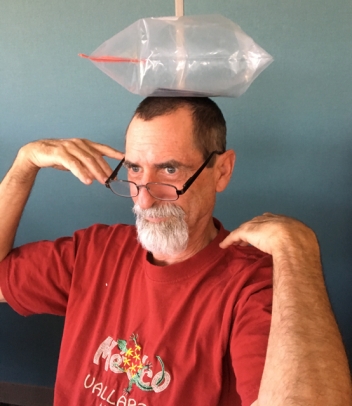
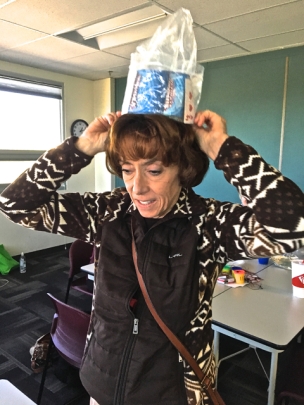
Participants were asked to warm-up for the session with a challenge from the Destination Imagination Instant Challenge App.

Instant Challenges are fun, STEAM-based group activities that must be solved within a short period of time. Using your imagination, teamwork and few everyday materials, you and your friends will work together to see just how innovative you can be. With hundreds of potential combinations and ways to solve each Instant Challenge, the creative possibilities are endless! https://www.destinationimagination.org/blog/new-instant-challenge-app/

IMG_2294.jpgIMG_2287.jpg

Introduction to the Squishy Circuits: The Medium for the Design Challenge

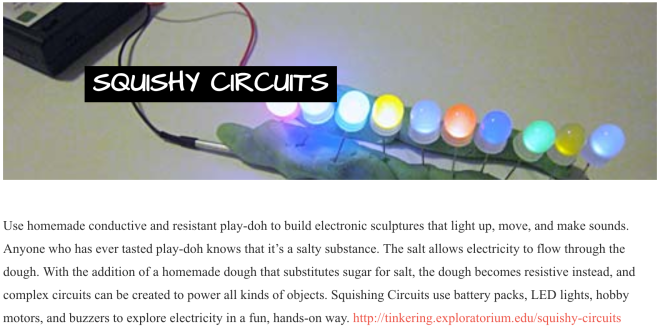
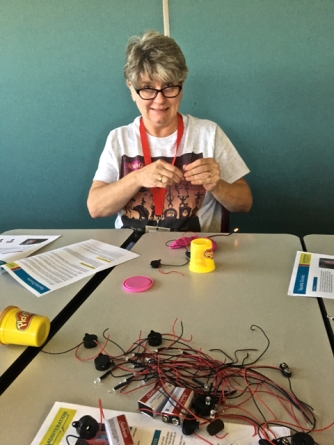
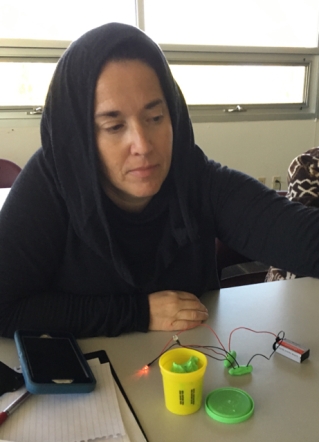
I then had the participating educators familiarize themselves with Squishy Circuits to prepare them for the upcoming design challenge and to deepen their engagement with the workshop content.

IMG_2298IMG_2302

An Overview of Design Thinking

The following videos and graphics about design thinking were introduced and discussed with participants.

John Spencer’s Video on the Launch Cycle

Design thinking was introduced to the participating educators through showing them John Spencer‘s video.

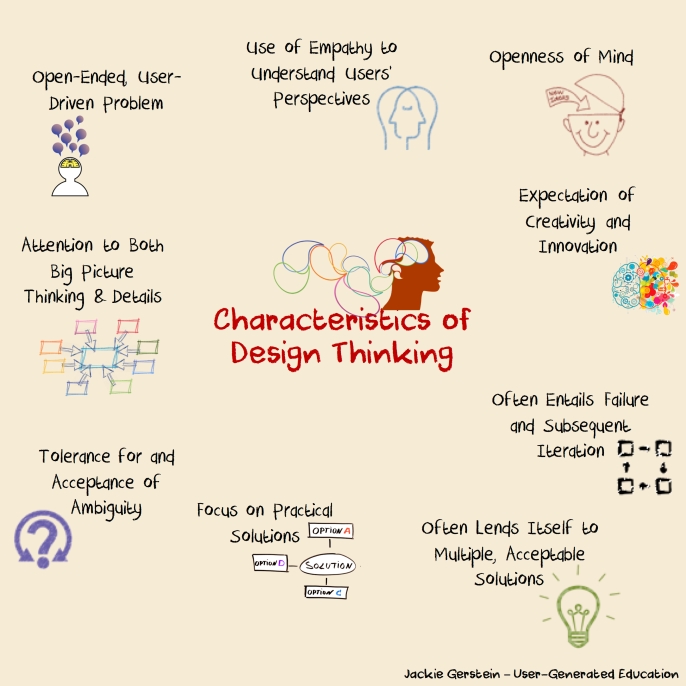
The Characteristics of Design Thinking

The following graphic, which I created for this workshop, was discussed.

characteristics of design thinking

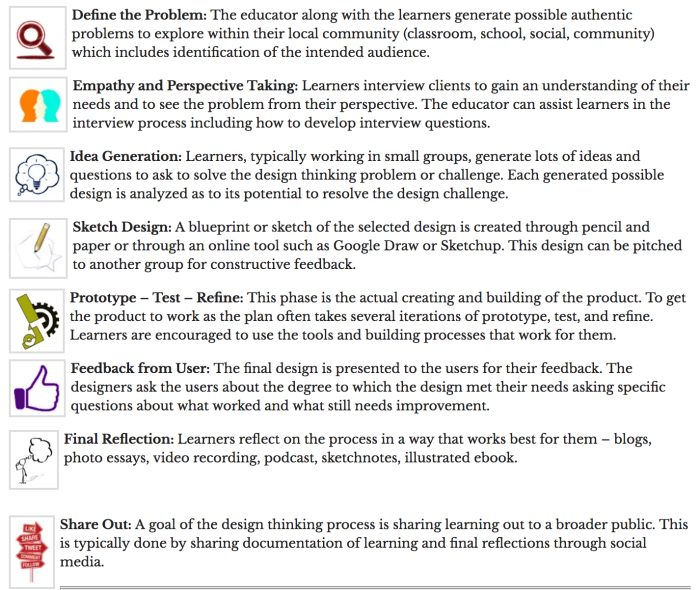
Design Thinking Process and UDL Planning Tool for STEM, STEAM, Maker Education

Design Thinking Process and UDL Planning Tool for STEM, STEAM, Maker Education developed by Barbara Bray and me was then introduced to the participants.

2017-10-22_1224

The Design Challenge

The major challenge or task was to create a design using Squishy circuits based on a partner’s specifications. Only the designer could touch the materials not the “client” who verbally described her desired design. To further explain this challenge, I showed a video of my gifted elementary students engaged in the challenge.

. . .  and some photos of the participating educators doing this challenge.

This slideshow requires JavaScript.

Sidenote

One of the partner teams was one of my colleagues, Anna, an amazing art teacher, who was the client paired with a gifted ed teacher, the designer. Anna provided the verbal directions for her partner to make an elephant drinking water. We were reaching the end of the session without its completion. I told them to just let it go – the elephant was complete but the lighting was not. During the time that the workshop participants were walking around looking at one another’s creations, Anna and her partner completed the elephant using the LEDs to light up his eyes. The look of pride and empowerment in both Anna and her partner, who obviously has never completed such a project and was glowing with well-deserved pride, was priceless – touching me quite deeply. The moral of the story for me: Teachers should be provided with PD opportunities to deeply engage in learning to the point where they feel empowered. I believe this will help increase the transfer of learning to their own classrooms as they will want their own learners to feel that same sense of empowerment.

Here is the slide deck from my presentation:

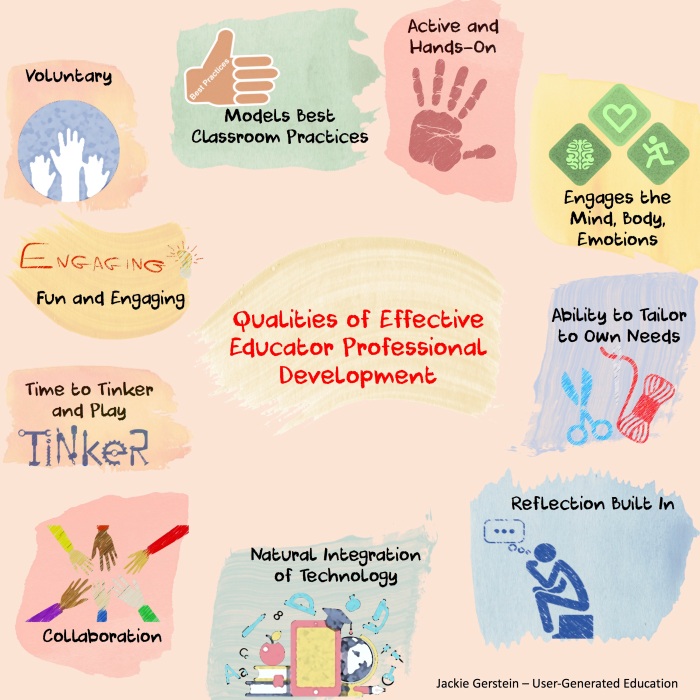
Qualities of Effective Educator Professional Development

Most administrators and teachers believe in the importance and value of professional development.  Sadly, though, too many teachers believe that those mandatory, one-size-fits-all professional development sessions offered by their schools are a waste of time and money.

Randi Weingarten, president of the American Federation of Teachers, said in a statement, “Even high quality professional development must be directly relevant to the needs of teachers and genuinely improve teaching and learning.” Weingarten said. “And low-quality professional development, frankly, feels like detention.” (New Report Reveals That Teacher Professional Development Is Costly And Ineffective)

Teacher professional learning is of increasing interest as a critical way to support the increasingly complex skills students need to learn in order to succeed in the 21st century. Sophisticated forms of teaching are needed to develop student competencies such as deep mastery of challenging content, critical thinking, complex problem solving, effective communication and collaboration, and self-direction. In turn, effective professional development (PD) is needed to help teachers learn and refine the instructional strategies required to teach these skills. However, research has noted that many professional development initiatives appear ineffective in supporting changes in teachers’ practices and student learning.(Effective Teacher Professional Development)

What follows are the general guidelines I use to plan and structure my professional development workshops. Recently, I facilitated two weekends of math instruction for elementary teachers. I use these workshops as a reference in this discussion.

  • Voluntary
  • Models Best Classroom Practices
  • Active and Hands-On
  • Fun and Engaging
  • Engages the Mind, Body, Emotions
  • Time to Tinker and Play
  • Collaboration
  • Ability to Tailor to Own Needs
  • Natural Integration of Technology
  • Reflection Built In

qualities of effective PD

Voluntary

Teacher PD needs to be voluntary.

The fact that adults are voluntary participants in the learning situation has profound implications for how learning occurs. They are generally highly motivated and primed to get the most out of the situation as possible. They will tackle tasks with enthusiasm, provided they are seen as relevant. This means that they are more likely to embrace participatory learning techniques such as discussion, role playing, small group work and the analysis of personal experiences.

The reverse side of voluntary participation by adults is that they can just as easily withdraw. Unlike the disruption that occurs when participation is mandatory, adults are likely to do one of two things. They will either quietly withdraw altogether or, if that is not really an option, they will continue to show up and do what is minimally expected of them, but will essentially become passive participants. (Principles underlying Effective Practices in Adult Education)

My weekend math workshops were offered to elementary teachers in a specific school district as a voluntary opportunity. A grant did provide them with a stipend for attending but as one of the attending teachers noted, “Even with a stipend, I wouldn’t volunteer for a weekend workshop unless I was interested in learning how to be a better teacher of math” (in this case).

Models Best Classroom Practices

First and foremost, teacher PD needs to model best classroom practices. “Curricular models and modeling of instruction provide teachers with a clear vision of what best practices look like” (Effective Teacher Professional Development). If the desire is to have educators create and implement engaging, interactive, and fun learning activities, then PD needs to be a mirror of these practices. I always believed that is is hypocritical to lecture about these best practices. It should be a process of modeling.

In order to model best classroom practices during my math workshops:

  1. I used videos, mostly from The Teaching Channel, to show elementary teachers modeling best practices in math within their own elementary classrooms.
  2. I did math activities with the teacher participants as if they were students in my elementary classroom.

Active and Hands-On

Active learning engages teachers directly in designing and trying out teaching strategies, providing them an opportunity to engage in the same style of learning they are designing for their students. Such PD uses authentic artifacts, interactive activities, and other strategies to provide deeply embedded, highly contextualized professional learning. This approach moves away from traditional learning models and environments that are lecture based and have no direct connection to teachers’ classrooms and students. (Effective Teacher Professional Development)

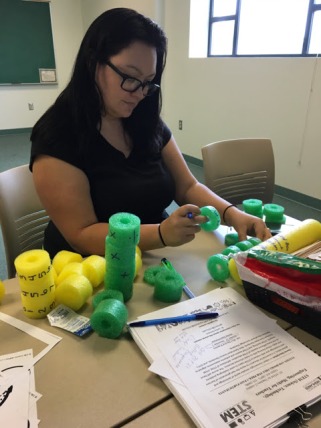
Other than explaining activities, showing videos and presenting some technology options, all of learning activities during the weekend workshop were hands-on and active.

IMG_1804IMG_1721

Fun and Engaging

Somewhere along the line of professional development, it became a way too serious endeavor. I believe this is a major reason why teachers don’t enjoy their professional development opportunities.

Fun has a positive effect on motivation levels, determining what we learn and how much we retain. If the learning isn’t fun, it won’t be effective. That’s not just a sneaking suspicion – it’s cold, hard, scientific fact.

  • study in the journal, College Teaching, found that students could recall a statistics lecture more easily when the lecturer added jokes about relevant topics.
  • In her book, Neurologist, Judy Willis showed how fun experiences increase levels of dopamine, endorphins, and oxygen – all things that promote learning.
  • In a study for the Journal of Vocational Behaviour, Michael Tews found that employees are more likely to try new things if their work environment is fun. (Why Fun in Learning is Important)

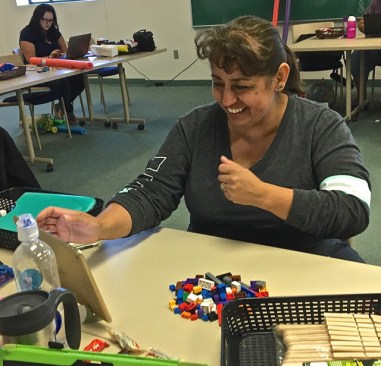
Regardless of age, grade, content area, one measure of success I use is the quantity of laughter and squeals of joy. I heard lots of laughter during my workshops.

IMG_1800IMG_1849

Engages the Mind, Body, Emotions

As an experiential educator and regardless of the age level I am teaching, I emphasize multi-sensory, whole person learning.

We learn best when we think, feel and do.  That’s the message of Dr. Adele Diamond, a cognitive developmental neuroscientist who currently teaches at the University of British Columbia in Canada.  We might refer to this as “whole body learning.”  According to Dr. Diamond, the executive function of the brain — the prefrontal cortex — works best when we go beyond the rational mind by also involving emotions and physical behaviors.  That makes sense since the more we involve other parts of the brain, the more neural connections we make that reinforce learning. (Brain Research: To Improve Learning, Use Whole Body)

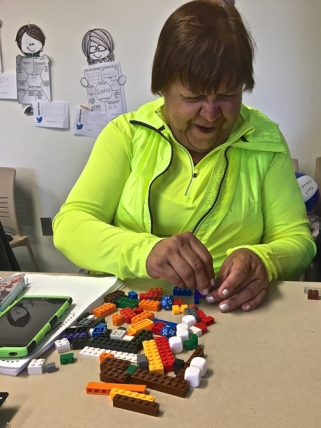
My math workshop was not exception as activities that use the body, mind, and emotions were introduced to the participating teachers.

IMG_1980.JPGIMG_1970

Time to Tinker and Play

Teachers and librarians, like their students, need hands-on experience with tools and with playing to learn as that helps them build creative confidence. (Crafting Professional Development for Maker Educators)

Teachers, during PD, should be provided with time, resources, and materials with which to play. It sets the expectation that they will be active agents of their own learning. It gives them the message it is okay to play and experiment with the materials; that tinkering is often needed as a part of learning new skills.

Given that the nature of the workshop was hands-on and active, workshop participants were time to tinker with the resources and materials provided.

 IMG_1819IMG_1701

Ability to Tailor to Own Needs

One of the justified complaints of teachers regarding their schools’ professional development is that it is often of the too generic, one-size-fits all variety. To be effective, professional develop should help teachers address their own classroom needs. Participating teachers were given lots of resources and opportunities to develop math activities specific for their grade level and students.

Integrates Collaboration

High-quality PD creates space for teachers to share ideas and collaborate in their learning, often in job-embedded contexts. By working collaboratively, teachers can create communities that positively change the culture and instruction of their entire grade level, department, school and/or district. (Effective Teacher Professional Development)

At the beginning of the workshop, participants were asked to form groups with same grade level teachers forming what I called mini-PLNs. Part of the workshop time was devoted to teachers developing materials for their own classrooms and students. During the time, the teachers could work with their mini-PLNs. They were also asked to share, throughout the weekend, the activities they discovered and developed. These sharing sessions often led to feedback and ways the activities could be modified for a variety of student populations.

IMG_1833IMG_1874

Naturally Integrates Technology

Technology use within all learning and teaching environments including professional development should be ubiquitous; it’s use should be determine by its potential to enhance and increase learning.

During my math workshop, participants used technology to:

  • Access the workshop slides.
  • Explore learning activities for the manipulatives I provided: dice, pool noodles, Legos. playing cards, beach balls.
  • Try out online math games: ABCya, Toy Theater Math, Prodigy, and Code.org.
  • Take photos of math examples in school building.

IMG_1246IMG_1667

Builds in Reflection

High-quality professional learning frequently provides built-in time for teachers to intentionally think about, receive input on, and make changes to their practice by facilitating reflection and soliciting feedback. Feedback and reflection both help teachers to thoughtfully move toward the expert visions of practice. (Effective Teacher Professional Development)

As a final reflection for the weekend, I asked participating teachers to use the following prompt to create a mini-poster of their learning. It also modeled how to use such a reflection process with their students.

. . . and here is a video recording of one of the participating teacher’s reflections:

As a parting shot, here are the slides I used during the workshop:

Specific Ideas for Intentional Creativity

Recently I wrote a blog post about Intentional Creativity. Here is the graphic created for that post. Below the graphic are specific ideas I am using with my gifted elementary students this school year.

intentional-cre_23934707_d014e7d3da113c7fcd2ff7cec1fa3adc034ba9a2

What follows are the activities I am using this school year to be intentional with sparking creativity in my gifted education classrooms. The titles are links for these activities.

Destination Imagination Instant Challenges

392x696bb

Goal: To spark creative divergent thinking for STEM, STEAM, and science based learning.

Description: Instant Challenges are fun, STEAM-based group activities that must be solved within a short period of time. Using your imagination, teamwork and few everyday materials, you and your friends will work together to see just how innovative you can be. With hundreds of potential combinations and ways to solve each Instant Challenge, the creative possibilities are endless!

IMG_1127IMG_1129

Write About

Goal: To get learners’ primed to do some creative writing.

Description: Don’t look at Write About as another thing to add. It’s a platform for writing and a community for publishing writing…regardless of the genre, purpose, length or audience. We believe a balance between digital and physical is a healthy thing, and support your pencil/paper writer’s notebooks whole heartedly! But when you want students to transition their writing skills into a digital space…when you want to empower them with choice and visual inspiration for creative sparks…when you want them to have an authentic audience for their writing…when you want them to leverage multi modal tools like audio and images…that’s where we come in!

Minute Mysteries

Goal: To help learners to think outside of the box; to develop alternative perspectives of perceived reality.

Description:  Minute mysteries are riddles where students ask yes or no questions to try and solve the riddle. They are called minute mysteries because they are usually a bit more complex than your average riddle.

Rebus Puzzles

Goal: To help learners playful interact with the symbolic nature of language.

Description: Rebus Puzzles are essentially little pictures or riddles, often made with letters and words, which cryptically represent a word, phrase, or saying.

Classroom Icebreakers

Goal: To build community; help create a classroom climate with a sense of fun and whimsy.

Description: Useful for the beginning of a class period or toward the beginning of a semester when students don’t know each other well, Introduction and Breaking-the-Ice games can dramatically transform the dynamics of your classroom. More ideas can be found at: https://www.pinterest.com/explore/classroom-icebreakers/

Intentional Creativity

Torrence, whose focus was on creativity, developed the Torrence Incubation Model of Creative Thinking (TIM) model.

[embedded content]

As emphasized in this video, embedding creativity into the curriculum can and should be a strong component of content area teaching and learning. In other words, educators don’t need to plan to teach creativity as another part of curriculum.  Creativity is often an integral part of the practices of professionals including scientists, mathematicians, business people, artists, writers, and is an important part of their content area expertise. It follow, then, that learners should be taught in ways that help them think like a scientist . . . like an artist . . .  like a writer . . .  like a business person.

E. Paul Torrance, perhaps one of the most prominent scholars of creativity, conducted a variety of studies exploring the teaching and learning of creativity. His studies identified specific skills associated with creativity, and demonstrated success in the teaching of creativity through the Torrance Incubation Model of Creative Teaching and Learning. The Torrance Incubation Model of Creative Teaching and Learning can be applied to a lesson, unit or project. The application of TIM and the identification of a specific creativity skill is an effective way to teach creativity, without impacting the teaching of core objectives or curriculum content. TIM, has three stages: Stage One, Heighten Anticipation, is designed to adequately and mentally prepare the student (or students) for the project ahead. Torrance describes this as a ʻWarming Up Periodʼ with the following six functions, (1) Create the Desire to Know, (2) Heighten Anticipation and Expectation, (3) Get Attention, (4) Arouse Curiosity, (5) Tickle the Imagination, and (6) Give Purpose and Motivation. (Torrance Incubation Model of Creative Teaching and Learning (TIM))

Specific active methods for heightening anticipation include:

The benefits of educators being intentional with heightening anticipation include:

  • Increased engagement in and motivation for the learning activities.
  • Increased interest in content area learning; possibly stimulating new learner passions.
  • Deeper learning.
  • More generalizable skills related to creativity.

So just with a little planning, the educator can set up conditions that can significantly motivate learners and create an energized learning environment climate.

intentional-cre_23934707_d014e7d3da113c7fcd2ff7cec1fa3adc034ba9a2

Freedom to Learn

I was painfully bored during my K-12 education. I looked forward to college anticipating that it would be different – more engaging, more interesting, more innovative. I was wrong. My undergraduate education, except for a few bright spots, was just an extension of my K-12 education including more grill and drill with sages on the stages (literally since I went to such a large university); taking notes and taking lots of multiple choice tests. During my freshman year, I thought that if I had one wish, it would be to change the educational system (which has stayed with me ever since). One of those bright spots was being asked to read Carl Rogers, Freedom to Learn, which was published 1969 in an upper level Educational Psychology course. The big aha for me was that school systems should be focused on helping learners develop the skills for how to learn not what to learn, one that was sorely lacking in most of my K-graduate-level education and a concept and goal that as an educator I’ve held onto ever since.

So now when I read about new “pedagogies” and instructional strategies based on self-directed learning, learning how to learn, self-determined learning, I kind of laugh to myself. Solid, valid, and student-focused pedagogy has been proposed ever since the beginnings of institutionalized education – think John Dewey, Maria Montessori, Kurt Hahn, and in this case, Carl Rogers.

The following text provides a summary of Rogers’ major themes  about learning and education from Freedom to Learn and comes from Weibell, C. J. (2011). Principles of learning: 7 principles to guide personalized, student-centered learning in the technology-enhanced, blended learning environment. Retrieved from https://principlesoflearning.wordpress.com.

freedom to learn

Rogers (1969) listed five defining elements of significant or experiential learning:

  1. It has a quality of personal involvement – Significant learning has a quality of personal involvement in which “the whole person in both his feeling and cognitive aspects [is] in the learning event” (p. 5).
  2. It is self-initiated – “Even when the impetus or stimulus comes from the outside, the sense of discovery, of reaching out, of grasping and comprehending, comes from within” (p. 5).
  3. It is pervasive – Significant learning “makes a difference in the behavior, the attitudes, perhaps even the personality of the learner” (p. 5).
  4. It is evaluated by the learner – The learner knows “whether it is meeting his need, whether it leads toward what he wants to know, whether it illuminates the dark area of ignorance he is experiencing” (p. 5).
  5. Its essence is meaning – “When such learning takes place, the element of meaning to the learner is built into the whole experience” (p. 5).

As an example of significant learning—the kind that illustrates his theory of freedom to learn—Rogers cited the informal notes kept by Barbara J. Shiel, a teacher, who out of despair and frustration decided to try a drastic experiment in promoting experiential learning in her sixth grade class. In the experiment Mrs. Shiel introduced the concept of work contracts. These were ditto sheets that contained a list of all of the subjects the class was to study, along with a list of suggestions for study under each, and a space for students to write their plans in each area.

“Because I was not free to discard the state-devised curriculum time schedule, I explained the weekly time-subject blocks to the children—this was to be a consideration in their planning. We also discussed sequential learning, especially in math, mastering a skill before proceeding to the next level of learning. They discovered the text provided an introduction to a skill, demonstrated the skill, and provided exercises to master it and tests to check achievement. When they felt they were ready to go on, they were free to do so. They set their own pace, began at their own level, and went as far as they were able or self-motivated to go.” (Rogers, 1969, pp. 17-18)

Since evaluation was self-initiated and respected by the teacher, there was no need for cheating to achieve success. “We discovered that “failure” is only a word, that there is a difference between “failure” and making a mistake, and that mistakes are a part of the learning process.” (Rogers, 1969, p. 18)

One cannot measure the difference in attitude, the increased interest, the growing pride in self-improvement, but one is aware that they exist. (Rogers, 1969, p. 19)

The experience of Mrs. Shiel’s experiment is illustrative of the principles of learning that Rogers (1969, pp. 157-164) abstracted from his own experience:

Human beings have a natural potentiality for learning. “They are curious about their world, until and unless this curiosity is blunted by their experience in our educational system” (p. 157).

Significant learning takes place when the subject matter is perceived by the student as having relevance for his or her own purposes. “A somewhat more formal way of stating this is that a person learns significantly only those things which he perceives as being involved in the maintenance of or the enhancement of his own self” (p. 158).

When threat to the self is low, experience can be perceived in differentiated fashion and learning can proceed. When [the learner] is in an environment in which he is assured of personal security and when he becomes convinced that there is no threat to his ego, he is once more free to…move forward in the process of learning. (p. 161)

Much significant learning is acquired through doing. “Placing the student in direct experiential confrontation with practical problems, social problems, ethical and philosophical problems, personal issues, and research problems, is one of the most effective modes of promoting learning” (p. 162).

Learning is facilitated when the student participates responsibly in the learning process. “When he chooses his own directions, helps to discover his own learning resources, formulates his own problems, decides his own course of action, lives with the consequences of these choices, then significant learning is maximized” (p. 162).

Self-initiated learning which involves the whole person of the learner—feelings as wells as intellect—is the most lasting and pervasive. This is not the learning which takes place “only from the neck up.” It is a “gut level” type of learning which is profound and pervasive. It can also occur in the tentative discovery of a new self-generated idea or in the learning of a difficult skill, or in the act of artistic creation—a painting, a poem, a sculpture. It is the whole person who “let’s himself go” in these creative learnings. An important element in these situations is that the learner knows it is his own learning and thus can hold to it or relinquish it in the face of a more profound learning without having to turn to some authority for corroboration of his judgment. (pp. 162-163)

Independence, creativity, and self-reliance are all facilitated when self-criticism and self-evaluation are basic and evaluation by others is of secondary importance. If a child is to grow up to be independent and self reliant he must be given opportunities at an early age not only to make his own judgments and his own mistakes but to evaluate the consequences of these judgments and choices. (p. 163).

The most socially useful learning in the modern world is the learning of the process of learning, a continuing openness to experience and incorporation into oneself of the process of change. If our present culture survives, it will be because we have been able to develop individuals for whom change is the central fact of life and who have been able to live comfortably with this central fact. They will instead have the comfortable expectation that it will be continuously necessary to incorporate new and challenging learnings about ever-changing situations. (pp. 163-164)

Rogers’ theory of learning also included principles that define the role of the teacher as a facilitator of learning. Rogers (1983) summarized this role by stating that “the primary task of the teacher is to permit the student to learn, to feed his or her own curiosity” (p. 18). Rogers’ principles of facilitation are complementary to his ten principles of learning. Together they form a human learning theory that emphasizes learner agency, growth, and affect. These ten principles are as follows (summarized from Rogers, 1969, pp. 164-166)):

  1. The educator has much to do with setting the initial mood or climate of the class experience. “If his own basic philosophy is one of trust in the group and in the individuals who compose the group, then this point of view will be communicated in many subtle ways” (p. 164).
  2. The educator helps to elicit and clarify the purposes of the individuals in the class.
  3. The educator relies upon the desire of each student to implement those purposes which have meaning for him or her, as the motivational force behind significant learning.
  4. The educator endeavors to organize and make easily available the widest possible range of resources for learning.
  5. The educator regards him/herself as a flexible resource to be utilized by the group.
  6. In responding to expressions in the classroom group, the educator accepts both the intellectual content and the emotionalized attitudes, endeavoring to give each aspect the approximate degree of emphasis which it has for the individual or group.
  7. As the acceptant classroom climate becomes established, the educator is able increasingly to become a participant learner, a member of the group, expressing his views as those of one individual only.
  8. The educator takes the initiative in sharing him/herself with the group—his/her feelings as well as thoughts—in ways which do not demand nor impose but represent simply a personal sharing which students may take or leave.
  9. As a facilitator of learning, the educator endeavors to recognize and accept his/her own limitations. “S/he realizes that s/he can only grant freedom to his/her students to the extent that s/he is comfortable in giving such freedom” (p. 166).

(For this final section, I took the liberty to change “facilitator” to “educator.”)

The following graphic developed by the Freedom to Learn Project, is based on Rogers’ ideas and exemplifies their manifesto.

2017-08-12_0958

http://www.freedomtolearnproject.com/new/manifesto/

So the push towards self-directed learning – helping learners develop skills for directing their own learning really isn’t new BUT the Internet, social media, and open-source content just make it easier for the educator actually implement these practices especially when working with groups of students.

Online learning opportunities, pedagogical shifts and easy accessibility of Internet through multiple devices offer attractive opportunities for learners to assume greater responsibility and initiative in their own learning. In fact, it may not be hyperbole to state that self-directed learning is now a mandatory skill rather than optional in order to impart both work readiness and the development of global citizenry (diversified, culturally sensitive and fully contributing social citizens) among the growing generation of digital [savvy learners]. (Is Learning Increasingly Self-Directed in the Digital Era?)

Beginning the School Year: It’s About the Learners Not the Content

Too many classes, all grade levels, begin the school year with getting down to academic business – starting to cover content, discussing expectations regarding academic requirements, giving tests, and other academic information provided by the teacher to the students in a mostly one-way communication.  The human or social element is often disregarded.

I believe that all classes should begin with focusing on having the students make connections between themselves and the educator; and between one another.  I want students to learn about one another in a personal way.  I want to learn about my students so my instructional strategies can be more personalized and tailored to their needs and interests.  Beginning class with a focus on connections rather than content gives learners the following messages:

  • You are the focus of the class not me.
  • You are important as a learner in this class.
  • You will be expected to engage in the learning activities during class time.  You will be an active learner.
  • You will be expected to do collaborative learning during the class time.
  • I, as the class facilitator, will be just that – a facilitator.  I will introduce the learning activities, but you will be responsible for the actual learning.
  • I will get to know you as a learner and try to help you find learning activities that are of interest to you. (From my post: Beginning the School Year: It’s About Connections Not Content)

Two things that I believe needs to occur at the beginning of the schools year:

  1. Get to know the learners – as individuals with unique backgrounds, interests, strengths, weaknesses.
  2. Establish a learning community where all learners are seen as having value in our classroom

Getting to Know Learners

One of our primary goals at the beginning of the school year is to get to know our students. This is important for several reasons. First, the better we know our students, and the more they know we know them, the more invested they become in school. Also, a dynamic and vigorous learning environment is built on relationships. When we create strong connections with our students, we create a learning environment where risk-taking and collaborative learning can take place. Finally, the better we know our students, the better we can help craft learning experiences that match who they are. Knowing our students is fundamental to real differentiation. (6 Strategies For Getting To Know Your Students)

This coming school year I am working with gifted elementary students. To support those messages I discussed above, I am going to have them do the following Hyperdoc starting with our first meeting together.

Using a Hyperdoc such as this has the additional benefits:

  • It leverages the use of technology which consistently is of high interest, high engagement for my learners.
  • It is a Choice Board.  Choice Boards:
  • It supports several of the new ISTE NETS for Students:
    • Empowered Learner: Students leverage technology to take an active role in choosing, achieving and demonstrating competency in their learning goals, informed by the learning sciences.
    • Digital Citizen: Students recognize the rights, responsibilities and opportunities of living, learning and working in an interconnected digital world, and they act and model in ways that are safe, legal and ethical.
    • Knowledge Constructor: Students critically curate a variety of resources using digital tools to construct knowledge, produce creative artifacts and make meaningful learning experiences for themselves and others.
    • Creative Communicator: Students communicate clearly and express themselves creatively for a variety of purposes using the platforms, tools, styles, formats and digital media appropriate to their goals. (https://www.iste.org/standards/standards/for-students)

Building a Learning Community

Community building activities are important in my classroom. It begins the first week of school and continues throughout the entire school year.

The intentional building and supporting of friendships is a cornerstone of a caring school community. Providing frequent opportunities for students to be in close proximity to others is not always enough to enable them to build a net­work of friends and feel connected to the classroom and the wider school com­munity. Careful classroom management and planning of student-student and student-teacher interactions, together with appropriate instructional strategies, can have a positive impact on social relationships and lead to the development of a support system that will enhance students’ learning in all curriculum areas. (Why create positive classroom communities?)

A growing body of research confirms the benefits of building a sense of community in school. Students in schools with a strong sense of community are more likely to be academically motivated (Solomon, Battistich, Watson, Schaps, & Lewis, 2000); to act ethically and altruistically (Schaps, Battistich, & Solomon, 1997); to develop social and emotional competencies (Solomon et al., 2000); and to avoid a number of problem behaviors, including drug use and violence (Resnick et al., 1997). (Creating a School Community)

I’ve written several blog posts about team building activities I’ve used with my elementary students and will use again with them as (1) they really like the activities, and (2) there is almost always more to learn even in repeat activities.

STEM Activities That Support

Since my gifted classes have a strong focus on STEM, STEAM, and Maker Education, my learners will be asked to do several of the following team building activities:

Team Building Activities That Support Maker Education, STEM, and STEAM 

teambuilding

Team Building Activities

Other team building activities can be found within the following resources:

As a parting shot, I’d like to mention that some teachers believe they do not have the time to do activities such as these. To that, I counter with several arguments for their use:

  • Getting to know the students and building a community often act as a form of prevention for behavioral management problems. When learners have trust in their teacher, their peers, and the environment, they become more engaged and less likely to “act up.” This form of prevention actually saves time in that the educator doesn’t have to deal with misbehavior.
  • School should be lots more than just the transmittance of content. It should include social emotional life skills that will assist learners in navigating in their worlds outside of school now and in their futures.

Development of civilization: Global perspective ,River valley civilisation

The development of human civilization marks one of the most significant transformations in human history—from nomadic, hunter-gatherer societies to settled, organized, and complex urban systems. This evolution was not uniform across the globe but occurred in distinct regions under varying environmental, economic, and cultural conditions. Among the earliest and most influential forms of civilization were the river valley civilizations, which laid the foundation for urban planning, governance, agriculture, and social organization.

This essay examines the global perspective of civilization development and provides a detailed discussion of river valley civilizations, their characteristics, and planning principles.


1. Meaning and Concept of Civilization

A civilization refers to an advanced stage of human social development characterized by:

  • Permanent settlements
  • Organized government
  • Division of labor
  • Economic systems (agriculture, trade)
  • Cultural and technological advancements

Civilizations represent the transition from simple societies to complex urban systems, often marked by the emergence of cities.


2. Global Perspective of Civilization Development

2.1 Prehistoric Phase: Hunter-Gatherer Societies

https://images.openai.com/static-rsc-4/YgGTuAY7HAROWq6hOdC43QMptIZWHjJ-6WD1XC8795t3HY-DwDuBO_IgHkw0N7KjkcMDVJZMdr4YT4wScl-rz3ufWwp7xAVIk1PZ05aO9El4l-4dQshMniRDguIMa5VRo19eGkovd9KiOEZlzVrxye-ntEmASQ6dFR0mY0rip-XNCy2ijoH2Pr5yoX5JLLwm?purpose=fullsize
https://images.openai.com/static-rsc-4/j-9QW_c2d4-TStfRAR8ywq1SyhbUFipr6q7IXT1iOHgW4uG9urWf58Qm8bUQAWmNuwEQGRZv5o1-eMNte-57JX_47cwmtbeI28s4MzYKT_uq7j35Q_WBemRfWWmRhadXvL-D9Jv2a5E9b7y3Tjs2TZKVXtYRspn32JtQr_eOJw2qLRB9VRpZy6vhma3lx6UF?purpose=fullsize
https://images.openai.com/static-rsc-4/_rlr5Iz0bKl0LgXXk05w0mK9ESFg8okd8JDojaEhvjz7xZPsL0p5J_6-IMjRsznFMzc6S0q4Myun5KWAZ36xrVE3rc6AV6jiADWo15JBqX3x64n6ufnIoQjcjMLQ8HhyIwR18F7sEM7JC2RTDhyJ7siV8pvl05WCsQATTuQEaVbAT3ha51VyEHk0Pa65j50F?purpose=fullsize

6

  • Humans lived in small, mobile groups
  • Dependent on hunting and gathering
  • Temporary shelters
  • No permanent settlements

👉 This phase lacked urban planning but laid the foundation for human adaptation to the environment.


2.2 Neolithic Revolution (Agricultural Phase)

https://images.openai.com/static-rsc-4/blslpbB6kIEGTtID0gNSWYErnB8rw_Y-LHKLIJyfVzKrERRS2GkKRQiCiLXSxfuc0JXsNkTCE5S_AXmWFWYYjF5a9ZjpMoUTFXwHImZ8ei-pmO51L9M_KPbHKWSnup-XPTzftCGMGH0oRoCSRIqSnEUFKFeDKsQCKDnj6HfZB08LOy7sL88A4k53od33lX7T?purpose=fullsize
https://images.openai.com/static-rsc-4/VR3x0Bb21ZqxzaFvRgS5SxqnsqxCWzFuvHepwWs05kGLr2LCxs_nZIsnUUWjIDb0AHyppk5gILSA7forFY9nl0zQfHl7akP8-zVgoGybC0VjQXc7c9uT3msYu-sOlelb-MOwSuGii54PzAmn5lv32530ud5lhf8O913p05p8VzRVJjxg2SbrytJAQOABadRq?purpose=fullsize
https://images.openai.com/static-rsc-4/buC6AX6qUgHpceuJiAlGuV7Use_VK6bIe9T1pOhy8IO3UWociD6wlWziAoUP1hC5AlBh7FMyrqirAjC2uTM0KMRdHPISErjSbnF03w6mdSoTG3M3xvjN2MX3PcCLBLkwTnA9W6bchxenwxlfCVLr8zN8wVMpTBK8TkY7JIBe9UU6iaKbM9EKXjgVUcCm_82z?purpose=fullsize

7

  • Transition to agriculture and domestication of animals
  • Emergence of permanent settlements
  • Development of tools and pottery
  • Surplus production

👉 This stage marked the beginning of organized settlements and proto-urban planning.


2.3 Emergence of Early Civilizations

https://images.openai.com/static-rsc-4/jC6CfMTzT045zv5GdD5MrnxnN7P4panQ7Tj_OetL5sBhe3JJQmzbbZmWCfrx0MrRtV4y_ts4w2OJaPy9HMcqohSRXp6s2OToqCu88rvPWIAdBiboMYHHuxFc7mSD-3UuX4pPK-vJ7PjqiiFLz4t0V_8EJJwL2w7idDERfXumVWKFjEBdcjzLQH7JJspXzEOQ?purpose=fullsize
https://images.openai.com/static-rsc-4/3lnI_zn8uqGwGe2zuc-9fLOF4Wfq61TDJI2W65dCKAd-5ccun8UOObLwCQLBbQazPQW8rNu36zAWhWffHwNJ48fAONyq5iWd9Y32ynzvA2Rnp-uS-P0fqs1zSrwXyQ2-LBNeKt2wByd66cerMCzjxBRvBg2ITqmsURR8eEzZjqzBiSCCbIZ8b1H56gHKRgua?purpose=fullsize
https://images.openai.com/static-rsc-4/ZVu52R3mTgEW5Qs8mAWItYQTbesPP12ehH0AUDHnX-2N4dTm6LlOjzYy9eByEWNSOhiUA6jOgSJAHqghL5Br0qQAZPw4MyjNJOf1_8h_d7s1m712vyh3dyZv1IUNyVKQkk2kE5A__ug_SBKf_UuUDhhno4bmInGSJRzyi367_N-y22xBYOIuV1VcV4e0DD_H?purpose=fullsize

5

  • Growth of cities and towns
  • Development of writing systems
  • Organized governance and administration
  • Trade and specialization

👉 Civilizations emerged independently in different parts of the world, especially along fertile river valleys.


3. River Valley Civilizations: The Cradle of Civilization

River valley civilizations are often called the “cradle of civilization” because they provided ideal conditions for human settlement and growth.

Why River Valleys?

  • Availability of water
  • Fertile soil due to alluvial deposits
  • Flat land suitable for agriculture and settlement
  • Transport and communication routes

4. Major River Valley Civilizations

4.1 Mesopotamian Civilization (Tigris–Euphrates)

https://images.openai.com/static-rsc-4/fnxNJXj7_g16zRa3snoh-M9p9I-uj8BkhgIDmYWq1BZbutQ9at8gu7WOhghlTMHKb4aDBjYvX_Db0JM2Qqy6PFscWXNoZd4eRGbaF0dQRCek-bPjsxoRUWwUhrN892goWCQbHV7TtnkXeQ8VOlM4Nb3XlMIIZKqhye69x8xenAGfN53i4iqWn_EtKvGwiohw?purpose=fullsize
https://images.openai.com/static-rsc-4/SvhLd9porZTsDQXpTSsmDl8hN8MeGrQBAe4-20P0XdaTlK705-xaPA6YS5HyDSpqD6LUKCPWZwA4JW-BZDk5wzMv5F31Htl9CEAjjXfo4ua-OQyd2jFWIznuOqYRv9RaSztUodWYtvIUxzrREBAhN8F72tQMGG0EHa7SjHkazKAr3G-sobgfbxlst7weBLvd?purpose=fullsize
https://images.openai.com/static-rsc-4/aFIx3ysT7ReFEbhDpCkzlVAYsmMMyhs6K9yVnNFogZxubeWrWoQEtf6C4ZFi3vD9oRSnSI5pRSnrD04eUN3SIn2mvBxgXrHYYzL0P9d5jwTEr_yHKPlMc4HT4c3GcOBq1fLD4V0Tfa3Dv3sapT2n-VLr3NcAMr23B5mNqiRmXfXacTieIT_l2ytB2UqpmG-_?purpose=fullsize

5

Location

  • Between Tigris River and Euphrates River (modern Iraq)

Features

  • First known cities (Ur, Babylon)
  • Development of writing (cuneiform)
  • Irrigation-based agriculture
  • Ziggurats (temple structures)

Planning Characteristics

  • Organic city layout
  • Defensive walls
  • Irrigation canals

Principles

  • Water management
  • Religious centrality
  • Trade-based economy

4.2 Egyptian Civilization (Nile Valley)

https://images.openai.com/static-rsc-4/r1RDBdVc-Ql_3eqJ6aZhOt1duGNORF4gbwKG4snLOCmq9-cAg_ptGQhQSdIZBSnqC-KDNDoBN-3JYIdbBj9ny8pvnPnIOSJW7Nj87aVWPWsUGizUPseiS21yO_epryP1MlZqT8fdZOvu0TmEdo4KcDjjfkgP8iGavavUlp47fQar0jQf125SgPeCeiILsKm4?purpose=fullsize
https://images.openai.com/static-rsc-4/hd1fL7BmQFaWUoDXyv0vv3sMNQTeYE1ar-nlibFCsbQxUun73Cg0TE0DIreR_uIGKnYlXemtfJDGf9rZNhxecrXsA3ccw2ymwnqkhmqjcY5wAoSr1mIDMPeHaCVbAaI6wR2T3-ftKtfQrkGzE35cyZce0ONVdLbpzP45s_QEWl5bl6stL5zrZKQEBQri5o_q?purpose=fullsize
https://images.openai.com/static-rsc-4/7uwIx70ziRt-amvqLzdLYXJAtBox_D9N9eoPIJArA5vbu1MK4HDyhI8iisTg3zxm9CD8poKPXCJNdkSsgqfmCy16RCPWXP1SNjZDXCVv-Lj0EMIM_kDutgCCCnImmn79Ncmj_eLOWcstIyx-Ib1wwOy0P-e5LlMbNcvBLPxaMNhtleFX4wIe3_59ZD1K6dLj?purpose=fullsize

7

Location

  • Along the Nile River

Features

  • Predictable flooding ensured fertile soil
  • Strong centralized governance (Pharaohs)
  • Monumental architecture (pyramids, temples)

Planning Characteristics

  • Linear settlements along the river
  • Functional zoning
  • Integration with agriculture

Principles

  • Dependence on natural cycles
  • Religious and political centralization
  • Environmental adaptation

4.3 Indus Valley Civilization (Indus–Saraswati)

https://images.openai.com/static-rsc-4/ToEgnuAkiTTecnIw8qQqW86e62oU3nttRt92fk_eDSNCz7rO7TZo0HHC0iHVODHejtsYv6xJS8mxVP6tR5FA9xbTmnXCl8TnemIKNKsSn4NMRoAe3OuNFbIKHwR8OqxYAb3kQDhIPZK-VH5WUBE9mdcR8WBU0AcL2EMRVIkJaEqrpNFRcq6b0qvOEkOkOwEI?purpose=fullsize
https://images.openai.com/static-rsc-4/9_hu2GrV1gxldOeax-kCsn5Xy0dEiOYfQ4wrxizVdJ1boA5MR8pj-iMsG0mRgROiVEU-ZklaZolvVHqATZ8UKPAFwQHofVPz83YKuvE4HRp3pdaEqAfG71ZNo2Smw6S9MPIuuua8KlGrsKFnUzPy7no820bZND_qperaznfHX4x6bl2WDCIGQJOf0jq5n0rq?purpose=fullsize
https://images.openai.com/static-rsc-4/lG7_Xx9gwjGl8VC8a6_FTx0vLpF2eMtKDZPrcZVXD-_UF6cVFOV6mReTfMfg5WJLJ7_AUctoP2riCXK0KBy95jtAyfzOtlY-EEQ_unajpv-MsdUN1CFsp13y0RJe2UzQLGvdMlro0b_CBlL1sN5ECyWpDxUljen9BWJvXHGt7I8PWbAshcy-ld8iVLqQOngv?purpose=fullsize

6

Location

  • Along the Indus River and its tributaries

Features

  • Highly advanced urban planning
  • Standardized construction
  • Trade with Mesopotamia

Planning Characteristics

  • Grid-iron street pattern
  • Zoning (citadel and residential areas)
  • Advanced drainage and sanitation
  • Water management systems

Principles

  • Scientific planning
  • Public health and hygiene
  • Infrastructure integration

👉 Considered the most advanced urban planning system among early civilizations.


4.4 Chinese Civilization (Huang He / Yellow River)

https://images.openai.com/static-rsc-4/WBdk7cRfF28Qro3Or29WdwZHUG2IqEI1R9pWlecBfIK603gd45h6ptSV40wIqFTYMS3N9c32DIqM1IB-8E1I10OiUoWi42NsADeSr17Ak9e7vtMMGMPSOquc_mFRkhsZe0guhBRI6sGvN-mg1_tQtbnQBD8ZldD9VgpmzQ6GdR3JF23FB73V3dU5sabIvatJ?purpose=fullsize
https://images.openai.com/static-rsc-4/81nUYorLv3mtdi-_1G_pehP3ZdG_5Ke0QSEG8pbujS91DzKa7BFT43tBCm0JfU2UehOuHhPNrTJ-nh2uVWQu6Up8FcCWahdglFMGYgtjmkDbIWA8VPztIjnWMauO7jMB674Fl2NA3_DNlD8dOQA-brBwM7dBY5Okck-CshZ3p2VL6DOSQCQIM8cC0RAmBhkg?purpose=fullsize
https://images.openai.com/static-rsc-4/MwMdJcCaBOJeTPaFU9BfyLNejSJQ8uRhfNRpvIXC3O_-rwe1fCRYQ5q5ZvsWFZSHaGL2vZcM6Cl7C8KaJQQgPHY22UzoYPLv1RaOjr6n8BuvvMa-CQvj3xlxgtIQLQH-58ZSCQ5lrHl2yqnkMKnSZSKJAcuL5xIijo8EeKAZxzTR1gdEj6B9yNppod6iwNlz?purpose=fullsize

7

Location

  • Along the Yellow River (Huang He)

Features

  • Development of agriculture (millet farming)
  • Early dynastic rule
  • Walled cities

Planning Characteristics

  • Grid-based layouts
  • Fortified cities
  • Hierarchical organization

Principles

  • Political control and defense
  • Order and hierarchy
  • Integration of agriculture and settlement

5. Common Characteristics of River Valley Civilizations

Across all major river valley civilizations, several common features can be observed:

5.1 Agricultural Base

  • Fertile land supported food production
  • Surplus led to population growth

5.2 Urbanization

  • Emergence of towns and cities
  • Development of specialized occupations

5.3 Infrastructure Development

  • Irrigation systems
  • Roads and transport routes
  • Water supply and drainage

5.4 Social Organization

  • Division of labor
  • Class hierarchy
  • Organized governance

5.5 Trade and Economy

  • Local and long-distance trade
  • Development of markets

6. Planning Principles Derived from River Valley Civilizations

These civilizations established foundational planning principles:

6.1 Water-Centric Planning

  • Settlements located near rivers
  • Irrigation and water management systems

6.2 Functional Zoning

  • Separation of residential, religious, and administrative areas

6.3 Infrastructure Integration

  • Roads, drainage, and water systems planned together

6.4 Compact and Dense Settlements

  • Efficient land use

6.5 Environmental Adaptation

  • Use of local materials
  • Response to climate and geography

7. Significance in Urban Planning

River valley civilizations are significant because they:

  • Represent the origin of urban planning
  • Demonstrate early engineering and infrastructure systems
  • Show the importance of resource-based settlement planning
  • Provide lessons in sustainability and resilience

8. Relevance to Contemporary Planning

Modern planning continues to draw lessons from these civilizations:

  • Water-sensitive urban design (WSUD)
  • Sustainable resource management
  • Integrated infrastructure planning
  • Compact city development (aligned with TOD)

In the context of cities like Delhi, river-based planning (e.g., Yamuna floodplain management) is highly relevant.


Conclusion

The development of civilization from primitive societies to complex urban systems reflects humanity’s ability to adapt, innovate, and organize. River valley civilizations played a crucial role in this transformation by providing the environmental and economic conditions necessary for growth.

From Mesopotamia to the Indus Valley and the Nile to the Yellow River, these civilizations demonstrate early examples of planning principles such as water management, zoning, infrastructure integration, and environmental adaptation. Their legacy continues to influence modern urban planning and sustainable development practices.

Understanding these early civilizations is essential not only for historical knowledge but also for shaping future cities that are resilient, efficient, and in harmony with nature.

The Imperative of Experiential and Hands-On Learning

For the past several decades, I have had my feet in both elementary education and teacher training and development. Regardless of age, grade level, and setting, I include hands-on and experiential learning as a integral part of my instruction. It is learning by doing with a reflective element which, in turn, creates conditions for deeply engaged learning.

Experiential education is a philosophy in which educators purposefully engage with learners in direct experience and focused reflection in order to increase knowledge, develop skills, clarify values, and develop people’s capacity to contribute to their communities. Throughout the experiential learning process, the learner is actively engaged in posing questions, investigating, experimenting, being curious, solving problems, assuming responsibility, being creative, and constructing meaning. (What is EE)

One of my favorite expressions is “Insanity is doing the same thing over and over again and expecting different results.”  There’s lots of lip service about closing the achievement gap, serving marginalized populations, helping students gain 21st century skills, and preparing students for STEM-related careers. The problem is that the school systems working toward these changes are using a factory model of education prevalent in the 19th and 20th centuries to do so. The changes that are being sought are not coming into fruition as different outcomes are expected out of doing more of the same thing. This is why I titled this post, The Imperative of Experiential and Hands On Learning. I believe that current instructional strategies need to be turned on their heads to achieve desired results and outcomes. Hands-on and experiential learning is used in some elementary schools but this diminishes as students get older. In too many high schools and colleges, instruction seems to occur through engaging the ears and sometimes the eyes (through visuals such as with slide presentations). Interestingly, though, a Study Finds 52% of U.S. Adults Say No. 1 Way to Learn is Through Active Participation, Followed by Visual Demonstration.

Some benefits of experiential and hands-on learning include:

  • Increases motivation and engagement.
  • Engages most of the senses.
  • Builds social emotional skills.
  • More likely to engage emotions.
  • Lots of brain activation.
  • Increases retention of learning.
  • Making mistakes becomes a natural part of the learning process.
  • Expands critical thinking skills.
  • Preparation for real life.

imperativeofhandson

Increases motivation and engagement.

Hands-on learning is often lots of fun; and having fun increases engagement and motivation.

Hands-on activities encourage a lifelong love of learning and motivate students to explore and discover new things (Bass, et al.).(Case for Hands-On Learning)

Learning by doing allows students to become personally invested in their own learning process. Becoming actively engaged in their education builds confidence, as the lessons require students to rely on their own abilities to obtain knowledge. That confidence and self-reliance inspires students to embrace the learning process and enthusiastically seek out additional knowledge.   (Importance of a Hands-On Experience in the Elementary Classroom)

Engages the senses.

Hands-on and experiential learning often is multi-sensory learning often engaging sight, hearing, tactile kinesthetic senses as learners participate in the educational activities.

By definition, hands-on learning requires students to engage in the education process using multiple senses, including sight, hearing and touch. Known as multisensory learning, the hands-on teaching strategy engages the senses in a way that promotes learning comprehension on multiple levels.  (Importance of a Hands-On Experience in the Elementary Classroom)

More likely to engage emotions.

The personal nature of experiential learning engages the students’ emotions as well as enhancing their knowledge and skills. When students see the concrete fruits of their labor, they experience greater gratification and pride, thus enhancing their enthusiasm for continued learning.  (The Benefits of Experiential Learning)

Lots of brain activation.

When you combine activities that require movement, talking, and listening, it activates multiple areas of the brain. “The more parts of your brain you use, the more likely you are to retain information,” says Judy Dodge, author of 25 Quick Formative Assessments for a Differentiated Classroom (Scholastic, 2009). “If you’re only listening, you’re only activating one part of the brain,” she says, “but if you’re drawing and explaining to a peer, then you’re making connections in the brain.”(Hands-On is Minds-On)

Builds social-emotional skills.

Lots of social-emotional skills are addressed with hands-on, experiential learning.  Some of the specific skills that hands-on learning address are:

  • Goal-setting
  • Tolerance for frustration
  • Persistence
  • Asking for help
  • Working with others

Increases retention of learning.

When it comes to what learning methods work best, everyone is different, but the survey clearly demonstrates that hands-on training is favored by most Americans. Students who practice what they’re learning in a hands-on environment can often retain much more information when compared with sitting passively in a lecture room, so it’s not a surprise that hands-on training is the overwhelming favorite. (Majority of Americans Prefer Hands-On Training in Educational Settings, Survey Finds)

There is a huge increase in the amount of information that is retained by students who are given the opportunity to practice what they are learning in the form of hands-on training. When students sit and listen passively in a lecture-style environment, they retain 20 percent of the information. When they are given the chance to practice what they have just learned, that percentage increases to 75 percent. (What Are the Benefits of Hands-on Training?)

Making mistakes becomes a natural part of the learning process.

Experiential learning involves trial by error. As students engage in hands-on tasks, they find that some approaches work better than others. They discard the methods that don’t work, but the act of trying something and then abandoning it – ordinarily considered a “mistake” – actually becomes a valuable part of the learning process. Thus, students learn not to fear mistakes, but to value them. (The Benefits of Experiential Learning)

Expands critical thinking skills.

The National Council for Excellence in Critical Thinking defines critical thinking as the “process of actively and skillfully conceptualizing, applying, analyzing, synthesizing, and/or evaluating information gathered from, or generated by, observation, experience, reflection, reasoning, or communication.”  Hands-on learning allows students to experience a problem or task and make adjustments to improve outcomes. This “trial and error” exploration develops critical thinking and improves an understanding of abstract concepts that can be applied to real-life experience. (Improve Learning with Hands-on Activities)

Preparation for real life.

Experiential learning takes data and concepts and makes them “real” by applying them to hands-on tasks, with real results. As the student interacts with the information, it becomes real to them.

Many experiential learning projects are career-oriented, because they are, by nature, grounded in “real-world” activities. Through these activities, students start to discover and develop their own skills, aptitudes and passions. This discovery in turn sets them on a more defined path to college and careers. (The Benefits of Experiential Learning)

Games or Worksheets: Is there really a question about the choice?

I work part time with gifted elementary students at two Title 1 schools where most of the students qualify for free or reduced lunches; and where they and/or their parents are learning English as a second language. What I quickly discovered about my students was that many were lacking in foundational skills in ELA and in math. Sadly, the instructional method used by way too many schools, especially those considered low performing like mine, is to give students lots of worksheets to teach such skills. I don’t like worksheets. I didn’t like them when I was an elementary student and don’t know too many elementary students who say, “I love doing worksheets.”

I have been using games in my classrooms (elementary and higher education) for decades. My use of games has included board games, team building and cooperative games, and more recently, video games. In order to help my gifted students learn some of the foundational skills, I integrate a variety of these games. This post is split into two parts:

  • Personal Observations About the Use of Games for Learning
  • Example Games Used to Teach and Reinforce

Personal Observations About the Use of Games for Learning

There has been a lot written about using games for learning. Research generally supports their use for learning:

Across 57 studies that compared teaching with a game to using other instructional tools, incorporating a game was more effective (SD .33). Using a game improved cognitive learning outcomes along with intrapersonal and interpersonal outcomes. Researchers looking at other collections of studies have found that games help students retain what they’ve learned.

I have written about the teacher as an ethnographer and the teacher as a reflective practitioner. In line with these beliefs, I have made my own personal observations about using games with gifted elementary students at low performing schools.

The Desire to Win is a Motivator

One of the biggest draw in the use of games is that students want to build their skills in order to win the game. Most, if not all, of my students embrace and engage in competitive games with the goal of winning. The need to win is a strong motivator; and to win they need to develop those skills. Even in group team building and cooperative learning, learning basic skills in order to be successful is a great motivator for learning basic skills. The same can’t be said of worksheets. The major reward for completing a worksheet is a grade from the teacher. For many students, this type of reward is not all that motivating.

A Sense of Fun and Play

When games are used for learning, excitement and joy become part of the learning process. My learners’ excitement is seen with their squeals of joy, big smiles on their faces, and jumping out of their seats when they succeed in the games.  Doing worksheets is not fun and they do not elicit playful responses. They is limited joy in learning through worksheets.

Learning Doesn’t Feel Contrived, Pushed, nor Painful

Most children play games and many adults do so, too. Games seem to be part of human existence.  Thus, when games are introduced into the learning environment, they feel natural to the learners. On the other hand, worksheets are not part of learners’ lives outside of the classroom. This translates into worksheets feeling contrived and pushed. Doing worksheets is often painful for the learners.

Noise is Expected

Games often include vocal elements. Learner voices and noise are expected and accepted when games are played. The opposite is true for doing worksheets. The expectation is that there is silence in the classroom while students work through their worksheets.

Increased and Engaging Repetition of Concepts

In general, repetition is needed to gain and remember basic skills. Usually this occurs through memorizing and repeating core skills. Games often offer the repetition of basic skills in a fun way as learners work towards completing the game challenges. Doing multiple worksheets can provide the repetition but not the engagement.

Learners Spontaneously Help One Another

Even in games that ask learners compete (see the second part of this post for examples), they often help one another out when one of their peers get stuck. This type of peer assistance is not promoted, may even be seen as cheating when students are completing worksheets.

Natural, Immediate, and Continual Formative Assessment

Most games offer continual feedback on learners’ performances. Games provide immediate feedback about the degree of success with a challenge as this function is built into the game mechanics. The same is not true for worksheets. The teacher is the one who often reviews and grades the worksheet. Feedback does not tend to be immediate nor continual with the use of worksheets.

Increased Engagement

The above characteristics equal increased engagement, and increased engagement often means increased learning. I have to wonder if one of the reasons my learners didn’t develop foundational skills is that they weren’t engaged in their learning processes; that they just went through the motions of doing the worksheets.

gamesvworksheets.jpg

Examples Games Used to Teach and Reinforce Basic Skills

Word Fluency

Scrabble Relay

In this game, students were separated into two groups. A pile of several sets of Alphabet bean bags were placed about 25 yards from the starting line. In a relay type game, group members ran one a time to pick up and bring back to the starting line one bean bag at a time. The relay continued until all of the bean bags were picked up.

img_7015img_7017

The groups were then asked to create as many words as they could using the letters they collected. Letters could be reused after a word was created. Point values were: one point for words of 2 to 4 letters; two points for words with 5 to 9 letters; and 3 points for words with 10 letters or more.

img_2218img_2229

Words with Friends

I created a class account with Words with Friends EDU:

[embedded content]

The success of this game was better than I expected. The learners had never heard of nor played Scrabble so I was excited to see their level of engagement. They loved challenging one another; learning how the point values worked; and exploring the power words and their definitions.

Basic Number Sense

Similar to the word fluency games, I have been using a variety of both analog and digital games to increase my learners’ knowledge and skill with basic addition, subtraction, multiplication, and divisions.

Some of the analog math games I’ve used include”

Some of the digital games I’ve used include:


Parting Shot: One of my gifted students yelled out this week during class (I meet with one group for a half a day and the other for a full day): I love coming to my gifted class. It is so much more fun than learning. On one hand, I was happy to hear how much he enjoys the class. On the other hand, I was saddened that: (1) he didn’t see our fun activities as learning, and (2) his regular classroom lacked such fun.

Simple and Rube Goldberg Machines: A Maker Education, STEAM Lesson

Recently I facilitated a simple-machines-leading-into-Rube-Goldberg-machines lesson with my gifted elementary students.

As I’ve discussed in past blog posts, I use several criteria to guide my lesson design:

  • Instructional challenges are hands-on and naturally engaging for learners.
  • There is a game-like atmosphere. There are elements of play, leveling up, and a sense of mastery or achievement during the instructional activities.
  • The challenges are designed to be novel and create excitement and joy for learners.
  • There is a healthy competition where the kids have to compete against one another.
  • Learners don’t need to be graded about their performances as built-in consequences are natural.
  • There is a natural building of social emotional skills – tolerance for frustration, expression of needs, working as a team.
  • Lessons are interdisciplinary (like life) where multiple, cross-curricular content areas are integrated into the instructional activities.
  • Lessons are designed to get learners interested in and excited about a broad  array of topics especially in the areas of science, engineering, math, language arts, and the arts.

The lesson activities and sequence went as follows . . .

Simple Machines

  • As a group, learners watched the following video and reviewed the following webpage on the Smartboard:
  • Via their own Chromebooks, they played the following online game: http://www.msichicago.org/play/simplemachines/
  • They used their Chromebooks to go on a scavenger hunt both inside and outside of the school to take photos of example simple machines.

img_6587img_6584

  • To conclude the simple machines component, learners were taught about Haikus and asked to write Haikus about simple machines to be posted on their Kidblogs.

2016-11-28_19262016-11-28_1928

Rube Goldberg Machines

  • Learners were shown several Rube Goldberg machines posted on Youtube.

img_6600img_6575

  • Learners were given a worksheet that contained several examples of Rube Goldberg Machines and asked to sketch their own cartoon versions.

  • Finally, they were given the task to create their own Rube Goldberg machines:
    • For inspiration, they were shown the following web resources –
    • They were split into teams and given lots of materials (dominoes, hot wheels, hot wheel tracks, playing cards, assorted cardboard pieces. balls, tape).
    • They were told that they needed to have their creations end with doing a simple task as is characteristic of Rube Goldberg machines.
    • Finally, they were told that their creations would go into a display in the school’s center hall.

This slideshow requires JavaScript.

What are the characteristics of high performing schools?

I am in the unique position of having several types of education jobs. I teach online graduate courses in educational technology to in-service teachers. I am a cohort facilitator for student teachers; and I am a part-time gifted teacher of elementary students at two different elementary schools that serve Kindergarten through 6th grade students. Out of the 16 elementary schools in my town, these two schools have some of the lowest end-of-year standardized test scores in the entire district; are composed of 85% to 90% Hispanic students; have a high percentage of English Language Learners; and all students on free or reduced lunch. These statistics present a dire picture, don’t they?

I tell my student teachers that when they enter new schools for possible employment, they should be able to see and feel the culture of the school almost immediately upon entering the front doors. Because of this belief, I decided to do a photo essay of the artifacts found on the hallway walls at the schools where I teach:

This slideshow requires JavaScript.

Because of the variety of my jobs as well as being an active reader and contributor to social media, I do a lot of thinking and reading about the qualities of high performing schools. Again, the data shows that I work at very low performing schools, but how are intangibles measured? How are the following characteristics, which I see, hear, and feel at both of my schools, measured and quantified?

  • A positive school climate
  • A safe school climate
  • Dedicated teachers who love teaching and their students
  • Creative teachers
  • Students enjoyment of being at school and in learning
  • Student creativity and imagination
  • Lots of laughing and smiling students
  • The arts naturally integrated into content area learning
  • School walls filled with beautiful student artifacts

I wholeheartedly believe I am teaching in high performing schools.

Halloween Wars: An Interdisciplinary Lesson with a STEM, STEAM, Maker Education Focus

For Halloween 2016 and 2017, I did a version of Halloween Wars (a Food Network show) with my two classes of gifted elementary learners. I am sharing this lesson through my blog post as it reinforces how I approach lesson planning and teaching.

Background Information

Principles that drive my instructional approach. regardless of theme, include:

  • Instructional challenges are hands-on and naturally engaging for learners.
  • There is a game-like atmosphere. There are elements of play, leveling up, and a sense of mastery or achievement during the instructional activities.
  • The challenges are designed to be novel and create excitement and joy for learners.
  • There is a healthy competition where the kids have to compete against one another.
  • Learners don’t need to be graded about their performances as built-in consequences are natural.
  • There is a natural building of social emotional skills – tolerance for frustration, expression of needs, working as a team.
  • Lessons are interdisciplinary (like life) where multiple, cross-curricular content areas are integrated into the instructional activities.

These have been further discussed in A Model of Good Teaching?

goodteaching

Halloween Wars Lesson

For this Halloween Wars lesson, the goals included the following:

  • To work in a small group to create a Halloween scene using food items, cooked goods, LED lights, and miscellaneous materials.
  • To work as a small group to craft a story about their scene.
  • To introduce and reinforce ideas, concepts, and skills associated with maker education, STEM, and STEM.

Standards addressed during this lesson included:

  • Generate and conceptualize artistic ideas and work. (National Core Arts Standards)
  • Exercise flexibility and willingness to be helpful in making necessary compromises to accomplish a common goal; and assume shared responsibility for collaborative work, and value the individual contributions made by each team member. (21st Century Skills)
  • Solve problems involving measurement and conversion of measurements. (CCSS.Math)
  • Write narratives to develop real or imagined experiences or events using effective technique, descriptive details, and clear event sequences. (CCSS.ELA-Literacy.W.5.3)
  • Publish or present content that customizes the message and medium for their intended audiences. (ISTE NETS for Students)

Time Frame: 3 to 4 hours

IMG_2412

Procedures:

  • Learners were introduced to the lesson through the following presentation –
  • Learners were split into groups of 3 or 4 members. In their small groups, they worked together on a shared Google doc to compose their story. The story was displayed on the Smartboard and read aloud. One member made editing changes to grammar and spelling based on suggestions by their classmates. (This strategy is further discussed in Teaching Grammar in Context.)   Here is one student group’s example:
  • They were then shown their materials and asked to sketch their designs.

img_6414img_6473

  • In their small groups, learners needed to work together cooperatively to make their display scenes using the materials provided.

img_6485img_6483

  • Learners made sugar cookies using a recipe projected on the Smartboard. They were asked to cut the recipe in half reinforcing math skills.

img_6437img_6443

  • LED lights, which learners connected to coin batteries, were placed in decorated ping-pong balls and their carved pumpkin.

img_6453img_6501

  • Microbits were programming to add a title to their scenes.

imagesIMG_2483

. . . and some final displays:

This slideshow requires JavaScript.

  • Their final task for Halloween Wars was to write a blog post on their Kidblogs that reflect on their processes. I worked with individual students to help them edit their work.

2017-10-31_1403

A Fuller Framework for Making in Maker Education

Background Information

I recently learned, for the first time, about Aristotle’s belief that there were three basic activities of humans: theoria (thinking), poiesis (making), and praxis (doing). Corresponding to these activities were three types of knowledge: theoretical, the end goal being truth; poietical, the end goal being production; and practical, the end goal being action (https://en.wikipedia.org/wiki/Praxis_(process)).

The Greek theoria, from which the English word “theory” is derived, meant “contemplation, speculation, a looking at, things looked at”.  The word theoria is derived from a verb meaning to look, or to see: for the Greeks, knowing was a kind of seeing, a sort of intellectual seeing (https://en.wikipedia.org/wiki/Theoria).

Poïesis is etymologically derived from the ancient Greek term ποιέω, which means “to make” (https://en.wikipedia.org/wiki/Poiesis).

Praxis (From ancient Greek: πρᾶξις) is the process by which a theory, lesson, or skill is enacted, embodied, or realized (https://en.wikipedia.org/wiki/Praxis_(process)). “Praxis” may also refer to the act of engaging, applying, exercising, realizing, or practicing ideas. Praxis may be described as a form of critical thinking and comprises the combination of reflection and action. Paulo Freire defines praxis “reflection and action directed at the structures to be transformed.”(https://en.wikipedia.org/wiki/Praxis_(process))

Implementing a Broader Framework of Making in Maker Education

All of this led me to think about how this would translate into a full spectrum of making in the context of maker educator. Having such a framework would help insure that learning from the making experience is more robust, not left up to chance. I believe a fuller spectrum or framework would including the following elements:

  • Play, Tinkering, Experimentation – This is uncensored, boundaryless, whimsical making. It can be considered free play.  This, in my mind, is the first part of of Poïesis which translated from Greek “to make”.  How this translates into practice is by providing learners with lots of making materials; and telling them to just dive in and play hard with those materials.
  • Framing or Frontloading the Making Experience – This is the introducing the making experience for more mindful and intentional making. It helps both the educators and learners to set purpose and intention for the making activity prior to actually doing it. This is discussed in Framing and Frontloading Maker Activities where I go in more detail how to frontload or frame the maker activities:
    • Using and Reviewing Essential Questions
    • Using Scenarios
    • Specifying Standards
    • Asking Questions Related To Personal Skills
    • Asking Questions to Help with Scaffolding and Sequencing the Activities
    • Asking Questions Related To Using Peer Support-Working Collaboratively
  • Mindful and Intentional Making – Once there is a familiarity with the making materials and processes,  making can become more mindful and intentional.This is the second part of poisis or the making process. Making becomes more goal-oriented, focused, and more results or product oriented (although process is still important).
  • Observing and Reflecting Upon Results – This is the theoria or thinking part of the process. After making, it is when makers step back away from their making to observe and reflect on their processes and results.”Being able to reflect is a skill to be learned, a habit to develop. Reflection requires metacognition (thinking about your thinking), articulation of that thinking and the ability to make connections (past, present, future, outliers, relevant information, etc.)” (Amplifying Reflection).
  • Critical Awareness and Analysis –  This is the praxis, the critical thinking component that combines reflection and action. It takes reflection to a deeper level by dissecting the making process to analyze what worked and didn’t work which, in turn, will inform future makes. This critical analysis should directly and strongly influence future making experiences – the action part.
  • Sharing to Elicit Broader Connections and Change – Given today’s ease of sharing via the Internet and social media, the action part of praxis has been expanded, in this framework, to include sharing out one’s makes, observations, reflections, and critical analyses to a broader audience. This can occur by writing about the making process, and/or by doing a photo essay, video, podcast to share via social media. By doing so, others can benefit from one’s make.

a-framework-for_17172814_ad53e9ef20a574d3e44d93f984241673d1c3da24

Teaching Elementary-Level Learners About the Brain

Judy Willis in How to Teach Students About the Brain writes:

If we want to empower students, we must show them how they can control their own cognitive and emotional health and their own learning. Teaching students how the brain operates is a huge step. Even young students can learn strategies for priming their brains to learn more efficiently.

Teaching students the mechanism behind how the brain operates and teaching them approaches they can use to work that mechanism more effectively helps students believe they can create a more intelligent, creative, and powerful brain. It also shows them that striving for emotional awareness and physical health is part of keeping an optimally functioning brain. Thus, instruction in brain function will lead to healthier learners as well as wiser ones.

Here is a run down of the learning activities I did with my gifted elementary students to teach them about their brains:

Introduction to the Brain

  • Learners played a concentration brain game I created. Cards were created that had parts of the brain images on one of the paired cards and the definitions on the other. Games cards included: cerebral cortex, frontal cortex, parietal lobe, temporal lobe, occipital lobe, cerebellum, limbic system, hypothalamus, amygdala, neuron, axon, dendrite, neurotransmitters, synapse. Students were asked to read aloud the definitions when they match a pair. An alternative is to play Neuro-Jeopardy found at http://faculty.washington.edu/chudler/jeopardy.html.

img_6319img_6323

Learning about the Brain Lobes

  • Learners completed a jigsaw puzzle I created about the brain lobes and their functions.

img_6303img_6309

  • Using the Smartboard, the interactive website, https://www.koshland-science-museum.org/explore-the-science/interactives/brain-anatomy, about the brain lobes was shown to the learners.
  • Using this website and brain anatomy posters on the wall as references, learners, in small groups, created their own model brains using dough (that they made themselves) for the lobes and sticky notes/toothpicks to label the lobes and their functions.

img_6341IMG_6353.jpg

img_6351img_6348

Brain Operation Game

  • I adapted the directions for their brain operation game from https://iamclaudius.com/makey-makey-operation-game/. I gave them an outline of the brain with lobes outlined for them to color and rubber cement onto a pizza box (see video below). For their brain parts, I gave them air drying clay. They were asked to create parts that represent the functions of the individual lobes, e.g., eye for occipital lobe, mouth for temporal lobe, a ball for the cerebellum, etc.
  • They were then asked to code their games using Scratch. Here is the example I used to get them started: https://scratch.mit.edu/projects/283935140/editor/. I instructed them to include, for each lobe, its name and some kind of pun about its function.
  • Finally, they hooked up the Makey Makey using the directions found at https://iamclaudius.com/makey-makey-operation-game/.

Learning About Neurons

  • Neurons were introduced to the learners through this Neuroscience for Kids webpage – https://faculty.washington.edu/chudler/synapse.html
  • Learners made their own neurons out of licorice, fruit roll ups, and min-Reese’s cups on top of wax paper and labeled the parts of the neuron on their wax paper. This was inspired by the Neuroscience for Kids webpage – http://faculty.washington.edu/chudler/chmodel.html.  Learners were then asked to show how their neurons would correctly connect to one another as they would be in the brain.

img_6361img_6377

stagimg_6397

Finishing Up with a Creative Writing Activity About the Brain

2016-10-21_1931

2016-10-21_1933

2016-10-21_1925

Teaching Grammar-In-Context

Archaic Ways of Teaching Grammar

We construct grammatically correct sentences or correct our mistakes by intuitively applying the rules that govern English syntax. If, instead, we had to apply those rules consciously, they would only get in our way, making it impossible for us to speak or write at all. To construct a simple two-word sentence, such as “He dreams,” requires the application of at least seven grammar rules. Imagine trying to apply them consciously following the rules of English grammar.

Over the years, the teaching of grammar has continued to be prominent in English and foreign language instruction, leaving less class time or student energy for students to speak, read, or write in those languages.  As early as 1906, studies were undertaken that attempted to show the relationship between knowledge of school-taught grammar and language skills. Since then, hundreds of such studies have produced some clear and unequivocal conclusions: The teaching of formal grammar does not help a student’s ability to speak, to write, to think, or to learn languages.

It is important for educators to know that, among recent research studies, not one justifies teaching grammar to help students write better.  Although we accept the fact that social, economic, and political forces influence education in many areas, we ought not to allow such forces to outweigh knowledge and reason in determining the school curriculum. (Is Teaching Grammar Necessary?)

A recent – November, 2017 – research article entitled, Experimental trials and ‘what works?’ in education: The case of grammar for writing, concluded:

With regard to our substantive case of grammar, the current evidence from randomised controlled trials does not support the widespread use of grammar teaching for improving writing among native English-speaking children. Based on the experimental trial and meta-analysis evidence about writing teaching more generally, our hypotheses are that supporting primary/elementary pupils’ grammar is most likely to require teachers intervening during the writing process, and interacting to discuss the use of grammar in relation to the overall purpose of the writing task and the purpose of the writing. Small-group and whole-class teaching that includes a focus on the actual use of grammar in real examples of writing (including professionally produced pieces, realistic examples produced by teachers including ‘think aloud’ live drafting of text and drafts of pupils’ writing) may be more effective.

Learning Needs a Context

I often discuss and blog about teaching content within a context, that learning needs a context. . .

How often have students been asked to memorize mass amounts of facts – historical dates, vocabulary words, science facts; get tested on them, just to forget almost all those memorized facts a week or two later? Given that is this learning experience is more common than not, why do educators insist on continuing this archaic and ineffective instructional practice?

The visual image I use to describe this is that there are all of these unconnected facts floating around in the learner’s brain. Since they have nothing to connect to, they end up flying away. This is especially true for abstract concepts including memorizing grammar rules.

floating facts

The key to increased understanding is providing a context for the facts and the rules. The context becomes the glue to increase the stickiness, the longevity of long term memory of those facts and rules. This is especially true for abstract concepts such as grammar rules. These concepts need something concrete with which to attach.context

Providing a Context for Grammar Instruction

I teach gifted elementary level classes with a good portion of the students being English Language Learners. This translates into ELA grammar making even less sense for them than for English only learners. I do a lot of maker education, STEM (science, technology, engineering, and mathematics), and STEAM (adding arts to it) activities with them, and ask them to document their learning through taking photos and blogging about those activities using their Chromebooks. Because of the article about grammar and talking with the school’s literacy coach, I decided to bring grammar-in-context into my classrooms. How I’ve done this is through projecting individual blog posts onto the Smartboard. The writer of the blog opens his or her blog post in an editing mode. Another learner reads the blog post out loud. The rest of the learners make suggestions for improvement as it is read out loud. I help guide them asking questions like:

  • Does that sound right?
  • Is that the correct verb for that noun?
  • What tense should that verb be?
  • What type of punctuation in the different pauses?
  • Is that spelling correct?
  • Is that possessive? If so, what is the punctuation?

. . . and again, these questions and the suggested edits are done in the context of the individual learners’ blog posts that have already been composed.

Here is an example of one such blog prior to editing:

Some of my observations from this process that I noted includes:

  • Learners eagerly volunteer to have their blog posts reviewed. First, they really enjoy having their posts read out loud. Second, I believe this is also due to the focus being on improving their means to communicate better not for a grade.
  • The learners know that their blogs are viewed by their own classmates and their sister school (I teach gifted education at two schools and have opened my Kidblog to both schools to view one another’s posts). They have authentic audiences and what to present their best selves.
  • As it becomes a group exercise, the other class members seem to enjoy the challenge and become engaged in offering corrections and improvements.
  • To keep up the motivation and make it manageable, I only do 2 or 3 during any giving sitting.

An Engagement Story

Update: This is the second year that I am continuing this practice with my gifted elementary learners. I have a student who dislikes the hands-on activities I do in my class. Since I do so many of them, I often struggle to find ways to engage him. One of his strengths is writing and grammar. I’ve made him the “official” grammar coach helping the other learners edit their blog posts. When he is doing so, he definitely finds his stride; a purpose in my class.

IMG_2613IMG_2623

He work with an English language learner to help her edit her blog post. Both learners were highly engaged in this process,

Here is the before:

2017-11-16_1722.png. .  and here is the after:

2017-11-16_1732.png

Not perfect, but better, and I believe they both learned from the process.

Introducing Design Thinking to Elementary Learners

Design thinking is an approach to learning that includes considering real-world problems, research, analysis, conceiving original ideas, lots of experimentation, and sometimes building things by hand. The projects teach students how to make a stable product, use tools, think about the needs of another, solve challenges, overcome setbacks and stay motivated on a long-term problem. The projects also teach students to build on the ideas of others, vet sources, generate questions, deeply analyze topics, and think creatively and analytically. Many of those same qualities are goals of the Common Core State Standards. (What Does ‘Design Thinking’ Look Like in School?)

I use the following activities to introduce elementary students to the design thinking process. The ultimate goal is for the learners to work on their own, self-selected problems in which they will apply the design thinking.

Introducing the general design process to elementary student occurs through showing the following video about the engineering process:

The Task: Build the Highest Tower

The Goal

The goal of this activity is to have learners practice a simple version of the engineering design process.

slide_10

Source: http://slideplayer.com/slide/9058715/

The Task

In teams of 3 to 4 members, learners are asked to build the highest tower out of 50 small marshmallows and 50 spaghetti noodles.

The Process

As a team, ask learners to sketch out possible solutions

Design thinking requires that no matter how obvious the solution may seem, many solutions be created for consideration. And created in a way that allows them to be judged equally as possible answers. Looking at a problem from more than one perspective always yields richer results. (Design thinking… what is that?)

img_5437img_5462

Prototype and test ideas

After brainstorming and sketching possible designs, learners begin the process of building this spaghetti-marshmallow towers.

img_5440img_5453

Revisit the design process

After some time prototyping, a time-out is called so learners can reflect on what is working and not working. Learners are encouraged to see what the other groups have created to spark new ideas.

Design thinking allows their potential to be realized by creating an environment conducive to growth and experimentation, and the making of mistakes in order to achieve out of the ordinary results. At this stage many times options will need to be combined and smaller ideas integrated into the selected schemes that make it through. (Design thinking… what is that?)

Return to the building and testing process

Next Step: Introduction to Empathy

As a design thinker, the problems you are trying to solve are rarely your own—they are those of a particular group of people; in order to design for them, you must gain empathy for who they are and what is important to them. As a design thinker, the problems you are trying to solve are rarely your own—they are those of a particular group of people; in order to design for them, you must gain empathy for who they are and what is important to them. (from the d-school)

The second part of the introducing elementary-level learners to the design process is introducing them to empathy and its connection to the design process.

The Goal

To have learners discover and explore the elements of empathy as it relates to design.

The Process

Introduction to Empathy

For younger kids (but even the 5th and 6th graders seemed to enjoy it):

Warm-Up: Great Egg Drop

Preparation and introduction:

Learners are asked to draw a face on an egg and are given the following directions: “Pretend the egg is alive – has thoughts, feelings, and opinions. Your job is to use the straws to create a protective covering for the egg so it will not crack when dropped from a 10 foot height. Address the following questions prior to building your egg structure:

  • What do you think your egg is feeling about his or her upcoming drop?
  • What do you need to make your egg’s journey less stressful?
  • What can you do to reassure your egg that everything will work out okay?
  • What forces do you need to consider in order to keep your egg safe? Consider gravity, rate of descent, impact.

Example Responses from a 6th grade group:

2016-09-28_1905

The Task

To begin, assemble groups of 4 or 5 and give each group various materials for building (e.g. 5-20 straws, a roll of masking tape, one fresh egg, newspaper, etc.)  Instruct the participants and give them a set amount of time (e.g. 30 minutes) to complete building a structure, with the egg inside in which the structures are dropped from at least 10 feet in elevation and then inspected to see if the eggs survived. The winners are the groups that were successful in protecting the egg. (http://www.icebreakers.ws/medium-group/defend-the-egg.html)

img_5646img_5713

Delving Deeper: An Environment for a Gamibot

Lead learners through the following steps:

img_5723img_5731

  • Develop the Backstory for the Gamibot: Report via a Blog Post or Voki
  • Create an Environment for the Gamibot Out of Natural and Art Materials. Make sure it fits your Gamibot’s backstory creating an environment that is tailored for your Gamibot. Be ready to explain why it fits your Gamibot.

2016-09-28_1947

2016-09-28_1941

Squishy Circuits: Designing for a Human Being

The Goal

To put everything together by creating a design for another human being.

The Task

Learners design a squishy circuit product based on the specifications given to them by a classmate – the client from all of the available colors of Play-Doh (conductive clay), modeling clay (insulating clay), and LED lights.

The Process

Lead learners through the following steps:

img_5914IMG_5916.jpg

  • As partners, decide who will be the designer and who will have a product designed for him or her – the client.
  • As a designer, find out the following from the client:
    • What do you want me to build?
    • What size do you want it to be? It needs to be scaled in some way. (Note: learners are given graph flip chart paper with 1″ squares and taught about scale, e.g., 1″ = 1′, 1″ = 2′, etc.)
    • What color Play-Doh? Modeling clay? LED lights.
  • Construct the design while your client gives you feedback. The client is not permitted to touch the Squishy Circuit during the design process.
  • After completion, roles are switched.

2016-10-09_1636

Natural Differentiation and Personalization Through Open Ended Learning Activities

This past summer I facilitated maker education classes for 5 to 10 year old kids. This school year I am a gifted teacher meeting with 2nd through 6 grades one day per week per group. I like mixed age groups and have no problem designing learning activities for them. I realized that the reason for this is that these activities are open ended permitting each student to naturally and instinctively to work at or slightly above his or her ability level.  This actually is a definition of differentiation.

Many classrooms consist of students from different knowledge backgrounds, multiple cultures, both genders, and students with a range of disabilities or exceptionalities (Alavinia & Fardy, 2012). Differentiated instruction is defined as “a philosophy of teaching that is based on the premise that students learn best when their teachers accommodate the differences in their readiness levels, interest, and learning profiles” (Konstantinou-Katzi et al., 2012, p. 333). (in http://edutechwiki.unige.ch/en/Differentiated_learning)

One of results or consequences of providing such activities is an increase in learner engagement, excitement, and motivation. Open ended learning activities permit and encourage learners to bring their “selves” into the work. They become agents of their own learning.

Because of this freedom, they often shine as true selves come through. Learners often surprise both the educator and themselves with what they produce and create. It becomes passion-based learning.  Not only do the activities become self-differentiated, they become personalized:

Personalization only comes when students have authentic choice over how to tackle a problem. A personalized environment gives students the freedom to follow a meaningful line of inquiry, while building the skills to connect, synthesize and analyze information into original productions. Diane Laufenberg in What Do We Really Mean When We Say ‘Personalized Learning’?

Personalized learning means that learning starts with the learner. Learning is tailored to the individual needs of each learner instead of by age or grade level. It is more than teaching to “one size fits all” or just moving to learner-centered learning and changing instruction. Personalized Learning takes a holistic view of the individual, skill levels, interests, strengths and challenges, and prior knowledge. The learner owns their learning. Barbara Bray in What is Personalized Learning?

The educator, in this environment, introduces the activities and then steps back to let the learners take over their own personal learning. The educator lets go of expectations what the final produce should be; should look like; should do.  The educator becomes a provider of resources, feedback giver, and communications facilitator. S/he becomes a tour guide of learning possibilities. S/he shows learners the possibilities and then gets out of the way.

Creating the conditions for self-differentiation and personalization can occur with learning objectives that start with action verbs such: create, write, explore, invent, make, imagine, prepare, build, compose, construct, design, develop, formulate, originate.

selfdifferentiating

Parting Shot: The following is an Animoto I created to show how many forms of making there are, but it also demonstrates what can happen when open ended projects are introduced into the learning environment.

Principles of planning as discussed in ancient Indian text

Urban planning in ancient India was not accidental; it was deeply rooted in philosophy, science, religion, and environmental understanding. Classical texts such as the Manasara, Mayamata, Arthashastra, and the broader corpus of Vastu Shastra provide detailed guidelines for settlement planning, architecture, infrastructure, and governance. These texts combined spiritual beliefs with practical planning, resulting in settlements that were efficient, sustainable, and culturally meaningful.

This essay discusses the major planning principles derived from these ancient Indian texts.


1. Concept of Vastu Shastra: Foundation of Planning

https://images.openai.com/static-rsc-4/M1mJT94fcf8luY132-LTfTjFOmjt4xELUa-MPFYbkor-Ia1I88tZV-3OhRPYMk_I9Icu7cuaJvMD1-t7YfLBpbJ_P-eocGWnM_QHLlaKu6mZTv8ehhr7br5Db9z0NSG9KAiiUy94OT5MFSdLdme6n1gsW9iy9xhIerKFplmsCRVs7328blJSHorAC2z_8F87?purpose=fullsize
https://images.openai.com/static-rsc-4/8dwY58rLT2RrCwBB0m5NNAvVTSOz_oXyVO9bGt5m0VdYwQPci0EXPk1_1UUFBqHsAz2jA8WXVTsfQuWoOYac_tp8NlJJIlELVU2gWUnbjnFeOd_hW4FdFtSY65jmf8Z9YOoGUGFe8FnH_tFSuZEAhBXK7XtT_DgcMasC0PIwSx7QinLMLFtA1QlcGLv5Hv5L?purpose=fullsize
https://images.openai.com/static-rsc-4/o_h--bHTIaEoCslDpx5_2DluMr6aJsqV8vvkxf7tvY9zFoptMFTPer_Ll5Ajow3XJRTvU5gi770TPlle0487bY5NcmZW4lKCmELe9zGb15EODXoR608vtFMq4Im5mn_UNBo9xaxFD83yK2kwASZ9l7P2tcVvW1A78rlBWv49-ljtNXRCFWRYNUjx2y2RuFFc?purpose=fullsize

7

The core philosophy of planning in ancient India is based on Vastu Shastra, which literally means the “science of dwelling.” It integrates architecture, town planning, and environmental design.

Key Idea: Vastu Purusha Mandala

  • A geometric grid (usually square) used as the basis of planning
  • Represents cosmic order and balance
  • Divides space into smaller modules for functional allocation

Principle

  • Harmony between human life, nature, and cosmic forces
  • Planning based on orientation, proportion, and symmetry

2. Site Selection Principles (Bhoomi Pariksha)

Ancient texts emphasized careful selection of land before planning a settlement.

Criteria for Site Selection:

  • Fertile soil and suitable topography
  • Availability of water sources
  • Good climate and air quality
  • Absence of hazards (floods, marshes, disease-prone areas)

Principle:

  • Settlements must be located in ecologically suitable and healthy environments

👉 This reflects early understanding of environmental sustainability and resilience.


3. Orientation and Directional Planning

https://images.openai.com/static-rsc-4/_RLoTy3KQnOPKj1YKtA-mgAf8WuJJ8JPZH3Z2uNancxQsXLSaG1MkNl1bF3c6V-G7QhLAe_sEFGrQSEnujNxR6D0CRU_U06iiT9JJRcMytv1-a8ER0-x33ZzYQeyPq0eQDvnoF8Vxr9ERnIMt2GlLRpjjEX612eodkrPBkc7OVo3jSLp8sB0M2hBZomhNBIx?purpose=fullsize
https://images.openai.com/static-rsc-4/2tjwoF3XZGdN0tfCZQI_e0yjIHo6hX1Z7WSUhKCGvuY2t6i5h7WCh0Lets9rKJnANHNMKoo1panqhPSRmY-czA6EQI0lRBbxDJh3JkYmS5vBVSqcQhPR_VhC-khnC8YfgHxcJmQxe0v8zwnaT5BIVGBL6Y1A0bjW4nM_0QYcLOtuRgdFQBht4Z93kNqgEww6?purpose=fullsize
https://images.openai.com/static-rsc-4/RQWuDdT_zdPZ3g7pXQTuFxBI3O5fwOz1X13vgKTXfi3b1DTCpuzOO5ZwxyYXsrXkeU51fW1kDZuPWHt_mOLWKBrO-VZI7Og-DBqrn9pblimLvMS226wUbeWdw4xW-5BnS0bFsD2FP0lv55rQ1xkBM1nDPxBJCkuITT4YEh2BSfQbsxszCdIDH80zK5UDb2MR?purpose=fullsize

6

Orientation was a critical aspect of planning.

Guidelines:

  • Alignment with cardinal directions (North, South, East, West)
  • Streets and buildings oriented to maximize sunlight and ventilation
  • East considered auspicious (associated with sunrise)

Principle:

  • Utilization of natural energy (sunlight, wind)
  • Climatic responsiveness

4. Town Planning and Layout (Nagara Vinyasa)

Ancient texts describe various types of town layouts such as:

  • Square (Chaturbhuj)
  • Rectangular
  • Circular
  • Radial

Key Planning Features:

  • Grid-based street network
  • Division into wards or sectors
  • Central administrative or religious area
  • Hierarchical road system

Principle:

  • Order, hierarchy, and functional organization
  • Efficient movement and accessibility

5. Zoning and Land Use Planning

https://images.openai.com/static-rsc-4/_N2stIjQdwwujE2h5WrxIU6hu4Hkxj4OMU5_3gsmOFlCN2Z7dqNt7n61hBeiRWlf5gnM9pCdUGUiMXld-iM65eyX5PIOeo3nPtBZw2Wsq62RGAcT85ejBeFvpkRoN--weaO0GGWsEXKbxqju9n8c71f_I3jIhTPDbxbRNMEgE8m9Q8lciW_X76V2gxeaX9qQ?purpose=fullsize
https://images.openai.com/static-rsc-4/5UGb8TxE1eHeXTAWz_vdovH8UyH9b5-vIf1oGEC8vD0OiZQMADFFw8hozKxysgdY12mXQ48dpOJlLvw2IRsqix7-ZSomn6kmK7YpEbUfhXloE9CpG7QZFsnI67yfHaMkWUd9cshVY5lgkErwOR8Fgca1bELPQ2FOMEkJmhzx6njmyul7eIcGyiC-eqRebnrU?purpose=fullsize
https://images.openai.com/static-rsc-4/VJMOy__GeKFJx4SI_EB2wb6LL6x5rKsNjJ9X4IfO0NBdo-kvBmORoekxL7KxQSCvEG9UntBYh5Q92WCB1NvLrLrTwe8M0khWd3OP0TaynL2WVQ8cx5myCAJ2QGDQ1DREgu5lJK1WoF2UXOFfKGesnGE2fM-S1y4V_kCyiTBotAXYNyP6AsTwwIgNFw9NpVu1?purpose=fullsize

6

Ancient Indian planning included clear zoning principles.

Zoning Based On:

  • Occupation (traders, artisans, priests, soldiers)
  • Social hierarchy
  • Functional needs (markets, temples, residences)

Principle:

  • Functional segregation with social and economic organization
  • Yet often mixed-use development within neighborhoods

6. Street Planning and Circulation

Street Hierarchy:

  • Main roads (Rajmarga)
  • Secondary streets
  • Lanes and by-lanes

Design Features:

  • Streets of varying widths depending on function
  • Provision for movement of people, animals, and chariots
  • Connectivity to important nodes like markets and temples

Principle:

  • Efficient circulation and accessibility
  • Hierarchical transport system

👉 Comparable to modern road hierarchy in urban planning.


7. Water Management and Infrastructure

https://images.openai.com/static-rsc-4/nAuEqa-Yj1ssAywVDqnFUrasEXSVrRIEskqDTNEh8pEFQhpgZ9JCjHrk0N-NrkzUlevXeapmzhaYYSI9HxMNIO4jLKrC7Gh8OyvutEAj9pkNsoYIh9EWZuy1hCk9rWD-jzt-u1r6ANmfqja2Y-13RHi519_rHEVyYoUNGaZkAx2M_gGVhWSGE4D1CW8ACOtS?purpose=fullsize
https://images.openai.com/static-rsc-4/HvP8qdrze8f9vdSZP6k-Qy6XmiZrHZFWF35-YxdW9FoAJZPhXiCpEq2ilbB2K0H7UkdCArocst1rh7-oLTqj-cUHZSKH3wMtjHJA6_0PobyHCScOb_eco_bofWpcSqvu9phZq1WjTdsobZuYiTXykNxoFqZalebneRqmhht4edalP8iW81QJwiDUZsQYHN1O?purpose=fullsize
https://images.openai.com/static-rsc-4/VD4QbaGrJC6Sf1X3KCV3GN1T-yD53XMmTGReJA_Tmjeb3vEvz6LEK7-ENhc6_qxHYchkmkno9xyJM-4x0rs44oCSYrNZbDBAccQVwWQWX30GjPxf6LCwCroC38jtno8N2gcFt-6DKCKYdeWXHp3bU0PcIGJdCnCYd2hPzTdHYBjlG0Y2zA02tmLs9FPPGQ3Q?purpose=fullsize

6

Water management was a central concern in ancient planning.

Key Features:

  • Wells, tanks, stepwells (baolis)
  • Rainwater harvesting systems
  • Drainage systems for wastewater

Principle:

  • Conservation and efficient use of water
  • Integration of infrastructure with natural systems

8. Public Spaces and Community Planning

Key Elements:

  • Temples and religious centers
  • Marketplaces (bazaars)
  • Open spaces and gathering areas

Principle:

  • Promotion of social interaction and community life
  • Integration of economic and cultural activities

9. Defense and Security Planning

Features:

  • Fortified walls and gates
  • Watchtowers and controlled entry points
  • Strategic location (hilltops, riverbanks)

Principle:

  • Safety and protection of inhabitants
  • Controlled access and surveillance

10. Housing and Architecture

https://images.openai.com/static-rsc-4/cbpJmln7JNYo-w2RlO0EWUlyYhBQEm2X1jZBVH2E_z7SG79VLVEBNQ9XKfwElkM0FvXN6MT31-4LpFOjK_mb5pUMhh_V8d0gh4jSCmgKgaWddTbiJhvx3XxuFqbITxrkGPymoZdmN-0XBYeVrGog3UX13TV6bSKbLu2aA650D3Aw3d9CzWT11LpyU7GxWEe9?purpose=fullsize
https://images.openai.com/static-rsc-4/4VY6lGm_NMN13KbIJ63rdf63BR_RFWHh-A0XX_h8Ufwivd2Pw6hV2w7zvk9BBos_hGPrxuitRWwkSziv1NJ46YTYlHNiimHw2wmOYiUcHwOiHbeKKInfQ4avBH9_XryOpQ7fP8WmWNV3KGPsZfBZkQ5knCiZ1kZlHwN4FqaowoKLXsNO0uFB_iZXb9BdcjIP?purpose=fullsize
https://images.openai.com/static-rsc-4/y6BmEUbGdPih9a9IGqrATvpG6pwbxF--AmE4LMoDn81-KJjgL7apiE3g_1dzQyCQjkhwpxe_N8NsB6A_2owwsgSzQTnm7clATJjtcMZ38u0KrNVCAa7jiqyQrxCGPBUT25TlTR-bnqNKldRIyud77ogT-BXIqipMBkbYv4Z5C6Mj6RYVN5E-sinmtoJjgAoM?purpose=fullsize

7

Design Principles:

  • Courtyard-based houses for ventilation
  • Use of local materials
  • Climate-responsive design

Principle:

  • Sustainability and energy efficiency
  • Adaptation to local climate and culture

11. Governance and Administration (Arthashastra)

The Arthashastra provides administrative guidelines for cities:

Key Aspects:

  • Location of administrative buildings
  • Regulation of markets and trade
  • Maintenance of infrastructure
  • Taxation and land management

Principle:

  • Strong governance and regulation
  • Integration of planning with administration

12. Environmental and Sustainable Planning

Ancient texts emphasized harmony with nature:

  • Preservation of forests and water bodies
  • Respect for natural topography
  • Sustainable use of resources

Principle:

  • Ecological balance
  • Long-term sustainability

13. Key Planning Principles Summarized

From ancient Indian texts, the following core principles emerge:

  1. Harmony with Nature
  2. Scientific Site Selection
  3. Orientation and Climatic Design
  4. Geometric Planning (Mandala concept)
  5. Functional Zoning and Social Organization
  6. Hierarchical Circulation System
  7. Efficient Water and Infrastructure Management
  8. Community-Centric Public Spaces
  9. Security and Defense
  10. Strong Governance Framework

14. Relevance to Modern Planning

These ancient principles are highly relevant today:

  • Climate-responsive design → Sustainable architecture
  • Compact planning → Supports TOD and walkability
  • Water management → Urban resilience strategies
  • Mixed land use → Reduces travel demand
  • Community spaces → Enhances livability and safety

Modern planning increasingly recognizes the value of traditional knowledge systems.


Conclusion

Ancient Indian texts such as the Manasara, Mayamata, Arthashastra, and Vastu Shastra provide a comprehensive and sophisticated framework for planning settlements. These principles go beyond physical layout to include environmental sustainability, social organization, governance, and cultural integration.

Far from being outdated, these ideas offer valuable lessons for contemporary urban challenges. By integrating traditional wisdom with modern technology, planners can create cities that are not only efficient and functional but also sustainable, resilient, and culturally rooted.

Thus, ancient Indian planning principles represent a timeless foundation for building better human settlements.

Natural Resources and Planning

1. Introduction

Natural resources play a fundamental role in the development and planning of cities, regions, and nations. They include elements of the natural environment such as land, water, forests, minerals, energy sources, and biodiversity that are essential for human survival and economic activities. The availability and management of natural resources significantly influence patterns of settlement, economic development, infrastructure planning, and environmental sustainability.

Planning must ensure that natural resources are used efficiently while maintaining ecological balance and sustainability for future generations. In modern planning practice, the integration of natural resource management into development planning is considered essential to achieve sustainable development and environmental protection.

Photo by ThisIsEngineering on Pexels.com

2. Meaning of Natural Resources

Natural resources are materials and environmental components that occur naturally and are utilized by humans for various purposes. These resources provide the foundation for economic development, industrial growth, agricultural production, and human settlements.

Natural resources are broadly categorized into the following types:

Renewable Resources

These resources can be replenished naturally over time. Examples include:

  • Forests
  • Water resources
  • Solar energy
  • Wind energy
  • Agricultural land

Proper management is required to ensure their sustainability.

Non-Renewable Resources

These resources are finite and cannot be replenished within a short period of time. Examples include:

  • Coal
  • Petroleum
  • Natural gas
  • Minerals and metals

Excessive exploitation of non-renewable resources can lead to depletion and environmental degradation.


3. Importance of Natural Resources in Planning

Natural resources play a crucial role in planning because they influence the location and development of settlements, industries, and infrastructure.

Resource-Based Development

Many cities and regions develop around natural resources. For example:

  • Mining towns develop near mineral deposits.
  • Agricultural settlements develop in fertile regions.
  • Port cities develop near coastal areas.

The availability of natural resources often determines economic specialization and regional development patterns.

Environmental Sustainability

Planning must ensure that natural resources are used responsibly to prevent environmental degradation. Sustainable planning practices aim to balance economic growth with environmental conservation.

Infrastructure Development

Infrastructure systems such as water supply, energy production, and transportation networks depend heavily on natural resources.


4. Role of Natural Resources in Urban and Regional Planning

Land Resources

Land is one of the most important natural resources in planning. Land-use planning determines how land is allocated for various activities such as residential areas, industrial zones, commercial centers, agriculture, and open spaces.

Efficient land-use planning helps prevent problems such as urban sprawl, land degradation, and environmental damage.

Water Resources

Water is essential for domestic use, agriculture, industries, and ecosystem health. Urban planners must ensure the availability and management of water resources through:

  • Water supply systems
  • Watershed management
  • Protection of rivers, lakes, and wetlands
  • Stormwater drainage systems

Water resource planning is particularly important in rapidly growing cities.

Forest Resources

Forests contribute to ecological balance, climate regulation, and biodiversity conservation. Urban planning must incorporate green spaces, urban forests, and protected natural areas to maintain environmental quality.

Mineral and Energy Resources

Mineral resources support industrial development and economic growth. Planning decisions must consider the location of mineral deposits and ensure responsible extraction practices.

Energy resources such as coal, oil, natural gas, and renewable energy sources influence industrial location and infrastructure development.


5. Natural Resource Conservation in Planning

Effective planning must include strategies for conserving natural resources and minimizing environmental impacts.

Sustainable Land Use

Planning policies should promote sustainable land use by protecting agricultural land, forests, and ecologically sensitive areas.

Environmental Impact Assessment (EIA)

Before implementing major development projects, environmental impact assessments are conducted to evaluate potential environmental consequences.

Protection of Ecosystems

Planning should protect ecosystems such as wetlands, forests, and coastal areas that provide essential ecological services.

Promotion of Renewable Energy

Encouraging renewable energy sources such as solar and wind power can reduce dependence on non-renewable resources and minimize environmental pollution.


6. Natural Resource Planning at Different Levels

Natural resource management must be integrated into planning at various levels.

National Level

At the national level, policies and strategies are developed to manage natural resources and ensure sustainable development.

Regional Level

Regional planning focuses on managing resources across large geographic areas such as river basins, forest regions, and agricultural zones.

Local Level

Local planning ensures the efficient use of land, water, and other resources within cities and towns.


7. Challenges in Natural Resource Planning

Despite the importance of natural resources, several challenges affect their management.

Overexploitation

Rapid population growth and economic development often lead to excessive exploitation of natural resources.

Environmental Degradation

Deforestation, pollution, and land degradation threaten the sustainability of natural ecosystems.

Climate Change

Climate change affects water availability, agricultural productivity, and ecosystem stability.

Urban Expansion

Unplanned urban expansion often encroaches on agricultural land, forests, and wetlands.

These challenges highlight the need for sustainable planning strategies.


8. Sustainable Resource Management in Planning

Modern planning emphasizes sustainable resource management to ensure long-term environmental and economic stability.

Important strategies include:

  • Integrated land-use planning
  • Conservation of biodiversity
  • Sustainable water management
  • Promotion of renewable energy
  • Protection of environmentally sensitive areas

Such strategies help balance development needs with environmental protection.


9. Conclusion

Natural resources are essential for the development and sustainability of cities and regions. They influence settlement patterns, economic activities, infrastructure development, and environmental quality. Effective planning must ensure that natural resources are used efficiently while protecting ecosystems and maintaining ecological balance.

Integrating natural resource management into planning processes is crucial for achieving sustainable development. Through responsible resource management, environmental conservation, and sustainable planning strategies, societies can ensure that natural resources remain available for future generations while supporting economic and social development.

Daily writing prompt
Are you superstitious?

A Model of Good Teaching?

One of my guilty pleasures is watching MasterChef Junior, a cooking competition for 8 to 12 year olds, and as an educator, I have been analyzing it as a model for good teaching.  My observations include:

  • The challenges are hands-on and naturally engaging for these kids. They are based on the kids’ passion for and interest in cooking.
  • The kids don’t need to be graded about their performances. Consequences are natural. Food gets burned. The kids sometimes get burned. The food dishes taste good or they don’t.
  • There is a gamelike atmosphere. There are elements of play, leveling up (each subsequent challenge is more difficult), a sense of mastery or achievement upon accomplishing each challenge. The experience is immersive with the kids living the part of a chef. The kids get to try new roles such as team leaders, lead chefs, team representative, and being popular (this is one of the first situations that some of these kids get to shine).
  • The kids push themselves to the limit within seemingly impossible challenges – mostly because of their love for cooking, a strong intrinsic motivator. The kids often create very difficult food dishes that they have never created before. They often rise to the challenges surprising both themselves and the judges with what they created.

Just seeing the kids … when their hands go up, and the look on their faces of what they have done is unbelievable. You can tell right on their face at that moment if they’re happy or if they’ve completely blown it. Obviously there are failures, and they’re crying. For the ones that have done well, when they put their hands up and they are proud of what they just put on the plate, that look — there’s no words to even go there with it. It’s unbelievable, because you know that they put everything into it. (Inside “MasterChef Junior,” the best cooking show on television)

  • The challenges are designed to be novel and create excitement and joy for the kids – there are things like mystery food boxes; the judges introduces challenges are astronauts; the kids cooking for other kids at an amusement. The kids visible shake with excitement and anticipation while the challenges are being introduced.
  • The judges are clear, specific, and truthful with their feedback: both positive and negative. The judges give brutally honest feedback. They are very specific in describing what worked and what didn’t work about about the kids’ food creations. Sometimes the kids cry but there is visible respect that the kids have for the judges and that judges have for the kids.

Even when Gorden (the top chef and host) is disciplining them, or yelling at them about something, there’s this level of respect that the child has for him, and he has for the child, that total care. They know, they get it. He’s this grandiose father figure that has the career of their dreams, and he just does it so naturally. He doesn’t sugarcoat things for them like they are a toddler. I mean, he really goes at them when they need it, but there’s always this wonderful constructive element. So that was awesome to see. (Inside “MasterChef Junior,” the best cooking show on television)

  • There is an atmosphere of mutual respect . . . kids for the judges, judges for the kids, and kids for one another.
  • The adult judges will come in and help the kids if they see any individual being pushed too far over their limits and capabilities. This intervention is based on teaching the kids proper technique not doing it for them.
  • There is a healthy competition where the kids have to compete against one another. The objective is to win but the kids seem more concerned about their own performance rather than the performance of their peers.
  • The kids, through working together on many of their challenges, develop into a close knit team and visibly support each other. Even though they are competing against each other, they seem to understand they are with like minded peers. In effect, they develop their own PLNs based on similar interests. For some, it is the first time they have been with peers with a passion for cooking.  Many cry when one of their peers in eliminated from the competition and say that they made friends for life.

goodteaching.jpg

What I believe the kids learn during their MasterChef Junior experiences:

  • Additional cross-curricular skills including math skills, oral communication, following directions;
  • Working with a team;
  • Tolerance for frustration;
  • That their passions and interests are valuable and meaningful.

Many of the kids in interviews following their elimination from the competition state that it was the best experience of their lives.  I have a hunch that many of these kids would say their MasterChef experiences taught them as much or more than all of the school years combined. I’ve written about creating the conditions for the best day ever.

It’s mind blowing how much I grew as a chef, how much I grew as a person. 12 year old Zac

Educators, in this era of learning, should focus on those conditions that create an environment that each and every one of their students love coming to school and love learning.

Courage to Be an Outlier Educator

courage

Today, during a podcast interview, I was asked what it takes to be an educational thought leader. My response was, “courage.”  In this test driven, accountability-laden era of education, it takes courage to be an educator driven by authentic, constructivist, and student-centered values and practices.

Courage:

Courage is the choice and willingness to confront agony, pain, danger, uncertainty, or intimidation.  Moral courage is the ability to act rightly in the face of popular opposition, shame, scandal, discouragement, or personal loss. According to Maya Angelou, “Courage is the most important of the virtues, because without courage you can’t practice any other virtue consistently. You can practice any virtue erratically, but nothing consistently without courage.” https://en.wikipedia.org/wiki/Courage

Outlier:

“Outlier” is a scientific term to describe things or phenomena that lie outside normal experience. In the summer, in Paris, we expect most days to be somewhere between warm and very hot. But imagine if you had a day in the middle of August where the temperature fell below freezing. That day would be outlier. And while we have a very good understanding of why summer days in Paris are warm or hot, we know a good deal less about why a summer day in Paris might be freezing cold. I’m interested in people who are outliers—in men and women who, for one reason or another, are so accomplished and so extraordinary and so outside of ordinary experience that they are as puzzling to the rest of us as a cold day in August. http://gladwell.com/outliers/outliers-q-and-a-with-malcolm/

I have been an outlier educator in a number of educational settings including elementary and college levels. I rarely stood in the front of the class as a sage on the stage. The only time I did so was to provide short snippets of information as mini-lectures, ten to twenty minutes in length, or to provide information about how to do the class activity. My classes were loud and seemingly chaotic (it was controlled chaos – I gave students lots of choices with the only rule being that you need to be engaged with a learning activity) with all students engaged and interacting with one other, computers, and with hands-on and experiential activities. I often was asked to quiet my students down and questioned about my classroom practices by other teachers and administrators. The other teachers did not like how I was teaching-what I was doing but my students did like it . . . a lot. Many students shined in this learning environment especially those who did not fit into or thrive in a traditional classroom. I knew in my heart that I was doing the right thing even in these climates where I was an outlier, where my techniques were under constant scrutiny and ongoing questioning. So today, during that podcast, I realized I have been courageous in standing my ground about what I believe encompasses good, student-centered teaching and I also realized that I am proud of that courage. And in this new year, I toast all of those courageous, outlier educators.

Photo Image: http://www.superherolife.com/e-courses/cultivating-courage/

Making a Hacked-Out Ugly Christmas Sweater

I’ve discussed the need to be a learner and lead learner in this era of education which includes maker education. What I find absolutely exciting about being a maker educator is that they need to be learners; dedicated and invested in attitudes and behaviors related to being lifelong learners as the maker movement is ever evolving with seemingly daily advances. I believe that being a lead learner involves documenting and reflecting on the iteration process that is common for maker education. I provided an example of this in my post, Educator as Lead Learner: Learning littleBits.

As a learner and maker educator who wants to keep developing my making skills, I decided to hack out an ugly Christmas vest. What follows is what I did and my reflections about the process of creating this vest:

Reflection on This Hack:

  • None of the original hacks worked correctly the first time. It was very frustrating but I had a need to make it work. Failure was not an option even if it meant my hacks weren’t as clean as I desired.
  • Even though they weren’t as clean as I originally pictured, there was joy in getting my hacks to work. It was rewarding and fun to see the finished vest.
  • The most joy I felt was when I wore the hacked out ugly Christmas vest to my health club. It was fun to watch others reactions –  their smiles, laughs, and comments were priceless when they realized all that was going on in my vest.

Best 2015 Videos: STEM, STEAM, and Maker Education Theme

One of my end of year rituals is finding and posting the years’ best videos. Given my current interest in maker education, I decided to locate and post 2015 videos related to maker education, STEM, and STEAM.

Maker Education: Reaching All Learners

At Albemarle County Public Schools, maker education fosters student autonomy, ignites student interest, and empowers students to embrace their own learning.

What Is a Maker?

We are all makers; it’s in our DNA. Featuring President Obama, Dale Dougherty, Adam Savage and others.

The Adaptable Mind

The Adaptable Mind explores the skills we need to flourish in the 21st Century.

[embedded content]

9 MIT Media Lab Innovations that Changed the Future

From touchscreens to E ink and GPS to Guitar Hero, some of today’s most popular technologies all originated from the same place: the MIT Media Lab. To celebrate its 30th anniversary current and former directors count down the nine most influential innovations to come out of the future-forward lab.

The Next Maker Movement

Since those early Maker Faires of 8-bit Arduinos and 3D printers much has changed, from the the wide availability of powerful smartphone-class electronics to the rise of polished crowdfunded campaigns. So what’s now at the DIY bleeding edge?

How 3-D printed arms are changing kids’ lives around the world

3D  technology is changing the world for kids born without limbs.

Change the World: Hour of Code

Computer science is a foundational field that opens doors for all boys and girls. Starring Sheryl Sandberg, Jasmine Lawrence, Karlie Kloss, May-Li Khoe, Mia Epner, Alice Steinglass, Jess Lee, Paola Mejía Minaya, Malala Yousafzai, and Susan Wojcicki.

“When knowledge is a free commodity, we need to innovate” – Tony Wagner

In a world where knowledge has become a free commodity, one skills set is vital to guarantee our students and our countries a healthy and prosperous future. It is the capacity to solve problems creatively – in a word, to innovate.

Anya Smith: Thinking Like a Designer

The world is malleable and everything in the made world is designed. Mount Vernon Innovation Diploma leader Anya Smith inspires our sense of agency and creative confidence, and she provides her recipe for success in taking on and tackling problems to make a positive difference.

iQ:smartparent: “The Maker Movement in Schools”

Just as the Maker Movement is transforming our culture, it’s having a major impact in our schools.  This episode of iQ: smartparent  examines the Maker Movement’s impact in the classroom.

Ugandan Children Play with Legos for the First Time

Playing with Legos for the first time without instructions – they’re reactions are priceless.

School is for learning to live, not just for learning

What did you learn when you played as a child? Susan shares the idea of how play is making learning successful at the Museum Center for Learning and Opal School.

Inspire Imagination and Keep Building

A Lego commercial that encourages girls to keep building.

Rube Goldberg Machine college nationals

The 2015 Rube Goldberg Machine college nationals contest . . . the challenge: erase a chalkboard in the most whimsical, over-elaborate way possible.

Bonus Video: The Other Christmas Gift

When faced with a tough decision, will these kids pick a Christmas gift for themselves or give it up for a gift for their family? 80% picked the gift for their family. As one asstute young man noted, “Your family matters not legos, not toys….your family so it’s either legos or family and I choose family.”

A Class on Coding and Bots

of


Thinglink of Resources: https://www.thinglink.com/scene/753039991126360065

I have been asked to return to teach summer enrichment classes on maker education for elementary-aged learners at a local school during the summer of 2016. One of the new classes I am designing is called Coding and Bots. It is a week long (5 days) class that will meet for 2.5 hours each morning. The description is:

Learn how to code first by playing games and then by coding some bots including Sphero, Ollie, mBot, OZOBOT, and Dash and Dot. All ages are welcome but the child should have basic symbol recognition/reading skills.

Two things to note about this class are, first, I learned last summer not to underestimate the learning potential of very young kids. These classes are mixed ages ranging from 4 to 10 year old kids. For most of the maker education activities, the very young ones could perform them, sometimes better than the older kids. Second, I am a strong proponent of hands on activities. Although I like the use of iPads and computers, I want elementary aged students to have to directly interact with materials. As such, I am designing Coding and Bots to include using their bodies and manipulating objects. This translates into having all activities include the use of objects and materials excluding and in conjunction with the iPad – not just using the iPad and online apps/tools to learn to code. The activities I plan to do follow:

Warm-Ups: Human Robots

Coding the Cups

Adapted from this Tinkersmith Activity, learners use symbols and plastic cups to act as robots using the coded symbols to build and manipulate a cup stack. Each small group of 2 to 4 learners gets 18 to 24 plastic cups and a set of symbol cards (a few sets of the template below):

cupstack

The cups are lined up on two levels. Each player, one at a time, picks and flips over one of the symbol cards and does the action stated on the card with the cups. In doing their movements, players need to insure that their selected cup is in contact with at least one other cup as part of their action. A player is “out” if s/he knocks over the cup/cups. The winner is the last player who places a cup without knocking any over. To increase the challenge, have learners play the game with just the symbols during second or third round of the game.

Kodable fuzzFamily Frenzy

Learners create a simple obstacle course where they “program” a partner to complete it using the code key below. Once they have written their code their partner must follow instructions to complete the course.

2016-07-10_1431

An Outdoor Treasure Hunt Through Codes

The educator sets up a Treasure Hunt outdoors for the learners to solve using coding clues provided by the educator. The coding clues are based on the following legend:

treasurehunt symbols

The pre-activity set-up includes setting up clues around the outdoor learning environment that lead from landmark to landmark and finally to a treasure (a treat or prize of some kind) along with the coding clues to get to each of the landmarks. Several routes might have to be set up if working with a larger group. I recommend no more than 3 or 4 per group. Learners are given the first clue, a series of the coding symbols that lead to the first landmark. An example might look like:

treasurehunt example

When they arrive at that landmark, they will find another clue, another series of coding symbols that lead to the next landmark and so on until they arrive at the last landmark that contains their treasure.

As a follow-up, learners will be separated into smaller groups to set up a treasure hunt for the other groups using the same legend of coding symbols.

This activity was adapted from Kodable’s Fuzz Family activity.

Superhero Coding for Kids

Use basic programming ideas to help Batman avoid the bad guys and get the jewels! You have to get him to move on the right path around the obstacles using basic programming commands.  The directions for this game can be found at http://littlebinsforlittlehands.com/superhero-computer-coding-game-without-a-computer/

3-11

Board + Manipulative Games

Robot Turtles Game

Learners will play the Robot Turtles Board Game. Robot Turtles is the a board game that teaches coding skills to kids as young as four, and the only screen-free resource for this pivotal age group. Read more at http://thinkfun.com/media-center/robot-turtles/.

Liz Engel Greaser designed an extension to this game but having her learners create their own Robots Turtle Games – see Extensions for Robot Turtles for the how-tos.

Coding Monkey Island

Learners will also play the Code Monkey Island. Its description is:

Code Monkey Island, the board game designed to teach players of all ages computer science logic! As the wise leader of your own tribe of monkeys, it’s up to you to guide all three of your monkeys safely around the board and into the banana grove. You’ll have to use concepts like conditional statements, looping, booleans, assignment operators and more to earn moves for your monkeys, dodge quicksand traps, and score some delicious fruit along the way!

Code Master

In Code Master, your Avatar travels to an exotic world in search of power Crystals. Along the way, you use programming logic to navigate the Map. Think carefully, in each level, only one specific sequence of actions will lead to success. Once you collect all the Crystals and land at the Portal, you win! (http://thinkfun.com/products/code-master/)

Osmo Coding

Osmo Coding begins with an assortment of modular magnetic blocks. You snap together numbered blocks along with commands such as “run,” “jump,” and “grab,” as you guide a tiny monster named Awbie on his eternal quest for more strawberries. https://www.playosmo.com/en/coding/)

Bots and Coding

Finally. the learners will move into coding the bots: Sphero, Dash and Bot, and Ozobot.

Sphero and Ollie

Learners will code their Spheros and Ollies using the Tynker app.

tynker-control-connected-devices-1024x434

MESH tags

MESH are wireless electronic tags shaped like blocks and each of them has different function. When you connect them together by using MESH app, your ‘what if’ ideas come to life. There is no need for knowledge of electronics or programming. Creating an IoT (internet of things) system will be very simple with MESH. http://meshprj.com/en/

Dash and Dot

Children ages 5 and up learn the foundations of problem solving and computer programming as they have fun with Dash & Dot.  Dash Dash is an explorer who zips around the room, getting into mischief along the way. Using sensors, Dash can detect objects in front and behind, hear where you are, and see where Dot is. This robot has quite the personality and becomes more capable as you program and play. Introducing Dot Dot is a puppet master who instigates the adventures that Dash goes on. When you toss, shake, or pick Dot up, Dot sends a signal telling Dash what to do. Dot can also tell stories using lights, sounds, and eye expressions.

Lesson plans for Dot and Dash can be found at https://teachers.makewonder.com/lessons.

OZOBOT

OZOBOT is an award winning smart robot, designed to teach kids & techies alike about robotics, programming & coding.

Ozoblocky is the programming language. The editor can be found at http://ozoblockly.com/editor

OZOBOT  lesson plans can be found at http://ozobot.com/play and http://portal.ozobot.com/lessons.

Codebug

CodeBug is a cute, programmable and wearable device designed to introduce simple programming and electronic concepts to anyone, at any age. CodeBug can display graphics and text, has touch sensitive inputs and you can power it with a watch battery. It is easy to program CodeBug using the online interface, which features colourful drag and drop blocks, an in-browser emulator and engaging community features. Create your own games, clothes, robots or any other wacky inventions you have in mind! (http://www.codebug.org.uk/whatiscodebug/)

Codebug lesson plans can be found at http://www.codebug.org.uk/learn/activity/ and http://www.codebug.org.uk/explore/codebug/

Extras – Build a Bot

Kamigamirobot

Resources:

The O Watch

Resources:

Maker Education Card Game

I like and have always used games in my classrooms. One of my current educational interests is maker education. As such, I have begun creating games for maker education – see my first one, a board game, at Reflecting on the Making Process. The game I am presenting here is a card game that ends with the makers making something based on selected cards. Each maker picks a card from each of the three categories:

  1. The Thing or Process
  2. The Product
  3. The Population.

For example, a maker may choose, Create a Blueprint from The Thing or Process category; a New Toy from the Product category; and Adults from the population category meaning the maker would create a blueprint for a new toy for adults. The educator and makers can choose whether it is a “blind” pick or one in which the makers see their options. (Note – I would love to increase options in all categories. If you have additional card ideas, please leave them in the comments section).

makercardgame.jpg

makercardgame2

makercardgame3.jpg

Educator Actions to Last a Lifetime

I currently teach graduate level educational technology courses. I like to acknowledge exemplary work by tweeting out the best of the best to my 21,000+ followers.  A past student of mine was asked by one of her current teachers to describe a major positive learning experience in her education and she replied it was my course due to:

A major moment in this course was some validation of my work that I was not used to. A few of my assignments were used as examples, and some were even tweeted out, and retweeted! The fact that a professional in this field (the professor) and others thought my project had real value and took the time to share it thrilled me. That has been one of the best moments in my education, because for the first time I felt my work extended beyond the gradebook. I also felt like my work gave me some validation and confidence that I just might be able to put some things on a resume that might land me a sought after position someday.

. . . and then there was Payton, a gifted 5th graders who spent one day a week with me when I taught in a gifted program. Payton was a quiet and somewhat shy kid. He didn’t make trouble in his regular ed class the other four days per week but he also didn’t excel.  I had a number of robotics kits in the classroom that the kids could select from during our last hour of the day for choice time. Payton, after some weeks of experimenting, ended up creating a solar powered Ferris wheel. His subtle non-verbals indicated to me the pride in his work.  I suggested that he take it outside while the other students were walking to the lunch cafeteria. As they went by, he would demonstrate his creation to them. I hope that this is a memory he takes with him . . . forever.

IMG_0132 2

. . . and then there was Jose, a tough 6th grader who I had in a gang prevention group. The group of kids were doing a difficult group problem-solving task called Island Hop.  He figured out this task that even adults have had difficulty solving. Upon doing so, he looked up at me. I gave him a big head nod, a smile, and thumbs up. To this day, I remember the look of pride in his face. It was one of those looks that still brings tears to my eyes – seeing the look of self-esteem growth.  I had a hunch this kid didn’t get a lot of positive feedback for pro-social behaviors or for being the smartest in the room, so I hope this moment stayed with him.

I am using these as examples to show the variety of ways to acknowledge exemplary actions and work of learners.  Isn’t this a big part of our responsibilities as an educator to acknowledge learner work that has gone past the normal expectations? I once heard an expression that our actions, even the smallest ones, can change the life and the world of another forever.

I am definitely an advocate of intrinsic motivation – providing students with choices and options so they naturally want to engage in the learning tasks, get joy out of the learning process itself. But I do believe that learners should be acknowledged for exemplary work – especially if it is exemplary for them – providing them with feedback and opportunities to shine for a job well done.  This matches real life where good works are or should be given credit. On the other hand, I don’t go into any learning activity offering learners any type of extrinsic rewards nor with the intention of finding the best work and using it as an example what other learners should be doing. I believe learners are on their learning journeys and should be acknowledged for actions and work that moved them beyond what they personally perceived possible.

Some ways to acknowledge and highlight exemplary learner work include:

  • Intentionally look for those big moments in learners’ lives.
  • Tweet or Blog about exemplary learner work.
  • Write learners personal notes about why you admire their work.
  • Ask learners to show others what they’ve done.
  • Ask learners to present at a virtual or face-to-face conference.
  • Don’t hold exemplary work up as an example of what you expect from other learners.
  • Remember that each learner is on his/her own journey.

teacheractions

Student Voice Comes With Teachers as Listeners

This piece was actually sparked by an interview of Lady Gaga by Soledad O’ Brien at the Born This Way Emotion Revolution Summit where Gaga stated, “It’s time to stop telling learners what to do and start listening for we can do for them.”

One of those accepted practices, sadly, in most educational settings is that the teacher is the authority to be respected and listened to without question. Listening to students is not a practice that is often taught in teacher education programs.

There is a current movement, in some circles, to promote and honor student voice.  But, and this is a huge but, if educators are serious about honoring student voice, they need to first learn how to listen, really listen to their students.

Students who are given a voice in setting goals gain ownership in what they’re learning. Teachers who listen to what students tell them they need to learn gain more than just a better understanding of the children they teach — they gain clarity on their roadmap to better teaching. And when conversations about teaching and learning are allowed to happen, teachers and students develop mutual trust and high expectations. (Want to Improve Teaching? Listen to Students)

Sadly, upon doing a Google search about why’s and how’s on educators listening to students, I found very little on the topic. It really gives the message – reinforces that teachers listening to students is not seen as part of best classroom practices. So my goal of this post is to offer some suggestions on how to listen to learners.

Listening Skills for Educators

  • Attend to the speaking learner with an open mind; without any agenda except to just listen.
  • Use body language and nonverbal cues that demonstrate a focus on the speaking learner.
  • Practice empathy skills with both verbal and nonverbal responses.
  • Engage in informal conversations encouraging learners to talk about non-school related topics.
  • Summarize what you heard the learner saying.
  • Reflect back to the learner what you believe to be the thoughts and feelings behind the stated message.
  • Ask open-ended questions if and when you don’t understand what the learner is saying and/or if you need further information.
  • Inquire about how learners connect to their learning; about their metacognitive strategies.

listeningtostudents

Benefits of Listening to Learners

The benefits of encouraging and listening to student voices, and then acting upon what they say include:

  • Positive classroom culture which can lead to a positive school culture,
  • Improved teaching and learning,
  • Better teacher-student relationships,
  • Learners see themselves as active partners in their own education; they become more invested in their learning,
  • Learners feeling that they are in a safe environment where they are willing and able to express concerns, ask questions, ask for help, take risks.

LED Projects for Kids

IMG_1811

I have been offered an opportunity to teach maker education again at a local summer enrichment program during summer, 2016. Last summer was my first time around so I experimented with lots of different maker education activities to see what worked and didn’t work with the 5 to 10 year old kids. I now have this foundation and can build upon this foundation. I love creating new learning activities and will be thinking of new ways to use the materials so my returning students will have new activities. I plan to blog about those activities as I formulate them so (1) I don’t forget about them, (2) others will have access to them, and (3) folks will realize that maker education can be implemented with accessible, fairly cheap materials; that a makerspace is not required to do maker education.

LED Nametags

Materials:

IMG_2333

LED Throwies Meet the Magnetic Board

Materials

  • LEDs (see http://lighthouseleds.com/)
  • Coin Batteries (I get mine in bulk from ebay)
  • Magnets (I also get these in bulk from ebay)
  • Electric tape
  • Individual Magnetic white boards
  • Dry erase markers

Procedures

  • Each learner is given the task to make 4-6 LED throwies (with the intent that they aren’t going to be thrown.

kfIFytROk6WrIwmA

http://makezine.com/projects/extreme-led-throwies/

  • Directions from Make Magazine:
    • Pinch the LED’s leads to the sides of the battery, with the longer lead (the anode) touching the battery’s positive (+) terminal, and the shorter lead (cathods) touching negative (–). It should light up.
    • Cut a 7″ length of strapping tape or electrical tape, and wrap the leads tightly to the battery so the LED does not flicker. Wrap once around both sides of the battery.
    • The battery’s positive contact surface extends around the edges of the battery, so don’t let the short lead (cathode) touch it or you’ll short the circuit.
  • More about LED throwies can be found at http://www.makereducation.com/led-throwies.html

DSC02159

  • Each learner is then given a magnetic dry erase board and the task to create a design using both their LED throwies and dry erase makers (like the opening photograph).
  • Since it is a dry erase board, learners can be encouraged to create multiple iterations of their LED-based art pieces. Photos can be taken so the learners feel comfortable with erasing and creating new art works.
  • Learners can work with partners and switch around their LED throwies creating new and unique designs.
  • Group Version:
    • Small groups form a design on a larger classroom whiteboard. They all put their LED throwies on the larger magnetic, dry erase board. They all then use the dry erase markers to create a group mural.

DSC02158

This is a whole group example prior to me realizing they could have decorated their LED group creation with the dry erase makers.

LED Craft Foam Bracelets, Bookmarks, and Pictures

Bubble Casing with LEDs

An LED-Lit City

Painters Cap Hacked with LEDs

Materials:

  • White Painters’ Caps
  • Fabric Markers or Paint
  • LEDs
  • Cooper Tape or Lilypads (depending on age)

The Future Belongs to the Curious: How Are We Bringing Curiosity Into School?

What is curiosity? The word is associated with the irregular form of the Latin verb cura, which can mean worry or care about or cure. The word closest in meaning is inquisitive, which also has a Latin root: quaere, to search into, to seek. (How Can Teachers Foster Curiosity?)

Curiosity is the quest for new ideas and information. Folks who are curious aren’t satisfied with what they already know or have figured out. They go after what they don’t know or can’t understand—and that missing information can become a driving need to find out. “Curiosity’s most distinguishing characteristic is its open willingness to explore….” (Cultivating Curiosity in Our Students as a Catalyst for Learning)

The future belongs to the curious . . .

20140207-1500

[embedded content]

A recent research study found a connection between curiosity and deep learning:

The study revealed three major findings. First, as expected, when people were highly curious to find out the answer to a question, they were better at learning that information. More surprising, however, was that once their curiosity was aroused, they showed better learning of entirely unrelated information that they encountered but were not necessarily curious about. Curiosity may put the brain in a state that allows it to learn and retain any kind of information, like a vortex that sucks in what you are motivated to learn, and also everything around it. Second, the investigators found that when curiosity is stimulated, there is increased activity in the brain circuit related to reward.  Third, when curiosity motivated learning, there was increased activity in the hippocampus, a brain region that is important for forming new memories, as well as increased interactions between the hippocampus and the reward circuit. (How curiosity changes the brain to enhance learning)

So what are we doing (or not doing) in our educational institutions to encourage and spark the curiosity of learners?

Curiosity is inherently dynamic and propulsive, not sedentary and passive. Most traditional instruction depends on the latter state and seeks to control the former. This is true especially of the interrupting student or precocious child who wanders about, ignoring the lesson while remaining intent on some mission of his or her own.

The only rational answer to the conundrum of curiosity is to disengage our educational system from standardized testing and common curricula. Curiosity does not hold up well under intense expectation. Give agency to teachers, with the explicit message to slow down and provide students time to wonder and be curious. Counter-intuitively, our role as teachers is not to provide answers. Our role is to give time and free rein to inherent curiosity and questions, and let our students exist in the heightened state of hungering for knowledge. (How Can Teachers Foster Curiosity?)

In this era of overly scripted, overly tested, overly controlled students AND teachers, there seems to be little or no room for curiosity at school. So what is the cost of curiosity-void schools?  The result , way too often, is a school culture of malaise rather than a culture of curiosity, engagement, excitement and joy for learning. Educators along with their administrators need to be agents of their own teaching and bring curiosity into their classrooms especially if they have the slightest belief that the future belongs to the curious.

What follows are some strategies for allowing curiosity to flourish in the learning environment:

  • Acknowledge and model your own curiosity as an educator.
  • Bring lots of “What ifs” into the learning environment.
  • Find out what learners wonder about.
  • Have learners develop their own curiosity-driven questions.
  • Embrace and provide the time and setting for unstructured play, exploration, tinkering (for all ages).
  • Do curiosity projects.

curiosity

Acknowledge and model your own curiosity as an educator.

The first and possibly the most significant action that educators can take is tapping into the curiosity of their students is to find, embrace and use their own curiosity as an integral part of their teaching strategies.

The power of modeling and social learning cannot be overstated.

When researchers invite children into a room containing a novel object, they find that children are very attuned to the feedback of adults. When the experimenter makes encouraging faces or comments, children are more likely to explore the interesting object. Experiments I’ve done show that children show much more interest in materials when an adult visibly shows how curious he or she is about the materials. In other words, children’s curiosity can be fostered or squelched by the people they spend time with. (The Case for Curiosity)

Bring lots of “What ifs” into the learning environment.

“What ifs” are defined, in this case, as what could be, what is possible. It is about possibility thinking. “What ifs” open doors to curiosity, imagination, and divergent thinking. A classroom filed with “what ifs,” generated by both the educator and the learners, is open to all kinds of possibilities. It is not constrained by what it but is becomes a place where thinking centers on what could be.

Find out what learners wonder about.

Micheal Wesch, the acclaimed digital ethnography professor from Kansas State University, had this to say about wonder:

What is needed more than ever is to inspire our students to wonder, to nurture their appetite for curiosity, exploration, and contemplation, to help them attain an insatiable appetite to ask and pursue big, authentic, and relevant questions, so that they can harness and leverage the bounty of possibility all around us and rediscover the “end” or purpose of wonder, and stave off the historical end of wonder.

I’ve developed and implemented a What Do I Wonder About? activity that I’ve done both 1st graders, 5th graders, and even college students.  I observed 100% engagement by all aged learners. Other wonder activities can be found at 4 Ways to Cultivate a Sense of Wonder (And Why it’s Important).

Not only do activities like these assist the educator in discovering what their learners wonder about, they give learners the message that what they wonder about it important and valued.

Have learners develop their own curiosity-driven questions.

Wesch believes that a sense of wonder and curiosity is nourished by learning to ask and pursue big, authentic, and relevant questions. The great educational philosopher Paulo Freire agrees with the power of the question and its direct relationship to curiosity:

I believe in the pedagogy of curiosity. That’s why I defend the pedagogy of the question and not of the answer. The pedagogy of the question is the one that is based on curiosity. Without that pedagogy there would not be a pedagogy that augments that curiosity. (The Future of School)

There seems to be lots of educational writings about how educators can use effective questioning techniques in the classroom. But these are the questions that are of interest to the teacher; that are composed and asked by the teacher.  These questions may tap into the interests and curiosities of their learners, but they are may not. If educators really have a desire to open up the channels of curiosity in their learning environment, they will facilitate helping learners develop their own curiosity-driven questions. As I discussed in Learners Should Be Developing Their Own Essential Questions:

If the true goal of education is inspiring students with a lifelong capacity and passion for learning, it is at least as important that students be able to ask the right question as it is to know the right answer. (Learning To Ask The Right Question)

Embrace and provide the time and setting for unstructured play, exploration, tinkering (for all ages).

As formal educational settings have evolved (seems a bit like a misnomer), there has also been less time blocked off for unstructured play, exploration, and tinkering. It seems that most Kindergarten through graduate school education have added more and more instructional time during each day leaving less time to just play.

Everywhere we turn these days we find pundits and politicians arguing for more restrictive schooling. Of course they don’t use the word “restrictive,” but that’s what it amounts to. They want more standardized tests, more homework, more supervision, longer school days, longer school year. (Learning Requires Freedom)

If learners of all ages had more time to just play, then their natural curiosities would emerge:

Whatever happened to the idea that children [and the rest of us] learn through their own free play and exploration? Every serious psychological theory of learning, from Piaget’s on, posits that learning is an active process controlled by the learner, motivated by curiosity.

If we stop to think about it, that the most valuable lessons we have learned are not what we “learned in kindergarten,” nor what we learned in courses later on. They are, instead, the lessons that we learned when we allowed ourselves the luxury of following through on our own interests and our own drives to play, fully and deeply. (Learning Requires Freedom)

Do curiosity projects.

Educators can even do a guided curiosity project with their learners. If educators want more detailed directions or a template for bring a curiosity project into their classrooms, see https://goo.gl/8HgZ7s written and implemented by Scot Hoffman.

It is a miracle that curiosity survives formal education. It is, in fact, nothing short of a miracle that the modern methods of instruction have not entirely strangled the holy curiosity of inquiry. — Albert Einstein

Let’s change this! Let’s bring curiosity based learning into more formal education to help learners belong in the future of curiosity.

Integration of knowledge of all subjects to understand dynamics of  planning projects small and big

🌐 Integration of Knowledge in Planning Projects

Planning projects—ranging from a small park to a large urban development—require a holistic understanding that combines multiple fields. Successful planning is not just about drawing maps or designing buildings; it’s about understanding people, space, environment, and systems together.


1️⃣ Core Disciplines Involved

🔹 a) Urban & Regional Planning

  • Zoning, land use, and urban design.
  • Planning frameworks, regulations, and development controls.
  • Site analysis and location assessment.

🔹 b) Architecture & Design

  • Building forms, scale, and aesthetics.
  • Functional layouts of buildings and open spaces.
  • Interior planning and ergonomics.

🔹 c) Environmental Science

  • Climate-responsive design.
  • Water management, drainage, and green infrastructure.
  • Biodiversity and natural resource management.

🔹 d) Sociology & Human Geography

  • Understanding communities, demographics, and social behavior.
  • Cultural practices affecting space usage.
  • Public participation and stakeholder engagement.

🔹 e) Economics & Infrastructure

  • Cost estimation and budget planning.
  • Transport networks, energy systems, and utilities.
  • Land value and economic feasibility studies.

🔹 f) Engineering & Technology

  • Structural engineering for building safety.
  • Civil engineering for roads, bridges, and water systems.
  • GIS, remote sensing, and data analytics for site planning.

2️⃣ Integration for Small Projects

  • Example: Community park
    • Landscape design → aesthetic and functional open space.
    • Environmental knowledge → tree species, water management.
    • Sociology → seating arrangement for different user groups.
    • Urban planning → location accessibility, parking, connectivity.
    • Economics → budget allocation for materials and maintenance.

Integration ensures the park is functional, sustainable, and user-friendly.


3️⃣ Integration for Large Projects

  • Example: Urban housing or industrial township
    • Urban planning → zoning, land-use allocation, circulation networks.
    • Architecture & Engineering → high-rise buildings, structural safety.
    • Environmental science → stormwater management, energy-efficient design.
    • Sociology → designing public spaces, social amenities, schools, hospitals.
    • Economics → phasing development, affordability, financing models.
    • Technology & Data → GIS-based site analysis, traffic modeling, environmental impact assessment.

Integration ensures efficiency, sustainability, social equity, and long-term resilience.


4️⃣ Dynamic Understanding

Planning is dynamic because:

  • Stakeholder needs evolve.
  • Environmental and economic conditions change.
  • Technology introduces new possibilities.

By integrating knowledge from multiple disciplines, planners can adapt, anticipate, and optimize project outcomes.


5️⃣ Key Benefits of Knowledge Integration

AspectBenefit
Multidisciplinary approachHolistic design solutions
Data-driven decisionsAccuracy and reliability
Community-centered designEnhanced user satisfaction
Sustainability focusLong-term environmental and social resilience
Efficient resource useCost-effective projects

In summary:

  • Small projects → integration improves usability, comfort, and aesthetics.
  • Large projects → integration ensures functional, sustainable, and economically viable urban development.
  • Planners must combine planning, architecture, environmental science, sociology, economics, and engineering for informed, dynamic decision-making.

Historical Planning of Indian Cities: Key Examples and Principles

India offers a rich spectrum of historical cities that illustrate diverse planning traditions—from ancient grid-based settlements to medieval organic towns and colonial capital cities. These examples are especially valuable because they demonstrate context-sensitive planning, integrating climate, culture, economy, governance, and mobility—principles still relevant for contemporary urbanism and Transit-Oriented Development (TOD).


1. Indus Valley Cities: Scientific and Engineering-Based Planning

Examples

  • Mohenjo-daro
  • Harappa
  • Dholavira

Planning Characteristics

  • Grid-iron street pattern
  • Hierarchical zoning (citadel and lower town)
  • Advanced drainage and sanitation systems
  • Standardized building materials
  • Sophisticated water management (especially Dholavira)

Planning Principles

  • Public health and sanitation
  • Functional efficiency
  • Standardization and regulation
  • Infrastructure-led planning

👉 These cities represent one of the earliest examples of evidence-based and engineering-oriented planning.


2. Ancient and Temple Cities: Cultural and Cosmological Planning

https://images.openai.com/static-rsc-4/nFOuXWAeXEBHw9PJ7LhLlHUeWlNHlBaXLHG5gGn8exr0GPmKw0i60Ve12jsvftcR28v8fZ7EouwwJltekTqxJHmyhhwlqhn-hUG0OXiZkmWZDHU1tnTGegYNA_IOUbjGHLuNI0LU3dVgM-Okg_Hi8ZznjmKljvFdKV8AInJvyBxi2BsPfWtrci7PO1braG3c?purpose=fullsize
https://images.openai.com/static-rsc-4/2YmivvM4WMFly9QzW9JWoqvxqvjG44OBAmfPtqM801v20_7cfJgHNtWem6eOqahzYjjhuUsnTqhom56jx1aTikWe3ekYOrCcUbJiNL_gHLr5vm0PXhOa-P9fRzQ2xowcUD9kMiNiI4LVXKMhmhAPcpxZaZdcLIyjiVgwOQr-X6RtGUEKWAGQLLXjqNo1XB_P?purpose=fullsize
https://images.openai.com/static-rsc-4/jtzhVTDI6fpXVlp5n1Zcr4PVRBnwgmvVQu5hmlzpG3dNXdtl2LBSg62FT-OQy_JSDyz_0Dr4hCdHeyD6OQ-lAeZhEvIKPZ473vaaM3XNgry90T3bPAk75NlHuxUtZ9rqCzPzIQsB4jqE_6-afddsyUfBQ7eYl--LkV6cqm66cr9uzO6qmoebdv-4jO5pj22f?purpose=fullsize

7

Examples

  • Varanasi
  • Madurai
  • Ujjain

Planning Characteristics

  • Development around temples or religious cores
  • Concentric or radial street patterns (Madurai)
  • Organic street networks (Varanasi)
  • Mixed land use (residential + commercial + religious)

Planning Principles

  • Religious and cultural centrality
  • Walkability and compactness
  • Integration of social life with spatial form
  • Symbolic and cosmological alignment (Vastu Shastra)

👉 These cities highlight people-centric and culturally embedded planning.


3. Medieval Fort Cities: Defense-Oriented Planning

https://images.openai.com/static-rsc-4/uZ-PZMSpAW0iRVCM1UfER7ys88VQnCIDJ7r1EFqj8XV48HTmnrP0N4304YMyVIw9kq4Gf4yumRl5DwAHyhE5DG2dvQzs4JYESdJBVmQ5pZIrwODIf10pTOL3l8_mjMG_E3xJQ91qO6V3Hn7jyLoci_fC-ouC9_wZx8v5u26op84RMjy0uHZN-cwnLUcqpro5?purpose=fullsize
https://images.openai.com/static-rsc-4/6hrTEWQ4EObqJ0fR_H826cqoCeDAIZQ9-rarHfSHiG7IjFiwv-RAXH8CbYP5Z1J8JdNc1L_hC9P1gfaswbFM-y-v2r_HGlyKbjToD7thkWleKOzkFCTvXusA_n5nXsCHEBphJHD3IadWJRKrAgzY8-M6SxmfwV3QfoS0vtd5gM5krPED8iPg-GMutERH4smT?purpose=fullsize
https://images.openai.com/static-rsc-4/5QlXD339FxCAmuJNJOozkvCaFbM_czqtesu_BC_gmytKMfL8O28ToJj07opGKSkt7XKoiss3f12UoC9MGy0-IRok4JE1r7qBBZGHgtZDoD-jMyaneRGxk5P8cba-fGhsWFfiPLFnSYCTwg_7yAzarLyRchgbYvRydZ29i-QFdVn9BPpvXwKO5qU7QDUQX7Zw?purpose=fullsize

7

Examples

  • Jodhpur
  • Golconda
  • Chittorgarh

Planning Characteristics

  • Fortified walls, gates, and controlled entry
  • Compact settlements within defensive boundaries
  • Narrow, winding streets
  • Central palace or fort as focal point

Planning Principles

  • Security and defense
  • Compact urban form
  • Hierarchical spatial organization
  • Climate adaptation (narrow shaded streets)

👉 These cities reflect strategic and security-driven planning.


4. Planned Medieval City: Jaipur

https://images.openai.com/static-rsc-4/QmrpahYVAx9jSno-HsuzN-5VqSAxf2TEIMfo3bdEI_7zbLTrKB6PwaC0b138rsinQVJ4-sarKJI0Rl06Bbn1QxutGIn-rQmFl3D3njIXMi_1y8uUg3wN23XRWaZIHE8kiXVhNkzSyFd3Ka-ZymbIQMtVzXaNIyVT8Js2NBnq5EzvaqVty58bi5ZIPlgTBEs8?purpose=fullsize
https://images.openai.com/static-rsc-4/diR-Wt3pWbjmsqFpuOYDByilTOJo9gFq9fK59FK_phLYGzEpNngfpl9GfZWEeisSzDHxHoCYR1dNvSjMzllzbWuZennUZzYsS_4FSH4MkSb_nTkfdd0Bp7yUNfI815wU1w-Ho7BxQ0VX0h-tJhvKO9eMVEK7EHsmaGxzJTcH27yx-t8dUKzzlCXkCuh0MziJ?purpose=fullsize
https://images.openai.com/static-rsc-4/r5ykKFGfMdAZnbtOp3m762LWvlga1IpWP9W3TMGkU8lxAr4OBwR5RW6xI8g8gQuymQ1yjPVK8XMtIDkteFD1iyrvn5vUgJIH4FqzKswu7GtUnUojgp1deN2gi4_HhFxDDqx5bVWVa7sXBDxuLn8iAsnJn3tM8O--NIIXh-H8wYYc6oUKhQBwlxzi03rKUXnb?purpose=fullsize

7

Example

  • Jaipur

Planning Characteristics

  • Grid-iron layout based on nine-square mandala (Navagraha plan)
  • Wide straight roads intersecting at right angles
  • Functional zoning (markets, residential areas, administrative zones)
  • Walled city with gates
  • Integrated bazaars (Johari Bazaar, Bapu Bazaar)

Planning Principles

  • Scientific and geometric planning
  • Integration of commerce and residence
  • Climate-responsive design (wide streets, shaded arcades)
  • Social organization and hierarchy

👉 Jaipur is one of the best examples of pre-modern planned cities in India.


5. Mughal Cities: Garden and Axial Planning

https://images.openai.com/static-rsc-4/pPtHEYEisIfLB-znXvfIzEB45hD9hOQ_l4NO3EtpywyGEY-Yxf60FiMcWn0RnqDEGvJA-D1OGS0ZBaaMip79E1W43uTHaYfcKUroqBLsGot1SQSSgWeCFS2o0cNmZivEvRXmXXTdvZiKZExiByWvJKqbqfew8IvjLvh6utNMe4dh2u_nqC65w5-zvYK0Uzqk?purpose=fullsize
https://images.openai.com/static-rsc-4/CC2V5hEWXGBv2-onbQnza9u-1IVneiWKfqhXnIgMsreoq9DyIuI53yqEgT12SOoRhWPVtjf95Yd8fZiAE7BOInRFya4IJEbb1Z-A1OYDmvf47AUMGGykCAbU7NxRRVDW3iOh1GEu6sLJnPH4bJ0FxscrUaH6MD8vUR-2Qtk5u_IW-ZGT5V0r74DKzzeU1JUh?purpose=fullsize
https://images.openai.com/static-rsc-4/GR6TQ8mVdPhlCWWrOn9Dm_o7QZ8VH3Ggy9yysUYE0CPADA_BcMDzojTTY3pUTo_ggU8N4VuEGVxh0tU1-66SOHM-AK-gDtaz0GMd4AEiPPr8zV_WX8iS8gRn4u5OAM630-OnDZ1s0bIxapnJG5ebEVVMtFhbLQTQgn7u9ky0-7LNNSHPnDOzfahhuHBOUGkA?purpose=fullsize

6

Examples

  • Shahjahanabad
  • Fatehpur Sikri
  • Agra

Planning Characteristics

  • Axial planning with grand boulevards (e.g., Chandni Chowk)
  • Forts and palaces as dominant elements
  • Charbagh (four-part garden layout)
  • Integration with riverfronts

Planning Principles

  • Monumentality and grandeur
  • Symmetry and geometry
  • Integration of nature and built form
  • Royal and administrative dominance

👉 Mughal cities emphasize aesthetic, symbolic, and imperial planning.


6. Colonial Cities: Segregated and Administrative Planning

https://images.openai.com/static-rsc-4/Udm4ujUZeIruuNnoonYz1sqfrsDM44eXdSpS_t6vTXd2sPjJFhRRHfgCytm2Pw_qY8jDV8rfblC3gcI8wAuSXO7-KBUsODsOi2PCr7PS6thlEnZvXH2GGcrOQL1RQvJ8LqaeLuHYArr-k0k5hWDKDQCbtwxTBwRR0_Ff1bybQUpye69_QF_Ex5eAqRvKxxkM?purpose=fullsize
https://images.openai.com/static-rsc-4/jM4SIFw3yjCDgPzXnuJbbaxnAeFyWwtwA4hIpGjY6-dGKz_UabZ17bF4OMwWaz3hENBL3qgBARXvA2rRg9kstJMIpK6Wx3M5tB02KOpre8g2gbUmclp0kzaYfLsUlH18ww8zyeZKrebmf3BWUI_QzMnyswqFvOc13voxjfhpi0A6dXKXLuPFyUIdopZZoaPo?purpose=fullsize
https://images.openai.com/static-rsc-4/OJX-gN2ich4sseJUC839i2IhTRPWs3ksamx3wYJcy0EPeZb5R3JkUSZAi_b47gq_pSV9TortjRM-41L0cS36quQlp6ZJDT1bxOmrVdAIGORHkce_dgtYWqWBxKcgVNKxY0en_W06BoMpBT7HTX15nbu9B2ab4-Xk0yNJVKbbzR2jbM6Fxnnm-6C0IlBD2rBJ?purpose=fullsize

6

Examples

  • New Delhi
  • Mumbai
  • Kolkata

Planning Characteristics

  • Segregation into:
    • Civil lines (European areas)
    • Native towns
    • Cantonments
  • Wide roads and open spaces
  • Grid and radial layouts
  • Administrative and institutional zones

Planning Principles

  • Control and governance
  • Sanitation and hygiene
  • Spatial segregation
  • Monumental planning (Lutyens’ Delhi)

👉 Colonial planning introduced modern infrastructure and administrative order, but also social segregation.


7. Modern Planned Cities: Post-Independence India

https://images.openai.com/static-rsc-4/E-Elxl_aPhmaWmuU0ICCGdXnyjbJkbTSyZIZ1rhfsnvIMz8VdW8YnLMUDjkmtLhrxN2KrbmMbJwWWbWytCCL3YXPgV9gEwT73nEZyeSecSEQtZn_e4PltCpdubDNcHFY0Fr3mDXexJsI31UoPd_7jh0aRdgk2P2utRfmTNocXW2xI3dlmaIAuVVGo0SNNbPm?purpose=fullsize
https://images.openai.com/static-rsc-4/xy5eUiyYOp-doUzMfeRG0dHEJbz2ThSBrIsanqeshmkY9mqqA02-VsjlBF4A8t2Wo37m3One5KnspK6CWtchso7YU8v8qLSRfKQvLiEdGAFmNPaNDqmVmmGYrrgwXLTsIORblVMABMHgk-JTFcS6H46d8GTgZzc5mh2iCM6Rr8bH23V-496F1ee0yovhu091?purpose=fullsize
https://images.openai.com/static-rsc-4/OntJ2rUPH9I4FlaHWH6cyMS7DFr0I_4dnon6qYM6ADWaw5lI0MOQgW_IP2FgWW7ki3LVP-8cfMq41qguSAcdy5BfhRPK6hC5MsPWRvcI_Mh2P_1M1TTH_dq1uQGFRYUGfu-X0Gfc5_-MojGUNutV3JsaaHvrpy3RG7Pz-wsgbXox1z5dHkz_EDHjg3MWm1DL?purpose=fullsize

7

Examples

  • Chandigarh
  • Bhubaneswar
  • Gandhinagar
  • Navi Mumbai

Planning Characteristics

  • Sector-based planning (Chandigarh)
  • Hierarchical road networks
  • Separation of land uses (zoning)
  • Green spaces and open areas
  • Emphasis on modern architecture

Planning Principles

  • Functional zoning
  • Human-scale planning
  • Integration of transport and land use
  • Environmental considerations

👉 These cities reflect modernist planning ideals and institutional planning approaches.


8. Key Planning Principles from Indian Cities

Across different historical phases, Indian cities demonstrate several enduring principles:

8.1 Climate-Responsive Design

  • Narrow streets, courtyards, shaded bazaars

8.2 Mixed Land Use

  • Integration of residential, commercial, and social activities

8.3 Walkability

  • Compact urban forms (especially traditional cities)

8.4 Social and Cultural Integration

  • Religious and community spaces as focal points

8.5 Hierarchical Planning

  • Streets and land uses organized in hierarchy

8.6 Infrastructure and Water Management

  • Stepwells, tanks, drainage systems

9. Relevance for Contemporary Planning (Especially TOD)

Historical Indian cities offer valuable lessons for modern planning:

  • Compact form → Supports public transport and TOD
  • Mixed land use → Reduces travel demand
  • Walkable streets → Encourages active mobility
  • Climate-sensitive design → Enhances sustainability
  • Public spaces → Improves social interaction and safety

These principles align strongly with modern TOD concepts such as:

  • Accessibility
  • Reduced car dependency
  • Enhanced ridership
  • Improved urban livability

Conclusion

Indian historical cities present a diverse and rich legacy of planning practices, ranging from the scientific precision of the Indus Valley to the geometric planning of Jaipur, the grandeur of Mughal cities, and the structured layouts of colonial and modern cities. Each period reflects distinct priorities—whether sanitation, religion, defense, governance, or modernization.

Despite their differences, these cities share common planning principles such as efficiency, adaptability, cultural integration, and environmental responsiveness. In the context of contemporary challenges like rapid urbanization, climate change, and mobility issues, these historical examples provide valuable insights for creating sustainable, inclusive, and resilient cities.

Thus, Indian cities are not just historical artifacts—they are living laboratories of planning knowledge that continue to inform and inspire modern urban development strategies.

Economics, Social and Physical Planning

1. Introduction

Planning is a comprehensive process that aims to guide the development of cities, regions, and communities in a balanced and sustainable manner. In order to achieve effective development, planning must consider various aspects of society including economic growth, social welfare, and the physical organization of land and infrastructure. These three components—economic planning, social planning, and physical planning—are closely interrelated and together form the foundation of modern planning practice.

Photo by Ron Lach on Pexels.com

Economic planning focuses on the efficient use of resources and economic development, social planning emphasizes improvement in the quality of life and social welfare, while physical planning deals with the spatial arrangement of land uses and infrastructure. When integrated effectively, these three types of planning contribute to the creation of sustainable and livable communities.


2. Economic Planning

Economic planning refers to the process of organizing and directing economic resources and activities to achieve development goals. It focuses on the efficient allocation of resources such as land, labor, capital, and technology in order to promote economic growth and improve living standards.

Objectives of Economic Planning

The main objectives of economic planning include:

  • Promoting economic growth and development
  • Generating employment opportunities
  • Reducing poverty and income inequality
  • Ensuring efficient use of resources
  • Strengthening industrial and commercial activities

Economic planning also plays a significant role in determining investment priorities and infrastructure development.

Role in Urban and Regional Development

Economic planning influences the spatial development of cities and regions by determining the location of industries, commercial centers, and economic activities. For example, industrial zones are often located near transportation networks to reduce production and transportation costs.

Economic planning also guides the development of infrastructure such as transportation systems, energy supply, and communication networks, which support economic activities.


3. Social Planning

Social planning focuses on improving the welfare and quality of life of individuals and communities. It addresses social issues such as housing, healthcare, education, employment, and social equity.

The goal of social planning is to create inclusive and equitable communities where all individuals have access to basic services and opportunities.

Objectives of Social Planning

Key objectives include:

  • Improving living conditions
  • Providing affordable housing
  • Ensuring access to education and healthcare
  • Promoting social justice and equality
  • Strengthening community development

Social planning also aims to reduce social disparities and improve the well-being of vulnerable groups.

Social Infrastructure

Social planning emphasizes the provision of essential social infrastructure such as:

  • Schools and universities
  • Hospitals and healthcare facilities
  • Community centers
  • Parks and recreational areas
  • Public safety services

These facilities contribute to the overall development and well-being of communities.


4. Physical Planning

Physical planning refers to the spatial organization and development of land uses, infrastructure, and built environments. It focuses on how land and physical resources are arranged and utilized within cities and regions.

Physical planning aims to create organized and functional urban environments by guiding land use, transportation networks, housing development, and infrastructure provision.

Objectives of Physical Planning

The primary objectives of physical planning include:

  • Efficient land-use management
  • Provision of infrastructure and public services
  • Development of transportation networks
  • Protection of environmental resources
  • Creation of well-organized urban spaces

Physical planning also helps control urban growth and prevent unplanned development.

Components of Physical Planning

Physical planning involves several key components:

  • Land-use planning
  • Transportation planning
  • Housing development
  • Infrastructure planning
  • Environmental management

Through these components, planners organize the spatial structure of cities and regions.


5. Relationship Between Economic, Social, and Physical Planning

Economic, social, and physical planning are closely interconnected and must be integrated to achieve sustainable development.

Economic Planning and Physical Planning

Economic activities require physical infrastructure and land resources. Therefore, economic planning influences the spatial distribution of industries, commercial centers, and employment zones.

Physical planning translates economic development strategies into spatial arrangements through land-use planning and infrastructure development.

Social Planning and Physical Planning

Social planning ensures that urban development meets the needs of communities by providing housing, education, healthcare, and recreational facilities.

Physical planning supports social planning by allocating land for these facilities and integrating them into urban layouts.

Integrated Planning Approach

Effective planning requires the integration of economic, social, and physical aspects to create balanced and sustainable urban development.

For example:

  • Economic planning may promote industrial growth.
  • Social planning ensures employment and housing for workers.
  • Physical planning organizes land use and infrastructure to support these activities.

6. Importance of Integrated Planning

Integrating economic, social, and physical planning provides several benefits.

Balanced Development

It ensures that economic growth is accompanied by social welfare and efficient infrastructure development.

Efficient Resource Use

Integrated planning helps utilize land, infrastructure, and financial resources effectively.

Improved Quality of Life

By addressing social needs and providing adequate infrastructure, integrated planning improves living conditions.

Sustainable Development

Environmental protection and sustainable resource management can be better achieved through coordinated planning efforts.


7. Challenges in Integrating Planning Approaches

Although integration is essential, several challenges may arise.

  • Lack of coordination between planning agencies
  • Limited availability of reliable data
  • Conflicting interests among stakeholders
  • Institutional and administrative barriers

Addressing these challenges requires strong governance systems and interdisciplinary collaboration.


8. Conclusion

Economic, social, and physical planning together form the foundation of comprehensive planning. Economic planning focuses on resource allocation and economic growth, social planning emphasizes human welfare and community development, and physical planning organizes the spatial structure of cities and regions.

The integration of these three planning approaches is essential for achieving balanced and sustainable development. By coordinating economic activities, social welfare initiatives, and spatial development strategies, planners can create urban environments that are efficient, inclusive, and environmentally sustainable.

Daily writing prompt
Are you superstitious?

Creativity and Orbiting the Giant Hairball of School

Our creative genius is the fountainhead of originality. It fires our compulsion to evolve. It inspires us to challenge norms. Creative genius is about flying to new heights on untested wings. It is about the danger of crashing. It is amorphous, magical, unmeasurable and unpredictable…But we need our genius to bail ourselves out of the messes we continually get ourselves into. So, individually, we must override the cartel, set aside our herd longing for security through sameness and seek the help of our natural genius. Yours and mine. Orbiting the Giant Hairball

This post is a teaser for, a taste of a panel in which I am participating at The International Conference of Creativity, Thinking & Education in April, 2015 (please consider attending). The panel and this post focus on the idea of orbiting the giant hairball of education.  Orbiting the Giant Hairball by Gordan MacKenzie is the inspiration for both the panel and this post.  The theme revolves around how the systems of business and education often proclaim an affinity towards creativity of and by supervisors, employees, and stakeholders but in practice, actually stifle any actions that threaten the status quo. Growing Up and Out of Creativity in the System of School I believe one of the greatest ethical breaches of our school systems is training learners (and often educators) out of their love of learning and personal passions and creativity.

Our artificiality is caused, in part, by the many teachers who work so hard to instill a professionalism that prizes correctness over authenticity and originality. Flesh-and-blood students persevere the rigors of broadcast school only to emerge with voices as unreal as their pancake make-up. Budding designers, capable of passion, sweat the grind in schools of architecture and graduate to create environments unconnected to the lusciousness of life. Diamonds-in-the-rough enter business schools and come out the other end as so many polished clones addicted to the dehumanizing power of classification and systemization. Orbiting the Giant Hairball

The Giant Hairball of School

On the way to getting big, most companies [schools] turn into Giant Hairballs. Not on purpose; it just happens. Two hairs get tangled — not because they don’t work but because on some level, for someone, they work just fine. As it is joined by more and more hairs, each of which worked well enough somewhere for someone, the tangle becomes more complex and larger. Before you know it there’s a ball of hair so big it has it’s own gravity field strong enough to pull . . . almost anything . . . nearly anyone . . . into its mass. That force field is success. The Hairball prefers repeating established processes to the risks of innovation and creativity because repeating those processes works—every day until it stops working.  A world honeycombed with established guidelines, techniques, methodologies, systems, and equations are at the heart of the hairball’s gravity. The trouble with corporate normalcy derives from and is dedicated to past realities and past successes. There is no room in the hairball of corporate normalcy for original thinking or primary creativity. Re-synthesizing past successes is the habit of the hairball. Orbiting the Giant Hairball

Many new educators enter the institution or system of education with high ideals, high energy and high creativity.  In order to fit in, they work hard to conform to the guidelines, rules, and regulations; overt and covert; expressed and hidden, of that institution. Often, the result, sadly, is having their creativity sucked out of them – both as professional educators and as humans. They become victims of the giant hairball of institutionalized education.

Unfortunately, while the heart of Hallmark (and many schools) sings the virtues of creativity, the company’s intellect worships the predictability of the status quo and is, thus, adverse to new ideas.  This incongruity creates a common corporate personality disorder:  The organization officially lauds the generation of new ideas while covertly subverting the implementation of those same ideas. The consequence is that, on any given day, umpteen people at Hallmark, responding to official corporate invitation, come up with concepts for new methodologies or fresh, original products.  Then those ideas, by nature of their newness, are deemed fundamentally unseemly by the same authority conglomerate that asked for them in the first place.  This makes for a lot of frustrated ideamongers. Orbiting the Giant Hairball

Orbiting Around the System of School The purpose of this post, actually, is not to emphasize the dire straits schools are in regarding creativity. The purpose is to propose a call to action for educators to be creativity facilitators – to facilitate their own and their students’ natural propensity for creativity. To do so, they need to learn to orbit the giant hairball of school.

Orbiting is responsible creativity: vigorously exploring and operating beyond the Hairball of the corporate mindset, beyond “accepted models, patterns, or standards “—all the while remaining connected to the spirit of the corporate [school] mission. To find Orbit around a corporate Hairball is to find a place of balance where you benefit from the physical, intellectual and philosophical resources of the organization without becoming entombed in the bureaucracy of the institution. Remember, Hairballs don’t set out to become Hairballs. It is an unintended consequence.   If you are interested (and it is not for everyone), you can achieve Orbit by finding the personal courage to be genuine and to take the best course of action to get the job done rather than following the pallid path of corporate appropriateness.  Through this measured assertion of your own uniqueness, it is possible to establish a dynamic relationship with the Hairball — to Orbit around the institutional mass. If you do this, you make an asset of the gravity in that it becomes a force that keeps you from flying out into the overwhelming nothingness of deep space. Orbiting the Giant Hairball

The following acrostic-based poster, Create Orbits (informally titled An Educator’s Soul Survivor Kit), proposes strategies to assist educators who want to learn how to orbit the giant hairball of schools – to remain creative, excited, and energized (and assist learners to do the same) within acceptable boundaries of the school system.

CREATE

Resources and Articles

As a parting shot – some creativity in education quotes:

Best Education-Related Videos of 2014

I love end of year “best of” lists.  My own list is what I found to be the most powerful education related videos of 2014. They all, in some way, address the mind, heart, and spirit of education.  Each touched me in some way to help illuminate the purpose and core of education. Let me know of any others that you found of value during 2014!

Malala Yousuf Nobel Prize Speech

So through my story I want to tell other children all around the world that they should stand up for their rights. They should not wait for someone else and their voices are more powerful. Their voices – it would seem that they are weak, but at the time when no one speak, your voice gets so loud that everyone has to listen to it. Everyone has to hear it. So it’s my message to children all around the world that they should stand up for their rights.

Maya Angelou on George Stroumboulopoulos

Always so very beautiful – RIP, beautiful woman!

I must must tell you the truth as I understand it.  You might be the last person with whom I speak. Life is life and death is death, so I must tell the truth when I speak.

What I really want to do is be a representative of my race; the human race. I have a chance to show how kind we can be, how intelligent and generous we can be. I have a chance to teach and to love and to laugh.

Carol Dweck: The Power of Believing You Can Improve

How are we raising our children? Are we raising them for now instead of yet? Are we raising kids who are obsessed with getting A’s? Are we raising kids who don’t know how to dream big dreams?  Let’s not waste any more lives, because once we know that abilities are capable of such growth, it becomes a basic human right for children, all children, to live in places that create that growth, to live in places filled with yet.  

Sir Ken Robinson: Can Creativity Be Taught

Teaching is a process of enabling. It’s a process of giving people opportunities. It’s a process of encouragement. It’s a process of inspiration, of mentoring.  Gifted teachers help people discover their creative talents, to nurture them, to hone them, and to become more creative as a result.

President Obama on the Whitehouse Maker Faire

But what’s happening is, is that the young people now are able to learn by doing. So math, science all gets incorporated into the task of actually making something, which the students tell me makes the subject matter that much more interesting. We’re helping schools take shop class into the 21st century, because one of the things I’m really interested in is how do we redesign high schools so that young people are able to do stuff as they are learning.

Toxic Culture of Education: Joshua Katz

THOSE students are marginalized by what I call our “Toxic Culture of Education.” It doesn’t matter if a student is a gifted artist, a loving caretaker, a poetic writer, or a talented musician. THOSE students are the fish being measured on how they climb trees.  We need to start paying attention to our students. If a student fails Algebra 1 in the ninth grade, chances are it is not because they do not understand the material. Chances are it’s not because the teacher isn’t teaching. Chances are it’s not because of the school. Chances are it is because the student lacks some type of intangible characteristic (a “Non-Cognitive Behavior”) that enables them to succeed. Things like persistence, initiative, social skills, common sense, a full belly, or a good night’s sleep.

The necessity of the student voice | Catherine Zhang

Our projects seem more like coloring activities than actual content, and we were forced to only consider one interpretation especially on multiple choice tests. We knew there was something fundamentally wrong with the way we were being taught, but as students we were powerless. At a time we are trying to answer these large questions about the future of education, we’re leaving out this huge portion of the population.  Student are this untapped resource.  We’re the only ones at the receiving end of education. Asking these educational experts about what appeals to kids without asking students, themselves, is like asking your 92 year old grandmother how to use Instragram when you have a teenager in the house.

Rethinking Learning in the Digital Age – Mitchel Resnick

Not only do new technologies have us rethink what we learn and how we learn, we can also rethink where we learn, when we learn, and with whom we learn. With technology we can be learning all of the time.  If we think of technology in the right way, we can break out of old outmoded models of learning.  New technologies help us rethink the structures of schools.

Individualization, failure and fun | Cordell Steiner

Failure was an awesome experience and had a purpose. You are able to learn from your failure. You have the opportunity to go back over and over again; and work until you master a skill.

Inspire Her Mind

Isn’t it time we tell her she is PRETTY BRILLIANT, too.

You can help stop the violence against young black men | Verna Myers

And we’ve got to be willing to not shelter our children from the ugliness of racism when black parents don’t have the luxury to do so, especially those who have young black sons. We’ve got to take our lovely darlings, our future, and we’ve got to tell them we have an amazing country with incredible ideals, we have worked incredibly hard, and we have made some progress, but we are not done. We still have in us this old stuff about superiority and it is causing us to embed those further into our institutions and our society and generations, and it is making for despair and disparities and a devastating devaluing of young black men. We still struggle, you have to tell them, with seeing both the color and the character of young black men, but that you, and you expect them, to be part of the forces of change in this society that will stand against injustice and is willing, above all other things, to make a society where young black men can be seen for all of who they are.

If I Knew Then: A Letter to Me on My First Day Teaching

Kid President Throws a Surprise Party for a Retiring Teacher

Erzah French: Sportskid of the Year

You can dream it, you can hope it, you can make it happen; I choose to make it happen.

Malcolm Mitchell Book Club

Universal Skills All Learners Should Know How to Do

This morning I was thinking about the things that all young people should know how to do regardless of income, geographical location, life goals, etc.  I started a list – see below.  Some have “always” been true – some are unique to this century of learning.  Let me know of any other universal skills you believe young people should know how to do.

universal skills
  • How to be a self-directed learner – finding and using resources (both face-to-face and online) to learn and improve personal interests
  • How to do effective online searches
  • How to develop one’s own Personal Learning Network (PLN)
  • How to post on social media while managing one’s digital footprint
  • How to evaluate websites and online tools for credibility
  • How to orally communicate with others both face-to-face and online (e.g., Facetime, Skype, Google Handouts)
  • How to Enjoy and Engage in the Arts
  • How to Identify and Solve Problems
  • How to take professional looking photos; make professional looking videos
  • How to learn and use emerging technologies
  • How to ask questions
  • How to make and invent stuff
  • How to code
  • How to work in mixed-age groups
  • How to effectively ask for what one wants or needs
  • How to write effectively
  • How to set and achieve goals
  • How to manage one’s own time
  • How to be healthy – physically and emotionally
  • How to care for others

Which are taught in school?  Which should be taught in school?

Experiences in Self-Determined Learning: Moving from Education 1.0 Through Education 2.0 Towards Education 3.0

By: Shashikant Nishant Sharma

Mrs. Lisa Marie Blaschke, Mr. Chris Kenyon, and Dr. Stewart Hase contacted a group of us due to our interest in heutagogy for the purpose of writing a chapter in an edited book.  This past week, because of their hard work, this book has been published through Amazon.  It is titled Experiences in Self-Determined Learning and can be found at http://www.amazon.com/Experiences-Self-Determined-Learning-L-M-Blaschke/dp/1502785307/ref=sr_1_1?ie=UTF8&qid=1417217745&sr=8-1&keywords=Experiences+in+Self-Determined+Learning

Presentation1

What follows is:

  • The Book Description
  • The Table of Contents
  • My Own Chapter: Moving From Education 1.0 Through Education 2.0 Towards Education 3.0

Book Description

Self-determined learning or heutagogy is fast gaining interest from educators around the world interested in an evidence-based approach to learning. Grounded as it is on brain research and extensive research into how people learn self-determined learning is particularly popular among those interested in innovative approaches to learning. This edited book is the perfect primer on self-determined learning or heutagogy. It consists of an introductory chapter explaining the main concepts and principles of this exciting approach to educational practice. This is followed by 16 chapters describing the experience of practitioners in using the approach. These experiences come from a wide variety of interests including school education, higher education, workplace learning, consulting, lifelong learning, training, and community education. Full of links to resources, curated sites,and discussion forums, this is a valuable ‘how to’ book for the interested practitioner and theoretician alike.

Table of Contents

The Basics

  • An Introduction to Self-determined Learning (Heutagogy): Stewart Hase
  • Heutagogy and Systems Thinking: A Perfect Marriage for Conducting Learning Experiences: Stewart Hase

The Learners

  • Embracing Opportunities for Self-Directed Learning in Formal Learning Environments: Bernard Bull
  • Moving Forward in the PAH Continuum: Maximizing the Power of the Social Web: Lisa Marie Blaschke
  • Assessment as an Ongoing Act of Learning: A Heutagogical Approach: Melanie Booth
  • New Pathways to Knowledge and Learning: Rónán O’Beirne
  • Moving From Education 1.0 Through Education 2.0 Towards Education 3.0: Jackie Gerstein

The Teachers

  • Skills for the Learner and Learning Leader in the 21st Century: Stewart Hase
  • Heutagogy and Social Communities of Practice: Will Self-determined Learning Re-write the Script for Educators?: David Price
  • Professional Performance Appraisal: From Ticking the Boxes to Heutagogy: Jill Ridden
  • Creating Learning Legacies Using Blogs: Robert Schuetz
  • Heutagogy and the Impact on Adult Learning in Higher Education: Denise Hexom

The Curriculum

  • Cultivating Creative Approaches to Learning: Thomas Cochrane and Vickel Narayan
  • From Obstacle to Opportunity: Using Government-mandated Curriculum Change as a Springboard for Changes in Learning and Teaching: Jon Andrews
  • One Way of Introducing Heutagogy: Chris Kenyon
  • Applying Heutagogy in Online Learning: The SIDE Model: Eric Belt
  • Engaging the Wider Community – A Heutagogic Journey Made by a Heutagogic Learner to Develop a Heutagogic Project: Mark Narayan

My Chapter: Moving From Education 1.0 Through Education 2.0 Towards Education 3.0

What follows is my chapter.  For a full picture and understand of Heutagogy, I recommend that you purchase the book.

The evolution of the web from Web 1.0 to Web 2.0 and now to Web 3.0 can be used a metaphor of how education should also be moving, developing, and evolving from Education 1.0 towards that of an Education 3.0. The Internet has become an integral thread of the tapestries of most societies throughout the globe. The web influences people’s way of thinking, doing and being; and people influence the development and content of the web. The Internet of today has become a huge picture window and portal into human perceptions, thinking, and behavior. Logically, then, we would expect that schools would follow suit in matching what is happening via the Internet to assist children and youth to function, learn, work, and play in a healthy, interactive, and pro-social manner in their societies-at-large. This, sadly, is more often than not the case. Many educators are doing Education 1.0; talking about doing Education 2.0; when they should be planning and implementing Education 3.0.

Education 1.0: A Pedagogical, Essentialist Education

Education 1.0 is a type of essentialist, behaviorist education based on the three Rs – receiving by listening to the teacher; responding by taking notes, studying text, and doing worksheets; and regurgitating by taking the same assessments as all other students in the cohort. Learners are seen as receptacles of that knowledge and as receptacles, they have no unique characteristics. All are viewed as the same. It is a standardized/one-size-fits-all education.

Figure X.1. Education 1.0: Learners as Receptacles of Knowledge

Gerstein 1 pic

Teachers prior to the Internet, as we know it today, were one of the primary gatekeepers of information. Education 1.0 was often the best choice given the resources and technologies of that time in history.   Other than libraries and news outlets, students were dependent on the educator to provide them with information. As such, a major role of the educator, similar to the beginning stages of the web, was to provide students with content knowledge in a one-way, often didactic format.

Education 1.0 can be compared to Web 1.0 where there is a one-way dissemination of knowledge from teacher to student.   Derek W. Keats and J. Philipp Schmidt (2007) provide an excellent comparison of how Education 1.0 is similar to Web 1.0.

Education 1.0 is, like the first generation of the Web, a largely one-way process. Students go to school to get education from teachers, who supply them with information in the form of a stand up routine that may include the use of class notes, handouts, textbooks, videos, and in recent times the World Wide Web. Students are largely consumers of information resources that are delivered to them, and although they may engage in activities based around those resources, those activities are for the most part undertaken in isolation or in isolated local groups. Rarely do the results of those activities contribute back to the information resources that students consume in carrying them out (Keats & Schmidt, 2007, para. 6).

Education 1.0: An Essentialist Philosophy. Education 1.0 can be classified as an essentialism or instructivism teaching and learning philosophical orientation. These educational frameworks or philosophies fit the characteristics of an Education 1.0 or a traditional pedagogical teaching framework.

Essentialism is defined as:

Essentialism tries to instill all students with the most essential or basic academic knowledge and skills and character development. In the essentialist system, students are required to master a set body of information and basic techniques for their grade level before they are promoted to the next higher grade. Essentialists argue that classrooms should be teacher-oriented. The teachers or administrators decide what is most important for the students to learn with little regard to the student interests. The teachers also focus on achievement test scores as a means of evaluating progress (Essentialism, n.d., para. 1).

Instructivism can be described as:

In the instructivist learning theory, knowledge exists independently of the learner, and is transferred to the student by the teacher. As a teacher-centered model, the instructivist view is exhibited by the dispensing of information to the student through the lecture format. This theory requires the student to passively accept information and knowledge as presented by the instructor (Pogue, 2009, para. 2).

The final piece of understanding the philosophical underpinnings of an Education 1.0 is that of pedagogy:

There is little doubt that the most dominant form of instruction in Europe and America is pedagogy, or what some people refer to as didactic, traditional, or teacher-directed approaches. The pedagogical model of instruction was originally developed in the monastic schools of Europe in the Middle Ages. Young boys were received into the monasteries and taught by monks according to a system of instruction that required these children to be obedient, faithful, and efficient servants of the church (Knowles, 1984). In the pedagogical model, the teacher has full responsibility for making decisions about what will be learned, how it will be learned, when it will be learned, and if the material has been learned. Pedagogy, or teacher-directed instruction as it is commonly known, places the student in a submissive role requiring obedience to the teacher’s instructions. It is based on the assumption that learners need to know only what the teacher teaches them (Hiemstra & Sisco, 1990, para. 2-3).

This essentialist, instructivist, pedagogical teaching model is still the most predominant model in current Kindergarten through College public education, even in these modern times of  ubiquitous information and technology. The learner in an essentialist, instructivist, pedagogical learning environment, given 21st century technologies, and through instruction of the teacher may:

  • Access information via ebooks and websites, but these often lack any type of interactivity or capabilities for the learner to comment, share, or interact with the content.
  • Watch, learn, and take notes from live and/or video lectures that focus on didactic dissemination of content and information.
  • Use technologies and mobile apps based on drill and grill where learners are given direction instruction via these technologies and asked to provide the correct answers via quiz questions. (I classify these technologies as worksheets on steroids.)

Figure X.2. Education 1.0 Learning Environment

gerstein 2 pics

Education 2.0: An Andragogical, Constructivist Approach to Teaching and Learning

Education 2.0, like Web 2.0, permits interactivity between the content and users, and between users themselves. With Web 2.0, users moved from just accessing information and content to being able to directly interact with the content through commenting, remixing, and sharing it via social networks. Web 2.0 also saw the development of social media which permits users to communicate directly with one another synchronously and asynchronously.

Similar to Web 2.0, Education 2.0 includes more interaction between the teacher and student; student to student; and student to content and expert. Education 2.0 has progressive, humanistic roots where the human element is important to learning. The teacher-to-student and student-to-student relationships are considered as part of the learning process. Education 2.0 focuses on the three Cs – communicating, contributing, and collaborating.

Figure X.3. Education 2.0: Learners as Communicating, Connecting, and Collaboration

gerstein 3 pic

Education 2.0 happens when the technologies of Web 2.0 are used to enhance traditional approaches to education. Education 2.0 involves the use of blogs, podcasts, social bookmarking and related participation technologies but the circumstances under which the technologies are used are still largely embedded within the framework of Education 1.0. The process of education itself is not transformed significantly although the groundwork for broader transformation is being laid down (Keats & Schmidt, 2007, para. 7).

Some school administrators and educators have taken steps and moved into a more connected, creative Education 2.0 through using project-based and inquiry learning, cooperative learning, global learning projects, Skype in the classroom, and shared wikis, blogs and other social networking in the classroom. With Education 2.0, the teacher, though, is still the orchestrator of the learning. S/he still develops the learning activities and is the facilitator of learning.

Education 2.0: An Andragogical, Constructivist Approach to Teaching and Learning. Education 2.0 takes on the characteristics of an andragogical, more constructivist teaching orientation where the principles of active, experiential, authentic, relevant, and socially-networked learning experiences are built into the class or course structure. Andragogy has been described for teaching adult learning, but basic principles can be extracted from Andragogy and applied to the teaching of most age groups.

The andragogical model is a process concerned with providing procedures and resources for helping learners acquire information and skills. In this model, the teacher (facilitator, change-agent, consultant) prepares a set of procedures for involving the learners in a process that includes (a) establishing a climate conducive to learning, (b) creating a mechanism for mutual planning, (c) diagnosing the needs of learning, (d) formulating program objectives (content) that will satisfy these needs, (e) designing a pattern of learning experiences, (f) conducting these learning experiences with suitable techniques and materials, and (g) evaluating the learning outcomes and re-diagnosing learning needs (Holmes & Abington-Cooper, 2000, para. 17).

Project-based learning with a focus on authentic, real world problems, networked learning, and use of collaborative digital tools would fit into an Andragogical orientation.

A growing number of educators are heralding the arrival of an era of technology-enhanced PBL. Using educational software and online tools to promote learning is nothing new in most schools. Many teachers remember the days of steering students to educational internet sites and having them present reports in PowerPoint. Now, teachers and students can choose from an ever-expanding cornucopia of digital tools that enable a new level of collaboration, analysis, and presentations (Schachter, 2013, para. 6).

Figure X.4. Education 2.0 Learning Environment

Gerstein 4 pic

An andragogical, constructivist learning environment typically has the following characteristics:

  1. Constructivist learning environments provide multiple representations of reality.
  2. These representations represent that complexity of the real world.
  3. Knowledge construction is emphasized over knowledge reproduction.
  4. Learners participate in authentic tasks in meaningful contexts.
  5. Real world settings are provided.
  6. Thoughtful reflection on experience is encouraged.
  7. Collaboration and social negotiation is encouraged among learners.
  8. There’s an integration and activation of prior knowledge.
  9. Discovery learning, collaborative activity, and hands-on activities are often integrated into the learning activities. (Abdal-Haqq, 1998; Jonassen, 1994 as cited in Learning Theories/Print Version, n.d)

Education 3.0: A Heutagogical, Connectivist Approach to Teaching and Learning

Web 3.0 is affording us with relevant, interactive and networked content that is freely and readily available and personalized based on individual interests.

Web 3.0 will provide users with richer and more relevant experiences. Many also believe that with Web 3.0, every user will have a unique Internet profile based on that user’s browsing history. Web 3.0 will use this profile to tailor the browsing experience to each individual (Strickland, 2008, para. 15). Web 3.0 will be able to search tags and labels and return the most relevant results back to the user (Strickland, 2008, para. 30).

Education 3.0 is based on this understanding – a personalized, self-determined education. Education 3.0 is self-determined, interest-based learning where problem-solving, innovation, and creativity drive education.

Education 3.0 is characterized by educational opportunities where the learners themselves play a key role as creators of knowledge artifacts that are shared, and where social networking and social benefits play a strong role in learning. The distinction between artifacts, people and process becomes blurred, as do distinctions of space and time. Institutional arrangements, including policies and strategies, change to meet the challenges of opportunities presented. There is an emphasis on learning and teaching processes with the breakdown of boundaries (between teachers and students, institutions, and disciplines (Keats & Schmidt, 2007, para. 9).

Figure X.6: Education 3.0: Learners as Connectors, Creators, Constructivists

gerstein 6 pic

Education 3.0 is also about the three Cs but a different set – connectors, creators, constructivists. These are qualitatively different than the three Cs of Education 2.0. Now they are nouns which translates into the art of being a self-determined learner rather than “doing” learning as facilitated by the educator. The learners become the authors, drivers, and assessors of their learning experiences with the educator truly being the guide on the side.

In the absence of a more relevant learning process in schools, our nation’s students increasingly are taking their educational destiny into their own hands and adapting the various tools they use in their personal lives to meet their learning needs and prepare themselves for the future, according to the 2009 Speak Up survey of 300,000 students nationwide. This “free-agent learner” student profile accurately depicts the way many of today’s students are approaching learning. For these students, the school house, the teacher and the textbook no longer have an exclusive monopoly on knowledge, content or even the education process. These students are leveraging a wide range of learning resources, tools, applications, outside experts and each other to create a personalized learning experience that may or may not include what is happening in the classroom   (Project Tomorrow, 2010, p. 1).

Learners already possess many skills related to self-determined learning due to their informal learning experiences interacting with the web. Educators can and should assist learners in transferring these abilities and skills in more formal learning settings. With Education 3.0, the educator’s role truly becomes that of guide-as-the-side, coach, resource-suggester, and cheerleader as learners create their own learning journey. The educator has more life experience, knows (hopefully) about the process of learning, and has more procedural knowledge about how to find, identify, and use informational resources and social networking for learning purposes. Not only, then, does the educator help steer students in some more productive directions, s/he models the process of self-determined learning increasing the students’ aptitude for this type of learning. Learners, themselves, also become mentors, teachers, and model learners for one another sharing best practices and strategies for effective learning.

Education 3.0: A Heutagogical, Connectivist Approach to Teaching and Learning. Education 3.0 is a more of a heutagogical, connectivist approach to teaching and learning. The teachers, learners, networks, connections, media, resources, tools create a unique entity that has the potential to meet individual learners’, educators’, and even societal needs. Education 3.0 recognizes that each educator’s and student’s journey is unique, personalized, and self-determined.

The heutagogical, connectivist orientation is closely aligned with Education 3.0.

In a heutagogical approach to teaching and learning, learners are highly autonomous and self-determined and emphasis is placed on development of learner capacity and capability. The renewed interest in heutagogy is partially due to the ubiquitousness of Web 2.0, and the affordances provided by the technology. With its learner-centered design, Web 2.0 offers an environment that supports a heutagogical approach, most importantly by supporting development of learner-generated content and learner self-directedness in information discovery and in defining the learning path (Blaschke, 2012, p. 56).

Even though heutagogy is usually defined and described for adult learners, given these times where we are living with open education resources and information abundance , learners as young as the elementary level have the potential to engage in educational experiences based on heutagogy.   In other words, they can engage in self-determined and self-driven learning where they are not only deciding the direction of their learning journey but they can also produce content that adds value and worth to the related content area or field of study.

Added to this equation is that this new landscape of learning has created opportunities for deep, broad, and global connections. George Siemens (2004) has defined the characteristics Connectivism:

  • Learning and knowledge rests in diversity of opinions.
  • Learning is a process of connecting specialized nodes or information sources.
  • Learning may reside in non-human appliances.
  • Capacity to know more is more critical than what is currently known.
  • Nurturing and maintaining connections is needed to facilitate continual learning.
  • Ability to see connections between fields, ideas, and concepts is a core skill.
  • Currency (accurate, up-to-date knowledge) is the intent of all connectivist learning activities.
  • Decision-making is itself a learning process. Choosing what to learn and the meaning of incoming information is seen through the lens of a shifting reality. While there is a right answer now, it may be wrong tomorrow due to alterations in the information climate affecting the decision (para. 25).

All of these principles of learning natural lead to Education 3.0. The learners in an Education 3.0, heutagogical, connectivist learning environment:

  • Determine what they want to learn and develop their own learning objectives for their learning, based on a broad range of desired course outcomes.
  • Use their learning preferences and technologies to decide how they will learn.
  • Form their own learning communities possibly using social networking tools suggested and/or set up by the educator. Possible networks, many with corresponding apps, include: Facebook, Twitter, Edmodo, Instagram, Blogging sites, Youtube, and other social networks.
  • Utilize the expertise of educators and other members of their learning communities to introduce content-related resources and suggest Web 2.0 and other online tools for that the students could use to demonstrate and produce learning artifacts.
  • Demonstrate their learning through methods and means that work best for them. It could include using their mobile devices to blog, create photo essays, do screencasts, make videos or podcasts, draw, sing, dance, etc.
  • Take the initiative to seek feedback from educators and their peers. It is their choice to utilize that feedback or not.

Teacher Mindset: Barriers to Change

So given that the that the time is ripe for Education 3.0, that we are in a perfect storm of free and available online resources, tools for creating and sharing information, and networking opportunities, what is stopping administrators and educators from implementing an Education 3.0 approach . . . at least some of the time? Some of the reasons educators profess include: “I don’t have enough time.”; “I don’t have enough resources.”; “I need more training.”; “I need to teach using the textbook.”; “I need to teach to the test.”; “I might lose control of the class.”; “I have always successfully taught this way.”

Figure X.7: Teacher Mindsets: Barriers to change

gerstein 7 pic

These are the symptoms, of a fixed mindset, of educators being both learners and teachers in an Education 1.0. Many educators feel forced into this paradigm of teaching. But, in reality, these are external obstacles whereby most of blame for resisting change is placed outside of educator responsibility. The result is a fixed mindset of learned helplessness, “I cannot change because the system won’t let me change.” Sometimes educators are creating some obstacles for themselves that in reality don’t exist. “Talking them into” or insisting on specific changes often creates more and stronger walls of resistance.

Making the Shift from a Fixed to a Growth Mindset

A mental shift occurs when a fixed mindset which often leads to learned helplessness is changed to a growth and positive mindset, believing that there are options; that one can grow, change, and be significant. It becomes focusing on what can work rather than what is not working. This is not to devalue the obstacles that educators face. It becomes about noting where change is possible and making some small changes in teaching. Small changes often result in larger, more systemic change.

Figure X.8. Moving to a Growth Mindset

gerstein 8 pic

The bottom line, though, is not is what is in the best interests of the teacher, the administration, or the politicians. It is what is in the best interests of the learner. The student should be central to education – not the content, not the tests, not the standards, not what we think students should know and do. Teachers did not become teachers to teach to the test, to develop practice tests or worksheets, to work with pre-scripted curriculum to meet standards. Teachers became teachers to teach students, first and foremost. The learner needs to be central to all teaching endeavors.

References

Blaschke, L. (2012). Heutagogy and lifelong learning: A review of heutagogical practice and self-determined learning. The International Review Of Research In Open And Distance Learning, 13(1), 56-71. Retrieved from http://www.irrodl.org/index.php/irrodl/article/view/1076

Essentialism. (n.d.). Retrieved from http://www.siue.edu/~ptheodo/foundations/essentialism.html.

Gerstein, J. (2013). Schools are doing Education 1.0; talking about doing Education 2.0; when they should be planning Education 3.0. Retrieved from https://usergeneratededucation.wordpress.com/2013/03/22/schools-are-doing-education-1-0-talking-about-doing-education-2-0-when-they-should-be-planning-education-3-0/ .

Gerstein, J. (2013). Education 3.0: Altering round peg in round hole education. Retrieved from https://usergeneratededucation.wordpress.com/2013/06/09/education-3-0-altering-round-peg-in-round-hole-education/ .

Hiemstra, R., & Sisco, B. (1990). Individualizing instruction. San Francisco: Jossey-Bass.

Holmes, G., & Abington-Cooper, M. (2000). Pedagogy vs. andragogy: A false dichotomy? Journal of Technology Studies, 26(2). Retrieved from http://scholar.lib.vt.edu/ejournals/JOTS/Summer-Fall-2000/holmes.html.

Keats, D., & Schmidt, J. (2007). The genesis and emergence of Education 3.0 in higher education and its potential for Africa. First Monday, 12(3). doi:10.5210/fm.v12i3.1625.

Learning Theories/Print version. (n.d.). Retrieved from http://en.wikibooks.org/wiki/Learning_Theories/Print_version

Pogue, L.S. (2009).   Instructivism vs, constructivism. Ezine @rticles. Retrieved from http://EzineArticles.com/1857834.

Project Tomorrow. (2010, March). As schools lose relevancy, students take charge of their own learning. Retrieved from http://www.tomorrow.org/speakup/pdfs/Speak_Up_09_March_Release_FINAL.pdf

Schachter, R. (2013, December). Schools embrace project-based learning 2.0. District Administrator. Retrieved from http://www.districtadministration.com/article/schools-embrace-project-based-learning-20.

Siemens, G. (2004). Connectivism: A Learning Theory for the Digital Age. Retrieved from http://www.elearnspace.org/Articles/connectivism.htm.

Strickland, J. (2008, March 8). How web 3.0 will work. HowStuffWorks.com. Retrieved from http://computer.howstuffworks.com/web-30.htm.

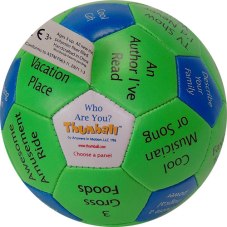
Growth Mindset: GoBrain and Making a Splash

A recent interest of mine has been the Growth Mindset.  I have blogged and presented on this topic:

Due to my interests, Carol Reiley contacted me about her initiatives about growth mindsets.  First, from her and her team’s website, GoBrain, is the following:

644a24_b860294e2dcb488385908bb95d8f2234.jpg_srz_p_788_575_75_22_0.50_1.20_0.00_jpg_srzhttp://www.gobrain.com/#!the-science/cu1w

Second, she wrote a children’s book, Making a Splash, and decided to crowdfund its publication through Kickstarter – https://www.kickstarter.com/projects/181490972/go-brain-a-childrens-story-to-inspire-life-long-le.

What follows is an interview with Carol about writing and disseminating Making a Splash.

How did you first get interested in the growth mindset?

I’m a PhD student in Computer Science at Johns Hopkins University. My research is studying how medical students learn to become great surgeons. After I read Carol Dweck’s mindset book, a lot of things resonated with me and changed how I viewed people and myself. It’s a topic relevant to everyone and any age.

I wanted to explore more deeply how someone develops a growth mindset or a fixed mindset . . . and what positive or negative external conditions in life affects mindset-whether it was verbal or nonverbal. It can be as small as a single sentence – for instance, calling a child smart after they did well. That response is so commonplace and carries with it great intentions.  However, it can have the opposite reaction than one had hoped. Calling a child smart can cause them have a fixed mindset and be afraid to try new things since they may fail and therefore be called dumb.  I was curious about interactions that were very subtle but very powerful. Being aware of what these interactions makes a huge difference.

More about my research and growth mindset here:

What are your personal connections to this topic?

I grew up in the “trophy” generation where every child got a trophy for anything they did. At that point, a child’s self-esteem and confidence were valued above learning. Now it’s been shown that self-esteem has very little correlation to anything (success, intelligence, alcoholism, etc). People should really focus on the process of doing things and encourage those who are challenging themselves.

I personally approach life with the attitude of wanting to experience as much of it as possible, even if I fail at times. I hope we develop a culture where that’s okay and is encouraged as long as lessons are learned. I find a lot of people holding themselves back from trying things because of what others think and have regrets later in life. I really wanted everyone to let go of that and just do what will help them become the best people they can be.

Why did you write a book for children?

A growth mindset was something I wish I was aware of earlier on. It helped me realize that I should actively strive for opportunities to grow and learn, even if they are a struggle. After I read the book, I wanted to share the concept with everyone I knew.

I wanted to write not just a book for children to see examples of the benefits of having a growth mindset, but also for anyone that interacts with a child (parents, educators, coaches). I noticed that while everyone wants children to have a growth mindset, there were not many resources that explained how you could develop one, how you should praise a child, what to do when a child is frustrated and wants to give up.

 Why did you decide on a Kickstarter fundraiser?

I never planned on being a children’s book author. After having conversations with a variety of people about mindsets, I sat down as a writing exercise and the rough draft of this children’s story came out. After I shared it with friends, I realized I had to write a supplemental guide since there needed to be a link between the science and the stories.

Instead of going the traditional publishing route, I decided to self-publish since the material was so personal to me and I wanted it done right. This included the visuals by selecting the illustrator myself (traditional publishing houses select the illustrator themselves) and the length and content of the book.

Crowdfunding is an interesting new way that enables creators to connect with people who care about your cause. I’m so glad we met our funding goal because it showed that people do care about the growth mindset and want to learn more. If we didn’t meet our goal, I wouldn’t create the book.

How do foresee parents and teachers using this book?

The first step is to bring awareness start a conversation about the mindset. Interest in the growth mindset has increased. That’s a very good thing! I want children and adults to have open discussions during story time and start being aware of their behavior and move towards a more positive learning experience.

What are in your plans as a next step after the book is produced and distributed?

I want there will be more connections between the cool work being done in research and the general public. In particular, I want to focus on helping children develop scientific thinking by asking thoughtful questions and gaining an inquisitive mind. I’d love to see math and science explained in a easy to understand and accessible manner since some people shy away from those subjects since they don’t think they’re naturally good at it. I hope they develop a growth mindset and see it as a chance to learn about exciting new things.

Experiential Learning: Is there really a question about this?

The things we have to learn before we do them, we learn by doing them. Aristotle

Give the pupils something to do, not something to learn; and the doing is of such a nature as to demand thinking; learning naturally results. John Dewey

My training as an educator occurred through experiential education rather than the traditional route.  Experiential Education is based on the following principles as articulated by the Association for Experiential Education:

  • Experiential learning occurs when carefully chosen experiences are supported by reflection, critical analysis and synthesis.
  • Experiences are structured to require the learner to take initiative, make decisions and be accountable for results.
  • Throughout the experiential learning process, the learner2 is actively engaged in posing questions, investigating, experimenting, being curious, solving problems, assuming responsibility, being creative, and constructing meaning.
  • Learners are engaged intellectually, emotionally, socially, soulfully and/or physically. This involvement produces a perception that the learning task is authentic.
  • The results of the learning are personal and form the basis for future experience and learning.
  • Relationships are developed and nurtured: learner to self, learner to others and learner to the world at large.
  • The educator and learner may experience success, failure, adventure, risk-taking and uncertainty, because the outcomes of experience cannot totally be predicted.
  • Opportunities are nurtured for learners and educators to explore and examine their own values.
  • The educator’s primary roles include setting suitable experiences, posing problems, setting boundaries, supporting learners, insuring physical and emotional safety, and facilitating the learning process.
  • The educator recognizes and encourages spontaneous opportunities for learning.
  • Educators strive to be aware of their biases, judgments and pre-conceptions, and how these influence the learner.
  • The design of the learning experience includes the possibility to learn from natural consequences, mistakes and successes. (http://www.aee.org/what-is-ee)

I know no other way of teaching.  Knowing the powerful results of experiential education, it confuses me as to why more (if not all) educators don’t teach this way.  In the graphic below, the images in the left column are learners from my own classrooms, the images on the right symbolize more traditional approaches in educational institutions.  As “A picture says a 1000 words,” the expressions of the learners say engagement, interest, joy, and learning.  Which do you want your students, your children to experience at school?

Prefer_

How Language Affects Our Teaching Practices

I had the privilege of hearing two Native American women, Rina Swentzell and Tessie Naranjo, talk about their mission to “save” the Tewa language from extinction.  What was profound about their talk was their discussion of the power that language has to influence how we think and what we do; and that language is culturally determined.

Rina Swentzell posed the following questions during her talk:

  • What is our relationship to words?
  • How does language connect us?
  • How does language become representative of our hearts?

 tewa

Dr. Swentzell went on to contrast Tewa to the English language.  Tewa language is softer, European languages harsher and harder.  Tewa language focuses on verbs; as a doing-ness.  European language emphasizes noun – the things.  Tewa is inclusive, European languages often are not.  She also discussed how very similar words have different meanings,  For example, the Tewa words for to teach and to learn are closely related to “to breath”.  She also wondered, “How does English affect our thinking and change us?”

Guy Deutscher author of “Through the Language Glass: Why the World Looks Different in Other Languages” notes:

When your language routinely obliges you to specify certain types of information, it forces you to be attentive to certain details in the world and to certain aspects of experience that speakers of other languages may not be required to think about all the time. And since such habits of speech are cultivated from the earliest age, it is only natural that they can settle into habits of mind that go beyond language itself, affecting your experiences, perceptions, associations, feelings, memories and orientation in the world.

As an educational reformer, this lead me to give more thought about the language used for educational culture in the United States and how this language affects teaching and learning practices.  Some common educational terminology includes (a sampling):

  • Standards
  • Objectives
  • High Stakes Tests
  • “Class” room
  • Accountability
  • Schedule
  • Benchmarks
  • Mastery
  • Methodology
  • Performance-Based

This words, as analyzed in relation to Dr. Swentzell’s comments, are nouns, do not focus on the doing-ness or actions that can/should be taken by administrators, teachers, and students, are non-nurturing, and do not emphasize relationship.

So maybe, as in line with the language of the Tewa, the discussions surrounding education could/should focus on the verbs, on the doing-ness of administrators, educators, and learners with each other, the content, and the world-at-large. A sampling of action verbs for education include:

  • Teach
  • Learn
  • Think
  • Give
  • Plan
  • Support
  • Experience
  • Engage
  • Inspire
  • Inquire
  • Change
  • Grow
  • Discuss
  • Dissect
  • Affirm
  • Analyze
  • Relate
  • Empathize
  • Connect
  • Create

2014-10-18_0900

Such intentional use of language would, as research suggests, change the way we think about and ultimately DO education.

Math teacher, Jason Faulkner , How We Talk About Education Shows What It Means To Us reflects on how his thinking about education affects his teaching practices.

As I reflect on how this narrative is told in my own classroom, Parker Palmer’s words weigh heavily on my heart. As the teacher, one who Palmer calls “the mediator between the knower and the known, the living link in the epistemological chain,” do I not surreptitiously perpetuate an “epistemological error” in my classroom whenever I present knowledge as something to possess or control or master, rather than as a gift to love?

Those serious about educational reform based at putting the learner at the center, need to take a long, critical, dissecting examination at the terminology we use to explain teaching and learning.

The Mindset of the Maker Educator

The Mindset of the Maker Educator

with 9 comments

Here are some graphics, Thinglinks, and the slideshow I created for my Mindset of the Maker Educator Workshop:

https://www.thinglink.com/scene/575147870160683008


educator_as_maker_educator_1


http://www.thinglink.com/scene/529031635128025090


makingreflection

9 Responses

Subscribe to comments with RSS.

This site uses Akismet to reduce spam. Learn how your comment data is processed.

Historical cities and their planning and principles

he study of historical cities provides deep insights into the evolution of urban form, planning practices, and design principles. Long before modern planning theories emerged, ancient civilizations developed highly organized settlements based on functionality, culture, governance, defense, and environmental adaptation. These cities were not random agglomerations but reflected clear planning principles, many of which continue to influence contemporary urban planning.

This essay explores major historical cities across civilizations and the underlying planning principles that shaped them.


1. Early Planned Cities: Indus Valley Civilization

https://images.openai.com/static-rsc-4/dXtSoS3IxrvWiMFrlGpCSRpnS31BZaVxdYk44BdcXau7uB455aKpYTvQhpoz_jz95No7jjlNMmMETl7VD1T8ang2Es_vSugC1T3p1tcAos3lS4MflmR-G-rbyQSvolSYVfOhTn1oQP0YyN5NOGCkp52xpleUM50xU3uaBDI8fzQPjUvLTPDfFh7BFWPjuXYP?purpose=fullsize
https://images.openai.com/static-rsc-4/GO7oUvsYZ5fO2OPiZ82CcB1JYScYPYSMabBJhiZatUEyBDzu6diy7gFd9Tz1qXDWJzyvA-spRhlSwCF6ERBOBfeaH0YmsVYhhqYqh9UvBBdRV2g1keHJyxaYvoeJYySOdCIFaQsNxfWn42QyaqciclebtZYrmE6eeWQuNZQMFER2cPrErhfPNWHO3dO14ffh?purpose=fullsize
https://images.openai.com/static-rsc-4/-2fZhS4WLnXdgdESmzSt9qe-N85lIM65D-z94MBmm0O_9gXiiBK1YBXKOSaxTvx2qdQQrR5X_swY6wiiyRGep4mLvghFO2QAaqk4X3IyXm_tSTRmbIzlKGQY45z5FzonNkChOWF8AfwVY-s3vIy76HiJNnBKwIBR3KMPsI_JeqNYtHPizWHhZML3mj1QLfsw?purpose=fullsize

6

One of the earliest examples of planned cities is found in the Indus Valley Civilization (2500–1900 BCE), particularly in cities like Mohenjo-daro, Harappa, and Dholavira.

Planning Features:

  • Grid Iron Pattern: Streets intersect at right angles, forming rectangular blocks
  • Zoning: Division into citadel (administrative) and lower town (residential)
  • Advanced Drainage System: Covered drains, soak pits, and sanitation
  • Standardized Construction: Uniform brick sizes and building techniques
  • Water Management: Wells and reservoirs (notably in Dholavira)

Planning Principles:

  • Functional efficiency
  • Public health and sanitation
  • Standardization and regulation
  • Hierarchical organization

These cities demonstrate that urban planning has roots in engineering, hygiene, and governance.


2. Ancient Egyptian Cities

https://images.openai.com/static-rsc-4/beY2n6LcHQABmxplkWf4-j-ypXBVbEC6L29s1NJQDQvTL9C3VwwZ2BNQ620vXa6bjayzt-Hx0CT_PaEY1yeATEK7T7omyJ0TJuEBMLny03L0hXss_mYDj-dEAvC9jy3HhImPVl41FjYr15GG3wmeUCxXA7Gt8bCmF6qTMPf0J6HgRYyfazLZYAvTynz2Uc9f?purpose=fullsize
https://images.openai.com/static-rsc-4/ASuZgy1JFIDVFJGWjw0KrER4-tNDMMTpaaFMXc7t1ajsPNimIqpTQFm30Wx2XiVsAmKUm1Zy5dnL-bn6zY4DvQ_DHIgDyKoPL19Z82mOtjCItjcyThdCKzMkoztCQQf2SKH_IhOwuc5WtwjRcsAxD-UiM9Roml_Y-_uR8Y_rgWQi8ZM-z-B73G-amWXdIVwT?purpose=fullsize
https://images.openai.com/static-rsc-4/VaokjnGshaWlZMPrYDjNWt4Felb946w-pQ8rzrASHx8ZB7Ob0DuNpZc7jt6T2CURlPxFEP4nWkeC1x6zzgBgciIQkFwjZi3KPzpoEXFfwUZmG5KPt0Wa5lURgeoVg0ZQy1MmP55sIX29qO9xh6YNfSlzl5WpDOcDTbveFuP0Bvwdb12-gZAuYfV8qiUoaGPR?purpose=fullsize

7

Ancient Egyptian settlements developed along the Nile River, with examples like Amarna.

Planning Features:

  • Linear settlements along the Nile
  • Functional zoning (residential, religious, administrative)
  • Workers’ housing arranged in regular rows

Planning Principles:

  • Dependence on natural resources (river-based planning)
  • Religious centrality (temples as focal points)
  • Social hierarchy reflected in spatial organization

3. Greek Cities

https://images.openai.com/static-rsc-4/F5TXoYri5xuaqYNGBuftwnjlIxxafcialY48_KlsirhEeeMgL3JGxvFXgA5cvjTHBm7ndv5oefRUYwA9WqMOARmbcxuvLOMAN6nJOTj0rdgE0EMFL_vEzbWrb-eY99-3sgkh4KEuoHW0IQ7GTAsVQxLZRbekJTtqNwWVK52M15Rbs1wetK7zPrxAk3KWzVUa?purpose=fullsize
https://images.openai.com/static-rsc-4/0qBy1ErAM_zzTDmP9TYs8HzF8fDKoIWXx4hVcyKQCG5lxzQLE7IL-v4T6OeysmWdgT3F8ud0yxax9x0W1AyoOefh_QF8OMNJAcbKc8CHRsO7zEwOrnK0ofCnI1m4UoJCzrBa8-k2O-S26MruSjwOhCddon-wSJ_wkZ4UlzMll52fv09lGKKIIVVYE9Qh8wwA?purpose=fullsize
https://images.openai.com/static-rsc-4/5n29ptcqVFMT_Gk3__H1zbyyJGEHEM-fKxxeOJ1rchzLXKGYN2Cr9akud5WPmlxf5sN6x9zEbwQ3QToacMQXnFm5O0AUCys31tsyT2tWrK1e5LYKeKD9e0k_aVsiDUxqWinaEoBJWFdGt_W3x_wKAtpsI7yFTyija9luJYBwyS1fkLjqiSoa94icf8HZPnQ0?purpose=fullsize

5

Greek cities introduced rational planning concepts, especially through the work of Hippodamus of Miletus.

Planning Features:

  • Grid Planning (Hippodamian Plan)
  • Central public space called Agora
  • Acropolis (fortified high area)
  • Zoning into public, private, and sacred areas

Planning Principles:

  • Order and geometry
  • Civic life and public participation
  • Functional zoning
  • Integration of topography

Greek planning emphasized the social and political role of cities.


4. Roman Cities

https://images.openai.com/static-rsc-4/ILlL3jA7G6LmfdDUAVT9GoA1GlJopqh7oq_gsoVGsvP1dCgg-2mxnf7Fyie7fjRLP_CCzbDB9TZ9jutXUausAiwXNvONqVpKLhxrzOC9RdNCxrI0jSWPpgjzGgMbD7a9gapeQ1khHWBwz28Hpd3LapT4wH1w5ZKRUH0t82MWKD53yk71y4JxeWMc1wwWiCGM?purpose=fullsize
https://images.openai.com/static-rsc-4/OVI557Wvex8eQTtN16XIVzRGHH9yru0ds8Be1ETuu_mn8LkFJX0GsRAYP1URwx-p7Z27XofUx2TRApfl6GJHElGtX75C17_FpIg-13sreZvN5YhT2-pxnmWhx4gDc6hzLafSKnqGayXllbeH7aVH2h3q6DcaSD0NfbwYhzuN7N2WEO_3gtT1ofydogPtMYli?purpose=fullsize
https://images.openai.com/static-rsc-4/O2sCuFvqe-Y6rHL4t5e8TxgbaRgVbANS3p99uLy_91zTnpx7B6KfhmBD1ZAMxTrWG6d90JkDrQH3-zQf2WBv6a25EJ--J3Y30TL785LCaPARXzZHUlVZR5Zl_rc7hB_PVySixFMPmaCOCfZXofqKCSxEQNCRVz9QGwFiiYeF6R8mW4c52yKF7Z_p3QTqKH6W?purpose=fullsize

7

Roman cities built upon Greek ideas but introduced advanced infrastructure and administrative efficiency. A classic example is Pompeii.

Planning Features:

  • Grid layout with two main axes:
    • Cardo (north-south)
    • Decumanus (east-west)
  • Central forum (administrative and commercial center)
  • Advanced infrastructure:
    • Roads
    • Aqueducts
    • Sewage systems
  • Standardized military camps (castrum planning)

Planning Principles:

  • Efficiency and control
  • Infrastructure integration
  • Standardization
  • Military and administrative functionality

Roman planning strongly influenced modern urban infrastructure systems.


5. Medieval Cities

https://images.openai.com/static-rsc-4/Yw5MwALPHobz6M8uXKM1xzmDsfgYVOXWvv1Xw156VRcaECmoszA0kBBaDmChcrMaHQd8fyipVxFdH6bfUuVgr6eiloIjGIkq2mu5wwzapMXHg-WQoNZdhaooyfHU4_q-oBY4xN26E3qWrGgtPXcvhDJGxhUW1CJC6cRTyh3vYkB3WgVz2NWZLY3AuDfwXMlX?purpose=fullsize
https://images.openai.com/static-rsc-4/ngtCnOE1ErjI2accZ_TqDSo_xyJXPzUlTKTXkJ2Yi2_Jjcb9XuKngFvREnCGDevGI69OuKDkW3pS_9eFsC59ZTeLF84JvAP1-fi1v7DCQLblMajiU3mGGeftYjE2gKrQB92cq7ywAV_WBFgYp-dJjlblWe2fI4ldTJZWF6XXUmDwXcEPCXogfj-Z8woWzAK6?purpose=fullsize
https://images.openai.com/static-rsc-4/evObcZkwt8NJs014WJXewuB9jieOHBwUUjMsmfr6CFReHKYPCMglEos4EqHrmIoB7wuV8XlSHhAaCoW6pBiL84goZFGRS0kAfbW8tqkXiR825SpFpnTxm6Z2_hgWrYm_cTTa04dVH8qM5ZLzWaBZLnLisydIQfWpvXhGftOVP7oyEVK_job2UlIgcywFBS0b?purpose=fullsize

7

Medieval cities in Europe and India evolved organically due to socio-political and defensive needs.

Planning Features:

  • Irregular street patterns (organic growth)
  • Fortifications (walls, gates, moats)
  • Central castle, church, or marketplace
  • Narrow streets and dense housing

Planning Principles:

  • Defense and security
  • Compactness
  • Mixed land use
  • Social hierarchy

In India, cities like Jaipur later introduced planned elements even during medieval times.


6. Renaissance and Baroque Cities

https://images.openai.com/static-rsc-4/wfVLjQQ5SJV-Nf3_x82gpwFiLknOoin9UBTygGU-CNFNHbUG5yTmppHZ1MJFj29EbELu2vbooYTVV3TZP-N3JNjBCYppPMO-ngQf7ZJ2RhbMAsbY-F6GYhyFtB2tu4a6q-CMrCgemSudRxt0l-8qvqad-ITvS61nOHkaIUkVbELtVujQqWOzaXwzvD3L9x-U?purpose=fullsize
https://images.openai.com/static-rsc-4/n5CI6APwxIzXJ359n1GIx9T7W_Bio2ujfrL1bOsnjJ-Ayn8CwzHWi2FNB-eTL9YgPOelhrcUU4iqaXetPq6lXqjRUTFeyTX39mP2Q31_ylLBaB_hX0921kOj6hoeJvkFjy_QbzVJWFvTidVpulepPc3ZV8w2FEFKd3DftdVtY5ei_HmXnF7GBekxX93PQ40o?purpose=fullsize
https://images.openai.com/static-rsc-4/LKNFywzMmQB2p3Sbcr60ji1oEaAt1HBCGOBjBHpZUrf-YBFUjvCucSi-7bifmuOgJXlq-p38tOKf-T24S8bGtFpsCpyhvCujg32V2ZG6xNmTpmT3Uoh0n97N2apGqQvBFFhU6Igqea4rBysCsb7AsfnK0GbF_WSgM5dO1N84-AfaQW8Tn9oFi6JEzJmDhUR4?purpose=fullsize

7

The Renaissance period reintroduced order, symmetry, and aesthetics in urban design.

Planning Features:

  • Radial and geometric layouts
  • Grand avenues and boulevards
  • Planned public squares (piazzas)
  • Emphasis on visual axes and perspectives

Planning Principles:

  • Aesthetics and beauty
  • Symmetry and proportion
  • Monumentality
  • Civic pride

Cities like Paris reflect these principles.


7. Traditional Indian Cities

https://images.openai.com/static-rsc-4/JxQ7wikUJ1W7bOD9wHLcZzpyth7WKesMZq9TQ5RKYwpH8Sqsk7E_id673Q6sa92rpuCK4jcvus3MPBlmuyofvMRLkz_HeQ2HvvU2rUfGJEqMErkZwdEnWvhMek2XfLWgSeTF9M-WSwK5I_hGdJegjnxCTnUNbw4FtlHsJbP9hkQ3SpD8BaknYjKpfWAg7Fgs?purpose=fullsize
https://images.openai.com/static-rsc-4/xVz4NfTeUWw38CBX8NEOVE5lGlyL-Pap4JcRonHsBBssChj2XpI6OuScxP_hDleLqued7NqJdUZKbgwrF5W4YMjE7V5ZnjoW_oM8UTlKTGRNNKn6q7O2tQN9y3CCJgCuFwHbs7VEma3q2Ow5WgKCG92KUk7HwAaCGW-faDX3kRh9D1NoP6fm_YSavs2f4O7A?purpose=fullsize
https://images.openai.com/static-rsc-4/Hzi9ski2QHjDrBnLzwYLjicexXTGSEjqxwY2O1INlIp-9zUQpuw8t2TW0bFzLTPuPpE2s40skKuH7bs4PBvmi4MQwkmYjo17k_1UDZS_lxEF40c7r4buOfLhtl-DX3e6EPJ1E4DTefwH_W-0G2nQMlq3CVklXz5JhUwSj9WDWYh8kodZn9IRLY44QwiqK3bK?purpose=fullsize

7

Indian cities show a blend of organic growth and planned principles, often guided by texts like Vastu Shastra.

Examples:

  • Jaipur – planned grid city (18th century)
  • Varanasi – organic religious city

Planning Features:

  • Grid planning (Jaipur) with chowks and bazaars
  • Hierarchical streets
  • Integration of religious and cultural spaces
  • Mixed land use

Planning Principles:

  • Cosmological and religious alignment
  • Climate-responsive design
  • Social organization (caste/community-based neighborhoods)
  • Walkability and compactness

8. Colonial Cities

https://images.openai.com/static-rsc-4/QBlpMrSObPhE09ouDQjJaq29q0UTE-0i0o_RYUQQX6UzkEFsyc3AK3Q_4CymStpco9zG_oS30KNGSDCusQZX-HrFuCrERMqOtbyuIcIf_mhXvJp6btkhLaIIgfqivY4mHBoH82Gxu2TDd5OLSkriVNvqRiv9z2CVX7UGemDpRS4jA1QN7BJxRxcf0DU9NjdU?purpose=fullsize
https://images.openai.com/static-rsc-4/JxQ7wikUJ1W7bOD9wHLcZzpyth7WKesMZq9TQ5RKYwpH8Sqsk7E_id673Q6sa92rpuCK4jcvus3MPBlmuyofvMRLkz_HeQ2HvvU2rUfGJEqMErkZwdEnWvhMek2XfLWgSeTF9M-WSwK5I_hGdJegjnxCTnUNbw4FtlHsJbP9hkQ3SpD8BaknYjKpfWAg7Fgs?purpose=fullsize
https://images.openai.com/static-rsc-4/5U3vz1ZspsMjOEZMSRxLh-1qnxrA5vmA98Sn5LrW3kZcj7dI-rfsE9zm656xz0Tfg0p8FyqjsjXRWu7ugBR7KYmKgaN47vdFuaoH4wfSoATLmstpc46CKJwhHaSfAsGKE38Dfa8UkQzt2xh_4PXXmXd54qEDkk_xG1x4T1uxeLBIzFqCeF9tfAZWcnSpuOxK?purpose=fullsize

7

Colonial cities introduced Western planning concepts in Asia and Africa.

Examples:

  • New Delhi
  • Mumbai

Planning Features:

  • Segregation (civil lines, cantonments, native towns)
  • Wide roads and open spaces
  • Administrative zones
  • Grid and radial layouts

Planning Principles:

  • Control and governance
  • Sanitation and hygiene
  • Spatial segregation
  • Monumental architecture

9. Key Planning Principles Derived from Historical Cities

Across different civilizations, several universal planning principles emerge:

9.1 Order and Geometry

  • Grid patterns and symmetry (Indus, Greek, Roman, Jaipur)

9.2 Functional Zoning

  • Separation of residential, commercial, administrative, and religious areas

9.3 Infrastructure and Services

  • Water supply, drainage, roads (Indus, Roman)

9.4 Defense and Security

  • Fortifications and controlled access (Medieval cities)

9.5 Social and Cultural Integration

  • Religious and cultural centers as focal points

9.6 Environmental Adaptation

  • Climate-responsive design and use of natural resources

9.7 Accessibility and Connectivity

  • Street hierarchy and transport networks

10. Relevance to Contemporary Planning

Historical planning principles continue to influence modern urban planning:

  • Grid planning → Used in modern planned cities
  • TOD concepts → Similar to compact, walkable traditional cities
  • Zoning → Derived from early functional divisions
  • Sustainability → Inspired by traditional climate-responsive design

In the context of modern cities (especially Delhi and TOD areas), these principles help improve:

  • Accessibility
  • Walkability
  • Public transport integration
  • Urban livability

Conclusion

Historical cities across civilizations—from the Indus Valley to Roman and Indian cities—demonstrate that urban planning is deeply rooted in human history. These cities were shaped by a combination of environmental conditions, socio-political systems, cultural values, and technological capabilities.

Their planning principles—such as order, functionality, infrastructure integration, and environmental adaptation—remain highly relevant today. As modern cities face challenges of rapid urbanization, climate change, and sustainability, revisiting these historical lessons can provide valuable guidance for creating resilient, inclusive, and well-structured urban environments.

Thus, the study of historical cities is not merely academic; it is a foundation for shaping the future of urban planning.

A Voice for Social Good and Educational Reform: All of Our Responsibility?

I am ending this year of 2013 with a blog post about having a voice for social change; for social good.  Social media has given us all a voice as well a potential audience.  We are living in unprecedented times.  At no time in history has there been this opportunity to reach so many people with our own unique voices using social media.

How we use that voice is up to each individual.  Social media users can choose to tweet about what they had for dinner or post selfies of their party life.  Since I have this mission-vision of making a difference especially in the field of education, I choose to use social media to disseminate my own ideas for a better educational system via this blog; using Twitter daily to tweet out ideas for educational reform and to share educational resources shared by the many great educators using Twitter.  I am finishing 2013 with close to 15,000 Twitter followers and almost 435,000 views of my blog with close to a quarter of a million in 2013.  The reason that I mention these statistics is that they provide at least a little evidence that my voice, my ideas have an audience . . . and I am very grateful for this audience.

2013-12-31_1444

I also am a bit biased and opinionated in that I believe educators, counselors, social workers, and other service oriented folks should use social media to help create change in their respective and related fields.  I am guided by some powerful commentary that I heard during a Gloria Steinem keynote at a mental health conference.  She discussed that when those in the service field (I include educators in this) just work with individuals to resolve their specific problems, they are not treating the larger systemic issues.  She compared it to doctors only treating individuals in the case of a pandemic rather than trying to figure out and cure the larger epidemic.  We are living in a pandemic of bad, often toxic practices in public education where scripted curriculum, tests, and overwhelming accountability practices have taken over classrooms; where teachers and students are losing their “selves” as standardization is norm and creativity, uniqueness, and innovation are not rewarded; and being in the classroom has become painful for many teachers and way too many learners.

Many educators I know feel as though there are way too many initiatives, practices, curriculum, and assessments forced onto them that are contrary to their own beliefs, philosophies, and practices.  Some try to use their own voice and practices within their own schools and classrooms.  Others just go along for the ride because, according to them, teaching through someone else’s lens and world is better than not teaching at all . . . and still others have given up and left teaching completely (e.g, Teacher’s resignation letter: ‘My profession … no longer exists’).  None of these actions results in changing the system; of helping to cure the pandemic of bad practices in education.

So in this end of year blog, I am putting out this call to action.  If you, as an educator or a supporter of a “good” education, believe that the educational systems could better meet the desires and needs of educators, administrators, learners’ families and most of all the learners, themselves, then use your voice to express your concerns and your proposed solutions for a better system.  This (educational) revolution can be Tweeted! This comment is in reference about the political movements that use social media as a voice against oppression and injustice.

The internet has opened a new arena, perhaps the purest democracy in the world. It is building bridges across continents, connecting causes, creating relationships, and raising consciousness to the point that the traditional role of the state in this area (of education) and many others is being slowly renegotiated and not on its terms. On ours. (The Revolution Will Be Tweeted)

Keeping silent might (emphasis on might) help a teacher keep his or her job, but at what cost?  What are the costs to the education professional, to oneself, to one’s own and future learners of keeping silent?

Having a voice for educational reform also connects to teachers regaining their agency as I discuss in Teacher Agency: Educators Moving from a Fixed to a Growth Mindset – with a short except here:

The bottom line, is that teachers need to reclaim their perceived and real teacher agency, voice, and empowerment. They need to develop a growth mindset that they can and do have agency in their profession.

With all that is happening in the education profession today, it is important to remember that teacher’s have power to change the system. This power for change can be called “Agency” which is defined as the capacity of teachers to shape critically their responses to educational processes and practices (Biesta and Teddler, 2006).  With all the external push from various sectors, ultimately teachers are the ones that can cut through all of the cross-purposed mandates and transform their own process and practices to ensure the best educational experiences for their students.  Teacher Agency and Today’s Teachers

. . . and as a parting shot, from Vicki Davis, CoolCatTeacher . . .

2013-12-30_1735

Creating Engaging Curriculum: A More Perfect World

Recently I revised my A More Perfect World curriculum unit.  I reformatted it to a Weebly website for ease of access and update the links and web tools.

2013-12-28_1106http://moreperfectfuture.weebly.com/

This unit is driven by several of my core beliefs regarding effective instructional practices:

  • Reading as Choice: Reading is such an amazing gift we have as humans and way too many students don’t like to read for their own pleasure and learning.  Reading engagement and enjoyment are increased when students are permitted to choose what they read. No single practice inspires my students to read as much as the opportunity to choose their own books (Becoming a Classroom of Readers).
  • Choices in Learning Content:  Choice in how the content is learned increases engagement and intrinsic motivation.  Students should be given choices as to how to learn the content.  Content should be presented to learners in a variety of ways: readings, videos, graphics with the only expectation that they learn it in a way that works for them.  This is in line with Universal Design for Learning Principle: Provide Multiple Means of Representation.
  • Choices in Expressing Knowledge and Competency: Choice in how the learner demonstrates his or her knowledge of the content increases engagement and intrinsic motivation.  Learners should be given a choice as to how they want to and can express what they learned about the content based on their own styles, interests, and strengths.  This is in line with the Universal Design for Learning Principle: Provide Multiple Means of Action and Expression.
  • Student Interest: Incorporating student interests into the curriculum increases relevancy.  Curiosity and thus learning thrive when connected to and/or emergent from contexts which are familiar and meaningful to the learner (The Importance of Engaging Students’ Interest in their Learning).   In this case, this unit incorporate the current interest of many young people in dystopian fiction as well as gives them opportunities to delve into their own interest areas throughout the lessons.
  • Project-Based Learning: Project-based learning is a dynamic approach to teaching in which students explore real-world problems and challenges, simultaneously developing cross-curriculum skills. Because project-based learning is filled with active and engaged learning, it inspires students to obtain a deeper knowledge of the subjects they’re studying. Research also indicates that students are more likely to retain the knowledge gained through this approach far more readily than through traditional textbook-centered learning. (Why Teach with Project-Based Learning?: Providing Students With a Well-Rounded Classroom Experience).  For more about project-based learning, see my curated Scoopit on Project-Based Learning and my post Is It Project-Based Learning, Maker Education or Just Projects?
  • Drawing on Learners’ Idealism; Desire for a Better World: Many young people think about ways to create a better world. Idealism is a developmental milestone of adolescence. Young adolescents are idealistic at this stage, and they are quick to point out what is fair and what is not.  Their idealism pours into asking questions about the meaning of life, questions for which there are not definitive answers. They also become inwardly reflective about who they are and the roles they play. It is a great stage of life and a great opportunity and challenge to meet the needs of these young adolescents (Adolescent Development). These ideas should be integrated into the learning setting.
  • Arts Integration:  Arts integration is highly effective in engaging and motivating students. The arts provide students multiple modes for demonstrating learning and competency. A rich array of arts skills and intellectual processes provide multiple entry points for students linking to content in other subject areas. Similarly, arts instruction is deepened through integration of content from the other subject areas. It enlivens the teaching and learning experience for entire school communities. At its best, arts integration is transformative for students, teachers and communities. The imaginations and creative capacities of teachers and students are nurtured and their aspirations afforded many avenues for realization and recognition (Creating an Arts Integration School).

Maker Education: A “Good” 2013-14 Educational Trend

In the midst of the implementation of common core state standards and no relief in sight from all the standardized testing, there’s been a breadth of fresh air in the form of maker education entering into many classrooms.  The Maker Movement is not easily defined nor placed neatly into a nice little box.  It can be high tech or low tech; hacking what is or creating from scratch; it can be creating from building and arts materials or creating on the computer.  We have entered into a convergence of several factors that are igniting the maker education movement.

The rise of maker culture has been slowly bubbling out of sheds, science labs, tech workshops, in schools and learning spaces. But, suddenly it is very present. The Imagination Foundation that has emerged out of energy and excitement of Caine’s Arcade is raising funds and investing in projects that support maker activities in education. The New Maker Education Initiative, backed by a range of organizations including Intel and Pixar, has just launched its first project called Maker Corps.  There are initiatives like the Make2Learn which aims to “leverage DIY culture, digital practices, and educational research to advocate for placing making, creating, and designing at the core of educational practice”. Makers and Teachers Unite!

Some maker-related educational movements that gained traction in 2013 and will most likely gain more momentum in 2014 include:

  • A focus on STEM (science, technology, education, and mathematics) and STEAM (science technology, engineering, arts, mathematics):

At a time when many people are asking how we can get more students interested in STEM fields, we are hearing from teachers who have found making to be a great way to get students excited and engaged in their classrooms. We are seeing making occurring in subject classes such as math or science — in classes specifically listed as maker classes — and in a variety of less formal settings such as clubs and study halls. Many of these projects incorporate a variety of STEM topics. (Engaging Students in the STEM Classroom Through “Making”)

New open-source microcontrollers, sensors, and interfaces connect the physical and digital worlds in ways never before possible. Plug-and-play devices that connect small microprocessors to the Internet, to each other, or to any number of sensors mean that low-cost, easy-to-make computational devices can test, monitor, and control your world. They offer much more than just “hands-on” crafting—these tools bring electronics, programming, and computational mathematics together in meaningful, powerful ways. We must reimagine school science and math not as a way to prepare students for the next academic challenge, or a future career, but as a place where students are inventors, scientists, and mathematicians today. (How the Maker Movement is Transforming Education)

  • The growing popularity of online game making and hacking platforms like Scratch and Minecraft:

Think of the Maker Movement as DIY for technology. It’s not just a passing fad – web tools like KidsRuby, Gamemaker, Scratch, Storify and Mozilla Webmaker make it possible for people of all ages to learn to code, build games, and re-mix media. For libraries and schools, the Maker Movement means new opportunities for promoting digital, media, visual, and critical literacies (21st century literacies). (Inanimate Alice and the Maker Movement)

  • An interest in and focus on design thinking both in educational and corporate sectors:

Making is a way of bringing creativity, authentic design thinking, and engineering to learners. Tinkering is the process of design, the way real scientists and engineers invent new things. Such concrete experiences provide a meaningful context for understanding abstract science and math concepts while often incorporating esthetic components. Creating opportunities for students to solve real problems, combined with imaginative new materials and technology, makes learning come alive and cements understandings that are difficult when only studied in the abstract. (Why we’re excited about the Maker Movement, maybe you should be too!)

3D Printing is one of the most disruptive technologies around. These printers are affordable, personal fabrication tools, compact enough to sit on any desktop, and allow anyone at any skill level to become producers, inventors and artists. Students participate in project-based learning that is experiential in nature and has real-world applications.  3D printing projects engage students in the world around them, kindles a curiosity about how machines work, how objects fit together, and how the designers, architects, and inventors who build the products, spaces and technology in their lives have found solutions to a variety of design problems.  (Makerbot Curriculum)

The goals of Imagination Foundation, who sponsors, the Cardboard Challenge is in line with many Maker Education Initiatives:

1. Instill Creative Thinking as a Core Skill and Social Value
Give kids the tools to develop as creative thinkers who can take on the jobs of the future, seek innovative and resourceful solutions, tackle social issues and find happiness.

2. Give Kids Opportunities to Create and Learn Based on their Passions
Help children find and develop their passions through play, hands-on learning and supportive communities. Design scalable Project-Based Learning programs that can be used by a wide range of communities.

3. Foster a Community of Creative Makers
Develop an engaged community (local and global) of young makers, parents, storytellers and educators who can share with, learn from, and inspire one another.  (Goals of the Imagination Foundation)

Common Core and the new Next Generation Science Standards emphasize critical thinking, creativity, and 21st century skills. To achieve these goals requires taking a hard look at both what we teach and how we teach it. The Maker Movement offers lessons, tools, and technology to steer a new course to more relevant, engaging learning experiences for all students. (Lessons from the Maker Movement for K-12 Educators)

Technology and the related movements as discussed above have amplified the human desire to create, innovate, share, learn from one another, and have an authentic audience.  What was once reserved for those with special skills and often lots of money is now accessible to the masses.  Maker education stems from developments related to Web 3.0 and the evovling Education 3.0 – which is characterized by learners being creators, contributors, connectors, and constructivists.  This is the type of education many of this generation are embracing often, sadly, in their “beyond school” learning.

2013-06-08_1947

These movements, initiatives, technological advancements show no signs of slowing down in the future and hopefully, will change education to better meet the needs, desires, interests, and passions of both educators and learners. Maker education has become a grassroots movement of informal learning as so many are craving and embracing this type of learning.  Just maybe, with educators and learners taking the initiative, these developments will work their way into more formal educational settings.

The maker movement has the opportunity to transform education by inviting students to be something other than consumers of education. They can become makers and creators of their own educational lives, moving from being directed to do something to becoming self-directed and independent learners. Increasingly, they can take advantage of new tools for creative expression and for exploring the real world around them. They can be active participants in constructing a new kind of education for the 21st-century, which will promote the creativity and critical thinking we say we value in people like Steve Jobs. Learning by Making: American kids should be building rockets and robots, not taking standardized tests by Dale Dougherty, founder, President & CEO of Maker Media, Inc.

Other posts on the Maker Movement:

Best Education-Related Videos of 2013

I love end of year “best of” lists.  My own list is what I found to be the most powerful education related videos of 2013. They all, in some way, address the mind, heart, and spirit of education.  Each touched me in some way to help illuminate the purpose and core of education.  They are in no particular order expect for the first one which is my number one choice and one that I believe all educators should be required to watch.

Rita Pierson: Every kid needs a champion

Favorite Quote:

Every child deserves a champion – an adult who will never give up on them, who understands the power of connection, and insists that they become the best that they can possibly be.

Ken Robinson: How to escape education’s death valley

Favorite Quote:

Governments decide they know best and they’re going to tell you what to do. The trouble is that education doesn’t go on in the committee rooms of our legislative buildings. It happens in classrooms and schools, and the people who do it are the teachers and the students. And if you remove their discretion, it stops working.

Sugata Mitra: Build a School in the Cloud

Favorite Quote:

We need a curriculum of big questions, examinations where children can talk, share and use the Internet, and new, peer assessment systems. We need children from a range of economic and geographic backgrounds and an army of visionary educators. We need a pedagogy free from fear and focused on the magic of children’s innate quest for information and understanding.

Malala Yousafzai United Nations Speech 2013

Favorite Quote:

Dear brothers and sisters, we want schools and education for every child’s bright future. We will continue our journey to our destination of peace and education for everyone. No one can stop us. We will speak for our rights and we will bring change through our voice. We must believe in the power and the strength of our words. Our words can change the world.  Because we are all together, united for the cause of education. And if we want to achieve our goal, then let us empower ourselves with the weapon of knowledge and let us shield ourselves with unity and togetherness.

Hackschooling makes me happy

Favorite Quote:

We don’t seem to make how to be healthy and happy a priority in our schools; it’s separate from schools, and for some kids it doesn’t exist at all, but what if we didn’t make it separate? What if we based our education on the practice of being happy and healthy because that’s what it is: a practice, and a simple practice at that. … Education is important, but why is being happy and healthy not considered education? I just don’t get it.

If students designed their own schools…

Favorite Quote:

It’s crazy that in a system that is meant to teach and help the youth there is no voice from the youth at all.

I think the more options we have in our schools, the more students we will help develop into the kind of citizens that we need and that it’s okay for you to need a little bit of a different approach from mine.

“To This Day” … for the bullied and beautiful

Favorite Quote:

Why else would we still be here?
we grew up learning to cheer on the underdog
because we see ourselves in them
we stem from a root planted in the belief
that we are not what we were called we are not abandoned cars stalled out and sitting empty on a highway
and if in some way we are
don’t worry
we only got out to walk and get gas
we are graduating members from the class of
f–k off we made it
not the faded echoes of voices crying out
names will never hurt me

TN Student Speaks Out About Common Core, Teacher Evaluations, and Educational Data

Quote:

I stand before you because I care about education, but also because I want to support my teachers, and just as they fought for my academic achievement, so I want to fight for their ability to teach. This relationship is at the heart of instruction, yet there will never be a system by which it is accurately measured.

Middle school football players execute life-changing play

Favorite Quote:

I kind of went from being somebody who mostly cared about myself and my friends to caring about everyone and trying to make everyone’s day and everyone’s life.

I Will Not Let An Exam Result Decide My Fate

So this one is for my generation.  The ones that found what they were looking for on Google, the ones who followed their dreams on Twitter, pictured their future on Instagram, accepted destiny on Facebook.This ones for my “failures” and “dropouts”  For my unemployed graduates. My shop assistants, cleaners and cashiers with bigger dreams!! My world changers and dream chasers!!
Because purpose of “Why I hate school, but love education” was not to initiate a world wide debate, but to let them know that whether 72 or 88, 44 or 68.  We will not let an exam results decide our fate. Peace.

My Last Days: Meet Zach Sobiech

Favorite Quote:

You don’t have to find out you’re dying to start living… You can either sit in your basement and wait, or you can get out there and do some crazy stuff… Life is just a bunch of beautiful moments, one right after the other…

A Pep Talk from Kid President to You

Favorite Quote:

This is your time. This is my time. It’s our time, if we can make everyday better for each other, if we’re all in the same team lets start acting like it. We got work to do. We can cry about it or dance about it. We were made to be awesome. Lets get out there.

Landfill Harmonic Amazing and Inspirational

Teachers: A Simple (Not Easy) Pedagogy Assessment

I have discussed and promoted the need for educators to reflect deeply on their beliefs, processes, and practices in several of my posts: Where is Reflection in the Learning Process and  Teacher Agency: Coming from a Strong Foundation.  As another strategy for engaging in this type of self-reflection, I developed these questions to have educators assess their pedagogical principles and instructional preferences:

  • Do you want your students to parrot the thoughts of others or want them to develop and express their own original thoughts?
  • Do you want students to consume knowledge and content or have them to add content to existing knowledge bases?
  • Do you want to give your students the content to be learned or have them learn to search for and locate the content for themselves?
  • Do you only teach students only what was or do you also ask to imagine what could be?
  • Do you have students copy what is or do you ask them develop and create “new” things?
  • Do you tell students what projects to create or give them the permission, time, and resources to create their projects?
  • Do you focus on telling students your and other experts’ stories or do you integrate the students’ stories in the classroom?
  • Do you view all students are equal or do you see them as unique individuals and help insure that each receives unique instruction?  (tricky)
  • Do you seek to control the behavior of your students or do you work to teach them the skills to manage and direct their own behaviors?
  • Do you want your students only to learn to just listen to you, the teacher, or also to one another, other students, adults, and experts?
  • Do you insist that your students be like everyone else or do you insist that they become their own individual “selves”?

2013-12-10_1938

This title of this post states “simple but not easy” because to answer the questions is simple.  I know that every good teacher would answer these questions in the direction of student-centric education; one that is in the best interests of the student.  But implementation is another thing.  To implement the non-maintstream alternative is not easy given the accountability systems, one’s own training and background, and mandated school initiatives.  It takes a strong, self-directed and courageous educator to do so.

Teacher Agency: Coming from a Strong Foundation

My past few blog posts have been dedicated to teacher agency:

This post focuses on the foundation needed to have authentic, strong, and purpose-driven teacher agency.  To have a voice, to gain agency, it is important to have a strong philosophical foundation and be able to clearly articulate one’s ideals, values, mission, and vision as an educator.

As part of teaching pre-service teachers, I ask them to spend a lot of time exploring why they are becoming teachers, their values related to being one, philosophical orientations, and desired instructional practices.  This builds a good foundation for their lives as teachers but what I find interesting is that educators are rarely asked to re-visit these core and foundational areas once they become teachers, once they have the experience of being a teacher.  I fear that many, once they get caught up with the mandates, accountability systems, requirements of being a teacher, they lose sight the why they became teachers.

The recommendation, then, is for educators to periodically revisit why they became teachers along with the exploring and possibly revising their value system and related teaching philosophies.  This could be done as an individual endeavor but it is more powerful done within a professional learning community.  Some exercises to assist with this process follow.

Characteristics of Effective Teachers and Letter to an Ineffective Teacher

Brainstorm characteristics of effective teachers.  The recommended number is about 10 to 15.  As a follow up, a letter could be written to an ineffective teacher, explaining what made him/her ineffective and what could make make him or her more effective.  Example:

Developing a Teaching Mission Statement

Grant Wiggins believes educators should be able to address and answer the question, Why do you teach?, in the form of a teaching mission statement.

Having taught, what should they have learned?  What do you aim to accomplish as a teacher? What is your goal for the year, for all the years? What kind of a difference in their thinking and acting are you committed to? Why You Teach: Developing A Teacher Mission Statement

Some resources for assisting with this process:

Specifying Beliefs as an Educator

This is an expansion of the developing a mission statement.  It is a list of guiding beliefs or principles for teaching.  Examples:

Promises to Our Students

Create a list of promises to your students.  Post them in your classroom so both you and they can view them.

teachers promise 2http://firstgradewow.blogspot.com/2012/09/my-promise-to-my-students.html

Create a Purpose Statement of Education from a Futuristic Perspective

Pretend it is the year 2100. So almost a hundred years have passed from the current day.  What has been the purpose of education in the 21st century based on your beliefs on what is the best education for our students?

    • create an image
    • write a newspaper or magazine article
    • create a fable
    • create presentation
    • write a narrative

Year_2100This is a great paper written by an alternative teaching licensure student:

2100 Scenario: The 100th Year Progress Report of the Bio-Regional Resource Center for Public Education

Conclusion

As this is part of my mission to encourage educators to demand their own agency, it is important for educators to take these exercises to the next level.  They need to live out and put into practice their beliefs and values.  They need to demand of themselves, their students, their administrators, and their communities that they are given the opportunity to do what they know in their hearts and minds what is in the best interests of the students.

A Culture of Kindness: 26 Acts of Kindness – 2013

Why on earth would a rational person give money to charity–particularly a charity that supports strangers? What do they get?

A story.

In fact, every time someone donates to a good cause, they’re buying a story, a story that’s worth more than the amount they donated.

It might be the story of doing the right thing, or fitting in, or pleasing a friend or honoring a memory, but the story has value. It might be the story that you, and you alone are able to make this difference, or perhaps it’s the story of using leverage to change the world. For many, it’s the story of what it means to be part of a community.  Seth Godin http://sethgodin.typepad.com/seths_blog/2013/11/what-do-we-get-when-we-give-to-a-good-cause.html

This Seth Godin quote provides a solid rationale why adults give to charities.  Kids and young people don’t have nor do many of them think about charity in terms of dollars and cents.  A precursor to giving both time as a volunteer and money as an adult, I believe, is creating a culture of kindness and giving in kids’ home and school lives.

We need to create a “culture of kindness,” encouraging a spirit of generosity and love where differences are accepted and celebrated, rather than targeted. In a culture of kindness, students stand up for and next to one another, all for one and one for all.  A dedicated effort to teach, advocate, and model kindness will work much better than efforts to punish meanness. Michael Josephson http://whatwillmatter.com/2012/04/commentary-establishing-a-culture-of-kindness/

One of the best ways to create a culture of kindness is to model and live one.  Last year, in response to the Sandy Hook travesty, Ann Curry propose 26 acts of kindness to honor the 26 children and teachers killed at the elementary school. My post of last year’s acts, Living a Life of Kindness: #26acts.  I plan on making this a yearly occurrence and posting about it – hopefully to inspire others to add a little more kindness into their own and their kids’/students’ lives. (Note: I actually have been doing acts of kindness for years especially around the holidays when I get a break from my college teaching.  I never told anyone of these acts as they are personal and I don’t do them for any need of acknowledgement.  But as I’ve stated, I hope telling this story inspires others to be proactive in their acts of kindness.)

Below are the beginning of my 2013 list as a response to Black Friday – they are my stories of giving kindness.  They begin with acts that were not financial based and then with acts of giving money to charities.

#1 – Clerk with Autism

I went to the local Hastings to buy my brother some books for the holidays.  I asked for a specific genre – WWII – because this topic is a passion for my brother, who has Aspergers.  I explained this to her.  She said that she has Asperger’s, too.  I told her that she was doing well as a clerk and she said sometimes it is hard for her.  That night there was a special event at the mall.  The center of the mall was set up to host live bands and some of the local restaurants were giving away free appetizers.  I explained this to the clerk who did not know of the event.  I asked her if she had a break to go check out the event.  She said she did not as she was only on 5 hour shifts.  At the same time, two of the young Hastings clerks, early twenties possibly, were going on break and headed towards this event.  The clerk asked them as they were leaving, “Can you get me some food?”  They totally ignored her.  As soon as I finish paying for the books, I headed to the event, grabbed several appetizers, went back to Hastings, and handed her the food.

#2 – Birthday Party for Kim

20131106_165623Kim is a very sweet and dedicated spin bike instructor.  She is giving is time, energy, and resources . . . goes way beyond what one expects or gets from a fitness instructor.  She told us a birthday was coming up.  I got party decorations and a decadent chocolate cake and set up the spin room prior to class.  She celebrated through three of her classes.

#3 – An Unexpected Hug

I take a pottery class at the local community college.  There about 15 in the class including an older woman from Germany.  She is abrupt in her comments and thoughts; and lacks the humor that most of the rest of us have in the class.  She is not well-liked due to this.  I have somewhat befriended her talking to her about her pots.  We had a long break coming due to Thanksgiving.  She was leaving and wished me a Happy Thanksgiving.  I asked her for a hug before she left expecting a little, slight embrace.  The opposite occurred.  She gave me a strong, long, caring hug – such an unexpected treat.

#4 – Donated to Save the Children disaster relief efforts for Typhoon Haiyan right after the typhoon.

2013-12-01_1129

#5 – Supported the amazing Black Girls Rock by Tweeting about their sheros show and purchasing a t-shirt.

#6, 7, 8, 9, 10 – Donated special gifts through Save the Children – 2 goats, school clinic, clean water clinic, community book bank, 14 week supply of ready to use food

2013-11-29_1445

#11 – Selected a Donors Choose program for a local classroom teacher to buy books, The Fault in Our Stars and Thirteen Reasons Why, for her teen students.

2013-11-29_1517

#12 – Another donation to help with those in the Philippines affected by the typhon

2013-11-29_1757

#14 – Donation to help in Haiti’s Beyond the Borders to help end childhood slavery there.

#15 – Donated to Indiegogo project – Afrimakers: Empower makers in Africa to develop sustainable projects and use making to solve local challenges and create an exchange of best practices between locals.

#16 – Gave a Hug & a Chocolate Treat

I have a fitness instructor who is amazing in fitness but lacking in social skills.  She often runs her group fitness classes like a drill sergeant – making everyone be there on time and yelling about form the whole time.  Many don’t take her class due to this.  But I like her routine, so I put up with her “meanness”.  That day someone in class mentioned it was her birthday.  After class, I took a deep breath and went up to her to give her a hug.  During her barely touching me hug, I said that I appreciated her classes and was happy I got to take them.  That day I went to the local bakery and bought her chocolate brownies and gave them to her as a birthday/Christmas present a few days later.  She seemed genuinely appreciative.

#17 – Donated to Be K.I.N.D. to a Girl in Malawi. Provide a School Scholarship.

2013-12-09_1425

#18 – Ceramic Sponges to My Pottery Buds

Bought and gave out specialized ceramic sponges to my pottery buddies.

20131212_101041

#19 – Toys for Tots Zumbathon

Attended a Zumbathon where the entrance fee was a toy for tots.

20131214_122444FYI – I bought the Black and Decker kids’ toolkit seen in the front.  It supports my belief that kids’ toys and play should involve creating, making, innovating.

#20 – Holiday Treats for My Brother and His Family

I have been disconnected with my youngest brother and his family for about three years – no calls, presents, or cards.  It was not precipitated by anything.  It just happened.  I bought and am sending his family a basket of baked treats for a local bakery for Christmas.

#21 – Donated and Supported (through Tweets) to Project for Awesome

Donated to get a t-shirt and a signed copy of John Green’s The Fault in Our Stars (score! in many ways).

2013-12-17_1658

#22 – Donated to Pencils of Promise to Help Build a School

2013-12-17_1917#23 – Helped 80-something Betsy learn how to shape a pottery bowl

I rented some studio space at Santa Fe Clay for the month of December because the college where I do pottery is closed for the winter break.  Studio space costs some $$$ – it has as such become a place where retired and a bit wealthy patrons make pots.  I have been going in a few hours several days a week.  I tend to just focus on my work.  I did notice a woman probably in her mid or late 80s working on some bowls and asked her about it.  She told me that she made pots in her 20s and wanted to get back into it.  She explained that it was NOT like riding a bike and that she was struggling a bit.  I have a great handmade wooden tool, called a rib, that’s great for shaping bowls.  As she was working on a bowl, I asked her if I could shape her bowl to show her how.  She watched intently and asked some questions.  I told her to try the rib on her next bowl.  When she got to the point of shaping with my rib, I went over and talked her through using it.  Her bowl looked good – much better than the bowls she made earlier – and showed me as such.  She thanked me and said it was probably the best tip she’s gotten since going back to pottery.  A little bit of my time made a difference for her AND for me as the gift in giving is priceless.

#24 – Donated to Unicef USA as an end of year matched donation

2013-12-31_1037#25 – Donated to Save the Children

2013-12-31_1115#26 – Donated to International Rescues

2013-12-31_1121

Parting shot . . .

sms-4158

Teacher Agency: Self-Directed Professional Development

“I can’t wait for and am so excited for the three day ‘sit and git’ professional development in-service at our school” said no teacher possibly ever.

“Let’s face it: Professional development, as we have known it for years now, has yielded little or no positive effects on student learning.” Thus complain the many weary professionals who flinch at the mere mention of the word “workshop.” In the collective imagination, the term “professional development day” conjures only images of coffee breaks, consultants in elegant outfits, and schools barren of kids. http://www.ascd.org/publications/books/104021/chapters/Professional-Development-Today.aspx

I recently discussed teacher agency in Teacher Agency: Educators Moving from a Fixed to a Growth Mindset.

Teacher agency is typically viewed as a quality within educators, a matter of personal capacity to act (Priestly et al., 2012) usually in response to stimuli within their pedagogical environment. It describes an educator who has both the ability and opportunity to act upon a set of circumstances that presents itself within that individual’s leadership, curricular or instructional roles. The educator described would then draw from acquired knowledge and experience to intercede appropriately and effectively.  Teacher Agency in America and Finland By Roger Wilson, GVSU Faculty

Teacher agency can be applied to teacher professional development.  What follows is a model of professional development driven by teacher agency.

The Teacher’s Choice Framework

Gabriel Diaz-Maggioli in her ASCD book, Teacher-Centered Professional Development, proposes a teacher’s choice framework which are characterized by:

  • Teachers are talented and devoted individuals who have gained enormous experience by interacting with students, and possess a wealth of knowledge that must be explored and shared.
  • Teachers differ from one another in terms of their theoretical and professional knowledge and the stages they are at in their careers. This diversity offers a wealth of resources and experience.
  • Teachers’ professional development should be embedded in their daily schedule; they should not be expected to devote their own free time to programs that are divorced from the context in which they work.
  • In order for teachers to develop ownership of professional development, they need to be active participants in its construction, tailoring programs to their needs and motivations.
  • Professional development should not be regarded as an administrative duty, but rather as a career-long endeavor aimed at disclosing the factors that contribute to the success of all students and teachers. Mandatory professional development offered only when it is convenient to administrators has little to offer to teachers.

2013-11-09_0946http://www.ascd.org/publications/books/104021/chapters/Professional-Development-Today.aspx

Teacher Empowered Model of Professional Development

  1. Develop a vision and a mission of an ideal classroom and optimal student achievement.
  2. Identify gaps between what is and the ideal.
  3. Establish and/or identify self-driven professional development activities to close the gap.
  4. Develop plans of action for implementation.
  5. Engage in an accountability system.

https://www.thinglink.com/scene/456121846488629249

Develop a vision and a mission of an ideal classroom and optimal student achievement.

As part of their teacher education, students are often asked to develop their teaching philosophy.  This is a good initial exercise but several problems exist with it.  First, this happens during pre-service teaching and often prior to any extensive time spent teaching in an actual classroom.  Second, it does reflect the continuous and evolving nature of education.  Finally, it does not reflect ideas and teaching practices shaped and learned while one is a teacher.

We’re all learning and growing all the time – we can’t not learn. The difference that creates success is deciding and directing your learning direction. If you don’t know what you want your work to look like in 1 or 2 years from now, you’ll be likely to have your career direction determined by other people or circumstances, rather than your personal values and desires, so get clear on the picture of work you’re aiming for. How To Drive Your Professional Development With A Self-Directed Learning Program

Part of an educator’s continuous growth and development process practices should be, on a regular basis, identifying an area of current interest, studying the current best practices of that interest, and creating a vision of a classroom and student achievement based on those best practices.  For example an educator, a group of educators, and an entire school could decide to study one of the following areas of 21st century education to explore best practices in that classroom-instructional practice:

Based on this focused study, the educator develops a vision of an ideal classroom and instructional practices.

Identify gaps between what is and the ideal.

The educator then compares current practices to that of the ideal to identify gaps.  From these gaps, professional development goals are established.  This process provides a foundation of “need”, focus, and relevancy for the educator’s professional development.  Professional development then becomes “just-in-time learning” rather than “just-in-case it is needed”.

The following visual metaphor is a model of this process.

cliff-metaphorhttp://www.visualthinkingmagic.com/visual-metaphor-bridge-gap

Identify Current Reality: On the left cliff, list of keywords that define your current reality. You’re basically outlining where you are right now in your classroom teaching process.   Sketches and symbols can also be used to describe your current reality.

Identify Desired Reality:  On the right cliff write down a list of keywords that define your desired classroom environment and practices based on your vision of the ideal.  You’re essentially defining the type of classroom that you would like to create by the date you specified.  Represent these keywords (your desired reality) using a series of sketches, symbols or both. Completing these sketches will help you to create more meaningful associations.

Identify Obstacles: Within the gap between the two cliffs, write down all the obstacles that are standing between your current reality and your desired reality. Write down keywords. Alternatively, you can represent these words in a visual way, as described above.

Identify Key Resources;  On the tree branches outline five key resources and training opportunities that you have at your disposal that you could use to help you overcome the obstacles that are standing between you and your desired reality. (Identifying resources will be further expanded upon in the next section.)

Bridge the Gap:  Now that you are clear about where you are, where you want to be, the obstacles standing in your way, and the resources you have at your disposal, it’s now time to build a bridge that will take you over the cliff towards your desired reality. This bridge is going to be built using a series of steps that you will take over a certain period of time that will get you to where you want to go.

Establish and/or identify self-driven and directed professional development activities to close the gap.

Design a self-directed learning plan for yourself by deciding what sources you’ll learn from, what programs or classes you might wish to sign up for, who you’d like to be mentored by, and what other sources of social support and accountability you’ll build into your learning program, in order to achieve your learning goals. How To Drive Your Professional Development With A Self-Directed Learning Program

During this phase, educators engage in self-directed professional learning opportunities to learn how to close the gap from the current state to the ideal one.  The opportunities for educators to engage in self-directed professional development is basically limitless in this era of teaching and learning.  As the British Columbia Teacher Federation notes, there are Many Ways to Grow Professionally

  1. Attend a conference/workshop locally.
  2. Attend a conference/workshop regionally/provincially/nationally/internationally.
  3. Attend a workshop/conference or summer institute/course.
  4. Becoming a facilitator, and give a workshop locally, regionally, or provincially.
  5. Begin/continue university studies.
  6. Form/join a teacher research group.
  7. Participate in group planning.
  8. Job-shadow in a related work situation.
  9. Join a professional organization/network.
  10. Observe another teacher, and talk together about the lesson/program.
  11. Read professional literature.
  12. Reflect, discuss, and research for the purpose of planning individual or group ongoing professional development.
  13. Develop the discipline of reflective journal keeping.
  14. Share with colleagues what you found at a conference/workshop.
  15. Subscribe to/read professional journals.
  16. Watch professional videos.

Four specific types are discussed in more detail: Teacher In-Services, EdCamps, Connected Education, and Professional Learning Communities.

Teacher In-Services or Professional Development Choice Days

As stated in the beginning passages a one size fits all type of professional development still offered by many school districts in the form of in-services is a thing of the past and creates high levels of dread among teachers.  In-services do have the value in that educators are given the time and space to participate in professional development and are able to engage in face-to-face discourse with colleagues.

To adapt in-service workshops from a one size fits all to one that is personalized for the participating educators requires that the in-service designers take into account the needs of educators, find workshop leaders with both expertise in those areas and in teaching adults using andragogical principles, and offer a number of workshop choices within each time slot including a choice to “unconference.”

An example of this is the Techtoberfest in Idaho.  It is a two-day conference for the teachers of that district and teachers from surrounding districts are invited to attend.  The conference designers explore the needs of the teachers of that district, locate experts to bring in to run workshops, and provide the teachers with about a dozen workshop options per time slot.  See https://docs.google.com/file/d/0B_ZlE-JbwhcRN1JTbXlKcnJHZ3M/edit?usp=drive_web for the Techtoberfest 2012 agenda.

EdCamp

An edcamp is a user-generated conference – commonly referred to as an “unconference“. Edcamps are designed to provide participant-driven professional development for K-12 educators. Edcamps are free participant-driven conferences.  Sessions are not planned until the day of the event, when participants can volunteer to facilitate a conversation on a topic of their choice.  Edcamps operate “without keynote speakers or vendor booths, encourage participants to find or lead a conversation that meet their needs and interests. http://en.wikipedia.org/wiki/EdCamp

[embedded content]

It makes sense. If you have teachers together face-to-face, why not let them talk about what works? Why not let them ask questions of one another? Why not use the best medium available, the human voice, to learn from one another? It has me thinking that our weekly professional development ought to work in an edcamp model. By this, I mean offer multiple choices, keep the groups small and then lead a discussion. It could be a book study or a week-by-week discussion on a topic. It could be a new set of topics each week, depending upon the desires of the teacher. An edcamp model would empower teachers to share their expertise democratically.   Ultimately, the value of edcamp is in the sharing of ideas and in the validation of one’s professional identity. Too often, that’s not happening at the weekly professional development that teachers attend. Yet, in a more democratic model, teachers begin to see that what they believe and what they know actually matters. Why Professional Development Should Be More Like Edcamp

Connected Education

The Internet and social networks provide an infinite number of ways to engage in self-directed professional development including, but not limited, to attending online webinars and virtual conferences, participating in Twitter and Tweet Chats, and reading, writing, and responding to blogs.

socialmediaguideinfohttp://www.onlinecollege.org/2012/09/24/the-social-media-guide-growing-your-personal-learning-network/

I teach a course entitled, Social Networked Learning, in which in-service educators learn how to use social networks for their own professional development.  See Educator as a Social Networked Learner for more about this.

Professional Learning Communities

In professional learning communities model, teachers in either grade-level or content-area teams meet several times a week to collaborate on teaching strategies and solve problems. In the most sophisticated examples, teachers set common instructional goals, teach lessons in their individual classrooms, administer informal assessments to determine levels of student mastery, and then regroup as a team to analyze the data together. Then, they pinpoint areas of success, identify areas for improvement, and set goals for future teaching (Honawar, 2008). http://www.edweek.org/ew/issues/professional-development/

For more on Professional Learning Communities, see

Develop plans of action for implementation, then implement.

If a primary goal of professional development is to affect what teachers believe, understand, and do on a daily basis, then offering “presentations” or “training” without intensive and sustained small-group dialogue, in-classroom coaching, and just-in-time problem solving is educational malpractice.  Put another way, “head learning” abstracted from practice without abundant opportunities for supportive on-the-job feedback and trouble shooting wastes the organization’s resources and squanders teachers’ good will. Why professional development without substantial follow-up is malpractice.

This is the “do it” phase.  Based on the educator’s self-directed professional development, he or she decides what changes, modifications, and adaptations will be implemented into one’s teaching environment.  Some guiding questions to assist with this process are:

This phase will only be effective if the educator is given the time, support, and resources to implement ideas gained through their professional development experiences.

Engage in an accountability system.

The world of work asks the educator to show evidence of learning; to quantify it; provide evidence of professional development in some way.  An accountability system needs to be set up that “requires”, acknowledges, and rewards educators for engaging in their own self-directed professional development.

You could qualify it by hours spent (yuck), content curated (a little better), total resources shared (a tad bit better still), PD presented in person (not bad), alignment between content found and school and district needs (decent), impact on learning performance (nice), or some basic formula of several of these and more.  Then turn that process over to them—crowdsource the recording-keeping with the only expectation being that it’s visible to everyone and simple to update. Personalizing Teacher Training Through Social Media-Based Improvement

Some ways to make the professional learning visible include teaching portfolios and digital badges.

Teaching Portfolios

Teaching portfolios, often known as dossiers, are compilation of teaching materials and related documents that teachers employ during teaching and learning processes. Portfolios serve as tools for reflection, a way to thoughtfully document teaching practices and progress toward goals. Portfolio entries can inform professional growth plans. As actual artifacts of teaching, portfolios help teachers to systematically ponder over their practice, reflect on the problems they face, and learn from their experience. They provide direct evidence of what teachers have accomplished.  Self-Directed Professional Development: Success Mantra or a Myth?

Digital Badges

Eric Sheninger, the principal of New Milford High School, is experimenting with Integration of Digital Badges to Acknowledge Professional Learning

I am proud to announce Worlds of Learning @ New Milford High School, a digital badge professional learning platform. The idea behind this platform is to provide professional learning with a pinch of gamification.  Digital badges can be used to guide, motivate, document and validate formal and informal learning.  Worlds of Learning @ New Milford High School provides a framework to allow our teachers to earn digital badges through learning about a range of technology tools and applications.  I hope that New Milford High School teachers will be able to benefit greatly from this sustained initiative because of the professional learning flexibility an online platform provides as well as it being a means to document and showcase the skills they have gained and  putting their learnings into practice in the classroom.

Conclusions

In summary, regardless of the type of professional development selected by the educational institutions and the teachers, themselves, it needs to have the following characteristics for effective implementation and sustainability in the classroom:

  • Educators need to feel they have and actually do have a voice, empowerment, and support to self-direct their professional development.
  • Educators should be given the time, resources, and ideas to establish their own professional learning goals which, in turn, would drive their professional development direction.
  • Isolated, one shot professional development experiences such as in-services workshops, going to conferences, etc,, most often do not lead to any changes in the classroom practices.  These experiences need to be part of a larger teacher initiated process of preparatory goal setting and follow-up support and implementation.
  • An accountability system needs to be established where educators have the responsibility for follow-through and getting appropriate credit and acknowledgement for doing so.