 Don’t forget to check the TeachHUB page on facebook to win a fun chalkboard mug. We’re giving one away every day until Christmas break.
Entering is super easy. All you have to do to win today is “like” our 12 Days of Teaching Classroom Carol.

Education is the process of facilitating learning, or the acquisition of knowledge, skills, values, beliefs, and habits. Educational methods include teaching, training, storytelling, discussion and directed research
Don’t forget to check the TeachHUB page on facebook to win a fun chalkboard mug. We’re giving one away every day until Christmas break.
Entering is super easy. All you have to do to win today is “like” our 12 Days of Teaching Classroom Carol.
 As December rolls by, the holiday hype has most likely invaded your classroom. The energy of your students is on the rise as they shift focus from their science homework to their holiday break plans.
Why not capitalize on your students’ holiday spirit with these Christmas and winter holiday activities!
 As educators, we spend countless hours in professional development studying methods for improving teen literacy and planning ways to integrate literacy into our daily lessons.
Choosing the right books to read with or to your students can be tricky. I’ve found several nonfiction books that provide meaningful science lessons and engage adolescent minds equally well.
 Since 1776 the United States has grown from a nation of relatively few religious differences to one of countless religious groups. This expanding pluralism challenges the public schools to deal creatively and sensitively with students professing many religions and none.
The following questions and answers concern religious holidays and public education, a subject often marked by confusion and conflict. Teachers and school officials, as well as parents and students, should approach this discussion as an opportunity to work cooperatively for the sake of good education rather than at cross purposes.
 K-2: Transform Your House
6-8: Modernize Traditions for the 21st Century
This is a technologically-advanced approach to a ribbon cutting ceremony for a new store. Think of other traditional ceremonies, like receiving a diploma at graduation, 4th of July fireworks celebrations, passing the Olympic torch, awarding statues at the Oscars or even a wedding. In at least two paragraphs, describe an updated version of the ceremony using technology to add some pizazz.
 Just because you’re showing a movie before the end of term doesn’t mean you are abandoning learning.
Here are a few ways to get the most educational value out of holiday favorites.
ओ पापी मानव! क्यों पाप किए जाता है?अपनी ही माँ को तू निर्वस्त्र किए जाता है।पेड़ काट कर तू धरती की लाज मिटाता जाता है।जिस आँचल ने तुझको पाला, उसे फाड़ता जाता है।
जे न मित्र दुःख होहिं दुखारी,तिन्हहि बिलोकत पातक भारी।निज दुःख गिरि सम रजे करि जाना,मित्रक दु:ख रज मेरु समाना।।
जिस शिक्षा से मिट जाए, जन मानस में फैला अंधकार
संयमशील, सुशील सदाचारी बनने का।यह सब संभव हो सकता यदि अनुशासन हो,मन में प्रेम, बड़ों का आदर, श्रद्धा का आसन हो ।।
चमत्कार विज्ञान जगत् का, और मनोरंजन जन साधनचारों ओर हो रहा जग में, आज दूरदर्शन का अभिनंदन
है समय नदी की बाढ़ कि जिसमें, सब बह जाया करते हैं।है समय बड़ा तूफ़ान प्रबल, पर्वत झुक जाया करते हैं। ।
तुमको अपनी स्मित रेखा से, यह संधि पत्र लिखना होगा।।
आदत को बोओ और चरित्र की फसल काटो,चरित्र को बोओ और भाग्य की फसल काटो।
Many of us feel a bit helpless to help others out during these coronavirus social distancing and isolation times. This also true for kids and young people. There are actions they can take as part of their home schooling. They can participate in civic engagement and activism activities.
Civic engagement is defined as “working to make a difference in the civic life of one’s community and developing the combination of knowledge, skills, values and motivation to make that difference (https://youth.gov/youth-topics/civic-engagement-and-volunteering).”
Quite frequently, not only do state standards permit teachers and schools to support student activism, but they encourage student activism as a means by which to develop civic understanding. Although standards vary from state to state, many of them are modeled on the National Council for the Social Studies (NCSS) College, Career, and Civic Life (C3) Framework for Social Studies State Standards (NCSS, 2013), which specifically endorses student activism: “Civics is not limited to the study of politics and society; it also encompasses participation in classrooms and schools, neighborhoods, groups, and organizations . . . In civics, students learn to contribute appropriately to public processes and discussions of real issues. Their contributions to public discussions may take many forms, ranging from personal testimony to abstract arguments. They will also learn civic practices such as voting, volunteering, jury service, and joining with others to improve society. Civics enables students not only to study how others participate, but also to practice participating and taking informed action themselves” (https://kappanonline.org/student-activism-civics-school-response-singer/).
Civic engagement and activism in normal times has benefits, but in these times of coronavirus and social distancing-isolation, the benefits are amplified as such engagement can move young people from feelings of helplessness to feelings of empowerment.
Even in social isolation, there are actions young people and kids can do. The following activity guide can provide ideas and give some structure to civics activity engagement.

The following PDF has links with more information about how to do that challenge:
Due to Coronavirus, many schools are moving online, and teaching through Zoom meetings. If it is only being used to present content to students, then why not just record videos and have students watch them on their own? The value of Zoom meetings is that the educator can create synchronous interactive conversations and activities. My goal is to have all my students actively engaged throughout the meeting. Below are some the activities I have used during my. teacher education Zoom meetings although they can be adapted for any age group and age level (3rd grade and up), and in training professionals. Along with the tools that come with Zoom, I also use online web tools and applications to increase interactivity and engagement. All tools I describe below are free and work on any device, any browser.

Whole group discussions should be just that – discussions. I believe that the teacher can use this forum for short lectures but, again, they should be short as the power of synchronous Zoom meetings is that it permits interactivity and active learning. Questions about class content can be posed with student responses elicited through verbal responses and/or through the Zoom group chat.
A favorite whole group activity I do is to have a group video viewing party. For this activity, I begin with a short overview of the video and a question of what they should look for during the video. Student responses are put in the chat during and/or after the video.
Whole group activities and discussions can also be used for Breakout Groups follow-up to share what they discussed and did. In this case, I inform the Breakout Groups to decide on a spokesperson or two to report to the whole group.


One of the best tools in Zoom is the ability to put students into smaller, self-contained breakout groups. Some ways to use the Breakout Rooms include:
My students of all ages, kids and adults, absolutely love the competitive, real time quizzes – Kahoot and Quizziz. Both of these online tools – applications have huge archives of teacher created quizzes. They also let teachers create their own and remix the quizzes other teachers have created.
Kahoot! is a game-based learning platform, used as educational technology in schools and other educational institutions. Its learning games, “Kahoots”, are multiple-choice quizzes that allow user responses.
Mentioned Kahoot and any student who has played it just lights up. I like using it at the beginning of a session prime students about what they will be exploring during the session or in the middle to re-energize them.
Quizziz offers self-paced quizzes to students. During my Zoom sessions, I do live Quizziz quizzes where the students answer quiz questions on their own yet compete with one another. It is similar to Kahoot but Kahoot is teacher directed, it displays the questions and answers on the teacher’s device; whereas Quizizz is student directed, it displays all the information on the student’s device.
Polling web tools can get real time information about students’ opinions, thoughts, and ideas which can be shared with them immediately.
Google Forms can be used for student surveys and polling. More information about how to do this can be found at How to Make a Survey With Google Docs Forms. What I really love about using Google Forms for surveys and polls is that immediate feedback can be presented to the students through the response tab.

I like using Google Forms to check in with students and to inquire about what topics they would like to discuss.
Poll Everywhere is a live student-response tool that offers whole-class participation and assessment through teacher-designed surveys, polls, and discussion boards. Tutorial guides can be found at https://www.polleverywhere.com/guides and video tutorials at https://www.polleverywhere.com/videos.
An example I did recently was polling the student teachers with who I work about special education services at their respective schools (see screenshots below).
There are lots of free, relatively easy-to-use web tools that students can use in Breakout Groups to create products about a class topic. The benefits of doing so include:
Before I give them their task and send them into their Breakout Groups, I give a screen share tutorial on how to use the tool. There are also lots of online video tutorials that can be shared with students.
As mentioned above, the smaller Breakout Groups share what they did with the whole group. To insure that the others pay attention, I ask them to share in the chat the favorite thing or what they learned from the smaller group presentations.
Having students help create a shared Google slide show is one of my favorite activities. Individual or small groups are asked to take a slide of a shared Google Slide presentation to report on a given topic. I give some broad guidelines including finding and adding both content and images. The following video explains this process.
Below is an example that focuses on classroom management. In Breakout Groups, they were give a topic. Breakout groups 1 and 2 were given the topic. , groups 3 and 4 Classroom Environment, and 5 and 6 Instructional Strategies. They were given several online articles as references and also encouraged to use their own experiences.
Padlet is a website and app that allows kids to curate information onto virtual bulletin boards using a simple drag-and-drop system. Students, alone or in groups, can start with a template or a blank page and add videos, text, links, documents, images — basically anything — to the wall and organize it, like a page full of Post-it notes (https://www.commonsense.org/education/website/padlet).
I typically use Padlet as a whole group activity. What I like about it is that the students can easily see the responses, images, links that their classmates have posted.
For example, I love starting my first Zoom meeting with the Padlet: Time to Take a Selfie Icebreaker developed by Catlin Tucker. Below is one I did with a group of teachers with whom I worked.

I have also created and used Padlets for partner interviews, where they posted the results of their partner interviews, SEL strategies, technology in the classroom, classroom management, and collaborating with the community.
“A mind map is a diagram for representing tasks, words, concepts, or items linked to and arranged around a central concept or subject using a non-linear graphical layout that allows the user to build an intuitive framework around a central concept (https://www.mindmapping.com/mind-map.php).
I like to use Coggle in Zoom Breakout Groups. Coggle is an online tool for creating and sharing mind maps and flow charts. It works online in your browser. It is easy to use and permits real time collaborative.
To collaborate, one of the group members starts a Coggle and then invites others by clicking on the + sign in the upper right hand corner and sends email invites.

Below is an example the student teachers did in a breakout about SEL strategies for the classroom.

Students can be asked to create a comic strip in their Breakout Groups to depict a given topic. My favorite is comic creator is Storyboard That but it has a bit of a learning curve for those who are less technology savvy. Although Make Belief Comix lacks some of the tools and options that Storyboard That has, it is much easier for students to use, so I have moved to using Make Belief Comix in my Zoom meetings. For more technology savvy groups, though, I recommend Storyboard That.
Once back in the whole group. students do a screen share of their product and explain it’s content to the rest of the group. For example, a here is a comic about differentiating instruction using Storyboard That.
As mentioned earlier, Breakout Groups then do a show and tell of their mind maps, comics. The following video shows how to do a screen share. The teacher needs to make sure they have “All Participants” enabled under the sharing settings.

I, like many of you, have gone into a somewhat involuntary social distancing and isolation (mostly) due to my school and health club closures and recommendation to stay away from crowds. It’s just my cats and I (gives new meaning to home alone). Having a plan to engage my mind and body is of utmost importance. I am sharing my plan of activities, which are almost all free, as it may give other educators some ideas. If you have additional ideas, please share them in the comments.

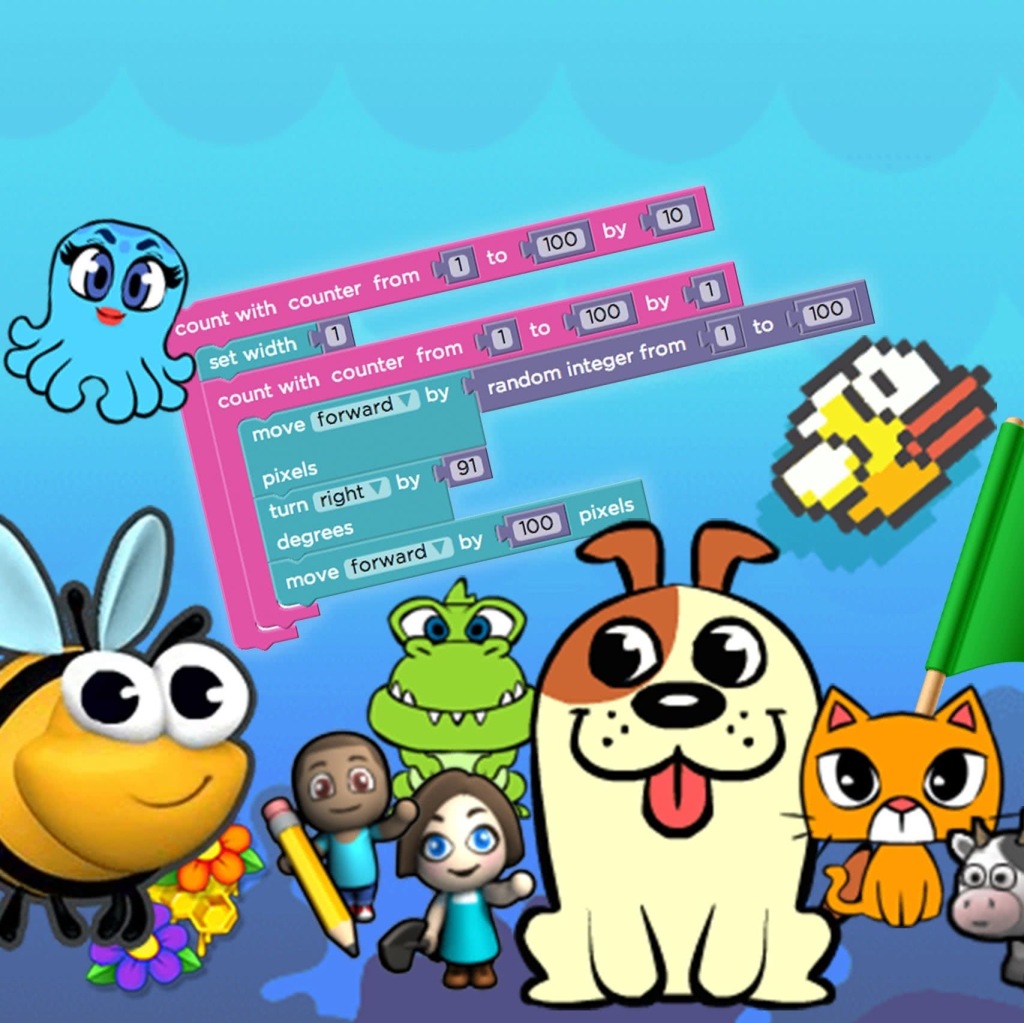
I work with gifted students one day a week. Our state and thus my district made an extremely quick decision to close the schools – heard last Thursday night and was told to send home with students Chromebooks along with lessons on Friday, a half day. Obviously most of the teachers didn’t have time to develop lesson plans and learning activities. I met with my learners quickly on Friday, as so much was going on, and asked them to check in with a shared Google doc and our Google Classroom. What follows are the general tasks they are being asked to do during our regularly scheduled gifted day.
Here is their schedule that I posted in Google Classroom for them.

The online applications – Newsela, Prodigy, and Code.org – have teacher dashboards so I can track progress and give them feedback. For their writing, I can give feedback directly on their Google docs, and for their maker projects, they are to post pictures to Google classroom.
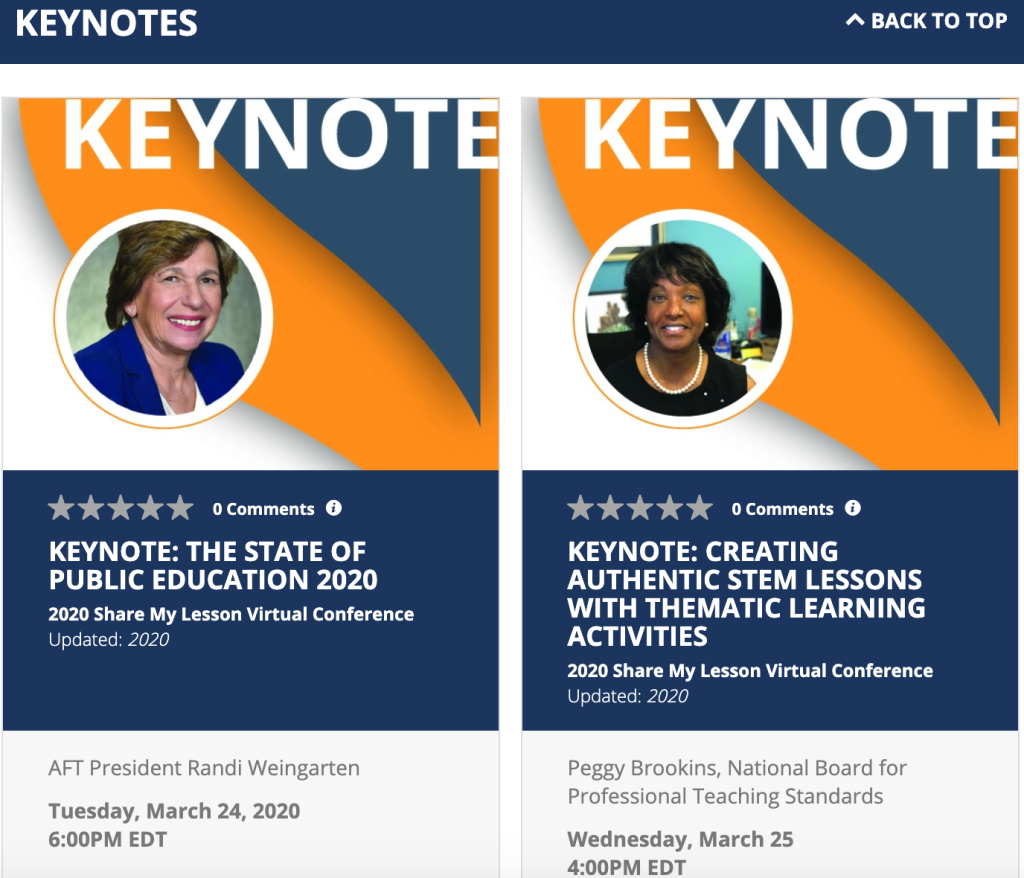

I plan on doing some PD in my pajamas – in other words, virtual style.
Attending Some Virtual Conferences
Taking Some Online Classes
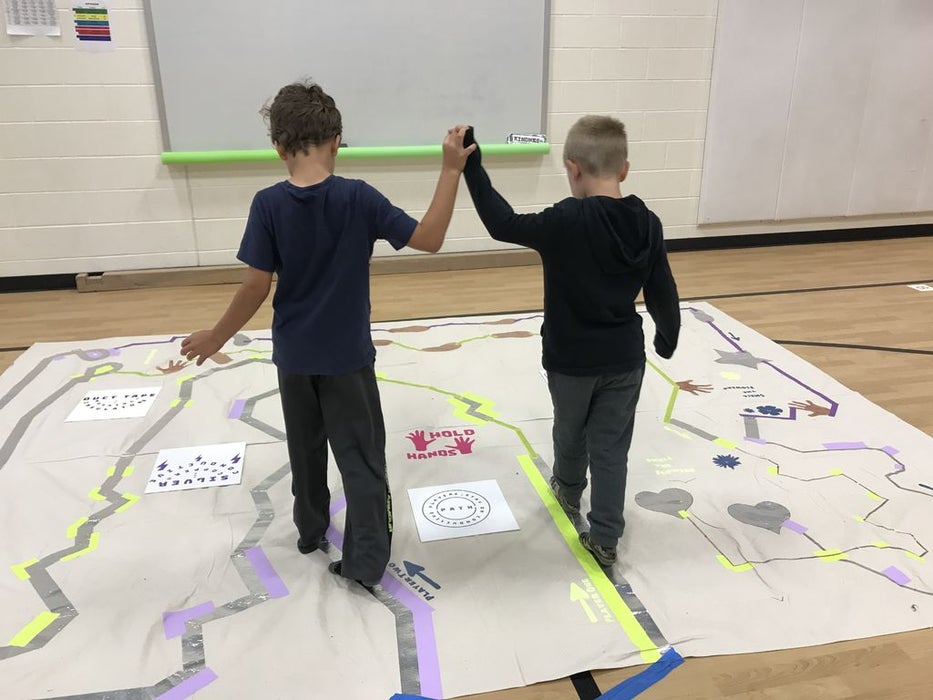

Because I use lots of maker education projects in my gifted education classes and our school has a new STEAM lab, this forced hiatus is giving me the opportunity to try out some new projects including:
I work out in group fitness classes several days a week. It verges on addiction. When I don’t get to do so, I get stressed out. Plus, it provides me with needed social interactions. So when my health club decided to limit their services, I became distraught. Luckily, though, I live in Santa Fe, New Mexico, so I plan to go on lots of hikes and am fixing up my bicycle to ride – hoping that the weather permits it. I am going to do online fitness classes. Oh, and, of course, cleaning my house from top to bottom will add an other fitness element. I absolutely know my physical workouts and health will positively affect my mental health.
Planning approaches determine how decisions are made and implemented in the development process. In development planning, particularly in urban and rural planning, two major approaches are commonly discussed: the Top-Down approach and the Bottom-Up approach. These approaches differ mainly in terms of decision-making authority, participation of stakeholders, and implementation methods.

The top-down approach focuses on centralized decision-making by higher authorities, whereas the bottom-up approach emphasizes participation and involvement of local communities in planning processes. Both approaches have advantages and limitations, and modern planning practices often try to combine elements of both to achieve effective and inclusive development.
The Top-Down approach refers to a planning method where decisions are made by higher authorities such as national governments, central planning agencies, or senior administrators, and then implemented at lower levels such as states, districts, cities, or villages.
In this approach, policies, strategies, and development programs are designed at the top level and passed down to lower administrative levels for execution.
Examples of top-down planning include:
The Bottom-Up approach is a planning method where local communities, grassroots organizations, and local governments actively participate in the planning process. In this approach, development ideas originate from the local level and are gradually integrated into higher-level planning frameworks.
The bottom-up approach emphasizes community participation and local knowledge.
Examples of bottom-up planning include:
In India, the Panchayati Raj system encourages bottom-up planning through village-level governance.
| Aspect | Top-Down Approach | Bottom-Up Approach |
|---|---|---|
| Decision-making | Centralized | Decentralized |
| Participation | Limited community involvement | Strong community participation |
| Planning level | National or regional level | Local or grassroots level |
| Implementation | Government-driven | Community-driven |
| Flexibility | Less flexible | More adaptable to local needs |
Modern planning practices increasingly recognize the importance of combining both approaches.
An integrated planning approach allows:
This combination ensures that development policies are both technically sound and socially inclusive.
The top-down and bottom-up approaches represent two different methods of planning and development. The top-down approach relies on centralized decision-making and expert-driven policies, while the bottom-up approach emphasizes community participation and decentralized planning.
Both approaches have their advantages and limitations. While top-down planning is useful for large-scale national development projects, bottom-up planning ensures that local needs and priorities are considered. In modern planning systems, integrating both approaches helps achieve more effective, inclusive, and sustainable development outcomes.
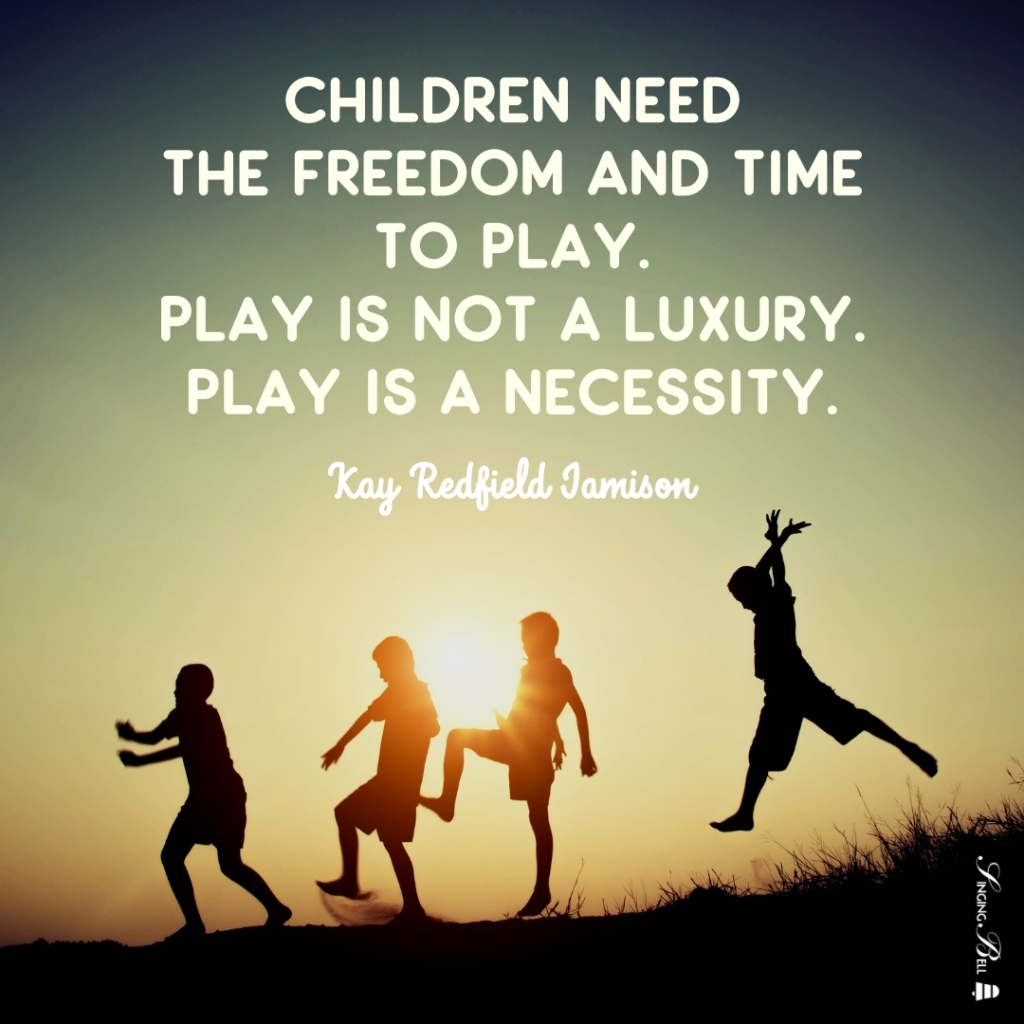
Teachers get so much pressure to meet standards and prepare students for state mandated tests, that I believe they forget their students are just kids. Because of this pressure, too many teacher education and professional development strategies stress the concept of time on task. For example, see Identifying (and Engaging Students in), Time-on-Task Activities, Increasing Time on Task, and Time on Task. This has some importance in teaching and learning but it shouldn’t always be the professed key to good instruction. This leaves little time for play. Play is important for students of all ages and grades.
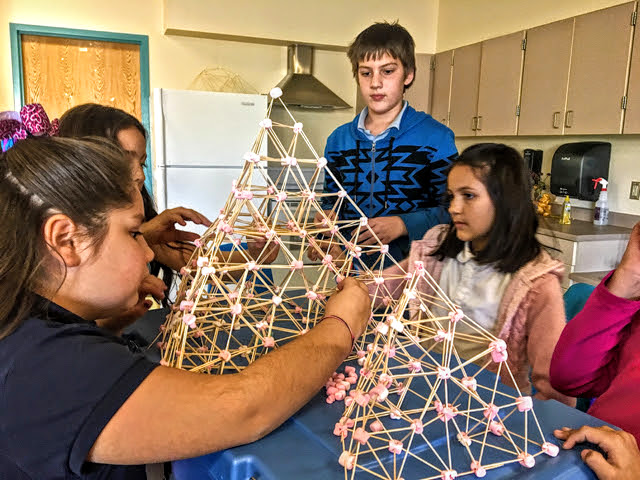
This week I was reminded of the importance of playing and having fun; and that play and fun are determined by the kids, themselves. I planned a math lesson based on visual patterning, The concluding activity was for them to make a Fractal Tetrahedron, a marshmallow-toothpick tower. I had planned to have them work on it during a series of math classes, but they asked to stay through lunch and recess to work on it.
I started working with this group of gifted middle school students in January. I always have a goal of engaging learners as I believe it is the foundation of all good learning. I have had difficulty engaging them even with the use of Breakout EDU escape boxes, art activities, and games. Some engaged. Some did not. This marshmallow-toothpick activity brought a new energy into this group. All of them participated. They worked together. They laughed. They excitedly kept building and building. They added pieces to it that weren’t part of the plan. They played and had fun. A new group and classroom dynamic emerged which I believe was due with just letting them play with this project.

I discussed the beauty of spontaneous play (lots of play is spontaneous) in An Education Filled with Wonder:
One day I was substituting for a 2nd grade class. It had begun to snow as we arrived to school that morning. By mid-morning, a few inches covered the ground. It was time for recess but, as expected, a voice came over the intercom to state that recess would be inside within each teacher’s classroom. I heard the kids moan as they came to school dressed for snow with boots and winter jackets. I threw caution into the wind. I asked the kids to bundle up so we could go outside. The kids became . . . well, kids. They ran through the fresh snow in the huge back-of-the-school play area with no other students out there. They examined the footprints they created in the snow. When one found something of interest, they called the others over to see. They caught snow flakes with their tongues and made snow angles. There were no conflicts nor arguing as was common to this group of kids. They just ran, played, and laughed together as a unified group reminding me of a flock of geese. I watched them with a tear in my eye, one that reflected the beauty I was witnessing.
I wonder (even though I intuitively know the answer) whether learners in their adulthoods will better remember the types of activities I described above or their very structured time-on-task classroom activities.
The Harvard Graduate School of Education discussed the importance of play in Playing to Learn: How a pedagogy of play can enliven the classroom, for students of all ages:
Play and school can seem diametrically opposed. School is structured, often focused on order; play, by definition, is not.
But within this paradox of play and school, educators can find meaningful learning opportunities, advancing students’ academic skills as well as the social skills that will allow them to thrive in adulthood and enjoy their childhood now, according to researchers from Project Zero (PZ), a research center at the Harvard Graduate School of Education.
“Play is a strategy for learning at any age,” says Project Zero’s researcher Mara Krechevsky. While older students and their teachers might have more curricular demands than younger students, playful learning still has an important role to play — it might just look different.
There is a universality to play: children are often more relaxed and engaged during play, and it’s enjoyable — all aspects that facilitate learning.
I think most educators innately know about the importance of play but according to many of them, they don’t have the time during the school day to permit kids to play outside of recess . . . but I ask, “What are the costs of not permitting them to play?”
A wonderful serenity has taken possession of my entire soul, like these sweet mornings of spring which I enjoy with my whole heart.
I am so happy, my dear friend, so absorbed in the exquisite sense of mere tranquil existence, that I neglect my talents.
I am alone, and feel the charm of existence in this spot, which was created for the bliss of souls like mine. I am so happy, my dear friend, so absorbed in the exquisite sense of mere tranquil existence, that I neglect my talents.
I should be incapable of drawing a single stroke at the present moment; and yet I feel that I never was a greater artist than now.
When, while the lovely valley teems with vapour around me, and the meridian sun strikes the upper surface of the impenetrable foliage of my trees, and but a few stray gleams steal into the inner sanctuary, I throw myself down among the tall grass by the trickling stream; and, as I lie close to the earth, a thousand unknown plants are noticed by me: when I hear the buzz of the little world among the stalks, and grow familiar with the countless indescribable forms of the insects and flies, then I feel the presence of the Almighty, who formed us in his own image, and the breath of that universal love which bears and sustains us, as it floats around us in an eternity of bliss; and then, my friend, when darkness overspreads my eyes, and heaven and earth seem to dwell in my soul and absorb its power, like the form of a beloved mistress, then I often think with longing, Oh, would I could describe these conceptions, could impress upon paper all that is living so full and warm within me, that it might be the mirror of my soul, as my soul is the mirror of the infinite God!
O my friend — but it is too much for my strength — I sink under the weight of the splendour of these visions! A wonderful serenity has taken possession of my entire soul, like these sweet mornings of spring which I enjoy with my whole heart. I am alone, and feel the charm of existence in this spot, which was created for the bliss of souls like mine.
I am so happy, my dear friend, so absorbed in the exquisite sense of mere tranquil existence, that I neglect my talents. I should be incapable of drawing a single stroke at the present moment; and yet I feel that I never was a greater artist than now. When, while the lovely valley teems with vapour around me, and the meridian sun strikes the upper surface of the impenetrable foliage of my trees, and but a few stray gleams steal into the inner sanctuary, I throw myself down among the tall grass by the trickling stream; and, as I lie close to the earth, a thousand unknown plants are noticed by me: when I hear the buzz of the little world among the stalks, and grow familiar with the countless indescribable forms of the insects and
Ramachandra*
* Assistant Professor, Department of political Science, Government First grade College, Hosadurga, Chitradurga, Karnataka.
Abstract
The recent elections held in Karnataka were significant for a number of reasons, many of which were discussed threadbare in the popular press at different levels. The BJP victory was astounding. Veterans politicians like Mallikarjun Kharge, who never lost an election or those like Deva Gowda and Veerappa Moily, all of them lost by huge margins. A more exhaustive analysis tends to happens only as a post-factor event – something which is bound to happen even this time. The verdict has confounded many observers who were looking at the larger picture. Hence, there is often an attempt to simplify what is otherwise a complex and perplexing result. There is no doubt that factors like nationalism, terrorism and related aspects did play an important part in the outcome, it would be unfair to ascribe the results only to one or two factors. Using the prism of an analysis of the results in Karnataka we argue that the verdict is the result of more complex factors that are at work in the state.
Keywords: Astounding, Exhaustive Analysis, verdict, Political Land Scape, Discernible, NOTA, Criss-crossed, Coalition government.
Introduction
The recently concluded elections were significant for a number of reasons, many of which were discussed threadbare in the popular press at different levels. The scale of BJP victory in Karnataka is, to say the least, astounding. Veterans like Mallikarjun Kharge, who never lost an election or those like Deva Gowda and Veerappa Moily, who had bucked the 2014 Modi wave lost. And, all of them lost by large margins. A more exhaustive analysis tends to happens only as a post-factor event – something which is bound to happen even this time. The verdict has confounded many observers who were looking at the larger picture. Hence, there is often an attempt to simplify what is otherwise a complex and perplexing result. There is no doubt that factors like nationalism, terrorism and related aspects did play an important part in the outcome, it would be unfair to ascribe the results only to one or two factors. Using the prism of an analysis of the results in Karnataka we argue that the verdict is the result of more complex factors that are at work in the state.
Karnataka Verdict: Overview
Karnataka has 28 parliamentary seats of which four are reserved for Scheduled Castes while 24 are unreserved. The political landscape of Karnataka is diverse and difficult to predict. The diversity is largely because of its historical evolution where the state consists of parts of that were united into a linguistic state from the British India and various princely states. There are six regions in the state each with its own unique set of political, social and economic dynamics. These regions include Bengaluru (28 assembly seats), Old Mysore (61 assembly seats; part of the princely state of Mysore), Coastal Karnataka (19 assembly seats), Central Karnataka (26 assembly seats), Hyderabad Karnataka (40 seats; part of erstwhile princely state of Hyderabad), and Bombay Karnataka (50 seats; part of the Bombay Presidency). According to the 2011 Census1, Hindus comprise of about 84 per cent of the population, Muslims about 13 per cent and Christians 1.87 per cent. An interesting aspect of Karnataka is the historical importance of various sects within Hinduism — a factor which played an important role in 2018 Assembly elections. Dalits make up about 17 per cent of the population. Unofficial estimates indicate that the two politically “dominant communities”[1], Lingayats and Vokkaligas make up an estimated 16-17 and 11-13 per cent respectively. Historically, Lingayats and Vokkaligas dominate the political landscape and have always accounted for about fifty percent of the elected legislators and parliamentarians.
In Karnataka there are three major political parties – Indian National Congress (INC), Bharatiya Janata Party (BJP) and Janata Dal (Secular) – of which two occupy the most important part of the spectrum while the third is a relatively smaller party, whose importance was magnified in the 2018 Assembly elections. It is well known fact that smaller parties tend to play a crucial role when there is an indecisive verdict.
Table 1: Karnataka General Elections
| Parties | 2014 | 2019 | ||
| Seats | Vote Share | Seats | Vote share | |
| BJP | 17 | 43.37 | 25 | 51.38 |
| Congress | 9 | 41.15 | 1 | 31.88 |
| Janata Dal (S) | 9 | 11.07 | 1 | 9.67 |
| Others parties | 0 | 1.24 | 0 | 1.31 |
| Independents | 0 | 1.57 | 1 | 5.04 |
| NOTA | 0 | 0.83 | 0 | 0.71 |
Note: Vote Share in Percentage
Source: Compiled From Election Commission of India website (https://eci.gov.in/statistical-reDOrt/statisticah reports/ and http://results.eci.gov.in/pc/en/trends/statewiseS101.htm?st=S 101
The verdict in Karnataka threw up new and interesting aspects and aspects. It is not clear whether these will continue to remain long lasting trends. The contest was primarily between the BJP and the Congress-JDS alliance on the other hand. The discernible trends in 2019 elections include: first, the voter turnout was a record of 68.6 per cent which was higher than the previous highest 67.58 per cent recorded in 1999 parliamentary elections and about 67.2 per cent recorded in the 2014 general elections[2]. Second, the verdict illustrated that it was overwhelming win for the BJP. The party won 25 out of 28 (or about 89 per cent) of the parliamentary seats in the state. A victory of this magnitude is rare in Karnataka. Second, the BJP won more than half of the popular vote share: it garnered 51.38 per cent of the votes cast.
Third, the magnitude of the vielory of the BJP in 2019 was larger than 2014 in terms of seat and vote sliare – trend that is in consonance with many other states in the country. Our observation about the magnitude of the victory is borne out by the results: in 20 of28 seats at stake, the BJP won by a margin of more than 1 lakh votes while in 24 of the total 28 seats the BJP won by a margin of more than 50,000 votes. In most constituencies, the swing in favour of the BJP varied from 6 to 12 percent of the votes cast. Fourth, except in one constituency (Mandya), won by an independent supported by the BJP, in all the other constituencies all candidates not belonging to the tluee major political parties lost their deposits. Fifth, in some constituencies “none of the above” (or NOTA) garnered the third highest number of votes polled, indicating of the complete dominance of the three political parties in the state. Sixth, the verdict saw the complete defeat of the Deva Gowda family, which has played an. important part in the state’s politics over the past three decades. Seventh, 2019 witnessed a marginal decline in the share of NOTA.
Assembly versus Parliament Voting Patterns
Karnataka has 224 assembly seats. Table 2 offers insights into the seat and vote shares of different parties in the two assembly elections (2013 and 2018). In 2013, BJP the then incumbent was defeated after it was bruised by a combination of anti-incumbency and a division of its votes due to the split in the party with a section led by B.S. Yedyurappa floating a separate party. Though the Congress won in the 2013 Assembly elections, it had to be content with just nine seats in the parliamentary elections while the BJP won 17 of the total 28 seats. This victory was largely facilitated by the Modi wave in 2014 and the fact that Yeddyurappa had returned to the parent party shortly before the 2014 general elections.
Table 2: Karnataka Assembly Elections
| Parties | 20 | 13 | 2018 | |
| Seats | Vote Share | Seats | Vote share | |
| BJP | 40 | 19.89 | 104 | 36.22 |
| Congress | 122 | 36.59 | 78 | 38.04 |
| Janata dal (S) | 40 | 20.19 | 37 | 20.61 |
| Others | 13 | 15.95 | 2 | 2.34 |
| Independents | 9 | 7.38 | 1 | 3.93 |
| NOTA | NA | NA | 0 | 0.86 |
Note: Vote Share in Percentage; * NOTA was introduced for the first time in the elections to Assemblies of Chhattisgarh, Rajasthan and MP in December 2013.
Compiled from Election Commission oflndia Website (https://eci ■ gov.i n/stati stical-report/stati sti cal-reports/)
In 2018 elections, the BJP emerged as the single largest party with 105 seats against the Congress’ tally of 78 seats. This is despite the fact that the Congress got a number of votes. Interestingly, the vote and seat share of the JDS remained largely constant. After high drama which saw a midnight Supreme Court hearing, the Congress and JDS formed a coalition government in which the representative of the third largest party ended up as the Chief Minister.
Understanding the Electoral Tsunami
An important aspect of the elections is that the ruling coalition which was cobbled up after the elections in May 2018 or about one year before the general elections was decimated. The results indicate that Karnataka has now emerged as the stronghold which the BJP can use as the springboard for its larger foray into other South Indian states much like Uttar Pradesh and Madhya Pradesh are to North and Central India. If one were extrapolate the parliamentary elections to the legislative assembly, the BJP would have won about 170 seats while the ruling alliance would have won in about 50 seats. There are a number of reasons for this. A combination of Karnataka specific factors and national level factors played an important role. First, Karnataka has a history of voting different for parliament and assembly elections. Second, the ruling alliance has only itself to blame. They were essentially stuck with fighting among themselves rather than putting up a resolute fight against a common foe – something that had enabled them to come to power in the first place. In short, the government has survived on a tenterhook from the very first day. They have been afflicted by constant dissidence and infighting either among the partners or have had to keep unhappy members in good humour. The net results are that governance went for a toss – a factor that had a significant impact on an electorate that votes differently in assembly and parliament elections. Third, BJP’s mammoth victory was made possible only because it was able to make dramatic gains into the Congress Vote bank in Old Mysuru Region – another first to the BJP’s credit. That is indicative of not just dissatisfaction but the fact that the BJP got the caste arithmetic right. In contrast, the alliance’s tendency to focus on giving tickets to members of entrenched families was contrasted with those of the BJP which went out of the way to show that it was against dynastic politics – an optics that meant the denial of ticket to the wife of the Union Minister, Late Ananth Kumar. Contrast this with the JDS where in two constituencies their third-generation family members contested – something that left an acute distaste among the electorate. In a number of seats it may be noted that poor strategy and execution led to self in (lie ted wounds among the alliance partners. Foremost is the fact thai the alliance partners never really worked in earnest for each other. The ease of Tumkur where the .IDS was allotted the ticket in the face of vociferous opposition from the sitting MP was illustrative of this. Moreover, fight for tickets often took a nasty turn where the partners did not work the success of each other. In many cases, the distribution of tickets was such that it was not just the victory but the margin of victory was assured. This poor strategy went to extreme lengths. In two constituencies that were allotted to JDS, that party did not have candidates and instead had to borrow candidates from the Congress. Thus, it is clear that better strategy would have invariably led to better electoral results for the alliance partners.
The role and contribution of Prime Minister Narendra Modi, his ability to micro-manage the party affairs and marshal the cumulative resources of the party without any let up played an important role. Unlike the alliance partners, whose electoral fight did not gain traction till the last minute, the Prime Minister and Amit Shah, the BJP president not just criss-crossed the state but saw to it that all the groups in the party worked to a united goal – that of victory. Similarly, the reach of the BJP and its affiliates in the ‘Sangh Parivar’ meant that while the BJP’s campaign was visible, the door-to-door low profile but highly effective campaign of hundreds of thousands of ideologically motivated cadres created a ground for the electoral tsunami. This explains the loss of entrenched leaders even in their strong holds. This cohesion and single minded devotion to achieving the goal was contrasted with that of the alliance partners where fights over ticket distribution meant that a large segment of the focal leadership was unhappy or a last minute stitching up a comprise meant a classic case of ‘too little, too late’.
The creation of the BJP juggernaut is largely due a major change in the electoral strategy of the BJP under Modi-Shah. Unlike in the past, the BJP has no qualms about assimilating strong candidates with a mass base into itself. In the past, this tactical move was considered the forte of the Congress Party and the BJP subtly frowned presumably because the ideological difference that may have been thought to exist. Post 2014, it is clear that the BJP under the leadership of Modi-Shah have no such qualms. They have been liberal in seeking to win over any discontented elements in any party across the ideological spectrum. In fact, the BJP’s success in Gulbarga and Bidar is because it was played a proactive role in drawing such elements in these seats – both of which the BJP won.
It is in this context of well oiled paily machinery backed by huge human resources and razor sharp focussed strategy that the post-Pulwama nationalist rhetoric should be approached. A nationalist rhetoric was something that was always a part of the BJP arsenal but the fact that it could be harnessed was lai’gely due to the fact that the party organisation was able to exploit it to the fullest extent which made the difference. Of course, to all the above one may add the usual factors like money power, advertising power and more importantly social media. The spread of smart phones and mobile internet means that the role of media transmission and their impact has changed. Millions of mobile internet connections aided by massive numbers of social media organisation and groups pushing Modi’s re-election bid, it is but not surprising that his message reached the last mile. In Karnataka elections social media reach and social media campaign, especially in the aftermath of Pulwama and surgical strikes played an important part in mobilising public opinion in favour of Narendra Modi. The use of social media to fill the gap in the last mile media outreach is a new feature of 2019 elections and one that will continue to remain for the foreseeable future.
An aspect of 2019 elections is that it is clear that Prime Minister Narendra Modi has brought about a major shift in the manner in which future elections will be fought. It was different for the simple reason that it was for the first time that an election was fought with all the new dynamics and one in which a national party was able to truly change the narrative from one that is usually highly localised to one that was pan-India in scope.
There is no doubt that the biggest win in Karnataka’s parliamentary election voting patterns will have massive ramifications – one that is already playing. The writing on the wall is clear that the opportunistic alliance’s days are likely to be numbered. This is for the reason that the alliance was afflicted by contradictions from day one and they had no unifying factor other than keeping the BJP out of power. A more worrying factor for the non-BJP parties should be the fact that it is clear that the BJP has spread its wings to areas that were in the past considered to be the traditional strong holds of the opposition. Hence, it is likely that the politics ot the state is likely to be in a state of flux for the next few years.
References
Kothari. Raj ini and Manor. James (eds). Caste in Indian Politics. Orient Blackswan. Hyderabad
2010
hup: www.censusindia.yov.in 2011 census Religion PCA. tiinil
https://eci.gov.in statistical-report statistical-reports
[1] Used in the same sense as Rajini Kothari and James Manor (eds), Caste in Indian Politics, Orient Blackswan, Hyderabad, 2010
[2] htti^:”eci.gov.in/statistica1-reDort/statistical-reports/ (website last visited 15 July 2019)
By Shashikant Nishant Sharma
Geographers often find it beneficial to understand GIS (Geographic Information System) algorithms, but it’s not always a strict requirement for all geographers. GIS is a powerful tool that allows geographers to analyze and interpret spatial data, and a basic understanding of GIS algorithms can enhance their ability to use GIS effectively. Here are a few reasons why geographers might benefit from understanding GIS algorithms:
However, it’s important to note that not all geographers need to delve deeply into GIS algorithms. Many geographers use GIS as a tool for spatial analysis without needing to understand the underlying algorithms at a detailed level. The level of understanding required depends on the specific tasks and goals of the geographer. Some may focus more on the conceptual and applied aspects of GIS, while others, especially those involved in GIS development or research, may need a more in-depth understanding of algorithms.
Abler, R. F. (1993). Everything in its place: GPS, GIS, and geography in the 1990s. The Professional Geographer, 45(2), 131-139.
Goodchild, M. F. (2004). GIScience, geography, form, and process. Annals of the Association of American Geographers, 94(4), 709-714.
Healy, G., & Walshe, N. (2019). Real-world geographers and GIS. Teaching Geography, 44(2), 52-55.
Johnston, R. J. (1999). Geography and GIS. Geographical information systems: Principles, techniques, management and applications, 1, 39-47.
Sharma, S. N. (2019). Review of most used urban growth models. International Journal of Advanced Research in Engineering and Technology (IJARET), 10(3), 397-405.
Kids are learning – but for way too many it occurs outside of the school environment rather than during school. Given today’s technologies, it makes sense and is exciting that learning occurs after schools hours, but for exciting, engaging, and profound learning not to occur during school hours is, simply put, a travesty.
I contend that school, especially in the latter part of the 20th century, had a high degree of irrelevancy but in today’s highly connected world, it is absurd, verging, in my perspective, as unethical practices. We are asking today’s students to spend so much of their school lives doing tasks that are unconnected to the the skills that need now and in their future lives.
. . . and the kids agree as studies have indicated.
Gallup has conducted more than 5 million surveys with students in grades five through 12 over the past several years. These students have come from every state and from a range of rural, suburban and urban school settings. Almost half of students who responded to the survey are engaged with school (47%), with approximately one-fourth “not engaged” (29%) and the remainder “actively disengaged” (24%). A closer look at the data by grade level reveals a disturbing trend. Engagement is strong at the end of elementary school, with nearly three-quarters of fifth-graders (74%) reporting high levels of engagement. But similar surveys have shown a gradual and steady decline in engagement from fifth grade through about 10th grade, with approximately half of students in middle school reporting high levels of engagement and about one-third of high school students reporting the same (School Engagement Is More Than Just Talk).
Just 54 percent of middle schoolers and 46 percent of high schoolers think their studies are relevant, according to new data from the nonprofit YouthTruth. Relevance was rated lowest on the survey of various measures of student engagement: if students take pride in their work, if they enjoy going to school, if their schoolwork is relevant, if they try to do their best, and if their teachers’ expectations help them with that goal (Only Half of Students Think What They’re Learning in School Is Relevant to the Real World, Survey Says).
Over five years ago, I wrote a post entitled Universal Skills All Learners Should Know How to Do in order to discuss those skills I believe are important for learners during this era. For this post, I revisited it. I revised it to now include financial literacy and civics.
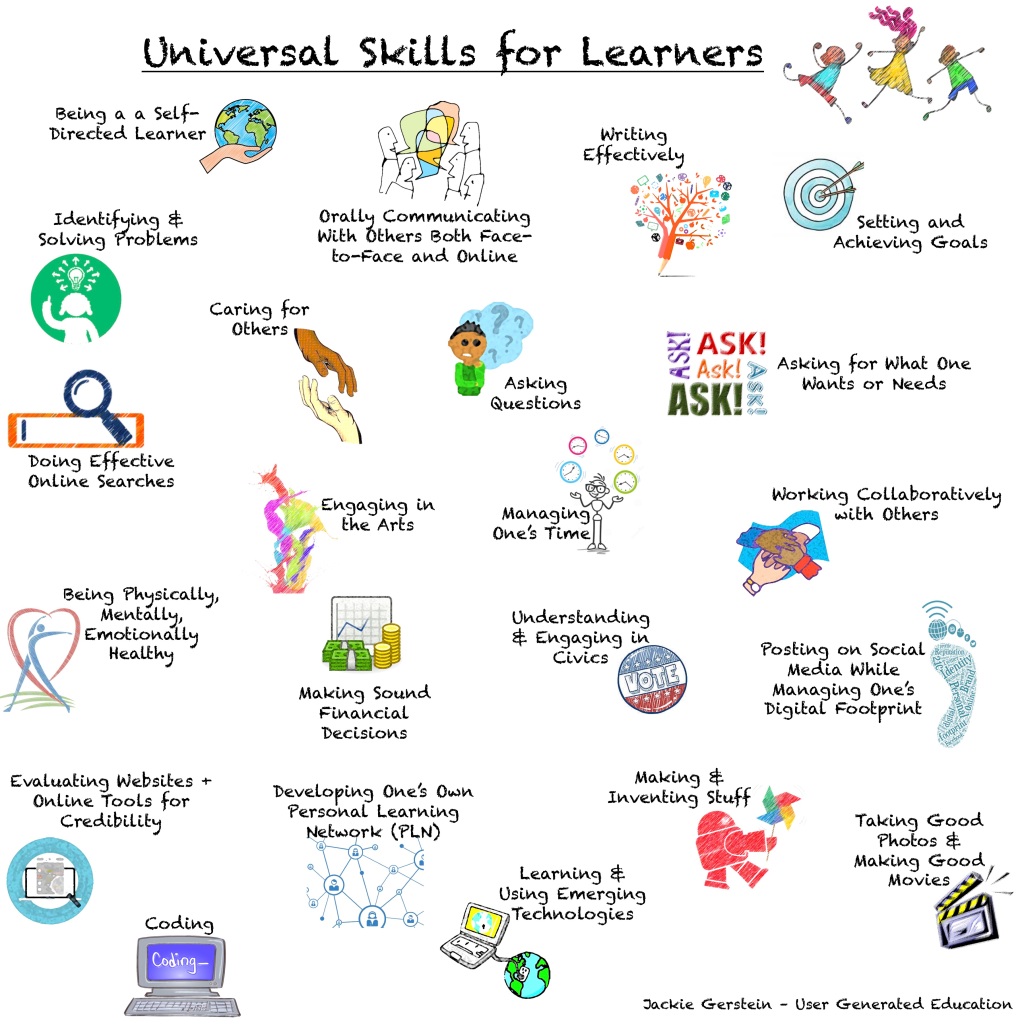
I think most administrators and educators (and learners) would agree with the importance of most of the skills on this list to assist learners to be successful now and in their futures. Sadly, though, too few of these skills are directly and intentionally taught to learners: writing, speaking, and for more progressive schools, engaging in the arts and the computer science related skills. Is the current school system model really the best we can do?
|
 बंदरों का खौफ: छत से कूदी महिला बंदरों का खौफ: छत से कूदी महिलाफरीदाबाद: 10 मई : बंदर के भय से सेक्टर-21 सी. में महिला ने दो मंजिले मकान से छलाँग लगा दी। जिससे उसके चेहरे व नाक की हड्डियाँ टूट गईं । गंभीर हालत में उन्हें अस्पताल में भर्ती कराया गया है। इस घटना से सेक्टरवासी बंदरों से खौफजदा है। इससे पहले भी यहाँ अनेक हादसे हो चुके हैं। बंदरों के आतंक से निजाद पाने के लिए स्थानीय लोग शिकायत करेंगे। बंदरों को पकड़ने में निगम को नाकाम बताते हुए लोगों ने अब निगमायुक्त से बंदरों को मारने की अनुमति लेने का फैसला किया है ताकि इस समस्या से खुद निपटा जा सके। (खौफ: भय, निजाद: रक्षा)
|
| पहला अंतर – (यह एक….मर गया) वाचन प्रक्रिया । छात्र सस्वर वाचन। वाचन का आकलन। ? जंगल के हाथी कैसे बेघर हो गए? ? किसी के बेघर हो जाने पर क्या होता है?
? जंगली जानवरों के बेघर हो जाने से क्या होता है? |
अगला अंतर – (खबर मिलते ही…..उसे सताना नहीं छोड़ा।)
वाचन प्रक्रिया और उसका आकलन । |
चोमस्की पहले भी भाषा विज्ञान के एक विद्वान था, जो उसकी हिब्रू पिता द्वारा भाषा के क्षेत्र के लिए शुरू की गई थी.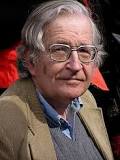
उन्होंने यह भी एक राजनीतिक कार्यकर्ताओं, संज्ञानात्मक वैज्ञानिक, दार्शनिक और कई पुस्तकों के सम्मानित लेखक माना जाता है. यह लोगों को राजनीतिक क्षेत्र में एक उदारवादी समाजवादी के रूप में उसे वर्णन करने के लिए शुरू किया है कि 1960 के आसपास थी.
उन्होंने कहा कि भाषाई दुनिया पर एक बड़ा प्रभाव है और वह लोगों को एक नई भाषा सीखने के लिए पर जोर डालने में निभाई भूमिका होने के लिए, तथापि, जमा किया गया है.
वे वृद्धि के रूप में अच्छी तरह से चोमस्की पदानुक्रम के रूप में जाना जाता है जो उनके सिद्धांत, और अधिक शक्ति के साथ अलग अलग वर्गों में निर्धारित व्याकरण बिताते हैं. उत्पादक व्याकरण और सार्वभौमिक व्याकरण का उनका विचार भी चोम्स्की और अन्य भाषाविद् के बीच विभाजनकारी का हिस्सा था.
उनका काम भी ऐसे इम्यूनोलॉजी, विकासवादी मनोविज्ञान, और कृत्रिम बुद्धि के अनुसंधान के साथ ही कम्प्यूटरीकृत है कि भाषा के अनुवाद के रूप में विशेषज्ञता के अन्य क्षेत्रों को प्रभावित किया है.
चोमस्की अपने अन्य समकक्षों की तुलना में एक अलग तरह के प्रकाश में भाषा के अध्ययन का दरवाजा खटखटाया. उनके सार्वभौमिक व्याकरण सिद्धांत है कि सभी मनुष्यों शेयर भाषाई नियमों की एक आंतरिक सेट है कि प्राथमिक सिद्धांत पर बल दिया. यह वह एक भाषा सीखने की शुरुआत चरणों बुलाया.
यह कुछ विशिष्ट नियम, दी जब किसी भी भाषा के उत्पादक व्याकरण, उचित व्याकरण की दृष्टि से एक वाक्य फार्म का गठबंधन होगा कि शब्दों की गणना करेगा कि तथ्य यह है कि पहचान की Naom चोमस्की था. सही ढंग से संपर्क किया जब वे एक ही नियम वाक्य की आकारिकी पर जोर देना होगा.
चोमस्की के उत्पादक व्याकरण के इस सिद्धांत के पहले संस्करण परिवर्तनकारी व्याकरण था. बेशक, उत्पादक व्याकरण संज्ञानात्मक व्याकरण और कार्यात्मक सिद्धांतों के समर्थकों से कुछ आलोचनाओं प्राप्त करता है.
समापन
चोमस्की मन दूसरों को यह ऋण देने से भाषा विज्ञान के साथ क्या करना था कि लगा. वह एक भाषाई वातावरण में रखा जाता है जब एक बच्चे का उदाहरण देकर प्रेफसस इस बोली जाती हैं कि शब्दों के लिए अनुकूल करने के लिए एक सहज क्षमता है करने में सक्षम है.





 Track2Training
You must be logged in to post a comment.