Eduindex News is a news aggregator app developed by Google. It presents a continuous flow of articles organized from thousands of publishers and magazines.
We all come across the word healing as we scroll down through social media or while reading a newspaper. We know the meaning of healing as in healing a wound, that is to recover or the process of recovering. But have you heard about healing your mind, it is nothing but emotional healing, the ability to take proper control of your mental health in a way they do not interfere your present moments. Nowadays, be it young children, teenagers or adults, we use the word stress in our everyday life. Stress is something that is unavoidable nowadays, loads of books to study, loads of activities to be done, relationship issues, health issues and lots of other stuff. Once your body reacts to stress, that makes you feel frustrated, so it is really important to heal your mind and body.
Steps to heal yourself
Once we get a wound, immediately we all treat the wound with some kind of antibiotics after cleaning the wound, same way when your body reacts to stress it creates some wound to your mind, so it must be treated immediately by healing. Here are some ways to heal yourself:
Take a deep breath whenever you feel stressed and think calmly to overcome the issue whatever it might be.
Indulge yourself with your favorite hobbies and keep going with it until you forget all your worries
Do some exercise, this might help your body and mind to relax
Have a nice talk with your closed once, share your thoughts with them, this surely reduces your burden.
Spend some time with nature, the pure air, birds chirping, cool breeze, really heals you better than anything else
Cook your favorite dish or go to your favorite restaurant, have something that makes you forgot all your worries
Have some ice cream, its the best comfort food, it seems to combat anxiety, stress and sadness away.
Take everything slowly, face your problems with a smile, Don’t push yourself too hard
Prime Minister Narendra Modi particularly thanked Romania for permitting Indians to enter its territory without visas.
Prime Minister Narendra Modi thanked Romania PM Nicolae-Ionel Ciucă, and Slovak PM Eduard Heger for permitting evacuation flights to land in their countries to bring back stranded Indians from war-hit Ukraine. (PTI)
Prime Minister Narendra Modi on Monday spoke to his Romanian and Slovak counterparts Nicolae-Ionel Ciucă and Eduard Heger, respectively, as India continued to use the two nations as land routes to bring back its stranded nationals from war-hit Ukraine.null
Modi thanked both Ciuca and Heger for their assistance in the repatriation process since Russia’s invasion of the east European country. According to a statement, he particularly thanked the Romanian PM for allowing Indians to enter the country’s territory without visas.
He thanked them for allowing special evacuation flights in their countries, which are being used to bring home stranded Indian citizens from Ukraine.
Further, Modi apprised Ciuca and Heger of the deployment of aviation minister Jyotiraditya Scindia and Union law minister Kiren Rijiju in Romania and Slovakia, respectively, as special envoys to oversee the evacuation process over the next few days.
During his calls with the two leaders, Modi also expressed his anguish at the ongoing violence and humanitarian crisis in Ukraine, and reiterated the need for a return to dialogue. “He also stressed upon the importance of respecting sovereignty and territorial integrity of nations,” a PMO statement said.
Written by Sharangee Dutta | Edited by Sohini Goswami, New Delhi
There are two kinds of students attending school or a college, they are either hostellers or day scholars. Day scholar students would have been wondering what would hostel life be like? There are a few things we all would have heard from hostellers. Nowadays both of the parents are working, so they prefer to join their children in a hostel rather than picking them up or arranging them a transport and worrying whether the child has reached safely or not, Also students from long distance obviously need hostel for them to stay.
Hostel life
There are certain things we are curious about hostellers. We often ask hostellers whether they miss their family and their previous environment. Of course hostellers miss their family and their home when they are new to hostel life. It’s very natural for a person to feel uncomfortable in a new place with new people surrounded by them. We often come across the word home sick, which is nothing but a distress caused by being away from home. Students miss their home, their family, they want to go back but all these sickness is temporary, once they find new friends and start feeling easy about hostel, it would be the best period of their lives. Hostel life is real fun, imagine staying with your friends all day long, chatting, watching shows and having your own little snacks party and saying creepy stories and enjoying the frightened face of your friends, isn’t it funny? Hostel is not only meant for enjoying but also it’s a great advantage to discuss and learn new things among friends. Each one of the students must be good at something, so it will be easier to learn a lot of new things within themselves.
Leaving Hostel
Staying all those years in hostel, it becomes like another home for them, leaving all those crazy memories and friends hurts them a lot, it’s the same feeling when they left their home for the first time or we can even relate it with our graduation day ,the farewell day , the day after which we won’t be able to experience what we experienced till now. But at last everyone came to the hostel with a purpose, once the purpose is filled we are supposed to leave the zone.
We are always curious about time travel which is hard to believe but some people say it is possible to time travel with advanced technology while others say it’s a myth. First of all what is time travel? It is a concept of movement between certain points in time. We always come across cartoons or movies where people go back and forth in time using a hypothetical device known as time machine.
When it all started ?
You may be wondering when did all these talks started. The first time this concept was mentioned was in a novel named “The Time Machine”, written by H.G Wells and published by Heinemann in 1895. We would have also come across ancient myths where some characters had the power to skip forward in time. There is also a Hindu mythology where the king “Raivata Kakudmi”, travels to heaven in order to meet the creator Brahma. There are a lot of cartoons which uses the concept of time travel to entertain the kids.
Science and time travel
What does science mention about time travel? In our physics book we all would have learnt about special and general relativity and also types of motion in space. Theoretically speaking, time travel is possible. According to general relativity, time travel is possible by moving faster than the speed of light , which includes cosmic strings, warm holes and Alcubierre drives. Some of us would have seen the movie interstellar in which the main character travels to the future using black hole concept and meets his daughter who had become way too older than him. Stephen Hawking suggests that the fundamental laws of nature prevent time travel. Still physicist cannot come to a conclusion on time travel but we all find it as an interesting topic to talk about.
Time Machine
Most of us are curious on how does a time machine would look like if it really existed. No one knows How a time machine looks, because real time machine doesn’t exist till date, but from seeing in science fictions and cartoons, we can say that it looks like vintage cars without a roof with some clocks installed in it. whatever maybe a time machine, if it existed won’t we all be standing in line to travel in it?
We all know that being healthy is real happiness, but most of us live a hectic lifestyle, rushing everything, pushing ourselves to earn money, studying hard and we forget about our health. Sometimes people forgot to eat or had forgotten they’ve eaten already. Some of us really do care about our diet, but we don’t know what is appropriate in order to stay fit . Speaking of food, it’s not only important to eat but also to eat a nutritious meal.
Weight loss and weight gain
Many of us are fascinated on seeing celebrities, how do they have such a fit body? how do they look young even at this age? We even try lot of diet and workout to look fit without knowing the basics of dieting and end up gaining all the weight we lost. People skip breakfast, thinking that might help them loose weight but it’s the other way round, skipping breakfast leads to a drop of blood sugar level, reduces your body metabolism which means your body doesn’t breakdown the food you intake, which obviously leads to weight gain. Some people try hard to gain weight, most of the time people gorge themselves leading to eating syndromes and other health issues.
Diet and Exercise
What can we eat to stay healthy? what kind of exercise makes me fit?, These kind of doubts would be arising in our minds while reading this article. There’s a simple way to understand this, our human body needs vitamins, minerals, protein, carbohydrate, fat, dietary fiber and water. It’s very important to note that all these nutrition should be taken in moderation to avoid disorders caused due to malnourishment or over nutrition. Exercise plays an important role in health, at least half an hour of exercise everyday is necessary to keep us fit. Remember to eat healthy and be active to lead a healthy and happy life , another interesting and effective way to stay healthy is facing all our problems with a smile and laugh out your stress, because laughing stimulates your heart which improves your cardiovascular health. Remember to begin your day with a smile.
(From left) Rahul Dhankar, Naveen Shukla and Muskan Dabas in their flat in Ukraine
Shreya Singh, a medical student at Bogomolets National Medical University in Kyiv, woke up Thursday to the sound of explosions. “An orange haze hung over the city. We later heard the news Russia had destroyed Ukraine
‘s airbases. We are panicking as I had booked a flight to India for March 2, but I think it will be cancelled. We are waiting for updates on evacuation from the Indian embassy,” Singh, who is from Lucknow, told Priyangi Agarwal over phone.
Another medical student, Gargi Gupta, said, “We can hear the sound of military aircraft. We have been advised if an 11-minute-long siren is sounded, we should run for the bunkers (bomb shelters)”.
Most of the buildings, including student hostels, the subway and underground metro stations, in Ukraine have bunkers. “We are packing necessary items and documents so that we can leave immediately when the evacuation process begins,” said Gargi, a third-year medical student from Kanpur.
Her friend, Mohammand Shafiuddin, said he had never imagined that such a situation could arise. A third-year student of Bogomolets National Medical University, Shafiuddin, who is from Hyderabad, stays with 11 friends at a rented house. “As most of my housemates are already in India, I had asked some other friends to stay with me as we are in a state of panic. Our landlord has provided basic facilities like water at the bunkers below our house,” he said. Most of the supermarkets in the city have run out of stocks, said Shafiuddin, and he, along with his friends, is planning to go to the outskirts to purchase groceries. Though he had booked a flight to India for March 12, his flight has been cancelled.
For the Indian medical students stuck in Ukraine, it’s a double whammy. Their studies have been disrupted and now they are worried about their exit route. Arvind Gehlawat of Rohtak, a second-year student at Kharkiv National Medical University, said, “From Thursday morning to noon, we have heard the sound of five explosions and we feel we are at risk. Our classes have been cancelled till Monday and we are confined to our hostel as we have been asked to go out of hostel only if it is necessary.”
Requesting the Indian government to ensure their safe evacuation soon, Sukas Pahal, who is from Panipat and studies in the same university, said, “The situation is tense and our scared parents are calling us repeatedly. I tried to convert Indian rupees to the Ukrainian currency, hryvnia, but it seems that the facility has been stopped.”
A third-year student at Bogomolets National Medical University, Rahul Dhankhar, who lives in a flat with his friends at Kyiv, is regretting his decision of not returning to India earlier. The student from Rohtak says he that thought the situation will get normalised. “We have now been told to make arrangements for ready-to-eat food for a week. There is a long queue outside ATMs and the supermarkets are flooded with people,” he said.
Some students who reached the Boryspil International Airport on Thursday were evacuated after Ukrainian authorities closed the airspace. A student from Gujarat, Vishwa Mehta, a first-year MBBS student at Bukovinian State Medical University, said, “A group of eight students reached the airport around midnight as we had a flight for India around 9.15 am Ukrainian time. However, at 4.30-5 am, we heard an explosion and the airport authorities vacated the entire airport. We were taken out to a safe place in a bus in Kyiv. Our university is around 580 kms from there, and hence, we are now going to the Indian Embassy on the advice of our seniors,” she told TOI on Thursday morning.
The uncertainty is unnerving for Gorakhpur’s Naveen Shukla. “We had no idea that bombing would happen so soon. We don’t know what will happen in the next few hours,” he said
Imagine that one day our Ozone layer was disappeared. What will happen? How long can we survive without it? The Ozone layer is a region of Earth’s atmosphere that contains a high concentration of Ozone (O3). Ozone is a highly reactive gas composed of three oxygen atoms. It is found in the lower portion of Earth’s atmosphere. It absorbs 97 to 99 percent of the Sun’s ultraviolet rays. Direct exposure to UV rays can cause serious skin problems including sun burn, skin cancer, premature ageing of the skin, solar elastosis. It can also cause eye problems and can ruin our immune system.
The depletion of ozone layer was first observed by a Dutch chemist Paul crutzen. He described the Ozone depletion by demonstrating the reaction of nitrogen oxide with oxygen atoms which slowing the creation of Ozone (O3). Later in 1974, American chemists Mario Molina and F. Sherwood Rowland observed that chlorofluorocarbon (CFC) molecules emitted by man-made machines like refrigerators, air conditioners and airplanes could be the major source of chlorine in the atmosphere. One chorine atom can destroy 100,000 ozone molecules. Not all chlorine molecules contribute to ozone layer depletion; chlorine from swimming pool, sea salt, industrial plants, and volcanoes does not reach the stratosphere. The ozone hole in Antarctica is one of the largest and deepest depletion which was discovered by the British scientists. This became worldwide headlines after that. According to NASA scientist Paul Newman, if this depletion continues in this rate our ozone layer can be likely disappeared in 2065. If that happens UV rays from sun directly reach earth and cause severe health issues, Humans can last 3 months and plants may die in 2 weeks because of heavy UV radiation. Thus Earth will become inhabitable.
Fortunately in 1987, Montreal protocol was made that bans chlorofluorocarbon and other chemicals that cause ozone depletion. Surprisingly it works, researches made in 2018tells that the ozone layer is repairing itself at a rate of 1% to 3% per decade since 2000. Still it will take at least 50 years for complete recovery. The greenhouse effect allows the short wave radiation of sunlight to pass through the atmosphere to earth’s surface but makes it difficult for heat in the form of long wave radiation to escape. This effect blankets the earth and keeps our planet at a reasonable temperature to support life. Earth radiated energy, of which about 90 percent is absorbed by atmospheric gases like water vapor, carbon dioxide, ozone, methane, nitrous oxide, and others. Absorbed energy is radiated back to the surface and warms earth’s lower atmosphere.
The gases have come to be called greenhouse gases because they hold in light and heat, just as a greenhouse does for the sake of the plants inside. Greenhouse gases are essential to life, not only at an appropriate balance point. These gases increased during the 20t century due to industrial activity and fossil fuel emissions. For example, the concentration of carbon dioxide I the atmosphere have recently been growing by about 1.4 percent annually. This increase in greenhouse gases is one of the contributors to be observed patterns of global warming. On September 16thworld ozone day, we can celebrate our success. But we must all push to keep hold of these gains, in particular by remaining vigilant and tackling any illegal sources of ozone depleting substances as they arise, says UN ozonesecretariat. So without the Montreal protocol, life on earth could be a question mark, so keep working hard. “OZONE FOR LIFE”.
In 1834, Robert Anderson of Scotland created the first electric car carriage. The following year, a small electric car was built by the team of professor Stratingh of Groningen, Holland and his assistant, Christopher Becker. More practical electric vehicles were brought onto the road by both American Thomas davenport and Scotsman Robert Davidson in 1842. Both of these inventors introduced non rechargeable electric cells in the electric car. The Parisian engineer Charles Jentaud fitted a carriage with an electric motor in 1881. William Edward Ayrton and John Perry, professors at the London’s city and guilds institute, began road trails with an electrical tricycle in 1882; Three years later a battery-driven electric cab serviced Brighton.
Around 1900, internal combustion engines were only one of three competing technologies for propelling cars. Steam engines were used, while electric vehicles were clean, quiet, and did not smell. In the United States, electric cabs dominated in major cities for several years. The electric vehicle did not fail because of the limited range of batteries or their weight. Historian Michel Schiffer and others maintain, rather, that failed business strategies were more important. Thus, most moor cars in the twentieth century relied on internal combustion, except for niche applications such as urban deliveries. At the end of the century, after several efforts from small manufactures, general motors’ made available on all electric vehicle called EV1 from 1996 to 2003. In the late 1990s, Toyota and Honda introduced hybrid vehicles combining internal combustion engines and batteries.
Entrepreneur Elon Musk is the man behind many modern innovations. It includes the digital payment service PayPal, the independent space travel company SpaceX, and the electric car company tesla motors. Tesla moors is named after Nikola Tesla, a Serbian American inventor who contributed to the development f alternating current electricity. In 2003 two Silicon Valley engineers, Martin Eberhard and Marc Tarpenning sold their eBook business for 187 million dollars and started Tesla to build a greener car. Elon musk joined as an early investor leading the series finance and taking on several other roles as well. Tesla’s plan was simple but potentially genius. They focused on lithium-ion batteries which they expected to get cheaper and more powerful for many years. They planned to start their journey with a high margin, high performance sports car. Tesla also planned to integrate energy generation and storage in the home and develop other emerging technologies like autonomous vehicles.
With this plan set, the company was ready to build a high performance low volume sports car, the roadster. Finally in 2008 Tesla motors released its first car, the completely electric roadster. In 2008, martin and marc left the company, and eventually Elon Musk took over as CEO. He made drastic changes, raising 40 million of debt financing and borrowed 465 million from the US government. In 2012 tesla started focusing on two new cars, model S and model X. beginning in 2012, tesla built stations called supercharges in the United States and Europe, designed for charging batteries quickly and at no extra cost to tesla owners. These two models were poised for success but the high cost of lithium ion batteries made it a luxury item. To compensate this, in 2013, tesla began building large factories called Gigafactories to produce lithium ion batteries and cars n large scale. It made tesla cars ultimately cheaper than gas powered vehicles. Then tesla gave autopilot system for its model S which gives semi autonomous capacities. By the end of 2017 tesla passed ford in market value. Tesla released another crossover he model Y, in 2020. The model Y was smaller and less expensive than the model X and shared many parts with the model 3. Tesla announced several models to be released in the future, including a second version of the Roadster, a Semi trailer truck, a Pick-up truck and the Cybertruck.
At 8:15 on the morning of the 6th august 1945, all people saw was a blinding light followed by complete darkness and destruction. It was the most powerful weapon ever created by mankind. It unleashed energy and radiation that killed a hundred and forty thousand people in the industrial city of Hiroshima, Japan. Today we have thermonuclear weapons, also called as the hydrogen bomb. Edward Teller, a Hungarian physicist, worked on the Manhattan project to produce the first atomic bomb based uranium fission, teller had long been interested in a hydrogen fusion bomb, but secrecy and the lack of access to computers contributed to slow progress. Stanislaw Ulam, a polish mathematician realized that a fission bomb could be used as a trigger for a fusion reaction. It is believed that teller seized on this for what became, in 1951, the “Teller-Ulam” design. Most sources agree that the H-bomb works in a series of stages, occurring in microseconds, one after the other. A narrow metal case houses two nuclear devices separated by polystyrene foam. One is ball shaped, the other is cylindrical. The ball is essentially a standard atomic fission bomb. When this is detonated, high energy radiation rushes out ahead of the blast.
How a hydrogen bomb works?
The first hydrogen bomb released the energy equivalent of 10 million tons of TNT. While the atomic bomb works on the principle of releasing energy through splitting of atoms called fission, a hydrogen bomb works by fusion of atoms together and it produce more energy than the atom bomb. Fusion is more powerful than fission. It is the same process that powers our sun. And when fission is combined with fusion in hydrogen, it creates energy orders of magnitude higher than fission alone which makes the hydrogen bomb hundreds to thousands of times more powerful than atomic bombs. The fusion portion of the bomb creates energy by combining two isotopes of hydrogen called deuterium and tritium to create helium. Unlike a natural hydrogen atom that is made of one electron orbiting around one proton, these isotopes have extra neutrons in the nuclei. A large amount of energy is released when these two isotopes fuse together to form helium, because a helium atom has much than these two isotopes combined. This excess energy is released. One of the main problems with creating the hydrogen bomb was obtaining the tritium. Scientists found that they can generate this inside the hydrogen bomb with a compound combining lithium and deuterium.
Scientist chose hydrogen for fusion, because it has only one proton and thus would have less electrical charge than atoms with multiple protons in their nuclei. It is possible to combine nuclei when the temperature is increased. Temperatures needed are astronomically higher than ever that at the center of our sun – 100 million degree Celsius. The center of the sun is 15 million degrees. At this temperature the isotopes become a form of matter called plasma. Now the electrons orbiting are stripped away from the nucleus. At this temperature the nuclei combined with each other and form a helium nucleus and a free neutron. But how is a temperature of 100 million degrees achieved? This is where the fission or atomic bomb is inside the hydrogen bomb enclosures comes into play. This fission provides the energy needed to heat up the fusion reaction. A hydrogen bomb is actually three bombs in one. It contains an ordinary chemical bomb, a fission bomb and the fusion bomb. The chemical bomb initiates the fission bomb, which initiates the fusion bomb. All these events happens in only about 600 billionths of a second, 550 billionths of a second for the fission bomb implosion, and 50 billionths of a second for the fusion bomb. The result is an immense explosion with a 10 million ton yield, 700 times more powerful than an atom bomb. Only six countries have such bombs, china, France, India, Russia, the United Kingdom, and the United States. The world now has over 10,000 such bombs capable of easily destroying every single person on earth many times over.
“I don’t know what weapons countries might use to fight world war III, but wars after that will be fought with sticks and stones”. – Albert Einstein
Amid threats of the Russian invasion, netizens took to Twitter to share their fears that the Russia-Ukraine crisis might trigger a World War 3 like situation.
Russia’s declaration of war on Ukraine has prompted outrage from across the world with nations and people alike condemning President Vladimir Putin’s act.
While he has claimed that it’s a military action in Ukraine, explosions could be heard soon after in the capital Kyiv and other parts of the country. Putin also called on Ukrainian service members to “lay down their arms and go home”, adding that the special military action was meant for “demilitarisation and denazification” of Ukraine.
As his statement comes amid Ukraine facing threats of the Russian invasion, netizens also took to Twitter to share their fears that the Russia-Ukraine crisis might trigger a World War 3 like situation. While several shared a serious concern of Russia’s attack on Ukraine, others posted funny memes, trying to make light of the ensuing situation. null
The Russia-Ukraine crisis
Russia declared war on Ukraine on Thursday, February 24 with Russian President Vladimir Putin calling it a military operation.
Putin has also warned other nations not to interfere with the Russian action as it would result in “consequences they have never seen”. Soon after his announcement, big explosions were witnessed in Ukraine’s Kyiv, Kharkiv and other regions.
Later, air sirens also went off in Kyiv, indicating that the capital is under attack. Meanwhile, Ukraine has closed its air space for civilian flights due to a “high risk” to safety amid Russia’s declaration of war on the country. Besides, The United Nations Security Council held an emergency meeting at the request of Ukraine on Wednesday night.
On February 21, Russia recognised the independence of two separatist regions in eastern Ukraine after President Vladimir Putin signed decrees to recognise Ukraine’s regions of “Luhansk and Donetsk People’s Republics” as “independent”.
The move escalated tensions in the region, heightening fears of Russia’s invasion of Ukraine. Putin also ordered Russian soldiers into eastern Ukraine in what the Kremlin termed a “peacekeeping” mission in the Moscow-backed regions.
Poverty still rising all over the world, COVID-19 pandemic made it even worse. About 1.89 billion people, or nearly 36% of the world’s population, lived in extreme poverty. Nearly half the population in developing countries lived on less than $1.25 a day. Why should we spend money on space exploration when we already have so many problems here on Earth? Is it really that important? It’s like What if our ancestors thought that it would be a waste of time to figure out agriculture while we can do hunting? Or why should we spend so much time on exploring new lands while we have so many problems in our land? Each year, space exploration contributes to a lot of innovations on earth. It gave answers to many fundamental questions about our existence, and a lot of questions there to be answered if only we could increase our investment on space exploration.
Benefits of space exploration
Improves our day to day life
Since 1969, Neil Armstrong became the first human to ever set foot on moon, our interest in science and technology has improved a lot. In 22nd February 1978, US space agency launched the first satellite for its program of global positioning system (GPS). Currently there are 31 global positioning system (GPS) satellites orbiting the earth.Space exploration helped us to create many inventions like television, camera phones, internet, laptops, LED’s, wireless gadgets, purifying system of water and many more that we are using in our day to day life. There are nearly 3,372 active satellites providing information on navigation, business & finance, weather, climate and environmental monitoring, communication and safety.
Improving health care
The international space station plays a vital role in health and medical advancements. The Astronauts who works on the ISS able to do experiments that aren’t possible on earth due to the difference in the gravity. The project of Exomedicine – the study of medicine and microgravity, gravity has an effect on a molecular level so working in an environment where it can be eliminated from the equation allows discoveries that would otherwise be impossible. Medical advancements due to space exploration include,
Diagnosis, treatment, and prevention of cardiovascular diseases
Treatment of chronic metabolic disorders
Better understanding of osteoporosis
Improvements in Breast cancer detection
Programmable pacemakers
Laser angioplasty
NASA’s device with Space technology for Asthma
ISS plays vital role in vaccine development
Early detection of immune changes prevents shingles
Development of MRIs and CT or CAT Scans
And invention of ear thermometers.
Need for space colonization
Overpopulation is one of the major crises in our planet. Currently we have 7.8 billion people alive on earth. Experts predict that there will be 9.7 billion people by 2050 and 11 billion by 2100, our earth can carry only 9 billion to 12 billion people with the limited food and freshwater resources. That means we have to find an exoplanet with suitable conditions soon. We already went to moon 6 times, we already sent a rover to Mars. Robotic missions are cost efficient, but if one is considering the future of human race we have to go there ourselves. Elon Musk announced that SpaceX is going to send people to Mars I 2022. NASA planned to make a colony on Mars by 2030. These missions are not something we need at this moment. But it may play an important role on our future. Proxima Centauri b is an exoplanet which is 4.24 light years away from us. With our current technology, it is impossible to reach it in our lifetime. But we should make it as an aim for interstellar travel over the next 200 to 500 years. Stephen hawking said that the human race has existed as a separate species for about 2 million years. Civilization began about 10,000 years ago, and the rate of development has been steadily increasing. If the human race is to continue for another million years, we will have to boldly go where no one has gone before.
The day we stop exploring is the day we commit ourselves to live in a stagnant world, devoid of curiosity, empty of dreams. –Neil deGrasse Tyson
I totally agree with the statement that media act as a objective information provider as in the age of technology it’s very easy to have a connection with the world and that is possible only with the help of media that in the busy life of people media act as a informer it’s very easy to read news articles or any sensation going on with the help of our phones laptops newspaper etc The concept of media has reached to its new sensation there are different forms of media available now a days which is very easy access for example. 1.Facebook- Facebook is world’s largest social media network more than 1.55 billion people are monthly active users of Facebook. It helps you to exchange messages as well as update your photos and profile including updates of latest news and information and different advertisement of the brand pages are also included in this tool. 2.Blogging- These platforms help you how to make your writing a voice for the nation where you can discuss your ideas or show your opinion in favor or against of any specific topics for discussion. 3.Twitter- It is a platform which allows blogging and to stay connected with different updates of the world 4.Instagram- One of the famous app of this generation has to be Instagram which allows you to update your pictures with filters and frames as well as share your ideas for different social networking sites and issues in the world. 5.YouTube- It allows you to put creative content on the media platforms with a significant message which device helps people to understand things more clearly with the help of visual aids, characters and more added to it. Media acts as a catalyst for our democratic society and helps in development as it is said to be the “FOURTH PILLAR OF COUNTRY”, helping to make public participation meaningful. If media is honest and committed in its job, democracy is bound to function more efficiently. On the topic if media is biased, corrupt and favours only a particular party or few individuals, it can prove to be very dangerous for the smooth functioning of democracy. Media is one of the part and parcels of everyone’s life it helps people to get updated with the things going around the world. There are a lot of examples where media act as an information provider Media’s role during election:- Media access and covers elections for judging whether elections are fair. During election period media increasingly Practises a combination of statistical analysis and the techniques of media studies to measure media’s roles in an election. Media ensures democratic electoral processes like: 1. Media as transparency. 2. Media as public educator. 3. Media as open firm for debate and discussion/ public voice. It acts an intermediate between government and people which makes them aware about each other. It is one of the best ways to spread awareness on any political views ,issues and problems and helps the public in exercising their rights. It helps in exercising the freedom of speech. It covers the protest for different movements to answer the right and wrong like “BETI BACHAO BETI PADHAO” , `AATMNIRBHAR BHART’ ‘ Let’s talk about the second example India act as a information provider media’s role during covid-19:- When lockdown was imposed suddenly in the country , it created a havoc among the wage workers who were living far away from their home as they had to travel long miles walking as no transportation Facilities were available because of the lockdown. Here, media played a crucial role in covering the painful scenario of these wage workers as a result of which many people came forward to help these needy people reach their homes safely. But it is not true that always media acts as an information provider sometime media goes bias with their opinion which is the problem we were facing during the hathras case which I have mentioned below:- Recently, there was a case from Hathras, Uttar Pradesh where a teenager girl was raped there was no such high coverage for this news . Here, media acted ignorant and they were more distracted Towards the SSR case i.e. ”news for sale or news for TRP rather than news for awareness or news for justice”. But living in the age of internet media’s toil was taken by social media where people By their posts and tweets raised their voices for justice. The disadvantages of the media include a risk of inaccurate reporting and a loss of privacy. Sometime, in a rush to be the first to break a story, the media puts out incorrect or inaccurate information. Media is acting biased and ignorant whenever there is a coverage against the government. Nowadays, truth is overshadowed by the TRP of the news channels. Media are now more focused towards the news for sale than news for awareness. There are various positive feature of media we develop lots of ideas and knowledge it benefits us in a lot of waves with the magnification source of education in just seconds. It made communication easier distance are not a limitation now with the help of this it makes interaction very ease compared to other platforms. Another in advantage that it provides a platform for young aspiring artists to showcase their skills and talents. It provides possibilities of employment Serves Company who want to promote their trademarks. It is known as the hub of information; you can get all information throughout the world with just a snap. Having such a huge advantage social media has also lead to one of the most dangerous element of the society the use of social media control the whole aspect of your life it makes you isolated drives children as a victim of social anxiety the addiction of social media is very common in youth they cross any extremities to be recognized in these digital platforms they follow all the hypes and trends just to make them self-fit in the media world. Fake news disturbs the mind of the civilians people get obsessed with the media tools and become the victim of this hy The sensation of latest new trend of mass communication has both loss and gain it helps to create good knowledge skills but at the same time are dangerous for the youth to follow any hype to be fit it is easiest way of communication but one of the largest platforms to spread rumors and fake news. Things come down to, it is your choice to make it work as the benefited form of hub of knowledge or to get wrapped in the dark side of this world. As an informer it should supply information in true and unbiased form and let the public choose, what may be right in their interest. Media makes us aware of various social, political and economical activity happening around the world. It plays a crucial role in shaping a healthy democracy. It is like a mirror which shows us or strive to show us the bare truth and harsh realities. It is the backbone of democracy. No one can become perfect but the media can rise upon the aspirations of the people for which it is primarily meant.
Self motivation is the ability to drive oneself to take initiative and action to pursue goals and complete tasks. It’s an inner drive to take action — to create and to achieve. It’s what pushes a person to keep going on and pursue tasks, especially those you’re pursuing because you want to, not because someone told you to.
When reaching for a big goal, self-motivation plays a key role. But making a change in your life requires persistence, and many of us find it difficult to stay motivated over time.When we talk about self-motivation, we are going beyond basic motives. What we really mean is the ability to follow through ,on making a positive change in life — without giving up. Self-motivation requires that you believe in yourself, stay inspired, and keep going despite setbacks. In other words, we are talking about grit.
With the onstart of covid, also emerged lack of motivation. My quarantined self can rightly describe the experience of quarantine being like ” a monotonous vacation”and the whole self-isolation process comes with a lot of the same risks and challenges. It is easy to let go of usual routines of self-care, such as having a schedule, showering, dressing well and eating structured meals at regular times. While not all these patterns are risk factors for depression, they may affect your motivation and energy levels. After wiling away a considerable amount of precious time that most of us were always falling short of once can also become a factor in reducing one’s motivation in life in general.
Similarly, sleep patterns can become dysregulated, with either excess sleep or sleeping out of sync with the usual daily routine – going to sleep early morning and waking around lunch or later
National Stock Exchange of India Limited (NSE) is the leading stock exchange of India, located in Mumbai, Maharashtra. It is under the ownership of Some leading financial institutions, Banks, and Insurance companies. NSE was established in 1992 as the first dematerialized electronic exchange in the country. NSE was the first exchange in the country to provide a modern, fully automated screen-based electronic trading system that offered easy trading facilities to investors spread across the length and breadth of the country. Vikram Limaye is Managing Director & Chief Executive Officer of NSE.National Stock ExchangeNational Stock Exchange of India (NSE).
National Stock Exchange has a total market capitalization of more than US$3 trillion, making it the world’s 9th-largest stock exchange as of May 2021. NSE’s flagship index, the NIFTY 50, a 50 stock index is used extensively by investors in India and around the world as a barometer of the Indian capital market. The NIFTY 50 index was launched in 1996 by NSE.However, Vaidyanathan (2016) estimates that only about 4% of the Indian economy / GDP is actually derived from the stock exchanges in India.
history of NSE.
National Stock Exchange was incorporated in the year 1992 to bring about transparency in the Indian equity markets. Instead of trading memberships being confined to a group of brokers, NSE ensured that anyone who was qualified, experienced, and met the minimum financial requirements was allowed to trade. In this context, NSE was ahead of its time when it separated ownership and management of the exchange under SEBI’s supervision.
NSE was set up by a group of leading Indian financial institutions at the behest of the Government of India to bring transparency to the Indian capital market. Based on the recommendations laid out by the Pherwani committee, NSE was established with a diversified shareholding comprising domestic and global investors. The key domestic investors include Life Insurance Corporation, State Bank of India, IFCI Limited, IDFC Limited and Stock Holding Corporation of India Limited. Key global investors include Gagil FDI Limited, GS Strategic Investments Limited, SAIF II SE Investments Mauritius Limited, Aranda Investments (Mauritius) Pte Limited, and PI Opportunities Fund I.
The exchange was incorporated in 1992 as a tax-paying company and was recognized as a stock exchange in 1993 under the Securities Contracts (Regulation) Act, 1956, when P. V. Narasimha Rao was the Prime Minister of India and Manmohan Singh was the Finance Minister. NSE commenced operations in the Wholesale Debt Market (WDM) segment in June 1994. The capital market (equities) segment of the NSE commenced operations in November 1994, while operations in the derivatives segment commenced in June 2000. NSE offers trading, clearing and settlement services in equity, equity derivative, debt, commodity derivatives, and currency derivatives segments. It was the first exchange in India to introduce an electronic trading facility thus connecting the investor base of the entire country. NSE has 2500 VSATs and 3000 leased lines spread over more than 2000 cities across India.
Markets of NSE.
Equity Derivatives EditThe National Stock Exchange of India Limited (NSE) commenced trading in derivatives with the launch of index futures on 12 June 2000. The futures and options segment of NSE has made a global mark. In the Futures and Options segment, trading in the NIFTY 50 Index, NIFTY IT index, NIFTY Bank Index, NIFTY Next 50 index, and single stock futures are available. Trading in Mini Nifty Futures & Options and Long term Options on NIFTY 50 are also available.[14] The average daily turnover in the F&O Segment of the Exchange during the financial year April 2013 to March 2014 stood at ₹1.52236 trillion (US$21 billion).
Equity Derivatives.
The National Stock Exchange of India Limited (NSE) commenced trading in derivatives with the launch of index futures on 12 June 2000. The futures and options segment of NSE has made a global mark. In the Futures and Options segment, trading in the NIFTY 50 Index, NIFTY IT index, NIFTY Bank Index, NIFTY Next 50 index, and single stock futures are available. Trading in Mini Nifty Futures & Options and Long term Options on NIFTY 50 are also available.[14] The average daily turnover in the F&O Segment of the Exchange during the financial year April 2013 to March 2014 stood at ₹1.52236 trillion (US$21 billion).
On 29 August 2011, National Stock Exchange launched derivative contracts on the world’s most-followed equity indices, the S&P 500 and the Dow Jones Industrial Average. NSE is the first Indian exchange to launch global indices. This is also the first time in the world that futures contracts on the S&P 500 index were introduced and listed on an exchange outside of their home country, the USA. The new contracts include futures on both the DJIA and the S&P 500 and options on the S&P 50
Interest Rate Futures.
In December 2013, exchanges in India received approval from market regulator SEBI for launching interest rate futures (IRFs) on a single GOI bond or a basket of bonds that will be cash-settled. Market participants have been in favor of the product being cash-settled and being available on a single bond. NSE will launch the NSE Bond Futures on 21 January on highly liquid 7.16 percent and 8.83 percent 10-year GOI bonds. Interest Rate Futures were introduced in India by NSE on 31 August 2009, exactly one year after the launch of Currency Futures. NSE became the first stock exchange to get approval for interest-rate futures, as recommended by the SEBI-RBI committee.
Debt Market.
On 13 May 2013, NSE launched India’s first dedicated debt platform to provide a liquid and transparent trading platform for debt-related products
The Debt segment provides an opportunity for retail investors to invest in corporate bonds on a liquid and transparent exchange platform. It also helps institutions that are holders of corporate bonds. It is an ideal platform to buy and sell at optimum prices and help Corporates to get adequate demand when issue bonds.
Financial literacy of NSE.
NSE has collaborated with several universities like Gokhale Institute of Politics & Economics (GIPE), Pune, Bharati Vidyapeeth Deemed University (BVDU), Pune, Guru Gobind Singh Indraprastha University, Delhi, the Ravenshaw University of Cuttack and Punjabi University, Patiala, among others to offer MBA and BBA courses. NSE has also provided mock market simulation software called NSE Learn to Trade (NLT) to develop investment, trading, and portfolio management skills among the students.[20] The simulation software is very similar to the software currently being used by the market professionals and helps students to learn how to trade in the markets.
NSE also conducts online examinations and awards certification, under its Certification in Financial Markets (NCFM) programs.[21] At present, certifications are available in 46 modules, covering different sectors of financial and capital markets, both at the beginner and advanced levels. The list of various modules can be found at the official site of NSE India. In addition, since August 2009, it has offered a short-term course called NSE Certified Capital Market Professional (NCCMP).[22] The NCCMP or NSE Certified Capital Market Professional is a 100-hour program for over 3–4 months, conducted at the colleges, and covers theoretical and practical training in subjects related to the capital markets. NCCMP covers subjects like equity markets, debt markets, derivatives, macroeconomics, technical analysis, and fundamental analysis. Successful candidates are awarded joint certification from NSE and the concerned.
Due to covid-19 period there has been a lot of differences in real work as well as virtual work. As we know that due to pandemic the style of doing work in industries affected a lot and also changed the lifestyle of the people. But pandemic is just a one part which affect the style of work if we think of the other side that is developing technologies is the other concern for the future of work. Consider Artificial Intelligence which is automating several jobs in all the sectors, especially for the low skilled labors. So due this low-wage workers will become jobless. There is a need to reskill them to keep them employed. New technologies such as blockchain, Internet of things have so much of potential to create plenty of employment opportunities. The jobs which will be there in the future are present today but the main concern is that they are not accessible for all. There is need to bridge the skills gap. Otherwise ,rich-poor inequalities will increased at a rapid rate. Future jobs will demand more skills as compared to present jobs. Future jobs will be more of technology based and it will create new job opportunities for new recruitment. Example – Cybersecurity jobs, Food deliveries etc. At present many workers are fighting towards exploitation of workers and human work culture, it is expected that the future of work will be more humane. Most of the companies will follow ethical practices such as minimum wage rule, ethical work hours etc. The future companies will be more customer-centric. Customer Happiness will be the integral to the success of the company.
The Future of work demand upskilling and reskilling of many workers .It is important to train low-skilled and unskilled people to prevent them from becoming jobless. It is expected that the future of work is going to be more humane and ethical.
A magazine for children that tells stories through pictures which is often combined with text or other visual information.
History of fun
India’s comic industry began in the mid-1960s when the leading newspaper The Times of India launched Indrajal Comics. Mid 1960s saw syndicated strips like The Phantom, Mandrake being translated to Indian languages.
In the late 1960s, evolution of Indian comics came in the form of Amar Chitra Katha which contained 100% Indian content. In
1970, Indians most popular comic character Chacha Chaudhary was brought to life through Hindi magazine Lot pot. The popularity of Chacha Chaudhary, Pran Kumar Sharma’s stories went on to be translated in over 10 different languages.
1980s saw the entrance of several unforgettable and original characters, magazines and publishing houses like Tinkle magazine was founded.
Chacha Chaudhary’s entry into the world of Diamond comics. The arrival of Raj comics.
Around 1992, A Raj Comics issue titled Nagaraj aur Bughaku and super commando Dhruva and sold more than 9 lakh copies within 3 months of its launch, becoming the bestselling Indian Comic ever.
Manoj Comics, another one of India’s leading comic book houses, also published more than 365 comics within a year in the ‘90s, thereby implying that there was a time in the era readers actually had one new comic book to read every single day.
There was a major decline in the sales of comic books by the late ‘90s and most Indian comic book companies were forced out of the game. The reason was rise in technology. After 2000, only Amar chitra Katha, diamond comics and raj comics were left.
After few years of struggling to revive Indian comic culture, comic companies were able to revive the culture through the birth of virgin comics, bullseye press, graphic India. Also in 2004, Web toons (a publishing portal) was launched which is a home to thousands of digital comics of different genre.
Famous Indian Comic Characters
Chacha Chaudhary is one of most favorite comic character that was created by pran Kumar Sharma. Chacha Chaudhary is a middle class Indian, frail but an extremely intelligent elder. The usual villains of Chacha Chaudhary are corrupt government officials, thieves, roadside goons & bullies, tricksters, cons and local thugs. He not only fights them and helps the common man but also teaches them moral lessons and good behavior.
Shakti is Goddess Kali’s transcending incarnation. Kali is the destroyer of demons and the last word in woman-power. She has a raging desire to get justice for women in this man’s world. The distress cries from any woman, anywhere in the world, turn her ordinary self of Chanda into a ferocious killer known as Shakti. Shakti is Maha Kali – Great Kali.
The Bahadur series focused a lot on dacoits. Bahadur himself was the son of a dacoit Bhairav Singh, who died in combat with Police. Bahadur, then a teenager, was adopted by Vishal, the police officer. Upon growing up, Bahadur set up the Citizen’s Security Force. Though Bahadur dealt with many kinds of villains, he displayed a much softer corner towards dacoits trying to rehabilitate them.
Shambu is a cowardly and lazy shikari (hunter) whom the rest of the world perceives as courageous. He always tries to run away from dangerous animals, but due to some stroke of luck always ends up as a hero. He lives with his wife Shanti. In The Legend of Shikari Shambu (Tinkle Magazine No.573), it was revealed that Shambu, before being called “Shikari” Shambu, fell on a tiger and knocked him out. It was after this incident that he got the name “Shikari” Shambu.
Reasons Behind Failure Of Indian Comics
The publishers don’t know the difference between inspiration and copy.
Indians prefer watching over reading. (mostly free)
No resource for new creator.
Pressure of family and society.
Conclusion
For every 90’s kid, comic books were like a family member but today’s generation prefers online platforms for reading rather than seating and reading books. Many of them do not understand the thrill one feels while reading books.
But now, many Indian comic books have digitalized themselves and also have websites or apps for their fan so that They can access to the content. Now it’s our job to let get them past us devices and introduce it to young generation.
Cartilage, found in joints and the disks of the spine, contains around 80 percent water. Long-term dehydration can reduce the joints’ shock-absorbing ability, leading to joint pain.
2. It forms saliva and mucus
Saliva helps us digest our food and keeps the mouth, nose, and eyes moist. This prevents friction and damage. Drinking water also keeps the mouth clean. Consumed instead of sweetened beverages, it can also reduce tooth decay.
3. It delivers oxygen throughout the body
Blood is more than 90 percent water, and blood carries oxygen to different parts of the body.
4. It boosts skin health and beauty
With dehydration, the skin can become more vulnerable to skin disorders and premature wrinkling.
5. It cushions the brain, spinal cord, and other sensitive tissues
Dehydration can affect brain structure and function. It is also involved in the production of hormones and neurotransmitters. Prolonged dehydration can lead to problems with thinking and reasoning.
6. It regulates body temperature
Water that is stored in the middle layers of the skin comes to the skin’s surface as sweat when the body heats up. As it evaporates, it cools the body. In sport.
Some scientists have suggested thatTrusted Source when there is too little water in the body, heat storage increases and the individual is less able to tolerate heat strain.
Having a lot of water in the body may reduce physical strain if heat stress occurs during exercise. However, more research is needed into these effects.
7, The digestive system depends on it
The bowel needs water to work properly. Dehydration can lead to digestive problems, constipation, and an overly acidic stomach. This increases the risk of heartburn and stomach ulcers.
8. It flushes body waste
Water is needed in the processes of sweating and removal of urine and feces.
9. It helps maintain blood pressure
A lack of water can cause blood to become thicker, increasing blood pressure.
10. The airways need it
When dehydrated, airways are restricted by the body in an effort to minimize water loss. This can make asthma and allergies worse.
11. It makes minerals and nutrients accessible
These dissolve in water, which makes it possible for them to reach different parts of the body.
12. It prevents kidney damage
The kidneys regulate fluid in the body. Insufficient water can lead to kidney stonesand other problems.
13. It boosts performance during exercise
Dehydration during exercise may hinder performance.
Some scientists have proposed that consuming more water might enhance performance during strenuous activity.
More research is needed to confirm this, but one review found that dehydration reduces performance in activities lasting longer than 30 minutes.
14. Weight loss
Water may also help with weight loss, if it is consumed instead of sweetened juices and sodas. “Preloading” with water before meals can help prevent overeating by creating a sense of fullness.
15. It reduces the chance of a hangover
When partying, unsweetened soda water with ice and lemon alternated with alcoholic drinks can help prevent overconsumption of alcohol.
Water helps dissolve minerals and nutrients, making them more accessible to the body. It also helps remove waste products.
The kidneys play a key role in balancing fluid levels.
These two functions make water vital to the kidneys.
Every day, the kidneys filter around 120-150 quarts of fluid.
Of these, approximately 1-2 quarts are removed from the body in the form of urine, and the rest is recovered by the bloodstream.
Water is essential for the kidneys to function.
If the kidneys do not function properly, waste products and excess fluid can build up inside the body.
Untreated, chronic kidney disease can lead to kidney failure. The organs stop working, and either dialysis or kidney transplantation is required.
Urinary tract infections (UTIs) are the second most common type of infection in the body. They account for around 8.1 million visits to health care providers in the U.S. every year.
If infections spread to the upper urinary tract, including the kidneys, permanent damage can result. Sudden, or acute, kidney infections can be life-threatening, particularly if septicemia occurs.
Drinking plenty of water is a simple way to reduce the risk of developing a UTI and to help treat an existing UTI.
Kidney stones interfere with how the kidneys work. When present, can complicate UTIs. These complicated UTIs tend to require longer periods of antibiotics to treat them, typically lasting 7 to 14 days.
The leading cause of kidney stones is a lack of water. People who report them often do not drink the recommended daily amount of water. Kidney stones may also increase the risk of chronic kidney disease.
.
Fast facts on drinking water
Adult humans are 60 percent water, and our blood is 90 percent water.
There is no universally agreed quantity of water that must be consumed daily.
Water is essential for the kidneys and other bodily functions.
When dehydrated, the skin can become more vulnerable to skin disorders and wrinkling.
Drinking water instead of soda can help with weight loss.
Possible benefits of drinking water range from keeping the kidneys healthy to losing weight.
To function properly, all the cells and organs of the body need water.
Cartilage, found in joints and the disks of the spine, contains around 80 percent water. Long-term dehydration can reduce the joints’ shock-absorbing ability, leading to joint pain.
2. It forms saliva and mucus
Saliva helps us digest our food and keeps the mouth, nose, and eyes moist. This prevents friction and damage. Drinking water also keeps the mouth clean. Consumed instead of sweetened beverages, it can also reduce tooth decay.
3. It delivers oxygen throughout the body
Blood is more than 90 percent water, and blood carries oxygen to different parts of the body.
4. It boosts skin health and beauty
With dehydration, the skin can become more vulnerable to skin disorders and premature wrinkling.
5. It cushions the brain, spinal cord, and other sensitive tissues
Dehydration can affect brain structure and function. It is also involved in the production of hormones and neurotransmitters. Prolonged dehydration can lead to problems with thinking and reasoning.
6. It regulates body temperature
Water that is stored in the middle layers of the skin comes to the skin’s surface as sweat when the body heats up. As it evaporates, it cools the body. In sport.
Some scientists have suggested thatTrusted Source when there is too little water in the body, heat storage increases and the individual is less able to tolerate heat strain.
Having a lot of water in the body may reduce physical strain if heat stress occurs during exercise. However, more research is needed into these effects.
7, The digestive system depends on it
The bowel needs water to work properly. Dehydration can lead to digestive problems, constipation, and an overly acidic stomach. This increases the risk of heartburn and stomach ulcers.
8. It flushes body waste
Water is needed in the processes of sweating and removal of urine and feces.
9. It helps maintain blood pressure
A lack of water can cause blood to become thicker, increasing blood pressure.
10. The airways need it
When dehydrated, airways are restricted by the body in an effort to minimize water loss. This can make asthma and allergies worse.
11. It makes minerals and nutrients accessible
These dissolve in water, which makes it possible for them to reach different parts of the body.
12. It prevents kidney damage
The kidneys regulate fluid in the body. Insufficient water can lead to kidney stonesand other problems.
13. It boosts performance during exercise
Dehydration during exercise may hinder performance.
Some scientists have proposed that consuming more water might enhance performance during strenuous activity.
More research is needed to confirm this, but one review found that dehydration reduces performance in activities lasting longer than 30 minutes.
14. Weight loss
Water may also help with weight loss, if it is consumed instead of sweetened juices and sodas. “Preloading” with water before meals can help prevent overeating by creating a sense of fullness.
15. It reduces the chance of a hangover
When partying, unsweetened soda water with ice and lemon alternated with alcoholic drinks can help prevent overconsumption of alcohol.
Water helps dissolve minerals and nutrients, making them more accessible to the body. It also helps remove waste products.
The kidneys play a key role in balancing fluid levels.
These two functions make water vital to the kidneys.
Every day, the kidneys filter around 120-150 quarts of fluid.
Of these, approximately 1-2 quarts are removed from the body in the form of urine, and the rest is recovered by the bloodstream.
Water is essential for the kidneys to function.
If the kidneys do not function properly, waste products and excess fluid can build up inside the body.
Untreated, chronic kidney disease can lead to kidney failure. The organs stop working, and either dialysis or kidney transplantation is required.
Urinary tract infections (UTIs) are the second most common type of infection in the body. They account for around 8.1 million visits to health care providers in the U.S. every year.
If infections spread to the upper urinary tract, including the kidneys, permanent damage can result. Sudden, or acute, kidney infections can be life-threatening, particularly if septicemia occurs.
Drinking plenty of water is a simple way to reduce the risk of developing a UTI and to help treat an existing UTI.
Kidney stones interfere with how the kidneys work. When present, can complicate UTIs. These complicated UTIs tend to require longer periods of antibiotics to treat them, typically lasting 7 to 14 days.
The leading cause of kidney stones is a lack of water. People who report them often do not drink the recommended daily amount of water. Kidney stones may also increase the risk of chronic kidney disease.
In November 2014, the American College of Physicians issued new guidelinesTrusted Source for people who have previously developed kidney stones. The guidelines state that increasing fluid intake to enable 2 liters of urination a day could decrease the risk of stone recurrence by at least half with no side effects.
Dehydration happens if we use and lose more water than the body takes in. It can lead to an imbalance in the body’s electrolytes. Electrolytes, such as potassium, phosphate, and sodium, help carry electrical signals between cells. The kidneys keep the levels of electrolytes in the body stable when they function properly.
When the kidneys are unable to maintain a balance in the levels of electrolytes, these electrical signals become mixed up. This can lead to seizures, involving involuntary muscle movements and loss of consciousness.
Some of the water required by the body is obtained through foods with a high water content, such as soups, tomatoes, oranges, but most come through drinking water and other beverages.
During everyday functioning, water is lost by the body, and this needs to be replaced. We notice that we lose water through activities such as sweating and urination, but water is lost even when breathing.
Drinking water, whether from the tap or a bottle, is the best source of fluid for the body.
Milk and juices are also good sources of fluid, but beverages containing alcohol and caffeine, such as soft drinks, coffee, and beer, are not ideal because they often contain empty calories. Drinking water instead of sodaTrusted Source can help with weight loss.
It was previously thought that caffeinated beverages had diuretic properties, meaning that they cause the body to release water. However, studies showTrusted Source that fluid loss because of caffeinated drinks is minimal.
How much water we need to consume is influenced by the climate.
The amount of water needed each day varies from person to person, depending on how active they are, how much they sweat, and so on.
There is no fixed amount of water that must be consumed daily, but there is general agreement on what a healthy fluid intake is.
According to the U.S. National Academies of Sciences, Engineering, and Medicine, the average recommended daily intake of water from both food and drink is:
This would be around 15.5 cups for men and just over 11 cups for women. However, around 80 percent of this should come from drinks, including water, and the rest will be from food.
This means that:
Men should drink around 100 ounces, or 12.5 cups of fluid
Women should drink around 73 ounces, or just over 9 cups
Fresh fruits and vegetables and all non-alcoholic fluids count towards this recommendation.
Times when it is most important to drink plenty of water include:
Babies and children have a higher percentage of water than adults. When babies are born, they are about 71 percent water, but this falls to 65 percent by the age of 1 yea.
Out of a sample of 3,397 adults, the researchers found:
1.7 percent of adults reported no daily consumption of drinking water
2.36 percent of adults reported drinking 1-3 cups of drinking water a day
3.35 percent of adults reported drinking 4-7 cups of drinking water a day
4.22 percent of adults reported drinking 8 cups or more a day
People were more likely to drink less than 4 cups of drinking water daily if they consumed 1 cup or less of fruits or vegetables a day.
The study only measured the intake of drinking water. Fluid can be gained from other beverages, but water is best because it is calorie-free, caffeine-free, and alcohol-free.
Seven percent of respondents reported drinking no water at all daily, and those who drank a low volume of water also consumed less fruit and vegetables. This suggests that a certain number of people are risking their health by not getting enough fluid.
Even if the respondents reporting low levels of water intake were obtaining enough fluid, it is likely that they would be obtaining it from sources that could potentially compromise their health in other ways.
“The biologic requirement for water may be met with plain water or via foods and other beverages,” write the study authors. “Results from previous epidemiologic studies indicate that water intake may be inversely related to volume of calorically sweetened beverages and other fluid intake.”
Engineers don’t sit back and watch – they make things happen. Using innovation, creativity and a wealth of knowledge, engineering graduates are impacting the world unlike any other.
The world is changing, and engineers are the ones behind so much of this development. The majority of today’s services and products had some element of engineering involved in their conception at least, paving the way to long, fulfilling and healthy lives for the people influenced by them.
Engineers must be critical yet creative; curious yet capable; as well as ready to handle the constantly changing world.
Have you ever wondered what’s going on in your four-legged friend’s head while they are sleeping? Dogs are similar to humans from multiple points of view. They need exercise, like to cuddle up on the couch and furthermore gets stunned when a new person comes to their home. But when it comes to the sleep, do dog’s brain process in the similar way human do? Basically its might be difficult for us to tell what they are dreaming about but everything we do know about animal’s dream’s, comes from what we know about our own dreams.
Can dogs actually dream? According to the studies, yes they do. One study at MIT trained rats to frolic a circular track for a food reward. Researchers monitored their brain during the task and again when they were sleeping. When the rats entered REM sleep, the phase where most dreaming occurs, researchers observed that half of their REM episode showed the same unique brain activity as when they were running on the track, awake. Their memories were even replayed at about an equivalent speed. In fact, their brain activity, asleep or awake was so similar that the researchers said they could reconstruct where the rat was on the track and whether it was running or walking. It’s generally thought that sleep allows us to consolidate and encode memories to find out things. So the rats were learning about that circular track, and a later study also in MIT found that the visual areas of rat’s brains are active in dreaming as well as their memory areas, suggesting that animals dreams in pictures. It also showed that most land mammals experience REM sleep. In dogs REM sleep is like rapid everything movement. They twitch their little noises, they move their mouths, and they often look like they’re running or digging. What’s more, since a canine’s mind is more unpredictable and shows an identical electrical succession, it’s sensible to accept that canines do dream.
What do dogs dream about?
Anything your canine does during the day is being prepared while they rest and remembered in dreamtime. Accordingly, the jerking bristles, the crying and consequently the running paws that we regularly notice. Dreaming is your canine’s effort to comprehend the information being prepared inside the cerebrum. Chances are that your dog is additionally dreaming about you. While we can’t know definitely, in case canines’ fantasy is packed with people, probability is that that on the off chance that you invest quality energy collaborating along with your canine, they will long for your play meeting, strolls and snuggle time together. Even though dog’s can’t tell us about their dream as they can’t speak, scientists are able to gather information about dog’s dream and sleep pattern through their various observations.
• As a canine starts dreaming, his breathing becomes further and more ordinary. • While dreaming, the dog’s breathing may become shallow and unpredictable, and muscles may jerk. A few group may portray this as “pursuing bunnies in their rest.”
Thus, both the humans and dogs experience the two phases of the sleep cycle. Scientific researchers exhibits practically identical brain wave pattern in people and dogs which approves this supposition. The conclusion is that dream are essential for the ordinary sleep cycle, and dogs do undoubtedly have them.
Entertainment is all about taking away people from the regular order of things when there is Chaos, pain, and space all around. Life without entertainment is unimaginable. Watching Monday night football match with your family, reading a fascinating novel, and even gossiping with your friends and family everything brings entertainment and joy in life. But nowadays surfing the internet is also a means of entertainment for the majority of people. The world of the internet is full of websites embedded with lots of information but on the other side, numerous websites are entirely for infotainment purposes. Keeping that in mind we have shortlisted “Top 6 Infotainment Websites Of 2021” which are loved and searched by millions and also bringing a dose of happiness and joy in this unprecedented corona time.
1. ScoopWhoop :- ScoopWhoop is a New Delhi-based digital media company founded in 2013 operating numerous online content and also serves as a news organization. it covers sections like Life, News, Humour, Travel, Sports, Food, Foreigners, Web-Series, Documentaries, and much more. ScoopWhoop mainly focuses on producing content that caters to adolescents and young adults at is it has a mix of information and entertainment that is infotainment. when it comes to generating revenue ScoopWhoop charges lakh and a half for each story they do for a brand. also with their social which they generate hefty amount which helps in functioning of the whole organization. ScoopWhoop has pages and channels on YouTube, Instagram, and Facebook which have reach in millions.
2. PinkVilla:- If you are a Bollywood junkie and looking for everything related to our film industry then PinkVilla is something you should know about. With over 1 lakh posts and a humongous reach of over 40 million PinkVilla is among the top entertainment portal in India. It was founded in 2007 by former Microsoft software engineer Nandini Shenoy. Also, PinkVilla collaborated with Hotstar in 2018 and has numerous shows to watch out like Cheat Meals with Stars, Undercover on the Internet, Untold Story, No More Secrets, and much more.
Speeding up your metabolism is a sure-fire way to feel better in general. When your bodily systems are working at top-notch capacity, it’s a bonus to overall health.
2. GREEN TEA MAY FIGHT CERTAIN CANCERS
This is big. After all, we all know someone who has been affected by cancer and may have even faced it ourselves.
The types of cancer that may be prevented are pretty numerous, too, including mouth, kidney, pancreas, stomach, and mammary glands, among others.
3. GREEN TEA MAY HELP WITH WEIGHT LOSS
A lot of people who have issues with their weight find that it is often an accumulation of pounds around the middle. Green tea may help you lose weight and, in turn, get rid of fat.
4. GREEN TEA CAN FIGHT CARDIOVASCULAR DISEASE
Cardiovascular diseases are high up there when it comes to the cause of death. Green tea can affect cholesterol levels that play a factor in conditions like stroke and heart attack.
5. GREEN TEA MAY PREVENT TYPE 2 DIABETES
Type 2 diabetes is on the increase. It could be due to today’s diets and the fact that we often exercise less than we should.
to green tea consumption, and blood sugar levels, a culprit of diabetes, are lowered, too.
Did you know that green tea is considered a superfood? A lot of hype surrounds this antioxidant-rich ingredient, and rightly so. This post will examine the benefits of green tea and why you should drink it every day.
Many people start their day with a steaming cup of coffee. But did you know that a cup of green tea comes with a ton of benefits?
Making the switch to green tea, or at least changing up the routine to include green tea in your daily regimen of liquids, is a smart idea. There’s a whole lotta good in that cup of tea, including its fat-burning properties and ability to improve brain function.
We’ll talk more about that in just a bit – first, I’m going to answer a few questions about this superfood. Then, we’ll look at the super amazing benefits of green tea!
WHAT IS GREEN TEA?
To best understand green tea, we have to look at tea in general. Most people drink black tea or variations of it. Others like to sip on oolong tea, and some people prefer the white variety of tea. What are the differences, and what makes green tea so healthy?
Tea comes from the leaves of the Camellia Sinensis bush. The plant comes in two varieties. One grows in China and is used for green and white teas. The second type of bush is found in India and is used for both oolong and black tea.
Of the four types of tea, green tea has the most flavonoids, which are plant-based antioxidant chemicals. Green tea is the least oxidized when processed, and that is why it is touted as the most beneficial.
HOW MUCH GREEN TEA SHOULD YOU DRINK A DAY?
Studies have not been conclusive on how much green tea to drink a day to reap the maximum benefit. It really depends on the person and their own personal health. Different amounts of green tea every day will benefit you in various ways.
For example, in controlled studies, those who drank one to three cups each day had a lower risk of stroke and heart disease than subjects who drank less than one cup. And stomach cancer was less likely to develop in women who consumed over 5 cups daily.
But, we have to look at it this way – how much you consume depends on how much you can tolerate. Not everyone wants to drink 5 cups in 24 hours. Adding green tea to your diet is beneficial, but as long as you are drinking a cup or more a day, that’s great!
HOW MUCH CAFFEINE IS IN GREEN TEA?
The amount of caffeine in a cup of green tea will depend on how it was grown and processed and how you brew it. But according to the Mayo Clinic, an 8 oz cup of green tea has about 28 mg of caffeine. This is about half of what you’d find in a cup of black tea.
CAN I DRINK GREEN TEA ON AN EMPTY STOMACH?
Despite the benefits of green tea, it’s best to not drink it on an empty stomach. Doing so can cause you to experience nausea. It’s the tannins in the tea that cause the problems. Tannins can increase stomach acids, leading you to feel sick and even have a stomach ache. It’s best to drink green tea in between meals. Don’t drink green tea with your meal, as it could interfere with iron intake.
ARE THERE SIDE EFFECTS TO DRINKING GREEN TEA?
People who drink a lot of green tea may experience side effects. If this happens, it’s a good idea to cut back. Remember, increase how much you drink in a day gradually. Don’t go all out the first day. Moderation is always ideal.
Like with any caffeine, too much can make you jittery
Excessive caffeine can affect sleep
Dehydration can occur if you drink in excess because tea is a diuretic
Too much green tea can cause headaches
Some people may experience stomach upset
Iron deficient people should drink green tea one hour after meals or in between meals because it may affect iron absorption
HOW TO DRINK GREEN TEA
Did you know that green tea is the second most consumed beverage after water? Who knew? Enjoy green tea warm or cold, but when you brew it, don’t pour boiling water over the leaves immediately after it has boiled. Doing so will affect the potent catechins that do all the work. Let the boiling water rest about 10 minutes and then pour. Steep 1 to 5 minutes, depending on your taste.
WHAT ABOUT MATCHA TEA?
Matcha tea comes from the Camellia Sinesis bush, too. But when farmers grow it, they cover the plants a few weeks before harvest to prevent sunlight from affecting them. The chlorophyll production is boosted, which means there are more catechins (antioxidants) in the tea. The color of the leaves is darker as well.
BENEFITS OF GREEN TEA
1. GREEN TEA HAS FAT BURNING PROPERTIES
Speeding up your metabolism is a sure-fire way to feel better in general. When your bodily systems are working at top-notch capacity, it’s a bonus to overall health. And the fact that green tea increases fat burning means that your blood is flowing better, your heart is pumping at a rate it should, and your digestive system is humming right along.
2. GREEN TEA MAY FIGHT CERTAIN CANCERS
This is big. After all, we all know someone who has been affected by cancer and may have even faced it ourselves. So, to know that green tea may fight cancer is a pretty big incentive to add it to your day. The types of cancer that may be prevented are pretty numerous, too, including mouth, kidney, pancreas, stomach, and mammary glands, among others.
3. GREEN TEA MAY HELP WITH WEIGHT LOSS
A lot of people who have issues with their weight find that it is often an accumulation of pounds around the middle. Green tea may help you lose weight and, in turn, get rid of fat. In a study of overweight subjects, the findings were that weight and waist circumference decreased in those who drank green tea.
4. GREEN TEA CAN FIGHT CARDIOVASCULAR DISEASE
Cardiovascular diseases are high up there when it comes to the cause of death. Green tea can affect cholesterol levels that play a factor in conditions like stroke and heart attack. Drink green tea to lower the LDL (bad) cholesterol in the blood.
5. GREEN TEA MAY PREVENT TYPE 2 DIABETES
Type 2 diabetes is on the increase. It could be due to today’s diets and the fact that we often exercise less than we should. Insulin sensitivity is reduced thanks to green tea consumption, and blood sugar levels, a culprit of diabetes, are lowered, too.
6. GREEN TEA BENEFITS ORAL HEALTH
Your oral health is important, too. In fact, some illnesses and diseases can result from a less than taken-care-of set of teeth and gums. The catechins in green tea fight against oral bacteria.
Job is the collection of tasks, duties, responsibilities , knowledge and skills which is a regular assignment to individual employee and different from other assignments. It can be defined as a group of positions involving some duties responsibilities , knowledge and skills. It refers to the anatomy of the job. It is the process of collecting information about a job.
Edwin Flippo defined job analysis as : The process of collecting information relating to the operations and responsibilities of a specific job. It includes job description and job specification.
Job specification : 1. Education , work experience, skills 2. Responsibilities , trainings 3. Personal and emotional characteristics.
Job description includes:
a) Job tittle b) Purpose of the job c) List of duties d) Responsibilities and tasks under particular job, nature of supervision given. e) Nature of supervision taken f) Risks associated with the job. Job description is a written statement of what a job holder does , how it is done and why it is done.
Job specification
Job specification is the description of the ideal candidate for the specific job. It states the kind of competencies that a person should possess to perform the job efficiently and effectively. It includes, a). Education qualifications b). Physical efforts and skills c). Experience d). Communication or other speaking skills e). Emotional characteristics f).Unusual sensory demands such as sight, hearing smell etc. necessary for the job. It is the statement of minimum acceptable qualification that an incumbent should possess to perform the given job.
Job description and Job specification for the post professors :
Job description : The post of Professor involves teaching research , consultancy and administration.
India is one of the most beautiful countries in Southeast Asia. It is also called the land of contrast, from the wettest land of Mawsynram to the driest Jaisalmer. It’s a melting pot of different cultures and traditions. India is a diverse country with many travel destinations to offer, so let’s start with it;
Kolad is a village in Raigad district of Maharashtra State. It lies on the bank of river Kundalika. It is one of the best place for sightseeing surrounded by luscious greenery. It’s a hub for many water sports. It is a paradise for nature lovers and adventure freaks.
. RISHIKESH
The yoga capital of the world, located at the foothills of Himalayas in Northern India, with the holy Ganges flowing through it, popularly known for it’s adventure sports. Such as water sports, hiking and it’s magnificent temples. It is a pilgrimage town for Hindus, since it’s a religious place. Alcohol and non veg food is prohibited.
. RANTHAMBORE NATIONAL PARK
Located near the city of Sawai Madhopur in Rajasthan. It is one of the largest wildlife reserve. It was formerly a hunting ground for loyals. One can see the spectacular views from Ranthambore fort. People can also hopp into safari jeeps to look around more closely. It’s a perfect place for wildlife photographers.
. JIM CORBETT NATIONAL PARK
One of the oldest national park in India, located at Nainital district and Pauri Garhwal district of Uttarakhand. It was named after hunter and naturalist Jim Corbett. It is a forested wildlife sanctuary popularly known for it’s Bengal tigers. One can closely look into animals habitat through a Jeep Safari. It is a place for Nature’s admirers and photographers.
. NAINITAL
One of the popular hill station of India, located in the Kumaon foothills named after Nainital lake. It is surrounded by seven hills known as Sapta-Shring, which adds alluring beauty to it. It has a pleasent weather through out the year. One can satisfy their eye by the spectacular view of hills and lakes.
. VARANASI
One of the oldest cities and the spiritual capital of India, located on the banks of river Ganges in the State of Uttar Pradesh. One of the seven scared cities of Hinduism. It has many temples and is an ideal place for a religious person, also infamous for it’s chaotic bazaars with variety of eatables. One can roam around the city for different tourist attractions.
. DELHI
The capital city of India. It has mix of different cultures. It has many things to offer, few of them are Red fort the Mughal fort built by Shah Jahan. It is used for flag hosting ceremony every year. Qutub Minar also called the victory tower built by Qutubud-din-aibak which falls under UNESCO World Heritage site. India Gate a war memorial located along the Rajpat road in New Delhi is famous for hosting Republic Day parade every year.
. RAJASTHAN
Also known as the land of Maharajas, largest state of India. It is renowned for its magnificent forts,palaces and vibrant folk dances and songs. Some of the most famous forts of Rajasthan are Chittorgarh fort, Bhangarh fort and many more. Also well known for it’s beautiful cities which gives a cultural peak to it’s heritage. One can enjoy the remnant of the loyals here.
. OOTY
Also known as the “Queen of hills”, a hill station located in Tamil Nadu State. Infamous for lakes, waterfall, botanical garden and other things. One can have the dazzling view of the hill station roaming around. The hill station remains relatively cooler throughout the year.
. PUNDUCHERRY
The union territory of India, lies in the southern part of Indian peninsula. Punducherry depicts French fusion with South Indian cultures. The impressive streets the French style villa’s and many more. It has many authentic bakeries and cafes to serve your taste buds. One can soak themselves at the pleasant beaches and enjoy the view of setting sun. It’s a preferable place for fashion freaks and photographers.
We have been studying about a complex organ in our body for centuries and we are still learning a lot about it, Do you know what it is?. Yes, the Brain is the most complex and fascinating organ which is made up of more than 100 billion neurons that can transmit an enormous amount of information through electrochemical signal. The brain is the major organ of the central nervous system and the control center for all the body’s voluntary and involuntary activities. It is also responsible for the complexities of thought, memory, emotion, and language. In adults, this complex organ weighs about 1.4 kilograms. The brain has three major parts, the cerebrum, cerebellum, and brainstem.
The Cerebrum, which consists of the right and left cerebral hemispheres joined by the corpus callosum, is the sight of most conscious and intelligent activities.
The Cerebellum, its main functions are the maintenance of posture and the coordination of body movements.
The Brainstem, which controls vital body functions, such as breathing and digestion.
Myth or Fact?
There are about two third of the people believes that we only use 10 percent of our brain, even 50% of science teachers also do. These are all started in 1908 when William James known as the father of American psychology mentioned inhis book, The Energies of Men that “we are making use of only a small part of our possible mental and physical resources”. He only meant this a challenge to encourage the people to develop ourselves mentally. But later in 1936 Dale Carnegie mentioned the 10% figure in his book and thus people started to believe this thing. It may also come from a simple confusion that our brain is 10% neurons and 90% glial cells. There are different types of neurons that take care of different functions in our brain but in general your neurons enable you to process and transmit information and glial cells surround our neurons providing them with support and insulation.
How much we actually use our Brain?
For an adult at resting position, our brain consumes about 20% of the body’s overall energy for just breathing, digesting and keeping itself warm, even though our brain makes up only 2% of the body weight. It means that it requires 350 to 450 calories per day just to transmit signals. For 5 years old, their brain consumes over 50% to 60% of the total energy. So imagine how much energy it takes to attain 100% efficiency of your brain at once, even if you can access your brain’s full capacity you can’t use it. Because your brain would be limited by your body’s survival needs. As we have been evolving as a human from 2.4 million years ago, our brain learned to use the necessary parts at any one time , a process called ‘Sparse coding’, with this we can carry the most information using the least energy. Consider your house for an example, it has living room, bedrooms, kitchen etc, and there will be some electrical appliances in each room, so when you are in a particular room, you don’t use all the electrical appliances at once because, you don’t have to when it is unnecessary, that’s what happens with your brain too. We actually use 1 to 16% of our brain for more efficient use of energy. We use more than 10% of our brain even while sleeping, our brain process all the day events and our subconscious data to our conscious memory.
Conclusion:
So how can you be smarter? You have to train your brain like a muscle, try to learn new things, stimulate it frequently, take on challenges and get enough sleep. We are using our brain 100% but not at the same time.
“Everything we do, every thought we’ve ever had, is produced by the human brain. But exactly how it operates remains one of the biggest unsolved mysteries, and it seems the more we probe its secrets, the more surprises we find”. –Neil deGrasse Tyson
Located seven miles north of the Island of Manhattan stands the ruin of the Glenwood/Yonkers power station associated with the New York Central and Hudson River Railroads. Built as a result of an act passed after 1900 to electrify the urban railroads of New York, the plant was designed by Minnesota-based architects Reed and Stern. Due to the infancy of electrical transportation power, the New York Central and Hudson River Railroad leadership commissioned the architects to build two power plants: the Glenwood/Yonkers plant and its sister plant in Port Morris of the Bronx.
The decline of the Glenwood plant began in 1936 when the New York Central Railroad began buying its electricity rather than producing it. This change proved to be more efficient and economical than producing electricity at separate railroad power plants. The plant was sold to New York’s Consolidated Edison and continued to produce energy until its decommissioning in 1963. Shortly after its closure, the large turbines and boilers were broken down and scrapped. The majority of circuit boards, furniture, and other generic pieces were left behind. Over time, the remains of the plant slowly disintegrated into a mid-20th century urban industrial ruin. Some walls have collapsed into piles of bricks. The remaining graffiti-adorned standing exterior frames smashed windows and a blighted interior.
Here is how it stands today: a monument to the decline of industry along the Hudson River.
The main generating building is split into two halves: the turbine hall and the boiler room. The turbine hall presents an early 19th century French arcade ambiance with its vast open middle that is surrounded by four floors of walkways topped with a giant glass roof. A historical impression is sensed from the structure’s untouched architecture and objects. The main turbine hall is amazing due to its immense size and Piranesi-like walkways and staircases. Its spectacular all-glass ceiling allows vast amounts of light into the great hall and evokes early steel construction design, a time when structure became longer and taller and took on lightness in its architecture. The astonishing glass ceiling has endured more than a century of time.
South of the turbine hall is the boiler room, an area that has unquestionably seen better days. The majority of the boilers have collapsed, producing a long hallway bordered by giant cross beams and piles of bricks. Desks, cubbies, shoes and hangers remain in their original resting places, covered in layers of mud and dust.
To the north of the main generating building is the substation that was turned into some sort of catchall. This building, while not as arresting as the generating building, contains many offices, bathrooms, and locker rooms. The highlight of the substation is its roof access. The roof heralds a beautiful view of the Hudson River as well as a bird’s eye view of the power plant grounds.
We hope this adventure is as stimulating for viewers as it was for us. A word of caution for those who wish to visit: wear comfortable boots and gloves when exploring the fallen plant, even on a beautiful day. Explore at your own risk. And officially, we can’t tell you how to trespass onto the property but if you get off at the Glenwood Metro-North Station you’ll be able to figure it out.copywrite GOOGLE
Rate this:
“The Lady’s Mine” by Francine RiversNew York Times bestselling author Francine Rivers returns to the California frontier in this sweeping, romantic tale of a displaced New England suffragette, a former Union soldier disinherited by his Southern family, and the town they join forces to save.Kathryn Walsh arrives in a tiny mining town in the Sierra Nevadas, coming to claim an inheritance of a defunct newspaper office. The town is overflowing with brothels and saloons, and a seemingly worthless mine. Kathryn relaunches her uncle’s newspaper and finds herself pitted against the town’s most powerful men.When local saloon and hotel owner Matthias Beck keeps finding himself on the same side of the issues as the opinionated Miss Walsh, his restless search for purpose becomes all about answering the call of his heart.
“Specters of Sapience” by Alex HackettThe Sapience series is a dark, mature twist on the magical school concept. In the second book of the series, a big story is compressed into a quick read that alternates between jolting moments of terror and deep moments of love and self-reflection, which will resonate with any reader.Around Sapience University, fallen combatants are emerging from their graves as undead creatures called Lifeless. Some hope to resurrect the Lifeless, while others want to return them to their graves. When everyone returns to Sapience for the winter semester, some students seem eerily different. Students continue their magical studies unaware that enemies walk among them. However, it won’t be long until the enemy strikes and sends the school back into chaos.
“Terriers in the Jungle” by Georja UmanoRoxie and Romeo, two spunky dogs, ponder, philosophize and crack jokes as they express underlying feelings of loneliness, fear and love. We watch them transform from unwanted street canines to beloved companions and pets. The two adore each other, their home and their mom Kate.But Kate, being an ardent animal conservationist, decides the family will move to Kenya to help save endangered elephants. The dogs must now learn to survive in the midst of wildlife, dangerous people and circumstances far from most American dogs’ understanding. We experience their journey as they adapt and grow into international heroes, in their own words. Inspired by real events!
“Comfort in the Wings” by Jennifer Collins”A story of love, loss and the possibility of redemption that brings home the feeling of loss in a way that no words can truly express.”Larissa Whitcomb flounders in the wake of unimaginable losses. Forget about coping; she can barely function. Life as she has known it evaporates, and she isolates herself from work and friends. Aware, however, of the dangers of her bleak existence, she reluctantly agrees to embark on a unique business opportunity, which becomes Larissa’s journey of grieving.She will be challenged by unwelcome encounters, confronted by emerging secrets and emotions and startled to find joy in the most unexpected places. Can her battered heart open to new possibilities?
On January 1, 2020, the state of California took a bold step in confronting the epidemic of child sexual assault when it enacted Assembly Bill 218 (AB218).This landmark bill took on the problem in three major ways — it broadened the definition of child “sexual abuse” to “sexual assault”; it extended the civil statute of limitations from age 26 to age 40; and it allowed for a three-year “lookback window” for those who had suffered sexual assault as a child but missed the prior statutory deadline.The deadline for filing claims under the three-year lookback window is rapidly approaching. It’s an important opportunity for anyone across the nation who suffered sexual assault in California decades ago to finally seek justice for the abuse they endured, as well as help others who have suffered like they have.A Major Step ForwardAB218 represents a major step forward for the state of California in recognizing the seriousness of the problem and its long-lasting impact on the victims. By relabeling what was formerly known as “sexual abuse” to “sexual assault,” it helps to emphasize what a serious and damaging crime it really is.This new definition not only more broadly defines what constitutes sexual assault, it also allows victims to sue organizations such as school districts, clubs and membership organizations, religious organizations and others for these crimes. What’s more, those organizations that are found to have been involved in covering up sexual assault can now be subjected to triple the damages than they were before the act was passed.And by extending the statute of limitations to age 40, the bill takes on one of the most important roadblocks that prevents victims of sexual assault from obtaining justice, which is that unique combination of social and psychological factors that deter many victims from coming forward until they have reached adulthood.Courageous ActionsStudies have shown that child sexual abuse is committed most often by a trusted adult, whether a clergy member, teacher, coach, adult family member or other person close to the child.Many times, when a child or adolescent is sexually assaulted, the predator will use a combination of threats and/or psychological manipulation to keep the child silent.And sadly, in many cases, if the child is brave enough to come forward, they are met with disbelief or told to keep quiet by a parent or authority figure.Furthermore, in many instances, the child may block out the memory of the trauma and not recall the details until much later in life.The truth is that most victims of childhood sexual assault don’t have the courage to come forward until they are well into adulthood. In many cases, they may not know that what happened to them was in fact sexual assault, due to their age and trust of the person who perpetrated it. In fact, a recent study suggests that the average age that victims feel comfortable in coming forward with the details of their assault is 52, by which time the statute of limitations has long since passed.Fortunately, the AB218 lookback window offers a new opportunity for those who suffered sexual assault during their lifetime to get the help they need and to finally get justice. There are a number of resources and attorneys who advocate for sexual assault survivors, including attorney Raymond Boucher of Boucher LLP (www.boucher.la) in Woodland Hills, Calif.Boucher has dedicated much of his practice to helping victims of child sexual abuse and assault, including bringing in over $1 billion in settlements for victims who were sexually abused by Catholic priests. He is a fierce advocate of legislation such as AB218 and encourages victims, regardless of age, to come forward to take advantage of the unique lookback window for claims.”Those individuals who decide to come forward and pursue their case under the AB218 lookback window are courageous and selfless pioneers who not only seek justice for the lifetime of pain they endured but are forging the way for others who are suffering like they did, and are paving the way for meaningful change,” says Boucher.
Bajrang Punia wins BRONZE in one-sided match at the Tokyo Olympics — India’s medal contender Bajrang Punia has won another medal, bringing India’s total to six, as he competes against Kazakhstan’s Daulet Niyazbekov. Bajrang Punia decided to play the match despite sustaining a knee injury during the semifinals and won.
After overcoming Kazakhstan’s Daulet Niyazbekov here at the Makuhari Messe Hall A Mat B on Saturday, grappler Bajrang Punia won a bronze medal in the men’s freestyle 65kg category at the ongoing Tokyo Olympics. Punia won the bronze medal match 8-0 over Niyazbekov. Bajrang held his own in the final three minutes, keeping his opponent at bay and taking home a bronze medal.
Wrestler Bajrang Punia started his Tokyo 2020 campaign with a resounding victory in both games. In the 1/8 Final, the Indian wrestler defeated Kyrgyzstan’s Ernazar Akmataliev, and in the 1/4 Final, he pinned Iran’s Morteza Ghiasi Cheka to the mat (winning by fall).
In the men’s freestyle 65kg category, Bajrang suffered a humiliating defeat in the semifinals of the Tokyo Olympics to Haji Aliyev of Azerbaijan. Balwan Singh, the father of wrestler Bajrang Punia, is optimistic that his son will bring a medal to India from the Tokyo Olympics.
07th of August, 2021; as the flag was getting higher and higher, and after a few moments; the beautiful hymn- Jana Gana Mana, was played, every Indian had goosebumps and water in their eyes. One day before the closing ceremony, when almost all hope was lost, Neeraj Chopra with a massive throw of 87.58m, brought a gold medal to out country. India had shined at the Olympics this time bagging a total of 7 medals, compared to last times 2, which has already raised hopes for the next Olympics. Till date not even a single Indian has won a gold medal at the Olympics for athletics. By winning a gold medal, Neeraj carved his name into our history books. In the coming years, when students will hear his name, not only will they remember the achievements he has done or yet to, but also this 23 year old young lads inspiring journey to the Olympics.
How many of you know, that unlike PV Sindhu or Mirabai Chanu, our Neeraj Chopra is not a full time athlete. He is currently in the Indian Army and holds the position of Naib Subedar. One great lesson that we can learn from Neeraj aside from his great skill would be balancing. He balanced his career and sports, not lagging behind anywhere. But a decade ago, if you were to meet this lad, you would be surprised to find him that way. An obese kid from Panipat, who was very mischievous and also often ridiculed by his friends for weighing 90 kilos and looking like a sarpanch aka a village head, Neeraj had started to hit the gym to reduce his weight. He used to visit a gym at Madlauda, cycle 24 kilometers to and fro to reach it. He was the youngest member at the gym and he later shifted to a gym at Panipat. Here, he used to visit the Panipat Sports Authority of India, and the magic happened here. Jaiveer Singh, another Javelin thrower found the potential and skill in Neeraj Chopra, when he was able to throw the javelin for more than 40 meters that too without any prior coaching or knowledge. After this incident, Jaiveer started coaching Neeraj Chopra for Javelin throw. After an year of training from Jaiveer, Neeraj headed to Panchkula, four hours away from his home to train for Javelin and his maximum throw now was about 55m. His coach Naseem Ahmad, described Neeraj to be a very attentive student who took notes about how to be better from other players and asked more questions than usual. After this he went on the achieve a new national record a throw of 68.40 meters. Soon there was no turning back and for each competition Neeraj started to shine even better than usual and soon was throwing more than 70 meters. He had won many golds at prestigious competions like the Asian Games, Commonwealth, South Asian Games, Asian Championships, World Junior Championships and the historic recent Olympics. He has also bagged a silver medal at the Asian Junior Championships. Neeraj Chopra indeed still has a lot more to see and win, but at such a young age, he inspired and made many people proud and will continue to do so. Something that we all shpuld learn from Neeraj Chopra would be, “Dream Big, Work Hard, Stay Positive and Enjoy the journey.”
“Reading maketh a full man” states the great English essayist FrancisBacon. Indeed, reading habbit can even be considered as virtue, as it gives us immense knowledge and pleasure. But nowadays our reading is getting diminished because of the advent of mobile phones. Even if you are a beginner or someone who reads daily, sometimes you may find it hard to read or lack interest. Don’t be bothered, this article will aid you in such cases.
If you are a beginner in reading, you must find your genre of books. Each person have seperate tastes so they may like fiction or non-fiction. You must find what interests you the most either fiction or non-fiction. Non-fiction and fiction is like an umbrella term in reading, because there different types inside this division. For example, non-fiction consists of self-help books, journals, autobiographies and biographies whereas fiction consists of fantasy…
Most types of clocks rely on the oscillation of a slid body, be it a pendulum, a balance-wheel, or a quartz crystal, but each suffers from the effects of temperature, pressure, and gravity. Time measuring devices depended on the spin of the earth, but these suffer from seasonal effects and tidal friction. The moon causes tides to occur on earth and it causes friction between moon and the earth. This friction slows down the earth’s rotation by few milliseconds. This is called tidal friction. The atoms, however, vibrate a fixed number of times per second. Both the U.S. National Bureau of Standards and the United Kingdom’s National Physics Laboratory tried to take advantage of these vibrations.
Four atomic clocks are used in each of the many satellites of the global positioning system and comparisons of electromagnetic-wave travel times enable positions of earth to be measured very precisely. The clocks are also used by geophysicists to monitor variations in the spin rate of earth, and the drifting of the continents. Since record began, earth recorded the shortest day on July 19, 2020, when the day was 1.4602 milliseconds shorter than 24 hours.
In 1949 the Americans built a quartz clock that was synchronized by the 24-GHz vibrations of low pressure gaseous ammonium molecules. The British, under the leadership of physicist Louis Essen (1908-1997), used the oscillations of an electrical circuit synchronized to the vibrations of caesium atoms, the first caesium was kept in a tunable microwave cavity and the clock relied on the fact that were 9,192,631,770 transitions between two hyperfine ground state energy levels every second. This number defined the second, as opposed to the old definition of there being 86,400 seconds in one day. A good atomic clock was accurate to one part in 1,014, and therefore would take about 3 million years to lose or gain a second.
Why atomic clocks is used in GPS?
The Global Positioning System (GPS) consists of 24 satellites orbiting the earth. A GPS receiver uses the position of four of these satellites to locate itself. One to correct the time on the receiver, and three to locate its position. A signal is sent to the receiver from the first satellite that contains the satellites location and the signal’s time of departure. The receiver then multiplies the signal’s travel time by the speed of light to calculate its distance from the satellite. With one satellite the receiver knows that it’s located o a sphere around that satellite with a radius equal to the calculated distance. So, it does the same calculation with a second satellite. The intersection of these two spheres narrows the location to the circumference of a circle. Then with a third satellite, the receiver can reduce the location to a single point. Since signals are travelling at the speed of light, being off by even a millisecond means an error off about a million feet, or 300 kilometers. But with atomic accuracy, the receiver can locate itself to about 3 feet. Global Positioning System (GPS) satellites fly in medium earth orbit (MEO- Medium Earth Orbit) at an altitude of approximately 20,200 kilometers from ground.
The NIST-F1 is one of the most accurate time standards based on microwave atomic clocks. The most accurate atomic clocks lose about a second over 138 million years.
When you are driving at night, you see reflective objects on road. These objects reflect the light and guide people to drive safely. It may seem so simple, but the idea of this invention came in an interesting way. One night in 1933 when the road mender Percy Shaw was driving home in Yorkshire, he saw the light of his car headlamps reflected in the eyes of a cat beside the road. This gave Shaw the inspiration that by replicating this effect he could produce a practical way of helping drivers navigate poorly lit roads. Shaw’s challenge was to create a device bright enough to illuminate roads at night, robust enough to cope with cars constantly driving across it, and that also required minimum maintenance. Shaw came up with a small device that could be inserted into the road as a marker. It consisted of fur glass beads placed in two pairs facing in opposite directions, embedded in a flexible rubber dome. When vehicles drove over the dome, the rubber contracted and the glass beads dropped safely beneath the road surface. The device was even self-cleaning. The cast-iron base collected rainwater and whenever the top of the dome was depressed, the rubber would wash the water across the glass beads to cleanse away any grime, just as the eye is cleaned by tears. The patent for the catseye was registered in 1934. And in 2001 the product was voted the greatest design of the twentieth century, ahead even of Concorde.
Catseye – Road Reflectors
Fountain pen
The invention of the modern fountain pen is really more a story of perfection than invention. In 1883, more than fifty years after the fountain pen was first invented, a New York insurance broker, Lewis waterman, was set to sign an important contract and decided to honor the occasion by using the standard ink-filled pen of the day. However, fountain pens were notoriously unreliable, especially in their capacity to regulate their ink low, so that it could not be signed, waterman decided to do something about it. Within a year Lewis waterman had designed the world’s first practical, usable, and virtually leak proof fountain pen. To regulate the flow of ink he successfully applied the principle of capillary action, with the inclusion of a tiny air hole in the nib of the along with grooves in the feeder mechanism to control the flow of ink from his new leak proof reservoir to the rib.
As early as the beginning of the eighteenth century, the chief instrument-marker to the king of France, M.Bion, crafted fountain pens with nibs, five of which survive to this day. The first steel pen point was manufactured in 1828, thought to be invented by Petrache Poenaru, and in the 1830s the invented James Perry had several unsuccessful attempts at designing nibs that employed the principle of capillary action. But it was Lewis waterman who overcome every obstacle and crafted a successful pen. It was so successful that by 1901, two years after waterman’s death, more than 350,000 pens of his design were sold worldwide.
Safety pin
When it comes to simple engineering, we can’t avoid safety pin. This useful object is found in households across the globe, it even gained status as a fashion accessory, with the movement in 1970s. Walter Hunt was a New York mechanic who, in 1849, sat wondering how to pay off a $15 loan. He spent around three hours twisting a length of wire in his fingers before he created the answers to his problems, the humble safety pin. Pins were by no means a new idea, having existed for centuries before Walter’s twist on the design. However, his creation was unique as it provided a solution to the potential problem of pricking oneself with the old style variety. His pin has a clip at the top which locks the pin and keeps us safe from not pricking. At the bottom it has a spring like structure made by bending the same pin to maintain the tension of the pin. Hunts design was patented in April 1849, and he sold the rights to his creditor, clearing a $385 profit. Unfortunately hunt had no idea how popular his invention was set to become. Even after 150 years, we are using this safety pin which works on a very simple engineering. He also designed America’s first sewing machine with an eye pointed needle. But fearing the loss of jobs his creation may cause, he did not patent the idea. It was left to a fellow American, Elias Howe, to claim the credit for this invention some twenty years later.
“A man who could invent a safety pin . . . was truly a mechanical genius . . .” – New York Times
We have often noticed people say “my wheels are finally turning” when anybody makes a progress in life. Have we ever thought why? Even in the literal sense, life would come to a standstill if the wheels stop turning. All the modes of transport be it cars or trains or ships, will be rendered useless without the existence of wheels. The discovery of wheels have allowed the mankind to conquer distance. But what is it that allows us to flawlessly navigate our way to the destination? It is the steering system. Thanks to the implementation of fine engineering which has allowed a slightest touch to the steering wheel make a car run or change direction smoothly.
The steering system converts the rotation of the steering wheel into the swivelling movement of the road wheels. Better the steering system of a car, more precise is its response. The steering system provides an interface between the human world and the machinery. It is important to have a well functional steering system to handle a car and the panicked last minute swerves effortlessly. Mentioned below in a nutshell is the necessary information one requires to have about a steering system-
The steering system:- Steering system is used to establish command on the direction of a vehicle’s motion. It allows the driver to guide its response while it is on the road so that it may give the passengers a smooth route forward . All modes of transport, except the railways, are navigated with the help of steering system.
Components of the steering system:-
Steering wheel, gear, linkage, drop arm, ball joints, drag link, stub axle, column knuckle, power steering fluid reservoir, power steering pump, fluid cooler, king arm, left tie rod, etc. How does a steering system work? Before we discuss the working of a steering system, it is important to know the most commonly used steering systems, namely- • Rack and Pinion Steering System • Recirculating Ball Steering System And lastly, we have the Power Steering System which acts as a support to the aforementioned systems. We shall now discuss their function in detail.
Rack and Pinion Steering System:- As much as it is preferred for cars, one does not opt for its implementation in heavy vehicles. It gets its name from the usage of the rack, the linear gear, and pinion, the circular gear in its functioning. A picture is given below to help the readers have a clear idea.
FUNCTIONING:- Rotating the steering wheel rotates the shaft which in turn rotates the pinion which makes the rack move linearly thus moving the tie rod. This rod then makes the wheel turn with the help of the steering arm. The pinion amplifies the amount of turning one gets from the rotation applied on the steering wheel thus making it difficult to handle. A small pinion is thus desirable for proper controlling of the car.
Recirculating Ball Steering System:- Mostly found in old cars and heavy vehicles, the worm gear and the sector gear are the most important components of this system. An image of the system is given below to help the readers have a proper understanding-
FUNCTIONING:- Rotation of the steering wheel rotates the shaft but the gear is prevented from moving up and down which thus makes the block and the worm gear rotate. The moving block moves the sector gear which finally moves the pitman arm. This allows the thread of the worm gear to be filled with ball bearings which are infamous for reducing friction and thus ensure smooth functioning.
Power Steering System:- This system comes is also called power assisted steering. It gives additional hydraulic or electric energy to the car and helps one overcome the troubles faced while parking. It makes manoeuvring effortless and easy. It gives the car a higher gear steering which means rotating the rim of the steering wheel to a small extent will cause a greater turning in the road wheels. This enhances the response of the steering system thus making it precise. This ensures proper control over the car which helps avoid accidents and allows one to move safely in roads packed with traffic.
Conclusion:- Mankind has never failed to reach insurmountable success with its inventions. The steering system is one of those discoveries that helped mankind progress by leaps and bounds. I hope this article has successfully conveyed to the readers the working of this marvellous invention, thus allowing them to be well versed with the existence and working of the steering system.
Title– The Great Gatsby ; Written by– F. Scott Fitzgerald ; Genre– Tragedy ; Publisher– F.P Classics ; Pages– 200
It starts off on a philosophical note. We are immediately introduced to the somewhat important character of the novel, if not the main, Nick Carraway. He explains how his wise father taught him “in his vulnerable years”, that whenever he is in a position to judge someone, he should remember not everyone gets the same opportunity as he does. This helped him to be “inclined to reserve judgements”. He is necessarily not the protagonist but it’s his opinion we usually are made to look through at various situations. Apart from its miraculous storyline, there are many side elements, opinions of people and how discriminatory they are to our present generation’s views. There are many beautiful metaphors too, one of my favourite being that of Doctor T.J. Eckleburg. Set in the summer of 1920s in New York, Nick starts off by moving towards the East egg (east side) from the West egg, to learn bond business. He later came back to West Egg which he claimed to be “the less fashionable of the two”.
“The history of summer really begins on the evening I drove over there (East Egg) to have dinner with the Tom Buchanans” Nick meets Daisy, his second cousin and her rather arrogant husband Tom. Nick also happened to meet Jordan Baker whose role is very uncertified but she did has small roles with Nick throughout the novel. He acknowledged the luxuriously adapted East Egg but also realises the messed up life of the Buchanans. He had a heart-to-heart talk with Daisy and she complains about Nick not being there in her marriage. He explains how he was then still serving time at the War. Daisy is a very sophisticated and polite character who would treat one like fragile, dry flower when instead it was her who was entirely broken from inside, or that’s what it appeared. When she told Nick how Tom wasn’t even there during the birth of their first child, t is seen how helpless she was. Nick describes Daisy in some of the most beautiful possible ways, one of my favourite line is “For a moment, the sunshine fell with romantic affection upon her glowing face… Each light deserting her with lingering regret, like children having pleasant street at dusk”. She explains to Nick how she wished her daughter would be a fool as according to her, “That’s the best thing a girl can be in this world, a beautiful little fool”. I happened to form an variable opinion of Daisy because although what she meant was simply that the world is cruel to girls, (at least at that period of time) she could have said something more encouraging towards her own child. Daisy, in my opinion was helpless in many situations throughout the story but her decisions are just not understandable and could have been better. It appeared that she lived with Tom only because of his wealth.
Nick later also meets Tom’s mistress and the most disturbing was the fact that even Daisy knew about Myrtle (Tom’s mistress). He thought it to be very absurd when Tom brought him in a small get-together with his mistress but the fact that what Catherine, Myrtle’s sister thinks, thinks about Daisy, put Nick in an utter sense of confusion. Catherine believed that Tom and Daisy could not file a divorce as Daisy was catholic. Nick was stunned since he knew Daisy was certainly everything but catholic. He couldn’t make out why would Tom lie and make them believe so. It was then when Nick realises the messy life of the Buchanan couple. It wasn’t just the end. Even Myrtle had a husband, Wilson, who seemed to be completely unaware of the entire situation.
Nick further meets Jay Gatsby in proceeding chapter in one of the weekly parties that Gatsby organises at his place. He was in awe upon realising how rich Gatsby was even while living in the West Egg, which was the conservative and aristocratic out of the two. We also understand that Gatsby and Nick were acquaintances as both of them served the same division during War. Nick soon comes to know about Gatsby and Daisy’s past and the awkward situation between them. They used to be lovers and Gatsby promised to marry Daisy once he returned back from war. But it was in the meanwhile Daisy met Tom Buchanan and married him instead as he assured to offer her a luxurious and comfortable life. It was a long time ago but Gatsby didn’t seem to have moved on further in his life as he wanted Nick to bring Daisy to one of his party. We are made to ponder over the fact if Gatsby really loved Daisy and if Daisy loved him the same way back.
Nick, and so are we, as we are usually made to look through situations from Nick’s point of view, suspicious of Gatsby’s ravishingly luxurious lifestyle and what his occupation really was, although Nick has always refrained himself from forming judgements at first sight. I personally appreciate how Fitzgerald tried to be realistic in this fact and just did not just portray his character to be rich without any evident reason.
Another line that is really very popular from the book that I really want to mention “The officer (Gatsby is called so, as he was serving at War) looked at Daisy while she was speaking, in a way that every young girl wants to be looked at sometime, and because it seemed romantic to me I have remembered the incident ever since.”
Overall, I would give this book a 9/10, since there are very few factors that I believe were just not my liking but overall the storyline actually left me in awe. From Mr. Fitzgerald’s style of writing to each character’s unique role, everything played an important part in making this book so popular.
Childhood is the only time when kids enjoy imagining the world beyond reality. Toys help them in providing this joy. Toys can also be used to promote experimental learning in interesting ways. They are useful in learning mathematics ,alphabets as well as science. By 3 years of age, children start to understand that body, mind and emotions are their own. Now they can answer simple questions and speak in sentences of five to six words. This is the time when they actually start learning. Children are curious, and their job is to ask questions about the world around them. It is our responsibility to help them. BUT HOW?
We can help our children by just giving few educational toys. there are plenty of fun ways to engage children while boosting their development. Some toys are designed specifically to build certain skills. These kind of toys are bright and colorful with shapes that allow your little to explore while having fun. The best toys for toddlers are also made from safe materials, these are safe for your child to play with . here are two types of toys which can help your child learning while having fun.
Play with clay and its tools- clay dough has educational benefits for kids. Lets check how it is going to improve your child’s skills.we can molded into an endless number of forms. We all makes mistake while learning something new. sometimes these mistakes can discourage, especially if they are hard to erase .but when it comes to working with clay, your child can easily correct the mistakes. playing with clay improves motor skills. In one reaserch it found that having fine motor skill in pre-school is a strong predictor of a child’s later academic achievement in reading. It teaches creativity. Children can explore making different objects through clay modeling with even a small amount of clay. Clay can also e used as a tool for teaching different subjects to your child. For example- one can mould numbers and alphabet to get better at numeracy and literacy. Here are some activities you can try out with your chil. a) Can mould a cake-
b) Rain cloud sun-
c) Numbers and alphabets-
Alphabet construction toys- The wooden construction toys are a great for introducing the letters of the alphabet, reading and writing in a fun way to a toddler or preschooler. Give your child a head start on learning their ABC’s and numbers. It is a great alternative to the handwriting and flashcards. Help child to solve problem on his own. It’s nice to have an old school kind of toy without something that needs to be charged or take batteries.
a) Easy assembly: As these toys are specially design for kids, Assembly is very easy.
b) Skill development: while assembling children can learn alphabet, and develop fine motor skills.
c) Complete set of alphabets : The Letter Construction set comes with all pieces, making it great for home use or school use that makes it great for home use.
Insurance, in simple words, is basically a financial cover or protection appertained to health, home, motor vehicle, etc. assured under an indenture by the insurance agency. As per which, the agency takes the charge to compensate the policyholder against a loss, harm, illness, death or damage caused due to an unsought mishap or a natural calamity.
Similarly, auto insurance is a monetary indemnity for an auto vehicle. Under this settlement, the auto insurance agency is at the helm to compensate against any loss or damage caused to the insured auto vehicle.
According to bankrates 2021, auto insurance in Texas values annually at an average of $1,823 for full coverage. Whereas, national average cost of full coverage insurance stops off at upto $1,674 per year.
Due to the vast insurance market drawing breath in the field, the rates of insurance are cheaper, hence, affordable. Below, we have curated a list that talks about the best three auto insurance agencies in Texas, have a look:
State Farm: State Farm is the first largest insurance agency with more than 57,000 employees in The United States of America, which is owned by the State Farm Policyholders, in that way, the auto insurance agency is owned and enjoyed by the same people who pick up and procure its insurance policies. State Farm is a private insurance agency founded in 1922 by George J. Mecherle.
GEICO: The Government Employees Insurance Company (GEICO) is an American auto insurance company founded in 1936 in Fort Worth, Texas, United States. It is an auto insurance agency that is fully owned by Berkshire Hathaway. After State Farm, it is the second largest insurance agency in the nation with the wide strength of 40,000 employees.
Allstate: The allstate corporation, an American insurance agency was founded in 1931. Being owned by Sears, since 1967, it is headquartered in Northfield Township, Illinois, near northbrook. Thomas J. Wilson is the chairman, president and CEO at Allstate. With more than 45,000 employees, the existence of the insurance agency is serving people from past 90 years.
Winding up here, hoping that the information provided above was serviceable and worthwhile.
Most common problem being faced by almost everyone, especially during this pandemic, STRESS.Sounds familiar, right?
What exaclty is stress?
Stress is a state of mental or emotional strain or tension resulting from adverse or demanding circumstances. It can come from any event or thought that makes you feel frustrated, angry or nervous. In short bursts, stress can be positive, such as when it helps you avoid danger or meet a deadline. But when stress lasts for a long time it may harm your health.
There are two main types of stress:-
■ACUTE STRESS: the short-term stress which goes away quickly. It occurs when you do something new or exciting. You may feel this when you slam on the breaks , have a fight with a close one, etc. Everyone has this kind of stress at one time or another■ CHRONIC STRESS: the stress which lasts for a longer period of time. It goes on for weeks or months. Reason of chronic stress can be money problem, unhappy relationship, trouble at work, etc.
Your body and stress
Your body reacts to stress by releasing hormones. These hormones make your brain more alert, cause your muscles to tense and increase your pulse. In short term these reactions are good because they can help you handle the situation causing stress. This is your body’s way of protecting itself. But overtime, this puts you at risk for various health issues .
Pandemic and stress
According to various research and surveys, highest level of stress is seen during this noval pandemic. The nation is facing collective trauma at this point of time. Prolonged stress can affect both physical and mental health. This pandemic has given a lot of reasons for stress, such as •People spend whole day sitting in front of screens, going through a lot of work load. •Following improper routine of sleep. •And there are people who are idle and are just overthinking which leads to stress.
Management of stress
If you’re living with high stress levels you’re putting your entire health at risk. It narrows your ability to think clearly, function effectively, and enjoy life.Effective stress management helps you break the hold stress has on your life, so you can be healthier, happier and more productive.You might think that there is nothing you can do about stress, but there are several ways which would help you overcome this issue. The following steps can help you do that:
Step 1: Identify the source of stress in your life
To identify your true sources of stress, look closely at your habits, attitude, and excuses:
▪Do you explain away stress as temporary (“I just have a million things going on right now”) even though you can’t remember the last time you took a breather?
▪Do you define stress as an integral part of your work or home life (“Things are always crazy around here”) or as a part of your personality (“I have a lot of nervous energy, that’s all”)?
▪Do you blame your stress on other people or outside events, or view it as entirely normal and unexceptional?
Until you accept responsibility for the role you play in creating or maintaining it, your stress level will remain outside your control.
Step 2: Practice the 4A’s of stress management
▪AVOIDE UNNECESSARY STRESSNot every stress is bad, so don’t avoide every stressful situation that hits since that may have a negative effect. You can do this by:- •SAY ‘NO’- avoide and say ‘NO’ to the objects and and situations, which are out of your limits and those which distract you from your task.•Manage your task- analyze your ‘to do’ list in terms of ”must do” and ”should do” task. ▪ ALTER THE SITUATIONTry alter the situation in case it is not possible avoid it. For example, exam, that to be of a subject you’ve no interest, how stressful they are, in this case you can share your emotions and thoughts with your friends instead of just bottling them up. Holding on such emotions could lead to negative feelings and mental health issues.Hence, express your feelings whether it be by talking to a friend or writing it down in a diary. ▪ADAPT TO THE STRESSORAt times, there’s nothing you can do to change the stressor. Instead change the way you perceive the stress. For instance, when you’re stressing about your studies, visualise that you’re climbing a ladder and that your goal getting through that is at the top. As you complete understanding each concept, take a break and realise you’ve just got one step higher towards that goal. ▪ ACCEPT THE UNCHANGEABLEFinally, some situations and stressors are unchangeable and nothing you do can change that. For us students, this means no matter how much we want our assignment or exams to go away- it won’t. Accepting that and moulding our schedule accordingly is the only option to keep the stress under control. This way you can save yourself from various mental health issues. Share
Do you know World Chocolate Day? It happenson July7th of each year. To celebrate, read the history of chocolate and the interesting journey from cocoa beans to chocolate bars.
A brief history of chocolate was first used as a beveragein Central America more than 3,500 years ago. It is very popular among the Mayans and Aztecs, who mixed cocoa beans with vanilla or chili. In fact, cocoa beans are so important to them that they are used as money. Cocoa was first grown in Ecuador, which has long been the world’sleading producer of cocoa beans. It is still one of the ten soybean producers, but today more than 70% of cocoa beans come from West Africa.
Cocoa Beans Cocoa Beans come from the cacao tree. These trees grow in tropical forests all over the world, from South America to Indonesia. The beans grow in colorful red, yellow, and purple pods. Inside the pod are beans. Each tree producesabout 50 pods per year and each pod can contain 20 to 60 beans. It takes about 100 beans to make 100 grams of chocolate. Pick the pods by hand to protect the trees. Prepare the beans After removing the pods from the tree, split them and remove the beans. Beansmust go through many different processes before they are ready to become chocolate. First, the beans and pulp are placed in special boxes, where they are slowlyfermented for up to five days. Here, the beans turn brown and begin to develop their special flavor. They were then exposed to the sun to dry for about 14 days. After that, roast them for about 15 minutes to prepare them for the final stage, at which point the beans are removedfrom the shell. At the end of this process, we obtained cocoa beans,thepurest chocolate and the basic ingredient of all chocolate products. From cocoa beans to chocolate syrup The first step is to grind the cocoa beanswitha machine or between two large stones. This produces cocoa liquor, a semi-solid paste. It is then cooked and mixed continuously for hours or even days until just right. This is also the stage where other ingredients are added: sugar, milk, various flavors. Interestingly, chocolate melts at 34ºC. This is just below body temperature, which explains why it is so sticky and messy, and why it melts as soon as itis put in the mouth. From liquid to solid At this point, the cocoa bean is ready for the last legof the journey. In orderto turn the cocoa liquor into solid chocolate, it must be heated, cooled and heated again until a solid mass is formed.In this way, in the end, the journey from bean to bar is over.Nowthat you know how to make chocolate, you might want to celebrate this day by eating one of your favorite chocolate snacks!
The Primary Colors, Yellow, Red and Blue, are at the top of any color structure. That’s because you can think of the three Primaries as the original parents of all the future generations of colors. Basically all the colors are formed from the primary colours
In traditional color theory (used in paint and pigments), primary colors are the 3 pigment colors that cannot be mixed or formed by any combination of other colors. It is formed by the combination of primary and secondary color ,her we find various of shades of colors
Red is considered to be a color of intense emotions, ranging from anger, sacrifice, danger, and heat, through to passion, and sexuality. Used in branding, it can deliver an impactful punch with the ability to increase desire. Not surprising when it’s the color of fire and blood, as well as being associated with love. It is a bold, energetic, and lively color that can symbolize strength, confidence, and power.
2.Pink
Pink is regarded widely in the western world as the color of femininity. Because of this, it is used to bring awareness to breast cancer . However, like all colors, pink is quite diverse and the level of intensity can impact its meaning. Pale pink is often aimed at little girls, dusty pink is more sentimental, while hot pink indicates youthfulness.
3.Orange
Blending the warmth of red and the optimism of yellow, orange communicates activity and energy. Orange has different tones and shades, each with different meanings and effects. For example, light pastel peach tones are seen as sweet, conversational, and affable, whereas more intense, vibrant oranges are seen as representative of vitality, energy, and encouragement.
As the population of the world increases consequently demand of food is also increased day by day. To fulfill the need of food, we have to adopt new technologies in our farming system to get more yield in short period of time without having any kind of loss due to climatic condition. Hydroponic system is that kind of modern approach of smart farming.
Soil less cultivation of crops is called as hydroponics system. In this system liquid nutrient mixture is used instead of soil. Nowadays it is a growing technology of modern Agriculture.
Types of Hydroponics System:
A. Standing aerated nutrient solution /Deep water culture system (DWC)
B. Nutrient film technique (NFT)
Benefits of Hydroponics System:
As there is no soil, so there is no chances of any soil borne disease infection.
Water requirement is very low compared to traditional method.
Higher productivity than traditional method.
As crops are grown in controlled climate, so there is no attack of any pest or disease.
Through hydroponics system year round cultivation of off season crops is possible.
There is no wastage of nutrient in case of hydroponics.
Some of your favorite accessories are the ones you reach for again and again, those items that are portable, easy, and convenient. When shopping for accessories for everyday use, special events, or travel, several factors stand out. The following tips will help you identify accessories that will make your life easier.
• Easy. Ease of use is a top consideration in everyone’s favorite, go-to accessories. Be it a wallet with just the right number of slots, a purse with pockets in just the right place, or a smartphone case that doubles as an ID holder, the right accessories make your life easier. If you’re a smokeless tobacco user, a portable spittoon that can be open and shut with one hand makes it easy to enjoy smokeless tobacco on the go. The portable spittoon from Atlanta-based FLASR features a one-hand operational design for ease of use.
• Convenient. Everyone wants accessories that are convenient. Smokeless tobacco users seeking a convenient spittoon for on-the-run use will appreciate the latest product from FLASR. The 4-ounce portable spittoon is designed to stay securely shut to minimize the risk of spills and leaks when not in use, and the one-hand, open/close feature is engineered to help maximize convenience and discreet use while on the go.
• Portable. The right accessories will enhance your life, not hinder it. Otherwise, what’s the point? To that end, nothing gets in the way of having a good time on a date or at a party like a poorly designed purse that falls open, a wallet that won’t close, or a smartphone case that’s bulky. For smokeless tobacco users, portability is paramount if they want to have a subtle spittoon on hand in order to enjoy dip, chew or snuff at an event away from home. FLASR’s single-hand design and 4-ounce size is designed to fit in a pocket for easy, subtle storage that won’t attract attention.
• Personal. Of course, the best accessories are the ones that let you showcase your personality and style, such as that unique handbag, or customized smartphone case. Smokeless tobacco users seeking a portable spittoon have a choice of several designs
Cats are a secret that has charmed individuals’ hearts for millennia. Felines are an exceptionally well known pet due to their mysterious character and stunning components; as indicated by a report, 18% of families in the UK alone are administered by a feline. With such countless felines around, unquestionably everybody has a universal knowledge of them, correct? Wrong! There are a ton of fascinating realities about felines that you certainly didn’t think about, such the world’s biggest feline and how they walk.
A portion of these feline realities make certain to astound you!
The most seasoned realized pet feline existed 9,500 years prior: The most established This captivating feline goody makes certain to intrigue your visitors at your next evening gathering. Did you realize that the feline should have been tamed by Egyptians? In any case, in 2004, archeologists from France uncovered a 9,500-year-old feline burial chamber in Cyprus. This makes it the world’s most established known pet feline, going back more than 4,000 years before Egyptian feline workmanship!
Felines burn through 70% of their lives dozing: You’d be right in the event that you expected felines spend the a large portion of their lives resting. Felines go through 70% of their time on earth snoozing, which likens to around 13-16 hours consistently, as indicated by Veterinary Hub. It’s the existence of a feline!
The most established feline on the planet was 38 years of age: When he passed on, the most seasoned feline on the planet was 38 years and 3 days old. Creme Puff, brought into the world on August 3, 1967, made due until August 6, 2005, and his proprietor Jake Perry additionally had Grandpa Rex Allen, the past most established feline record holder, who kicked the bucket at the excellent age of 34! Jake Perry is an expert at whatever he does!
The record for the longest feline at any point is 48.5 inches: Domestic felines are ordinarily thought to be modest and sensitive animals. However, did you realize that the world’s longest feline, Stewie, a Maine Coon, was 48.5 inches long? Arcturus, then again, held the title for being the tallest feline, remaining at a faltering 19.05 inches tall! Those are some enormous cats.
The most extravagant feline on the planet had? 7 million: According to Guinness World Records, Blackie is the world’s most well off feline. At the point when his rich proprietor kicked the bucket, he declined to specify his family in his will and rather left Blackie a 7,000,000 pound fortune! That interesting feline data bewilders us!
Felines walk like camels and giraffes: Have you at any point seen how felines stroll similarly that camels and giraffes do? They stroll with both right feet first, then, at that point both left feet, pushing half of their body ahead simultaneously. The lone different creatures that can walk this way are camels and giraffes. Still don’t trust us? Have a look at the video underneath!
A house feline can arrive at velocities of up to 30mph: If you’ve at any point seen your little catlike run around the family room when they’re energized, you realize felines are quick, yet you will have a hard time believing this feline truth. They can arrive at paces of more than 30 miles each hour, which is sufficiently quick to overcome Usain Bolt in a 200-meter run!
In 1963, a feline went to space: You’ve presumably known about monkeys and canines in space, yet did you realize a feline has additionally wandered into the obscure? Felicette, usually known as “Astrocat,” was the sole feline to go to space on October 18, 1963.
House felines share 95.6% of their hereditary cosmetics with tigers: This data about felines will dumbfound you. As indicated by an investigation, our homegrown felines share 95.6 percent of their hereditary cosmetics with tigers! They likewise display a significant number of similar practices, for example, fragrance and pee checking, following, and jumping on prey.
Isaac Newton concocted the feline entryway: Isaac Newton is generally known for his computations on gravity, yet he is likewise credited with developing the feline entryway. Newton’s examinations at the University of Cambridge were routinely hindered by his felines scratching at the passage, as indicated by How Stuff Works. Subsequently, he employed a Cambridge craftsman to cut two openings in the entryway, one for the mother feline and the other for her infants! These openings, as per reports, may in any case be seen at the grounds today.
Start-ups wow……. What a innovative and independent way. So today let’s know about something about startups. Startup looks like the newest way to explore our opportunities in the most significant and planned manner. The boss of your own. Sounds great and yes startups are just like that. Skill, knowledge ,technique and experience can lead to a good startup. A startup is an opportunity for an individual to enhance his skills and it will be an employment generation. When the works is facing unemployment, lack of jobs, competition and scarce resources, start-ups come as a best and appropriate option because the creation of jobs is more important rather than being only employed. It gives a way to people of different backgrounds to work under circumstances according to their skill and specification.
A job of their own in which they can take decisions and these decisions can be an example for other people too. Startup can’t be defined because a tea seller is also doing a startup and a businessman too is doing the startup. It’s the need of the hour to understand and go with the trend. Jobs may come and go but experience can’t. People are making milestones in these start-ups whether it is at a village level of group of people who doesn’t possess high degrees to an MBA individual. Startups have never been considered as an option because there is always a risk. And people don’t want to take that risk. But as we know the population is increasing day by day and it’s almost impossible to for any government to provide secure job to every individual. But startups are a game changer in this changeover.
They aren’t only providing employment but are also heading toward the society to change its mindset. A change is the only way to explore and innovate. As a result the youth are taking interest in enhancing their skills and being a part of these startups. Not only the youth, our one genera is of old people who are retired from their jobs but it is not easy for them to accept it mentally. They want to do work because it’s their habit and they have lived that lifestyle for a long period of time. So their experiences and our knowledge can be the perfect balance for a good startup. Startup also creates a step further to communicate our thoughts with the outside world and can create a feeling of good competition. Startup develops the leadershi
Most of us always wanted to explore the Outer-space to discover various unique planets or Aliens, but have we ever wondered that our planet Earth holds many unexplainable secrets that even scientists couldn’t able to explain. There are many Mysterious places on our planet which we have to still figure out, and those places are:-
There is a place in the United States of America called by the name Minnesota which is known for this mysterious waterfall which is known as Devil’s Kettle Falls. This Waterfall has been puzzling the scientist, geologists and Hikers for many decades because as it looks like an average waterfall that drops about 800 feet of water but the interesting part about this waterfall has two different bodies of falling water. One side of the body of waterfalls on Lake Superior and the other one falls straight into a huge natural hole in the ground, where this water lead is still a mystery. Many researchers or curious people who visited this place has poured many items like dye, sticks, ping pong balls and even logs into the kettle but one of them found any trace of a thing in the water or the nearby area.
Stonehenge
It is a unique prehistoric monument on Salisbury Plain located in Wiltshire, England, two miles (3 km) away from the west of Amesbury. It is considered to be one of the architecturally sophisticated and only surviving lintel led stone circles in the world. According to the Encyclopedia Britannica, Stonehenge was constructed in six stages between 3000 and 1520 BCE. Nowadays we have machines that can help us lift heavy materials to build huge buildings and monuments, but back in those days when Stonehenge was built no one had access to this type of technology. Many questions are arising that how can anyone have lifted stones weighing anywhere from four to thirty-seven tons and also that why were they doing this, archaeologists have come up with plenty of theories to explain this phenomenon some guessed that the men who built Stonehenge used a system of sledges rollers and boats others hypothesized that it was built with a weighted levy system well many of these guesses seem to make sense to a certain extent to this day no one has a definitive answer.
The Hessdalen Lights
This is an unidentified light which are 12 kilometres long located in a Hessdalen valley in rural central Norway. The residents of Hestia land valley Norway have to live with this burning question every single night it has to Lin Valley brightly coloured lights appear in the sky in different colours and shapes for the last four decades and possibly longer. This phenomenon has continued to puzzle scientists, according to some theories these lights could be caused by a nearby radioactive lake emitting particles that light up in the air as they evaporate other scientists think that the base of the valley contains a lot of sulfuric acids when it comes into contact with the water it causes sparks to appear in the sky even though there are many different guesses as to why this town gets their very own light show every night scientists still haven’t come up with a definitive answer.
The Boiling River in the Amazon
In the Amazon forests lies a floating river in the forested region of my Mayantuyacu that boasts temperatures so hot that any person or animal that falls into it boils alive from the inside out. This river runs at an unbelievable 196 degrees Fahrenheit dang that’s hot locals used the water to brew tea and sometimes they cook with it well this river’s high temperature is incredibly intriguing what makes this natural phenomenon a mystery is a fact that no one can figure out what makes the water so hot. According to geophysicist Adres Ruzo, boiling waters are typically attached to an active volcano or magmatic system like the boiling River Trail in Yellowstone National Park in the US but in the town of my Mayantuyacu, there are no active volcanoes within 400 miles. Over the centuries residents of this town believed that the river had magical healing powers and used it spiritually and medicinally. Ruzo guesses that hot geothermal waters pour in from cracks in the earth heating the temperature of the river but this has yet to be scientifically proven.
Movile Cave
There’s a place on earth with its ecosystem and atmosphere similar to another planet well the name of that place is movile cave which is located in the southeastern part of Romania remain closed in complete darkness for approximately 5.5 million years. It wasn’t until workers discovered the cave when they were looking for a place to build that anyone learned about it scientists carved out an opening to the cave and found that a completely sustained ecosystem was thriving inside as a pathway was carved through the rock past numerous tunnels. Scientists found a lake of sulfuric water that stinks, the air was filled with hydrogen sulfide and had 100 times more carbon dioxide than Earth’s air contains needless to say this air is completely toxic what’s even crazier is that a whole ecosystem has been existing in this cave with 33 species that can’t be found anywhere else on earth this cave gives us a glimpse of what could exist on other planets with completely different atmospheres how it managed to exist on earth all this time is still a question.
Circles of Namibia
Namibian deserts are full of elephants, snakes, antelope and also hundreds of evenly placed circles which makes the mysterious part of this desert, this brutally hot desert is home to a vast array of wildlife but even more interesting are the fields of grass with evenly spaced holes and now these circles are almost perfect and range anywhere from 10 to 65 feet in diameter many scientists have offered up theories as to why these circles appear instead of other more random shapes. In 2013 environmental scientist Norbert Juergens hypothesized that termites were the cause of these circles but like all the hypotheses that came before his, it was later disproved.
Negotiable instrument act enacted on 9th December 1881, by Imperial Legislative Council is an act to define the law relating to negotiableinstruments. Some imp dates and their significance for the act:
Negotiable Instrument Act (1881) (Citation: ACT No. 26 of 1881)1866 – The act was originally drafted.1867- “Introduced in the council and was referred to a select committee.” 1877-“ the bill was revised by a select committee, after the lapse due to criticism by local governments , high courts and chamber of commerce.” 1880-“ By the order of secretary of state the bill was referred to new law commission as in spite of everything happened in the past bill could not reach the final stage.”
The bill was redrafted.1881- Thus after being prepared for 4 times, it was introduced in the council.1882- Commenced on 1 March 1882. Characteristics of Negotiable Instruments :· These are freely transferable in nature. for example; property is a negotiable instrument and it is readily transferable by a simple process of delivery..· Presumed to have been
1. made
2. accepted
3. endorsed
4. drawn
5. negotiated6. transferred for consideration· They are easy for recoveryIndependent Title: “The general principle as regards the transfer of property, that is, no “One can give a better title than he himself has, is not applicable in case of negotiableinstruments. If the transferor had obtained a negotiable instrument by exercising fraud, but the transferee obtains that negotiable instrument in good-faith (bona-fide) for value, then the transferee shall enjoy a good title as regards that negotiable instrument. Thus, the title of the transferee as regards a negotiable instrument is independent of the title ofthe transferor.”“The holder who acquires the instruments hold title free from all defects.”“Every holder of instrument is presumed to be holder in due course.” Presumptions as to negotiable instruments: “Sections 118 and 119 of the Negotiable Instrument Act lay down certain presumptions which the court presumes in regard to negotiable instruments. In other words these presumptions need not be proved as they are presumed to exist in every negotiable instrument”. Until the contrary is proved the following presumptions shall be made in case of all negotiable instruments: 1. Consideration: “It shall be presumed that every negotiable instrument was made drawn, accepted or endorsed for consideration. It is presumed that, consideration is present in every negotiable instrument until the contrary is presumed. The presumption of consideration, 6 however may be rebutted by proof that the instrument had been obtained from, its lawful owner by means of fraud or undue influence.” 2.Date: “Where a negotiable instrument is dated, the presumption is that it has been made or drawn on such date, unless the contrary is proved.” 3. Time of acceptance: “Unless the contrary is proved, every accepted bill of exchange is presumed to have been accepted within a reasonable time after its issue and before its maturity. This presumption only applies when the acceptance is not dated; if the acceptance bears a date, it will prima facie be taken as evidence of the date on which it was made.” 4. Time of transfer: “Unless the contrary is presumed it shall be presumed that every transfer of a negotiable instrument was made before its maturity.” 5. Order of endorsement: “Until the contrary is proved it shall be presumed that the endorsements appearing upon a negotiable instrument were made in the order in which they appear thereon.” 6. Stamp: “Unless the contrary is proved, it shall be presumed that a lost promissory note, bill of exchange or cheque was duly stamped. “7. “Holder in due course: Until the contrary is proved, it shall be presumed that the holder of a negotiable instrument is the holder in due course. Every holder of a negotiable instrument is presumed to have paid consideration for it and to have taken it in good faith. But if the instrument was obtained from its lawful owner by means of an offence or fraud, the holder has to prove that he is a holder in due course.”Negotiable instrument act enacted on 9th December 1881, by Imperial Legislative Council is an act to define the law relating to negotiableinstruments. Some imp dates and their significance for the act: Negotiable Instrument Act (1881) (Citation: ACT No. 26 of 1881)1866 – The act was originally drafted.1867- “Introduced in the council and was referred to a select committee.” 1877-“ the bill was revised by a select committee, after the lapse due to criticism by local governments , high courts and chamber of commerce.” 1880-“ By the order of secretary of state the bill was referred to new law commission as in spite of everything happened in the past bill could not reach the final stage.” The bill was redrafted.1881- Thus after being prepared for 4 times, it was introduced in the council.1882- Commenced on 1 March 1882. Characteristics of Negotiable Instruments :· These are freely transferable in nature. for example; property is a negotiable instrument and it is readily transferable by a simple process of delivery..· Presumed to have been 1. made2. accepted3. endorsed4. drawn5. negotiated6. transferred for consideration· They are easy for recoveryIndependent Title: “The general principle as regards the transfer of property, that is, no “One can give a better title than he himself has, is not applicable in case of negotiableinstruments. If the transferor had obtained a negotiable instrument by exercising fraud, but the transferee obtains that negotiable instrument in good-faith (bona-fide) for value, then the transferee shall enjoy a good title as regards that negotiable instrument. Thus, the title of the transferee as regards a negotiable instrument is independent of the title ofthe transferor.”“The holder who acquires the instruments hold title free from all defects.”“Every holder of instrument is presumed to be holder in due course.” Presumptions as to negotiable instruments: “Sections 118 and 119 of the Negotiable Instrument Act lay down certain presumptions which the court presumes in regard to negotiable instruments. In other words these presumptions need not be proved as they are presumed to exist in every negotiable instrument”. Until the contrary is proved the following presumptions shall be made in case of all negotiable instruments: 1. Consideration: “It shall be presumed that every negotiable instrument was made drawn, accepted or endorsed for consideration. It is presumed that, consideration is present in every negotiable instrument until the contrary is presumed. The presumption of consideration, 6 however may be rebutted by proof that the instrument had been obtained from, its lawful owner by means of fraud or undue influence.” 2.Date: “Where a negotiable instrument is dated, the presumption is that it has been made or drawn on such date, unless the contrary is proved.” 3. Time of acceptance: “Unless the contrary is proved, every accepted bill of exchange is presumed to have been accepted within a reasonable time after its issue and before its maturity. This presumption only applies when the acceptance is not dated; if the acceptance bears a date, it will prima facie be taken as evidence of the date on which it was made.” 4. Time of transfer: “Unless the contrary is presumed it shall be presumed that every transfer of a negotiable instrument was made before its maturity.” 5. Order of endorsement: “Until the contrary is proved it shall be presumed that the endorsements appearing upon a negotiable instrument were made in the order in which they appear thereon.” 6. Stamp: “Unless the contrary is proved, it shall be presumed that a lost promissory note, bill of exchange or cheque was duly stamped. “7. “Holder in due course: Until the contrary is proved, it shall be presumed that the holder of a negotiable instrument is the holder in due course. Every holder of a negotiable instrument is presumed to have paid consideration for it and to have taken it in good faith. But if the instrument was obtained from its lawful owner by means of an offence or fraud, the holder has to prove that he is a holder in due course.”
Vijay Tendulkar was a famous Indian playwright of contemporary times, during the third phase of threatre. He could be called a complete playwright in tradition of Shakespeare because how he reflected on the society in his plays and the way her brought the characters to life.Not many playwrights can claim such an achievement. He took on themes that were not spoken on in those times, various taboo themes of sexuality, violence within the family and outside, treatment of women in the Indian society.
One such play he wrote that brought him to spotlight was ‘Silence! The Court Is In Session’. The play takes on the plight of a single Indian woman, the stigma attached to her in the society at that times and how she held more accountable for wanting to live her life her way, unlike a man ever would be. A play within a play, it centers around the mock trial aimed at showing the Samant what a court proceeding looks like and prosecuted the protagonist, Ms. Benare, for a fake crime that was turned into a contempt against her and her personal life and she felt as if she was on a real trial for her “crime” – Being an unwed mother.Ms. Leela Benare, the protagonist, is written as a modern young woman in the middle class society today she is cheerful, lively and seeks to live life on her own terms. She is a dedicated and devoted teacher and believes that one should live their life to the fullest. He character suffers in the play because the way she lived her life defied the established social norms and her private life was dissected for the evil pleasure of the males of the group and to satisfy the jealous of the only woman present there apart from Ms. Benare.The highlighted character represents a modern day free-minded women who are out there in the field doing what they love and living the life on their own terms. The times have changed since the play was first written but the plight of such women still exists and is in effect more than we would like it to be. A woman, even today is questioned for the clothes she wear, working late night, hanging out with male friends and having fun and living their life. The stigma still continues that a woman needs to be reserved, should marry as soon as possible and live her life as far as the permission of her husband allows. And this is the top most layer of it all. The things turn worse if a woman is romantically involved with a man she is not married. She becomes an object of scrutiny for the entire society n the pall-bearers of the “purity of society” treat them as an anomaly and possible threat to the “sancity” of the society. For some reason, the affair of a married man is not as big an issue for the people as a romantic involvement of a woman is. A man can follow his desires, even sexual, run away from his responsibility of upholding the sanctity of society and still live his life in peace. The private life of a man never comes in question when his professional competency is concerned unless it’s something as grave as committing a crime, which still form a crucial part for professional area, the background of an employee. A woman on the other hand, needs to maintain a “society-approved” speckless record of personal life to prove her professional competency. All this gets far much worse if you are an unmarried single woman who’s pregnant or a divorcee. Male divorcees are still treated with more pity than a female divorcee. In the case of the play, how Miss Benare was treated for having a flirtatious nature and living a life full of fun and enthusiasm won’t come as big surprise for the readers. Also, how Prof. Damle was not at all held at contempt, neither was her maternal uncle, for getting involved with her. But Ms. Benare alone faced the blunt of it all, because she’s a woman who wanted nothing more than love from a man and was betrayed. In the game, skeletons tumbled out of the closet and her suicidal tendencies as well as seducing every male member in the troupe and proposal of marriage to everyone is revealed. The institution of a inquiry in her school for her moral conduct which will dismiss her from service (her sole means of sustenance) was also ordered. The hypocrite society calls motherhood divine, higher than heaven and infanticide a great sin will not take any kind of motherhood other than the what they suppose is correct, which is, a married woman. Other elements such as inter-caste marriage is not included in the play but that as well decides the level of divinity of one’s mother hoodShe does not want to abandon his child as she has enjoyed some blissful moment. She talks about her genuine love for her maternal uncle and Prof. Damle and how she left her both the time. Even in the current time, a woman will be treated with quite a bit of harsh contempt for her romantic and , especially, sexual involvement with any person she is not married to. Whereas men and their love for only the flesh of a person, their lust, will always be justified or overlooked, or both. Society might have changed, women a more free than they ever were before, but shaking off of a long set stigma and the utter lack of respect for the personal life of a woman will take a long long time.
Revocation generally in terms mean to withdraw something. It can be anything of a good , offer, task, deal anything. It may also stand for cancellation. So revocation in the law of contracts can be defines as a remedy given to buyers if not satisfied with goods of the sellers. The buyers here are termed as offerers and revocation must be communicated to offree before acceptance. This is also the general common rule on revocation.
Section 2(e) says that an agreement is defined as a set of promises. This happens when an offer is placed by the offererand accepted by the offree. Revocation can only be done before the acceptance of a particular agreement.According to section 2e All agreements are not contracts but all contracts are agreements.
Problems Of Revocation:
Formation of a contract lies within giving the power of acceptance to the offreerather than in a meeting of the minds, A different principle has been definitely established . Admittedly even today Freedom of contracting and making the offers permits the offeror to reserve for himself the possibility of revoking his offer without any notice. Thus in Tartoria v Mankoa real estate broker having a listing of Ds property was held to be entitled to his comissionwhen he procured a customer after the property had been sold since the seller had concealed the sale from the broker.”
Today revocation is generally so strictly connected with the offerees notice about it has also been defined as the communication of change in the offererspurpose. Its justified that communication is essential for revocation purpose.
Hey guys so I have been reading this book “LAWS OF SPIRITUAL WORLD” by “khorshed Bhavnagri”. It was the book I was looking for. Hearing about the spirit world is so calming. It’s like you know it but you cannot remember it. In this book the writer lost her two young sons in an accident and she explained how she overcome that trauma and contacted her sons in spirit world. Her sons explained many things about spirit world like why humans come on Earth? What is karma? Who is God? What is our mission on Earth?
They explained that every human being on Earth has a spiritual mission. Humans in spirit world choose their own mother their date of birth as well as date of death. Humans choose how they want to be trained on Earth so they can fight their negative karma and rise spiritually.
Indian aspirations to be an independent entity remained unfulfilled till the second half of the 20th century. National Movement was always subdued due to the lack of organised efforts against the well – organised masters. The real organised effort to achieve the political , social and economic liberty was felt only after the formation of the Indian National Congress in 1885. The first reason for evolving a feeling of nationalism was the political unification of India. Before the advent of the British , the subcontinent presented a collage of selfish kingdoms under rival chiefs and rulers.The coming of the British brought western influence , which inspired western education. The liberal and radical ideas of Europe influenced the Indian intelligentia and created a new educated middle class. The use of western education and English as a language for communication brought closer the population in various regions.Thus it helped in exchange of ideas and aspirations for liberty from the foreign rule. The initial Indian rebellion of 1857 sparked when soldiers serving in the British East India Company ‘ s British Indian Army and Indian kingdoms rebelled against the British hegemony. After the revolt was crushed, India developed a class of educated elites whose political organising sought Indians political rights and representation while largely remaining loyal to the British Empire. However, increasing public disenchantment with the British rule – owing to the suppression of civil liberties , political rights , and culture as well as alienation from issues troubling common Indians – led to an upsurge in revolutionary activities aimed at overthrowing the British authority. The revolt of 1857 was a major turning point in the history of modern India. The British abolished the British East India Company and replaced it with the direct rule under the British crown. A viceroy was appointed to represent the Crown. In proclaiming the new direct – rule policy to ” the Princes , Chiefs, and Peoples of India,” Queen Victoria promised equal treatment under the British law, but Indian mistrust of British rule became the legacy of the 1857 rebellion. The British embarked on a programme of reforms, trying to integrate Indian higher castes and rulers into the government. They stopped land grabs,decreed religious tolerance and admitted Indians into the civil service , albeit mainly as subordinates. However, they also increased the number of British soldiers in relation to native ones and allowed only the British soldiers to handle artillery. Bahadur Shah was exiled to Rangoon, Burma where he died in 1862, finally bringing the Mughal dynasty to an end. In 1877, Queen Victoria took the title of Empress of India. The socio – religious movements brought forth by various social reformers all over the country inspired national consciousness to improve their social condition and invoked the spirit of patriotism in the Indian masses. The promotion of vernacular language and its use in the Indian and vernacular papers infused a feeling of nationalism in the people.Inspired by a suggestion made by A.O Hume , a retired British civil servent, seventy – three Indian delegates met in Bombay in 1885 and founded the Indian National Congress. They were mostly upwardly mobile and successful western – educated provincial elites , engaged in professions such as law , teaching , and journalism. They had acquired political outlook from regional participation in various professions by securing nomination to various positions in legislative councils,universities and special commissions. The Indian Nationalism witnessed development but in phases. In the first phase ever since the evolution of Indian National Congress , a moderate movement with the will to co – operate for the grant of a better living conditions for the Indian people prevailed. They believed in the gradual realisation of their national goals. The first of a series of national movements was the Non – cooperation Movement (1920-1922). It was followed by the Civil Disobedience Movement, after a lull. Though the Congress was in the forefront of the freedom struggle but there were many other organisations and individuals who also played important roles. The struggle for Independence continued in the 1930s but the real momentum came with the Second World War. The Indian National Congress thought that after the war the British government in their war efforts. The Congress thought that after the war the British might leave India, but the real intentions of the British became clear soon after. The Congress under the leadership of Gandhi, began to prepare for the ‘ Quit India Movement ‘ in 1942. With the pace of developments all over the world ( after the Second World War) , the British came to realise that it was not possible to rule India any more and they decided to quit. After the First World War ,the revolutionary activities suffered major setbacks due to the arrest of prominent leaders. In 1920s, the revolutionary activists started to reorganize. Hindustan Socialist Republican Association was formed under the leadership of Chandrasekhar Azad. Bhagat Singh and Batukeshwar Dutt threw a bomb inside the Central Legislative Assembly on April 8,1929 protesting against the Public Safety Bill and the Trade Disputes Bill. Following the trial (Central Assembly Bomb Case), Bhagat Singh , Sukhdev and Rajguru were hanged in 1931. The third phase of the Indian National Movement was dominated by the Gandhian ideology ; non- violence, Non Co – operation and Civil Disobedience movements, the Quit India Movement with the slogan of ‘ Do or Die’, all ultimately resulted in the freedom at the mid – night stroke on 15th August 1947.
Ah, Valentine’s day! The celebration many people love to hate and others to be the perfect excuse to get cheesy with their loved ones. No matter how you react to Valentine’s Day, there is no chance you can ignore it. It’s everywhere. In fact, once December ends and the Christmas decorations come down, all the brands get ready for the next big thing which is most definitely Valentine’s Day. And for good reason.
I’m sure we can all agree by now that what first started as a holiday celebrating love is now more about how much brands sell. Nothing wrong with this. Did you know that authors like Chaucer and Shakespeare popularized Vday and made it this gift-giving holiday it is today?
And have you ever wondered what goes beyond the famous February 14? How did Valentine’s Day become this huge, commercial holiday it is today? Let’s dig deeper into the history of Valentine’s Day and see how all this started.
A brief history of Valentine’s Day
This pink-hearted holiday wasn’t always pink. The origins of this cutesy day are kind of dark and bloody. As far as we could track its provenance, the history of Valentine’s Day goes back to the Roman Empire. A time when men literally hit on women by hitting them. And women literally stayed in line for this to happen, believing it would make them more fertile. Kinda crazy, right? Stick with me, it gets even crazier.
According to the legend, what happens next is some sort of ancient version of “The Bachelor”. They had this tradition where all the young, fertile women in the city would have their names in a big urn. Then, the city’s single men would each pick a name and make a couple with that girl for the upcoming year. When the match was right, often these couples would end up getting married. This crazy ritual was called the Festival of Lupercalia.
Who was Saint Valentine?
Well, it seems like there was more than just one St. Valentine. Or at least, the history is mixed up a little bit. Because there are, at least, two different stories about who St. Valentine was. According to the first legend, Valentine was a Christian priest who was imprisoned and fell in love with his jailer’s daughter. Before he died, he left a love letter signed with the words “from your Valentine.”
The second one features, yet again, a priest who ignored the orders of Emperor Claudius of not officiating marriage for young men in his army. He continued to marry couples who were deeply in love and so, the priest got executed exactly on February 14th in the third century of Rome. The history of Valentine’s day tells us that this priest wore a ring with a Cupid on it – one of the well-known symbols of this holiday – so that soldiers would recognize him. He also liked to share paper heart cards to remind Christians of their love for God.
While St. Valentine’s story established this holiday to be a romantic one, what truly solidified the connection between St. Valentine and love was a poem by medieval author Geoffrey Chaucer in 1381. Historians consider this poem as being the origin of the “modern” celebration of Valentine’s Day.
Why do we celebrate Valentine’s Day?
As we’ve already mentioned before, Chaucer and Shakespeare had a great impact on the history of Valentine’s Day. They both romanticized this holiday in their work that much that it gained popularity throughout Great Britain and the rest of Europe. Soon, people began writing and exchanging love letters to celebrate Valentine’s Day. The common folk even started to beg divinations to reveal their future romantic partners.
In 1913, a well-known American company called Hallmark began distributing official “Valentine’s Day cards”. And the celebration of this popular and romantic holiday continued even more: flowers, candies, teddy bears, paper hearts, jewelry, romantic dinners… and the rest is history. February has not been the same since.
Valentine’s Day nowadays. How people celebrate it
The celebration of Valentine’s Day still goes on nowadays all over the world, in many various ways. Many will break the bank buying jewelry, perfumes, or other expensive gifts, while others will prefer the simplest gifts: romantic dinners, flowers, chocolate, and Valentine’s Day cards. Did you know that people exchange millions of Valentine’s Day cards every year? Looks like Hallmark really revolutionized the history of Valentine’s Day! And also the tradition of offering red roses on Valentine’s Day is a special one. These flowers are associated with the Greek goddess of love, Aphrodite, that’s why people choose to give red roses instead of other types of flowers to express their love.
No matter how you choose to celebrate Valentine’s Day, keep in mind that there are no rules. It’s a totally new era, so you can feel free to celebrate the way you want. A dreamy dinner out, some champagne, going out to the movies, cooking a fancy meal, offering a nice Valentine’s Day card, or even hosting a Valentine’s Day party…it’s up to you to pick the best option.
When stress hits hard as it has during the pandemic, many of us eat more, and less-than-healthy comfort foods may be the treats we reach for first. But an unhealthy response to stress can be hard on your body, especially your heart. That’s why it’s smart — at the top of the New Year, or anytime — to try to eat more foods that nourish. It’ll make your heart happier, and maybe trim your waistline, too.Don’t know where to start? Let the National Heart, Lung, and Blood Institute (NHLBI) help.”We have many recipes for healthy and really tasty dishes, plus an award-winning eating plan called Dietary Approaches to Stop Hypertension, or DASH for short,” says Charlotte Pratt, Ph.D., M.S., R.D., a nutrition expert at NHLBI. For years, the DASH eating plan has ranked among the U.S. News & World Reports’ best diets for healthy living and heart health. Its secret, says Pratt: “Eating nutrient-dense foods and meals that are lower in sodium and saturated fat, rich in fruits, vegetables, low-fat dairy, and legumes.”Some of the recipes NHLBI has developed to support the plan feature healthy versions of comfort foods, such as oven-baked french fries, chicken chile stew, and sweet potato custard. The recipes are easy to make and family-friendly. They include traditional African American, American Indian/Alaska Native, Vietnamese, Latino, and Filipino dishes. You can find these recipes, along with tips about safe cooking, what to stock in your kitchen online The DASH eating plan is scientifically proven to lower your blood pressure and cholesterol levels,” says Pratt. And NHLBI research shows that increasing your physical activity and watching your calories while following DASH will also help you lose weight.DASH requires no special foods, and it helps you set daily and weekly nutritional goals using these simple guides:
Eat vegetables, fruits and whole grains
Include fat-free or low-fat dairy products, fish, poultry, beans, nuts and vegetable oils
Limit foods that are high in saturated fat, such as fatty meats, full-fat dairy foods and tropical oils such as coconut, palm kernel and palm oils
Limit sugar-sweetened drinks and desserts
To make it easier to follow the DASH for life, these tips can help:
Change gradually. Add one more serving of vegetables a day. Read nutrition labels to choose the food lowest in saturated fat, sodium or salt and added sugar.
Vary foods high in proteins. Try a mix of lean cuts of meat. Remove the skin from chicken. Eat fish once or twice a week. Eat two or more meals without meat each week.
Select healthy, tasty snacks. Have a piece of fruit, a few unsalted snacks such as rice cakes, fat-free or low-fat yogurt or raw vegetables with a low-fat dip.
Find substitutes. Try whole-wheat bread or brown rice instead of white bread or white rice. Try beans or seeds such as flax or sunflower seeds, if you’re allergic to nuts.
Combining healthy eating habits with other self-care activities can help you reduce stress and take care of your heart. Top of the list: move more throughout the day, get 7 to 8 hours of sleep, and try relaxation exercises such as meditation or yoga. If you smoke, try quitting, and develop a strong social-support system to help keep you motivated. Delicious Oven-Baked French Fries Baking instead of frying these potatoes reduces the fat while keeping them crispy.Prep time: 10 minutes. Cook time: 35 minutes. Makes 5 servings. Serving size: 1 cup.Ingredients4 large potatoes (2 lbs.) (regular or sweet potatoes) 8 C ice water 1 tsp garlic powder 1 tsp onion powder 1/4 tsp salt 1 tsp white pepper 1/4 tsp allspice 1 tsp hot pepper flakes 1 Tbsp vegetable oilDirections
Scrub potatoes and cut them into long 1/2-inch strips. Place the strips in the ice water, cover and chill for 1 hour or longer.
Remove potato strips and dry them thoroughly. Preheat oven to 475 degreeF.
Place garlic powder, onion powder, salt, white pepper, allspice and pepper flakes in a plastic bag. Toss the potato strips in the spice mixture.
Put the potato strips in a shallow baking pan and brush them with oil.
Cover the baking pan with aluminum foil and bake at 475 degreeF for 15 minutes.
Remove the foil and continue baking, uncovered, for an additional 15 to 20 minutes or until golden brown. Turn fries occasionally to brown on all sides.
Global Warming is a term almost everyone is familiar with. But, its meaning is still not clear to most of us. So, Global warming refers to the gradual rise in the overall temperature of the atmosphere of the Earth. There are various activities taking place which have been increasing the temperature gradually. Global warming is melting our ice glaciers rapidly. This is extremely harmful to the earth as well as humans. It is quite challenging to control global warming; however, it is not unmanageable. The first step in solving any problem is identifying the cause of the problem. Therefore, we need to first understand the causes of global warming that will help us proceed further in solving it. In this essay on Global Warming, we will see the causes and solutions of Global Warming.
Causes of Global Warming
Global warming has become a grave problem which needs undivided attention. It is not happening because of a single cause but several causes. These causes are both natural as well as manmade. The natural causes include the release of greenhouses gases which are not able to escape from earth, causing the temperature to increase.
Further, volcanic eruptions are also responsible for global warming. That is to say, these eruptions release tons of carbon dioxide which contributes to global warming. Similarly, methane is also one big issue responsible for global warming.
After that, the excessive use of automobiles and fossil fuels results in increased levels of carbon dioxide. In addition, activities like mining and cattle rearing are very harmful to the environment. One of the most common issues that are taking place rapidly is deforestation.
So, when one of the biggest sources of absorption of carbon dioxide will only disappear, there will be nothing left to regulate the gas. Thus, it will result in global warming. Steps must be taken immediately to stop global warming and make the earth better again.
Global Warming Solutions
As stated earlier, it might be challenging but it is not entirely impossible. Global warming can be stopped when combined efforts are put in. For that, individuals and governments, both have to take steps towards achieving it. We must begin with the reduction of greenhouse gas.
Furthermore, they need to monitor the consumption of gasoline. Switch to a hybrid car and reduce the release of carbon dioxide. Moreover, citizens can choose public transport or carpool together. Subsequently, recycling must also be encouraged.
For instance, when you go shopping, carry your own cloth bag. Another step you can take is to limit the use of electricity which will prevent the release of carbon dioxide. On the government’s part, they must regulate industrial waste and ban them from emitting harmful gases in the air. Deforestation must be stopped immediately and planting of trees must be encouraged.
In short, all of us must realize the fact that our earth is not well. It needs to treatment and we can help it heal. The present generation must take up the responsibility of stopping global warming in order to prevent the suffering of future generations. Therefore, every little step, no matter how small carries a lot of weight and is quite significant in stopping global warming.
Even though the stock market continues to engage in wild swings, people are still predicting a better year financially.
That sense of optimism was one of the most striking findings in Fidelity Investments’ tenth annual “New Year Financial Resolutions Study,” and could be an encouraging sign that – despite December’s rockiest performance in decades by all the major U.S. indexes – Americans still have confidence when it comes to the strength of the economy.
In fact, 75 percent of the adults age 18 and older who were surveyed envisioned a rosier financial future for 2019, and 42 percent say they were presently better off than the year before. What’s more the fact that far more people were even making financial resolutions compared to last year – saving more money topped the list – was telling, says Ken Hevert, Fidelity’s senior vice president of retirement and income solutions.
“This suggests people are no longer willing to remain complacent about their finances simply because the stock market has performed well in the last decade,” he says. “On the heels of what is the longest bull market in history, Americans are re-examining their past financial mistakes and revisiting areas that could stand improvement. They want to maintain momentum in the new year, no matter what the market brings.”
Fattening retirement nest eggs was among the long-term goals deemed especially important, so much so that 48 percent of respondents say they intended to boost their 401(k) and/or IRA contributions by at least 1 percent of their salary. How fortuitous: The limit on annual contributions was recently raised from $18,500 to $19,000 for the former, and from $5,500 to $6,000 for the latter.
As for “re-examining their past mistakes,” as Hevert puts it, 58 percent of respondents confessed to committing at least one of the following financial missteps last year: • Dining out too much (28 percent); • Splurging on something they couldn’t really afford (19 percent); • Neglecting to return or exchange unwanted purchases (18 percent); • Continuing to pay for subscriptions like apps and streaming media services they no longer use (18 percent); • Paying too much in fees for ATM machines and late payments (18 percent).
Many online tools exist to help people keep their resolutions. Fidelity, for example, has an entire webpage dedicated to the subject that anyone can access, and also offers a free “Retirement Score” tool that lets you see where you currently stand just by answering six simple questions.
So what were the top three financial resolutions for 2019? And who was the most optimistic?
The answer to the first question: Aside from saving more (a median of $200 per month), there was paying down debt and spending less. As for the second, Millennials – with 85 percent of them predicting better times ahead.
Pregnancy and birth can be a very special time in the life of a woman. The nine months of pregnancy, as well as labor and delivery, are filled with many physical and psychological changes, as well as changes in lifestyle. Each change poses a challenge that can be met successfully when the woman shares her feelings and experiences with a partner or other supportive person and with her physician, midwife, nurse, and childbirth educator. The importance of health care throughout pregnancy is emphasized, because proper health care increases the likelihood of a healthy pregnancy, a healthy baby, and satisfied parents.
PREGNANCY:
The reproductive process through which a new baby is conceived, incubated and ultimately born into the world. Many facets of pregnancy are covered starting with the preparation and planning stages, and moving through conception, fetal development, labor and delivery, and post-partum (or post-birth) stages. The document describes normal, uncomplicated pregnancy in some detail, and also contains information concerning more difficult pregnancies, including pregnancies for women with chronic illnesses and other health complications. Pregnancy is a unique, exciting and often joyous time in a woman’s life, as it highlights the woman’s amazing creative and nurturing powers while providing a bridge to the future. Pregnancy comes with some cost, however, for a pregnant woman needs also to be a responsible woman so as to best support the health of her future child. The growing fetus (the term used to denote the baby-to-be during early developmental stages) depends entirely on its mother’s healthy body for all needs. Consequently, pregnant women must take steps to remain as healthy and well nourished as they possibly can. Pregnant women should take into account the many health care and lifestyle considerations described in this document.
Though we have tried to present relatively comprehensive coverage of pregnancy, this document should only be considered to be an overview. It will hopefully introduce you to some new ideas, and help you to learn about aspects of pregnancy that you may not have previously encountered, but it does not contain or provide all the information you will need to make informed choices as you go through your own actual pregnancy. Be sure to see your doctor when you become pregnant. Share with him or her any questions or concerns you may have about your pregnancy. Your doctor, and other specialized health care providers including nurses and midwives, will be some of your more important allies during your pregnancy. They are in the best position to guide you through the process and to make authoritative recommendations that will best benefit your baby-to-be’s development and future health and welfare.
CHILD BIRTH:
When you are ready to have your baby, you’ll go through labor. Labor is the process of giving birth. Signs that you might be going into labor include: *Contractions that are regular then start to come closer together *Leaking fluid or bleeding from the vagina *Low, dull backache *Abdominal cramps *Call your health care provider if you have any of these signs, even if it is before your due date. Preterm labor can start before 37 completed weeks of pregnancy.
Labor happens in three stages. The first stage begins with contractions. It continues until your cervix has become thinner and dilated (stretched) to about 4 inches wide. The second stage is the active stage, in which you begin to push downward. Crowning is when your baby’s scalp comes into view. Shortly afterward, your baby is born. In the third stage, you deliver the placenta. The placenta is the organ that supplied food and oxygen to your baby during pregnancy. Mothers and babies are monitored closely during labor. Most women are able to have a baby through normal vaginal delivery. If there are complications, the baby may need to be delivered surgically by a Cesarean section.
Child labor is a kind of crime where children are violated to work at a very young age and do the duties just like grown-ups by practicing in business activities. As per the International Labour Organization (ILO), a rule has been established according to which children up to the age limit of fifteen should not be involved in any job forcibly. The use of children for financial work makes children denied of childhood, proper literacy, mental, physical, and social well-being. In some countries, this practice is completely forbidden; however, it has become an international matter in most of the states as it is ruining the future of children extensively.
As per Indian law, children who come under the age group of 1-14 years are not allowed to be employed to any job forcibly by the parents or master in factories, offices, or restaurants. It is commonly practiced in India and other developing countries in small-scale industries, for domestic service, as a restaurant waiter, for rock breaking, like a shopkeeper’s representative, in construction-site, for bookbinding, etc.
There are several reasons for child labor in our country. Some of the grounds of global child labor are similar; however, they differ from country to country. The most popular reasons are poverty, suppression of child rights, irregular education, inadequate rules, and laws, etc.
HOW TO PREVENT CHILD LABOUR ?
To reduce the social matter of child labor, it is required to follow some effective solutions on an urgent basis to guard the future of any country. Following are some solutions to prevent child labor in India Essay in English.
Creating more unions may help in preventing child labor pdf as it will promote more people to help against child labor. All the children should be given priority by their parents to take proper and regular education from their early childhood. This step needs much cooperation by the parents as well as schools to free children from education and take admission of children from all walks of life respectively. Child labor demands high-level social knowledge with the proper statistics of huge loss in the future for any developing country. Every family must earn their minimum income to survive and prevent child labor. It will decrease the level of poverty and thus minor labor. Family control will also benefit in controlling child labor by decreasing the family’s burden of childcare and schooling. There is a need for more efficient and stringent government laws against child labor to prevent children from working at a little age. Child trafficking should be eliminated by the governments of all countries. Child workers should be substituted by adult workers as about 800 million grown-ups are jobless in this world. In this way, an adult will get work and children will be free from labor. Work opportunities should be improved for adults to overcome the problem of poverty and child labor. Company owners of factories, industries, mines, etc should take the oath of not including children in any type of work or job.
CHILD LABOUR IS A CRIME:
Child labor is still followed in many nations even after being a big offense. Owners of the industries, mines, factories, etc., are using child labor at a high level to get more work at low labor costs. Poor children are more inclined to be involved in child labor as they are overpowered by parents to make some money to give financial help to their family at a very tender age (too young to understand their liabilities towards family) alternately of taking proper education and enjoying their childhood.
According to a new survey from Edward Jones, “Female Financial Empowerment,”while women have made significant strides in gender and income equality in the workplace, one of the biggest obstacles they continue to face is the tendency to “prioritize immediate family needs” over saving for their own future.
That certainly helps explain what the financial services firm acknowledges is an inherent conflict in the findings: Although seven out of 10 women polled say they feel “confident” in their financial knowledge, all too many have actually done little to generate their own long-term wealth.
“Only 25 percent of women surveyed consider saving for retirement as their most important goal over the next three to five years,” says Nela Richardson, an investment strategist at Edward Jones. “That tells us that female financial empowerment should be next on the list of barriers women have broken over the past few decades.”
The two other biggest challenges women need to surmount, according to the national sample of 1,004 adult women ages 18 and older, is waiting for the “perfect” time to invest (something men do as well), or something else to motivate them.
Some examples: A big raise or other windfall (49 percent). A financial emergency (20 percent). A significant life event (20 percent). A market correction (12 percent).
“Waiting for a raise or a significant life event, by definition, isn’t a financial strategy,” Richardson says, “and they’ll always have competing priorities. The key is to anticipate both tailwinds and headwinds in life, and be flexible enough to adapt to changing situations so you can meet your long-term financial goals.”
Edward Jones lays out a female centric approach to handling your finances on its website. But here’s a quick cheat sheet to get you started:
• Make yourself a priority by starting to invest now in order to give your money time to grow – never underestimating the power of a wondrous thing called compound interest.
• Begin small with modest investments.
• Develop a goals-based financial strategy.
As for how much better women are doing financially, here’s one notable sign: Forbes’ list of the world’s 100 richest people featured just four females in 2000 compared to 10 this year. The richest woman – and fifteenth overall – is the L’Oréal heiress, Francoise Bettencourt Meyers ($49.3 billion), who is chairwoman of the family’s holding company.
But she inherited her wealth, you say? Well, the youngest billionaire ever, according to Forbes, is 21-year-old cosmetics wunderkind Kylie Jenner ($1 billion).
Hijab, or veil, takes the center stage whenever there is battle between truth and falsehood. It has always been a sensitive issue, but it recently received a great deal of attention due to legislation and proposed legislation in several European countries (e.g., France, Germany) that ban its use in government institutions as well as educational institutions. For women who wear hijab out of religious conviction, the truth is obvious and indisputable. For others with limited knowledge or understanding of Hijab, it can be confusing.
It is important to understand several points related to hijab and modesty. The first point is that modesty had been the norm in history, up until the later part of the past century. If one were to peruse historical books of various times and ages, one would find modest covering of women in almost every society. The other point is that modesty is a component in several world religions, particularly in Judaism, Christianity, and Islam. It may come as a surprise to many that it was not Islam that invented modesty or hijab. This existed in the laws of religions revealed before Islam, and remnants can still be found in the altered books of those faiths. With the final message given to Prophet Muhammad (peace be upon him), the order for Hijab was confirmed and finalized. This is a reality since all of those revelations came from the same Source, Allah. Mary, mother of Jesus (may Allah exalt their mention), is rarely depicted without a traditional head-covering and one would assume her to be Muslim. (Which, of course, she was.) One can still find both Jewish and Christian women today who cover in much the same way as Muslim women. It is one of the common bonds that are shared by these three major faiths.
Hijab, or veil, takes the center stage whenever there is battle between truth and falsehood. It has always been a sensitive issue, but it recently received a great deal of attention due to legislation and proposed legislation in several European countries (e.g., France, Germany) that ban its use in government institutions as well as educational institutions. For women who wear hijab out of religious conviction, the truth is obvious and indisputable. For others with limited knowledge or understanding of Hijab, it can be confusing. It is important to understand several points related to hijab and modesty. The first point is that modesty had been the norm in history, up until the later part of the past century. If one were to peruse historical books of various times and ages, one would find modest covering of women in almost every society. The other point is that modesty is a component in several world religions, particularly in Judaism, Christianity, and Islam. It may come as a surprise to many that it was not Islam that invented modesty or hijab. This existed in the laws of religions revealed before Islam, and remnants can still be found in the altered books of those faiths. With the final message given to Prophet Muhammad (peace be upon him), the order for Hijab was confirmed and finalized. This is a reality since all of those revelations came from the same Source, Allah. Mary, mother of Jesus (may Allah exalt their mention), is rarely depicted without a traditional head-covering and one would assume her to be Muslim. (Which, of course, she was.) One can still find both Jewish and Christian women today who cover in much the same way as Muslim women. It is one of the common bonds that are shared by these three major faiths.
More than a religious symbol
Hijab represents a woman’s submission to her Creator and her connection with the faith. While referring to it, Allah Almighty says: “That is more suitable that they will be known…” But, while hijab is a symbol, in reality it is much more than that. The following purposes and functions of hijab will clarify this point. Hijab is a test for the Muslim woman. It is clear from the Qur’an and the Hadiths that hijab is a religious obligation, which a woman has to undertake. There is no scholarly difference on this point and the Muslim Ummah has applied it for over 14 centuries. When a Muslim woman wears hijab she is obeying and submitting to Allah. The following verses of the holy Qur’an refer to the obligatory nature of hijab: “And tell the believing women to reduce [some] of their vision and guard their private parts and not expose their adornment except that which (necessarily) appears thereof and to wrap (a portion of) their headcovers over their chests and not expose their adornment except to their husbands, their fathers, their husbands’ fathers, their sons, their husbands’ sons, their brothers, their brothers’ sons, their sisters’ sons, their women, that which their right hands possess, or those male attendants having no physical desire, or children who are not yet aware of the private aspects of women. And let them not stamp their feet to make known what they conceal of their adornment. And turn to Allah in repentance, all of you, O believers, that you might succeed.” [Qur’an, 24:31) Also Allah says: “O Prophet, tell your wives and your daughters and the women of the believers to bring down over themselves [part] of their outer garments. That is more suitable that they will be known and not be abused. And ever is Allah Forgiving and Merciful.” (Qur’an, 33:59) A woman who wears hijab liberates herself from the vain and selfish desire to show off her beauty and to compete with other women around her. This is an innate desire that is exacerbated by wanton display and tamed by modesty and covering. With the hijab, a woman does not have to live up to society’s expectations of what is desirable, and she no longer has to use her beauty to obtain recognition or acceptance from those around her. In the chapter of Al-Ahzaab mentioned above, Allah Almighty Says what means “That is more suitable that they will be known and not be abused.” Thus, one of the functions of hijab is to protect women from abuse and harm. This particularly includes various forms of sexual abuse and harassment, which are prevalent in societies in which few women cover. Men often get mixed signals and believe that women want their advances by the way they reveal their bodies. The hijab, on the contrary, sends a signal to men that the wearer is a modest and chaste woman who should not be annoyed.
Pollution is a term which even kids are aware of these days. It has become so common that almost everyone acknowledges the fact that pollution is rising continuously. The term ‘pollution’ means the manifestation of any unsolicited foreign substance in something. When we talk about pollution on earth, we refer to the contamination that is happening of the natural resources by various pollutants. All this is mainly caused by human activities which harm the environment in ways more than one. Therefore, an urgent need has arisen to tackle this issue straightaway. That is to say, pollution is damaging our earth severely and we need to realize its effects and prevent this damage. In this essay on pollution, we will see what are the effects of pollution and how to reduce it.
Effects of Pollution
Pollution affects the quality of life more than one can imagine. It works in mysterious ways, sometimes which cannot be seen by the naked eye. However, it is very much present in the environment. For instance, you might not be able to see the natural gases present in the air, but they are still there. Similarly, the pollutants which are messing up the air and increasing the levels of carbon dioxide is very dangerous for humans. Increased level of carbon dioxide will lead to global warming.
Further, the water is polluted in the name of industrial development, religious practices and more will cause a shortage of drinking water. Without water, human life is not possible. Moreover, the way waste is dumped on the land eventually ends up in the soil and turns toxic. If land pollution keeps on happening at this rate, we won’t have fertile soil to grow our crops on. Therefore, serious measures must be taken to reduce pollution to the core.
After learning the harmful effects of pollution, one must get on the task of preventing or reducing pollution as soon as possible. To reduce air pollution, people should take public transport or carpool to reduce vehicular smoke. While it may be hard, avoiding firecrackers at festivals and celebrations can also cut down on air and noise pollution. Above all, we must adopt the habit of recycling. All the used plastic ends up in the oceans and land, which pollutes them.
So, remember to not dispose of them off after use, rather reuse them as long as you can. We must also encourage everyone to plant more trees which will absorb the harmful gases and make the air cleaner. When talking on a bigger level, the government must limit the usage of fertilizers to maintain the soil’s fertility. In addition, industries must be banned from dumping their waste into oceans and rivers, causing water pollution.
Conclusion
To sum it up, all types of pollution is hazardous and comes with grave consequences. Everyone must take a step towards change ranging from individuals to the industries. As tackling this problem calls for a joint effort, so we must join hands now. Moreover, the innocent lives of animals are being lost because of such human activities. So, all of us must take a stand and become a voice for the unheard in order to make this earth pollution-free.
every year in he month of october, swedis and norgwegian committees award 6 nobel prizes to an individual or organization in 6 different fields for their ground breaking work in their respective fields and their contribution for the humanity. the 6 different fields include physiology or medicine, physics, chemistry, economic science, literature and peace work. the winners are awarded with a diploma and a degree with cash prize of about 1.1 million$. the prize money is divided when there are multiple winners.
The Ganges is the largest river in India with a profound religious significance. It is known by several names, including Jahnavi, Gange, Shubhra, Sapteshwari, Nikita, Bhagirathi, Alaknanda, and Vishnupadi. Nothing can match the ever-lasting divinity of the holy River Ganga; the sacred river is a true mother by all means.



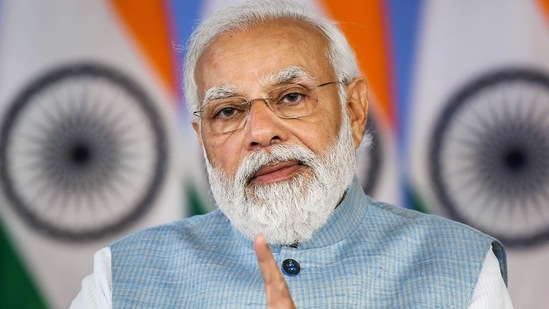


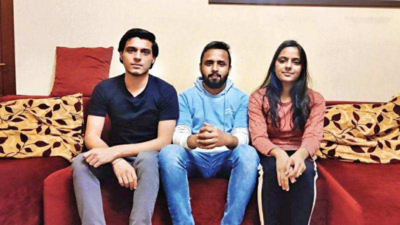


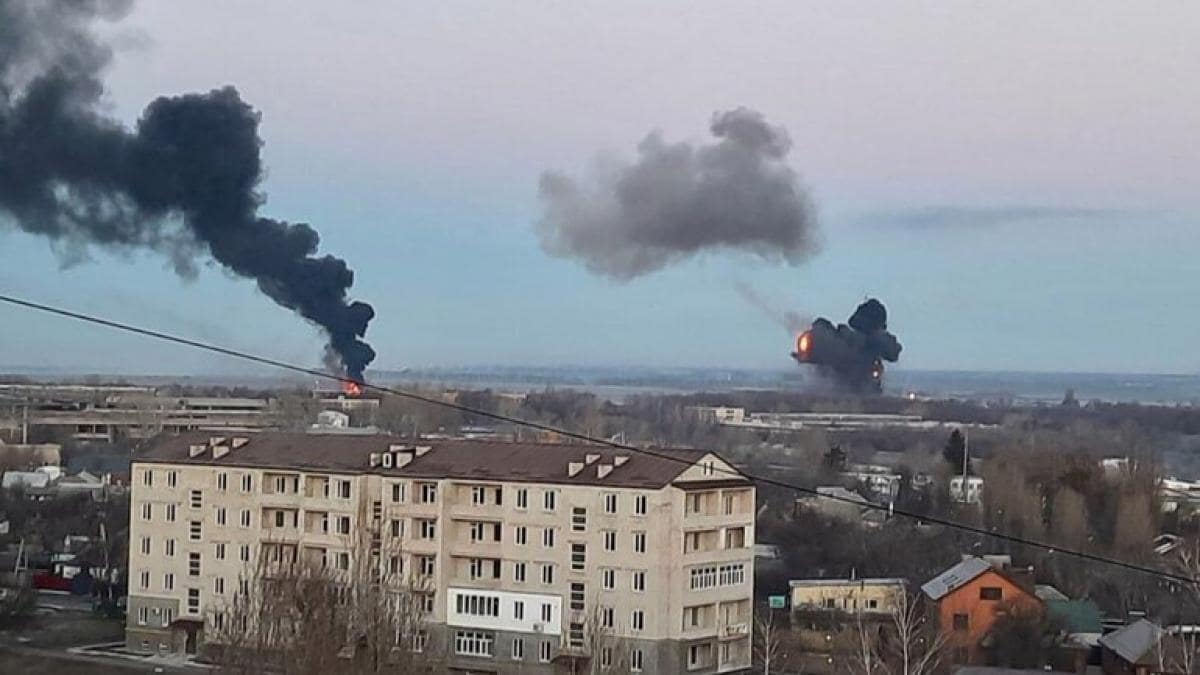


































 Track2Training
You must be logged in to post a comment.