THE NATURE OF ART

The definition of Art:

something that is attractive or reflects important ideas or sentiments, and was made with imagination and talent that is called “Art”.

The study of the nature of art, including ideas like interpretation, representation, expression, and form, is known as philosophy of art. Aesthetics, the philosophical study of beauty and taste, and it are intimately related.

Types of Art:

There are number of types in art. when it comes to visual arts. but. finally there are three types in art.

they are:

1.Decorative art.

2.Commercial art.

3.Fine art.

1.Decorative art:

Any form of art that focuses on designing and embellishing items that are valued more for their functionality than their merely aesthetic features is referred to as decorative art.

Examples of Decorative art:

1.Furniture.

2.Glass ware.

3.Ceramic

4.Wood work.

5.Textiles

Importance of Decorative art:

The programmed lifestyle of the upper classes of society, which was followed by others, was heavily influenced by ornamental arts. Records of an object’s location and careful descriptions highlight their variety of uses.

2.Commercial Art:

Art produced for business objectives, typically advertising, is referred to as commercial art or the art of creative services. To encourage the sale and interest in goods, services, and ideas, commercial art use a range of venues for spectators.

Examples of commercial art:

1.Posters.

2.magazines and news papers.

3.Bill boards and sign boards.

4.telivision commercials.

5.Internet ads

6.Package and labeling goods

Importance of commercial art:

It is their duty to produce visual materials, such as presentations, photographs, and designs, to engage customers with the company’s offerings. For the creation of billboards, book jackets, presentations, Windows displays, and technical catalogues, businesses hire art directors.

3.fine art:

The fine arts—commonly referred to as the performing and visual arts—are distinctive and significant in the academic programme.

examples of fine art:

1.Drawing.

2.painting.

3.Architecture.

4.sculpture.

Importance of fine art:

Students have a creative outlet through arts education, which can help them become better problem solvers. They gain the ability to think creatively and investigate ideas in novel ways. Several of these subjects, including feelings, time, and space, are frequently challenging to teach in a classroom.

The most common elements in art:

1.Line

2.shape.

2.Texture

3.Form.

4.Space.

5.color

principles of Art:

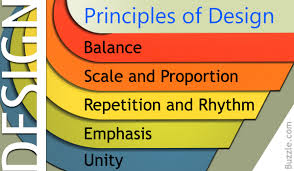
The nine design principles—contrast, emphasis, movement, repetition, proportion, metre, rhythm, balance, unity, and variety—are the cornerstones of artistic creation and the guidelines by which artists must arrange the components of an artwork.
The beginning of Art: Visual arts history

Expressing oneself through art seems a universal human impulse, while the style of that expression is one of the distinguishing marks of a culture. As difficult as it to define, art typically involves a skilled, imaginative creator, whose creation is pleasing to the senses and often symbolically significant or useful. Art can be verbal, as in poetry, storytelling or literature or can take the form of music and dance. The oldest stories, passed down orally may be lost to us now, but thanks to writing, tales such as the epic of Gilgamesh or the Lliad entered the record and still hold meaning today. Visual art dates back 30,000 years, when Paleolithic humans decorated themselves with beads and shells. Then as now, skilled artisans often mixed aesthetic effect with symbolic meaning.

A masterpiece of Johannes Vermeer, 1665 –“Girl with a Pearl Earring”.

In an existence that centered on hunting, ancient Australians carved animal and bird tracks into their rocks. Early cave artists in Lascaux, France, painted or engraved more than 2,000 real and mythical animals. Ancient Africans created stirring masks, highly stylized depictions of animals and spirits that allow the wearer to embody the spiritual power of those beings. Even when creating tools or kitchen items, people seem unable to resist decorating or shaping them for beauty. Ancient hunters carved the ivory handles of their knives. Ming dynasty ceramists embellished plates with graceful dragons. Modern pueblo Indians incorporates traditional motifs in to their carved and painted pots. The western fine arts tradition values beauty and message. Once heavily influenced by Christianity and classical mythology, painting and sculptures has more recently moved toward personal expression and abstraction.

Humans have probably been molding clay- one of the most widely available materials in the world- since the earliest times. The era of ceramics began, however, only after the discovery of that very high heat renders clay hard enough to be impervious to water. As societies grew more complex and settled, the need for ways to store water, food, and other commodities increased. In Japan, the Jomon people were making ceramics as early as 11,000 B.C. by about the seventh millennium B.C.; kilns were in use in the Middle East and china, achieving temperatures above 1832°F. Mesopotamians were the first to develop true glazes, through the art of glazing arguably reached its highest expression in the celadon and three color glazes of the medieval china. In the new world, although potters never reached the heights of technology seen elsewhere, Moche, Maya, Aztec, and Puebloan artists created a diversity of expressive figurines and glazed vessels.

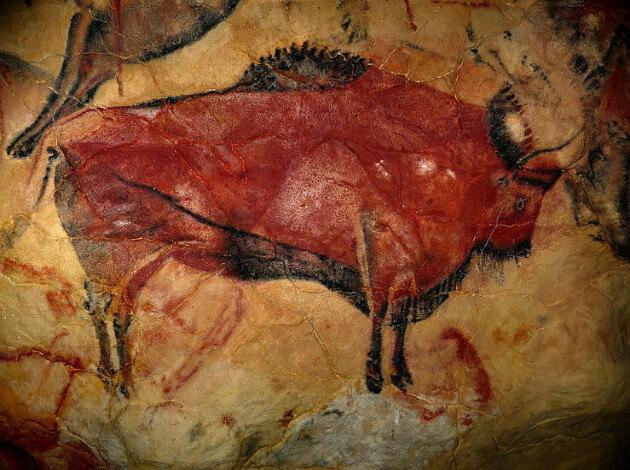
The prehistoric cave paintings of El Castillo, Spain were almost 40,800 years old 

When Spanish nobleman Marcelino Sanz de Sautuola described the paintings he discovered in a cave in Altamira, contemporizes declared the whole thing a modern fraud. Subsequent finds confirmed the validity of his claims and proved that Paleolithic people were skilled artists. Early artists used stone tools to engrave shapes into walls. They used pigments from hematite, manganese dioxide, and evergreens to achieve red, yelled, brown, and black colors. Brushes were made from feathers, leaves, and animal hair. Artists also used blowpipes to spray paint around hands and stencils.

“History is remembered by its art, not its war machines”James Rosenquist