Black Holes – The Hawking Radiation, definition and facts

When a massive star dies, it leaves a small but dense remnant core in its wake. If the mass of the core is more than 3 times the mass of the sun, the force of gravity overwhelms all other forces and a black hole is formed. Imagine the size of a star is 10times more massive than our sun being squeezed into a sphere with a diameter equal to the size of New York City. The result is a celestial object whose gravitational field is so strong that nothing, not even light can escape it. The history of black holes was started with the father of all physics, Isaac Newton. In 1687, Newton gave the first description of gravity in his publication, Principia mathematica, that would change the world. Then 100 years later, John Michelle proposed the idea that there could exist a structure that would be massive enough and not even light would be able to escape its gravitational pull. In 1796, the famous French scientist Pierre-Simon Laplace made an important prediction about the nature of black holes. He suggested that because even the speed of light was slower than the escape velocity of black hole, the massive objects would be invisible. In 1915, Albert Einstein changed physics forever by publishing his theory of general relativity. In this theory, he explained space time curvature and gave a mathematical description of a black hole. And in 1964, john wheeler gave these objects the name, the black hole.

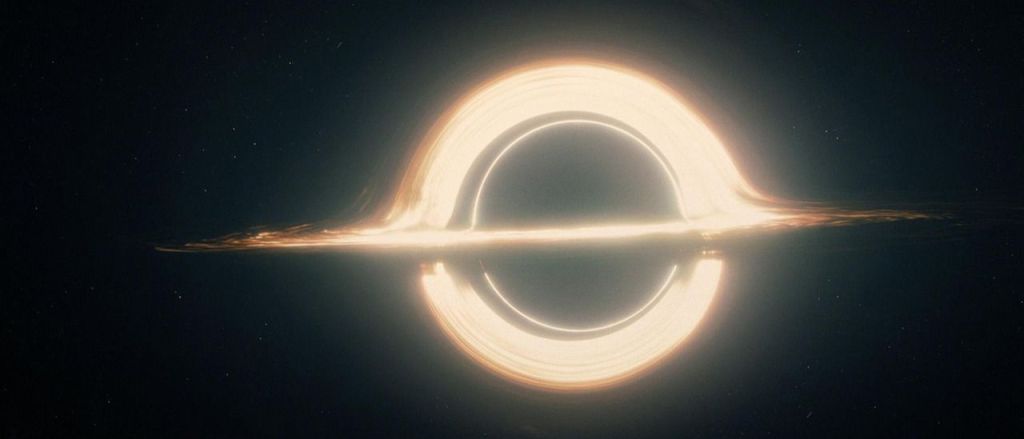
The “Interstellar” black hole was created using a new CGI rendering software that was based on theoretical equations provided by Thorne.

In classical physics, the mass of a black hole cannot decrease; it can either stay the same or get larger, because nothing can escape a black hole. If mass and energy are added to a black hole, then its radius and surface area also should get bigger. For a black hole, the radius is called the Schwarzschild radius. The second law of thermodynamics states that, an entropy of a closed system is always increases or remains the same. In 1974, Stephen hawking– an English theoretical physicists and cosmologist, proposed a groundbreaking theory regarding a special kind of radiation, which later became known as hawking radiation. So hawking postulated an analogous theorem for black holes called the second law of black hole mechanics that in any natural process, the surface area of the event horizon of a black hole always increase, or remains constant. It never decreases. In thermodynamics, black bodies doesn’t transmit or reflect any radiation, it only absorbs radiation.

When Stephen hawking saw these ideas, he found the idea of shining black holes to be preposterous.  But when he applied the laws of quantum mechanics to general relativity, he found the opposite to be true. He realized that stuff can come out near the event horizon. In 1974, he published a paper where outlined a mechanism for this shine. This is based on the Heisenberg uncertainty Principe. According to the principle of quantum mechanisms, for every particle throughout the universe, there exists an antiparticle. These particles always exist in pairs, and continually pop in and out of existence everywhere in the universe. Typically, these particles don’t last long because as soon as possible and its antiparticle pop into existence, they annihilate each other and cease to exist almost immediately after their creation.

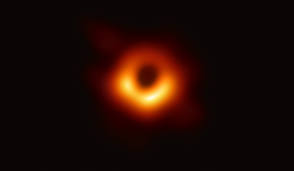
In 2019, the Event Horizon Telescope (EHT) collaboration produced the first-ever image of a black hole

In the event horizon that the point which nothing can escape its gravity. If a virtual particle pair blip into existence very close to the event horizon of a black hole, one of the particles could fall into the black hole while the other escapes. The one that falls into the black hole effectively has negative energy, which is, in Layman’s terms, akin to subtracting energy from the black hole, or taking mass away from the black hole. The other particle of the pair that escapes the black hole has positive energy, and is referred to as hawking radiation. Due to the presence of hawking radiation, a black hole continues to loss mass and continues shrinking until the point where it loses all its mass and evaporates. It is not clearly established what an evaporating black hole would actually look like. The hawking radiation itself would contain highly energetic particles, antiparticles and gamma rays. Such radiation is invisible to the naked eye, so an evaporating black hole might not look like anything at all. It also possible that hawking radiation might power a hadronic fireball, which could degrade the radiation into gamma rays and particles of less extreme energy, which would make an evaporating black hoe visible. Scientists and cosmologists still don’t completely understand how quantum mechanics explains gravity, but hawking radiation continues to inspire research and provide clues into the nature of gravity and how it relates to other forces of nature.

 

Universe or Multiverse

A number of scientific enquirers suggest our universe may be one in a collection of other universes, possibly an infinite number of universes spreading through other dimensions of time and space. Although these ideas are speculative at the moment, the large Hadron Collider in Switzerland is searching for evidence of multiple dimensions. And ESA’s Planck satellite will be looking for the evidence of inflation. if either finds it is looking for, the possibility of multiple universes will become stronger. The new theory postulates that, just after the creation of the universe, space expanded hugely, driven by fluctuations in energy that once they began were rather had to stop. Not only did our universe grow, but so did countless others in a chain reaction that continues to this day. These other universes would bud off from our own and be completely observable to us. they would bud new ones, creating an endless cascade. The idea of multiple universes crops us again in theoretical efforts to understand why we exist. It also points to how the forces of nature are related to one another, suggesting that reality may consists of 11 dimensions, not just the three that are familiar.

How old is the Universe?

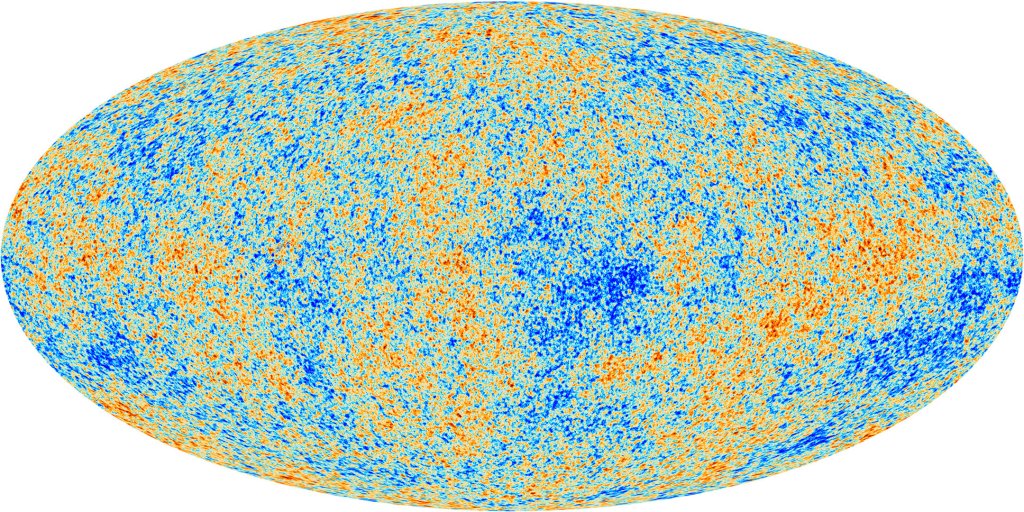
According to the best measurements ever taken of the radiation left over from just after the Big Bang, the universe is a little older and perhaps a bit stronger than previously thought.the data from the Planck satellite combined a map of the remnant glow that largely affirms scientists theories about the universe’s early history. but the results also reveal a few quirks. Launched by the European Space Agency in 2009, the Planck satellite scans the sky for the cosmic microwave background, radiation that dates back to about 380,000 years after the Big Bang. That radiation was originally about 2,700 degree Celsius but has cooled to a mere 2.7 degrees above absolute zero. Planck is essentially a supersentitive thermometer that can probe the temperature of this radiation to millionths of a degree. that extraordinary precision allowed researchers to map tiny temperature fluctuations in the radiations across the entire sky. Now, that cosmologists do have access to the map, they can make many conclusions about how the universe has evolved

The yellow spots in the map are about one part in 100,000 hotter than the average temperature, while the blue spots are slightly colder. These subtle perturbations in the early universe eventually grew into stars and galaxies.

Dark Matter Mystery

Most of the universe is made up of dark energy, a mysterious force that drives the accelerating expansion of he universe. the next largest ingredient is dark matter, which only interacts with the rest of the universe through its gravity. normal matter, including all the visible stars, planets and galaxies, makes up less than 5% of the total mass of the universe. Astronomers cannot see dark mater directly, but can study its effects. They cans see lights bent from the gravity of invisible objects (called gravitational lensing). they can also measure that stars are orbiting around in their galaxies faster than they should be. This can all be accounted for if there were a large amount of invisible matter tied upon each galaxy, contributing to its overall mass and rotation rate.

The Make-up of the Universe

What Exactly it is ?

Astronomers know more about what dark matter is not than what is is. Dark matter is dark: It emits no light and cannot be seen directly, so it cannot be stars or planets. Dark matter is not clouds of normal matter , normal matter particles are called baryon. If dark matter were composed of baryons. it would be detectable through reflected light. Dark matter is not antimatter: Antimatter annihilates matter on contact, producing gamma rays. Astronomers do not detect them. Dark matter is not black holes : Black holes are gravity lenses that bend light. Astronomers do not see enough lensing events to accounts of dark matter that must exist. Particle colliders such as the large Hadron Collider. Cosmology instruments such as WMAP and Planck. Direct detection experiments including CDMS, XENON, Zeplin, WARP, ArDM and others. Indirect detection experiments including; Gama ray detectors (Fermi from space and Cherenkov telescopes from the ground ); neutrino telescopes (IceCubes, Antares); antimatter detectors( Pamela, AMS-02) and X-ray and radio facilities.

.

Stephen Hawking’s final theory of black holes -The Hawking radiation

When a massive star dies, it leaves a small but dense remnant core in its wake. If the mass of the core is more than 3 times the mass of the sun, the force of gravity overwhelms all other forces and a black hole is formed. Imagine the size of a star is 10 times more massive than our sun being squeezed into a sphere with a diameter equal to the size of New York City. The result is a celestial object whose gravitational field is so strong that nothing, not even light can escape it. The history of black holes was started with the father of all physics, Isaac Newton. In 1687, Newton gave the first description of gravity in his publication, Principia mathematica, that would change the world.

Then 100 years later, John Michelle proposed the idea that there could exist a structure that would be massive enough and not even light would be able to escape its gravitational pull. In 1796, the famous French scientist Pierre-Simon Laplace made an important prediction about the nature of black holes. He suggested that because even the speed of light was slower than the escape velocity of black hole, the massive objects would be invisible. In 1915, Albert Einstein changed physics forever by publishing his theory of general relativity. In this theory, he explained space time curvature and gave a mathematical description of a black hole. And in 1964, john wheeler gave these objects the name, the black hole.

The Gargantua in Interstellar is an incredibly close representation of an actual black hole

In classical physics, the mass of a black hole cannot decrease; it can either stay the same or get larger, because nothing can escape a black hole. If mass and energy are added to a black hole, then its radius and surface area also should get bigger. For a black hole, the radius is called the Schwarzschild radius. The second law of thermodynamics states that, an entropy of a closed system is always increases or remains the same. In 1974, Stephen hawking– an English theoretical physicists and cosmologist, proposed a groundbreaking theory regarding a special kind of radiation, which later became known as hawking radiation. So hawking postulated an analogous theorem for black holes called the second law of black hole mechanics that in any natural process, the surface area of the event horizon of a black hole always increase, or remains constant. It never decreases. In thermodynamics, black bodies doesn’t transmit or reflect any radiation, it only absorbs radiation.

When Stephen hawking saw these ideas, he found the idea of shining black holes to be preposterous.  But when he applied the laws of quantum mechanics to general relativity, he found the opposite to be true. He realized that stuff can come out near the event horizon. In 1974, he published a paper where outlined a mechanism for this shine. This is based on the Heisenberg uncertainty Principe. According to the principle of quantum mechanisms, for every particle throughout the universe, there exists an antiparticle. These particles always exist in pairs, and continually pop in and out of existence everywhere in the universe. Typically, these particles don’t last long because as soon as possible and its antiparticle pop into existence, they annihilate each other and cease to exist almost immediately after their creation.

In the event horizon that the point which nothing can escape its gravity. If a virtual particle pair blip into existence very close to the event horizon of a black hole, one of the particles could fall into the black hole while the other escapes. The one that falls into the black hole effectively has negative energy, which is, in Layman’s terms, akin to subtracting energy from the black hole, or taking mass away from the black hole. The other particle of the pair that escapes the black hole has positive energy, and is referred to as hawking radiation.

The first-ever image of a black hole by the Event Horizon Telescope (EHT), 2019

Due to the presence of hawking radiation, a black hole continues to loss mass and continues shrinking until the point where it loses all its mass and evaporates. It is not clearly established what an evaporating black hole would actually look like. The hawking radiation itself would contain highly energetic particles, antiparticles and gamma rays. Such radiation is invisible to the naked eye, so an evaporating black hole might not look like anything at all. It also possible that hawking radiation might power a hadronic fireball, which could degrade the radiation into gamma rays and particles of less extreme energy, which would make an evaporating black hoe visible. Scientists and cosmologists still don’t completely understand how quantum mechanics explains gravity, but hawking radiation continues to inspire research and provide clues into the nature of gravity and how it relates to other forces of nature.