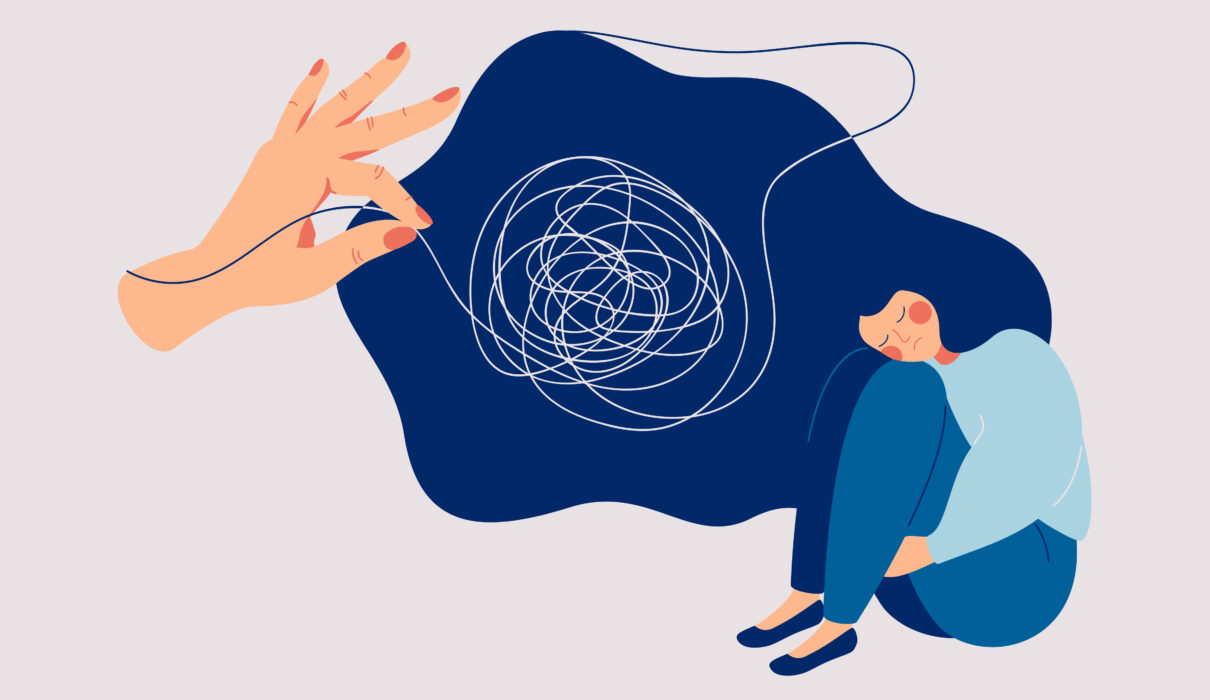
EMPATHY

N kavya

The term “empathy” is used to describe a wide range of experiences. Emotion researchers generally define empathy as the ability to sense other people’s emotions, coupled with the ability to imagine what someone else might be thinking or feeling. The term “empathy” is used to describe a wide range of experiences. Emotion researchers generally define empathy as the ability to sense other people’s emotions, coupled with the ability to imagine what someone else might be thinking or feeling.

Contemporary researchers often differentiate between two types of empathy: “Affective empathy” refers to the sensations and feelings we get in response to others’ emotions; this can include mirroring what that person is feeling or just feeling stressed when we detect another’s fear or anxiety. “Cognitive empathy,” sometimes called “perspective taking,” refers to our ability to identify and understand other people’s emotions. Studies suggest that people with autism spectrum disorders have a hard time empathizing.

Empathy seems to have deep roots in our brains and bodies, and our evolutionary history. Elementary forms of empathy have been observed in our primate relatives, in dogs, and even in rats. Empathy has been associated with two different pathways in the brain, and scientists have speculated that some aspects of empathy can be traced to mirror neurons, cells in the brain that fire when we observe someone else act in much the same way that they would fire if we performed that action ourselves. Research has also uncovered evidence of a genetic basis for empathy, though studies suggest that people can enhance (or restrict) their natural empathic abilities.

Having empathy doesn’t necessarily mean we’ll want to help someone in need, though it’s often a vital first step toward compassionate action.

Empathy manifests in education as well as between teachers and students. Empathy becomes difficult when there are differences between people regarding culture, language, skin color, gender, and age. Empathy is considered a motivating factor for unselfish behavior. Lack of empathy is similar to antisocial behavior. Empathy develops deep roots in our brains, as our evolutionary history. Having empathy does not mean that a person is willing to help someone. It is an essential step toward compassionate action.

Empathy forms one of the most critical components of creating harmonious relationships. It reduces stress and enhances emotional awareness. People are well attuned to their feelings and emotions. Getting into someone’s head can be challenging at times. People tend to be empathetic when they listen to what others have to say. It makes an individual overwhelmed by tragic incidents. Empathy can make an individual concerned about the well-being of another individual.

Empathy helps to make an individual a better person. By understanding what people are thinking and feeling, people can respond appropriately. Social connections build up as a result of empathy. It helps in both physical and psychological well-being. Empathizing with others helps to regulate a person’s own emotions. It helps an individual to manage his feelings even at times of great stress.

Empathy helps a person to engage themselves in helpful behaviors. Not everyone experiences empathy. Some people may be more naturally empathetic than others. How a person perceives another person can influence empathy to a great extent. Being empathetic toward others will help to understand others’ suffering and create harmony in the world.

Key aspects of empathy -:


1. In the absence of empathy, relationships remain shallow.
2. Empathy does not form a part of intuition; it is about understanding others.
3. Empathy is a learned behavior.
4. The capacity of being empathetic to another person depends on each individual.
5. Empathetic people tend to help others more.
6. Painkillers can reduce your capacity of being empathetic toward other people.
7. Anxiety and tension can influence empathy to a great extent.
8. An individual can heighten their empathy through meditation.
9. All humans are inclined toward empathizing with others in their pain and suffering.
10. A genetic defect can reduce an individual’s empathy.

Empathy can be learned and practiced. It is a vital aspect of our everyday lives. It enables an individual to show compassion. It helps to relate to other people, relatives, colleagues, and loved ones and helps to impact the world positively. Some people are born with empathy while some learn it and can increase or decrease it. It is a part of emotional intelligence, which can be taught to children at a very early stage. Children can be taught to be empathetic by sharing their things and not hurting others.

ANXIETY

N kavya

Anxiety is your body’s natural response to stress. It is a feeling of fear or apprehension about what is to come. It is normal to feel anxious about moving to a new place, starting a new job, or taking a test. This type of anxiety is unpleasant, but it may motivate you to work harder and do a better job. Ordinary anxiety is a feeling that comes and goes but does not interfere with your everyday life. In the case of an anxiety disorder, the feeling of fear may be with you all the time. It is intense and sometimes debilitating. This type of anxiety may cause you to stop doing things you enjoy. For example, it may prevent you from entering an elevator, crossing the street, or even leaving your home in extreme cases. If left untreated, the anxiety will keep getting worse.

Symptoms of anxiety :
1. anxious thoughts or beliefs that are difficult to control
2. restlessness
3. trouble concentrating
4. difficulty falling asleep
5. fatigue
6. irritability
7. unexplained aches and pains.

What causes anxiety?


Medical experts are not sure of the actual cause. But a combination of factors likely plays a role.
The causes of anxiety may include:
1. stress
2. other medical issues such as depression or diabetes
3. first-degree relatives with generalized anxiety disorder
4. environmental concerns, such as child abuse
5. substance use
6. situations such as surgery or occupational hazard. 7. In addition, researchers believe that it stems from the areas of the brain responsible for controlling fear and the storing and retrieval of emotional and fear-related memories.

Physical symptoms of anxiety :


When you experience symptoms of anxiety, they can manifest as physical symptoms such as:


1. dizziness
2. tiredness
3. heart palpitations
4. muscle aches and tensions
5. shaking
6. dry mouth
7. excessive sweating
8. stomach-ache
9. headache
10. insomnia

Who is at risk of anxiety?


Medical researchers say with each type of anxiety, there are different risk factors. But there are some general influences, including:


1. Personality traits. This includes shyness and nervousness in childhood.
2. Life history. This includes being exposed to negative or stressful life events.
3. Genetics. Of those who have a diagnosis of anxiety, percent trusted to have a first-degree relative who also has a diagnosis of anxiety.
4. Other health conditions. Thyroid problems and other health conditions can make you prone to anxiety.
5. Stimulants. Consuming sources, specific substances, and medications can worsen your symptoms.

Are there treatments for anxiety :


Once you’ve received a diagnosis of anxiety, treatment can help you overcome the symptoms and lead a more manageable day-to-day life.


The treatment is categorized into three types :


• Psychotherapy. Therapy can include cognitive behavioral therapy and exposure response prevention.
• Complemental health techniques. Mindfulness, yoga, and self-management strategies such as stress management are ways to treat your anxiety using alternative methods.
• Medication. Doctors prescribe antianxiety and antidepressant drugs.
• Session, with a therapist or psychologist, can help you learn tools to use and strategies to cope with stress when it occurs.

Some other commonly used medications include:

• Selective serotonin uptake inhibitors (SSRIs). Escitalopram, fluoxetine, and paroxetine are common SSRIs.
• Selective norepinephrine reuptake inhibitors (SNRIs). Duloxetine and venlafaxine are common SNRIs.
• Antipsychotics. Quetiapine and aripiprazole are common antipsychotics.
• Benzodiazepines. Diazepam and clonazepam are common benzodiazepines.
• Anxiolytics. Buspirone is a common anxiolytic.

Natural remedies for anxiety are :

1. getting enough sleep
2. meditating
3. staying active and exercising
4. eating a healthy diet
5. avoiding alcohol
6. avoiding caffeine
7. quitting smoking cigarettes if you smoke.

Foods that can help you with anxiety :

• flax and chia seeds
• fatty fish such as mackerel and salmon
• turmeric
• vitamin D
• magnesium
• tryptophan

It’s important to understand that anxiety disorders can be treated, even in severe cases. Although anxiety usually doesn’t go away, you can learn to manage it and live a happy, healthy life.

What it means when you find yourself detaching from society?

Do you constantly find yourself cutting off from people without any reason? The feeling that you don’t belong? A major reason for such thoughts is that you find it difficult to blend in with your friends and family. While such mindset is not something permanent, it can develop from a constant state of neglect and lack of affection.

It is not necessary that such state of mind arises in only those who are generally closed off by nature. There is a larger percentage of so-called ‘extroverts’ who also suffer with the same complexion.

While this situation generally arises from a change in friend circle, or after losing a loved one, breakup, or a change in surroundings. Some other reasons like depression, heavy medicines, illness or other social factors can also be an imminent variable.

Some people can also call it a ‘Retreat’, a means to detach from society in order to better focus on their upcoming projects, a major people comprising this class will consist of authors, artists, and such other people in need of peace and tranquility.

The case is not always same for teenagers and young adults. Retreating from society in an abrupt manner is major teller of mental illness, depression, as it is generally termed. While it is not uncurable, a major support is required from family and loved ones in most cases. Emotional support goes a long way in providing support and a feeling of togetherness.


This does not mean that a person who appears to be detached from the general colorful society is weak. That would be a gross understatement. Such people are generally in need of a closure with whatever is it that they have suffering with. No other person can help solve this condition other than the person who suffers from it. All others can-do is provide an understanding gesture and emotional support.

The best ways to deal with such a swing of emotion could be to try to talk to someone and share your thoughts. Other than that, going out for a walk or eating your favorite dish will help make you feel better! The one thing that is imperative through the whole process is that you will emerge Stronger. A better version of your own self. With a better view of your dreams and desires. The only quality required is to have faith and be kind to yourself.

Think of your future self 5 or 10 years from now and how thankful they would be to you that in spite of all the hardships thrown your way, you held on, that is all that is required.

Just hold on!

Written by: Ananya Kaushal