The Delivery That Smitten Everyone-The Flower Delivery

Introduction=

For every special occasion whether formal, informal, official, unofficial people usually find it appropriate to carry flowers with them. And as the culture where it is considered respectable and suitable gained popularity the business that flourished with florists diving into new world of trade and commerce is flower delivery. It is the service provided by many different companies both online and offline for people to order and send flowers to a distinct party to show their love, care and support.

Occasions=

The exchange of flowers usually takes place in occasions, like-

  •  Attending a party (public or personal)
  • Gifting them on special days
  • Sharing the happiness for big days (promotion, weddings, etc.)
  • Wishing good luck
  • Grieving or presenting condolences
  • Biding goodbye

History=

Very few are not aware of the fact that sale of flowers has been happening now for centuries and just the method or mode of delivery have changed with no modifications in the imperativeness that flower delivery holds. In the earlier days without the facility of any kind of mail service people took flowers themselves even for long journeys. As the progress started to happen now telegrams were being used for sending flowers on the other side. With courier service then came the dealing of flowers in the same city by phone. And currently online platform has given new heights to trade of flowers.

Modifications=

With advances in technology day after day, it became important for florists to improve their style of work as well. This modification mainly came in the field of supplying the flowers to the customers. With technological enhancement the providing of flowers through online portals became easy and efficient and in demand. It was significantly observed that consumers were now more interested in ordering online for it gave them more choices, better discounts and timely delivery all at the comfort of their homes.

Summing Up=

As there is a constant progress taking place in various fields in the contemporary world a change in pattern of getting flowers for different occasion was also destined. With the phenomenon of self love gaining fans, a new trend of getting flowers for themselves is apparent. Folks in today’s world do not wait for some being to get them flowers rather they go out and buy it for themselves. As new fads come and go the carrying of flowers to most occasions remain unaffected as it is the flower delivery that smitten everyone.

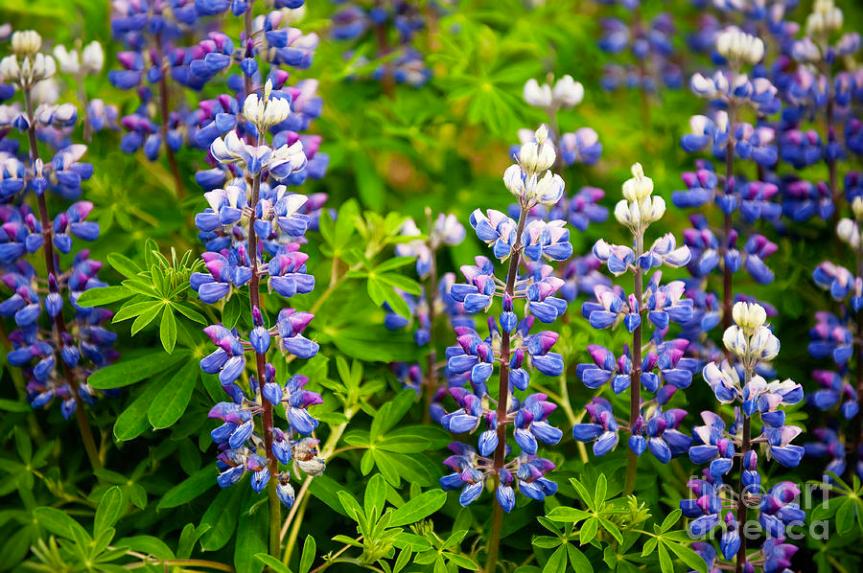
Photo by Jonathan Nenemann on Pexels.com

A Glare Beyond Ravages of Time: Lupine Arcticus

Lupinus arcticus is a species of flowering plant in the legume family known by the common names Arctic lupine or subalpine lupine. It is native to northwestern North America, where it occurs from Oregon north to Alaska and east to Nunavut. It is a common wildflower in British Columbia.This is a perennial herb growing from a taproot and producing an erect stem up to 50 centimeters tall. The dark green, hairy leaves are borne upon rough, hairy petioles up to 17 centimeters long. The leaves are palmately compound, made up of 3 to 9 leaflets each measuring up to 6 centimeters long. The inflorescence is a raceme up to 15 centimeters long bearing up to 30 flowers. The flowers are usually blue, sometimes purple, and occasionally white. The banners of the pealike flowers may be tinged with pink. The fruit is a hairy, greenish to blackish legume pod 2 or 3 centimeters long. It contains up to 10 white-speckled black seeds each about half a centimeter long. The plant may hybridize with other Lupine species when they grow together.

Lupinus arcticus - Wikipedia

This plant grows in several types of habitat, including fields of sedge and moss, alpine regions, and the hills of the Canadian Arctic Archipelago. It grows on tundra and in moist and wet substrates. This species has been the topic of some biological research. In 1967 it caused a stir when the seeds of this species were discovered in ancient lemming burrows dating back to the Pleistocene; the seeds were germinated and they produced plants, causing them to be declared the oldest viable seeds ever discovered. In 2009 a follow-up article detailed how radiocarbon dating was used to determine that the seeds were, in fact, just a few years old at the time of their discovery, and had probably fallen into the burrows not long before.

The plant contains a neurotoxin called sparteine, possibly as a deterrent to herbivores such as the snowshoe hare. The levels of sparteine in the leaves cycle, becoming higher at night, when herbivory is more likely to occur. In addition to the hare, species of ground squirrel have been known to feed on the plant.In Science, they described how these burrows, found at Miller Creek within the Yukon territory of western Canada, had been buried deep within frozen silt since the Pleistocene. That made them over 10,000 years old. As well as rodent nests, faecal pellets and seeds, they also contained an ancient lemming skull, further confirming their old age.Crucially, the seeds remained viable, as the scientists managed to germinate and cultivate normal healthy Arctic lupine (Lupinus arcticus) plants from them.”These were considered to be the oldest viable seeds to have ever grown,” says Grant Zazula, a scientist working for the Yukon Palaeontology Program run by the Government of Yukon, based in Whitehorse, Canada. They were found in ancient frozen lemming burrows and the radiocarbon dating did confirm that the lemming skull found alongside the seeds was from the Pleistocene. That validated the original researchers’ claim that they had collected Pleistocene samples from deep within the permafrost.But without their knowledge, the seeds must have fallen into the burrows just years before they were collected. The burrows had likely been exposed by mining activity in the region.More than four decades ago, Canadian scientists published details in one of the world’s foremost scientific journals of how they discovered two dozen seeds of an Arctic lupine plant within ancient lemming burrows and finally these plants survived and thrived as a few of the challengers to the tides and cleansing of that being called time.

Ghost Orchid: The rarest Orchid in the world.

We all know orchids as exotic, classy and high-maintenance blooms. But I’m sure you haven’t heard of ghost orchids which sway to the breeze in night, trance and mesmerize you with its ethereal beauty.  Well, fret not, even faint-hearted can enjoy the beauty of these blooms too!

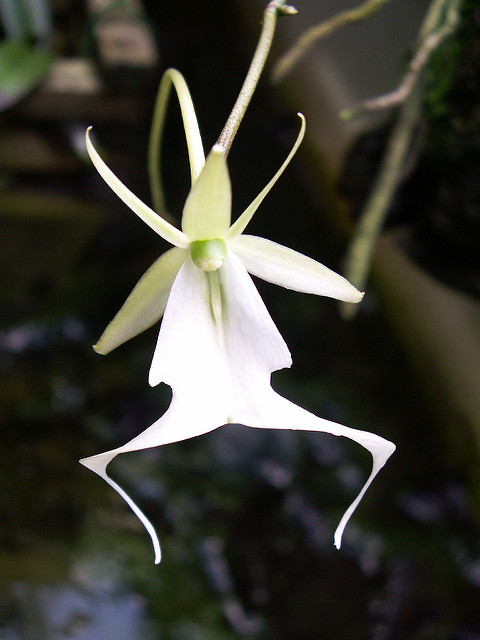
ghost orchid flower

It is the phantom of orchid family and looks nothing like its siblings. It doesn’t have chlorophyll and leaves.  It poses like a ghost whenever you try to click it. But what do these characteristics make it? A die-hard, born-to-survive miracle that makes its way through all odds and shines like a star!

The florets don’t have chlorophyll and hence, are white in nature. When they move in night, they look like creepy ghosts floating in air and thus, the name ghost orchids. The plant is also leafless and depends on the other tree to make food.  The pond apple trees, palm trees, mild temperature, optimum shade and high humidity make South Florida the perfect habitat for them. The roots of plants do the photosynthesis and cling to the trunks trees like cypress, maples and pond apples.  The plants remain in a symbiotic relation with mycorrhizal fungus, without which they can’t survive. The fungus needs sugar from the plant and in exchange, it provides and gathers nutrients for it.  If the plants aren’t infected by the fungus in the wild, they won’t germinate and will be dead eventually.The blooming season for the plant is June to August.  One to ten flowers are bloomed, with only one flower opening at a time.  The scent of plant resembles apple’s fragrance. The lower petal gives the illusion of jumping frog and the bracts of the flowers are almost paper-like, and thin.  The roots of the orchid cling with such intensity that not only it is difficult to tell them apart but also it makes for a display of flower floating in the middle of nowhere, eventually lending the flowers a ghost illusion.

Though, the plant doesn’t have any chlorophyll, it is an abundant source of nectar.  The pollination of the flowers is done by sphinx moth in night that is lured by nectar. Sphinx has long tongue (proboscis) that lets it reach the nectar sap located deep within. The moth goes from one plant to another in the search of nectar, and transfers the pollen as a result. But due to human intervention in the natural habitat of ghost orchids, the pollination alone doesn’t remain as a reliable and viable option for this endangered flora species. Given their unique appearance, the over-collection of the flowers by flower enthusiasts are also to be blamed for the rapid decline in their population besides hydrological changes and habitat destruction by humans. In fact, its sightings became too rare that it was declared ‘lost and extinct’ in Britain in the year 2010.Scientists have found a new way to culture and process plants from seed to the lab. The plants, so far, have successfully acclimatized to the greenhouse environment.  The ghost orchids also showed high rates of survival when planted to wild as well.  Out of 80 plants, 70 orchids survived the natural habitat at Florida Panther National Wildlife Refuge in Eastern Collier County, Florida. The biologists also found success with ghost orchids planted at the Naples Botanical Garden.