

Geography as a university discipline got recognition in the early decades of the 19th century in the German universities and subsequently in the French and British universities.
During the period of evolution, geography, like all other sister social science disciplines, faced many philosophical and methodological problems. Geography did not develop as a well-regulated
It followed a process of varying tensions in which tranquil periods, characterized by steady accretion of knowledge, are followed by crisis which can lead to upheaval within subject discipline and breaks in continuity. In each phase of tranquillity and crisis, geographical literature was and has been written with changing philosophies and methodologies; the philosophy and methodology being largely governed by the individual beliefs of the author, the political system, the social requirements of the people of the region and its economic institutions.
The last twenty-five years can be regarded as a period in which enormous geographical literature has been produced. This literature in the shape of books, research papers and monographs pertains to teaching, research, professional employment and pragmatic plans for the public and private bodies. Geography up to the Second World War, however, was regarded as a discipline providing general information about topography, relief features, weather, climate, mountains, rivers, routes, towns, cities and seaports.
Geography for most of the people was nothing but general knowledge. In the recent past, geographers have, however, adopted a new strategy in the restructuring of their courses and designed the syllabi around the theme of social welfare, making the subject the principal source of awareness of local surroundings, regional milieu, environmental pollution and world environment.
Geographers are venturing into the areas of environmental management and problems of pollution to make the social environment conducive for the proper development of individuals and societies. In order to achieve the welfare target, geographers are attacking social problems and exploring the causes of socio-economic backwardness, environmental pollution, and uneven levels of development in a given physical setting. Now, the main objective of geographical teaching and research is to train students in the analysis of phenomena, so that they can take up subsequently the problems of society as the fields of their research and investigation, thereby helping the local, state and national administration to overcome the regional and intra-regional problems.
The social problems are being tackled with approaches ranging from positive to normative, from radicalism to humanism, and from idealism to realism. In brief, geographers are increasingly concerning themselves with the problems of society, conditions of mankind, economic inequalities, social justice, and environmental pollution.
For the reduction of regional inequalities and for the improvement of the quality of life, the main concern of geographers is with what should be the spatial distribution of phenomena instead of with what it is. It is in this context that the spatial inequality in social amenities and living standards is investigated by geographers to trace the origin of disparity rather than to condemn injustice.
Historically, in the initial phases of its development, the main area of employment of geography students in the developed countries was teaching. In the Third World countries, geographers even today are not much actively involved in the process of planning and development. Regrettably, research had less important place in the geographical profession than in many of the social and physical sciences.
Moreover, the research done by individuals mainly remained confined to the libraries and has hardly been utilized for the purpose of planning. Unfortunately, the policy-makers in developing countries like India do not seem to be aware of the spatial dimensions of their problems of policies. Another reason is widespread ignorance of and even prejudice against geography particularly among the present generation of decision-makers whose opinions have been shaped by the experience of the previous generation school geography—when geography occupied a low place and was, as a subject, considered to be nothing more than general knowledge.
In fact, in most of the social fields, very little contribution had been made by geographers, and in the past they could not significantly suggest alternative strategies for the spatial organization of space. The last three decades have, however, seen some particularly important changes in the subject-matter, philosophy and methodology of geography. The major issues on which the geographers are concentrating include poverty, hunger, pollution, racial discrimination, social inequality or injustice, environmental pollution, and use and misuse of resources.
Some of the leading works which have been useful in the public policy making are: Geography of Crimes, Black-Ghetto, and Geography of Social Well-being. The quantitative revolution of the 1960s in geography gave to it some kind of intellectual vigour so essential for the rigorous analysis required in any public context and in the formulation of proposals for public policy.
It is an encouraging fact that now geographers all over the world are envisaging research on social problems with a welfare theme. They are working with a pragmatic approach to overcome the problems of inequalities. In fact, the objective of welfare geography is the evolution of the social desirability of alternative geographical state.
Scientific revolution entered in geography in the early 1970s. The pragmatists advocated the use of scientific methods (positivism) for finding solutions to human problems. It is with this intention that scholars like David M. Smith has adopted the welfare approach while discussing the problems and prospects of human geography.
The welfare geography has been defined differently by different scholars of geography. In the words of Mishan, “theoretical welfare geography is that branch of study which endeavours to formulate positions by which we may rank, on the scale of better or worse, alternative geographical situation open to society”. While Nath expressed ‘welfare geography’ is that part of geography where we study the possible effects of various geographical policies on the welfare of society. In the spatial context, Smith defined welfare geography as the study of “who gets what, where and how”.
The geographical ‘state’ or situation, in the sense used above, may refer to any aspect of the spatial arrangement of human existence. It may relate to the spatial allocation of resources, income, or any other source of human well-being. It may concern with the spatial incidence of poverty or any other social problem. The expression may also be used in desirable industrial location pattern, the distribution and concentration of population, the location of social services facilities
transportation network, patterns of movement of people or goods and any other spatial arrangement which has a bearing on the quality of life as a geographically variable condition. And beneath them all, in the type of society—the economic, social, political structures that generate the pattern.
The welfare approach, nevertheless, has had different meanings in the different periods of human history. The humanist endeavours in various periods of different nations and societies like Jewish, Christians, Muslims, Confucians, Hellenistic, Scientific, Realists, Marxist and Existentialists, and many other forms of humanism appeared on the map of intellectual history.
The geographers who are mainly concerned with the problems of society and trying to formulate pragmatic proposals for public policy clarify the description and explanation of the phenomena. On the basis of such analysis they evaluate their plans and prescribe suitable strategies for balanced development.
Description involves the empirical identification of territorial levels of human well-being—the human condition. This is a major and immediate research area in which surprisingly little work has been done in India and in other developing countries. Explanation covers the how…It involves identifying the cause and effect links among the various activities undertaken in society, as they contribute to determining who gets what and where. This is where the analysis of the kind of economic, demographic and social patterns mentioned above logically fits into the welfare structure.
Evaluation involves making judgement on the desirability of alternative geographical states and the societal structure from which they arise. To say that one spatial pattern of human well-being is preferable to another is to say that a higher level of welfare is attached to it. Such judgements must be made with reference to equity as well as the efficiency criteria with which the geographer is more familiar. Geographical patterns of all kinds can be judged with respect to their profit maximizing and cost minimizing criteria.
Prescription requires the specifications of alternative geographical state, and alternative societal structures designed to produce them. Prescription involves answering the ethical question: who should get what, where? Implementations is the final process replacing as a state deemed undesirable by something superior. It covers the question of how, once it has been decided who should get what, where. Just what role should be adopted by geographer qua geographer in a changing world.
In the contemporary world, there is a growing awareness among geographers that all physical development has a potential income redistributive impact. Any development proposed at any time in space has the capacity to benefit some people in some places more than others. It would be very difficult to construct anything anywhere which would be of equal benefit to every citizen. This is because of this situation that the benefits of government developmental policies in developing societies do not percolate down to the lowest strata of these societies.
Geographical distance and accessibility mean that some people will be better placed to enjoy the advantages or disadvantages, whether the structure is hospital, school, road, railway, community hall, cinema, theatre, park, recreational place or sewage works. Therefore, location decisions and plans for spatial allocation of resources must be made with utmost care, if the benefits and penalties are to be proportional among the population in a predictable and equitable manner. In such public policy decisions, geographers’ role becomes imperative as they have the basic training in the spatial and temporal analysis of phenomena.
Spatial allocation problems are associated with identification of priority areas, planning routes, location of factories or other sources of employment, spatial arrangement of facilities providing medical care, housing complexes, shopping centres and allocation of land for different urban and recreational uses. Each of these decisions can be made in a number of ways, and each decision can have a different impact. Geographers by their training can build up more sophisticated knowledge of the process of development. This involves disentangling complex networks of economic, social and cultural relationships and also the ecological relationships in a balance, so easily disturbed by ill-conceived ‘development’ projects. Geographers by allocation, analysis and synthesis of space can contribute, successfully, meaningfully and effectively to the formation of public policy.
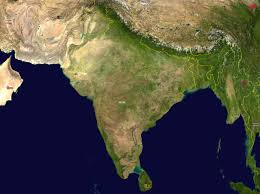
In developing countries like India there is a high degree of internal inequality. In the Third World nations wealth and power are still largely in the hands of a small urban elite or big landlords. The most obvious example is South Africa. In India also, more than 50 per cent of the population is below the poverty line while over 50 per cent of the total national assets are in the hands of only two dozen families. Moreover, in India, most of the economic activity is concentrated in metropolitan cores, though still over 70 per cent of the total population is residing in the rural areas. The urban biased industrial and social infrastructural policy adopted by planners is widening the gap between the rich and the poor on the one hand and rural and urban population on the other.
The highly advanced countries like U.S.A., Canada and Australia also have spatial variations in levels of human well-being. In the United States, the general material standard of living is higher than anywhere else in the world. Yet, millions of Americans, especially Negroes, live in poverty and social deprivation in ghettos—city slums. In parts of the rural south of U.S.A. (Texas, Georgia, etc.) people can be found living in conditions as bad as anywhere in South Africa. In these urban slums, the rate of crimes and drug addiction is fairly high.
The persistence of widespread poverty in American slums—the most affluent society in the world—is a contradiction which underlines the failure of economic growth under a capitalist system to uplift the lives of all people to current standard of decency. In 1976, according to the U.S. Census Bureau, about 12 per cent (26 million) Americans have income below the officially recognized poverty line.
One of the arguments put forward by the capitalist for the existing regional and intra-regional inequalities is that peoples are not born equal and they cannot be equal in their societies owing to the unequal distribution of the means of production. In fact, the chance of birth into a particular family or group in a particular locality, immediately constrains a child’s opportunity.
This situation gets further aggravated if the socio-political and economic organization is planned with an urban-biased or rich people-oriented policy. The planners in consultation with geographers can construct general social amenities which can benefit all sections of the society. Geographers, however, cannot be a panacea to all the ills, inequalities and socio-economic imbalances.
They know it much better than any other experts that they cannot make all deserts fertile, eliminate drought and create mineral resources where none exist in nature. There are physical limitations in the development of societies living in harsh environment. Such people, however, can have better chances of development if their resource base and needs of society will help to highlight fundamental issues of choice, efficiency and equity. Moreover, it would be useful in the provision of public services and other aspects of local life quality.
Geographers have the ability to analyze the spatial dimension of environmental problems and more particularly, to handle, analyze and interpret spatially distributed data. This awareness of and facility of handling the spatial dimension, which is a major ingredient of all problems of environmental and resource management, is something not generally provided by those in other disciplines and tends to be overlooked if a geographer does not provide it.
A welfare society needs better allocation of commodities, better distribution of commodities and better allocation of means of production among individuals (groups or classes) and among places. All these things are more easily achievable if geographers who deal with the man-environment interaction and examine the spatial distribution of phenomena are actively involved in the process of planning and formulation of public policies at the local, regional, national and international levels.
In countries like Sweden, Norway, the Netherlands, Israel, Denmark, U.S.S.R., France, New Zealand and Australia where geographers in collaboration with other scientists design public policies the use and beneficial effects of resources are reaching all sections of the societies. Geographers in India can provide pragmatic proposals for solving the various socio-economic and employment problems facing the rapidly increasing population.
By their efforts geographers can consider the causal relationships between inequity, the spatial organization of society and social structure. Public policies about reorganization and redistribution can be designed through planning by the experts who have expertise in man-environment interaction and spatial analysis of phenomena. For this purpose, geographers have to assert themselves through their applied and utilitarian researches.

 Track2Training
You must be logged in to post a comment.