VARIOUS SECURITY FORCES AND AGENCIES AND THEIR MANDATE IN INDIA

There are external and internal threats to India’s security and various specialized Indian forces deal with these threats. External threats are typically handled by the armed forces of the Department of Defense, while internal threats are handled by the Department of Home affairs .

Security forces

1.Indian Armed Forces

2.Central Armed Police Force

Indian Armed Force

The defense forces are divided into four sub-heads.

  1. Indian Army Personnel.
  2. Indian Air Force Personnel.
  3. Indian Navy Personnel.
  4. Indian Coast Guard Personnel.

The Supreme Commander of the Indian Armed Forces is the President of India. All three of these services are under the Department of Defense.

Indian Army

The Indian Army is the land component of the armed forces. It evolved from the armed forces of the East India Company, eventually transforming into the British Indian Army and the Indian Army after independence.
It is commanded by the Chief of Staff of the Army (COAS). It is considered the second largest active army in the world. The mission of the Indian Army is to ensure national security and protect India’s sovereignty, territorial integrity and harmony against foreign aggression and threats. This also includes providing humanitarian assistance and aid to civilians during natural disasters and unexpected times.

Indian Navy

India has a coastline of 7516.6 km. The Indian Navy secures India’s maritime borders and interests. It also protected Indian merchant ships by fighting pirates on the high seas, and at the same time, it aided civilians in disasters. It is commanded by the Chief of Naval Staff, an Admiral. The Indian Navy is deployed under three commands: Eastern Naval Command – Vishakhapatnam is the headquarters. Western Naval Command – Mumbai is the headquarters The Southern Naval Command – Kochi is the headquarters. The navy is used to support foreign policy goals, build “bridges of friendship” and strengthen international cooperation.

Indian Air Force

The Indian Air Force was officially established on 8 October 1932. The force was known as the Royal Indian Air Force in recognition of its service during the Second World War. . After Independence, the term “Royal” was dropped. It is considered the 4th largest air force in the world. The primary responsibility of the Indian Air Force is to secure Indian airspace and conduct air wars in times of conflict. In addition to the wars of independence for India and humanitarian action, she has participated in many UN peacekeeping missions. An Air Marshal is the commander of the air forces in India. The Air Force Network (AFNet), launched September 14, 2010, is a digital information network that enables rapid and accurate response to threats. It is a fiber-based network.

Security Forces Dealing with Internal Threats

There are many divisions of Central Armed Police Force, which deal with internal threats.

Central Armed Police Force (CAPF)

  1. Assam Rifles (AR)
  2. Border Security Force (BSF)
  3. Central Industrial Security Force (CISF)
  4. Central Reserve Police Force (CRPF)
  5. Indo Tibetan Border Police (ITBP)
  6. National Security Guard (NSG)
  7. Sashastra Seema Bal (SSB)

Duties of various security forces and agencies The Ministry of Home Affairs (MHA) has many responsibilities, the most important of which are internal security, management of paramilitary forces, border management, center-state relations, administration of territories. of the Union, disaster management, etc. Article 355 of the Constitution ordered the Union to defend each State against external aggression and internal disturbances and to ensure that each State’s government was carried out in accordance with the provisions of the Constitution.

Indian Surgical Strike

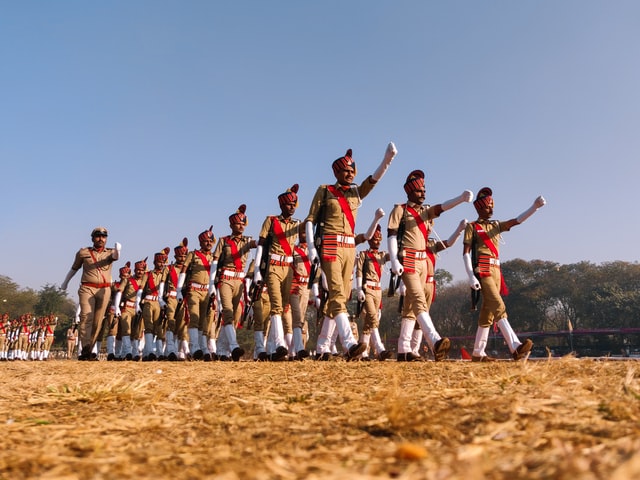
Today 28th September, we are celebrating the anniversary of surgical Strike. It was the first operation in which the Indian army’s para special forces has crossed the Line of Control to destroy terrorists camps and launch pads.

Reason for conducting surgical Strike

The Indian Army conducted the surgical Strike in response to the Uri attack on September 18, 2006, which was conducted by a Pakistani base terror group jaish-e-mohammed. The Attack aimed Indian army camp killings 19 soldiers. Similar attacks where done in Gurdaspur and Pathankot, so this was an alarming security alert for the Indian armed forces.

How it was conducted

Indian Army Army conducted this operation In the Midnight of 28 and 29 September 2016. There were 70 to 80 soldiers involved in teams a team of the forces crossed LOC in Kupwara district while, another group cross LOC from poonch district. They destroyed terrorist camp using granites and rockets, there were no casualties and no commoner was harmed during this mission. A soldier was injured due to tripping landmine.

New India

This was a moment the whole Nation was celebrating as we got our revenge of Uri attack and other previous attacks. Nations security is atmost priority and Indian Army Soldiers showed the whole world that this is New India, which knows how to enter in enemy’s land and finish them off ( Bhart dushmano ke ghar me ghusega bhi aur marega bhi).

Indian Army Day

When people think about heroes of India, they only and only remember the Indian Army. Let us celebrate Indian Army Day by saluting all the army men and women for their bravery, dedication and patriotism.

Army Day is celebrated on 15 January every year in India, in recognition of Field Marshal Kodandera M. Cariappa taking over as the first Commander-in-Chief of the Indian Army from General Sir Francis Butcher, the last British Commander-in-Chief of India, on 15 January 1949. Today, India will celebrate its 73rd Indian Army Day. The day is celebrated in the form of parades and other military shows in the national capital New Delhi as well as in all headquarters. Army Day marks a day to salute the valiant soldiers who sacrificed their lives to protect the country and its citizens. Army Day strives to motivate people to build a great Nation by knowing about how an Army officer provides his/her full life for the betterment and safety of the people. While celebrations take place across the country, the main Army Day parade is conducted in Cariappa Parade ground in Delhi cantonment. Gallantry awards and Sena medals are also awarded on this day.

K. M. Cariappa

Kodandera Madappa Cariappa was the first Indian Commander-in-Chief of the Indian Army. He led Indian forces on the Western Front during the Indo-Pakistani War of 1947. He was appointed Commander-in-Chief of the Indian Army in 1949. He is one of only two Indian Army officers to hold the Five-star rank of Field Marshal; the other being Field Marshal Sam Manekshaw.

His distinguished military career spanned almost three decades. Born on 28 January 1898, in Madikeri, Kodagu, Cariappa joined the British Indian Army shortly after the end of World War I. He was transferred between multiple regiments early in his career before settling on 1/7 Rajputs, which became his permanent regiment. He was the first Indian military officer to attend the Staff College, Quetta, the first Indian to command a battalion. Several measures taken by Cariappa, such as his refusal to induct former Indian National Army personnel into the Army, kept the organisation out of political affairs and maintained its autonomy.  He died in his sleep on 15 May 1993. India remembers him as a true patriot and a son of the country. 

The primary mission of the Indian Army is to ensure national security and national unity, to defend the nation from external aggression and internal threats, and to maintain peace and security within its borders. It conducts humanitarian rescue operations during natural calamities and other disturbances. The army comprises more than 80% of the country’s active defence personnel. It is the largest standing army in the world, with 12,37,117 active troops and 9,60,000 reserve troops. In 1992, the Indian Army began inducting women officers in non-medical roles. In 2014, India’s army had 3 per cent women and in 2015, India opened new combat air force roles for women as fighter pilots, adding to their role as helicopter pilots in the Indian Air Force. We all have love, respect and admiration for our soldiers and the Indian army as a whole.

Happy Indian Army Day!

Indian Army

Indian army is one of the outstanding armies in the world. Ensuring national security and national unity is the main focus of the Indian army. Our army is fighting against external aggression and internal threats, and maintain peace and security within Indian borders.

Except for war and battle against terror, it also conducts humanitarian rescue operations during natural calamities and other disturbances, like Operation Surya Hope. It is a major part of national power alongside the Indian Navy and the Indian Air Force. Indian army has also fought four big wars with neighboring Pakistan and one with China. Other important operations undertaken by the army include Operation Vijay, Operation Meghdoot and Operation Cactus.

The Indian army came into existence with independence. India army has also fought in both world war 1 and world war 2. The Indian Army is operationally and geographically divided into seven commands.comprises more than 80% of the country’s active defense personnel. Presently our army is 2nd largest standing army in the world, with active troops and 960,000 reserve troops.

At present, Manoj Mukund Naravane is an Indian Army Chief since 31 December 2019. Indian army is considered as the deadliest army on the plater earth.  Indian Army was established in 1895 but it got its current structure after independence

Love for our mother India creates the firm base of the Indian army. He sacrifices his life for the protection of the nation’s pride. Every soldier is a true patriot and is always ready to lay down his life in the service of motherland. Our nation’s protection and safety are totally dependent on our soldiers.

Indian Army not only fights in the war but also take care of the rescue operations when natural calamities occur like cyclones, earth-quakes. We must feel the pain of the great sacrifice which our Indian Army is doing every day to keeping our country, our people together and safe. Thus, we all salute our Indian heroes and pay homage to the supreme sacrifice which our army brothers are doing every day. At last i want to say this ” three Cheers for Indian Army Jang k maidan mein kabhi na haarte” I’m proud of my Indian Army who are always ready to protect our India and sacrifice their lives so that we can live peacefully and happily, there sacrifices can never be forgotten. Big Salute to Indian Army.

Army begins process to grant Permanent Commission to women; candidates to submit applications by 31 Aug

New Delhi: The Indian Army has kickstarted the process to grant Permanent Commission to eligible women officers, nearly two weeks after the defence ministry approved the proposal.

Officials said the Army headquarters has invited applications by 31 August for grant of Permanent Commission (PC) to women officers recruited under Women Special Entry Scheme (WSES) and Short Service Commission (SSC).

“Consequent to the receipt of formal Government Sanction Letter for grant of PC to women officers in Indian Army, the Army headquarters is in the process of convening a special number selection board for screening women officers for grant of PC,” said an Army statement.

The officials said women officers who have joined the Army through the WSES and SSC are being considered for grant of the PC.

Last month, the Ministry of Defence issued an order for grant of PC to women officers in the Army.

In a landmark judgement, the apex court in February directed that all serving women officers recruited under the short service schemes will have to be considered for PC.

Officials said 10 streams where PC of women officers are being made available include army air defence, signals, engineers, army aviation, electronics and mechanical engineers, army service corps and intelligence corps.

At present, the Army offers permanent commission to women officers in two branches — judge advocate general (JAG) and education.

Under SSC, women officers are initially taken for a period of five years, which is extendable up to 14 years. Permanent commissioning will allow them to serve till the age of retirement.

The Army recruits women officers under SSC for streams like air defence, engineering, signals and services and they can serve up to a maximum of 14 years.

The three services have allowed permanent recruitment of women in select streams including medical, education, legal, signals, logistics and engineering.

The women officers recruited through the SSC in the IAF have the option of seeking permanent commission in all streams except the flying branch.

The Navy has allowed permanent commission of women in a host of departments such as logistics, naval designing, air traffic control, engineering and legal.

What does empowerment/bravery have to do with gender?

Not making women Commandant Officers in the army is simply prejudice and fear of the fraternity of male officers.

The argument made by the Solicitor General in the Supreme Court that women officers of the Indian Army cannot be made as Commandants because male soldiers will not obey their orders is in fact irrational. In 1992, women were first included in the Armed Forces through the Short Service Commission. This service is of 10 years which can be extended up to 14 years.

They train in OTA Chennai and work shoulder to shoulder with their male counterparts. Their posting takes place at risky, rough and tough areas, whether it borders Kashmir or as a UN Peacekeeper, Libya and Congo. In areas bordering Pakistan and in the North East, there are hardly 4-5 officers and even sometimes just a sole woman officer with her male soldiers.

The question is when the head of NCC battalion of over 800 girls can be a male commandant, then why can’t a woman be the commandant of that battalion? The argument that the physical difference in women makes them less capable of the military is ridiculous. Whether the fighter is at the junior level or senior position.

There is no need for more or less muscle power anywhere. At the senior level, job profile supervision, strategy making and decision making have to be done. An order issued by the Ministry of Defense on 25 February 2019 calls for giving a permanent commission to women in the army from the date of the order. But this leaves off the demand of women who have served the country for 24-25 years and most of them have crossed 40 years of their age.

It is necessary that the policies of the government should be proposed considering those who are currently the officers in the army and should not be made considering the future. Now that the time has come for these high-ranking women officers to be given their right to serve in high positions, the appellant suspects that selective 332 women officers, who are just 4% of their entire capacity, will purloin the vacant positions at a higher level in the military. This is nothing but prejudice and fear of the fraternity of male officers.

The Army considers women officers as an effective workforce for lower-level positions which extends up to 14 years of service and considers them incompetent and unfit for the Commandant level, which is a culmination of hypocrisy. People argue that this battle is parallel to fighting against the government. But they have to understand that Prime Minister Narendra Modi has made it clear that women should be taken for bureaucracy and all senior positions of government. The Prime Minister’s words are political volition.

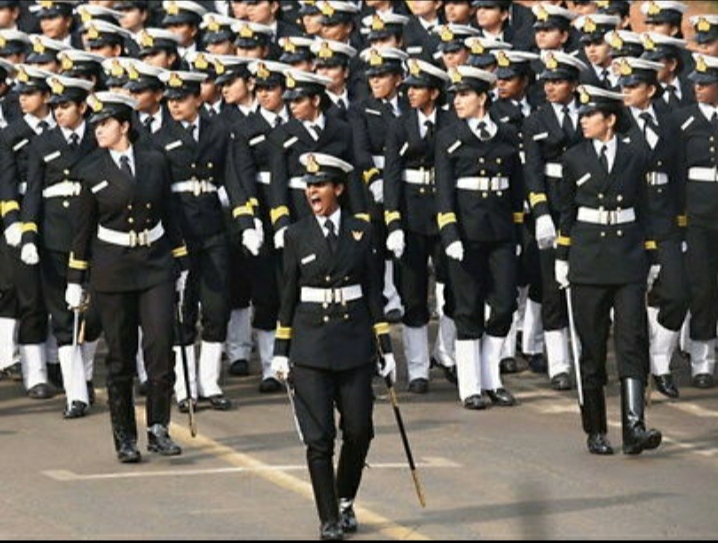
It should be believed that a person’s rank or role in life should be according to integrity and merits. On the one hand, we send Captain Tanya Shergill in the Republic Day Parade to lead the contingent and on the other hand, we argue in the Supreme Court that she is not entitled to be a commandant in the army. This reflects the military’s dual policy towards its people. The fight is not against the government but against the misconception and mindset of bureaucracy.

Our women officers have suffered sentimental throbs during their 25-year job. To be sidelined despite having the ability, the lack of job security due to the ambiguous cadre status and working below the 6 batch Junior Officer affects the morale of giving 100 per cent for the service. The argument that can be made in favour of these women officers is that the mode of war in the world is changing. The world is evolving in a cyber age and even wars are not left rearwardly. Signal communication has to govern in ever-increasing adverse surroundings.

New technologies and methods of demolition are being prepared every day. And analytical skills are more than the physical ability to deal with them. Women are making missiles in DRDO and Chandrayaan in ISRO, then why can’t they command a battalion? We all know the answers to these questions. This idea needs to attain policies.

Men and women live in the same bunker in the army. Once a woman or a man joins the army, he/she is just a fighter, apart from gender. It is only the qualification that should decide their position in the service. Are women kept in the army only as fancy chunks? So that the army is not labelled as ‘men zone.’

And they only maintain a women-men ratio so that the data can be shown internationally.
How is heroism related to gender? When a woman can handle the election campaign of Srinagar, which is currently the most unstable area in the world, without being in the army, then why can’t women handle the commandant’s charge?

A woman can be second in command but not a commandant because women can perform in the army only as long as they do not hurt the ego and arrogance of men. However, when we look at the other side of the coin, there are some false feminists who have used the card of family and child care responsibility to deny the call of duty. There was a case when a female officer refused to go to Nagpur to court-martial because she had to take care of her newborn. Such excuses should be condemned.

If the Supreme Court and the government feel that women are not competent for combat or defence service because they are women, then their entry into the service should be stopped altogether. But Punita Arora, Padmavati Bandopadhyay, Mitali Madhumita, Priya Jhingan and Tanya Shergill prove all those arguments wrong. High positions are being demanded as rights, not in charity.