
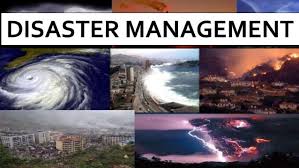
Disaster is a very common phenomenon to the human society. It has been experienced by them since time immemorial. Though its form may be varied, it has been a challenge for society across castes, creeds, communities and countries. The latest development which has been discovered in the World Disaster Reports recently is that the disasters have increased in frequency and intensity.
People are becoming more and more vulnerable to disasters of all types, including earthquake, flood, cyclones, landslides, droughts, accidents, plane crash, forests fire, etc. With the technological advancements and progress, the force of disasters is also changing. When they occur they surpass all preparedness and eagerness of society and pose bigger challenge to them. This is quite true in case of both developed and developing countries. The floods in UK, France, and heat wave in Europe, particularly in France in 2003, claimed more than 35000 lives. In the year 2006, America had to face bigger disaster in the form of tornadoes and other cyclones. They caused great loss of lives and property. All these are sufficient to prove that technological mechanisms are inadequate.
There is a direct correlation between higher human development and higher preparedness. The countries which have lesser human development are more vulnerable to risks of disasters and damage. Of all the disasters, floods are the most common followed by wind storms, droughts and earthquakes. But the drought is the deadliest disaster which accounts for 48 per cent of all deaths from natural disasters. The highest numbers of people die from disasters in Asia. India, China and Bangladesh are the worst affected countries by flood. Besides the natural disasters, transport accidents and technological disasters are also faced by the developing countries.
India, due to its geographical locations and geological formations, is a highly disaster prone country. Its long coastline, snowclad high peaks, high mountain ranges, the perennial rivers in the north all combine to add to this problem. India, which has only two per cent the total geographical area, has to support 16 per cent of total world population. Naturally, there is a tremendous pressure on the natural resources, which directly or indirectly lead to the occurrence of disasters, namely floods, droughts, landslides, earthquakes, etc.
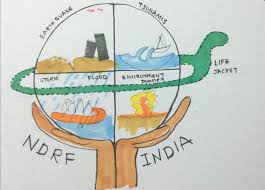
Like human population, India has to support large cattle population, which also heavily depends on biomass and graze into forest area. The forest cover with more than 0.4 densities is 12 per cent of the land area, though forest, at present, is 23 per cent. Due to overgrazing the quality of soil is also degrading resulting in soil erosion, silting of rivers, and removal of fertile soil and heavy silting of cultivable land. We see heavy rainfall during the monsoon, sometimes 100 cm rain in 36 hours or getting the whole monsoon rain two to three days like the ones in Maharashtra, Gujarat, and Kolkata. From the region wise analysis, it is clear that northern region of India is faced with problems of avalanches, landslides, floods, drought and earthquakes because this region fall under the seismic zones III to V.
The Eastern region is confronted with the heavy floods in the perennial rivers of Brahmaputra, Ganga, etc. Drought, heat wave, hailstorm, cyclone, heavy wind and earthquake are also common in this region. The Northeastern region faces the natural disaster in the form of flood, landslides, wind outrage, earthquake as most of this part of the country comes under the seismic zones IV and V.
The Western region is widely known for severe drought, wind erosion of land and soil, flood and cyclone. This area is also prone to earthquakes. The Southern region, particularly the coastal region is vulnerable to cyclones, sea erosion, tsunami, landslides. The islands of Andaman & Nicobar and Lakshadweep are confronted with the problems of sea erosion and tsunami. Indian coastal areas faced some of the severest cyclones both in Eastern coast and Western coast. One of the natural disasters, namely the volcanoes is in the barren island in Andaman group of islands which periodically become active.

In recent times, it was active in 2005. Among all the disasters, tsunami is the latest phenomena, which was never seen or heard earlier. Due to having no adequate warning system, it devastated a large portion of coastal region of Tamil Nadu, Kerala and Andhra Pradesh besides Andaman & Nicobar Islands and claimed a large number of innocent lives and destroyed property worth crores of rupees.
India has faced a number of disasters, ranging from flood, earthquakes, cyclones, tsunami, drought, landslides. A few recent disasters faced by India include Uttar Kasha earthquake in UP in 1991, Later earthquake in Maharashtra in 1993, Chama earthquake in Gujarat, super cyclone in Orissa in 1999, Buhl earthquake in Gujarat in 2001, Tsunami in 2004 and Mumbai-Gujarat flood in 2005. Besides, India has a bad experience of technology-related tragedy in the form of gas tragedy in Bhopal in 1984. India also faced the problem of Plague in Gujarat.
The direct or indirect impacts of disasters, either natural or technological, are always damage, destruction and death. They cause loss of life of both men and animals and properties as well. At the occurrence of disaster, everything goes haywire in view of the destruction of lifeline support systems, namely communication, power supply, water supply, drainage, etc. In this situation the health care and hospitals are also put under severe stress. Commercial and economic activities are badly affected. Life almost comes to a standstill.
The impact is almost same, in case of man-made disasters like riots. The worst affected group is the poor sections of society, who are daily wage-earner. They are the most vulnerable and they suffer the loss of their livelihood. The psychological traumas caused by the disasters are sometimes so severe that they span the whole of life of the victim. Besides other rehabilitation works, psychological rehabilitation is of great importance.In some natural disasters like cyclones, tsunami and earthquake, it is the building structure which becomes the cause of destruction and death. It is due to this fact that in building construction, building codes are not followed property. In developing countries only 30 per cent of built infrastructures are constructed as per the building codes, while semi-permanent and other buildings do not follow the plan. Besides, the low quality of building material, liberal flouting and lack of master plan are some of the major constraints in this regard.

Rehabilitation is an integral part of disaster management. When disasters occur administrative measures are terribly inadequate and perhaps this is the most difficult period for a victim. The role of administration does not end with end of disasters. In fact its effort and commitment get more complex. It requires proper coordination among various agencies. In this context it is very important to note that disasters are non-routine events that require non-routine response. Government cannot rely on normal procedures to implement appropriate responses- the rescue teams require learning special skills, technologies and attitudes in dealing with disasters.
Disaster Management has assumed great importance in recent times. To handle the situation efficiently, we need to be well-equipped with latest technologies. It cannot avert the situation, but can mitigate its impacts.

 Track2Training
You must be logged in to post a comment.