Numerous of us have transferred our lives to the web. Managing an account, work emails, social media, dating profiles, therapeutic records – all that imperative, touchy data. So it could be a small perturbing that the web features a lethal security imperfection.
Don’t freeze; our private data is safe for presently. But some time recently exceptionally long the encryption calculations that ensure us online are attending to crack. That is the pressing driving drive behind a modern, more secure kind of web that saddles the control of the quantum domain. Once up and running, the framework will be able to do a parcel more than ensure our data.
It could bring us unanticipated quantum apps, and possibly gotten to be the platform for a world-spanning quantum computer of extraordinary power. Building the quantum web could be a colossal and multi-faceted building challenge, but the establishments are as of now being laid. Systems of filaments are spreading. Researchers are chatting in mystery on neighborhood systems. There are indeed plans to utilize minor satellites to empower long-dist
Quantum physics is typically just intimidating from the start. It’s kind of strange and can seem unreasonable, even for the physicists who deal with it every day. But it’s not impenetrable. If you’re learning something about quantum physics, there are really six main concepts about it that you should keep in mind. Do that, and you’ll find quantum physics a lot simpler to understand.
Everything Is Made of Waves; Also, Particles
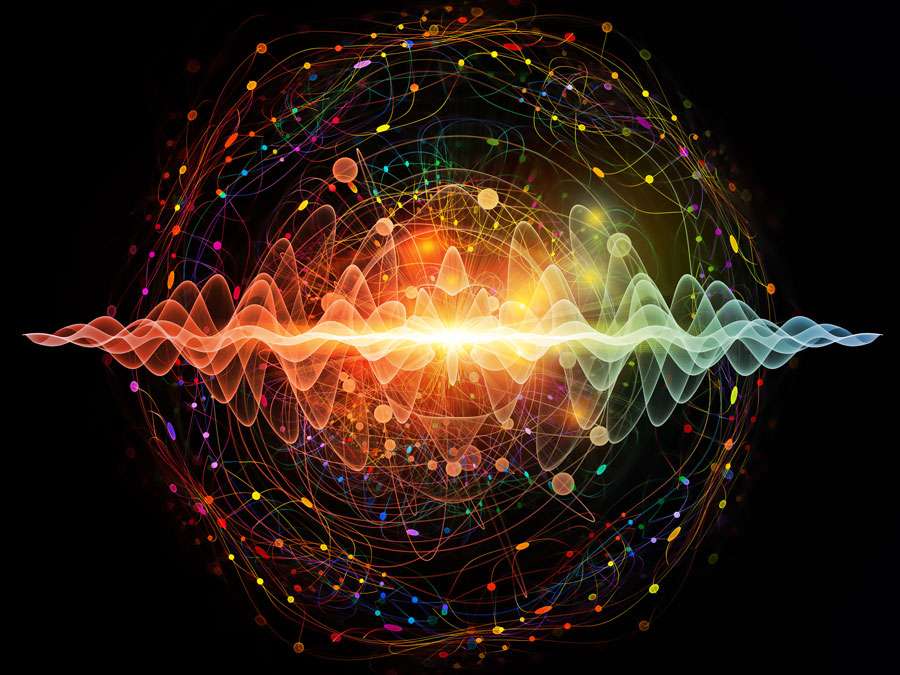
There’s various of places to begin this sort of discussion, and this is as good as any: everything in the universe has both particle and wave nature, at the same time. There’s a line in Greg Bear’s imaginary duology where a character stating the fundamentals of magic says “All is waves, with nothing waving, over no distance at all.” It is a sort of poetic description of quantum physics– deep down, everything in the universe has wave nature.
Quantum Physics Is Distinct
It’s right in its name– the word “quantum” comes from the Latin for “how much” and reflects the fact that quantum models every time include something coming in distinct amounts. The energy comprised in a quantum field comes in integer multiples of some fundamental energy. For light, this is related with the frequency and wavelength of the light– high-frequency, short-wavelength light has a large characteristic energy, whereas low-frequency, long-wavelength light has a small characteristic energy.
Quantum Physics Is Probabilistic
One of the most astonishing and debateable features of quantum physics is that it’s impossible to expect with certainty the consequence of a particular experiment on a quantum system. When physicists predict the consequence of some experiment, the prediction always takes the form of a probability for finding each of the particular likely outcomes, and comparisons between theory and experiment always involve concluding probability distributions from many frequent experiments.
Quantum Physics Is Confined
The final huge contribution Einstein made to physics was not broadly known as such, mostly because he was wrong. In a 1935 paper with his younger colleagues Boris Podolsky and Nathan Rosen (the “EPR paper”), Einstein offered a clear mathematical declaration of something that had been bothering him for some time, an idea that we now call “entanglement.”
Quantum Physics Is (Mostly) Very Small
Quantum physics has a status of being weird because its predictions are severely different from our everyday experience. This occurs because the results involved get smaller as objects get larger– if we want to see unmistakably quantum behaviour, you mostly want to see particles acting like waves, and the wavelength reduces as the momentum increases. The wavelength of a macroscopic object like a dog walking across the room is so ridiculously tiny that if you enlarged everything so that a single atom in the room were the size of the entire Solar System, the dog’s wavelength would be about the size of a single atom within that solar system.
Quantum Physics Is Not Magic
The earlier point leads very naturally into this one: as weird as it may seem, quantum physics is most definitely not magic. The things it expects are surprising by the values of everyday physics, but they are thoroughly forced by well-understood mathematical rules

 Track2Training
You must be logged in to post a comment.