
TRAVAILS OF LOVE

To a significant extent, the difficulties of same-sex love have been a matter of discussion. The horrors perpetrated against these people are numerous and terrible, ranging from bullying to harassment. Promiscuity (indiscriminate sexual partner selection) has been a fundamentally ethical education in and of itself. In so-called “ethical education,” being who you have no place. Even if there are numerous unsolved concerns, the law is unconcerned about them. In the eyes of the law, people’s particular identities are irrelevant. In the case of homosexuals, one partner is nothing more than a friend of the other in the eyes of the law. Following a flurry of rages and discussions, the Indian Supreme Court approved same-sex marriage. It is the culmination of two decades of unrelenting battles. Thousands of people gather every year in February to celebrate LGBTQ pride by rallying on the streets and hope for society to accept them in every state of India. The LGBTQ community is plagued by a slew of issues. The primary issue is getting people outside the community to accept you.

Lesbians, gays, bisexuals, transgender individuals, queers, intersex, and asexuals are all part of the LGBTQIA community. A lesbian is a woman who is attracted to another woman; a gay is a man who is attracted to another man; a bisexual is a person who is attracted to more than one gender; a transgender is a person whose gender identity differs from the sexual identity assigned to them at birth; Queers are gender minorities who are not heterosexual or cisgender. Intersex refers to a group of circumstances in which a person is born with reproductive or sexual anatomy that does not appear to fit the traditional classifications of female and male. Asexual refers to a person who has no sexual desires or sensations. Because the word “queer” denotes “weird,” “odd,” or “funny,” it relates to the degrading of that particular community. It reflects society’s obnoxious and patriarchal attitude toward the LGBT community. The LGBTQ community has been constantly scrutinized by the outside world. We live in a world where LGBTQ persons are reluctant to tell their parents about their sexual orientation. Every year, a large number of LGBT persons confront significant challenges such as assault, unemployment, prejudice, poverty, and a lack of access to health care. This is due to the discriminatory behavior of society, which instills the people’s mentality. Many people still have no idea what LGBTQ is or what it stands for. Even if a large number of people are educated, others remain illiterates in this subject, despite their acceptance. ‘Gay abandon’ is a relatively common occurrence.

Homosexuality was once considered a felony in India, thanks to Section 377 of the Indian Penal Code. Section 377 refers to ‘unnatural offenses,’ and states that anybody who voluntarily engages in sexual intercourse against the order of nature with any man, woman, or animal shall be punished with life imprisonment or imprisonment of either sort for a term up to ten years, as well as a fine. This exemplifies the morality enshrined in India’s constitution.
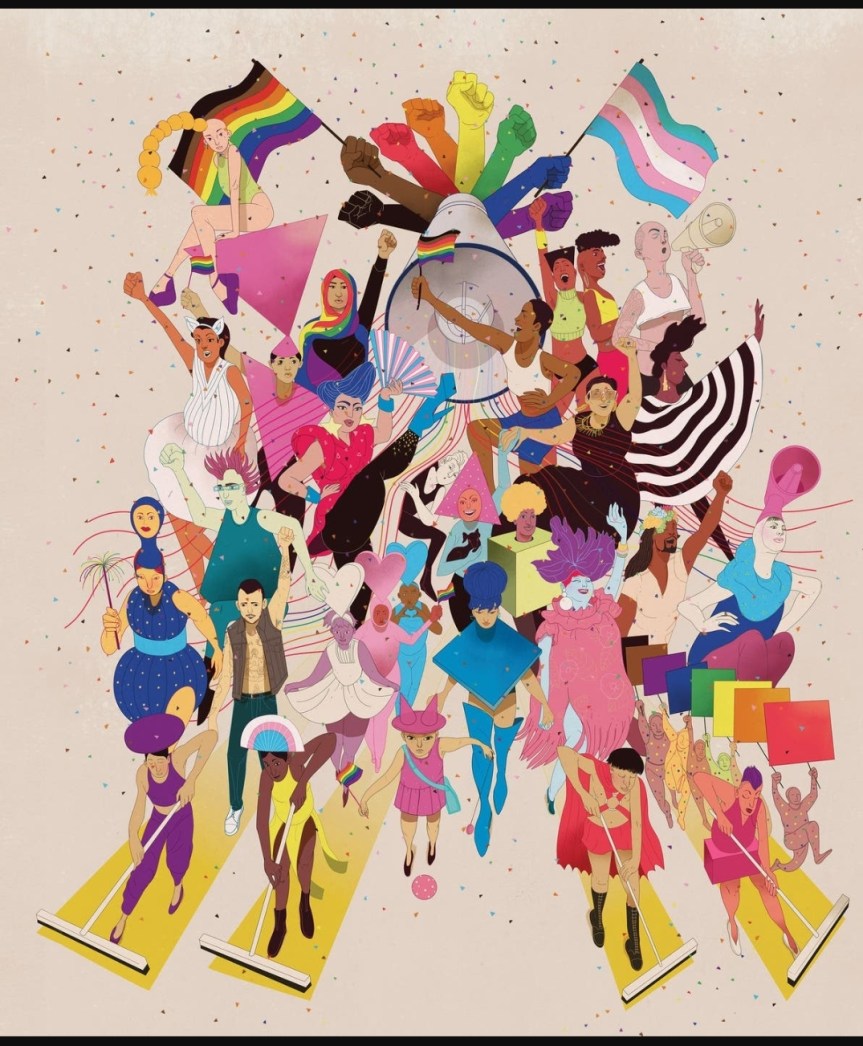
Chasing The Rainbow: A New Era And A New Fight for India’s LGBTQ Communities

“Openness may not completely disarm prejudice, but it’s a good place to start.”

-Jason Collins

India’s Supreme Court last year struck down Section 377, a colonial-era law that outlawed same-sex relations, sparking hopes of equality for the country’s lesbian, gay, bisexual and transgender population. Hundreds of students with rainbows painted on their faces descended on a New Delhi college on Friday and others held parties in major Indian cities to commemorate the overturning of the ban on gay sex.

However, once all the celebrations and merrymaking faded into the background and harsh reality set in, it became apparent that homosexuality in India wasn’t going to be about unicorns and rainbows anytime soon. Even those beating drums and dancing warned that the fight for equal rights, including same-sex marriage and serving in the military, had not been won.

After all they still cannot marry, they still cannot adopt. They have many, many years before any of this is over. The harsh truth still remains that even though LGBTQ activists are growing in numbers, acceptance is still elusive as they continue struggle against internalized homophobia.

So, “where does this homophobia stem from?” and “how bad can it be?” you may ask.

One of the root causes of homophobia is that we, as a society, are unaware of homosexuality. We live in a time and place where people call each other gay to mock and insult them. A decade ago, gay and eunuch were used interchangeably and people were highly ignorant and intolerant towards homosexuality. My classmates often gossiped about (Bollywood producer and director) Karan Johar and (actor) Shahrukh Khan. It was a subject of ridicule and mockery. The stereotypical portrayal of gay and effeminate men in Johar’s movies was in unfair representation of the queer community. Even the popular sitcom FRIENDS was riddled with casual and sometimes blatant homophobia. “Gay” and “LGBTQ” still conjure images and connotations of loud, cackling men in gaudy drag costumes in India, partly because that is the only representation LGBT people get to have.

There’s also lack of sensitisation about the LGBTQ+ community. If they had a dime for each time someone told them that it’s “just a phase” or “why someone from the same gender, it’s not like you are deprived”, they probably could afford to move to a more accepting country. When I was in school, there was a guy who was often severely bullied by the “masculine” classmates because he was effeminate. Kids who weren’t “manly enough” were often a subject to ridicule and bash. No one stopped that. People thought it was normal and the right thing to do. This isn’t surprising though, given that even now there are people who find hijras scary.

The LGBTQ+ community also suffers from lack of support from their family. As a result, their only options are either getting excommunicated if they come out or remaining closeted which can be extremely draining.

They suffer from religious dogmatism. India is a secular country. Every major religion in India condemns homosexuality. It must no doubt be petrifying to live in a place which has more than 330 million gods and yet you can count on neither one of them for their blessings.

The arduous journey to acceptance becomes even more strenuous when you try discussing and rationalizing homosexuality to those intolerant towards it and reach the realization that the minds of recalcitrant homophobes are incapable of processing things beyond black and white. They need that sharp dichotomy. Without it, they panic. They feel adrift, as if nothing is sacred anymore. Which is, of course, ridiculous. But anyway, that whole thing comes from an “us or them” mentality, in which they’re the righteous and anyone who disagrees with them is clearly a secret homosexual out to convert their children to dance around a fire with Satan.

It appears that we have become obsessed in this toxic society with the labelling of others, especially with an intense and revolting over- interest in the sexuality and gender orientation of others what happened to the idea of loving our neighbours unconditionally and paying more attention to developing our own selves in good ways? After all, to change the world we change ourselves in ways that enable us to love others all the more. So let us drop the facade of “morality”, the wilting fig leaf over such garish homophobia, and have no agenda on the LGBTQ community.

Screenshot_20200730-124228_Samsung Internet

Diversity is good, and it’s okay to be different from the norm.