
By Shashikant Nishant Sharma

Introduction
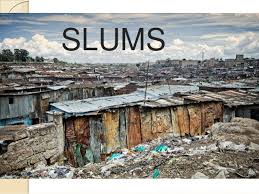
India is experiencing a profound transformation of its urban landscape. Cities are expanding spatially, economically and demographically, generating new opportunities for employment, education, mobility and social advancement. At the same time, rapid urbanisation has intensified challenges related to housing affordability, infrastructure provision, environmental quality and social inequality. Among the most visible expressions of these challenges are informal settlements, commonly referred to as slums.
Slums are often represented through a deficit-oriented lens—as places characterised by overcrowding, inadequate sanitation, insecure tenure and poor-quality housing. While these conditions are real and require urgent intervention, such descriptions do not fully capture the complex social, economic and spatial systems within which informal settlements develop. Slum communities are not merely passive recipients of urban poverty; they are also active participants in the production of urban space. Their residents contribute significantly to the informal economy, construction sector, domestic services, manufacturing, transportation and numerous other activities that sustain urban economies.
Consequently, the question facing Indian planners is not simply how to remove slums, but how to create inclusive, affordable, environmentally sustainable and socially just urban environments. Redevelopment strategies need to move beyond physical replacement and consider housing, livelihoods, social networks, accessibility, neighbourhood morphology, environmental quality and community participation as interconnected dimensions of urban development.
Earlier research has already highlighted the importance of inclusive approaches to slum redevelopment and urban environmental management (Charumitra et al., 2014). The challenge today is to translate these principles into more comprehensive planning practices capable of responding to contemporary pressures such as climate change, rising land values, housing shortages and increasing spatial inequality.
Understanding the Complexity of Informal Settlements
Informal settlements emerge through a combination of economic, institutional, demographic and spatial factors. High land prices, limited formal housing supply, migration, inadequate rental housing and uneven employment opportunities often push low-income households toward locations where housing can be obtained at relatively lower costs.
The physical form of slums also varies considerably. Singh et al. (2013) demonstrate the importance of identifying different typologies of slum settlements rather than treating all informal settlements as a homogeneous category. Settlements may develop along transportation corridors, railway lines, drainage channels, industrial areas, vacant public land or peripheral locations. Their morphology influences accessibility, infrastructure provision, environmental risks and possibilities for redevelopment.
This spatial diversity has important implications for planning. A uniform redevelopment model may be inappropriate because the problems and opportunities associated with a centrally located settlement can differ substantially from those of a peripheral settlement. Planning interventions should therefore begin with a detailed understanding of settlement morphology, land ownership, infrastructure, livelihood patterns, social networks and environmental conditions.
Singh, Singh and Dhote (2013) further emphasise the relationship between social conditions and spatial fabric through morphological analysis. This relationship is critical because the built environment is not simply a physical container for social life. Street networks, plot configurations, housing arrangements, public spaces and access routes influence social interaction, mobility, safety and economic activity.
From Slum Removal to Inclusive Redevelopment
Historically, many urban interventions have approached slums as physical problems requiring clearance. Such approaches may improve the appearance of selected areas but can also produce displacement, loss of livelihoods and disruption of established social networks.
An inclusive redevelopment strategy should instead ask a different question: How can existing communities be integrated into the formal urban system while improving their quality of life?
Charumitra, Dhote and Sharma (2014) argue for an inclusive approach to slum redevelopment as a means of strengthening urban environmental management. This perspective is particularly relevant because redevelopment should not be understood solely as construction of new buildings. It should represent a process of improving housing, infrastructure, sanitation, environmental conditions and access to opportunities.
In-situ redevelopment, where feasible, can offer important advantages because residents remain connected to their existing employment opportunities, schools, markets, social networks and transportation systems. However, in-situ redevelopment is not automatically inclusive. It requires careful attention to affordability, tenure security, community participation, building design and long-term maintenance.
Where relocation is unavoidable because of environmental hazards, infrastructure projects or other legitimate planning requirements, rehabilitation should be designed around accessibility to employment and services rather than merely the availability of land. Relocation to distant peripheral housing can technically provide a dwelling while simultaneously increasing transportation costs, reducing employment opportunities and weakening social support networks.
Housing as More Than a Physical Structure
Affordable housing is central to inclusive urban development. Housing policy must recognise that affordability involves more than the purchase price or construction cost of a dwelling. A household’s total housing burden includes rent or mortgage payments, transportation expenses, utility costs, maintenance and access to employment and social services.
The evolution of affordable housing in India reflects changing approaches to the provision of housing for economically weaker and lower-income groups (Kumar & Sharma, 2022). Yet the continuing housing deficit demonstrates that conventional supply-oriented approaches alone are insufficient.
An effective affordable housing strategy should incorporate multiple tenure and delivery models, including rental housing, incremental housing, serviced plots, cooperative housing, public housing and regulated private-sector development. The objective should be to create a diversified housing ecosystem capable of accommodating different income groups and household structures.
Neighbourhood location is equally important. Research on neighbourhood preferences and land-value relationships indicates that people’s choices are influenced by accessibility, amenities and spatial characteristics, not simply housing costs (Kumar & Dhote, 2020). Therefore, affordable housing should not be concentrated exclusively in peripheral areas where land is inexpensive but access to employment and services is poor.
The Importance of Urban Infrastructure
Infrastructure is one of the most important determinants of quality of life in low-income settlements. Water supply, sanitation, drainage, roads, electricity, solid waste management and public transportation directly influence health, safety and economic productivity.
The experience of the Jawaharlal Nehru National Urban Renewal Mission (JNNURM) demonstrates the importance of linking urban investment with improvements in citizens’ quality of life. Sharma, Onkar and Dhote (2010) examined the role of JNNURM in upgrading quality of life in Bhopal, illustrating how urban infrastructure programmes can become instruments for broader urban improvement.
However, infrastructure programmes must be evaluated not only according to the quantity of infrastructure created but also according to its accessibility, reliability, affordability and maintenance. A water connection that functions intermittently, a road without pedestrian facilities, or a housing project without adequate public transportation cannot be considered a complete solution.
Social Inclusion and Participation
Urban redevelopment affects people’s homes, livelihoods, social relationships and sense of belonging. Consequently, communities should have meaningful opportunities to participate in decisions affecting their neighbourhoods.
Participation should not be reduced to occasional consultation meetings. It should involve residents in needs assessment, prioritisation, design, implementation and monitoring. Local knowledge can reveal issues that may not be apparent through conventional planning surveys.
Participation can also improve the legitimacy and sustainability of redevelopment projects. When communities understand the objectives of a project and have a role in shaping outcomes, resistance can be reduced and long-term maintenance can be strengthened.
Inclusive urbanisation therefore requires a shift from planning for communities toward planning with communities.
Learning from Vernacular and Local Knowledge
Contemporary urban development frequently relies on standardised construction systems and universal design assumptions. While standardisation can improve efficiency, it can also overlook climatic, cultural and social characteristics of particular places.
Research into sustainable practices in the vernacular architecture of tribal communities in Central India demonstrates the potential value of indigenous knowledge for sustainable design (Dhote et al., 2012). Vernacular settlements often contain lessons concerning climate responsiveness, material efficiency, community interaction and adaptation to local environmental conditions.
These lessons should not be romanticised or transferred mechanically into modern urban settings. Instead, planners should identify the principles embedded within local practices and reinterpret them using contemporary technologies and building standards.
Such an approach can contribute to environmentally responsive and culturally appropriate housing while strengthening residents’ connection with place.
Climate Change and Inclusive Urbanisation
Climate change adds another layer of complexity to the challenge of informal settlements. Low-income communities are frequently located in areas exposed to flooding, extreme heat, poor drainage and other environmental hazards. Their vulnerability is often intensified by inadequate infrastructure and limited financial capacity to recover from disasters.
Inclusive urbanisation therefore needs to incorporate climate resilience into housing and neighbourhood planning. Shrestha et al. (2014) emphasise the importance of rethinking urbanisation, policy and practice in the context of climate change. This perspective is particularly important for rapidly growing cities where climate risks intersect with social and spatial inequalities.
Climate-sensitive redevelopment can include improved drainage, shaded public spaces, heat-responsive building design, water conservation, permeable surfaces, green infrastructure and reliable emergency access. Importantly, climate adaptation should not become a justification for displacing vulnerable communities. Environmental improvement and social justice must be pursued simultaneously.
Spatial Justice and the Right to the City
Urban inequality is fundamentally spatial. The location of housing determines access to employment, education, healthcare, transportation, public spaces and environmental amenities. Consequently, spatial planning can either reproduce inequality or help reduce it.
Recent scholarship on spatial changes in vernacular settings highlights how transformations of physical space can generate forms of social injustice (Dehalwar & Sharma, 2024). This observation has wider relevance for urban redevelopment. Changes in land use, road networks, public spaces and housing forms can alter social relationships and access to resources.
A just redevelopment process should therefore evaluate not only what is constructed but also who benefits, who bears the costs and who has decision-making power.
The concept of the “right to the city” provides a useful framework here. Urban residents should have equitable opportunities to access and participate in the production of urban space. This does not imply that every resident has an unrestricted right to occupy any location, but it does demand that urban development processes recognise the social value of existing communities.
Toward a New Framework for Slum Redevelopment
A future-oriented redevelopment framework for Indian cities should integrate six interconnected principles.
First, diagnose before intervening. Every settlement should be studied in terms of morphology, tenure, infrastructure, livelihoods, environmental risks and social characteristics.
Second, prioritise in-situ solutions where feasible. Existing communities should not be displaced simply because their neighbourhoods are considered visually undesirable.
Third, treat housing and livelihoods as inseparable. Relocation or redevelopment should preserve reasonable access to employment and economic opportunities.
Fourth, integrate climate resilience. Drainage, heat mitigation, water security, green infrastructure and disaster preparedness should be incorporated into neighbourhood planning.
Fifth, institutionalise participation. Residents should be involved throughout the project cycle, with transparent mechanisms for decision-making and grievance redressal.
Sixth, measure outcomes rather than outputs. The success of redevelopment should be evaluated through indicators such as housing affordability, tenure security, travel time, access to services, environmental quality, employment stability and resident satisfaction.
Conclusion
The future of Indian cities will depend substantially on how they address the needs of their most vulnerable residents. Slum redevelopment cannot be reduced to the replacement of informal housing with formal buildings. It is fundamentally a question of urban citizenship, spatial justice, environmental sustainability and social inclusion.
Research on slum typologies, morphological relationships, affordable housing, infrastructure programmes, vernacular practices and inclusive urbanisation provides valuable foundations for rethinking redevelopment. The central lesson emerging from this body of scholarship is that successful urban transformation requires an integrated approach in which physical planning is connected with social and economic realities.
Indian cities need to move from a clearance-oriented model to an inclusion-oriented model, from isolated housing projects to integrated neighbourhood development, and from top-down decision-making to meaningful participation.
The objective should not simply be to create a city without slums. Rather, the objective should be to create a city in which the circumstances that produce exclusion are progressively reduced and every resident has access to safe housing, infrastructure, employment, public services and a dignified urban life.
Inclusive redevelopment is therefore not merely a strategy for improving slum settlements. It is a pathway toward building more resilient, equitable and sustainable Indian cities.
References
Charumitra, B., Dhote, K. K., & Sharma, A. (2014). Slum redevelopment strategy: A way forward to urban environment management through inclusive approach. Research Journal of Engineering Sciences, 3(7), 28–37.
Dehalwar, K., & Sharma, S. N. (2024). Social injustice inflicted by spatial changes in vernacular settings: An analysis of published literature. ISVS e-journal, 11(9), 93–113.
Dehalwar, K., & Sharma, S. N. (2026). Human settlements and social dynamics: A planner’s guide. Cambridge Scholars Publishing.
Dhote, K. K., Preeti, O., & Santanu, D. (2012, March). Identifying the sustainable practices from the vernacular architecture of tribes of Central India. In Proceedings of the 2nd International Conference–Workshop on Sustainable Architecture & Urban Design, School of Housing, Building & Planning, Universiti Sains Malaysia, Penang, Malaysia.
Kumar, G., & Sharma, S. N. (2022). Evolution of affordable housing in India. European Journal of Business & Social Sciences, 10(9), 20–30.
Kumar, S., & Dhote, K. K. (2020). Calibrating neighbourhood preferences in the land value contour model. Current Science, 119(6), 1001–1009.
Sharma, R., Onkar, P., & Dhote, K. K. (2010). Role of JNNURM in upgrading quality of life of the citizens of Bhopal. Institute of Town Planners, India Journal, 7(4), 57–68.
Shrestha, K., Ojha, H., McManus, P., Rubbo, A., & Dhote, K. K. (Eds.). (2014). Inclusive urbanization: Rethinking policy, practice and research in the age of climate change. Routledge.
Singh, D., Singh, P., & Dhote, K. (2013). Slum redevelopment by linking social conditions with spatial fabric through morphological study. OIDA International Journal of Sustainable Development, 6(9), 37–46.
Singh, P. O., Dhote, K. K., & Soni, N. (2013). Development of typologies of slum settlements: The case of a million plus city of India. In The Sustainable City VIII (2 Volume Set): Urban Regeneration and Sustainability (p. 1153).




You must be logged in to post a comment.