The importance of menstrual cups

Many girls of the rural areas don’t attend school during their menstruation because of the stigma attached to it and the unavailability of proper supplies. The issue of affordability and privacy in the rural areas can be resolved through availability of better alternatives to sanitary pads. One very good option for the latter is using menstrual cups. The pros of using such a cup are as follows –

  1.  These cups are reusable and can be used for 3-4 years if maintained with good hygiene.
  2.  Menstrual cups are also very environment friendly unlike pads as they are mostly made of silicon, rubber or latex , unlike sanitary pads, which are made of plastic and can only be used once. On an average, a woman utilizes 3,500 sanitary pads throughout her lifetime. That, alone, is enough to suggest how much of money and resources we would be saving if we shifted to using menstrual cups.
  3. They prevent discomfort and leakage while walking and sitting as well.  If placed righteously, menstrual cups can be a safer options for school going girls as it would provide them will ease while doing activities and resolve their fear of leakage in school.
  4. Menstrual cups also prove out to be the best alternative because they are a one-time investment. In rural areas, regular supply of sanitary pads is a big issue. In this scenario, menstrual cups can persist for a much longer time.
  1. Although India is a progressive country, the mentality of some people of the rural area refuses to change. In some households, it is a myth that wearing a menstrual cup can lead to the breakage of the “hymen” of a girl. Hymen is a tissue while surrounds the entrance of the uterus of a girl. The condition of the hymen is heavily linked to the honor of the family since they consider it as a proof of her “purity”.
  2. Menstrual cups are still not available in almost any of the chemist shops in India in the urban areas only, let alone the rural areas. As of now, menstrual cups can only be ordered online, which the people from the rural area don’t have the access to.
  3. There are still a lot of myths in the society surrounding the usage of menstrual cups with regards to safety and health which need to be debunked as soon as possible!
  4. Menstrual cups and other period supplies are still not a part of the period education which is imparted in schools. The girls need to be made aware of the mere existence of these products firsthand.

If more awareness is raised about the affordable alternatives to sanitary pads and about periods in general, we can succeed in finishing the problem of period poverty and the stigma that periods make you impure, in this country. The education of the girls of our country shouldn’t continue to pay the price of this mindset and belief system !

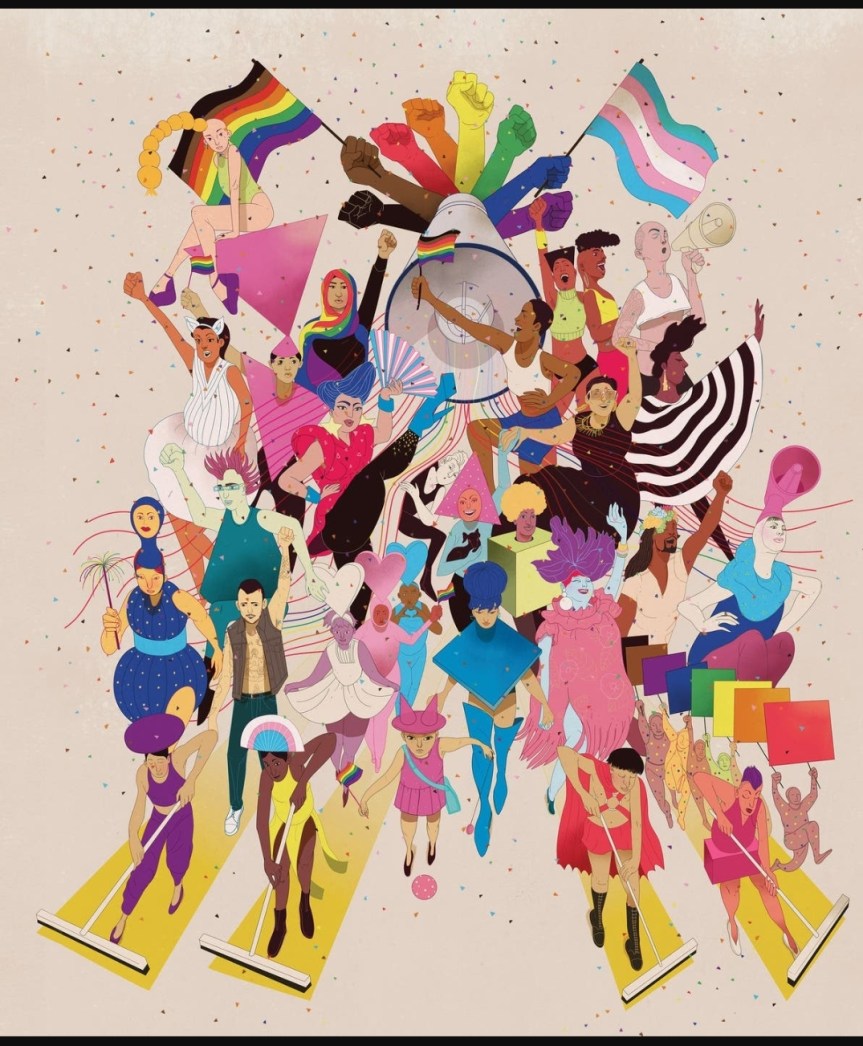
The lgbtqia+ community in India

This is the best time around to write about this. Although the pride month is dedicated to queer rights, they sadly have to fight for their right to existence 24/7 and not only for a single month in the year. And as our laws are turning progressive day by day, giving us all hopes, the general mindset of our country just isn’t.

The people (especially of India) like to dismiss this topic in the name of preserving their “culture.” So here, we are going to talk about whether our culture really prohibits homosexuality or not. I am mainly going to talk about Hinduism in this article since I am one and I can speak out the perspective.

I have heard the saying ” Homosexuality is a foreign concept” in my life enough times to do proper research on it. But is it really?

The research proves out to be quite conflicting. It is now being said that the stigma around homosexuality and sex education is, in fact, a foreign concept “gifted” to us by the Britishers when they colonized us. The liberals keep their perspective that homosexuality and even polyamory were “recognized” in the ancient history of India, and they keep forward various ancient carvings, books, and art as proof.

While on the other side of the spectrum, some people have argued that the carvings were made by poor carvers who projected their knowledge and fantasies through their art, since talking about it was socially unacceptable at that time. The truth can actually fall on any side of the spectrum but we can’t be oblivious to the fact that our gods did not forbid homosexuality either. In fact, they represented the communities.

“Many deities in Hinduism and Indian epics are represented as both male and female at different times and in different incarnations or may manifest with characteristics of both genders at once, such as Ardhanarishvara, created by the merging of the god Shiva and his consort Parvati whose half right body is a fully male body and half left body is full female.

Many chronicles of changes in sex and polyamory are often found both in traditional religious narratives such as the Vedas, Mahabharata, Ramayana, and Puranas as well as in regional folklore. But then again, there are no direct mentions and so, these interpretations might go on to hurt religious sentiments.

Regardless of whether our pasts and religions have shown proves of supporting the community or not, our society should unfold to progress towards a world where all human beings are valid and loved. Because in my interpretation of a “religion”, peace and love comes before beliefs and rules. God supports humans who support other humans in overcoming their battles in life.

  1. Moral education- We have been pressing on the topic of proper sex education in schools while letting the importance of home values and life skills slip. Because education starts at home and that’s where a child is mainly raised. Although, moral education in schools is very good start, it should be modified to not only focus on children, but on parents as well.
  2. Better inclusion in the parliaments and mainstream media – People and especially children need to realize that the people belonging to the LGBTQIA+ community are also normal human beings like them and are capable of handling honorable positions.
  3. Inclusion of struggles and stories in the curriculum- Children need to know from the very beginning that this world has been pretty cruel and this world needs determined people to bring about a change which is the need of the hour.
  4. Individual change- Speak up against any prejudice in your households or anywhere else. The topic of homosexuality is pretty massive, so don’t step back when it comes to educating yourself and other people about this.

“Equality means more than passing laws. The struggle is really won in the hearts and minds of the community, where it really counts.” – Barbara Gittings

Because nobody gets the right to prohibit someone else from living their lives. So just keep spreading love !

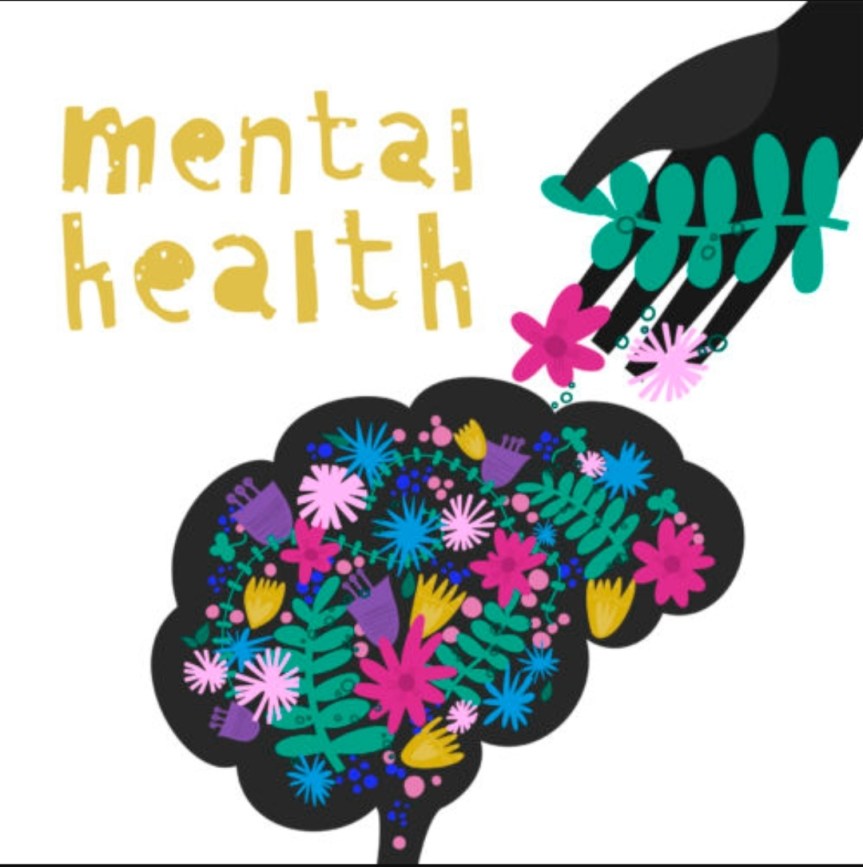
MENTAL HEALTH

Mental illnesses should not be thought of any differently from physical illnesses. In fact, I believe the two are inseparable. Because the whole body is connected and interwoven, the two cannot be separated. The brain is an organ just like everything else in the body and can be hurt like everything else. When the brain is ill, it is not isolated in just the brain, but instead affects the whole body and the overall wellness.

The stigma surrounding mental illness keeps people from getting the help they need to get better and causes them to hide their pain.  

Mental health is important. It impacts how we feel, think, and behave each day. Our mental health also contributes to our decision making, problem solving, how we deal with stress, and how we can relate to others in our lives. That’s why, we have to always care about our own mental health.

Current research clearly identifies the importance of mental health to learning, as well as to students‘ social and emotional development. Students who experience positive mental health are resilient and better able to learn, achieve success, and build healthy relationships.

An emotionally fit person will always feel vibrant and truly alive and will easily manage emotionally difficult situations.

Mental illness does not mean that you’re going crazy, and one should not be ashamed of it. Our society needs to change its perception of mental illness or disorder. Mental illness is the instability of one’s health, which includes changes in emotion, abnormal thinking and behaviour

Receiving help is the most important thing anyone can do for themselves. But unfortunately, the stigma keeps people from getting help.  Mental illness should not be something to be ashamed about or thought of differently. When mental illness is treated equally to other illnesses, more people will have the courage to get help and better their lives.

We need to understand that being both physically and emotionally fit is the key to success in all aspects of life. Children should be educated about the importance of mental health, which would help them in breaking the stereotypes around mental health which today’s society has created.

Chasing The Rainbow: A New Era And A New Fight for India’s LGBTQ Communities

“Openness may not completely disarm prejudice, but it’s a good place to start.”

-Jason Collins

India’s Supreme Court last year struck down Section 377, a colonial-era law that outlawed same-sex relations, sparking hopes of equality for the country’s lesbian, gay, bisexual and transgender population. Hundreds of students with rainbows painted on their faces descended on a New Delhi college on Friday and others held parties in major Indian cities to commemorate the overturning of the ban on gay sex.

However, once all the celebrations and merrymaking faded into the background and harsh reality set in, it became apparent that homosexuality in India wasn’t going to be about unicorns and rainbows anytime soon. Even those beating drums and dancing warned that the fight for equal rights, including same-sex marriage and serving in the military, had not been won.

After all they still cannot marry, they still cannot adopt. They have many, many years before any of this is over. The harsh truth still remains that even though LGBTQ activists are growing in numbers, acceptance is still elusive as they continue struggle against internalized homophobia.

So, “where does this homophobia stem from?” and “how bad can it be?” you may ask.

One of the root causes of homophobia is that we, as a society, are unaware of homosexuality. We live in a time and place where people call each other gay to mock and insult them. A decade ago, gay and eunuch were used interchangeably and people were highly ignorant and intolerant towards homosexuality. My classmates often gossiped about (Bollywood producer and director) Karan Johar and (actor) Shahrukh Khan. It was a subject of ridicule and mockery. The stereotypical portrayal of gay and effeminate men in Johar’s movies was in unfair representation of the queer community. Even the popular sitcom FRIENDS was riddled with casual and sometimes blatant homophobia. “Gay” and “LGBTQ” still conjure images and connotations of loud, cackling men in gaudy drag costumes in India, partly because that is the only representation LGBT people get to have.

There’s also lack of sensitisation about the LGBTQ+ community. If they had a dime for each time someone told them that it’s “just a phase” or “why someone from the same gender, it’s not like you are deprived”, they probably could afford to move to a more accepting country. When I was in school, there was a guy who was often severely bullied by the “masculine” classmates because he was effeminate. Kids who weren’t “manly enough” were often a subject to ridicule and bash. No one stopped that. People thought it was normal and the right thing to do. This isn’t surprising though, given that even now there are people who find hijras scary.

The LGBTQ+ community also suffers from lack of support from their family. As a result, their only options are either getting excommunicated if they come out or remaining closeted which can be extremely draining.

They suffer from religious dogmatism. India is a secular country. Every major religion in India condemns homosexuality. It must no doubt be petrifying to live in a place which has more than 330 million gods and yet you can count on neither one of them for their blessings.

The arduous journey to acceptance becomes even more strenuous when you try discussing and rationalizing homosexuality to those intolerant towards it and reach the realization that the minds of recalcitrant homophobes are incapable of processing things beyond black and white. They need that sharp dichotomy. Without it, they panic. They feel adrift, as if nothing is sacred anymore. Which is, of course, ridiculous. But anyway, that whole thing comes from an “us or them” mentality, in which they’re the righteous and anyone who disagrees with them is clearly a secret homosexual out to convert their children to dance around a fire with Satan.

It appears that we have become obsessed in this toxic society with the labelling of others, especially with an intense and revolting over- interest in the sexuality and gender orientation of others what happened to the idea of loving our neighbours unconditionally and paying more attention to developing our own selves in good ways? After all, to change the world we change ourselves in ways that enable us to love others all the more. So let us drop the facade of “morality”, the wilting fig leaf over such garish homophobia, and have no agenda on the LGBTQ community.

Screenshot_20200730-124228_Samsung Internet

Diversity is good, and it’s okay to be different from the norm.


Homosexuality in Ancient India


“History owes an apology to the LGBT community. They were denied the fundamental right to equality, the right against discrimination and the right to live with dignity.”

– Justice Indu Malhotra


“Gay marriage and relationship are not compatible with nature and are not natural, so we do not support this kind of relationship. Traditionally, India’s society also does not recognise such relations.” As usual, other members of right-wing factions joined the chorus – stubbornly maintaining that homosexuality is against nature.

But are we sure about that? Can we honestly say that it was never “recognised”?

It’s impossible to talk about homosexuality in ancient India without referring to one of its most affirmative and visual ‘proofs’, so to speak. The sculptures in the Khajuraho temple of Madhya Pradesh are known for their overt homosexual imagery. The temple is popularly believed to have been built sometime around the 12th century. The sculptures embedded in the Khajuraho temple depict what seem to be sexual fluidity between man and man and woman and woman with either women erotically embracing other women or men displaying their genitals to each other, the former being more common (suggesting a tilt in favour of the male voyeur).

The story of Shikhandi, a transgender who becomes the nemesis of Pitamah Bhishma in the kurukshetra war, and the story of Arjuna turning into a transgender with the name Brihannala for a limited period due to a curse, which in fact is proved to be a blessing in disguise when the Pandavas were required to lead an incognito life at the end of their exile, are two examples of the existence of and awareness about the transgenders even during ancient times.The story of Krishna assuming female form to marry Aravan the son of Arjuna might also have been an euphemism or a veiled reference to homosexuality. During the Mughal rule, men were reportedly castrated to make them transgenders, before getting posted as sentries or servants in the Harems of the Kings where a large number of queens and other ladies were confined behind the Purdah.

I think the fact that the boys and girls getting married at a very early age (in pre adolescence and in case of girls even before attaining puberty) during older times in India also might have prevented a large number of men and women even to properly understand sex or become aware of their own sexual orientations. And in a closely knit joint family/community living systems, LGBTs might still have managed to lead the lives of their choice without openly flaunting their alternate sexuality or inviting the notice of the society to this particular behavior.

Purushayita in the Kama Sutra, a 2nd century ancient Indian Hindu text, mentions that lesbians were called “swarinis”. These women often married other women and raised children together. The book further made mention of gay men or “klibas”, which though could refer to impotent men, represented mostly men who were impotent with women due to their “homosexual tendencies”. The Kama Sutra’s homosexual man could either be effeminate or masculine. While they were known to be involved in relationships of a frivolous nature, they were also known to marry each other. The book further mentions that there were eight different kinds of marriages that existed under the Vedic system, and out of those, a homosexual marriage between two gay men or two lesbians were classified under the “gandharva” or celestial variety – “a union of love and cohabitation, without the need for parental approval”. Varuna and Mitra, famously referred to as the “same-sex couple” in the ancient Indian scripture of the Rig Veda, were often depicted riding a shark or crocodile or sitting side-by-side on a golden chariot together. According to the Shatapatha Brahmana, a prose text describing Vedic rituals, history and mythology, they are representatives of the two half-moons.

Amongst scenes from epics and legends, one invariably finds erotic images including those that modern law deems unnatural and society considers obscene. Curiously enough, similar images also embellish prayer halls and cave temples of monastic orders such as Buddhism and Jainism built around the same time. The range of erotic sculptures is wide: from dignified couples exchanging romantic glances, to wild orgies involving warriors, sages and courtesans. Occasionally one finds images depicting bestiality coupled with friezes of animals in intercourse. All rules are broken: elephants are shown copulating with tigers, monkeys molest women while men mate with asses. These images cannot be simply dismissed as perverted fantasies of an artist or his patron considering the profound ritual importance given to these shrines. There have been many explanations offered for these images – ranging from the apologetic to the ridiculous. Some scholars hold a rather puritanical view that devotees are being exhorted to leave these sexual thoughts aside before entering the sanctum sanctorum. Others believe that hidden in these images is a sacred Tantric geometry; the aspirant can either be deluded by the sexuality of the images or enlightened by deciphering the geometrical patterns therein. One school of thought considers these images to representations of either occult rites or fertility ceremonies. Another suggests that these were products of degenerate minds obsessed with sex in a corrupt phase of Indian history.

According to ancient treatises on architecture, a religious structure is incomplete unless it’s walls depicts something erotic, for sensual pleasures (kama) are as much an expression of life as are righteous conduct (dharma), economic endeavours (artha) and spiritual pursuits (moksha). Why is homosexuality considered such a big taboo in India? We marry people to trees and rocks in the name of religion but do not support a homosexual marriage.

To sum up, if we go by these popular references in Indian history and mythology, then it appears that ancient “Indian society” did indeed “recognise” homosexuality through that period, and in many cases, even accepted it. So, ultimately, it’s just factually incorrect to deny that homosexuality has been part of Indian tradition.

Mental Health: Are We Doing Enough?


“No one wishes to have dark days, sleepless nights, grumpy mornings and this endless dark tunnel with no sign that it ever ends. Mental illnesses aren’t a choice.”

Mental illnesses are the unseen, unheard, silent killers. It’s the pain that’s too much to cope with, too hard to deal with and so misunderstood. You can’t escape it no matter how hard you try, because it follows you around like a black shadow that’s on the inside, eating you.

There isn’t anything tragically beautiful about them, it’s just tragic. It’s not sad songs and poetry, shy glances or drowning in the bath. It’s not ghostly white skin tainted by charcoal circles under sad eyes and large purple bruises stretching viciously up your arms. It isn’t lonely walks, vacant coffee shops or smoking dusty cigarettes.

Depression is unwashed clothes and flaking skin. It’s over eating and the inability to even get out of bed. It’s giving up on yourself and not taking pride in your appearance anymore. It’s empty inboxes, bursts of anger and late night tears. It’s a feeling of disgust within yourself that makes you want to tear off your own skin just so you can feel clean. It’s uncertainty and confusion. It’s losing weight, long showers and greasy hair. It’s constantly wishing you could be somewhere or someone else. It’s losing the will to even live.

Similarly, anxiety isn’t just sweating and shaking and shortness of breath. It’s also feeling like you have no control over your life and there is a knot in your stomach and you feel like your world is crashing down completely and you have to sit there and act like you’re fine.

Being bipolar is like being on a roller coaster ride. Sometimes you can predict drop offs and others you just have to hang on because the next turn sends you into an unexpected spiral. Sometimes you are laughing and throwing your hands in the air and then other times you are clinging, simply holding on for dear life screaming it the top of your lungs.

Obsessive Compulsive Disorders are like unpredictable demons of your own mind, where the soul is a puppet of your own fears, where a line between right and wrong gets blurred, where your true identity disappears only in you, where you get accosted for thousands of pointless known questions, where you get beaten every single second by your own self, where everyone seems fine except you, where regret is smaller word for ‘reassurance’, where mind goes dead and breathing continues, where you stuck in a small box full of nightmares.

So, are we doing enough about mental health? Long answer short, no.

The first and foremost reason for India to lose its mental health is the lack of awareness and sensitivity about the issue. There is a big stigma around people suffering from any kind of mental health issues. They are often tagged as ‘lunatics’ by the society. This leads to a vicious cycle of shame, suffering and isolation of the patients. Also, there is a serious shortage of mental healthcare workforce in India.

One of the biggest hurdles in addressing mental health is the measurement of objective information. With other illnesses, there are lab reports, X-rays, CT scan, MRI, etc. which are used for identification of illnesses. In case of mental health, such objective parameters aren’t available. Secondly, despite it’s enormous social burden, mental health remains a taboo subject that is susceptible to age-old stigmas, prejudices and fears. Because people can’t see a physical deformity they think there’s no substance to your illness. People often associate it with pretending and take it lightly in less developed states. Even highly educated people react the same way and lack empathy. They’ll belittle mental illnesses and blame it on the sufferer’s personality. Thus, in our country, the discovery of a mental illness is often followed by denial and hesitation to seek help. Thirdly, the output of the same disease or problem varies significantly from person to person, making it very subjective. Thus, needless to say, the path towards addressing and normalizing discussions about mental health is indeed a rocky one.

Mental health stigma is not only a culturally learned aversion to discussing mental illness, it is also the subsequent ignorance in the general population about how to recognize stigma in everyday life or an institutional level. And this stigma is can be soul damaging. It’s also personal and unique to the individual, yet it encourages society to treat the ones suffering from it as: Dangerous. Expendable. Useless. Invisible. To dismantle stigma we have to look much deeper at the specific problems and manifestations of it. How does stigma penetrate into the scientific publications and research? What type of education are we given on mental health in public education? All of these more nuanced questions give us routes to comparison and action. I believe it is in these details that stigma exists and where it must be sought if we are to dismantle it.

We, as a society, need to learn to treat people with mental illnesses with compassion rather than telling them that their brain is defective.
To build a better world we need to consciously design a better environment for all of humanity, one in which all the choices we have are good options. What we have now is a dynamic that makes people sick and then blames them for being sick. This world of fear and coercion can be swapped for one of love and cooperation, a world that brings us all health and happiness in all our different and wonderful cultures.

The Visibly Invisible

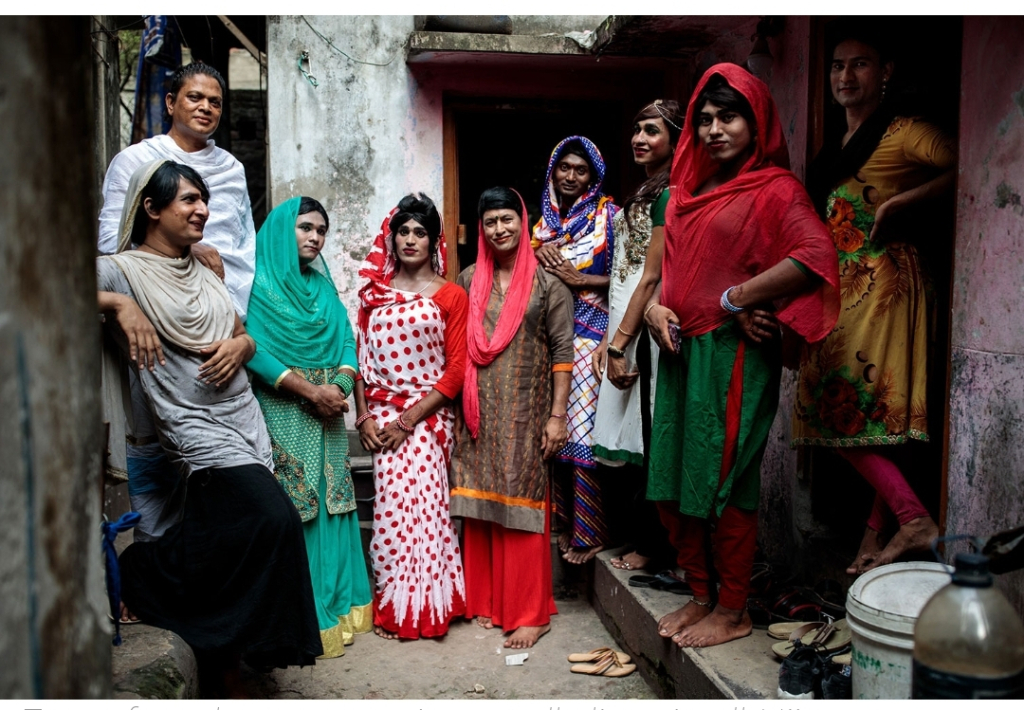
Hijras are a sexual minority that’s very visible, and yet they are treated by the society as if they’re invisible.

When Lord Rama was exiled from Ayodhya and his entire kingdom began to follow him into the forest, he told his disciples: “Men and women, please wipe your tears and go away.” So they left. Still, a group of people stayed behind, at the edge of the forest, because they were neither men nor women. They were hijras, which in Urdu means something like eunuchs. Those people waited in the woods for 14 years until Lord Rama returned, which won them a special place in Hindu mythology.

At a traffic signal on a busy day, the slight tapping on my car’s window by a transgender would often unnerve me. They are persistent, and there is a common notion that they will cause you embarrassment if you don’t hand them money. At other times, one might find them in the trains badgering the passengers for money, often to point that even the bystanders feel uncomfortable.But is that all there is to their identity? What is it like to be a hijra in India?

I can only guess. One must be fighting a constant battle with the rest of one’s nation to be taken seriously, to be accepted, to be respected, to be spared a laugh, to feel secure about their sexuality and to be understood, among so many other things. We can only guess.However, we can at the very least attempt to understand their plight. Imagine you’re thrown out of your house. What would you do? You’d go to your friend’s place? Or you’d go find some work and make your living? Imagine you don’t have any friends. And even if you did have any, they wouldn’t let you anywhere near their houses. What would you do now? Obviously you’d get some petty job and start earning for your own expenses. Now, imagine this. People aren’t even willing to give you a job. Everywhere you go, they just shoo you away, wanting to get rid of you from those places as quickly as possible. What’s next? You can’t go back home since your family has deserted you. You might want to try to talk to someone. Then, imagine no one even wants to lift their eyes and look at you when you approach them. You’re someone most people don’t even want to see. That’s the daily life of a transgender or a hijra.

Today hijras, who include transgender and intersex people are really hard to miss. Dressed in glittering saris, their faces heavily coated in cheap makeup, they sashay through crowded intersections and crash fancy weddings and birth ceremonies, singing bawdy songs and leaving with fistfuls of rupees. Behind the theatrics, however, are often sad stories — of the sex trade and exploitation, cruel and dangerous castrations, being cast out and constantly humiliated. Within India’s L.G.B.T. community, the hijras maintain their own somewhat secretive subculture.

Hijra communities face several sexual health issues including HIV, and since most hijras are from lower socioeconomic status and have low literacy levels, there are several barriers stand in their way of seeking health care. Mental health needs of hijras too are barely addressed in the current HIV programs. Some of
the mental health issues reported in these communities include depression and suicidal tendencies, possibly secondary to societal stigma, lack of social support, HIV status. There’s also the need to address alcohol and substance use among the hijra communities, a significant proportion of which consume alcohol possibly to forget stress and depression that they face in their daily life.

One might argue that since they’re able-bodied, they should just get a job job and provide for themselves. Yes, they absolutely should. Except for two words – social stigma. Most people would know the Kochi Metro recruited many transwomen when it started operations. Almost all of them have since quit. Why? Because while the job paid them 9–10,000 rupees a month, nobody would rent them accommodation, so they had to end up in lodges which cost hundreds daily. Ergo, they spent more than what they earned. In that instance, the government tried, and so did they. But society didn’t. The media also outed some women who were living secretly, away from family. The result? Threats of death if they came back home. In India, lakhs of male engineers are struggling to find gainful employment. What chance do these uneducated transwomen stand? They are not eunuchs by choice, they were born like that. We fail to create an environment for them in which they feel equal to us (which they are), in which they can lead a respectful and decent life by earning a living and not by begging, the least we can do is to help them by giving them these small amount of money, which hardly makes any difference to us.

Thus, the next time you meet a transgender, be polite, behave in a humble manner because what we see is the reflection of what we as a society have done to them. Tackle them with empathy and kindness, and be eternally grateful that you are not struggling with your gender, thrust on you by society. It could’ve easily been any one of us in their place. Even if you don’t give them money, at least don’t look at them with disgust.

At the end of the day, they’re normal people but it’s the world that makes them feel different.

screenshot_20200713-120140_chrome
The visibly invisible community.