Veganism

Over the past few years, the concept of veganism has become largely popular. Many famous personalities have also started switching into veganism. According to Wikipedia, “Veganism is the practice of abstaining from the use of animal products, particularly in diet, and an associated philosophy that rejects the commodity status of animals.” There is a specific pattern of eating involved in it which includes only plant-based food items. Vegan people replace dairy products with plant based milks like soy, scrambled eggs with scrambled tofu, honey with maple syrup and similar other options. They also refrain from using other animal products like clothing from animal products and leather. It is a lifestyle which attempts to decrease animal exploitation as much as possible.

Photo by Jill Wellington on Pexels.com

The term “vegan” was first coined by Donald Watson in 1944 when he founded the Vegan Society with a small group of vegetarians, who broke away from the Leicester Vegetarian Society in England. It is said that the term “vegan” was constructed by combining the first and last letters of “vegetarian.” At first it was used to mean “non-dairy vegetarian” and by May 1945 vegans started abstaining from “eggs, honey; and animals’ milk, butter and cheese”. They chose to not consume dairy or any other product of animal origin along with abstaining from meat like vegetarians. In 1951, the Society changed its definition to “the doctrine that man should live without exploiting animals”. It is currently defined as “a way of living that attempts to exclude all forms of animal exploitation and cruelty, be it from food, clothing, or any other purpose.” Interest in Veganism started from the latter part of 2010s as more and more vegan stores opened increasing vegan options. These have started to be increasingly available in supermarkets and restaurants across the world.

Photo by Fuzzy Rescue on Pexels.com

Reason behind going vegan

Vegans generally choose to avoid animal products for reasons like Ethics, Health and Environment.

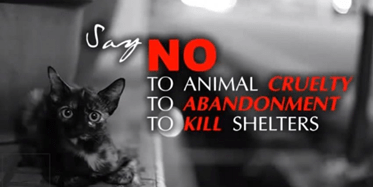
People who support the ethics of the practice are called Ethical Vegans who strongly agree to the belief that all creatures have the right to life and freedom. So, they oppose killing a conscious being to simply consume its flesh, drink its milk, or wear its skin — especially when alternatives are available. They also oppose the psychological and physical stress that animals may endure as a result of modern farming practices. For instance, the small pens and cages in which many livestock animals are forced to live between birth and slaughter, the farming industry’s practices of the grinding of live male chicks by the egg industry or the force-feeding of ducks and geese for the foie gras market. Ethical vegans also protest against animal cruelty and raise awareness about ending all forms of cruelty towards animals.

Some also choose veganism due to its health benefits. Plant-based diets may reduce the risk of heart disease, type 2 diabetes, cancer, and premature death. Lowering the intake of animal products may likewise reduce the risk of Alzheimer’s disease or dying from cancer or heart disease. One can also avoid the side effects linked to the antibiotics and hormones which are used in modern animal agriculture. Studies show that there is a relation between vegan diets and lower body weight and body mass index (BMI).
Photo by Lauris Rozentu0101ls on Pexels.com

Vegan diets are high in dietary fiber, magnesium, folic acid, vitamin C, vitamin E, iron, and phytochemicals; and low in dietary energy, saturated fat, cholesterol, long-chain omega-3 fatty acids, vitamin D, calcium, zinc, and vitamin B12. There is also the possibility of nutrition deficiency because elimination of all animal products may lead to nutritional deficiencies. Some of these can only be prevented through the choice of fortified foods or the regular intake of dietary supplements. Vitamin B12 supplementation is considered to be very important in some cases.

Some people avoid animal products and shift to veganism for the environmental impacts. It is widely known that animal agriculture is a very water intensive process. The UN report of 2010 suggests that animal products need more resources and produce a higher percentage of greenhouse gas emissions than plant-based options.
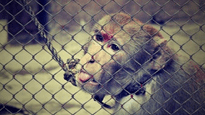
Stop animal cruelty

The use of animals to entertain human beings is wrong from the welfare point of view because: … it involves the animal in performances that are foreign to their natural behavior. It may involve cruelty during the show (e.g. bullfighting, rodeos) it may involve cruelty in training the animal.

cruelty in circuses

The wild animals commonly abused in circuses are extremely stressed by circus conditions. The loud noise of the music, the cheers of the crowd and the dizzying lights all disorientate and cause stress to wild animals. Over prolonged periods this can result in abnormal behaviors and health problems related to anxiety.

Animals do not want to perform painful, confusing and demeaning tricks, but animals in circuses have no choice. Trainers use abusive tools, including whips and electric prods, to force them to perform.

Not only are elephants, horses, hippopotamuses, birds, dogs, camels and other animals often beaten by trainers, but they also suffer from loneliness, boredom and frustration from being locked in cramped cages or chained for months on end as they travel from city to city. Instead of being loaded and unloaded like furniture into trucks and warehouses, these animals should be in their natural habitats – exploring, seeking mates and raising families.

In a research found that, an elephant age has been minimize due to lock under the cages.

A couple of cases of cruelty towards animals have come to light in the past few weeks which have enraged many and made one ponder as to whether the laws in existence are sufficient enough to protect animals. The most recent of all incidents of cruelty that have taken place this year, are that of killing of a pregnant elephant from kerela, a pregnant cow from Himachal Pradesh and a jackal from Tamil Nadu. I state these incidents together as these have the same method used to seriously injure/kill them. In all three cases, the poor animals were fed explosives covered with some kind of edibles.

 In 2019 an incident came to light where in Uttar Pradesh a tigress was brutally beaten with sticks, under a protected zone of the Pilibhit Tiger Reserve. Another inhumane incident saw the light of the day in September 2019 when a video of a nilgai (antelope) being pushed into a pit in Bihar and buried alive got viral. It is unimaginable to think that New Delhi has its very own ‘Serial dog killer’ who allegedly beat, stabbed and killed three dogs and a puppy.

Cruelty in zoos

 The process of segregating animals from a group according to desired or undesired characteristics; the process often ends with the segregated animal being killed. Several reasons are given for culling in zoos, including a lack of space, the genes of the culled animals are over-represented in the zoo population, the (young) animal might be attacked or killed, or the culled animals have contracted a disease.

Because animals in zoos are killed for many reasons, such as old age or disease, just as pet animals are often euthanized because of health problems, it is beyond the scope of this list to identify every case where an animal is killed in a zoo.

There is more to treating animals in an appropriate way than keeping them healthy: It’s possible (and used to be common) for zoos to keep animals in perfect physical shape, but in conditions that cause the animals to display serious behavioral problems.

These are the reasons, Many of the animals lost their ages under the cages of zoos , and we think they are entertaining us, we go in a zoos and purchase tickets not for the entrainment but we purchase those  tickets for giving more enhancement of cruelty on animals not even in zoos but also on circuses.

Law against this cruelty

The Supreme Court in 2014, in a case titled – Animal Welfare Board of India v. Nagraja&Ors., recognized the Right to Life as enshrined under Article 21 of the COI, to extend to animals as well.NGOs and animal rights activists condemn these brazen killings and inhumane acts however there is now an immediate need to make stricter laws.

Stop animal cruelty

Now, the time we should understand that animals are not entertainers for us ,they also have a rights to live out of cages without any interference of humans ,humans also don’t like interference of anybody so why they interfere in the animals life

These all things written above shows the cruelty of human beings on animals.so, it’s the time stop animal cruelty not even in India but all over the world .

Animals just need your love and care don’t harm them for your business and entertainment ,stop doing these things stop animal cruelty