UNDERWATER WORLD

ABOUT UNDERWATER WORLD:

There is a world inside water which is the underwater world. The underwater world is an amazing place full of mysterious and wonderful creatures. The underwater world is filled with beauty, color, and life. There are over millions of known species of plants and animals in our oceans and many millions maybe still be discovered.The animals in the underwater world are aquatic. They are purely a pleasure to see.

WHY IS AQUATIC LIFE IMPORTANT? :

Aquatic life is one part of many life cycles that exist to maintain the equilibrium of the entire life cycle. The food chain is dependent on aquatic animals. Human beings also depend on many aquatic animals and plants to survive. The aquatic wildlife gives the sources of food, energy, jobs, atmospheric oxygen, and global climate change. Other than fish Snails, worms, turtles, frogs, marsh birds, alligators, beavers, otters, snakes, and many types of insects live in the aquatic ecosystem.

AQUATIC ANIMALS:

In Underwater World, aquatic animals consist of mammals like whales, mollusks such as sea snails, cnidarians, also known as jellyfish, and crustaceans like crabs. Aquatic animals which live in river, lakes, and pond are freshwater animals. Aquatic animals that live in oceans are Marine or saltwater animals. Some animals live on both land and water such as snails, crabs, and turtles, etc….

INTERESTING SEA CREATURES OF UNDERWATER WORLD:

There are also interesting and mysterious sea creatures in the underwater world. Some of them are,

  • PURPLE EYED GOBY:-

It is also known as Gudgeon, Hovering Goby, Pinkeye Goby, Purple-eye Goby, Purple-eyed Dwarf Goby, Purple-eyed Goby, Redeye Goby, Red-eyed Goby, Reef Goby. It is mainly found in small schools hovering in the branches of Acropora Corals over shallow lagoon reefs.

  • PINE CONE FISH:-

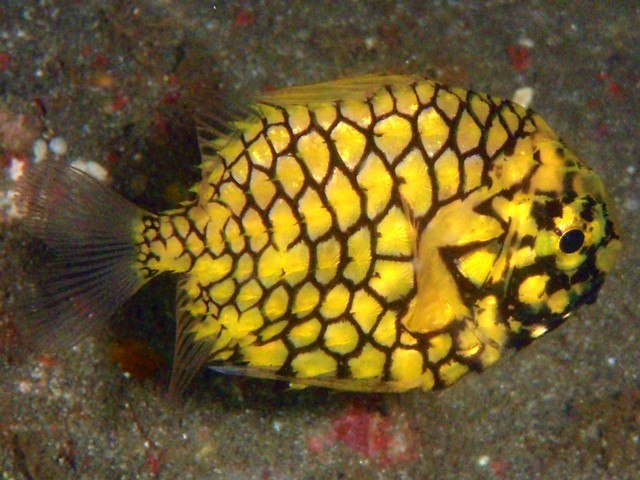
The Pinecone Fish, also called the Pineapple Fish and Knight-fish is covered with spines and has a brilliant yellow body. The body is covered by heavy, platelike scales that overlap, giving the fish the appearance of a pinecone-hence its name.

  • FLYING FISH:-

These fish got their name due to their ability to fly above water to avoid predators. This fish can fly above the water for up to 45 seconds at a time. This fish has large pectoral fins that enable it to leap out of the water and fly above the surface for a few seconds.

  • GREEN NUDIBRANCH:-

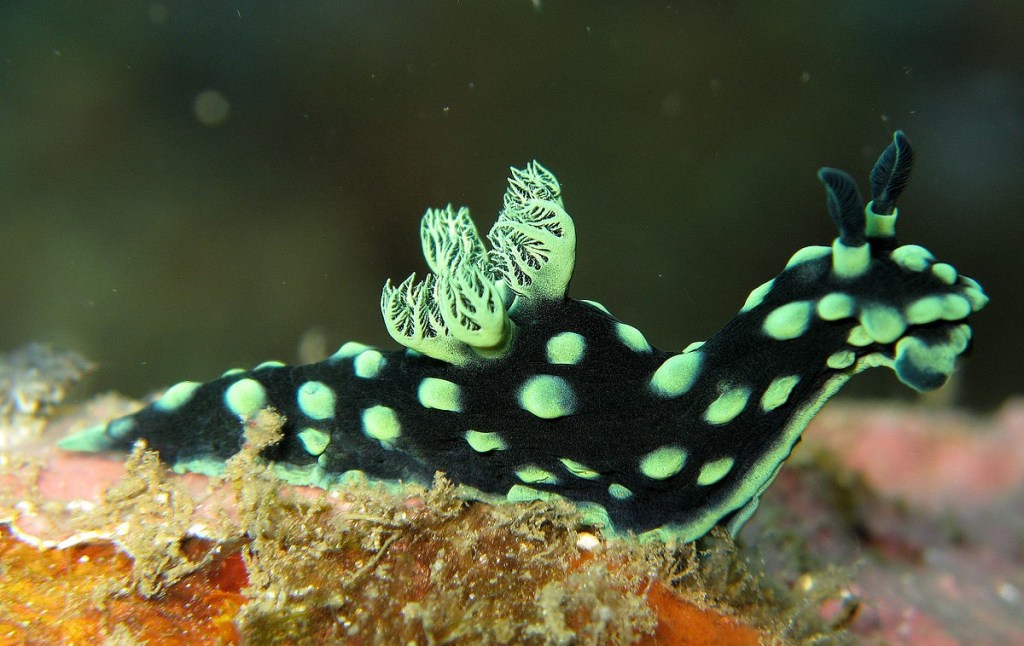
It grows to at least 50 mm in length. Its body is covered with raised green nodules. The bright colors of this nudibranch species are an aposematic warning to predators. They are hermaphrodites.

  • PHYCODOROUS EQUES:-

It is also known as a leafy sea dragon. It is found along the southern and western coasts of Australia. The name is derived from the appearance, with long leaf-like protrusions coming from all over the body.

  • SUNFISH:-

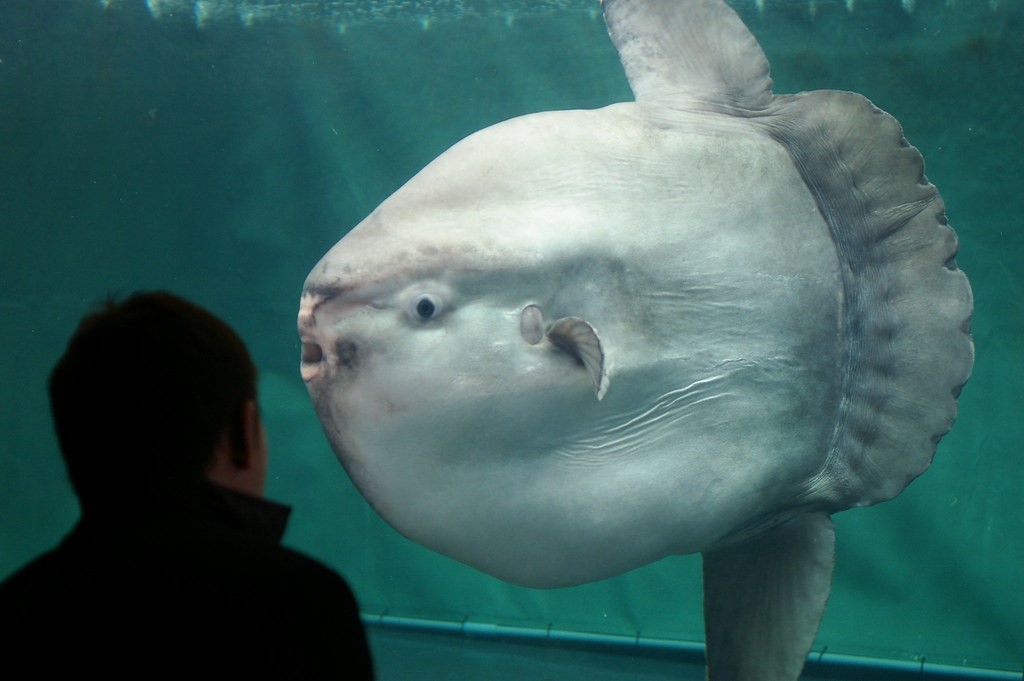
Sunfish is the world’s heaviest bony fish. The average adult may weigh 1000 kg and the highest recorded weight is 2300 kg. The main prey of ocean sunfish is jellyfish.

  • DUMBO OCTOPUS:-

Dumbo octopuses move by slowly flapping their ear-like fins, and they use their arms to steer. Dumbo octopuses’ primary predators are diving fishes and marine mammals, including tunas, sharks, and dolphins. The Dumbo octopus is the deepest-living genus of all known octopuses. It lives at least 13,100 feet (4,000 m) below the surface.

  • RIBBON EEL:-

Ribbon eels are colorful animals that are a species of a moray eel. The Ribbon Eel is a very distinctive looking eel with their sharp head and enlarged fan like nasal openings. They will slowly extend themselves out the hole almost imperceptibly and swing closer and closer to the target fish.

SOME FUN FACTS OF UNDERWATER WORLD:

  • Walruses can stay underwater for up to 30 minutes on a single breath.
  • Sea turtles can’t hide in their shells.
  • 95% of the underwater world is yet to be explored.
  • Dolphins sleep with only half of their brain and one eye open so they can watch for predators and other treats.
  • Great White Sharks can go as long as 3-6 months without eating.
INDIA

ABOUT INDIA:

India is the largest country in the south Asia Region, located primarily in the center of the subcontinent. It is an extremely diverse country, with vast differences in geography, climate, culture, languages. India remains to be one of the world’s fastest-growing economies and one of the fastest developing countries. Diversity of India in terms of geography, religion, races, food, and living habits of her people.

POPULATION OF INDIA:

India population in 2020 is estimated to be 1.38 Billion (138 crores). India is the second most populous country, after China and US is the third populous country in the world.  India’s population is young and more than half of the population is under the age of 35.

WHAT IS INDIA KNOWN FOR:

India is known for so many and is famous for its hundreds of things. Firstly, TAJ MAHAL is one of the seven wonders in the world. Taj Mahal was build in the 17th century by Mughal Emperor Shah Jahan for his wife Mumtaz in Agra. It is also known for its diversity, its spirituality, its population, its sporting culture, and also Indian foods.

INDIAN CULTURE:

India has a diverse and distinct culture that has been developing for thousands of years and varies from region to region. Indian culture is one o f the milestones in the history of Indian literature. Culture is like a living organism, which can sustain and progress only when it shows adaptability in full abundance. Indian culture is as many-sided as life. It includes the intellectual and social aspects of any human being. It also takes account of the aesthetic instinct as well as the spiritual impulses of human beings.

STATES OF INDIA:

There are a total of 28 states and 8 union territories in India. Every state is ruled by a Chief Minister. The 28 states of India are,

  • Andhra Pradesh
  • Arunachal Pradesh
  • Assam
  • Bihar
  • Chhattisgarh
  • Goa
  • Gujarat
  • Haryana
  • Himachal Pradesh
  • Jharkhand
  • Karnataka
  • Kerala
  • Madhya Pradesh
  • Maharashtra
  • Manipur
  • Meghalaya
  • Mizoram
  • Nagaland
  • Odisha
  • Punjab
  • Rajasthan
  • Sikkim
  • Tamil Nadu
  • Telangana
  • Tripura
  • Uttar Pradesh
  • Uttarakhand
  • West Bengal

SPORTS IN INDIA:

Sports are good for any nation. Various games are played in India. Sports in India are badminton, football, shooting, wrestling, boxing, tennis, squash, weightlifting, gymnastics, athletics, table tennis, basketball, volleyball, and cycling. Popular indigenous sports include chess, kho-kho, kite-fighting, leg cricket, polo, snooker, and Gilli danda. India’s sporting icons such as chess wizard VISWANATH ANAND, cricket legend SACHIN TENDULKAR, billiards maestro GEETSETHI, tennis duo LEANDER PAES and MASHESH BOOPATHY are currently rated among the world’s best.

INTERESTING INDIAN FACTS:

  • There is an underwater waterfall in the Indian ocean
  • India is the second-largest producer of wheat, rice, sugar, groundnut, and inland fish.
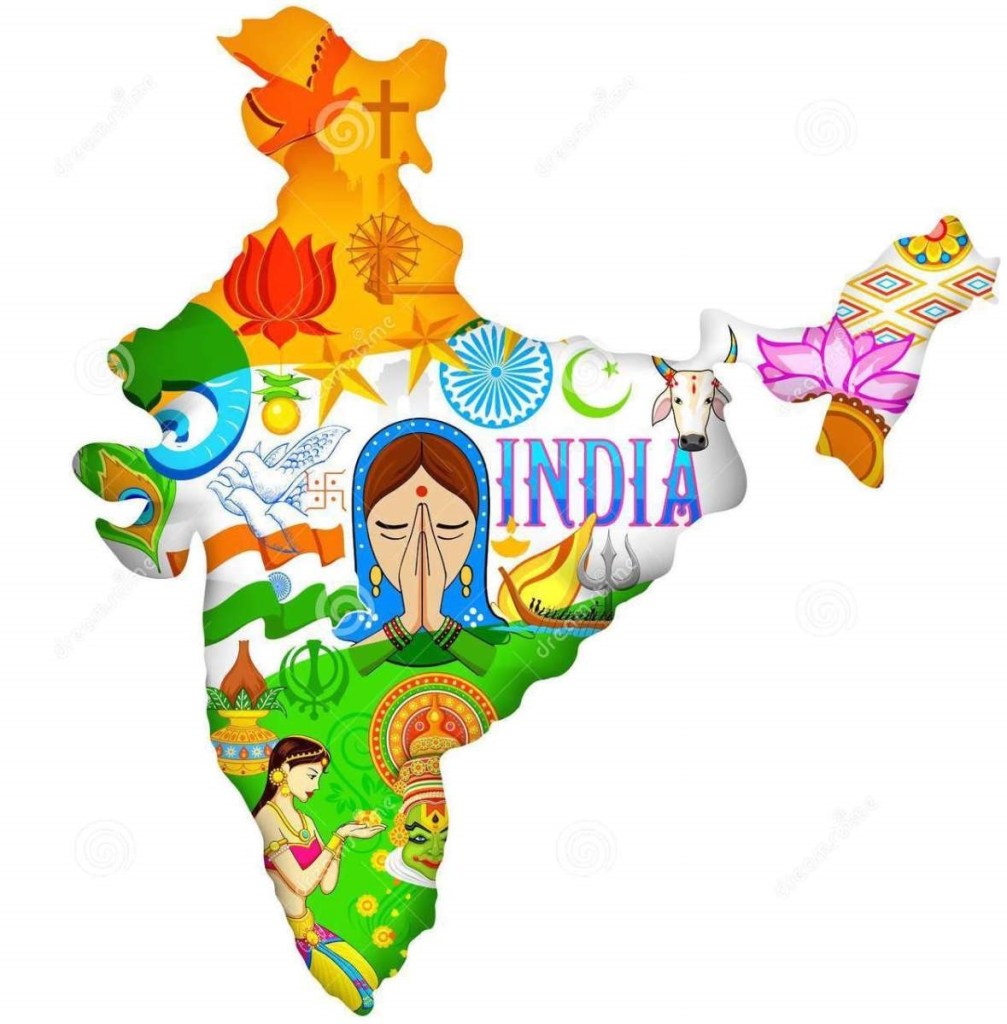
  • There is a place in Bongaigaon Assam where River Champawati meets Brahmaputra and the scene represents our India map
  • Maysynram in India is noted as being the wettest place on earth is with over 11 meters of rain falling every year.
  • The steel wires used to make Bandra Worli sea link is equal to the earth’s circumference.

ENVIRONMENT

WHAT IS ENVIRONMENT? :

Everything around us is known as the environment. The environment is the total of land, water, air, and other living organisms. The environment is the area where we live. The environment also has an interrelationship with human beings. The environment is important to all. Changes in the environment affect living things. Today many people are working to protect the environment.

TYPES:

According to Kurt Lewin, the environment is simply classified as THREE types that influence the personality of an individual. They are,

  • PHYSICAL ENVIRONMENT:-

                                             The physical environment refers to geographical climates and weather or physical conditions. The human working efficiency can also depend on the climatic conditions.

  • SOCIAL AND CULTURAL ENVIRONMENT:-

                                                                     The social and cultural environment includes an individual’s social and political conditions.

  • PSYCHOLOGICAL ENVIRONMENT:-

                                                             The physiological environment enables us to understand the personality of an individual. Both the person and his goal form a psychological environment. By adopting this mechanism, the individual is helped in his adjustment to the environment.

STRUCTURE OF ENVIRONMENT:

                                                      The environment is both physical and biological. It includes both living and non-living components. They are,

  • Physical environment

The physical environment is classified into three broad categories. They are,

  • Solid
  • Liquid
  • gas  

WHY IS ENVIRONMENT IMPORTANT? :

 The environment is the key to the existence of life on earth. It matters because it provides air, food, and other essential needs. Environments also play an important role in regulating air and climate. . Without it, there can be no life on earth.There are other planets in the solar system without life because of a lack of environment. Hence the environment is important for all living beings to survive.

FUN FACTS ABOUT ENVIRONMENT!  :

  • AROUND 20 MILLION TREES ARE CUT DOWN EACH YEAR TO MAKE WOODEN CHOPSTICKS
  • TREES CAN HELP TO REDUCE NOISE POLLUTION
  • RECYCLING OF ONE TON PAPER CAN SAVE 17 TREES
  • HUMMINGBIRD’S EGGS ARE SMALLER THAN JELLY BEANS
  • DOLPHINS ARE MARINE MAMMALS AND NOT FISH
  • 75% OF EVERY VEHICLE IS RECYCLABLE
  • OVER 90% OF ALL VOLCANIC ACTIVITY HAPPENS IN THE OCEAN
  • WE EACH USE ABOUT 12,000 GALLONS OF WATER EACH YEAR

CONSEQUENCES OF ENVIRONMENT DEGRADATION:

Environmental Degradation occurs when the earth’s natural resources are depleted. It leads to weather extremes, species loss, rare specious disappearance, disasters, and over population. Land degradation and dam burst can lead to massive siltation and floods situation.

CAUSES OF ENVIRONMENTAL POLLUTIONS:

                                        “ENVIRONMENTAL POLLUTION IS AN INCURABLE                                  DISEASE. IT CAN ONLY BE PREVENTED”.

                                                               -Barry Commoner

      Mainly the environment is polluted by air pollution, water pollution, and land pollution. Oil spillage causes environmental pollution when oil is spilled in water. Smoke and fumes from industries also lead to environmental pollution since it produces smoke that may limit oxygen supply. Land pollution is caused by accidental spills, landfill and litter dumping, use of chemical fertilizers.

HOW TO CONTROL ENVIRONMENTAL POLLUTION:

  1. Avoid excessive use of pesticides and chemical fertilizers
  2. Discharge of wastewater can be minimized
  3. Disposal of radioactive materials must be safe and secure            
  4. Use eco-friendly products
  5. Conduct pollution prevention programs
  6. Plant more trees
  7. Reduce waste production
  8. Avoid burning trashes and other materials.