
A boundary wall is a critical component of site development that provides security, demarcation, privacy, and aesthetic enhancement to a property. It acts as a physical barrier to prevent unauthorized access, defines land ownership, and contributes to the visual character of the site. In urban and peri-urban contexts, boundary walls also play a role in controlling noise, dust, and visual intrusion.
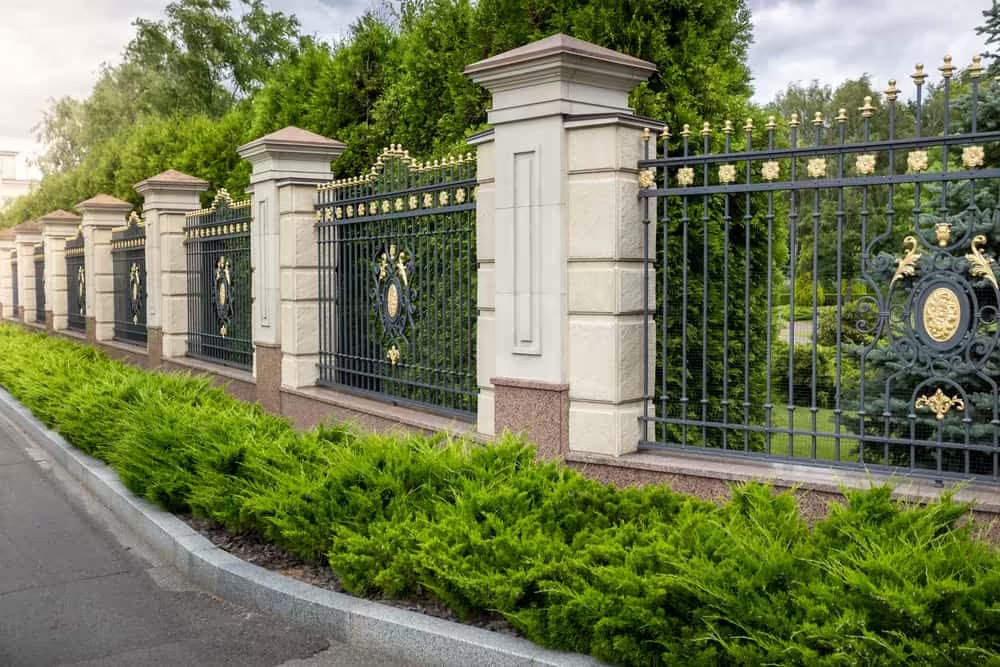
This specification outlines the materials, construction methodology, design considerations, and quality standards for the construction of boundary walls, ensuring structural stability, durability, and compliance with engineering norms.
2. Scope of Work
The work shall include:
- Site clearance and layout marking
- Excavation for foundation
- PCC (Plain Cement Concrete) bed
- Construction of foundation and plinth
- Masonry work (brick/stone/block)
- RCC components (columns, coping beam if applicable)
- Plastering and finishing
- Installation of gates (if included)
- Painting and protective coatings
- Drainage provisions around wall
3. Types of Boundary Walls
Depending on design and functional requirements, boundary walls may include:
3.1 Solid Masonry Wall
- Constructed using brick, stone, or concrete blocks
- Provides maximum privacy and security
3.2 RCC Column with Infill Panels
- RCC columns at regular intervals
- Infill with brickwork or precast panels
3.3 Barbed Wire / Chain Link Fence with Base Wall
- Low masonry base with fencing above
- Used for large plots or institutional areas
3.4 Precast Boundary Wall
- Precast concrete panels inserted between RCC posts
- Faster construction and cost-effective
4. Site Preparation and Layout
4.1 Clearing and Marking
- Remove vegetation, debris, and obstructions
- Mark boundary line using survey instruments
- Establish reference points and levels
4.2 Setting Out
- Layout shall be checked for alignment and right angles
- Corner points shall be fixed with concrete markers
5. Excavation
5.1 Specifications
- Excavation shall be done to the required depth (typically 600 mm to 1200 mm depending on soil conditions)
- Width shall be at least 2–3 times the wall thickness
5.2 Safety Measures
- Proper shoring for deep excavation
- Dewatering if groundwater is encountered
5.3 Disposal
- Excavated material shall be disposed of or reused as per site requirements
6. Foundation Work
6.1 Plain Cement Concrete (PCC)
Specifications
- Grade: M10 or 1:3:6 (cement:sand:aggregate)
- Thickness: 100–150 mm
Purpose
- Provides a stable base
- Prevents direct contact between soil and masonry
6.2 Footing / Foundation Masonry
Brick/Stone Foundation
- Brickwork in cement mortar (1:6)
- Stepped footing to distribute load
Depth
- Minimum 600 mm below ground level (or as per soil condition)
7. Plinth and DPC (Damp Proof Course)
7.1 Plinth Construction
- Plinth height: 300–600 mm above ground level
- Brick masonry in cement mortar (1:6)
7.2 Damp Proof Course
- 25–40 mm thick PCC layer with waterproofing compound
- Prevents moisture rise
8. Superstructure (Wall Construction)
8.1 Materials
Brick Masonry
- First-class bricks
- Compressive strength as per IS standards
Concrete Blocks
- Hollow or solid blocks
- Lightweight and faster construction
Stone Masonry
- Random rubble or dressed stone
- Suitable for rural or aesthetic applications
8.2 Mortar
- Cement mortar ratio: 1:4 or 1:6 depending on design
- Proper mixing and consistency
8.3 Wall Thickness
- 230 mm (9 inch) for standard walls
- 115 mm (4.5 inch) for partition or low-height walls
8.4 Height of Wall
- Typically 1.5 m to 2.4 m
- May vary based on security requirements
8.5 RCC Columns (if applicable)
Spacing
- 2.5 m to 4 m center-to-center
Size
- Minimum 230 mm × 230 mm
Reinforcement
- 4–6 bars of 10–12 mm diameter
- Stirrups: 6–8 mm @ 150 mm c/c
Concrete Grade
- Minimum M20
8.6 Coping
Purpose
- Protects wall from rainwater
- Enhances durability
Specifications
- RCC or stone coping
- Slope for water drainage
- Thickness: 50–75 mm
9. Plastering and Finishing
9.1 Plastering
- External plaster: 12–15 mm thick
- Cement mortar ratio: 1:4 or 1:6
9.2 Finishes
- Smooth or textured finish
- Waterproofing additives recommended
9.3 Painting
- Primer coat followed by 2 coats of exterior paint
- Weather-resistant paint preferred
10. Gates and Openings
10.1 Gate Types
- Steel gates
- Sliding or swing gates
10.2 Installation
- Fixed to RCC columns
- Proper alignment and leveling
11. Drainage and Protection
11.1 Drainage
- Provide slope away from wall
- Prevent water accumulation
11.2 Anti-Termite Treatment
- Applied at foundation level
12. Quality Control
12.1 Material Testing
- Cement, sand, and aggregates shall meet IS standards
- Bricks shall be tested for strength and water absorption
12.2 Workmanship
- Proper alignment and verticality
- Uniform joint thickness
12.3 Inspection
- Each stage shall be inspected before proceeding
13. Safety Measures
- Use of PPE (helmets, gloves, safety shoes)
- Proper scaffolding for height work
- Safe handling of materials
14. Maintenance Guidelines
14.1 Routine Maintenance
- Inspection for cracks and damages
- Cleaning and repainting
14.2 Repairs
- Crack filling with cement mortar
- Replacement of damaged sections
15. Sustainability Considerations
- Use of locally available materials
- Recycled construction materials
- Permeable design where possible
16. Cost Considerations
- Material cost (brick, cement, steel)
- Labor cost
- Maintenance cost
17. Conclusion
The construction of a boundary wall requires careful planning, proper material selection, and adherence to engineering standards to ensure durability, safety, and functionality. A well-constructed boundary wall not only enhances security but also contributes to the overall aesthetics and value of the property.


You must be logged in to post a comment.