
Introduction
A New Town is a planned urban settlement developed to accommodate population growth, promote balanced regional development, reduce pressure on existing metropolitan cities, and support industrial, administrative, or economic activities. Unlike naturally evolved cities, new towns are designed according to comprehensive master plans, incorporating modern infrastructure, efficient transportation, adequate housing, green spaces, and public amenities.
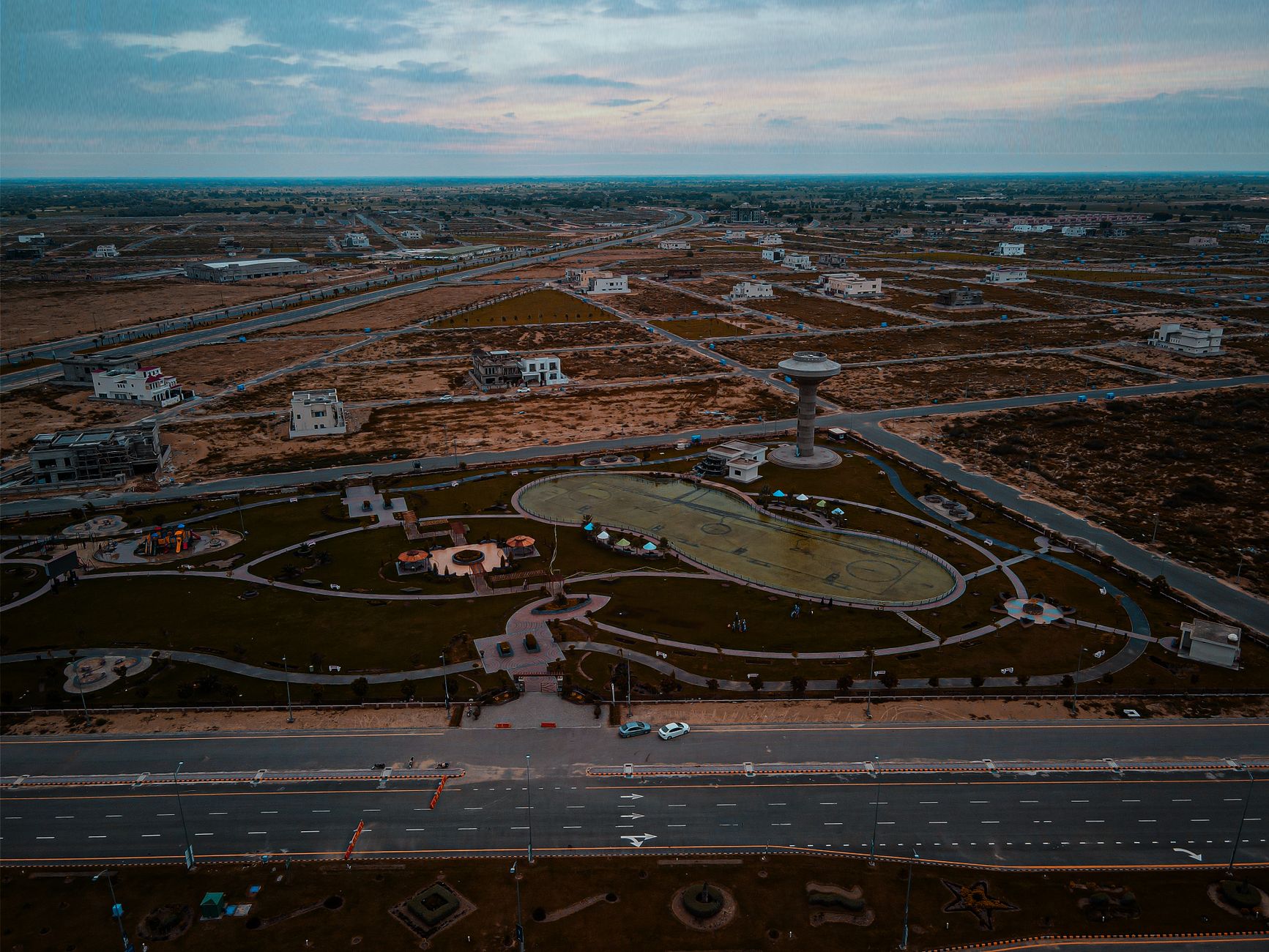
In India, the concept of new towns gained prominence after Independence in 1947, when rapid urbanization, industrialization, and the establishment of new state capitals created the need for planned urban development. Inspired by Ebenezer Howard’s Garden City, Patrick Geddes’ planning principles, and modernist planning concepts, India developed several new towns to support economic growth and improve urban living conditions.
Objectives of New Town Development
The primary objectives of establishing new towns are:
- Reduce population pressure on existing metropolitan cities.
- Promote balanced regional development.
- Support industrial and economic growth.
- Provide planned residential and commercial areas.
- Improve housing and public infrastructure.
- Encourage sustainable urban development.
- Develop administrative and institutional centers.
- Enhance employment opportunities.
- Promote environmentally friendly urban growth.
Characteristics of New Towns
New towns generally possess the following characteristics:
- Planned land-use pattern.
- Comprehensive master plan.
- Mixed residential, commercial, and industrial development.
- Modern road and transportation networks.
- Adequate water supply and sewerage systems.
- Public parks and open spaces.
- Educational and healthcare facilities.
- Community centers and recreational spaces.
- Environmental sustainability.
- Scope for future expansion.
Classification of New Towns in India
1. Administrative New Towns
Developed as state or national capitals.
Examples:
- Chandigarh
- Gandhinagar
- Naya Raipur (Atal Nagar)
- Amaravati (planned)
2. Industrial New Towns
Developed around major industries and public sector enterprises.
Examples:
- Bhilai
- Bokaro
- Rourkela
- Durgapur
- Neyveli
- BHEL Township (Haridwar)
3. Satellite Towns
Developed to reduce congestion in metropolitan cities.
Examples:
- Navi Mumbai
- Noida
- Greater Noida
- Gurugram
- Faridabad
- Sonipat
- Bahadurgarh
4. Port-Based New Towns
Examples:
- Paradip
- Kandla
- Ennore
- Visakhapatnam Port Township
5. Educational and Institutional Towns
Examples:
- Pilani
- Kharagpur
- Roorkee
- Manipal
- Vallabh Vidyanagar
6. Smart Greenfield Cities
Examples:
- Dholera Special Investment Region (Gujarat)
- Gift City (Gandhinagar)
- Amaravati
- Naya Raipur (Atal Nagar)
Major Examples of New Towns in India
1. Chandigarh (Punjab and Haryana)
Planner
Le Corbusier
Year
1953
Purpose
- Capital of Punjab (later shared with Haryana)
- Administrative city
Features
- Sector planning
- Hierarchical road system (7Vs)
- Capitol Complex
- Green spaces
- Functional zoning
- Neighborhood planning
Significance
India’s first planned modern city.
2. Gandhinagar (Gujarat)
Planner
H. K. Mewada and Prakash Apte
Year
1960
Purpose
Capital of Gujarat.
Features
- Grid street pattern
- Thirty sectors
- Large green belts
- Administrative district
- Low-density development
- Planned infrastructure
3. Navi Mumbai (Maharashtra)
Planner
Charles Correa and CIDCO
Year
1971
Purpose
Satellite city for Mumbai.
Features
- Polycentric development
- Railway-based growth
- Self-contained nodes
- Mixed land use
- Affordable housing
- Planned industrial zones
Importance
One of India’s largest planned satellite cities.
4. Noida (Uttar Pradesh)
Full Form
New Okhla Industrial Development Authority
Year
1976
Purpose
Industrial and residential satellite city of Delhi.
Features
- Wide roads
- Industrial sectors
- Residential sectors
- IT parks
- Metro connectivity
- Green spaces
5. Greater Noida
Year
1991
Features
- Wide arterial roads
- Planned sectors
- Knowledge parks
- Industrial zones
- Educational institutions
- Integrated infrastructure
6. Naya Raipur (Atal Nagar), Chhattisgarh
Purpose
New capital of Chhattisgarh.
Features
- Smart city infrastructure
- Underground utilities
- GIS-based planning
- Solar energy
- Green transportation
- Sustainable development
7. Amaravati (Andhra Pradesh)
Purpose
Proposed capital city.
Features
- Smart city concept
- Transit-oriented planning
- Riverfront development
- Mixed land use
- Sustainable infrastructure
8. Bhilai (Chhattisgarh)
Purpose
Steel city.
Features
- Worker housing
- Industrial planning
- Green spaces
- Public facilities
- Planned neighborhoods
9. Bokaro (Jharkhand)
Purpose
Steel industry.
Features
- Sector planning
- Industrial township
- Residential colonies
- Community facilities
10. Durgapur (West Bengal)
Purpose
Industrial development.
Features
- Planned industrial zones
- Residential sectors
- Educational institutions
- Road hierarchy
11. Rourkela (Odisha)
Purpose
Steel city.
Features
- Modern township
- Worker housing
- Industrial development
- Green belts
12. GIFT City (Gujarat)
Full Form
Gujarat International Finance Tec-City
Purpose
International financial hub.
Features
- Smart infrastructure
- Automated utility tunnel
- High-rise commercial district
- ICT-enabled governance
- Sustainable planning
13. Dholera Special Investment Region (Gujarat)
Purpose
Greenfield smart industrial city.
Features
- GIS-based planning
- Smart utilities
- Renewable energy
- Industrial corridors
- Transit-oriented development
Comparative Table
| New Town | State | Primary Purpose | Planner/Agency | Special Features |
|---|---|---|---|---|
| Chandigarh | Punjab/Haryana | Administrative Capital | Le Corbusier | Sector planning, Capitol Complex |
| Gandhinagar | Gujarat | State Capital | H. K. Mewada | Grid layout, green city |
| Navi Mumbai | Maharashtra | Satellite City | CIDCO | Polycentric nodes, railway-oriented |
| Noida | Uttar Pradesh | Industrial & Residential | NOIDA Authority | Wide roads, IT hub |
| Greater Noida | Uttar Pradesh | Planned Expansion | GNIDA | Knowledge parks, integrated planning |
| Atal Nagar (Naya Raipur) | Chhattisgarh | State Capital | NRDA | Smart city infrastructure |
| Amaravati | Andhra Pradesh | Planned Capital | APCRDA | Riverfront, smart city concept |
| Bhilai | Chhattisgarh | Steel Township | Bhilai Steel Plant | Industrial township |
| Bokaro | Jharkhand | Steel Township | Bokaro Steel Plant | Sector planning |
| Durgapur | West Bengal | Industrial City | Durgapur Development Authority | Industrial development |
| Rourkela | Odisha | Steel Township | Rourkela Steel Plant | Green belts |
| GIFT City | Gujarat | Financial Hub | GIFTCL | Smart infrastructure |
| Dholera SIR | Gujarat | Smart Industrial City | Dholera Industrial City Development Ltd. | Greenfield smart city |
Challenges of New Town Development
Despite their planned nature, new towns face several challenges:
- High infrastructure costs.
- Delays in implementation.
- Land acquisition issues.
- Population growth beyond planned capacity.
- Traffic congestion.
- Environmental concerns.
- Housing affordability.
- Employment imbalance.
- Governance and maintenance issues.
Recent Trends in New Town Planning
Modern Indian new towns increasingly incorporate:
- Smart city technologies.
- GIS and Digital Twin applications.
- Transit-Oriented Development (TOD).
- Climate-resilient infrastructure.
- Renewable energy systems.
- Green buildings.
- Electric mobility.
- Mixed-use development.
- Affordable housing.
- Blue-green infrastructure.
- Sustainable drainage systems.
Conclusion
New towns have played a vital role in India’s urban development by accommodating growing populations, promoting industrialization, supporting administrative functions, and reducing pressure on existing metropolitan areas. From Chandigarh, India’s first planned modern city, to Navi Mumbai, Noida, Gandhinagar, Atal Nagar, GIFT City, and Dholera, these settlements demonstrate the evolution of planning philosophies from modernist design to smart, sustainable, and technology-driven urban development. As India continues to urbanize rapidly, new towns will remain essential instruments for achieving balanced regional growth, economic competitiveness, environmental sustainability, and improved quality of urban life.


You must be logged in to post a comment.