Veganism

Over the past few years, the concept of veganism has become largely popular. Many famous personalities have also started switching into veganism. According to Wikipedia, “Veganism is the practice of abstaining from the use of animal products, particularly in diet, and an associated philosophy that rejects the commodity status of animals.” There is a specific pattern of eating involved in it which includes only plant-based food items. Vegan people replace dairy products with plant based milks like soy, scrambled eggs with scrambled tofu, honey with maple syrup and similar other options. They also refrain from using other animal products like clothing from animal products and leather. It is a lifestyle which attempts to decrease animal exploitation as much as possible.

Photo by Jill Wellington on Pexels.com

The term “vegan” was first coined by Donald Watson in 1944 when he founded the Vegan Society with a small group of vegetarians, who broke away from the Leicester Vegetarian Society in England. It is said that the term “vegan” was constructed by combining the first and last letters of “vegetarian.” At first it was used to mean “non-dairy vegetarian” and by May 1945 vegans started abstaining from “eggs, honey; and animals’ milk, butter and cheese”. They chose to not consume dairy or any other product of animal origin along with abstaining from meat like vegetarians. In 1951, the Society changed its definition to “the doctrine that man should live without exploiting animals”. It is currently defined as “a way of living that attempts to exclude all forms of animal exploitation and cruelty, be it from food, clothing, or any other purpose.” Interest in Veganism started from the latter part of 2010s as more and more vegan stores opened increasing vegan options. These have started to be increasingly available in supermarkets and restaurants across the world.

Photo by Fuzzy Rescue on Pexels.com

Reason behind going vegan

Vegans generally choose to avoid animal products for reasons like Ethics, Health and Environment.

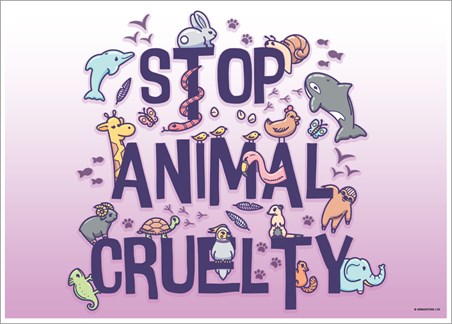
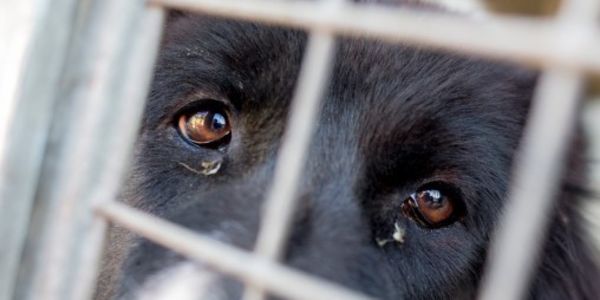
People who support the ethics of the practice are called Ethical Vegans who strongly agree to the belief that all creatures have the right to life and freedom. So, they oppose killing a conscious being to simply consume its flesh, drink its milk, or wear its skin — especially when alternatives are available. They also oppose the psychological and physical stress that animals may endure as a result of modern farming practices. For instance, the small pens and cages in which many livestock animals are forced to live between birth and slaughter, the farming industry’s practices of the grinding of live male chicks by the egg industry or the force-feeding of ducks and geese for the foie gras market. Ethical vegans also protest against animal cruelty and raise awareness about ending all forms of cruelty towards animals.

Some also choose veganism due to its health benefits. Plant-based diets may reduce the risk of heart disease, type 2 diabetes, cancer, and premature death. Lowering the intake of animal products may likewise reduce the risk of Alzheimer’s disease or dying from cancer or heart disease. One can also avoid the side effects linked to the antibiotics and hormones which are used in modern animal agriculture. Studies show that there is a relation between vegan diets and lower body weight and body mass index (BMI).
Photo by Lauris Rozentu0101ls on Pexels.com

Vegan diets are high in dietary fiber, magnesium, folic acid, vitamin C, vitamin E, iron, and phytochemicals; and low in dietary energy, saturated fat, cholesterol, long-chain omega-3 fatty acids, vitamin D, calcium, zinc, and vitamin B12. There is also the possibility of nutrition deficiency because elimination of all animal products may lead to nutritional deficiencies. Some of these can only be prevented through the choice of fortified foods or the regular intake of dietary supplements. Vitamin B12 supplementation is considered to be very important in some cases.

Some people avoid animal products and shift to veganism for the environmental impacts. It is widely known that animal agriculture is a very water intensive process. The UN report of 2010 suggests that animal products need more resources and produce a higher percentage of greenhouse gas emissions than plant-based options.
Animal Cruelty


It’s June 2020 and currently, we are dealing with a plethora of crises around the world, but I believe that not the majority of people have deciphered that yet properly. The irony of the time is that at each point, where some of us are trying our best to give reminders or bestowing proposals to overcome the plight of the situation, the rest are busy acting despicably.

This is concerned with human civilization and it’s preceding and long-term support system, acting no less than any ‘ancillary’ – Animals.
We often overlook a very common thing, which ends up being stigmatic- every existence on this planet counts.
How could we act so cruel?

If we go back in time or could recall the memories of our childhood- watching animated shows on TV, and most of the time marking some of them as our favourites for the reason being that we could hear animals talking, like us. (at least it was mine for sure)
That was the time when we wanted to hear them and now, few of us are showing the barbarity towards them because they can’t talk!

We are witnessing these shameful acts for a long time and still waiting for the juncture that one day, things would change around us.
I still wonder at times, why the ruthlessness of humans is being compared to the savagery of animals? Because as of now, humans are less humane!

Recently, we heard the news of a pregnant elephant who died in Kerala because of eating a pineapple which had explosives inside.
People who were accused of feeding her had another angle of their tale. They explained that to protect their agricultural land from wild boars, they had planted those.
But the question that arises here is, who was at fault? The innocent animal or the rural people who did so for the protection of their only way of sustenance?
If the government of that state has allowed shooting the boars or killing them with any means, then how far it’s justified that the innocents get trapped unknowingly, get killed in the name of protection? Who will ensure their safety? We can’t just put an end to lives.

Laws aren’t just meant to be made, they need to be assessed well in the first place that how far their execution is going to be favourable to most of the beings.
Something similar had happened once to blue bulls (antelope) in Bihar. The government had the same reason to pass the order of killing them. 200 of them were killed.
We can’t just opt for the easy way out rather than making sensible decisions and then finding the ways in which we can protect all.

We have seen numerous incidents where humans have shown their heartlessness. Some of them are mentioned below-

Case of thrashing 20 stray dogs to death in Dehradun came out.

A Dog was beaten up brutally by a guard in Hyderabad.

In Himachal, miscreants blew off cow’s jaw with crackers.

It doesn’t end here, 49 people were arrested in Bareilly, U.P for illegal slaughtering of animals.

The list is endless but just hearing about the incidents is of no avail, it never was.

Many of us aren’t even aware of the laws that have been made for balancing the animal-humane society.
Here I am writing down six of them:

  1. Under Section 11 of the Prevention of Cruelty to Animals Act of 1960, it is a criminal offence to feed toxic food to stray animals.
  2. Sections 428 and 429 of the Indian Penal Code and the Cruelty to Animals Act of 1960 make it unlawful to maim or cause injury to any animal. It is also illegal for vehicles to intentionally injure dogs, cats and cows on the streets.
  3. Stray dogs are safeguarded under the Prevention of Cruelty to Animals Act, 1960, and rules enacted under Section 38 of the act, particularly, the Animal Birth Control (Dogs) Rules, 2001; Indian Penal Code, sections 428 & 429 and Article 51A (g) of the Constitution.
  4. It is the fundamental duty of every citizen of India to have compassion for all living creatures. Article 51A(g).
  5. Animal sacrifice is forbidden in every part of the country and considered illegal. Rule 3, Slaughterhouse Rules, 2001.
  6. Under Section 11(1)(i) and Section 11(1)(j), PCA Act, 1960, abandoning any animal for any reason can put you behind the bars for up to three months.
Enough of killing ‘humanity’ in the name of different motives at different times. We’ve screamed enough for human rights while violating much of the freedom given to us, and abovementioned were few of the examples. We can become the voice of the voiceless as well.
We need to act, need to be ‘humans’ in actual ways by saving animals and humanity!