The Buddhist majority countries in South-East Asia, namely Cambodia, Laos, Myanmar, Thailand, and Vietnam, saw rather small-scale outbreaks during this coronavirus pandemic. Despite these countries sharing borders with the origin of the deadly virus, China and India, country with most number of daily cases how have these neighboring countries managed to contain the spread of the coronavirus?
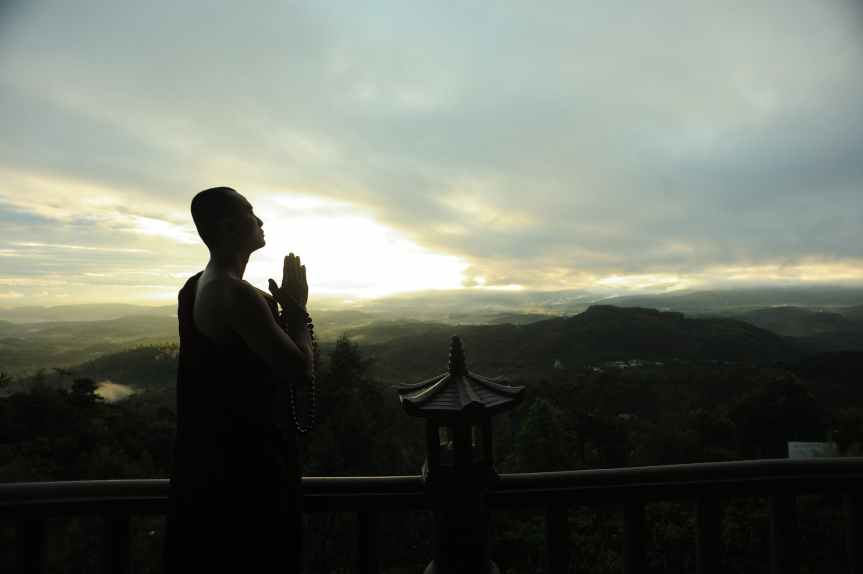
The wonder case in this region has to be Vietnam. A country with a population of approximately 97 million people, the authorities claim no deaths from Covid-19. Thailand, with 70 million people, has seen just 58 deaths and no cases of local transmission have been reported in over 40 days. Myanmar claims just six fatalities from 317 cases. Cambodia reported 141 cases and the tiny country Laos only saw 19 cases. Both these countries claimed no deaths and no local transmission since April. Geographically speaking, they have it far better than their other neighbors such as Indonesia with some 68,100 cases and 3,400 deaths, and the Philippines with 50,400 cases and 1,300 deaths, India with some 2.91million cases and 54,849 deaths. It is almost as if the pandemic has spared these Buddhist majority nations. But does it have anything to do with religion though? It would not seem so, because, Vietnam’s communist dictatorship is an atheist. Meanwhile, China, the original epicenter of the virus, also has a majority Buddhist population although it is also a communist state. Vietnam’s handling of the crisis so far is commendable. Centuries of mistrust in its great northern neighbor, China, prepared Vietnam to be extra cautious of all the information China gave about the virus at the beginning of this year. Vietnam even initiated cyber-attacks to get more knowledge about the path of the outbreak. The country closed its borders and used repressive forces to keep the population locked. They monitored and separated any affected patients. That is kind of similar to what China’s communist regime was doing. In terms of having a powerful government that can make the people follow protocols, as well as having a strong medical sector, Thailand also makes the list. The country led by generals in the name of democracy has an incredible healthcare system which makes Thailand a popular medical tourist destination. Besides, the government was swift to create a robust task force for fighting Covid-19. Initially, more contact with the Chinese people must have been a prerequisite for transmission. Yet this didn’t happen in Laos, which is too low to withstand the flattery of China, Myanmar, which is awash with Chinese traders and traffickers, or Cambodia, whose strongman, Hun Sen, is China’s greatest supporter in the region. Such countries are being reshaped by Chinese development thanks to BRI, and all came under pressure not to close borders with China as the pandemic spread. In February, at the height of the Chinese outbreak, Hun Sen traveled to Beijing. Thailand is also quite closely knit to China, it seems, as the country welcomed Chinese tourists even in March. And Myanmar’s China border seriously lacks guard. Then, why did all these visitors from China not cause a bigger outbreak in South-East Asia? Many suspects that they have done so, but these have not been revealed. Tests in Cambodia, Laos, and Myanmar are extremely restricted. But, Frank Smithuis of Medical Action Myanmar, a charity with many clinics around the country, says that his organization would have found out if there had been a large-scale transmission since a COVID-19 epidemic cannot be covered especially in Myanmar, the ” number one gossip country” in the world. Also, researchers in Cambodia, Thailand, and Vietnam do not see signs of large transmission, like people rushing to the hospitals with symptoms. Even the poorest countries have taken steps which may have helped to control coronavirus spread. Researchers in Bangkok said that migrant workers coming back from Thailand to their Myanmar villages had to quarantine in a shack outside their village for 14 days. According to health experts, many factors may have come in helpful, like large numbers of people living in the countryside rather than cities; the region’s relative youth; and a pre-existing tendency to wear masks in public which could have been trivial in pre-COVID times. Many of these countries are third world countries, non-industrialized thus people live in rooms with open windows rather than relying on air conditioning. Also, there could have been a religious element to it too. Since the Buddhist way of greeting is called the wai, where they press their palms together, unlike the handshake or hugs or cheek kisses in other parts of the world, the wai is a way of physical distancing. The question now is whether the Buddhist achievements in South-East Asia will survive second or third waves. Researchers say, perhaps low transmission from China wasn’t quite a miraculous blessing. After all, the giant neighbor soon got on top of its outbreak. Now, China is not the only problem anymore, the whole world is. The outbreak has changed its course and is still changing. Infections from across the world are being introduced across Asia, seeding local transmission, most recently in Hong Kong.
Image by rawpixel.com


 Track2Training
You must be logged in to post a comment.