
Economic development
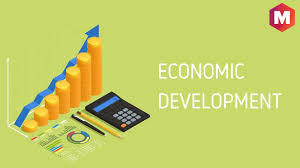
In the economic study of the public sector, economic and social development is the process by which the economic well-being and quality of life of a nation, region, local community, or an individual are improved according to targeted goals and objectives.
The term has been used frequently in the 20th and 21st centuries, but the concept has existed in the West for far longer. “Modernization”, “Westernization”, and especially “industrialization” are other terms often used while discussing economic development. Historically, economic development policies focused on industrialization and infrastructure, but since the 1960s, it has increasingly focused on poverty reduction.
[1]Whereas economic development is a policy intervention aiming to improve the well-being of people, economic growth is a phenomenon of market productivity and increases in GDP; economist Amartya Sen describes economic growth as but “one aspect of the process of economic development”. Economists primarily focus on the growth aspect and the economy at large, whereas researchers of community economic development concern themselves with socioeconomic development as well.
Many institutions of higher education offer economic development as an area of study and research such as McGill University, London School of Economics, International Institute of Social Studies, Balsillie School of International Affairs, and the Norman Paterson School of International Affairs.
economic development goals

The development of a country has been associated with different concepts but generally encompasses economic growth through higher productivity, political systems that represent as accurately as possible the preferences of its citizens,the extension of rights to all social groups and the opportunities to get them and the proper functionality of institutions and organizations that are able to attend more technically and logistically complex tasks (i.e. raise taxes and deliver public services) These processes describe the State’s capabilities to manage its economy, polity, society and public administration. Generally, economic development policies attempt to solve issues in these topics.
With this in mind, economic development is typically associated with improvements in a variety of areas or indicators (such as literacy rates, life expectancy, and poverty rates), that may be causes of economic development rather than consequences of specific economic development programs. For example, health and education improvements have been closely related to economic growth, but the causality with economic development may not be obvious. In any case, it is important to not expect that particular economic development programs be able to fix many problems at once as that would be establishing unsurmountable goals for them that are highly unlikely they can achieve. Any development policy should set limited goals and a gradual approach to avoid falling victim to something Prittchet, Woolcock and Andrews call ‘premature load bearing’.
Many times the economic development goals of specific countries cannot be reached because they lack the State’s capabilities to do so. For example, if a nation has little capacity to carry out basic functions like security and policing or core service delivery it is unlikely that a program that wants to foster a free-trade zone (special economic zones) or distribute vaccinations to vulnerable populations can accomplish their goals. This has been something overlooked by multiple international organizations, aid programs and even participating governments who attempt to carry out ‘best practices’ from other places in a carbon-copy manner with little success. This isomorphic mimicry –adopting organizational forms that have been successful elsewhere but that only hide institutional dysfunction without solving it on the home country –can contribute to getting countries stuck in ‘capability traps’ where the country does not advance in its development goals.
social development
Social development is about improving the well-being of every individual in society so they can reach their full potential. The success of society is linked to the well-being of each and every citizen.Social development means investing in people. It requires the removal of barriers so that all citizens can journey toward their dreams with confidence and dignity. It is about refusing to accept that people who live in poverty will always be poor. It is about helping people so they can move forward on their path to self-sufficiency.
Every New Brunswicker must have the opportunity to grow, develop their own skills and contribute to their families and communities in a meaningful way. If they are healthy, well educated and trained to enter the workforce and are able to make a decent wage they are better equipped to meet their basic needs and be successful. Their families will also do well and the whole of society will benefit.
Learning must start early in life. By investing in early learning initiatives, we can ensure a greater degree of success amongst our citizens. Making sure that children get a good start in their education goes a long way to increasing their success later in life.
An affordable, high quality child care system is also needed for society to succeed. When people know that their children are being well taken care of, they can be more productive in their jobs. When employers have good employees their business is more likely to succeed. When businesses succeed, the economic situation of a community is improved. An investment today in good child care programs can provide many long term economic benefits for society.
In addition, a safe affordable place to live is very important in helping people achieve self-sufficiency. It is the focus of family life; where families can live safely, nurture their children, build community relationships and care for aging parents. Without a decent place to live, it is difficult to function as a productive member of society .Other investments in people that contribute to the economic prosperity of society include youth programs and services, post-secondary education, job creation, promotion of healthy, active living and safe and secure communities.
To reduce poverty we need to take a social development approach and invest in our people. By investing in people we can reduce poverty. We need to go beyond looking at government to find ways to develop our most valuable resources, our people. We need to share responsibility with community organizations, businesses, universities and municipalities in the task of improving the well-being of all New Brunswickers and preventing and reducing poverty.
 Track2Training
You must be logged in to post a comment.