The Foundation Day of Maharashtra.

With the dream city as its capital, Maharashtra is the second most populous state of the country. Along with being the most industrialised state of the nation, it is also the largest contributor to the GDP of India. It is ‘The Land of the Valiants’. The Ganesh Chaturthi celebration of this state is one of the famous festivals contributing to the economy of the nation. ‘Laal Bagh cha Raja’ in Mumbai is a great tourist attraction.
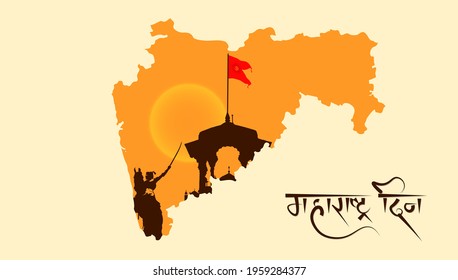
Image Source: Shutterstock

Let’s start with the history of the state:

  • Shahaji Bhosale was the first Maratha to establish his independent rule. His legacy was continued by his son Chhatrapati Shivaji Maharaj, the one who is credited for the major expansion of the Maratha Empire.
  • The Marathas are largely attributed for ending the Mughal rule in India.
  • They were the chief participants in the Third battle of Panipat in the year 1751.
  • The rule of Marathas came to an end after the third Anglo-Maratha war. Though their rule ended their power was both appreciated and feared by the people. 

“India contains no more than two great powers, British and Maratha, and every other state acknowledges the influence of one or the other. Every inch that we recede will be occupied by them.’ Charles Metcalfe, Governor-General wrote in 1806.

  • The first railway line of the nation was laid between Bori Bunder and Thane in 1853.
  • The first textile Mill was set up in Mumbai in 1854. Mumbai became one of the most important ports on western coast overtaking Surat. 
  • Bombay became one of the most important presidencies under the British rule. The second University in India was established here after the University of Calcutta in 1857.
  • After partition both the Gujarati and the Marathi people demanded a new state on the basis of their language. On 1 May 1960, their demands were fulfilled dividing the Bombay presidency into two states; Gujarat and Maharashtra.  

Having a rich history, Maharashtra is also known for its various tourists spots. Some of the main tourists attraction of the state are: 

  • The city of dreams, Mumbai.
  • ‘The Oxford of the east’ and the IT centre of the nation, Pune.
  • The Hill stations like Lonawala, Mahabaleshwar, Khandala, Palghar and Matheran (the cutest hill station of India).
  • The famous temples of Nashik and Shirdi.
  • The historic cities like Aurangabad, Ahmednagar, Kolhapur, etc.
  • The majestic Ajanta and Ellora caves, Elephanta caves are the important UNESCO World Heritage sites of the state. 
  • Sharing a coastline with Arabian Sea the state is endowed with numerous beaches and in-land fresh water lakes. 
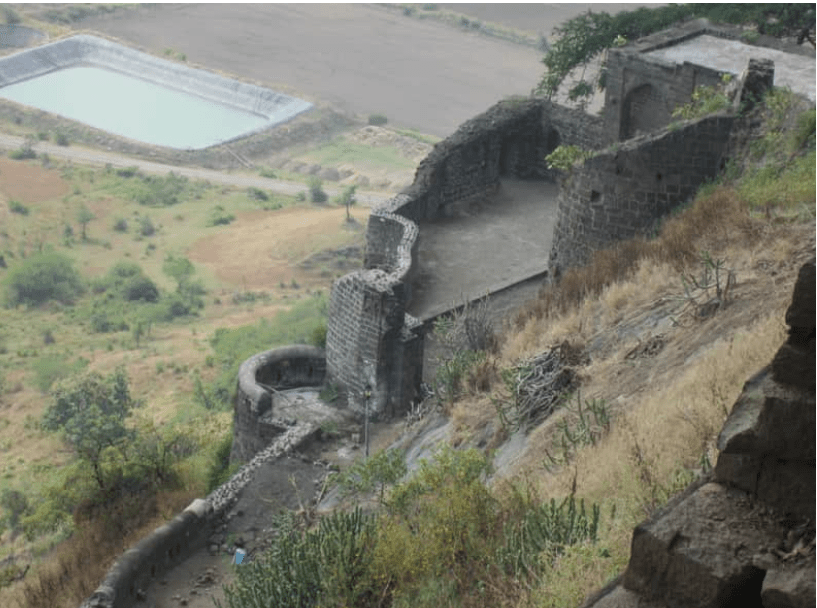
  • Many forts like that of Raigarh, Rajmachi, Pratapgarh, Sinhagarh, Kolaba, mark the historic importance of the state.
  • Adlabs Imagica is one of the best amusement parks in the country. 

And the list goes on. Maharashtra has given many famous:

  • Valiant leaders like: Chhatrapati Shivaji Maharaj, Rani Laxmi Bai, Peshwa Bajirao, Ahilya Bai Holkar, etc.
  • Independence warriors like: Bal Gangadhar Tilak, Gopal Krishna Gokhale, Tantia Tope, Vasudev Balwant Phadke, etc.
  • Revolutionaries like: B.R. Ambedkar, Jyoti Rao Phule, Vinoba Bhave, Vinayak Damodar Savarkar, etc.

One of the most famous politician Bal Thackeray formed the party Shiv Sena for the welfare of the common man in Maharashtra. 

Marathi people take pride for their valiant Heritage and celebrate the foundation of this state every year with great joy. Maharashtra is a must visit state for every Indian. Lets celebrate this pride with the recitation of ‘JAI MAHARASHTRA…!’

Delhi the city of pandavas

Delhi, the capital of India has a strong historical background. It was ruled by some of the most powerful emperors in Indian history.

The history of the city is as old as the epic Mahabharata. The town was known as Indraprastha, where Pandavas used to live. In due course eight more cities came alive adjacent to Indraprastha: Lal Kot, Siri, Dinpanah, Quila Rai Pithora, Ferozabad, Jahanpanah, Tughlakabad and Shahjahanabad.

History

indraprastha is not only known from the Mahabharata. It is also mentioned as “Indapatta” or “Indapattana” in Pali-language Buddhist texts, where it is described as the capital of the Kuru Kingdom, situated on the Yamuna River. The Buddhist literature also mentions Hatthinipura (Hastinapura) and several smaller towns and villages of the Kuru kingdom. Indraprastha may have been known to the Greco-Roman world as well: it is thought to be mentioned in Ptolemy‘s Geography dating from the 2nd century CE as the city “Indabara”, possibly derived from the Prakrit form “Indabatta”, and which was probably in the vicinity of Delhi.

Partition


After their Uncle King Dhritarashtra partitioned the Kingdom of Hastinapur (which was rightfully Yudhishtir’s) into two in order to stem the rivalry between the Pandava brothers and the Kauravas .

Mahabharata is about the Kauravas and the Pandavas, two groups of relatives engaged in a long conflict with each other. It refers to Indraprastha as a major city that was the capital of the Pandava Kingdom from about 1400 BC. Indraprastha is considered to have been the first significant settlement in the Delhi area, which has since hosted a succession of kingdoms and giant civilisations. At some point, Indraprastha fell from grace, either conquered or abandoned. The ASI believes that Purana Qila may have been built on top of these ruins.

How much years did pandavas ruled on indraprastha?

Indraprastha, The capital of the Pandavas (the Pandus) whence they ruled for 36 years.

It lay to the west of Yamuna river, in modern-day Delhi territory.

How did pandavas built the indraprastha?

 Pandavas cleared this forest to construct their capital city called Indraprastha. This forest was earlier inhabited by Naga tribes led by a king named Takshaka.

Arjuna and Krishna cleared this forest by setting up a fire. The inhabitants of this forest were Killed or displaced. This was the root cause of the enmity of the Naga Takshaka towards the Kuru kings who ruled from Indraprastha and Hastinapura.

The Mahabharata states that Indra was the protecting deity (deva) of Khandava forest, which is why the region was known as Indraprastha.

When the forest was being burned, Indra attacked Arjuna with his bolt (vajra), injuring him.

But Arjuna defeated all gods, Gandharvas and demons in that fierce battle and burnt entire forest.

chhapadeshwar Mahadev Mandir in Kharkhoda, Haryana was the part of Khandav Van.

Khanda village named after Khandava Forest.

Later Lord Indra sent Mayasur and Vishvakarman  to Build a Superlative City that would be so Beautiful and Magnificent that it would compete with Lord Indra’s Heavenly abode – Hence it was called as “Mayanagari” or a Magical city as Maya an Asur had built it with several Magical Tricks and Treats in Architecture and construction.

Who ruled on indraprastha after the defeat of kauravas and pandavas?

The death of several rulers and kings in the war resulted in several successions, of which two notable ones being the crowning of Yudhishthira as the king of Hastinapura and declaration of Yuyutsu as the subordinate king to Yudhishthira for the kingdom of Indraprastha. Evidently, the central power in the Gangetic plain had now shifted from the Kurus to the Panchalas. The states of Hastinapur and Indraprastha were reunified and were governed by the Pandavas.

Now, where the indraprastha situated in delhi and on what place?

 It is often thought to have been located in the region of present-day New Delhi, particularly the Old Fort (Purana Qila), although this has not been conclusively confirmed. The city is sometimes also known as Khandavaprastha or Khandava Forest, the name of a forest region on the banks of Yamuna river.

History of Maharashtra

The Shivaji Bhosle the founder of Maratha empire, did a lifelong struggle against the mughals. by the years of shivaji death nearly the whole of Deccan belonged to this empire. shivaji was worried and one of the finest rules of india, so he holds the highest place in Maratha history. Sambhaji succeeded shivaji, but he is not great his father shivaji. 1680 to 1707 is known as the period of instability in the history of maharashtra. Balaji Vishwanath, Bajirao peshwa, Nanasaheb peshwa, Thorale Madhaorao peshwa, Naraynrao peshwa were the other important rulers of maharashtra.

The fall of Ahemednagar fort in 1803 marked the end of Indian rules and supremacy of British in Deccan. In 1804, general Wellesly proclaimed the in a state of chaos, established military rules and the Peshwa remainder rulers for namesake. The present of state was formed in 1960 with Bombay as the capital, when the Marathi and Gujarati linguistic areas of former Bombay sate were separated. Maharashtra became the channel of cultural exchange between southern to northern India.

The maharashtra is quite rich some of the great rules and King of this is region, eaving behind the mentioned in the account of a contempporary chinese traveler, Hunan Tasang. as per historian, Dravidians were the inhabitants of Maharashtra and the forest region was called Maharashtra or Dandakarayana. After the declined if the chalukyas came to power.

about the maharashtra there were the Mumbai is the capital of maharashtra of the entire country. Nagpur is known as the Wealthiest state, Maharashtra contributes around 15% of the industrial output of the country and around 14% of it us gross domestic or product. The sate has a varied landscape and is bounded by the Western ghat. It boasts of several wildlife sanctuaries and national parks, and also patronizes project tiger, which is attempt to preserve the endangered of the country. Maharashtra has a tropical monsoon climate and of the country. maharashtra has a tropical monsoon climate and annual rainfall is between 400 to 6000 mm annually, with the Konkan area receiving the maximum rainfall in the state. five main region, Maharashtra has 19 Rajya Sabha or Upper House seat and 48 Lok Sabha or lower House seats. In the maharashtra their are many forts of with huge history as well as tracking

  1. Sinhagad Fort
  1. This fort is located to the Pune. This fort is name gets its mean from the Marathi word Lion. One of the more popular fort in Maharashtra Sinhagad Fort is believed to the have been conquered by Tanaji Malusare’s brother from the Mughals. At fort, you will see a few old stables were believed to the have been used by the Maratha army to keep their horses.this also a brave Tanaji malusare worrier.

2. Rajgad Fort

The rajgad Fort, Pune was built on the Murumbadevi Hills in the Sahyadris range. It was the first capital of shivaji Maharaj and is also for believed to be the place where shivaji’s wife, saibai, spent her last few days. Inside the rajgad is a popular of trekking spot for local and tourist who though the place in the monsoon. from the top of Rajgad Fort.

3. Shivneri Fort –

This fort is the birthplace of shivaji Maharaj, the shivneri fort holds high esteem in Maratha and Maharashtrian history. The fort was constructed in a unique triangular shape and had many mosques, ponds and a tomb inside the shivneri fort, there is a temple that is dedicated to goddess Shahi Devi and a massive chain gate at the entrance. However you are good at trekking, you can try up to the fort from chain route located on the western of the fort.

Culture of Maharashtra : The images of and social consciousness about deities such as Gautam Buddha, Shiva, Vishnu, Ganpati, Paravati, Laxmi, Saraswati, Jain gods etc, have been expressed through various art forms and that through various psychic disposition of the concerned artist.