DEBATE CONCEPTS IN OSTEOARTHRITIS

This article deals with some of the concepts related to the progression of osteoarthritis. These statements were given by prominent researchers and resulted in a debate between two prominent groups of researchers against each other. All of these took place actively in the 19th century where the publications of research scholars were opposed to that of the scholars in the other group.

William Bauer told that mechanical trauma can result in OA directly or indirectly. By the 20th century ideologies were majorly split into two ‘inflammation’ and ‘no inflammation’. Henry Fuller and Robert Todd suggested that OA occurred due to disruption to nutrients required for knee development and doesn’t occur through inflammation. On the other hand, Garrod and others stated that OA is partly degenerative and partly inflammative. Hence the study for OA continued under these two domains and each group of scientists trying to prove the other is false. But this situation can be compared to two sides of a coin where both the situations cannot be neglected. Hence both the domains of OA cannot be neglected.

Some others say that OA is a neurogenic immune homeostatic disorder. Garrod in 1988 stated that OA is associated with lesions in CNS in a peculiar manner. CNS refers to the central nervous system which constitutes the brain and spinal cord. The brain is the mastermind of the body which generates electrochemical signals to simulate several neurons in the body. The spinal cord is known as a warehouse of reflexes. Reflex is an involuntary (cannot be controlled by conscience) rapid sequence of actions. Reflex can be best explained by several experiments.

When someone comes to hit you; you will either duck or catch his hand spontaneously and this is known as a reflex and the spinal cord or vertebral column is responsible for this.

The reflex of the knee is tested by the doctor who takes a rubber mallet and taps it on the knee and what interestingly happens is that the knee starts to retract and the patient can feel the pain. In case of OA or any knee-related diseases, the patient cannot experience any pain and hence the doctor understands that there is some abnormality in the knee. Hence we can understand that there is a connection between the knee’s ability and CNS and an interruption in this connection can lead to knee diseases.

We have to understand that this is a basic relation and there are other complex associations between them and require more complex methods like electrophysiology and pharmacology to understand them. Later it was proposed that changes in the sympathetic nervous system can also lead to OA.

The sympathetic nervous system is a part of the autonomic nervous system. This can be correlated to the word ‘increase’. The sympathetic nervous system works in response to stimuli like emotions and increases some parameters of the human body like heart rate, eye dilation, blood sugar, blood pressure, etc. this proposal paved the way for using micro-circuitry to correct it.

There is also another field on which the world is divided into two namely ‘nociceptive’ and ‘neuropathic’ where nociceptive refers to pain resulted due to receptors. These are present at target and send signals to the brain via the spine more or less like the reflex. On the other hand neuropathic refers to the condition where pain occurs due to nerves. The following table shows the difference between these two. 

NociceptiveNeuropathic
Receptor-mediated painNerve mediated pain
Doesn’t affect nervesAffects the nerves
Due to painful stimuliDue to inflammation

However, some of the debate topics have not been resolved even till now but a lot of research articles about the progression of the disease and its underlying phenomena have been published. This is one of the cases in which a debate has done some good to the field of science!

HAPPY READING!!

OSTEOARTHRITIS GRADING SYSTEM

Osteoarthritis can be mainly classified into two. They are primary and secondary. The criterion for this classification is based on the different types of risk factors. Primary OA is mainly due to age where the reason for cartilage breakdown is not known or maybe due to genetics. Secondary OA is due to direct injury through sports or trauma, stress, inflammation, or other metabolic diseases. In this case, the cause may localize.

OA grading

Grading is the process of classifying the disease based on its extent or severity. OA has been graded into 5 from grade 0 to grade 4

Stage numberCondition
 0Normal
1Minor
2Mild
3Moderate
4Severe

This was proposed by Kellgren and Lawrence and it is known as KL grading. The five grades have been proposed based on radiographic analysis of subjects. This was accepted as a standard measure by WHO in 1961. The grading has been done based on the narrowing of joint space and the formation of osteophytes.

  • grade 0 (normal): no changes in knee x-ray
  • grade 1 (minor): minimalistic joint space narrowing with possible osteophyte lipping
  • grade 2 (mild): definite osteophytes and  joint space narrowing
  • grade 3 (moderate): multiple osteophytes, definite narrowing of joint space and some sclerosis and possible deformity of bone ends
  • grade 4 (severe): large osteophytes, marked narrowing of joint space, severe sclerosis and definite deformity of bone ends

Grade 0

Grade 0 is considered normal. The subject will not exhibit any features for OA. The x-ray image from this grade is taken as a standard and the other grades are compared with this grade.

Credit:- Häggström, M (2014). “Medical gallery of Mikael Häggström 2014“. WikiJournal of Medicine 1 (2). doi:10.15347/wjm/2014.008. ISSN 2002-4436. Creative Commons CC0 1.0 Universal Public Domain Dedication
X-ray of a healthy knee 
Credit:- Häggström, M (2014). “Medical gallery of Mikael Häggström 2014“. WikiJournal of Medicine 1 (2). doi:10.15347/wjm/2014.008. ISSN 2002-4436. Creative Commons CC0 1.0 Universal Public Domain Dedication
This is the joint space which is observed in healthy patients.

Grade 1

Grade 1 is known as the minor. It can be considered as the initial grade. The joint space has just started to decrease. Osteophyte refers to excess bone growth. It is also known as bone spurs since spur refers to kind to sharp material. This bone growth can be observed as sharp spikes. Here there is very minimal growth of excess bone. Bone spurs occur only at the bones adjacent to the joint. There will be very minor loss of cartilage but this does not contribute to the narrowing of the joint space. Subject in this stage is not confirmed with osteoarthritis. However, subjects having any of the risk factors become more prone to the disease

Grade 2

Grade 2 is known as mild. In this grade, the narrowing of the joint space is more and is visible through the x-ray. There will be also more formation of osteophytes. This grade can be considered as the precursor to many complications like bone dislocation and rubbing. None of these complications are seen in this grade but these complications are soon to occur. The subject in this grade is confirmed with osteoarthritis. Special care has to be taken by those in this grade and through proper medications, they can prevent those further complications.

Grade 3

Grade 3 is known as moderate. Obvious damage occurs to the cartilage and the joint space narrows even at a faster rate. Swelling of the joints starts to occur in this stage. Erosion of cartilage becomes prominent in this stage. The joints become rougher due to spurs leading to stiffness. Inflammation occurs at regular intervals. Subjects can experience popping sounds from the knee.

Grade 4

Grade 4 is known as severe. It is the worst and highest grade of all. The changes become prominent and occur at larger scales. There will be no gap literally meaning the joint is absent. The bones start to rub over each other causing pain. The joint becomes stiff like a rock. The cartilage wears down and maximum growth of osteophyte is seen. Various cytokines are released at cartilage resulting in further death. Life would be dreadful for those in this grade. The arrow in the given X-ray indicates the bones are touching each other and there is no gap in between them.

Grade 4 osteoarthritis
Courtesy: – James Heilman, MD Osteoarthritis of the left knee. Note the osteophytes, narrowing of
 the joint space (arrow), and increased subchondral bone density (arrow). the joint space (arrow), and increased subchondral bone density (arrow). Creative Commons Attribution-Share Alike 3.0

HAPPY READING!!

THE DREADFUL DISEASE FOR THE AGED- THE OSTEOARTHRITIS

Osteoarthritis is the most well-known type of joint pain, influencing a huge number of individuals in the world. It occurs as a result of the wearing down of the cartilage that cushions the ends of your bone over time. It is a complex disease that integrates biomechanics and biochemistry associated with the knee. This is the standard way of defining OA which will be difficult to understand. Hence let us try to understand what OA is. The best way is by splitting the word and analyzing it part by part

Osteo- bone

Arth- joint                        

It is- inflammation    

Knee, Old, Care, Injury, Pain, Knee Pain
x-ray of the osteoarthritic knee joint


As mentioned earlier, the unit of bone is called osteon and any word ending with itis refers to inflammation. Also, arthro term refers to joints in general. Hence the combination of the terms corresponds to inflammation of bones in the joint. This rather sounds simplified. The previous definition had complex terms like biomechanics and biochemistry. Biomechanics refers to the study of movement in living beings. Biochemistry refers to the study of the reactions occurring in living things. So in short, osteoarthritis is such a disease that results in inflammation of joints that occur due to wearing down of the bones surrounding the joint hence affecting the movement and chemical reactions which used to occur properly during normal conditions.

Osteoarthritis can occur in any joint in the human body like elbows, hips, knees, etc. Since our primary focus is on the knee, we will take a deep dive into it. In view of its expectancy and the tolerance that goes with sickness in the knee osteoarthritis represents more prevalence with daily activities like climbing steps and walking when compared to other diseases. Osteoarthritis is the most standardized reason for total knee replacement. As a result of the frequency of this disease especially in middle-aged people, osteoarthritis can act as an extensive barrier towards work and can lead to early retirement.

Coining of OA

Many say that the term osteoarthritis was coined by the British physician John Kent Spender but it was Richard Von Volkmann who tried to separate it from rheumatoid arthritis. The other names which were offered to this disease were ‘chronical rheumatism’

‘senile arthritis’

‘hypertrophic arthritis’

‘arthritis deformans’.

Effect of age

Osteoarthritis can affect people of any age group but it majorly affects old age people. National Library of Medicine suggests that people with an age greater than 70 have more risk to get osteoarthritis. The reason lies in the definition of osteoarthritis. The definition says that disease occurs due to the wearing down of bones. So the bones don’t get worn down the next instant a baby is born. Every process requires time to occur. A mother has to wait for a minimum of 9 months to give birth to a healthy baby. A student must wait for 4 years to get a degree from college. Similarly, it takes time for the bones in the knee to get worn down.

This disease has always troubled old aged people in their lives. Living with osteoarthritis is dreadful. Even climbing the stairs will be a difficult task for them. Hence it is worth knowing about the disease.

HAPPY READING!!

THE DREADFUL DISEASE FOR THE AGED- THE OSTEOARTHRITIS

Osteoarthritis is the most well-known type of joint pain, influencing a huge number of individuals in the world. It occurs as a result of the wearing down of the cartilage that cushions the ends of your bone over time. It is a complex disease that integrates biomechanics and biochemistry associated with the knee. This is the standard way of defining OA which will be difficult to understand. Hence let us try to understand what OA is. The best way is by splitting the word and analyzing it part by part

Osteo- bone

Arth- joint                        

It is- inflammation    

Knee, Old, Care, Injury, Pain, Knee Pain
x-ray of the osteoarthritic knee joint


As mentioned earlier, the unit of bone is called osteon and any word ending with itis refers to inflammation. Also, arthro term refers to joints in general. Hence the combination of the terms corresponds to inflammation of bones in the joint. This rather sounds simplified. The previous definition had complex terms like biomechanics and biochemistry. Biomechanics refers to the study of movement in living beings. Biochemistry refers to the study of the reactions occurring in living things. So in short, osteoarthritis is such a disease that results in inflammation of joints that occur due to wearing down of the bones surrounding the joint hence affecting the movement and chemical reactions which used to occur properly during normal conditions.

Osteoarthritis can occur in any joint in the human body like elbows, hips, knees, etc. Since our primary focus is on the knee, we will take a deep dive into it. In view of its expectancy and the tolerance that goes with sickness in the knee osteoarthritis represents more prevalence with daily activities like climbing steps and walking when compared to other diseases. Osteoarthritis is the most standardized reason for total knee replacement. As a result of the frequency of this disease especially in middle-aged people, osteoarthritis can act as an extensive barrier towards work and can lead to early retirement.

Coining of OA

Many say that the term osteoarthritis was coined by the British physician John Kent Spender but it was Richard Von Volkmann who tried to separate it from rheumatoid arthritis. The other names which were offered to this disease were ‘chronical rheumatism’

‘senile arthritis’

‘hypertrophic arthritis’

‘arthritis deformans’.

Effect of age

Osteoarthritis can affect people of any age group but it majorly affects old age people. National Library of Medicine suggests that people with an age greater than 70 have more risk to get osteoarthritis. The reason lies in the definition of osteoarthritis. The definition says that disease occurs due to the wearing down of bones. So the bones don’t get worn down the next instant a baby is born. Every process requires time to occur. A mother has to wait for a minimum of 9 months to give birth to a healthy baby. A student must wait for 4 years to get a degree from college. Similarly, it takes time for the bones in the knee to get worn down.

This disease has always troubled old aged people in their lives. Living with osteoarthritis is dreadful. Even climbing the stairs will be a difficult task for them. Hence it is worth knowing about the disease.

HAPPY READING!!

INTRODUCTION TO THE KNEE DISORDERS

When there are some imbalances within the knee then it can lead to disorders which can be indicated by deviation of the knee in terms of function. Most of these disorders occur due to some conditions imposed onto the structures present inside the knee.

BURSITIS: – inflammation (burning sensation) of the bursa causes pain.

(TIP- a word ending with itis refers to inflammation)

FAT PAD IMPINGEMENT: – the fat pad gets swollen heavily and can burst due to over-expansion.

TENDINITIS: – inflammation of a tendon

TORN MENISCUS: – a sudden twist of the knee can tear the rubbery cartilage leading to serious issues.

FRACTURE: – the bones surrounding the joint may get broken especially the patella is viable to damage in the case of accidents.

DISLOCATION: – the knee bone slips and comes out from its original location leading to excruciating pain.

ACL AND PCL INJURY: – the anterior and posterior cruciate ligament gets torn which may occur when there are a lot of instantaneous turns. However, this occurs rarely since these are very strong ligaments naturally. 

OSGOOD-SCHLATTER DISEASE: – this is the swelling of the tendon between the tibia and patellar muscles.

STRAIN AND SPRAIN: – both are injuries but strain occurs in ligaments whereas sprain occurs in tendons.

These are some of the common disorders occurring to the knee. All of these disorders have something in common….PAIN but the intensity can vary based on time and severity of the disorder

ARTHRITIS                                                      

Arthritis is a commonly used word referring to the inflammation of joints. In fact, many people have an intuition that severe pain in the knee corresponds to arthritis mainly in old age groups. This is potentially a dreadful disease and can mainly affect the old aged. Most arthritis occurs over time but some can occur suddenly. Old-aged persons are more prone to this disease. This disease is likely to affect all age groups. This disease is more prevalent in women rather than men since their joints are weaker and more susceptible to motion when compared to men.

differences between normal and arthritic knee joint


In the case of arthritis, the bones start to wear down, the ligaments can tear, inflammation and swelling can occur, and also lead to internal bleeding (hematoma). There are about 100+ types of arthritis with different causes and symptoms.

comparisons between some of the arthritis

The different types of arthritis have symptoms different from each other. But arthritis, in general, shows some symptoms irrespective of the type.

Joint pain, stiffness in joints, red swollen mass, deranged and irregular motion is some of the common symptoms exhibited during arthritis. These symptoms are easy to identify by a common man and hence one can consult a medical practitioner known as a rheumatologist. The study of joints is known as arthrology and it is recommended to consult such a person.

As mentioned earlier cartilage is the one that protects the bones and also acts as a shock absorber. In the case of Osteoarthritis, this cartilage starts to vanish slowly. In the case of rheumatoid arthritis, the synovial fluid gets attacked by its own antibodies!!! This phenomenon in medicine is known as autoimmune disease and occurs due to error in the programming of these cells leading to the attack on their own cells.

In the case of gouty arthritis, there is a deposition of sodium urate crystals in the joints. It can lead to redness, pain, and heat around the joint. Uric acid which is generated in our body gets converted to purines (an essential component in DNA). Increased uric acid levels can lead to its deposition in the form of crystals. The best way is to remove the synovial fluid.

So these are the different types of disorders that can be seen in the knee. Proper diet and exercise and a healthy lifestyle can prevent most of them. So it is essential to be healthy to prevent the occurrence of these diseases.

HAPPY READING!!

INTRODUCTION TO THE BONES AND JOINTS

Our human body can be compared to a machine in terms of its functioning, but the magnanimous human can perform extremely better than a machine. As there are many nuts and bolts to connect many parts in a machine, there are too some bolts and nuts in our body which join several parts of the body like arms and legs. The so-called nuts and bolts of the human body are known as JOINTS. A joint in general is the articulation that is present in between two bones. This sounds a bit complex. So joint in the English language refers to the association. So the joints in the human body associate something. The something defined previously is bones. In order to understand this, we have to know about the structure of bone in detail.

Fig 1.1- structure of a bone 


The above image depicts the structure of a bone in general. Important information to be known is that the unit of a bone is called an osteon. Many osteons combine together to form a bone. Bone-destroying cells are known as osteoclasts and bone-forming cells are known as osteoblasts. The external structure of a bone has two parts namely epiphysis and diaphysis. Physis refers to the growing plate. An increase in the bone’s height corresponding to bone growth. Epi means above and dia means through. Hence diaphysis is found in between two epiphysis which acts as the head and tail to the bone. The point of attachment of muscle in this bone is known as the trochanter. Everything present in the human body has some kind of protection. In the case of bone, that protection is offered by the periosteum. The inner layers can be visualized by peeling off those previous layers hindering them. Next, we have the cartilage which is a rubbery kind of protection to the bone. Hyaline cartilage present in bone is rather glassy in nature. The bone also has nerves and blood vessels since the bone requires nourishment and a proper message for its functioning. Bone marrow is the spongy tissue inside the bones. It contains stem cells. The stem cells can develop into the red blood cells that carry oxygen through your body, the white blood cells that fight infections, and the platelets that help with blood clotting. Bone marrow can be considered the mother of blood cells. This table provides insights on the types.

Type namePrevalenceContent
RedChildrenBlood
YellowAdultsFat

So now we move onto how a joint connects two bones. Consider this situation where there are two pipes and we want to connect them. The best way to connect so as to minimize their loss is by using a junction. There may be other options also, but there is no need to make a fuss about it.

Fig 1.2- the structure of a healthy joint

Hence from all these, we can come to an understanding of the importance of joints in the human body. To be short, the human body is meaningless and fragmented as the face, trunk, hands, and legs are separated without the joints.

HAPPY READING!!

CRACKING OF JOINTS- GOOD OR NOT

written by Sairam Adithya

The cracking of the joints is often a common habit seen in a lot of people. This is especially seen in the joints of the fingers in the hand and legs (medically known as phalanges). Many people say that this is a very bad habit and can degrade your joints. However, to confirm this, it is essential to find the reason for the sound. Then, based on the cause we can come to a conclusion that whether the habit is good or not. This would be an appropriate and better approach.

In order to understand the noise, it is essential to understand joints. Joints can be called the nuts and bolts of the body. The joints are a medium of connection between several bones. There are about 360 joints and all of them fall into three main categories and have some subcategories. The table below well represents the classification.

Type Other namesMobility Constituent Example 
FibrousSynarthroses ImmovableHyaline(denser)Skull
Cartilaginous SynchondrosisSlightly movableHyaline cartilageSternum
SynovialDiarthrosesMovableArticular cartilage covered with synovial membraneKnee 

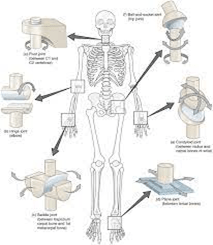
Out of these the synovial joints are of our importance. The prominent examples of a synovial joint include the knee, the hip and the forearms. There are six types of synovial joints which are tabulated below:-

Typedescription/analogyExample
Ball and socketThe tail of bone attached to the head of other boneShoulder
HingeHinge present between the doorKnee
PivotAction of turningNeck
CondyloidTwo plane motionWrist
SaddleLooks like a seat in horseThumb
Gliding Bones pass over each otherWrist
pictorial representation of different synovial joints in human body

Hence it is to be understood that the freely moving joints (synovial joints) are those which are capable of producing the cracking sound. Also, not all of them can do so, it is the phalanges of the hands and legs, the elbow, the neck, and sometimes the knee which can produce the cracking sounds.

The important characteristic of synovial joints is the presence of synovial fluid and a fatty layer. There are two specific functions for the fat layer. An important feature of fat is that it has the highest affinity for nitrogen. Affinity can be known as “chemical love”. Like it can be considered that nitrogen is a drug for the fat in our joints which has an irresistible addiction towards it (just for analogy, please don’t even think about drugs….).

i)       To provide protection from mechanical damage; For instance, banging the fingers/knee onto a wall

ii)     To trap the heat; heat is required for internal mechanisms to occur, so it is essential that fat (adipose tissue) encapsulates the heat

There are two important facts that have to be known relevant to this phenomenon. The first is the atmosphere; it is a collection of enormous amounts of gases, liquids, and lots more. What is trivial is that nitrogen constitutes about 78% of the total atmosphere. Phew! That is indeed huge. Another aspect is the process of diffusion. Diffusion is a passive method of gas transportation that moves from a higher concentration to a lower concentration.

a visualisation of diffusion between oxygen and hydrogen molecules

So what happens is that the nitrogen diffuses from the atmosphere (high concentration) to the fat present in the joint (low concentration). As a result of this process, nitrogen bubbles get accumulated in the gaps in the synovial fluid. As we press the joints or do any movements, the bubbles inside the gaps are forced to be released out. This process is known as capitation and as a result, a popping/cracking sound is developed.

To conclude, the release of the nitrogen bubbles are the ones responsible for the popping sound and this activity has nothing related to the health of the joints. You can pop the joints and this is not a bad habit (in the sense of health). Make sure that you don’t disturb others in the process!!

HAPPY READING!!!