Cultural Pluralism

N kavya

Cultural pluralism is defined as the societal condition in which minority groups within a society can maintain their distinctive cultural identities, values, and practices if they are consistent with the laws and values of the wider society. Institutions and values that support cultural pluralism include political democracy, tolerance for uncertainty, prioritization of secular rational values, and openness to foreign cultures. societies with a demanding climate and high innovation performance, their citizens tend to support democracy, are more tolerant of uncertainty, prioritize secular-rational values, and take more leisure trips outside of their home country.

Significance of cultural pluralism -:

The late nineteenth and early twentieth centuries, which saw the largest surge of immigrant arrivals in American history, an anti-immigrant backlash took the forms of nativism, xenophobia, and other expressions of prejudice. Criticism of the unfamiliar appearances and behaviours of the newly arrived people prompted discriminatory treatment of the new immigrants in education, employment, government programs, housing, and public accommodations. As a result, the advance of industrious and talented immigrants whose efforts could enhance American progress was held back. The concept of cultural pluralism is an alternative to the “melting pot” view that immigrants should assimilate to American culture by abandoning their own cultures, languages, and other traditions. Cultural pluralists insist that different ethnic groups have enriched the American way of life as immigrants and native-born citizens have learned from one another, thereby broadening their views on art, cuisine, education, history, music, and other aspects of life.

Positive Aspects of Cultural Pluralism -:

1. The cultural plurality system is that it is easily understood by voters, provides a quick decision, and is more convenient and less costly to operate than other methods.
2. The plurality method operates best under a two-party system.

Critique of cultural pluralism –:

1. Cultural pluralism has been attacked for justifying cultural separatism—that is, a transformation to a “nation of nations” like what is found in Switzerland or a segregated America of ethnically pure residential enclaves.
2. The cultural pluralists assume that because ethnic traditions are static, they suppress individuality.
3. Cultural pluralists are attacked for a belief that ethnic identity is primary and thus more powerful than other identities. Some critics even see Kallen’s concept of cultural pluralism as rooted in Jewish ideology.

Cultural pluralism is distinct from multiculturalism, which lacks the requirement of a dominant culture. If the dominant culture is weakened, societies can easily pass from cultural pluralism into multiculturalism without any intentional steps being taken by that society. If communities function separately from each other or compete with one another, they are not considered culturally pluralistic. Pluralism is valuable because it provides individuals with alternative ways to live, promotes critical reflection on the culture within which one currently lives, and thus promotes change and growth within cultures generally.

Canada is a country that is often cited as an example of cultural pluralism. This is due in large part to the fact that Canada is home to a diverse range of cultures and ethnic groups.

Cultural pluralism brings diversity as explained by, Cultural pluralists who insist that different ethnic groups have enriched the American way of life as immigrants and native-born citizens have learned from one another, thereby broadening their views on art, cuisine, education, history, music, and other aspects of life.

The problem of poverty in India

In India, poverty is presently estimated by fixing a poverty line based on a differentiated calorie-norm. This means that the level of poverty depends upon the capacity of a person to purchase food and a person who can buy specific amount of food to cross the poverty line margin for nutrients and calorie intake is above the poverty line. Whereas, the person who cannot buy enough food to meet the required nutrition value of calories and carbohydrates is below the poverty line. This level is not the correct parameter to check the level of poverty.

A task force of the Planning Commission in 1979 defined the poverty line as that per capita expenditure at which the average per capita per day calorie intake was 2400 calories in rural areas and 2100 calories in urban areas. Average per capita expenditures incurred by that population group in each State which consumed these quantities of calories, as per the 1973-74 survey of NSSO, were used as the poverty lines.

The debate on the extent of poverty in India has been a matter of global interest in the recent years. The primary reason for the global interest in the debate is that the levels of poverty in India and China have come to exert significant influence over the trends in world poverty itself.

Within India too, there has been growing contestation around poverty estimates, particularly in the period of economic reforms. First, there are persistent disagreements among economists on whether the rate of poverty decline after economic reforms was slower than in the preceding period. Secondly, the shift to targeted, rather than universal, welfare schemes has witnessed the use of poverty estimates to decide on the number of households eligible to access these schemes. The report of the Expert Group on the estimation of poverty, chaired by Suresh Tendulkar, is the latest input to the “Great Indian Poverty Debate.”

It is to be noted here that many subsidies and programs are launched by the government but these additional increments do not reach the actual people that are in need of them. Instead it is sent back to the businessman and thus a lot of profit is earned on these subsidized goods. Thus, to lower the level of poverty in India, schemes have to be launched in order to directly benefit the people in need.

The Hindu states that, “A final issue with the report, of much long-term consequence, relates to the wisdom of abandoning the calorie norm. It is indeed true that the levels of calorie intakes are not well correlated with nutritional outcomes. However, abandoning the calorie norm altogether and taking solace from the fortuitous fact that calorie intakes appear adequate at the new poverty lines is an arbitrary proposition. It is unclear whether there is any basis, theoretical or empirical, for this relationship to hold true across time.”

the Tendulkar Committee has pitched for a policy position that is stranded between the harsh realities of poverty in India and the fiscal conservativeness of a neo-liberal framework. The real challenge lies in preserving the positives from the report, and strongly persisting with the demand for a universal social security system.

– Ananya Kaushal

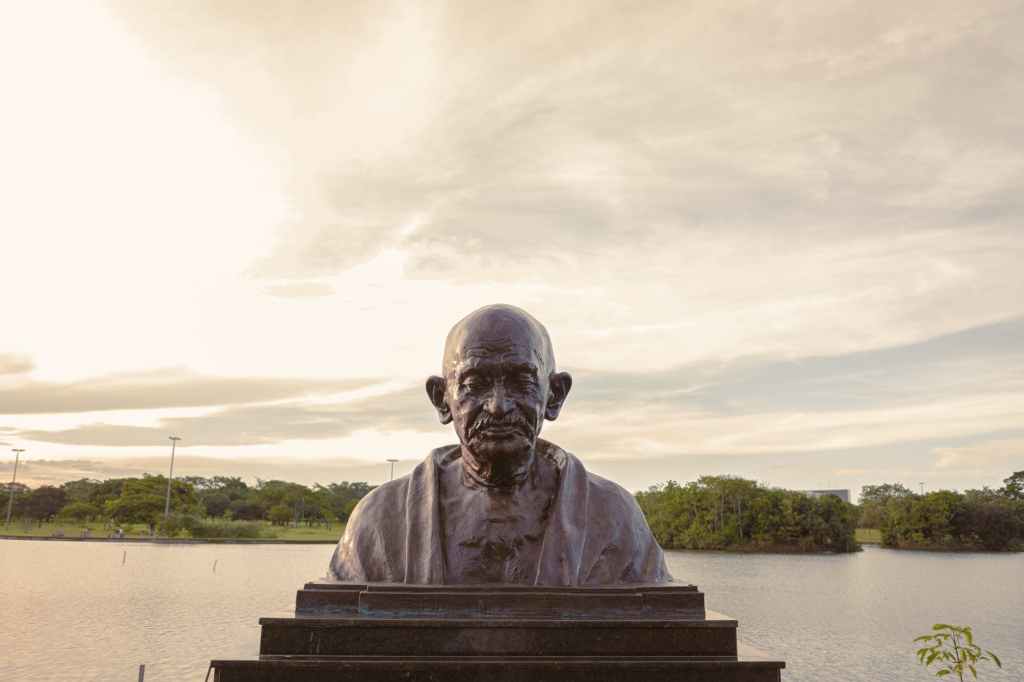
GANDHI’S GOAL-SHANTI SENA

SHANTI SENA

              *    SHANTI SENA is a word derived from Sanskrit.

               *  SHANTI means peace and SENA Means army.

                *  SHANTI SENA is also called as peace army.


MAIN GOALS OF SHANTI SENA:

*.   Service to peoples as a volunteer at any time.

*.    Give to a cause close to your heart.

*.     Most important goal is to bring the non-violence.

*.       No religion diverse all religions must       get equal rights and respect.

All are equal

QUOTES BY PEACE ARMY:-

“THE GREAT GOOD IS WHAT WE DO FOR ONE ANOTHER”.

” TREES NEED FOR SEED PEOPLE NEED FOR SHANTI SENA”.

  NON – VIOLENT LIFE :-

                        *  Non violent is a personal practice to not make harm to others.

                        *  Gandhi introduced the concept of ahimsa ( Non-violence).

                         *. Non violence is powerful tool for the social protest.

                          *. To create non violent children.It is crucial to maintain the peaceful environment.

                          *. It is the active out pouring of one’s whole being of another.

                          *. Non violence love is active not passive.


IMPORTANT OF NON VIOLENT COMMUNICATION IN Society:-

* Non violent will bring peace among the people.

* Non violent communication help us to express our feelings.

* Non violent communication means complete lack of violence in the way we communicate with others.

* To respect our people.

MAIN COMPONENTS OF NON VIOLENT COMMUNICATION:-

* Observation.

* Feelings.

* Needs.

* Requests.

SHANTI SENA:-

* SHANTI SENA makes love and peace to the people.

* SHANTI SENA brings non violence to the people.

* SHANTI SENA is not only to maintain peace also good relationship.

* SHANTI SENA is the non weapon war of peace.

* If one should have shanti sena he should ignore annoyance.

* SHANTI SENA avoid us from the jealous and competition with the people.

* SHANTI SENA is one of the fundamental peace policy of people.

” soldiers army save country

Peace army save courtesy”.