Major geopolitical developments and it’s impact on India

Over the past several weeks, a number of important developments have taken place which may appear disconnected at a glance but in fact add up to a significant shift in regional and global geopolitics.

ONE, the withdrawal of US and NATO forces from Afghanistan and the complete takeover of the country by the Taliban. This resulted in chaos and overall disruption of the semblance of peace the country earlier possessed. With the Taliban claiming the residents of the country are happy with their takeover and the disrupted president on the run, the future of the country appears in shambles.

TWO, significant domestic political changes in the People’s Republic Of China. This includes the ideological and regulatory assault against its dynamic private high-tech companies and now recently, its real estate companies. As a result, it has a heightened risk perception among international business and industries which had seen China as a huge commercial opportunity until now. While the economical affairs of the country are entirely their own to manage and govern, there will be a lasting impact on the general job opportunities.

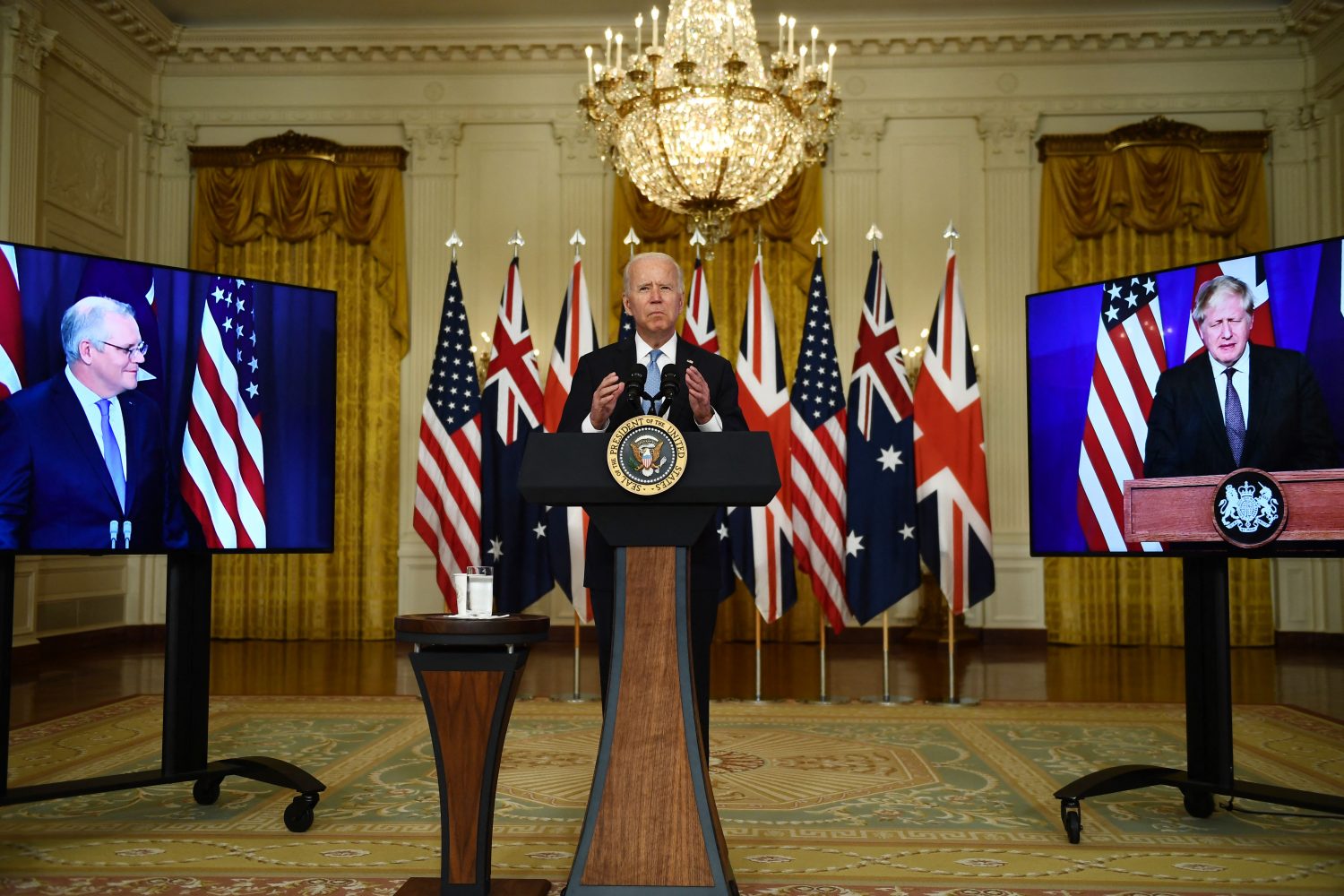
THREE, the announcement of the Australia-UK and US (AUKUS) alliance which represents a major departure in US strategy by its commitment to enable Australia to join a handful of countries with nuclear submarines. The alliance clearly portraits Australia’s strategic choice to firmly support USA despite its considerable economic and commercial equation in China.

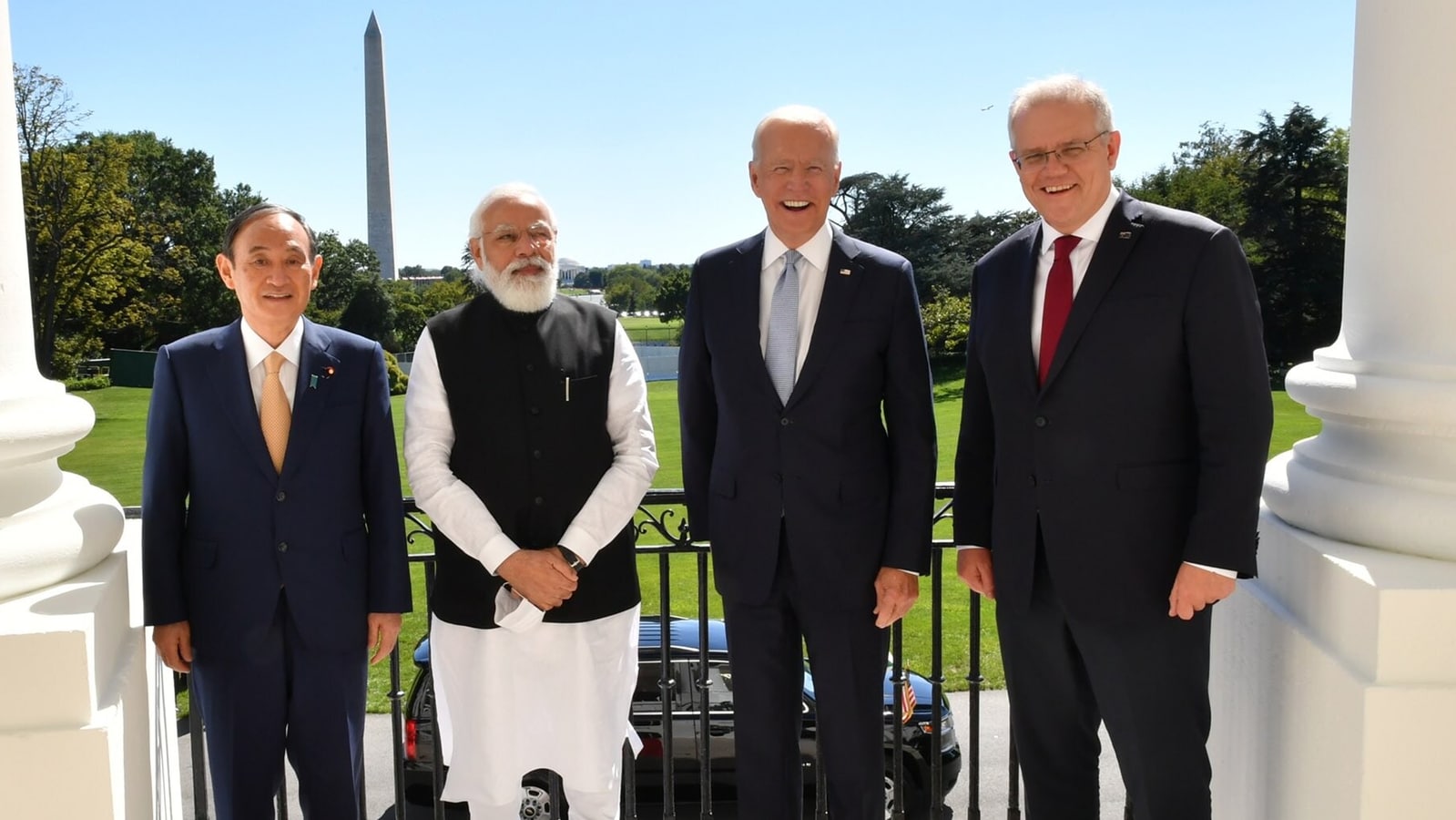
FOUR, the convening of the four nation Quad physical summit (India, Australia, Japan and the US) IN Washington. This reflected a major step towards its formalization as an influential grouping in the Indo-Pacific going beyond boundaries and into a personal level of safeguarding.

These four developments together present India with both risks and opportunities. While the latter outweighs the risks henceforth. It would indeed be fitting to say a future of uncertainties awaits the entire world. Are these measurements a preparation of the unseen future or simply precautions is something only time will reveal.

Written by : Ananya Kaushal

ROLE OF QUAD IN SOUTH CHINA SEA

BY DAKSHITA NAITHANI

The Quadrilateral Dialogue was established in 2007 when four countries—the United States, India, Japan, and Australia—joined forces. However, it did not take off at first due to a variety of factors, and it was resurrected in 2017 after almost a decade due to factors such as growing country convergence, the expanding importance of the Indo-Pacific area, and rising threat sentiments toward China, amongst many others.

The origins of QUAD may be traced back to the Malabar Exercise. Malabar began as a modest Passage Exercise named PASSEX between the Indian and US Navies in 1992, but was halted after India’s nuclear testing in Pokhran in 1998. It was later restarted in 2002. Since its inception in 2002, QUAD has become an annual event. With the addition of Japan in 2015, it has become a trilateral practice.

The Quad’s goal remains intact: to promote the economic and security objectives of those nations with genuine and essential interests, to devise a new approach for keeping the Indo-key Pacific’s maritime lanes free of foreign influence. It has become necessary in view of the increased need for information exchange in the maritime sector. With the growing presence of the Chinese Navy in the Indian Ocean, awareness is a key subject for the Navy. After 2008, China increased its presence in the Region under the pretext of anti-piracy operations, even deploying submarines for the objective. In 2017, China formally established its first overseas facility near Djibouti, in the Horn of Africa.

What are the underlying challenges?

The environment in which QUAD has been resurrected, as well as subsequent engagements like as Malabar Exercise 2020, are regarded as governed by a counter-China narrative. There are several features that may not constitute sites of convergence, despite how they appear.

China’s influence: China has significant economic links with Quad partners, particularly Australia, which is what it may use to compel or sway nations to its side. This might prove to be an issue for India.

Maritime orientation: Quad is a marine rather than a land-based organisation because of its strong concentration on the Indo-Pacific. This raises some important concerns about the basis of collaboration with Asia-Pacific and Eurasian countries.

Differing perspectives. There are conflicting viewpoints on certain situations, such as the Myanmar crisis as seen through the eyes of the United States and India. India has remained silent in the face of Japan’s expressed worry that China is attempting to alter the status quo in the East and South China Seas.

Advantages in Space- When QUAD representatives join forces in space, they have significant benefits and are able to fight China. This includes (a) lowering the extremely high expenses of building a dock in order to promote the development of interplanetary vehicles (IPVs). (b) One member state has benefits that will compliment each other and will lead to a successful Mars exploration and the construction of support facilities that will be necessary for effective asteroid belt mining. (c) All member countries bring a high degree of convergence in space applications, for example, the United States has the advanced technological base required for advanced avionics, which will form the backbone for both the construction of a space dock and the construction of IPVs; India has a highly educated and inexpensive working population, which will lower the cost of space; and Australia has the natural resources required for exploration.

The Quad met in Tokyo on October 6, 2020, for the second time since the organisation revived in November 2017. It was the second such gathering, following the inaugural virtual meeting in June, and the first high-level Quad meeting since the 2019 foreign ministers’ meeting in New York on the margins of the UN General Assembly meeting. Furthermore, given mounting worries about Beijing’s hostile conduct and growing suspicions about China’s management of the COVID-19 outbreak in Wuhan, the meeting’s timing and circumstances added to its relevance.

China’s ‘incremental encroachment strategy’ in the South China Sea (SCS) is a source of worry not only for the countries currently affected by the loss of influence over the Exclusive Economic Zone (EEZ), but also for the rest of the world, as China may be able to exercise a monopoly over SCS Sea Lines of Communication (SLOC). Affected nations lack the necessary power to stand up to China, and so will be forced to accept a one-sided agreement such as the China-driven “Code of Conduct” (COC).

As a result, Chinese adventurism must be restrained by other major maritime countries in the global interest. The fact that China could establish a military facility in the SCS despite the existence of the US Navy shows that worldwide criticism and more effort are required to prevent the SCS from becoming “China’s lake.”

Quad may not have the fangs it needs right now, but there is no other option than to establish a prospective structure like this involving likeminded maritime countries with shared strategic objectives in the Indo-Pacific. Various perspectives on the Quad’s role, viability, and prospects have been expressed on several occasions. Because Quad is a security conversation platform rather than a military alliance, aspirations from it must be suitably limited for the time being. 

In the Indo-Pacific, each Quad member sees a distinct threat. While three of the Quad’s warships (Australia, the United States, and Japan) operate under the NATO military alliance structure, India is not a member of any military alliance, while being a reliable ally of two of them. Without India, the trilateral conversation between the three NATO partners has been since 2002. Because India is the only Quad member with an unresolved land boundary with China, it will take a different strategy to dealing with China.

The Quad has emphasised the importance of ASEAN in the Indo-Pacific; nevertheless, their membership in it is a contentious topic owing to Chinese influence. In reaction to China’s claim to the nine-dash line in the SCS, there are divisions within the ASEAN grouping. Some of the ASEAN nations that have been harmed had previously raised a faint voice opposing Chinese aggressiveness, expecting international powers to rein in China’s antics.

Quad’s shared goal of putting its vision of a free and open Indo-Pacific on a “rules-based” legal framework to ensure freedom of passage in the global SLOC requires some reflection and strengthening. The United Nations Convention on the Law of the Sea (UNCLOS III) has been ratified by Australia, India, and Japan, but the United States has yet to do so. This ratification will be required in order to maintain a high moral ground when implementing the agreement.

China is relatively certain that the US and any other country would not employ military action against it, given the current world geopolitical situation. Beijing is also beefing up its naval capabilities. Quad aims to upgrade beyond its Malabar workouts in this situation.

In the Indo-Pacific, Quad members must maintain freedom of navigation exercises and military posture as China continues to do so. Chinese expansion must continue to be condemned by the international community. Quad may not be powerful enough to stop Chinese adventurism in its current form, but it has the potential to become one of the most effective instruments if the afflicted nations and the international community band together to address their mutual concerns.

The navies of Australia, India, Japan, and the United States conducted their largest naval drills this month, sending warships, submarines, and aircraft to the Indian Ocean, signalling the four countries’ seriousness in countering China’s military and political influence in the Indo-Pacific region, according to analysts. Officials in Beijing were silent, but Chinese state media denounced the Malabar naval manoeuvres, calling them a threat to regional stability, according to the Global Times newspaper.

Conclusion

The Quad is developing as one of the major multilateral which is committed to increased security collaboration in the post–COVID-19 international order, given the rising pace and scope of the group’s work. Furthermore, having an active Quad dispels the long-held belief that the Indo-Pacific is mainly inert. With the stakes higher than ever, each of the Quad’s four members must play a larger role in balancing the Indo-threats Pacific’s and power moves. Every step made by the Quad will make it more difficult for Beijing to realise its great-power goals. As a result, China will be unnerved by the Quad’s emergence as a united front championing a free and open Indo-Pacific. Furthermore, if China continues to push the security boundaries and put the Quad members to the test, the organisation will morph into the anti-China squad Beijing fears.

ROLE OF INDIA IN QUAD

BY DAKSHITA NAITHANI

The Quadrilateral Dialogue was established in 2007 when four countries—the United States, India, Japan, and Australia—joined forces. However, it did not take off at first due to a variety of factors, and it was resurrected in 2017 after almost a decade due to factors such as growing country convergence, the expanding importance of the Indo-Pacific area, and rising threat sentiments toward China, among others.

Since then it has evolved into a platform for diplomatic discussion and coordination among participating countries, who meet on a regular basis at the working- and ministerial levels to discuss shared interests like ensuring a rules-based international order.

SIGNIFICANCE FOR INDIA

The Quad, ASEAN, and the Western Indian Ocean are the three groupings in which India participates as a partner in the Indo-Pacific area.

India as a Net Security provider

In the region of Indian Ocean India must be a Net Security Provider. Its supremacy in the IOR must be maintained and sustained if it is to claim this position as a Region. QUAD offers India with a platform to strengthen regional security through collaboration while also emphasising that the Indo-Pacific concept stands for a free, open, and inclusive area.( Inclusive here refers to a geographical notion that encompasses all countries inside it as well as those having a stake outside of it)

Countering China

The Quad offers India with a forum to seek collaboration with like-minded countries on a variety of problems, including maintaining territorial integrity and sovereignty, as well as peaceful dispute settlement. It also shows a united front against China’s unceremonious and aggressive actions towards the nation which is especially important now, since ties between India and China have deteriorated as a result of border intrusions along the Tibet-India boundary in many locations. The Chinese policy of encircling India with the String of Pearls poses a direct threat to India’s maritime sovereignty, which must be addressed.

Framing post-COVID-19 international order

QUAD can assist India in not just recovering from the pandemic’s impacts through a series of integrated measures, but also in securing a part in the modern international order. Enhancing such cooperation was one of the first actions made in 2021. The vaccination initiative will serve as a good litmus test for the QUAD administrations’ ability to work together.

Convergence on other issues

On a range of topics, India shares common interests with other Quad members, including connectivity and infrastructure development, security, especially counter-terrorism; cyber and maritime security; multilateral institutions reform, and so on. Assistance from members on these problems might help India achieve its strategic and economic objectives.

Supplementing India’s defence capabilities

Assistance in the sphere of defence among Quad countries, such as joint patrols, strategic information exchange, and so on, can help India overcome its disadvantages in terms of naval capabilities, military reconnaissance, technology, and surveillance systems.

Ensuring a free Indo Pacific

The Indo-Pacific region must be accessible and vibrant, regulated by international norms and bedrock values such as freedom of navigation and peaceful resolution of conflicts, and the nations involved must have the right to make decisions, free of coercion.

Counter-terrorism Table top Exercise for QUAD nations to improve collaboration and common capabilities in dealing with potential terrorist threats, as well as examine CT response systems.

INDIA’S ROLE IN THE INDO-PACIFIC

In the Indo-Pacific, India’s geographic and geopolitical importance provides a counterbalance to China’s rising influence in the Indian Ocean. India’s security concerns, centred primarily on China’s encirclement policy through port facilities in India’s neighbourhood mainly Gwadar and Hambantota and the desire to maintain and protect open and free sea lanes of information exchange against concerns about China’s chokepoint in the South China Sea and increasing maritime presence in the ocean

India’s critical significance in the Indo-Pacific may be seen as a multiple framework. First, unlike the Asia-Pacific architecture, the Indo-Pacific architecture allows New Delhi to move above its long-held standing as a middle-power. This is bolstered by India’s admission to the League of big powers especially the United States and Japan and the development of tight strategic ties with Washington and its regional allies. This promotes India’s great-power ambitions and force projection capability inside the Indo-Pacific and beyond.

Second, India’s Act East Policy and Extended Neighbourhood Policy benefit from New Delhi’s strong participation in the Indo-Pacific. New Delhi’s stronger relations with ASEAN members have also bolstered this boost.

Third, the development of India-US strategic relations, particularly in military, works as a significant counterweight to India’s adversaries. Increased engagements between New Delhi and Washington are exemplified by the four foundational contracts signed between the two countries, which include the General Security of Military Information Agreement, Logistics Exchange Memorandum of Agreement, Communications Compatibility and Security Agreement, and Basic Exchange and Cooperation Agreement—all of which promote in-depth partnership Most significantly, the improved partnership boosts India’s military capacity, particularly when it comes to striking targets with precise accuracy.

Fourth, under India-Australia ties, which were elevated to a Comprehensive Strategic Partnership in 2020, India’s strategic position is bolstered yet further. In fact, Canberra and New Delhi inked nine agreements, the most important of which are the Australia-India Mutual Logistics Support Arrangement and the Defence Science and Technology Implementing Arrangement, both of which provide a framework for the two nations’ security cooperation.

Fifth, and most significantly, during COVID-19, India demonstrated its ability to be a first responder to a regional disaster by giving medical assistance to its near neighbours, including the Maldives, Sri Lanka, and Seychelles. In addition, India sent medical quick response teams to Comoros and Kuwait to help them prepare for the epidemic. In addition, nine Maldivians were evacuated from Wuhan, China, the site of the pandemic.

In addition, India pushed for virtual summits like the South Asian Association for Regional Cooperation web conference on March 2020 and the “Extraordinary Digital G20 Leaders’ Summit” to help develop a worldwide reaction to the epidemic on 26 March 2020. In addition, New Delhi established a SAARC Emergency Response Fund for Coronavirus, with India contributing an initial 10 million USD.

In addition, as countries attempt to move manufacturing away from China, India is viewed as one of the world’s new “favoured” investment destinations. The enormous scale of India’s marketplace as well as the low labour costs, make it a desirable destination. Apple, for example, created a production facility in India in partnership with Foxconn, while Samsung, of South Korea, ceased operations in China and moved manufacturing units to India.

There is little dispute about India’s rising position in the Indo-Pacific, not just as a significant participant but also as a responsible actor.  As a result, India’s manoeuvring room in the post-COVID international order is anticipated to expand, as India is seen as one of the major movers in guiding policy and protecting allied interests in the Indo-Pacific. COVID-19 has, in fact, expanded the Quad framework, allowing important parties to play a more active role in addressing critical conventional and unconventional regional issues.

Australia being a cute Rasgulla.

So due to increase tension between India and China and India and Australia there is a huge chances and probability that i the days to come India and Australia may become strongest of allies as by discovering some of the biggest potential they behold through trade and military presence in both Asia and Oceania if there is a mutual respect and support between each other. There is also an ambitious bilateral agenda that will add substance to the India-Australia summit. When it comes to defense, India and Australia share a common concern over China it is that aspect which informs a lot of the bilateral transactions between the two countries. While Australia is worried about China’s presence in the Pacific, India is worried about China’s increasing activities and influence in the Indian Ocean.

Earlier this year, the Australian and Indian navies concluded a two-week-long bilateral maritime exercise code-named AUSINDEX. A government release at the time said the exercise was conducted, “to strengthen and enhance mutual cooperation and interoperability between the IN (Indian Navy) and RAN (Royal Australian Navy), providing opportunities for interaction and exchange of professional views between the personnel of the two navies”. From 2016-18, the armies of the countries conducted a joint military exercise dubbed “AUSTRA HIND”. Significantly, for the first time in 2017, Australia’s Foreign Policy White Paper identified India as being at the “front rank” of Australia’s international partnerships, “on par with the US, Japan, Indonesia, and China”, Australian High Commissioner Harinder Sidhu said in her address at the National Defence College in May this year.

The informal strategic Quadrilateral Security Dialogue (QSD) that was initiated by Japan’s Prime Minister Shinzo Abe in 2007 was largely in response to China’s growing power and influence. Initially, the “Quad” members included India, Japan, the US, and Australia; however Australia chose to withdraw when Kevin Rudd was Prime Minister, since it did not want to be a part of an anti-China alliance at the time. In an article in the Nikkei Asian Review in March 2019, Rudd said, referring to his opposition to the Quad: “Japan said that the rationale for the QSD was to defend the international rules-based order, implying that China back in 2007 had already become a threat to the order.“For Australia in 2007 therefore, to begin embroiling itself in any emerging military alliance with Japan against China, in the absence of any formal reconciliation between Tokyo and Beijing over the events of the Second World War (Nanking Massacre), was incompatible with our long-term national interests.”However, Australia later rejoined the dialogue in 2017 on the sidelines of the ASEAN Summit, signalling a re-ignition in Australia’s interest in the dialogue.

However, it is the economic dimension that continues to lag. The summit provides Modi and Morrison with the opportunity to impart a fresh momentum to it. Bilateral trade is barely 30 billion dollars and even though Australia is a world leader in niche technologies, investment in India is relatively limited. ‘An India Economic Strategy to 2035’ by Peter Varghese, former Australian Foreign Secretary and High Commissioner to India, provides an excellent blueprint. It identifies 10 states and 10 sectors of the economy that can be of particular focus, and underscores the important role of investment in driving the economic relationship. But while Canberra sees the opportunity, private business groups have been shy to grab it. With the exception of the Macquarie Group and a couple of others, Australia’s large financial institutions, pension funds and even the sovereign Future Fund have shown reluctance to invest in India. From India, the Adani group’s multi-billion dollar investment into the Carmichael coal fields in Queensland also ran into a series of hurdles and dampened some of the initial ardor to invest in Australia. There are also a number of less glamorous areas that offer fertile ground for collaboration in sectors where Australia has proven expertise. Some projects are already underway in agriculture, animal husbandry, water conservation, mining technology and equipment and sports infrastructure, but there is ample scope for scaling these to become success stories that both countries can proudly showcase. Cyber security is of critical interest to both, as is the need to work together in tapping Australia’s huge deposits of lithium and rare earths.