Traditional, Contemporary Outfits To Rock This Festive Season

India is a country with an  ancient clothing design tradition, yet an rising Fashion industry. 

The festival of Ganesh Chaturthi is around the corner, and all of us are looking forward to celebrating it with utmost pomp and show. The festival, which involves prayer, celebrations also includes wearing bright and beautiful dresses. To make your celebrations brighter, here is a look at traditional and contemporary attires to ramp up your festive look.

1 .Simple saree:

Either you can go for a simple plain saree with a Kalamkari blouse, or you flaunt a Kalamkari saree with a simple plain blouse.

2.Cape style Anarkali:

If you are bored with wearing the same old Anarkali suits, this can go a long way for you. It adds a modern look to your attire and gives you a fresh and ideal look for celebratory events.

3.Tye and Dye Saree:

You can go for something traditional yet cool this Ganesh Chaturthi, like this striking red tye and dye saree. This one is for blending it with the people whether its’ at home or social gathering.

4. Puff Sleeves:

If you are tired of wearing the traditional blouse at all festivals, Puff Sleeves are the solution to this! If you are always used to wear kurtas and salwars, and just want to surprise everyone with a nice saree, then do wear it with a puff sleeve blouse. You can also braid your hair and adorn them with flowers.

5. Cotton Saree with Silver Jewelleries:

A popular trend these days is a soft lightweight cotton saree paired with oxidized silver jewelry. It’s perfect for those who want to celebrate in style but don’t want a hole in their wallet.

6. Multicoloured Sharara set:

It is the perfect balance between comfort and glamour. This makes it a perfect fit for this season.

7. Printed Skirt with White Shirt:

This fusion of traditional and contemporary makes you a perfect delight to look at. It is easy to carry as well. Pairing the look with silver jewelry gives you the statement look and makes you stand out in the crowd.

8.Banarasi Silk Kurta and Skirt set:

This traditional and homely attire is the perfect blend of culture and elegance. Banarasi work never goes out of fashion and makes you look both pretty and graceful at the same time.

9. Printed floral sarees:

printed sarees with a simple sleeveless blouse is a perfect outfit for any occasion.

10. In a light printed saree:
Floral is one of the oldest prints in couture and this pastel orange saree with contrasting blue and violet flowers all over brings out the ‘70s charm that an Indian drape had.

11. Maharashtrian Nauvari Saree:

It’s a 9-yard saree drape and is one of the most popular drapes in the region. It helps you to walk quickly and lets you sit comfortably on the floor or handle any amount of work with ease.

12. saree with a belt:

Sarees buckled up with a belt have become quite trendy. With the ever-changing fashion, draping saree with a belt is a trend that is a rage currently. Belt not only keeps the traditional aspect intact but also adds an oomph factor to the look. And you are set to look stylish and fashionable. They work well as both an ethnic and formal wear with the utmost style and chicness.


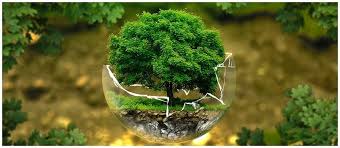
Environmental ecology

The problem of population is the main cause of ecological environment damage. As the population grows up and economic develops, the increasing demand of resources is becoming more and more severe. Because of deforestation, unreasonably overgrazing dykes to reclaim land from a lake, marsh reclamation, excessive usage of land and water resources, which leads to the destruction of biological environment or even disappearance, the normal survival of the species is affected a lot. There is a large number of species which have not yet been detected by human beings. They have quietly become extinct, thus leading to destruction of biodiversity.

Land is the material basis of human survival. In the demand of the food sources of the survival of human beings, crops cultivated land accounts for 88%, 10% of grasslands and pastoral areas and 2% counted for marine. With the development and utilization of ocean, energy applied by sea food for human beings will increase. At present, the cultivated land of the world is about 1.37 x 10⁹ hm2, which shows per capital is about 0.26 hm2. But due to the increase of the non-agricultural land land desertification, soil erosion, soil pollution and so on, it prompts the contradiction between population increase and reduce land resources becoming more and more sharp. What’s more, the pressure of increase in population on land is becoming bigger and bigger. According to the United Nations food and agriculture organization, nowadays, about 500 million people around the world are in a state of super land bearing capacity.

So the fresh water is going to run out. To discover and to make use of new sources are necessary within two aspects. One is to find fresh water resource which hasn ‘t been found or used. The other way is to thoroughly look for fresh water from where other than the fresh water resource it self. This is mainly asked to turn which is not fresh water purification into fresh water. Since sea water accounts a lot of the total water resources of the earth. The key means to turn them into the water we can drink is to purify and desalinate. Although it is not because that there is no water desalination plant in the world, why we still worry about water resources drying up? That is mainly due to the desalination technology which is not very mature and completed. Not to mention, the cost is very high as well. Ordinary people can not afford such high price. That explains why this technique is not popularized worldwide, but most concentrated in the developed countries. That is to say, if we want to fade in seawater batches, the most important is to rely on science technology to improve the efficiency of desalination, reduce the desalination cost and let ordinary people be able to use the desalinate water under a proper price.

Organisms of this ecosystem may generally be divided into three categories:

1. Producers, 2. Consumers, 3. Decomposers.

Producers mostly belong, to the category of plants that make their food by the inorganic substances by themselves in the presence of light.Consumers particularly include animals including human being, that de­pend for their food on other organism including plants, and the decomposers come in the category of bacteria and fungus etc. that decompose the organic substances present in dead plants and animals.

The system is useful to man. A perfect ecological balance cannot be expected in the wake of growing industrialisation as owing to this, pollution of environment becomes inevitable.The environment has “carrying capacity”, or the amount of pollution or damage an environment can sustain without further degradation.

A lake that is 5 times larger than another one can carry roughly 5 times the pollution load. If the loads of pollution are not minimised or environment upgraded to an extent that it will be able to carry them, the environmental degradation will inevitably worsen.

By the misuse, abuse and uncontrolled use of resources both natural and otherwise have upset the equilibrium between human activity and nature.

Over-exploitation of natural resources in the name of industrialization is posing a great danger to the ecosystem. This danger may be understood in following two ways:

1. Physical Environment. 2. Human Environment.

Physical Environment consists of all constituents of natural origin like physiography-, climate, vegetation, soil, water bodies, wild animals and minerals.

Human Environment consists of all elements having a human touch in their origin. Such elements include all manifestations of human activities.

Of course natural resources cannot be confined to the physical mani­festation of nature, it also includes the entire environmental scenario-the carrying capacity of nature, the extent up to which the nature can accommo­date.

Can we predict the ecological effects of pollution and climate change?

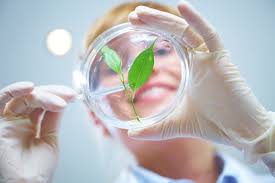
Governments and citizens around the world are increasingly aware of the consequences of atmospheric pollution and climate change. In large-scale experiments, plants and animals are exposed to carefully controlled atmospheres and different ecological conditions. Scientists use this information to understand how they respond to pollution levels, and make predictions about future climate change.

Can we fish the ocean without depleting its riches?

It is possible, but does depend on where we are in the world. In the Antarctic, the marine ecosystem is currently managed as a whole under an international agreement to conserve living resources. This makes it easier to understand marine communities and their interactions, as well as help monitor threatened species more closely.

Can we conserve a habitat and its biodiversity?

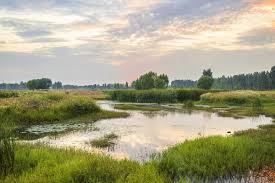
Yes. Ecology provides the essential basis for nature conservation. Maintaining a mosaic of habitats ensures the survival of a rich variety of species. For instance, heathland is a valued landscape that is fast disappearing throughout much of Western Europe, but studies have helped identify how to preserve its ecological characteristic.

Advertisements

The Beautiful Monsoon

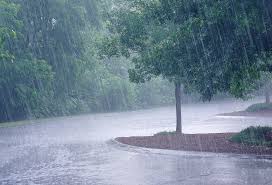
Today, I woke up and it was raining heavily outside. Seeing the view outside made my heart filled with pleasure. I love the rainy season because it’s the season of festivals!

Farmers also longed-for monsoon season with honest emotions, it gives them a purpose to rejoice numerous carnivals, cross fingers for high-quality harvests, and make élite monsoon dishes. Monsoon in actuality shows us one of its finest natural outlooks, as streams are bursting, flooding and swinging, foothills are wide-awake in pursuit of greeneries and downpour ornamented the entire hills with a lustrous look, glorious ponds, plush natural foliage, and stunning floras.

The rainy season is one of the four main seasons of India. It ends every year after the summer season, especially in the month of July and ends in September. Clouds in the sky rain when the monsoon occurs. It gets very hot during the summer season and goes up in the sky as vapor from water resources like oceans, rivers, etc. Water is of the utmost importance in human life. That is why we should plant more and more trees for good rainfall so that our environment remains clean and green.

We all the more so get unexpected appetites for pakoras, samosa, and corn cobs. Certainly, it’s the finest nosh for all periods but flavors extremely satisfactory the minute it showers outdoor. Avoid eating leafy vegetables like spinach, cabbage, cabbage, during the rainy season. Instead, use cucumber, orange, mango, and tomato more in food. Eat plenty of dry fruits during the rainy season. They help in increasing the immunity of the body. Aloo paratha prepared for breakfast or dinner during the rainy season. The whole family will be happy. If you mix onions and potatoes in the stuffing, the taste will be even better.