VARIOUS SECURITY FORCES AND AGENCIES AND THEIR MANDATE IN INDIA

There are external and internal threats to India’s security and various specialized Indian forces deal with these threats. External threats are typically handled by the armed forces of the Department of Defense, while internal threats are handled by the Department of Home affairs .

Security forces

1.Indian Armed Forces

2.Central Armed Police Force

Indian Armed Force

The defense forces are divided into four sub-heads.

  1. Indian Army Personnel.
  2. Indian Air Force Personnel.
  3. Indian Navy Personnel.
  4. Indian Coast Guard Personnel.

The Supreme Commander of the Indian Armed Forces is the President of India. All three of these services are under the Department of Defense.

Indian Army

The Indian Army is the land component of the armed forces. It evolved from the armed forces of the East India Company, eventually transforming into the British Indian Army and the Indian Army after independence.
It is commanded by the Chief of Staff of the Army (COAS). It is considered the second largest active army in the world. The mission of the Indian Army is to ensure national security and protect India’s sovereignty, territorial integrity and harmony against foreign aggression and threats. This also includes providing humanitarian assistance and aid to civilians during natural disasters and unexpected times.

Indian Navy

India has a coastline of 7516.6 km. The Indian Navy secures India’s maritime borders and interests. It also protected Indian merchant ships by fighting pirates on the high seas, and at the same time, it aided civilians in disasters. It is commanded by the Chief of Naval Staff, an Admiral. The Indian Navy is deployed under three commands: Eastern Naval Command – Vishakhapatnam is the headquarters. Western Naval Command – Mumbai is the headquarters The Southern Naval Command – Kochi is the headquarters. The navy is used to support foreign policy goals, build “bridges of friendship” and strengthen international cooperation.

Indian Air Force

The Indian Air Force was officially established on 8 October 1932. The force was known as the Royal Indian Air Force in recognition of its service during the Second World War. . After Independence, the term “Royal” was dropped. It is considered the 4th largest air force in the world. The primary responsibility of the Indian Air Force is to secure Indian airspace and conduct air wars in times of conflict. In addition to the wars of independence for India and humanitarian action, she has participated in many UN peacekeeping missions. An Air Marshal is the commander of the air forces in India. The Air Force Network (AFNet), launched September 14, 2010, is a digital information network that enables rapid and accurate response to threats. It is a fiber-based network.

Security Forces Dealing with Internal Threats

There are many divisions of Central Armed Police Force, which deal with internal threats.

Central Armed Police Force (CAPF)

  1. Assam Rifles (AR)
  2. Border Security Force (BSF)
  3. Central Industrial Security Force (CISF)
  4. Central Reserve Police Force (CRPF)
  5. Indo Tibetan Border Police (ITBP)
  6. National Security Guard (NSG)
  7. Sashastra Seema Bal (SSB)

Duties of various security forces and agencies The Ministry of Home Affairs (MHA) has many responsibilities, the most important of which are internal security, management of paramilitary forces, border management, center-state relations, administration of territories. of the Union, disaster management, etc. Article 355 of the Constitution ordered the Union to defend each State against external aggression and internal disturbances and to ensure that each State’s government was carried out in accordance with the provisions of the Constitution.

Surveillance

Implications of surveillance

• Freedom of speech curtailed – journalists or dissidents who have
criticised the government – targeted.

• Faulty refuge under Statues – Indian Telegraph Act, 1885; section 69 and the
Interception Rules of 2009 under Information Technology (IT) Act, 2000.
 Statutes provide way for surveillance, no protections to the surveilled.
 Even the opaque laws don’t provide for surveillance
 Hacking is a criminal offence under the IT Act.
• Threatens the separation of powers
 Judiciary can effectively over see and curtail such
powers being misused.
 Laws provides no scope for an individual subjected
to surveillance to approach a court of law.

Key Take-away

• Surveillance system impacts the right to privacy under Art. 21 – reiterated in K.S. Puttaswamy (Retd) v.
Union of India (2017) case.

• Impacts exercise of freedom of speech and personal liberty under Art. 19 of the Constitution.

• Mass surveillance – risk of concentration of powers
with the executive.

Cyber Crime

Now in modern era science and technology has reaching it’s new peak day by day. It is also advancing man is becoming dependent on internet for all his needs as it gives easy access to gaming, online studying, social networking, online jobs, shopping etc. everything at one place. Apart from other countries, India is also not far where the rate of incidence of cyber crime is increasing day by day. It makes our life easier than before. As people also face the incidences of the Cyber crime. Cyber crime is an illegal activity which involves a series of issues ranging from theft to using your system or IP address as a tool for committing a crime. It can be refers to the use of an electronic device (computer, laptop, etc.) for stealing someone’s data or trying to harm them mentally or physically like Fraud due to credit card, debit card, bank robbery, illegal downloading, child pornography, distribution of viruses using a computer.

There are many types of cyber crime mainly we can say that Cyber Crime are categorized into four different types. These are

The financial crime where they steal the money of user or account holders. Likewise, they also stole data of companies which can lead to financial crimes. Also, transactions are heavily risked because of them. Every year hackers stole lakhs and crores of rupees of businessmen and government. It also includes e-commerce fraud.

The Privacy Crime includes stealing your private data which you do not want to share with the world. It is common nowadays. Moreover, due to it, the people suffer a lot and some even commit suicide because of their data’s misuse.

In hacking they intentional deface a website to cause damage or loss to the public or owner. Apart from that, they destroy or make changes in the existing websites to diminish its value. This is different from ethical hacking, which many organizations use to check their Internet security protection. In hacking, the criminal uses a variety of software to enter a person’s computer and the person may not be aware that his computer is being accessed from a remote location.

Modern-day terrorism has grown way beyond what it was 10-20 years ago. But cyber terrorism is not just related to terrorists or terrorist organizations. But to threat some person or property to the level of creating fear is also Cyber Terrorism.

It can be saved by keeping our system update regularly, use strong and unique password. It cannot be written down on notebook or be disclosed to anyone. Data must be backed and don’t click suspicious links. We should follow the security protocols and other proper method to save us from Cyber crime.

Thanks….

What is Ethical Hacking?

Hacking refers to the practice of gaining access to systems or computers through unauthorized means. While our everyday life is increasingly moving online as are all activities, it is important that our privacy is maintained, our bank accounts remain secure, and our data not be used for other purposes. Cyber-crimes which are crimes perpetuated online pose a massive threat to our security in the virtual world and are on the rise every day. These activities are done by malicious hackers who use the information for their own personal gain or for organizations with criminal intentions. It is to counter this threat that ethical hacking is promoted now.

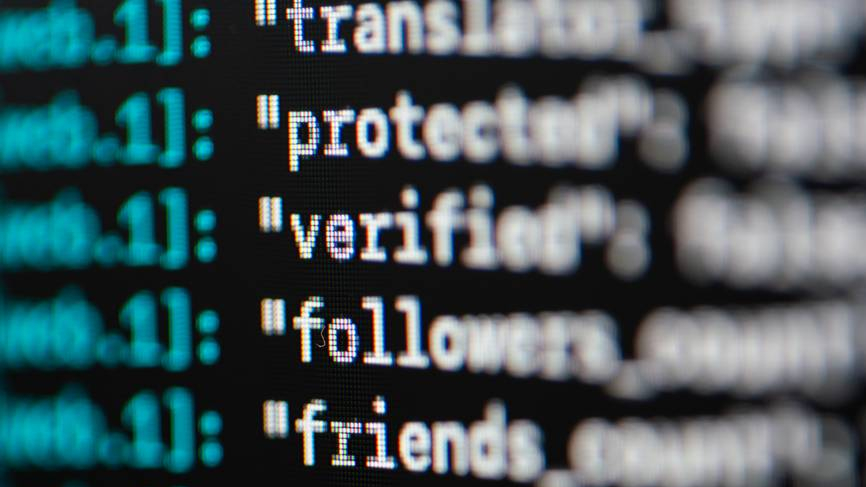
code on computer screen
Photo by ThisIsEngineering on Pexels.com

Ethical hacking refers to the practice of breaking through or bypassing system security with non-criminal intent. It is a pre-emptive measure to identify the flaws in a system as well as expose the probable cracks through which data can be compromised. The breach in the system will allow the organization to understand their current security status and do what is needed to better it. Ethical hackers are also known as White Hat hackers as opposed to Black Hat hackers who use illegal means to gain access to a system and do harm. There is a third group who are called the Grey Hat hackers. They are hackers who break into systems without authorization but do so with no mal-intention. Many do it for the fun of it and also report their breaches to whoever concerned. However, the lack of official authorization makes even this act a crime. Data theft, identity stealing, and large-scale money heists are all common activities that a black hat hacker would engage in. In the current landscape of commerce and technology, it is undebated that those who have access to and control of more information get the upper-hand. Information and data are the currency used most widely now. It is to ensure that these transactions and safekeepings are as secure as possible, and that the organizations who handle our data are able to safeguard them that we have need of ethical hacking.

An ethical hacker employs his skills to find the glitches in the armor and alerts his employers about his findings. With technological innovations reaching new heights every day, it is necessary that security systems are constantly upgraded and under scrutiny. Companies hire ethical hackers to find vulnerable points in their security systems and software that could be points through which an unethical hacker could enter the system. Ethical Hacking is also known as pen-testing or penetration testing. This is because they perform what is called a ‘pen test’ to hack into the system. Ethical hackers usually use the same methods that unethical hackers will use to enter a system. The only difference is that they are doing it with legal authority. They are required to keep their findings and understanding of the security system of an organization confidential since any slippage of information from them can cause harm as well. They are to remove or erase any traces of the hack once they have finished checking the system in order to stop unethical hackers from exploiting the same vulnerabilities. Ethical hacking can be learnt online from professionals or as part of courses. It is becoming a much sought-after profession and an increasingly pertinent one in the current global scenario.

What is a Surveillance society?

The surveillance society is a society that is structured and organized using surveillance-based techniques. To be under surveillance means having information about individual’s movements and activities recorded by technologies, on behalf of the governments and organizations that structure our society. This information is sorted and categorized and then used as a basis for decisions which affect our life. Such decisions concern our entitlement, work, access to benefits, products, services, and criminal justice; our health, well-being, and our movement through private and public spaces. 

Everyday encounters with surveillance include:

• Video cameras which watch us every day everywhere we go – in buildings, shopping malls, streets, and residential areas. Automatic systems can now also recognize number plates (as well as faces).

• Electronic tags that keep a check on ones who are on probation do not break their release conditions, and people arrested by police have samples of their DNA taken and kept whether they are guilty or not. 

• We are constantly asked to prove our identity, for benefits like healthcare, and so on.

If surveillance is a normal aspect of the management and governance, then what’s wrong with it?

 Using surveillance to achieve one’s aims, no matter how big or small bestows great power. Some interests will be served, while others will be marginalized. Some will receive entitlements and benefits, while others may not.

As data travel silently across international boundaries, national states, and within transnational corporations, the impact of surveillance becomes even harder to identify and regulate.

It focuses on correcting the negative also it gives a message to those who are watched that they are not trusted to behave appropriately.

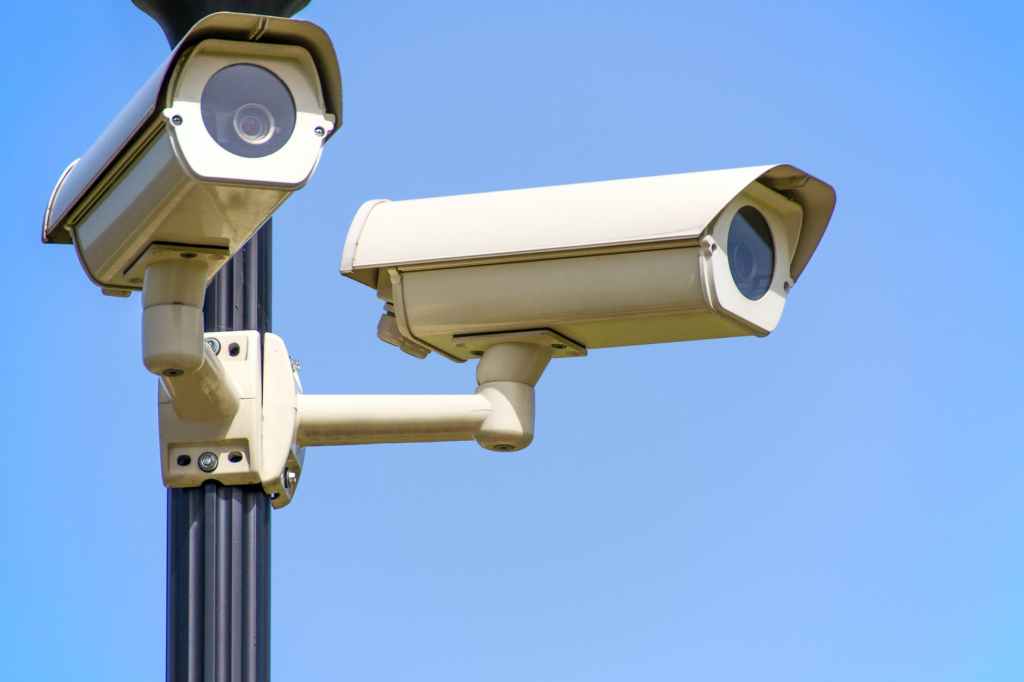
The rise of technology is shattering even the illusion of privacy. Video cameras peer constantly from lamp poles, satellites and drones float through the skies, smartphones relay a dizzying barrage of information about their owners and what not.

The information of every traveler on every stop is noted and stored by Internet service providers like Google, Verizon, and Comcast. Retailers scan, remember, and analyze each purchase by every customer. Smart TVs know what we’re watching—soon they will have eyes to watch us watching them.

The future is here. Nearly everything that happens from now on has the potential to be seen by someone and also stored indefinitely. Government and the private corporations working with them, collect and store billions of records every day and they’re hungry for more. Technology makes all secrets difficult to keep.

There has been evidence that shows mass surveillance erodes intellectual freedom and damages the social fabric of the affected societies. It opens door to flawed and illegal profiling of individuals. Mass surveillance has also not helped in preventing terrorist attacks.

Other evidence shows that even the possibility of being under surveillance changes the way people think and act, causing them to avoid talking or writing about sensitive or controversial subjects. This only showcases that mass monitoring of citizens achieves only one thing that is the development of mutual mistrust between individual and state.

Surveillance society instead of beneficial has given us more non-benefits. It affects the privacy of the individual. The mismanagement of CCTV, ID cards, mobile phone data, health, and social security databases, shop loyalty cards, and other data retention technologies has an enormous potential in causing public or personal catastrophe – from criminals and terrorists hacking into or sabotaging the health care database, down to personal data being stolen or accidentally destroyed.

However, if surveillance and personal data collection are to achieve its true value then it should be tightly regulated to avoid abuse and mismanagement by government, companies, and individuals. If we are living in a society that relies on surveillance to get things done are we committing slow social suicide?

Surveillance and personal data collection have the potential to be of benefit to society but only if maintained with due care, otherwise it only risks jeopardizing the public safety it’s meant to protect.