
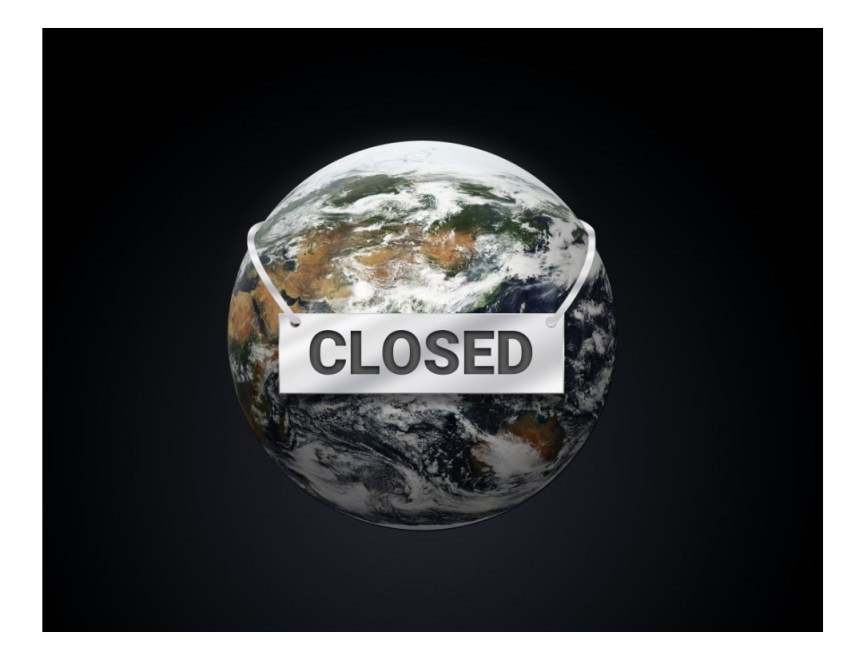
“The outbreak of novel coronavirus pneumonia will inevitably have a relatively big impact on the economy and society … For us, this is a crisis and is also a big test.”
With the whole Coronavirus pandemic engulfing the whole world in its clutches, there’s a thing or two humanity had to learn the hard way. Firstly, all strings are attached. If your neighbour’s house is on fire, then it is not the time to judge his doings, his karma, even shielding your own house isn’t advisable. Run for him, save his house put off the fire first. Secondly, invisible thing mess us up better, whether it is your so called almighty or a deadly virus. Third, public are the second priority for any government, obviously, first is their party. Lastly, home isn’t sweet home but a jail if you live locked in it for months. It eats you, it’s door is like mouth and you’ve walked into it yourself, and can’t find an escape route.
We, as people, have started craving human connection. What happened to conversations? We are all stuck in this same catastrophe, feeling like there’s nothing left to say. We focus on the weather, pretend its something new. There’s an elephant in the room that keeps us standing six feet apart. We all miss human touch. We now feel like an empty shell, once fuelled by love, now left to rot. It’s hard to speak these days. Respirators and cloth masks return our warm breath and words against our lips and cheeks. Many of us haven’t seen a smile in weeks. Even if our mouths weren’t covered, I’m not sure I would see a smile in these conditions. These are dark times. There’s a glimpse of light at the end of the tunnel. I’m so afraid we’ll all forget these lessons, as we open back up, and cause greater destruction. It’s really sad that coronavirus is creating a point of shared experience between the chronically ill and disabled and generally healthy people all forced to stay at home. And while it will be handy going forward to explain to people who think me being home on disability must be nice, I can now say “remember coronavirus?” But at the same time, people have died and are dying just so ablest get a taste of what disability living is like.
The pandemic has also taught us a few valuable lessons that can’t be ignored in the future.
• Foundational research may be expensive, but it is necessary.
• No country can deal with a crisis like this on its own.
• A strictly for profit health care system is not prepared to deal with a pandemic in any way, shape or form.
• Instead of equating wealth to success, as we have done until today, we will need to start equating positive contribution to society with success.
We can see some signs of such a motion during the pandemic in the praise that health-care workers receive for their efforts to help the often-unmanageable amount of coronavirus cases. However, we need to further internalize this redefinition of success, as our social connections, life engagements, work and social values all stem from it: There is nothing successful in being individually successful and wealthy at the expense of others. Success lies in creating a positively-connected society, where its members take responsibility and care for each other, contribute to each other’s well-being, and promote to each other the need for centering everyone’s focus on benefiting others instead of benefiting our individual selves.
The world is learning about the need to be more considerate of everyone, as we all depend on each other. However, I think that an extra “push” on our behalf to further implant this understanding will serve to better balance us with the tighter interdependence and interconnectedness that the coronavirus era has revealed to us.
Whatever silver lining we can find in this crisis will, however, always be tainted by travesties we had to endure, because we had the knowledge and tools to do a lot better and save more lives.

A key way to fight a pandemic is with positive chaos, to sew kindness and love into the fabric of society at every opportunity possible.

 Track2Training
You must be logged in to post a comment.