
Disaster and disaster management

Catastrophe (Disasters) are classified into three types: naturals, man‐made, and hybrid disasters. A natural disaster is a major adverse event resulting from natural processes of the Earth; examples include firestorms, dust storms, floods, hurricanes, tornadoes, volcanic eruptions, earthquakes, tsunamis, storms, and other geologic processes. A normal calamity can cause misfortune of life or harm property, and ordinarily clears out a few financial harm in its wake, the seriousness of which depends on the influenced population’s versatility and on the framework accessible.
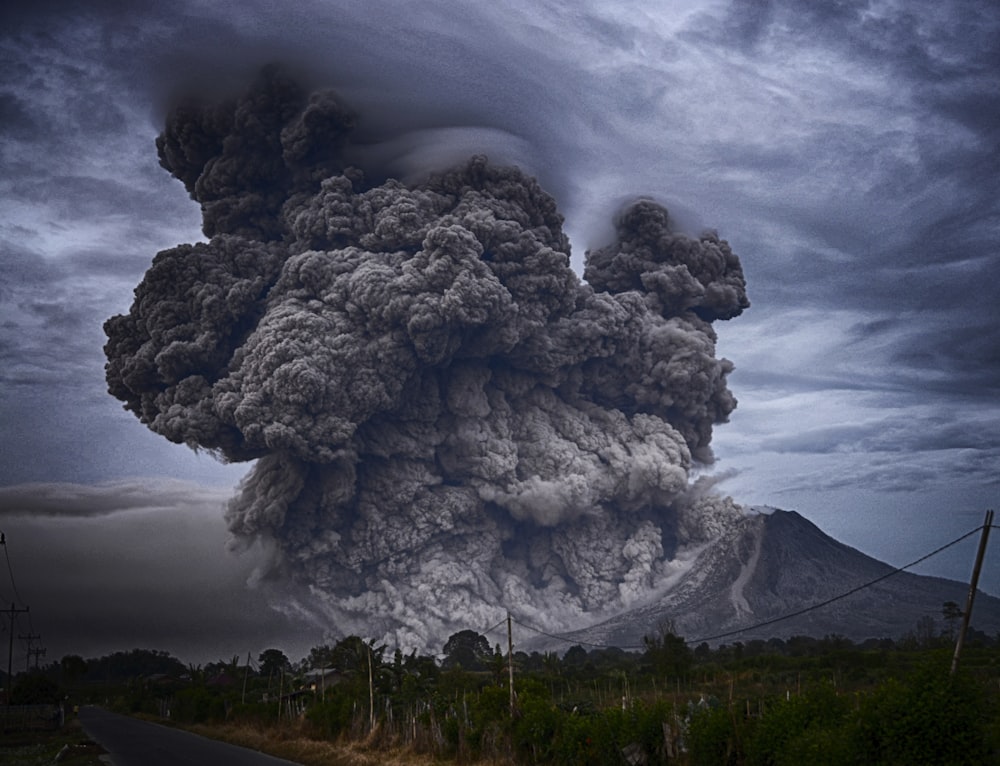
A landslide is depicted as an outward and descending slant development of an wealth of slope-forming materials counting shake, soil, manufactured materials, or a combination of these. An seismic tremor is the result of a sudden discharge of vitality within the Earth’s hull that makes seismic waves. At the Earth’s surface, seismic tremors show themselves by vibration, shaking, and in some cases relocation of the ground. Volcanoes can cause far reaching pulverization and resulting catastrophe in a few ways. One danger is the volcanic emission itself, with the constrain of the blast and falling rocks able to cause hurt. Dust storm may be a spread of tidy in dry regions. A manmade disaster is more cascading than a natural disaster an example of natural disaster is Bhopal Gas Tragedy.

Bhopal Gas Tragedy, India : Imagine waking up in the middle of the night in agonizing pain with your eyes and lungs burning. You wonder if you’re going to make it. Many don’t. That was the experience countless residents of Bhopal, India had on December 2, 1984 when the Union Carbide India Limited pesticide plant sprang a gas leak. Over 500,000 people were exposed to methyl isocyanine gas and other chemicals. Thousands of people died within the first hours of the leak, but estimates between 5,000 to upwards of 16,000 deaths resulted from the leak overall.

Deepwater Skyline Oil Spill, Inlet of Mexico It’s difficult to disregard the most noticeably awful and biggest oil spill in human history since it as it were happened less than three a long time prior. It begun on April 20, 2010 when an blast on BP’s Deepwater Skyline oilrig murdered 11 specialists, harmed 17 others, and cleared out the well spouting oil. Initially, BP claimed the spill was fair 1,000 barrels per day, concealing the reality that the well was spilling anyplace from 40,000 to 162,000 barrels a day.

Worldwide Warming, Third Planet from the Sun: Global warming is one of the foremost neglected and continuous man-made fiascos — one that will have the most noteworthy long-term affect on humankind. Over the top sums of nursery gasses, especially CO2, presented into the air have expanded normal worldwide temperatures determining a number of desperate results. Impacts from rising ocean levels, desertification, and harm from strongly super storms like Typhoon Katrina have already created a few of the primary bunches of climate-change outcasts and a few appraise that number to rise to 150 million by 2050.

Hybrid disaster is the third type of disaster. A crossover catastrophe may be a artificial one, when powers of nature are unleashed as a result of specialized disappointment or disrupt. There are disasters that result from both human mistake and normal strengths. These are crossover catastrophes. An case of a crossover disaster is the broad clearing of wildernesses causing soil disintegration, and hence overwhelming rain causing avalanches.

Disaster management is how we deal with the human, material, economic or environmental impacts of said disaster, it is the process of how we “prepare for, respond to and learn from the effects of major failures”

Disaster management has three stages which include disaster prevention, disaster preparedness, and disaster response/relief UNISDR sees Calamity Anticipation as the concept of locks in in exercises which proposed to anticipate or dodge potential unfavorable impacts through activity taken in development, exercises planned to supply security from the event of catastrophes. WCPT so also highlight that whereas not all catastrophes can be avoided, great hazard administration, clearing plans, natural arranging and plan benchmarks can decrease chance of misfortune of life and harm relief. The HYOGO System was one such Worldwide Arrange for common Calamity Hazard Decrease, which was received in 2005 as a 10 year Worldwide Arrange, marked by understanding with 168 Governments which advertised directing standards, needs for activity and viable implies for accomplishing fiasco versatility for defenseless communities.

“The information and capacities created by governments, proficient reaction and recuperation organizations, communities and people to successfully expect, react to, and recoup from, the impacts of likely, inescapable or current danger occasions or conditions” “The provision of emergency services and public assistance during or immediately after a disaster in order to save lives, reduce health impacts, ensure public safety and meet the basic subsistence needs of the people affected”

The lingering effects of unexpected emergencies and disasters are different for everyone. Knowing what to do after an emergency can help reduce stress and aid in a quicker recovery. Recovery is a process the process to repair and restore your life after an emergency or disaster is not easy and takes time, flexibility and patience. Examples of recovery include: removing waste and debris, contacting your insurance company, replacing lost or destroyed documentation, finding a new home, getting mental health support etc.

Mini Movie Review|It touched the hearts but not the brains

A character played by Kirti Sanon personifies surrogacy through Mimi who was aspired to chase her dreams but couldn’t fulfill it.

Nothing like you are expecting!!

Cast: Kirti Sanon, Pakaj Tripathi, Sai Tamhankar, Supriya Pathak, Manoj Pahwa

Director: Laxman Utekar

In a patriarchal society like India, women have always been under the umbrella of the community. It’s barely seen in the families who support a girl’s dream and accept her to be a dancer.

The movie begins with the introduction of a foreign couple who came to India in the search of a surrogate. After long hours of work, they were finally able to find a girl with the help of the driver (a role played by Pankaj Tripathi) in a hotel. Mimi(the girl) was a dancer and getting influenced by its flexibility they decided to offer her 20 lakhs to be the surrogate. Being an ambitious 25-year old woman agrees to take the risk for the same of becoming a famous Bollywood actress. She decides to live at her friend’s house by convincing the parents saying, she is going to a film shoot. With the required procedure, Mimi becomes the surrogate, and for the first four months, she was having a good time with the pregnancy. However, after eight months tests revealed that the baby is suffering from some mental disorder. This news outraged the couple and they decided not to accept the baby after birth and told Mimi to abort. This became the turning point in her life. She sacrificed all her dreams by deciding to give birth to the child and raise him. Later, the couple returned to her after 2 years when they came to know that the baby was born healthy. Mimi refused to give the child back and in the end, they decided to adopt a girl.

Message

  • A girl is also born with a dream and her character is not decided with what she pursues but what she is.
  • The support of family is crucial in the darkest times. Mimi faced all the criticisms from society but her parents never let her alone and accepted her as she was.
  • Killing is not an option. It’s not the fault of a child to be born unhealthy.
  • One loyal friend is more important than a group of unloyal ones. The driver and the friend were with Mimi till the end, helping her go through all the difficulties with a smile.

Every coin has two sides. Even though the movie won the hearts of the audience, it faced several criticisms like not following the laws related to a sensitive topic of surrogacy, using the term casually, and disrespect towards the decision of abortions.

It played with the emotions well, yet failed to manipulate the thoughts.

EIA 2020

The EIA draft 2020 have been doing the rounds on various online and social media platforms for a while now. People are doing everything in their hands to educate the rest and to put a stop to this draft from being implemented, which the national and most local medias have shut a blind eye towards.

This clearly depicts where their priorities are at, more on mainstream politics and other topics, putting the people who depend on such mediums in the dark. Unaware.

The very idea of people having to take to social media to get the word about such a devious plan is a clear depiction that we’re in the endgame now. It’s going to be every man for himself from now.

The EIA draft of 2020 is something we as the citizens of this great nation can’t afford to be a part in. It’s for a greater cause, for a better future. If neglected, the consequences coming generations will have to face will be a plenty. It’s now or never.

From elementary schools we are taught about the importance of conservation of mother nature and the dangers of pollution. We’re taught that the earth is our only home, yet and that we should do everything in our hands to protect it from such acts of fellow less concerned beings. 

Several movies and campaigns instituted by conservative environmentalists are more often that not given the spotlight to inform the masses of what we’re in store for. I for one, believe that an educated nation will be a better functioning nation.

The destructions of the Bhopal Gas tragedy needs no introduction. A grave tragedy. Post the Gas tragedy of ‘86, the Government of India brought into action the Environment Protection Act with a concern for the safety of the Public and the Nature.

The EIA under the aforementioned Act of 1986, constitutes a process which prevents the industrial and Infrastructural projects by Individuals and body corporates from being approved without proper oversight. It basically consists of a tool of environmental management forming a part of project approval and decision making.

It ensured that every project would go through the process for obtaining proper environmental clearance certificates , for a better, safer tomorrow.

The point of contention in the draft of  Environment Impact Assessment is post-facto clearance and less public participation of the affected communities. Making the voices of the already barely heard voices, totally mute.

The EIA (Environment Impact Assessment) draft 2020 by the Ministry of Environment, Forest and Climate Change under the Government of India has a counter regressive approach towards protecting the nature of the Largest democracy in the World. 

The EIA covers numerous projects like mining of various minerals, infrastructure development, industrial projects, thermal nuclear and hydropower projects. The projects for which clearance was sought was allotted clearance by a panel of experts based on its potential impact on the environment.

It involves prospective changes suggested against the EIA notification of 2006. By embodying norms to weaken environmental norms and outright silencing the affected communities. 

This draft basically allows the various Infrastructural and Industrial bodies to go ahead with various projects and seek the approval later ( post facto clearance), which would certify the starting of various projects without proper clearance certificates, afterwards when the destruction would’ve been already done.

The point of emphasis is that the principles embodied in the draft is against the various principles that shouldn’t exist in such a democratic nation. It not only possess a grave threat to the environment but also takes away the fundamental rights of citizens to raise their voices and deliver criticism regarding such concerns.

Rather than strengthening the norms under the Act and allowing the people to participate and raise their concerns, this draft focuses on restricting the Public’s voice over such environmentally degrading projects.

It also curtails the right of the communities by legalising projects that has already caused a great deal of harm and the ones which are already existing without proper approvals under the EIA. Making potential threats of mass destruction legal.

However, the Government has commented that the proposed draft would further bring transparency and expedite the process of development. Experts in the field have commented that the only process expedited by such a drastic change would be dragging the country to the ground and crippling the powers of the common man versus huge industrial organisations.

Foreseeable accidents of Vizag Gas leak and the Baghjan Oil fire are grave examples of the gravity of destruction that can be caused by projects that are not run under proper EIA guidelines.

Sighting the present troubles already upon the citizens, the drafts brought to life should be of those which corporates building a greener and more sustainable future where the nature would be the heart of all operations.