
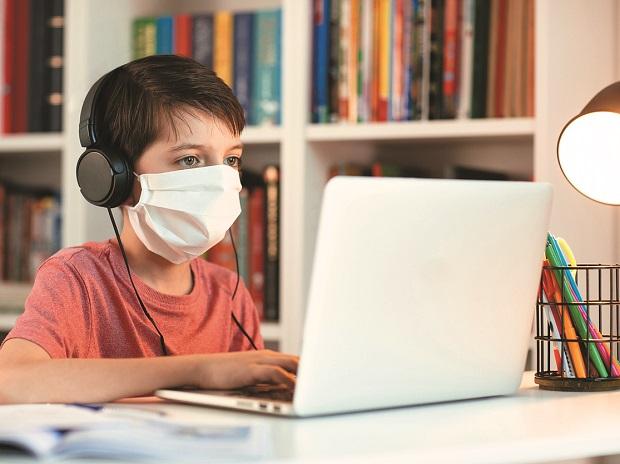
Covid- 19 pandemic sparked widespread realization that our way of thinking is not working. It has shattered our understanding of what culture as we know it is natural and deconstructed. Education is one of those crucial fields, where the need for improvement has become apparent. The coronavirus’ consequences, and thus its preventive interventions, have turned the lives of students, parents, and teachers upside down. The clear imbalance in the ‘normal’ workings of education has put emphasis on many questions that were previously asked and left unanswered afterwards. So, what might the actual effects of this global pandemic mean for the education future?
While coronavirus keeps spreading throughout the entire planet, many countries have decided to close educational institutions as part of a policy of social distancing to slow transmission of the virus. However, this closure of schools, due to the coronavirus (COVID-19) pandemic, has affected the learning of more than 1.5 billion children and youth globally. It should be acknowledged that school closures are likely to widen the learning gap between the lower-income and higher-income families among children. Although many parents who have access to technology and the internet are gradually turning to online education technologies to keep their children studying at home while others may not be able to. In a survey conducted by India Welfare Trust, it has shed some light on how children endure the disproportionate burden of the astonishing outbreak According to the survey, 89 per cent of respondents believe that the delay in lifting the coronavirus lockdown will affect their children’s learning.

Rapid Online Perception study investigates the impact of Covid-19 on Children. During the survey, 1,102 respondents from 23 states and territories of the Union were interviewed. “While children have not been in the face of this pandemic as they have been mostly shielded from Covid-19’s direct health effects so far, results from the study suggest that they have been among its biggest casualties with numerous side effects on their physical and psycho-social well-being,” said CRY chief executive Puja Marwaha.
“More than half of the parents reported their child became more flustered and apprehensive during the lockdown,” the report said, adding, and “37 percent of respondents confirmed that the child’s mental well-being and happiness had been affected by the lockdown. In addition, 88 percent of respondents said that their children’s exposure to screens increased during the lockdown, with 45 percent reporting the increase “to a large extent” and only 43 percent of parents/primary caregivers said they were always supervising the child when it was online.
The things we can keep in mind while opening educational institutions post lockdown are:
Changing the way of Learning:
The teaching method and the way syllabuses are taught can change. Aspects once deemed fundamental to education can be revised to cater the life skills of the future in large measure. Not only careers but also future residents will need skills such as resilience, versatility, collaboration, communication, compassion and understanding, originality and emotional maturity. School learning will have a new purpose, and that will be a major departure from today’s details-focused education.
Implementing innovative methods in education system:
Aside from the upheaval faced by the novel coronavirus, there have been some major changes in schooling in our developing nations. Yet, even in the face of rapid innovation, the way we deliver education still needs to be shifted. Learning is knowledge acquisition, but it doesn’t have to occur primarily through age-old methods that don’t leverage the highest brain potential. Can students get an experience that shapes their learning, rather than being taught? Approaches such as integrated learning and experiential learning, with greater digital transformation, will fuel the future of school education.
Strengthening the bond with technology:
New technologies such as Zoom and Google Meet have been identified as a prominent life-saver in the face of a crippling pandemic. Communication is crucial to our interconnected existence, and the driving force that maintains our connections is technology. For education, that means creating content and delivery systems that make full use of and harness technology. Maybe education can become more flexible and accessible, giving up on its excessive-reliance on rigid structures that we consider necessary at the moment. They are generations identified by their use of technology; it has become an extension of their consciousness and without it, they don’t know a planet.
The future of education should find no room to ignore the use of technology as it can very well be the best platform for empowering learning in an age which integrates technology as a way of life. Such generations will have an effect on the evolution of education because they are the ones most impacted by the pandemic and are in the best place to learn from it and evolve from it.
 Track2Training