
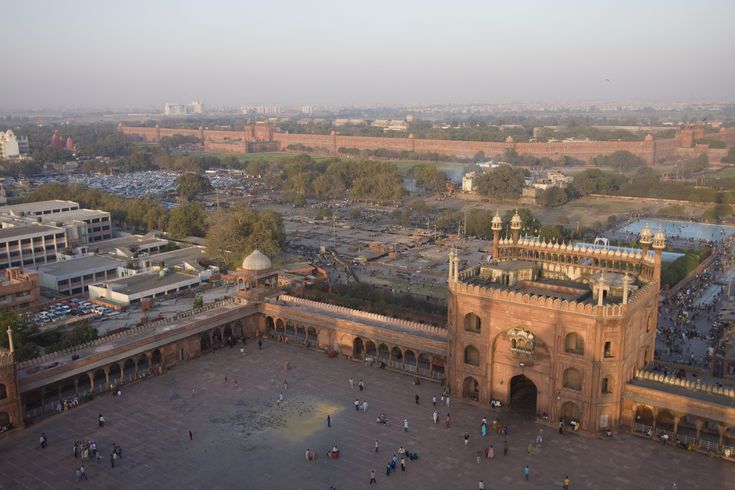
Delhi: an indomitable city – Cultural role played by the city in the fifty years of 1675-1725

Being a city with a soul, the grandeur of unshakable cultural ethos of Delhi had been reverberating in the air across centuries from the inception of Indraprastha to the present. Even though she was lacerated by incessant plunders, devastating wars, shifting capitals and changing rulers, the cultural vibe of Delhi remained fit as a fiddle, radiating the grandeur of a thousand suns rising in all its splendor. Delhi is, therefore, a city with unparalleled cultural eminence, unsurpassable glory and more importantly, an indomitable spirit. 

Owing to the colossal historical backdrop of Delhi, this article attempts to spotlight the indomitable cultural grandeur of the city confined to a brief timeframe of fifty years from 1675 to 1725. However, one may note that this particular time frame is purely abstract and open-ended. None of the limits coincides with any major historical event nor the reigning period of any emperor and hence necessitates the need of referring to some period before or after the pre-designated timeframe. 

The designated timeframe witnesses the rule of Aurangazeb, Bahadur Shah I, Jalandhar Shah, Farrukhsiyar, Akbar II and Muhammad Shah. Nonetheless, the timeframe fails to incorporate the entire reign of Aurangazeb and Muhammad Shah and therefore, this article tends to briefly mention those periods even though it’s beyond the scope of the predetermined timeframe. 

On a brief analysis of Aurangazeb’s reign, one may conclude that his regnal period witnessed mass cultural genocide prima facie. Firstly, he banned music from the court for the want of time for festivity amidst his surging devotion for duty. Secondly, being a hardcore proponent of shari’a, he believed that the content of poetry was immobilized by Sufi mysticism and considered them hawkers of duplicity. Finally, he believed that paintings were un-Islamic and banned it and withdrew all forms of royal patronage offered to artists. One may note that Islamic law forbids the depiction of living creatures in art as it believes that the power of creation safely vests with God. 

However, on careful analysis of the period, Delhi emerged as an exquisite centre for thriving Indo-Mughal culture braving the ravages of Aurangazeb’s antics. Even though Aurangazeb banned music from the court, ceremonial music (naubat) continued to exist. Literateurs and artists now looked upon the members of the harem and the leading nobles for patronage. To illustrate, Prince Azam extended his patronage to a plethora of poets and artists. 

Soon after Aurangazeb withdrew royal patronage for art, music and poetry, many artists left Delhi in search of patronage and imperial attention. Nonetheless, one may note that many of them were hesitant to leave the premises of the city which had honed their skills and supported their livelihood. One of the many poets who were unwilling to leave Delhi was Bedil, a close associate of Aqil Khan ‘Razi’, the venerated Governor of Delhi. He spent thirty-six years of his life in the city and was deeply influenced by Sufi mystic poetry. Moreover, he trained a school of poets in Delhi and he was deeply revered to an extent that an annual urs to his grave began after his death in 1720 where the poets were expected to read out their recent compositions. 

Jahanara with her handsome allowance fixed by Aurangazeb continued extending patronage to a school of poets, musicians and artists. Even after her death, her legacy was inherited by Zeb-un-Nisa and Aqil Khan ‘Razi’ and they emerged as cultural patrons of Delhi, supporting the baluster slackened by Aurangazeb. 

However, Aurangazeb imprisoned Zeb-un-Nisa for supporting rebellious Akbar nonetheless she was granted great sort of freedom and a handsome allowance in confinement and at the later phase of her life, she set up an academy that aimed at incubating and honing the skills of artists. 

In addition to that, the celebrated Chishti order was revived by Sheikh Kalimullah and Jahanara contributed to the growth and revival of the same towards the later stages of her life. Delhi now came to be known as the ‘metropolis of liberalism’ and towards the end of the seventeenth century, two rival centres emerged for the development and propagation of cultural values- Aurangabad that stood for Orthodoxy, theology and Islamic studies and Delhi that resonated with Liberalism and Sufism. 

One may note that Delhi was deprived of the imperatorial presence for about thirty-three years from 1679 when Aurangazeb left for Aurangabad. Bahadur Shah I was in power till 1712 but he never entered Delhi in his capacity as the Emperor. However, this never meant a depreciating political legacy of the city. Firstly, Asad Khan, the ex-Wazir of Aurangazeb was elevated to the position of the Governor of Delhi and this appointment of the most senior officer as the Governor of Delhi exemplifies the political legacy of the city. Secondly, Bahadur Shah ordered that none shall leave Delhi or none shall visit Delhi without his permission. Thirdly, the Red Fort continued to be a formidable macrocosm of legitimate power which can be comprehended by the fact that the newly appointed Governor of Lahore sought permission to visit the Red Fort before assuming his office. 

Even though Delhi was deprived of the imperial presence, it thrived as an important centre for trade, commerce, manufacture and culture. Vestiges of Shah Jahan’s artistic inclination failed to meet a sudden death. Patronage continued to be extended to artists, poets and scholars, both Hindus and Muslims by Dara Shikoh and by the mid-seventeenth century, Delhi emerged as a significant cultural centre. Delhi reclaimed its political importance with the advent of Jalandhar Shah in 1712. However, from 1712 to 1759 Delhi guarded the gates of a rapidly diminishing empire. With declining monarchial prestige and dislodged nobility supplemented by food insecurity, inflation, epidemics and famines with necessary provisions being confined to imperial coffers, Delhi witnessed an era of surging turmoil and insecurity. Merciless executions, imprisonment and dispossession of nobles who had supported a rival prince laid the foundations of catastrophic factional warfare in Delhi. 

Declining monarchical prestige was amplified by the act of Jalandhar Shah as he elevated Lal Kunwar coming from a family of musicians to the status of a queen and such elevations were considered undesirable for nobility. The emperor spent his time with her and even got drunk in public. The emperor seemed to be reduced to the position of a King in the game of Chess being manipulated by the entire clan of musicians. This paved the way towards social instability where the emperor lost the support of the nobles, landlords and theologians. Farrkukhsiyar also failed to restore the lost prestige of Mughal nobility and he was widely despised for his association with a low-born homosexual. 

However, amid such adverse insecurities and catastrophic conflagrations, Delhi remained to be a city with an indomitable spirit. Firstly, even though the Emperor was reduced to the status of a restricted monarch figurehead, the subjects considered him as the guardian of social order and justice. Even the Sayyid Brothers couldn’t attempt a direct consolidation of political power and had to support Farrukhsiyar to the throne. Secondly, albeit the political power of the Mughals were rapidly diminishing with the snowballing Maratha power and semi-independent principalities like Awadh, Bengal and Hyderabad, the Mughal Emperor was seen as a nominal head and a legitimate authority to an extent to which the Marathas and even the British had to approach them at a later stage for political legitimacy. 

Despite the social instability of the period under consideration, the emergence of a small elite class with both means and desire to offer patronage ensured the evergreen perpetuity of cultural activities. Delhi remained to be the favourite halt of nobles and money-lenders who had invested in building markets, lending money for interest or trade aspiring for a supplementary income and this made Delhi one of the mammoth financial centres in India. In consequence of the same, many businessmen, manufacturers, scholars, religious leaders and elites settled in Delhi and offered patronage to cultural activities and thus, Delhi remained to be culturally bouncy even though it faced adverse calamities. Delhi was, is and will be a city with an indomitable spirit and unsurpassable glory. 

One of the biggest loot in the history of India that handicapped Delhi was the invasion of Nadir Shah in 1739. On one hand, the inexpensive Peacock Throne and the Kohinoor were looted and on the other, the repercussions of this loot incarnated as anarchy and insecurity among both the rich and the poor alike for a period of twenty years from 1740-1760. However, this event was also easily overcome within no time as the looted wealth was mostly hoarded ones, not in circulation and by and large it just accounted for a very small part of gold and silver in circulation. Supplemented by a favourable foreign trade, the indomitable spirit of the city overcame the backlash of the loot with ease and cultural life was restored. 

The period under consideration is undoubtedly venerated for flourishing music and literature. Whereas Persian was used by the upper class, Urdu continued to be the language of the masses. The Urdu poetry incorporated Persian and Hindi styles and represented an integrated culture. 

Even though she was wounded by adverse calamities in the period under consideration, Delhi remained to be culturally vibrant, alive and breathing. In the fifty years from 1675 to 1725, she was left without an Emperor for thirty-three years and after the advent of Jalandhar Shah, she witnessed social instability supplemented by inflation, epidemics, famine and factional warfare. She was much better off in the absence of the monarch as the later monarchs were downgraded to the status of a restricted monarch figurehead backed by a myriad of misfortunes. 

Delhi surpassed all her misfortunes with her indomitable spirit. Banning of cultural activities, absence of the emperor, incapable rulers, social unrest, epidemics and famines, inflation, diminishing moral values, factional warfare and plunder miserably failed to amend the cultural landscape of the city. Although Delhi was overshadowed in size, economy and cultural activities by Lahore and Agra as far as the predetermined timeframe is concerned, Delhi was an unparalleled metropolis in the eyes of its people and it remains to be so and it will remain so for the times to come.


Social media and academia are often seen as contradictory pulls in the life of a college student

To keep pace with technological advancement, the Hon’ble Supreme Court of India has cited the right to Internet access as a fundamental right under Article 19(1)(a) of the Constitution of India. Since Social media in itself is a potential medium for large-scale dissemination of information, it is pretty obvious that it is necessary to keep abreast of the latest developments and to communicate with an extensively larger populace that makes it fall under the purview of the right to freedom of speech and expression. In 2017, Kerala became the first state to recognize the internet as a basic human right. Keeping this in mind, won’t it be a clear violation of fundamental right if a college student, an individual citizen of India who has attained the age of eighteen, being barred from access to social media?

Starting from addiction, the use of social media has a wide range of repercussions on the human body and mind. Addiction becomes a very incarnation of digital neo-colonialism where the physical body, the emotion and the intellection of an individual are being feloniously glued to the cobweb fabricated by social media. However, there are only twelve notches in a regular clock. Spending hours on Facebook and WhatsApp becomes an opportunity cost that has incurred as a result of compromising the time that could’ve been devoted to academic activities. Burning the midnight oil sitting in front of a mobile phone indisputably interrupts the sleeping time of a student that in turn will have adverse implications over his biological self. In addition to that, adolescent fantasizing has emerged as a recent issue that challenges the emotional self of a student, most probably caused due to devoting undue hours on social media and ‘sitting in an armchair with a mobile-phone dreaming up Utopias’, as suggested in a recent study report published by the University of Leeds. This is a situation where an individual fails to differentiate between fantasy and reality. It won’t be a surprise if the life of such individuals ends up in a lunatic asylum.

Similar to the statutory warning printed over a pack of cigarettes, the ill effects of social media are being selectively ignored by college students. This selective amnesia has been legitimized by the digitalization of the education system amidst the pandemic. Every college now has its own social media pages and WhatsApp groups have been legitimized as the “official” medium of dispensing college-related and academic-related information. Classes are being taken through WhatsApp, Facebook, Hangouts, Zoom, inter alia and on one fine day if the phone of a college student goes haywire, his day is irretrievably lost. The suggested books, often published by International universities may not be available in public libraries and in most cases, buying them from the open market would be nothing less than a daylight robbery. This makes college students depend on the digitized version of such books, often made available free of cost, making social media like WhatsApp intrinsic to the education system. Social media, therefore, becomes a potential platform for sharing notes, suggested readings, dissemination of urgent information and repeated timetable alterations and it will continue to be so even after the pandemic. It’s simply similar to the concept of a mixed economy where features of both capitalism and socialism exist side-by-side. This relation with academics makes social media an unfathomable part of college life.

In toto, social media has now become an indispensable part of any college student’s daily life, serving as a virtual encyclopedia and as a potential stress-buster. Aside from the health concerns posed by it, it has been adopted by the current education system and now, debates are even made to make social media an intrinsic part of the right to life and personal liberty. “Social Media: A Boon or a Bane” is one of the evergreen topics that are hotly debated for decades. Be it an English question paper of a 6th Grade student, this topic finds its place even in the UPSC interviews and columns of The Hindu. Whether it is a boon or a bane solely depends on your attitude towards the same. For instance, silkworms were given a boon to form a protective shield around them and it strives for its entire lifetime to create one and once it’s created, it loses its life by dint of its boon. A boon can easily be a bane and a bane can be metamorphosed into a charming boon. Therefore, social media can be a boon to some and bane to others depending on how they use the same. Utilizing social media in adherence to a systematic schedule and demarcating the boundary that separates academia and social media so that none of them hampers the time frame devoted to each other will make one a lucid, levelheaded college student. 

Towards the Fourth Phase of Indian Federalism: ‘Modi’fication of Centre-State Relations from 2014 to the Present

“We require a strong and united Centre, much stronger than the Centre we had created under the Government of India Act of 1935”

-Dr B.R. Ambedkar

Devised from the principles scooped out from the Government of India Act of 1935, the Indian Federalism attempted a successful translocation from a tax and law-and-order based governance to governance committed to the welfare ideas of planning and development. However, one may witness three phases of this system, prima facie viz. benign centralism of Nehru (1950-’64) and excessive centralization of Indira Gandhi (1965-’89) followed by co-operative federalism of the era of coalitions (1989-2014). However, on a brief analysis of the contemporary political ecosystem, on the face of it, one may put the finger on the fourth phase of the Indian federal exercise of Modi from 2014 to the present characterized by a series of attempt towards centripetal governance.

The General Elections of 2014 and 2019 has paved the way for the restoration of the de facto one-party dominance at the centre. Being a landmark in the history of Indian Politics, these twin electoral events conferred a hegemonic position to the BJP at the centre. Albeit the fact that the election manifesto of the BJP (2014) attempts to constitute a ‘Team India’ stressing on more sophisticated centre-state relationship supplemented by the creation of regional councils of states that aid the Centre in planning and development, nonetheless, can be despised as BJP’s cock-a-doodle-doo of competitive, co-operative federalism. There can be two possible grounds for the same. Firstly, the party in the majority no longer relied on the endorsement from regional parties. Secondly, intra-party centralization is strengthened with its say in the nomination of candidates to pivotal positions complemented by the participation of Central leaders in regional election campaigns. 

To begin with, the office of the Governors who’re being criticized as the political agent of the centre in the guise of the formal head of the State; is accorded a political dimension with the appointment of partisan Governors. In 2014, the BJP Government dismissed nine Governors who were appointed by the previous Government. One of the consequential nitpick of Indian federalism is Art.156 owing to which the office of the Governor is made immensely insecure as she shall be in harness during the pleasure of the President and can be removed from office anytime with the ease of knocking a chesspiece out. 

The celebrated Bommai Judgement (1994) serves as a lodestar of the principles of Indian Federalism that brings the cold-blooded use of Art.356 under the purview of Judicial Review. The provision was invoked twice in 2016 over the Congress ministries of Arunachal Pradesh and Uttarakhand. As far as the former is concerned, the partisan Governor advanced the session of the legislative assembly by a month (Art.174) owing to a factional warfare within the Congress, paving the way for BJP-led Government in Arunachal Pradesh. Concerning the latter, nine Congress MLA’s broke-out from the party and consequently, the Congress ministry was asked to prove their majority. However, the President of India was advised to suspend the Government a day before the floor test was conducted, inviting colossal political outrage. In both cases, the Supreme Court restored the former Governments in her capacity of the Guardian of Indian Federalism or an institutional veto player

Moreover, the Demonetization melee of 2016 has attracted large-scale opprobrium. Then Congress Chief Minister of Uttar Pradesh pummeled this act as being politically motivated, aiming to destroy political rivals and ensuring a slackened propaganda before the 2017 election campaigns of Uttar Pradesh and the incapacitated campaigning activities and the Election results favouring the BJP seemed to prove his argument valid. 

In addition to that, even though the overtly centralized planning commission was replaced by NITI-Aayog, the latter tends to be inclined to the office of the Prime Minister. The Aayog constitutes of a CEO, a Vice-Chairperson, some full-time members, few ex-Officio members who’re Cabinet Ministers and special invitees of which none of them so far were State officeholders.  Even though the NDC was replaced by a Governing Council, it is highly looked down upon as being a mere formulator of Union policies- like a caged parrot. For instance, the council met thrice between 2015-17 and the ‘15 meeting was devoted to policy formulation related to the proposed amendment to the Land Acquisition (Rehabilitation and Resettlement) act of 2013. Also, the Regional Councils comprise of a school of Chief-Minister’s nonetheless, the Central Executive determines the composition as well as the themes to focus on. They aren’t empowered to work on a theme of their choice, in sync with their aspirations. In 2015, three councils on Skill Development, Swachchh Bharat and Implementation of Centrally Sponsored Schemes were formed. Albeit the fact that these councils were heterogeneous in party-based compositions, they were chaired by then BJP Chief-Ministers of Andhra Pradesh, Punjab and Madhya Pradesh respectively. 

The abolition of Art.370 brings to the limelight one of the excessive powers of the Union to alter the territorial boundaries and status of the constituent units with a simple majority, with minimal and exceedingly formal consultation with the affected (Art.3). Notwithstanding the Puducherry crisis, the ex-CM accused the former Lieutenant Governor and the Union of their (successful) attempt to topple the government. The Calcutta High Court’s direction to remove the anti-CAA advertisements sponsored by the West Bengal Government validates Art.256 that requires the State Governments to implement a parliamentary law. Further, Art.257 enables the Union to give directions to the States ensuring the same. En réalité, refusal to adhere to such lawful directions may invite discharge of Art.356 according to Art.365 and the Constitutional validity of the latter was upheld by the Bommai verdict. 

In toto, the Parliament which is supposed to be the asseverate temple of democracy is being confined to an edifice of constitutional formalities. The constitution with a natural inclination towards the centre joins hands with the de facto one-party dominance paving the way for a centripetal centre-state relation. 

Poor public works and infrastructure

There is a huge need and a huge opportunity to get everyone in the world connected, to give everyone a voice and to help transform society for the future. The scale of the technology and infrastructure that must be built is unprecedented, and we believe this is the most important problem we can focus on.
– Mark Zuckerberg
To accomplish sustained poverty reduction, nations like Indonesia should seek financial development that includes and benefits the poor. The development of the poor is a necessary aspect in order to meet the UN (United Nations) Development Goal (MDGs) which has a set focus fo various difficulties in varied sectors (agriculture and income, education, health, water and sanitation). Although infrastructure hasn’t been distinguished as a direct MDG target or indicator, the arrangement of infrastructure is essential in facilitating financial growth and local development. Without sustainable infrastructure development, a large number of MDG targets may not be met. Investing in infrastructure might be a source of livelihood for many people. The development and upkeep of such infrastructure needs labour and this creates opportunities for people to get a job. The utilization of local resources also bring about the betterment of the economy of the neighbourhood. Although India is the world’s fourth largest economy, lack of good infrastructure is a cause of major obstruction to a huge amount of growth and development. Physical infrastructure has a direct impact on economy and may cause people to invest money in India.

While infrastructure in India is still developing, there are a plethora of issues which need to be addressed in order to curb poor infrastructure. A few of such examples are:
• A stark division between production and demand of electricity detrimenting both manufacturing and overall growth
• Roads are a popular means of transport. They are cheap and easy to avail and can take us to most places in our daily lives. Roads act as a backbone for transportation in India. The poor conditions of the roads thus effect the quality, speed and the wide reach of transport here.

It turns out that advancing equal opportunity and economic empowerment is both morally right and good economics, because discrimination, poverty and ignorance restrict growth, while investments in education, infrastructure and scientific and technological research increase it, creating more good jobs and new wealth for all of us.
– William J. Clinton
India’s ambition of keeping in pace with its extremely fast pace of growth depends largely on infrastructure. The infrastructure available in India is till date inadequate and insufficient for such a growing nation. Infrastructure development is the main priority for improving India’s manufacturing competitiveness and as a result cause higher growth. Even for budgeted projects, timely execution is a challenge for many. Although things such as power generation and transmission is on the rise, the declining condition of transportation infrastructure forces a limit onto corporate performance and investments. If developed successfully, good infrastructure may benefit a myriad of sectors and be an overall boost to the country’s economy. However, large sums of money are necessary for such infrastructure to take place. It is important to first fill up the infrastructure deficit before thinking about going for better infrastructure for future growth. The cost for transport in India (around 15% of the country’s GDP) as well as China(around 18-20% of the country’s GDP). The GST (goods and service tax) aims at fixing the negative effects of different layers of taxes across the state and the central governments, causing much help to logistics and infrastructure companies.