
Gratitude has a bigger influence on our lives than we realise. We’ll look at what positive psychology has to say about the habit of offering thanks in this post. “Gratitude has a stronger impact on our lives than we think,” according to a related piece. Let’s have a look at what positive psychology has to say about the habit of expressing thanks in this article. The United States and Canada celebrate Thanksgiving, which was originally called Thanksgiving, on various dates each year.
On American soil, it is observed on the final Thursday in November, while on Canadian soil, it is observed on the second Monday in October. Its Beginnings In 1621, a group of pilgrims in Plymouth shared their autumn crop with the Vampanok Indians, who taught them how to cultivate.
Month: February 2022
Avul Pakir Jainulabdeen Abdul kalam
Avul Pakir Jainulabdeen Abdul kalam or Abdul Kalam as he is well-known is the major force behind India’s missile power. He is the driving force behind missiles like Agni, Akash, Trishul, and Nag which made India a major missile power in the world.
Born in 1931, in Rameshwaram, Tamilnadu, Abdul Kalam had his initial education in Rameshwaram. Later he studied at Schwartz High School, in Ramanathapuram. Subsequently, he moved to st. Joseph’s college Tirchi. Though he was not a bright student in terms of the marks that he secured in exams, he developed an interest in physics. After completing the B.sc degree course from St.Joseph’s he joined the Madras Insitute of technology, the best institution for technical education in south India at that time. He specialized in Aeronautical Engineering after being trained at Hindustan Aeronautics Limited, Bangalore.
After his college education, Abdul kalam was keen on joining the Indian Air force were dashed when he just missed making it to the selected list of candidates. Though he was sad at being unable to join the Indian Air force, he went ahead and joined the directorate of technical development and production, DTD and P (Air), as a senior scientific assistant.
Abdul Kalam’s job at the DTD and P (Air) became the launching pad for his glorious career in the defense field. After working for some time at The National Aeronautics and Space Administration (NASA) in the USA, Abdul kalam returned to India and helped the country to develop awesome weaponry.
It will be no exaggeration to state that Abdul kalam is instrumental in firmly establishing India’s core competency in rocketry. His efforts, along with that of his dedicated team, took India into the select club of nations that call themselves superpowers.
For his distinguished contributions to the defense of the country, the government decorated him with the highest civilian award of India, the Bharat Ratna.
Abdul kalam leads a simple life working 18 hours a day. He is fond of music and spends his leisure hours practicing veena. He is also actively involved in developing inexpensive medical devices to bring advanced medical care within the reach of the poor Indians.
nature protects, if protected
Earth provides enough to satisfy every man’s needs, but not every man’s greed.
Mahatma Gandhi
In 42nd amendment to the constitution of India (1976), article 48A and 51A(g) were added inter alia. Article 48A talks about the “protection and improvement of environment and safeguarding of forests and wildlife” and Article 51A(g) talks about one of our fundamental duty i.e. “to protect and improve our natural environment”. These two articles were added in the aftermath of the Stockholm convention (UN conference on Human environment, 1972) which provided for 26 principles and 109 recommendations. These principles serves as the “Magna carta” of environment protection.
The SARS-CoV-2 ravaged the whole globe, however “differential treatment” is offered by the virus to the unprivileged sections of our societies. Those who were at lowest rung of the societies faced the most brunt of it with some of the families even losing their sole breadwinner. There is a substantial hue and cry among the opposition parties as well as people regarding the mishandling of pandemic by the government. However, we all are more or less responsible for this havoc. Not just because we haven’t followed the COVID appropriate behavior religiously but because we as a human race failed to respect, “The Precautionary Principle”.
Why do we look different in photos?
No wonder we always experienced that how hard we try to click a good photo for our profile picture it is so hard for all of us to get a decent photo.
Also, when we look ourselves in the mirror we look just fine! Then why exactly we look good in mirror but bad in photos?
Reality is we do not really know how we look. The mirror gives us a reflection and the camera does not show us our accurate face.
The mirror you look in every morning during washing or before going out makes you believe that this is how you look. We are so accustomed to see ourselves in mirror that when we see ourselves in a picture we are unable to recognize ourselves.
Mirror shows us the enantiomorph version of our face in simpler terms when we see in a mirror the right becomes left and the left becomes right, and so unless you have a completely symmetrical face you will always find slight change in the mirror image of you and photo clicked image of you.
Scientist call this familiarity of us to the mirror image of ourselves as MERE EXPOSURE. This exposure makes us favorable to things which are familiar and unfavorable to things which are unfamiliar. Henceforth, we are more inclined towards our mirror image than the camera clicked image
Also, the camera picture we see are not also true image. Camera clicks 2D images and thus it somehow distorts our real look.
Putting in a nutshell, we do not really know how we look and honestly it does not even matter how we look as Margaret Hungerford says beauty lies in the eye of the beholder.
They both die at the end – Adam Silvera

What if you had one day to live?
They both die at the end bases on an alternative present, where a company named Death Cast calls the deckers—a term for the people who will die the coming day— to tell them of their forthcoming death, though not the way it will happen. Unfortunately two teenagers Mateo Torrez and Rufus Emeterio face their cruel destiny when they receive a call from Death Cast. But is it really cruel though?
Two total strangers—deckers—find each through an app Last Friend to spend their end day and make it worth. Mateo and Rufus contact each other through Last Friend and eventually try to come out of their comfort zone to spend their last day, with no regrets during which their deepening friendship starts blossoming into something more.
The books gives off the most important message that yes, we’re going to die but until then we are living. We have to move, live, dream even if we survive for a day. And as the title already spoils it, they both do die at t
Top Tourist Destinations
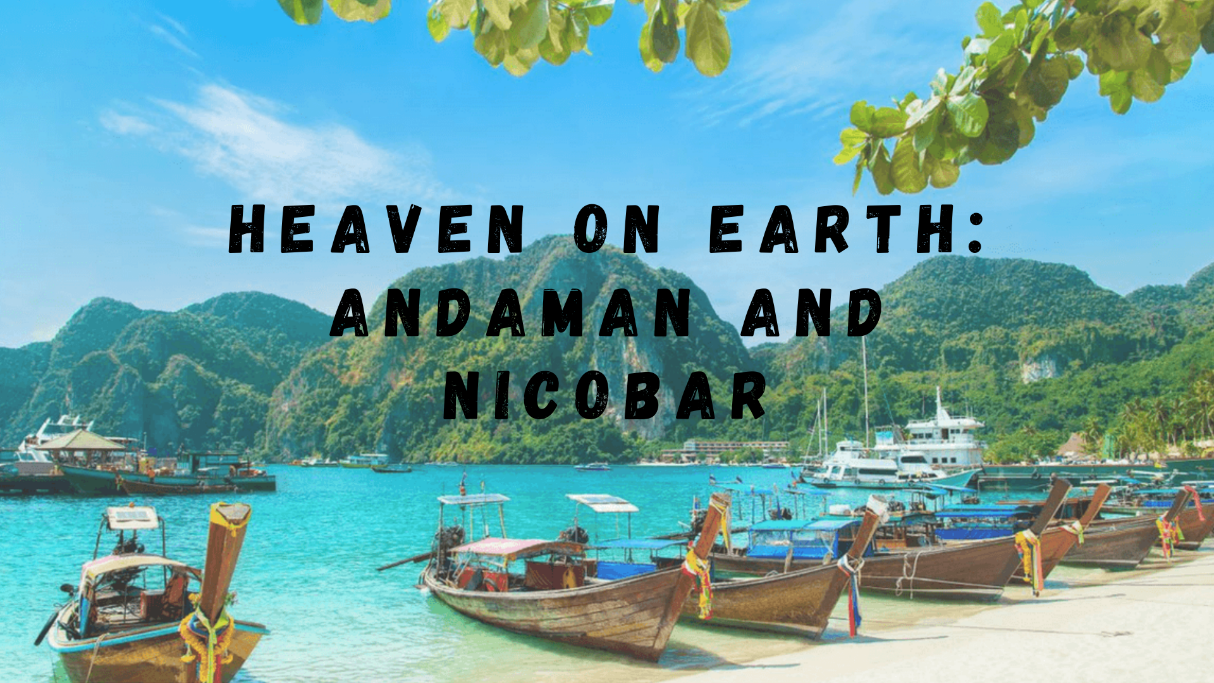
In this blog, I am going to take you to the middle of the sea. Wondering where? The island which is very famous because of our freedom fighters where they had to spend years behind the bars. Yes, you are guessing right, I am talking about Andaman and Nicobar Island. This place is heaven on the earth if you haven’t visited yet after reading this blog about Andaman and Nicobar Island, I am sure that you all will be going to book your tickets now! So, let’s start our online trip to Andaman and Nicobar.
I am going to talk about the places where I had visited in Andaman and Nicobar.
- Havelock
- Neil island
- Cellular Jail
- Ross Island

Havelock is the spotlight of the Andaman and Nicobar tourism, it is very famous for the beaches and greenery, in short, it is the feast for the eyes. Clyster clear water, white sand will definitely soothe your eyes. In 2018 our prime minister Narendra Modi has changed the name of havelock to swaraj deep. Yes I know you all want to know how to reach there, you have to book ferries and it will take 90 min to reach there. Places to visit in havelock are:
- RADHA NAGAR BEACH:
Radha Nagar beach is one of the most well-known beaches in Andaman and Nicobar and the best beach in Asian described by the Time magazine. sky blue sea with crystal clear water and white sand where you and enjoy your day you can play in the water you can swim in the water you can also take sun-bath there. There are large numbers of huts, benches and wooden chairs where you can sit and relax there and can enjoy the beauty of nature.
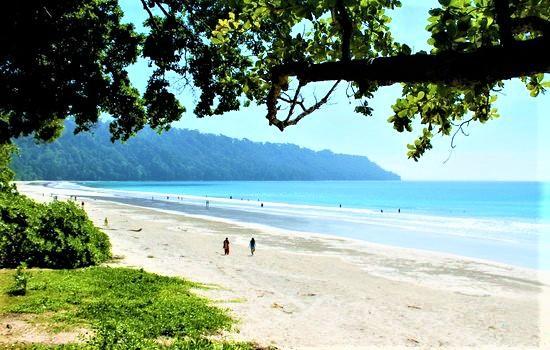
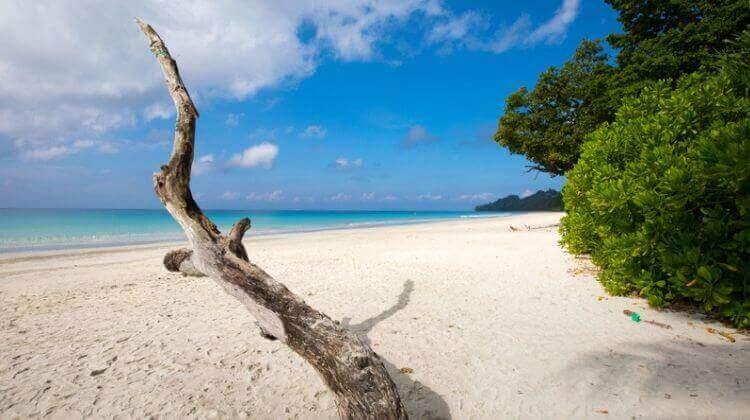
They also provide you with changing rooms where you can change you wet cloths.
- ELEPHANT BEACH
Don’t judge this place by its name, you might be thinking that there must be many elephants but it is not like that. Elephant beach is very famous for water sports, it gives you numerous water activities. Let’s discuss in more details about water sports.
- SCUBA DIVING :

In scuba diving, you are taken under-water where you can see the breath-taking view of aquatic life. You can see untouched coral reefs, vibrant fishes, under-water vegetation and under-water ecosystem.
- SNORKELING :

Snorkelling is little bit same as scuba diving but it doesn’t allow you to go deep inside the water, you can only go to the surface of the water and can see through your goggles, and also can swim.
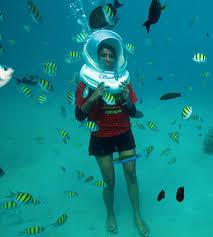
- SEA WALKING:
Yes, you heard right you can walk under the sea, sea walking is most unique and very adventurous. Diving and swimming are okay but have you ever imagined walking under the sea. Once you reached the bottom of the sea you will see that you will get surrounded by hoards of fishes you can actually feed them, isn’t it really exciting?
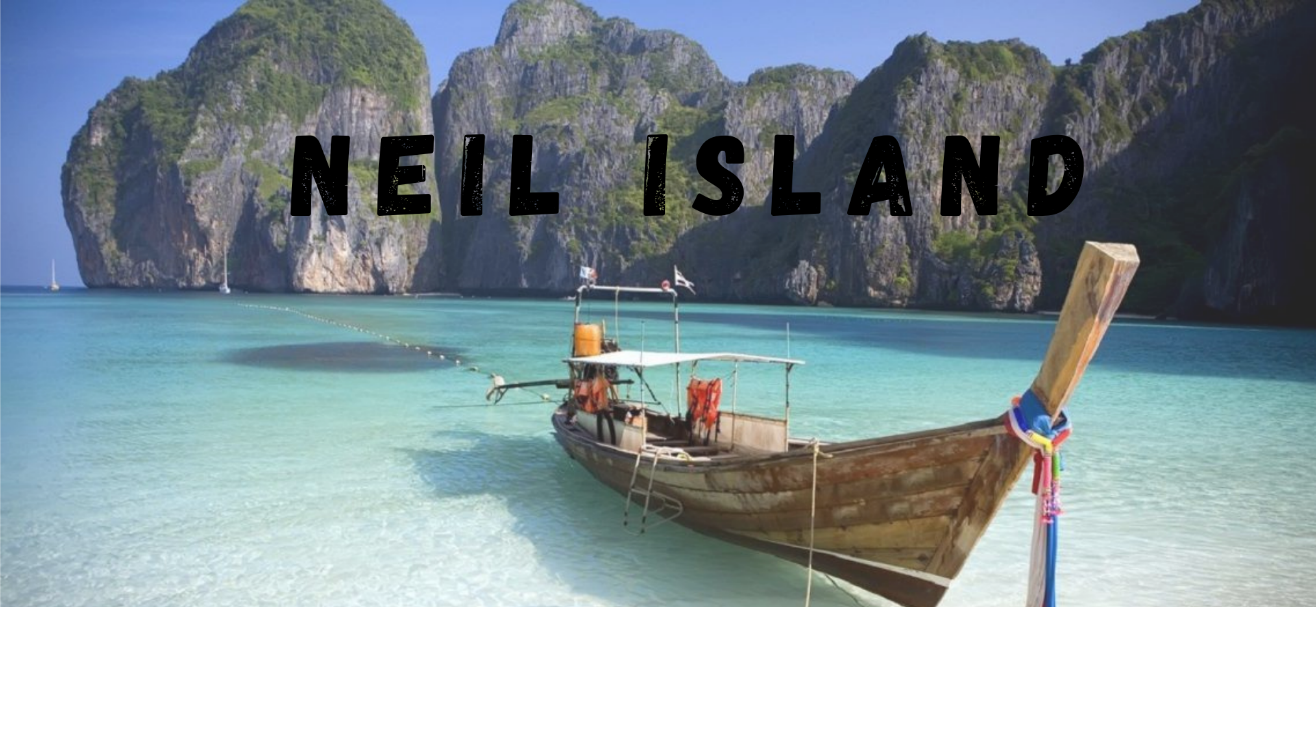
It is another island full of beaches, this island is for those who want to be far from noise, disturbance as you can find a smaller number of vehicles, market and less population. Here also you can find water sports activities like jet skiing and a glass bottom boat ride. Let me make you more clear about these water sports.
- JET SKIING:

Jet skiing is one of the most enjoyable water sports activity as it can be enjoyed by anyone and it is available at Bharatpur Beach in Neil. It will give you a unique feeling that you are riding a bike on water. Timing for this activity is from 9AM to 4PM. I personally advise you to book jet ski as it is always available and t is cheaper than other water sports activities.
- GLASS BOTTOM BOAT RIDE:

this activity is appropriate for those who don’t want to get wet or doesn’t want to go into the water. By the name itself, it is clear that you will be travelling on a boat which will have a see-through glass from which you can see the underwater life, you can see fishes, corals and many more.
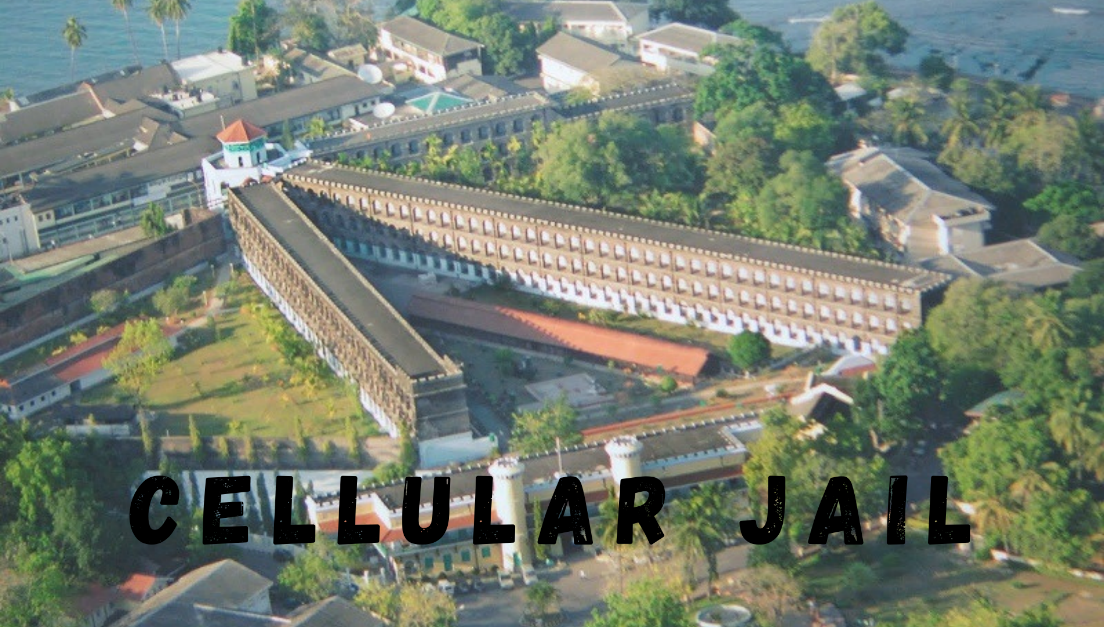
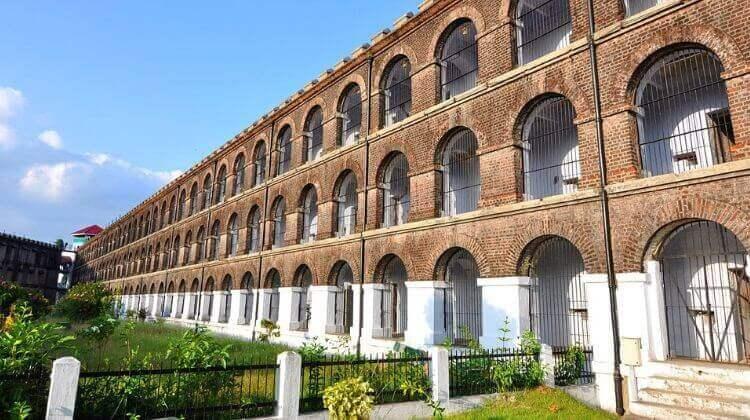
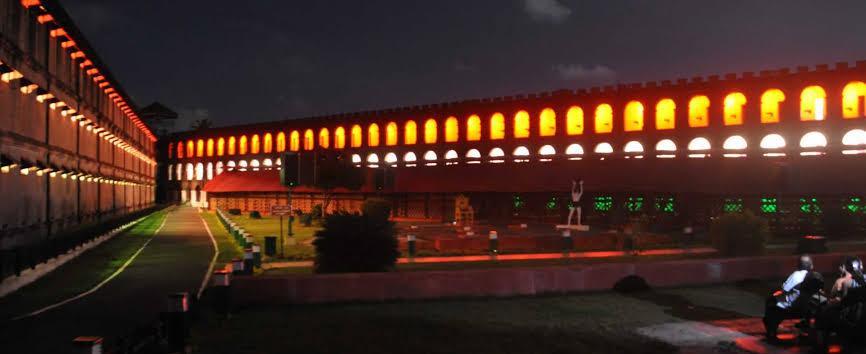
Cellular jail is one of the most historic monuments in Andaman and Nicobar, also known as kaala Pani, it will definitely give you goosebumps while exploring the jail. Every wall of the jail will tell you the story of our soldiers. There you will see how much sacrifice has been done by our freedom fighters. Britishers used to send the soldiers in this whenever they try to protest against them. You can visit the jail at 9AM to 12:30PM and 1:00PM to 5PM (except on Mondays and on national holiday)
Cellular jail will provide you light and sound show, in this you will get narrated the whole story of how freedom fighters lived there how they survived there and how has been treated there. It is a must-watch show. The show is in both Hindi language and in the English language. You can enjoy this show at 6PM (Hindi) and 7:15PM (English).
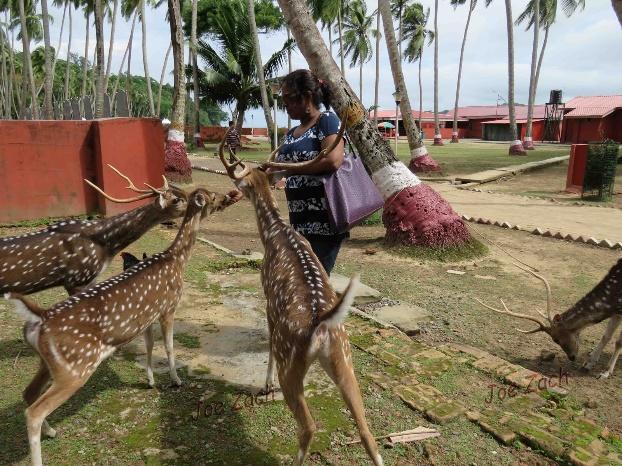
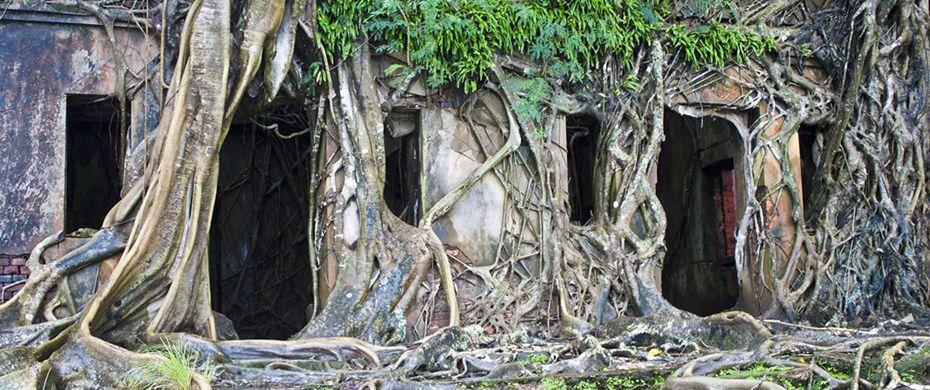
The one who is a nature lover, Ross island is a perfect place to visit. There you are surrounded by nature. There you can see animals and the best part is that they are not caged they will roam here and there. You will see rabbits, deer, peacocks roaming here and there and you can experience the beauty of the nature. You can sit there for hours in cool breeze and can also enjoy the beach view. In 2018 our Prime Minister Narender Modi has changed the name of Ross Island to Netaji Shubhas Chandra Bose island.

Next question you all will get that how one can reach there?
You can get a boat from phoenix bay jetty and it will help you to reach in 15 mins, the people over there will provide you with a life jacket also or else you can choose a helicopter tour.
Yes, this is the short and adventurous trip of mine to Andaman and Nicobar, I am sure that after reading this blog you will definitely plan your future trip to Andaman and Nicobar. I personally suggest you to visit Andaman and Nicobar during summer months.
Brave New World by Aldous Huxley

Brave New World is a dystopian social science fiction novel by English author Aldous Huxley, written in 1931 and published in 1932. The book presents a nightmarish vision of a future society.
In 1999, the Modern Library ranked Brave New World at number 5 on its list of the 100 best English-language novels of the 20th century. In 2003, Robert McCrum, writing for The Observer, included Brave New World chronologically at number 53 in “the top 100 greatest novels of all time”, and the novel was listed at number 87 on The Big Read survey by the BBC. Despite this, Brave New World has frequently been banned and challenged since its original publication. It has landed on the American Library Association list of top 100 banned and challenged books of the decade since the association began the list in 1990.
Summary
This is a story about a world where people are born in test tubes and their lives are predetermined by their social status. Mothers, fathers, children, and other social relationships do not exist, and all of the primary human needs are met by forced or fabricated social experiences.
The Alphas, the top social class, are the most brilliant and enjoy more of life, whereas the lower classes, who have been genetically stunted in a lab, perform the society’s less important chores. To further assure their future social rank, each generation of children is created in batches via cloning and suggestive conditioning.
Bernard, a government psychologist in London, is an Alpha, but he’s physically small and doesn’t like society’s artificial social aspects, such as unrestricted sex and soma, a drug that makes people feel drunkenly good.
Bernard is sent to New Mexico as a psychologist to study a “savage” reservation, a place where the “old” society still exists. He brings Lenina, a young and attractive woman, with him, and the two of them enter the reservation together. There, Bernard meets Linda, a lady who grew up in London but was abandoned in the reservation several years ago. It is also discovered that, Linda had a son named John.
This is problematic because the father is Bernard’s boss, the Director of Hatcheries and Conditioning, and Bernard’s society does not accept procreation through natural means. Instead, Bernard decides to bring Linda and John back to London.
Bernard, who is normally quiet, becomes outgoing, as his fame for bringing back John, “The Savage”, grows. However, when John fails to show up for a social event, his social status returns to one of an outcast.
After his mother’s death, John understands that something is wrong with society. He attracts the attention of the Controller, the regional leader of Western Europe, and then John and the Controller talk.
The Controller explains how and why things are the way they are. That the coexistence of truth and happiness is a balancing act and that they have chosen a life of extreme happiness with very little truth.
Bernard is sent to an island with other freethinkers like himself, and John decides to move to the countryside and live alone. In the end, after being made a spectacle, John hangs himself out of shame.
Review
There’s a lot to say about this story, but what draws my interest is the concept of predisposing individuals for a specific course before they’re even born, similar to putting them on a train track. We learn in the story that lower-level individuals learn what is comfortable to them early on so that when they grow up and have to do menial duties, they are not angry because they have been conditioned to believe that what they are doing is good. In other words, a social ceiling has been created for them.
What’s even more interesting is that the same thing could be happening today. For example, if a person is raised in a high-status social network, he or she is bound to stay in that high-status social network. Similarly, someone who grew up in a poor social network is more likely to stay in that network. Of course, these paths aren’t cast in stone, and there’s always the possibility of deviations, but for the most part, one’s environment has a significant impact on the type of person they become and the decisions they make.
What’s exciting to see are individuals, through their own talents or luck, who shift their social circumstances and assimilate themselves into other social networks. In essence, they are shifting the direction of their tracks and arriving at new destinations.
THE RISE OF METHODISM
AN INTRODUCTION TO STUART ENGLAND (1603-1714):

The Stuart era began when James I, who was also James VI of Scotland, succeeded Elizabeth I. The last Tudor queen had died childless in 1603. James’s ascension to the throne conjoined the two long-warring nations of England and Scotland. The Stuart period witnessed intense religious and political conflicts, which shifted power from the monarchy to Parliament. Meanwhile, discoveries and innovations transformed science, architecture and everyday life.
A NEW DYNASTY :
The shrewd James I (r.1603–25), who was also James VI of Scotland (and the son of Elizabeth I’s cousin Mary, Queen of Scots), successfully conjoined the two long-warring nations of England and Scotland.
Despite threats to his reign, including the Gunpowder Plot (1605), he maintained peace at home and abroad.
James’s glamorous elder son Prince Henry died in 1612, leaving his younger son, Charles I (r.1625–49), to succeed.
This sober, ceremonious monarch was devoted to the arts and to the Anglican Church, and acutely conscious of his divine right to rule.
ROYAL DECREE AND CIVIL WAR:

Impatient with parliamentary control, Charles ruled by royal decree (without Parliament) from 1629 until 1640. His subjects became increasingly exasperated by the taxes he levied on them, and by the suppression of Puritanism by William Laud, the Archbishop of Canterbury.
After the fiasco of the Bishops’ Wars with the Scots of 1639–40 (provoked by the imposition of Charles’s religious reforms), the king was forced to recall Parliament in a bid to raise money. Frustration boiled over as Charles refused to give Parliament real power in State and Church. Both sides armed themselves, and despite a widespread desire for compromise, civil war broke out in August 1642.
The civil wars and their aftermath were calamitous. They killed a far greater proportion of the populations of England, Scotland and (especially) Ireland than the First World War. Many castles were pressed into active service for the first time since the Middle Ages and many – like Scarborough in North Yorkshire – underwent epic sieges.
A KING CONDEMNED:

By 1647 Parliament’s New Model Army, commanded by Sir Thomas Fairfax and Oliver Cromwell, had defeated King Charles. He was imprisoned at Carisbrooke Castle on the Isle of Wight, but under the cover of peace negotiations, he secretly worked to provoke a Second Civil War, which broke out 1648. Parliament was again victorious, and this time the army accordingly insisted (despite moderate protests) on his trial, condemnation and execution in 1649.
The unprecedented public beheading of a monarch sent shockwaves through Britain and Europe. In 1651, with Scots support, the future Charles II mounted a hopeless invasion of what was now a republic, the English Commonwealth (1649–53). Defeated, he escaped to France after famously hiding in an oak tree at Boscobel in Shropshire.
THE INTERREGNUM :
The period after Charles’s execution, known as the Interregnum, saw the loosening of government and Church control. In response, there was an unprecedented ferment of revolutionary ideas, which were spread by an explosion of pamphlets. Radical religious sects proliferated, many expecting the imminent Second Coming of Christ. The Levellers demanded votes for all men and universal religious tolerance.
Oliver Cromwell, who ruled as Lord Protector of the Commonwealth of England, Scotland and Ireland from 1653 until 1658, personally favoured toleration of all religions despite his own radical Puritanism. But he used military power to preserve both the fruits of his Civil War victory and national stability, commanding the confidence of both army and civil government.
At his death, this stability collapsed. Charles II was invited to return, and resumed the throne in triumph in May 1660.
SUCCESSION AND UNION:
The joint rule of William III (1689–1702) and Mary II (1689–94) brought peace to England, although in Ireland and Scotland James’s supporters fought on. The Act of Settlement (1701) ensured the succession of Mary’s sister, Anne – rather than James II, his son or any other Catholic claimant – and ultimately the ‘Protestant Succession’ of the House of Hanover. This was all the more necessary since none of Anne’s 18 children reached maturity.
During Anne’s reign (1702–14) the Duke of Marlborough won famous victories against Louis XIV of France, but the most significant political event during her time on the throne was the Act of Union with Scotland (1707). For the first time, England was part of a unified Great Britain.
Cycling for Health and Fitness
Physical activity is required to be fit and healthy. Obesity, heart disease, cancer, mental illness, diabetes, and arthritis are all diseases that can be prevented by regular physical activity. One of the most effective strategies to lower your risk of health problems related with a sedentary life is to ride your bicycle on a regular basis.
Cycling is a low-impact, healthy activity that may be enjoyed by people of all ages, from toddlers to seniors. It’s also enjoyable, inexpensive, and environmentally friendly.
Riding to work or the shops is one of the most time-efficient ways to combine regular exercise with your everyday routine. An estimated one billion people ride bicycles every day – for transport, recreation and sport. It only takes two to four hours a week to achieve a general improvement to your health.

Health benefits of regular cycling
Cycling is mostly an aerobic activity, which means that your heart, blood vessels and lungs all get a workout. You will breathe deeper, sweat more, and have a higher body temperature, all of which will improve your overall fitness.
The health benefits of regular cycling include:
- increased cardiovascular fitness
- increased muscle strength and flexibility
- improved joint mobility
- decreased stress levels
- improved posture and coordination
- strengthened bones
- decreased body fat levels
- prevention or management of disease
- reduced anxiety and depression.
Cycling and specific health issues
Cycling can improve both physical and mental health, and can reduce the chances of experiencing many health problems.
1) Obesity and weight control
Cycling is a good way to control or reduce weight, as it raises your metabolic rate, builds muscle and burns body fat. If you’re trying to lose weight, cycling must be combined with a healthy eating plan. Cycling is a comfortable form of exercise and you can change the time and intensity – it can be built up slowly and varied to suit you.
2) Cardiovascular disease and cycling
Cardiovascular diseases include stroke, high blood pressure and heart attack. Regular cycling stimulates and improves your heart, lungs and circulation, reducing your risk of cardiovascular diseases. Cycling strengthens your heart muscles, lowers resting pulse and reduces blood fat levels.
3) Cancer and cycling
Many researchers have studied the relationship between exercise and cancer, especially colon and breast cancer. Research has shown that if you cycle, the chance of bowel cancer is reduced. Some evidence suggests that regular cycling reduces the risk of breast cancer.
4) Diabetes and cycling
The risk of developing type 2 diabetes is rising, posing a severe threat to public health. Physical inactivity is known to be a primary factor in the development of this condition. Large-scale research in Finland found that people who cycled for more than 30 minutes each day had a 40% decreased chance of acquiring diabetes.
5) Bone injuries, arthritis and cycling
Cycling improves strength, balance and coordination. It may also help to prevent falls and fractures. Riding a bike is an ideal form of exercise if you have osteoarthritis, because it is a low-impact exercise that places little stress on joints.
Cycling does not specifically help osteoporosis (bone-thinning disease) because it is not a weight-bearing exercise.
6) Mental illness and cycling
Regular bike riding can help with mental health issues like sadness, stress, and anxiety. This is due to the effects of the exercise itself and because of the enjoyment that riding a bike can bring.
7) Hand cycling and health
Hand cycles are similar to recumbent tricycles, but instead of using foot pedals, they use hand power. If necessary, Velcro straps can be used to hold the hands to the pedals.
This style of tricycle allows amputees, people with spinal injuries and those recovering from certain conditions such as stroke to cycle as a form of exercise and recreation. Hand cyclists get the same cardiovascular and aerobic benefits as normal bicycles.
LIFE OF ENGLAND IN SEVENTIES:
After the dynamic optimism of the sixties, the seventies proved to be a decade of disillusionment. The seventies ushered in a mood of weary disenchantment. It was essentially a decade of disillusionment.
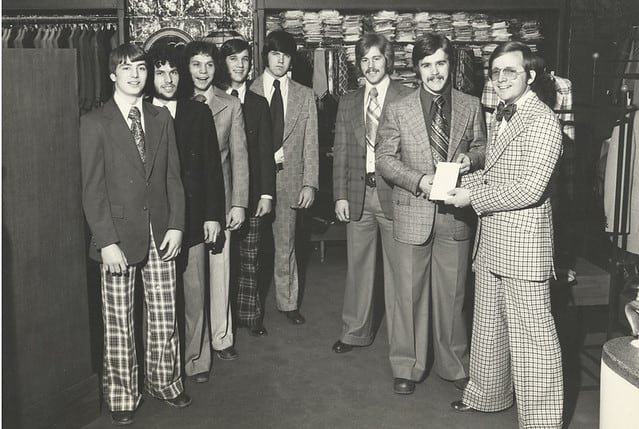
A Conservative government, under Edward Heath, was elected in 1970. He introduced further changes in politics and technology that were characteristic of the over- optimistic thinking of the sixties. For a while the economy seemed unreal. There was a sharp increase in real estate prices, leading to a great concentration of city development. Inflation rate became alarming. The trade unions were becoming very aggressive and were at odds with the Conservative government over its Industrial Relations Act. Heath tried his best to meet the crisis, but his government collapsed in 1974. When Harold Wilson returned as the next Prime Minister, it was a chaotic period of industrial unrest, power cuts and food shortages. Shipbuilding a s the aircraft industries were nationalised.
In 1975, when the country was on the very brink of a financial crisis, Wilson resigned. Over the next couple of years, the conservatives, under Mrs. Margaret Thatcher, won a long series of by-elections, toppling the huge Labour majorities. With the increasing power of the conservatives, there was a steady swing back to the right. Between1975 and 1976, both of Britain’s major political parties had chosen new leaders. James Callaghan replaced Harold Wilson as the leader of the Labour party . In 1979, the Conservative Party Won, and Margaret Thatcher became the first woman Prime Minister of England. By the end of the seventies, the British people began to feel that a revival of conservative attitudes was essential. Various writers and politicians, who were earlier leftist, now warned the people that the power of the unions, if unchecked, would eventually change the country into a Marxist totalitarian state. Another Aspect of the seventies was the increasing interest in the religions of the East.
IRISH REPUBLICAN ARMY (IRA):
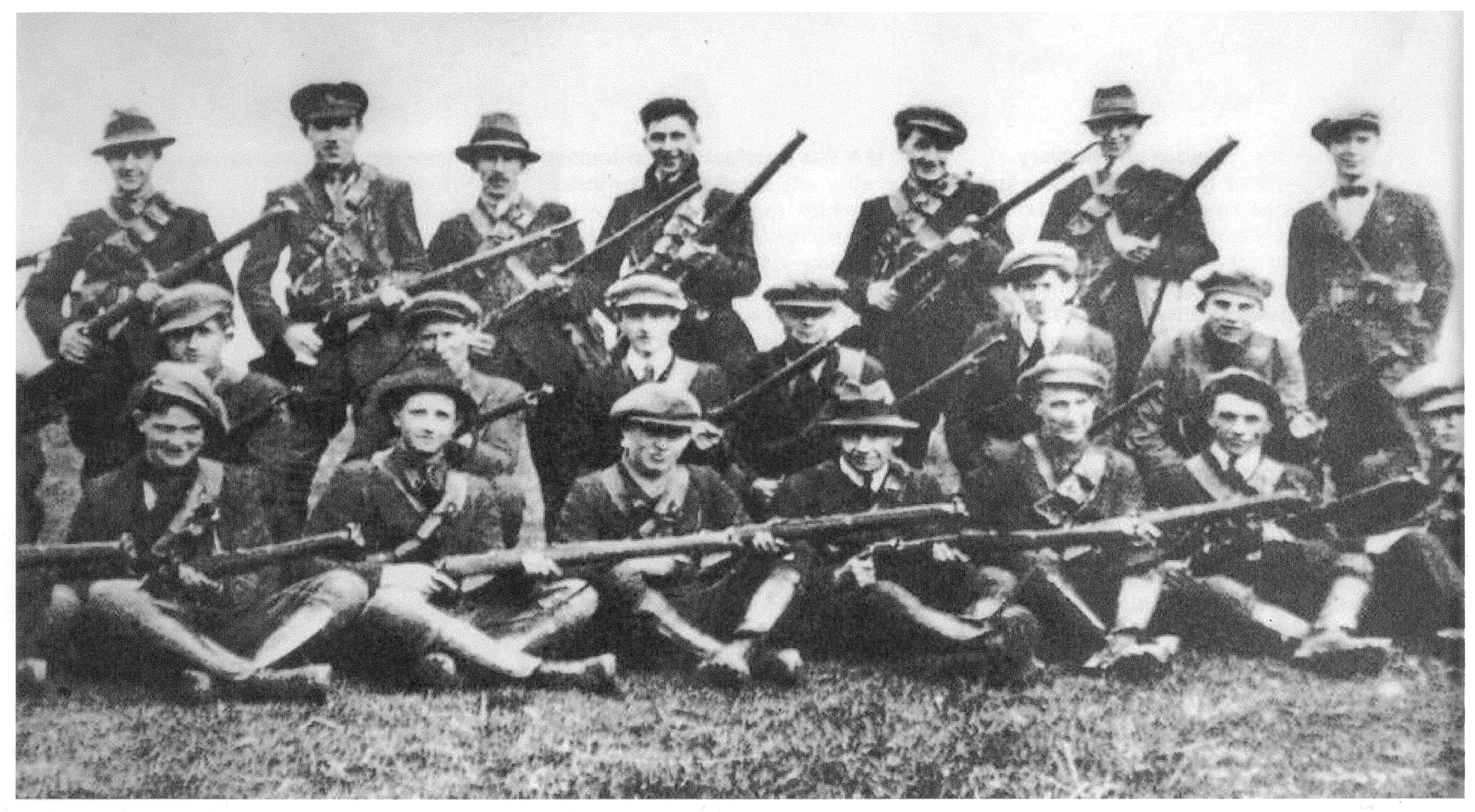
In England, the Irish Republican Army (IRA) intensified its nationalistic campaign through a series of terrorist activities. Several people were wounded when two car bombs exploded in central London. The IRA was responsible for the disaster. Another explosion caused by the IRA backed terrorist activities in the seventies. In fact, Earl Mountbatten, Queen Elizabeth’s cousin was killed by an IRA bomb.
IMPORTANT EVENTS:
Giant strides are being taken in the world of science. For example, computers and cheap calculators were flooding the market. History was created in the world of medical science when the world’s first test tube baby was born in England in 1978. During the seventies, people began to take another look at the negative effects of science and technology. It was the seventies which, for the first time in history, received the earliest warnings that the earth’s supplies of energy and natural resources were getting depleted. And Mankind began to depend so much on oil, that oil consumption far outbalanced oil production. By the end of the decade , the global energy crisis was a harsh reality. Metals were also slowly disappearing.
Published by
Ayisha Shabana. M
The Great Gatsby by F. Scott Fitzgerald
The Great Gatsby, third novel by F. Scott Fitzgerald, published in 1925 by Charles Scribner’s Sons. Set in Jazz Age New York, the novel tells the tragic story of Gatsby, a self-made millionaire, and his pursuit of Daisy Buchanan, a wealthy young woman whom he loved in his youth. Unsuccessful upon publication, the book is now considered a classic of American fiction and has often been called the Great American Novel.

Summary
This is the story of a man named Nick who lives in America in the 1920s. He moved to New York to work as a bond trader and discovers that he lives next to a large mansion occupied by a mysterious man named Gatsby.
Gatsby throws huge parties every night, along with loads of women and alcohol, and when Nick is invited, he learns that Gatsby served in the army as well. However, no one knows how Gatsby became so rich.
Nick reunites with his cousin, Daisy, a flirty young woman who is married to Tom, a wealthy businessman. Tom, on the other hand, is having an affair with Myrtle, the wife of a mechanic.
Nick meets Daisy’s friend Jordan, a young professional golfer, and the two fall in love. In the meantime, Nick and Gatsby become friends, and Gatsby tells Nick about how he inherited his wealth from a yacht owner.
Gatsby also reveals that he knew Daisy when they were younger and that he is still in love with her. In fact, Gatsby secretly watches Daisy from across the lake, where she lives with Tom and her daughter.
When Gatsby and Daisy finally reunite, a flood of emotions returns. They acknowledge their love for each other. To escape the heat, they all drive into town. When Tom finds that Daisy wants to leave him, he gets upset and tells Daisy and Gatsby to drive back home and talk about it. However, Daisy, driving Gatsby’s yellow car, accidentally runs over Myrtle.
Tom then tells the mechanic that it was Gatsby who ran over Myrtle. The mechanic shows up and shoots Gatsby when he is swimming at home. Unfortunately, no one attends Gatsby’s funeral, and Nick, confused and saddened, sells everything and returns to the Midwest.
Analysis
First of all, this novel provides a historical perspective on the 1920s, a fascinating period in American history. We get the vividness of the time, with the lights and glitz that saturated the people. Drinking and parties were to be encouraged rather than discouraged.
It should also be highlighted that expressing this energy and culture through writing is a difficult task. It’s not only saying that there were bright lights and cocktails, but also engaging the reader in a world with subtle reminders of the culture.
Identity is another major theme, as the characters, like real people, have complicated identities that frequently involve deceit. People aren’t who they say they are, as seen by Tom and Myrtle’s affair and Gatsby’s ambiguous history, as Gatsby’s name isn’t even his real name. And as readers, we are reminded of this when Gatsby’s father shows up and corrects Nick, saying his name was “James Gatz.”
There are various theories of how Gatsby became wealthy. Readers learn early on how he had gained his wealth , but are still wondering how he kept it over the years. Even after Gatsby’s death, ambiguous phone calls seem to be coming to the house, which hints at illegal gambling as a source of income for Gatsby.
Nick makes an interesting point regarding parties that may still be relevant today. That, despite the fact that parties happen every weekend, there is a sense of emptiness experienced at parties. This emptiness stems from how easily people may be replaced. That if you go to enough parties, they all start to look the same.
Gatsby also wishes he could travel back in time to when he first met Daisy. And any character who wishes the present were the past, that things were the way they used to be, is doomed. This is a strong literary strategy that many of the best stories use in their tragic characters. So be forewarned, living in the past is dangerous.
FAHRENHEIT 451 by Ray Bradbury

Fahrenheit 451, dystopian novel, first published in 1953, that is regarded as perhaps the greatest work by American author Ray Bradbury and has been praised for its stance against censorship and its defense of literature as necessary both to the humanity of individuals and to civilization.
In 1954, Fahrenheit 451 won the American Academy of Arts and Letters Award in Literature and the Commonwealth Club of California Gold Medal. It later won the Prometheus “Hall of Fame” Award in 1984 and a “Retro” Hugo Award in 2004. Bradbury was honoured with a Spoken WordGrammy nomination for his 1976 audiobook version.
Summary
This is a story about a man named Guy Montag who is a fireman. However, by today’s standards, he is not a fireman. Rather than putting out fires, he starts them by burning books, which are outlawed by the government.
After talking to his neighbour, Clarisse, Guy begins to doubt his work. When he looks around, he sees a wife who doesn’t love him and a world wrapped in technology and war. Every day, people kill each other and no one seems to care.
After learning that Clarisse died, Guy further begins to question himself whether or not he is doing the right thing by burning books. He is so enraged that he steals a book before burning a lady and a pile of books.
Beatty, his fire captain, notices changes in Guy and keeps a close eye on him. Guy tells his wife that he has a small book collection at home, and they try to read them together, but his wife seems disinterested.
Guy meets Faber, an old English professor, and the two decide to fight the government together.
Meanwhile, when Guy is at work, they receive a notification that books have been found. Surprisingly, the firemen arrive at Guy’s residence.
Guy is forced to burn all of his books with a flamethrower, but when provoked, he kills Beatty. He grabs what books he can and rushes over to Faber’s house for a final farewell.
The government has launched a full-fledged broadcast hunt for Guy, which includes the use of a mechanical search dog. Guy escapes the city and walks down the river, where he encounters a group of runaways. There, he discovers that they have all memorized books, thus creating a human library of literature.
Finally, the runaways watch the city being destroyed by enemy bombs and prepare themselves for a grim future.
Analysis
So, why does this society dislike books? What did books ever do to humans? In this society, people have chosen not to read books. The majority of people quit reading and instead found entertainment in the form of bite-sized portions of educational information.
The administration then decided that books should be forbidden because they contained contradictory views that caused debates and conflicts. Rather than creating a marketplace of ideas, the government wanted to streamline thinking so that everyone had the same viewpoint. What’s even scarier is that this doesn’t seem too farfetched to occur in real life.
Most importantly, this story tries to answer the question: Why are books so important? As Faber discusses with Guy, books are important for three reasons. The first is that books are excellent sources of information. The second reason is that reading books takes time and dedication. The third reason is that we have the power to react to our surroundings based on what we learn from reading. That the words in books aren’t just meaningless words, but have practical applications in our lives.
It’s not just because this old dead guy wrote some things for me to read hundreds of years later, but also because how do those words apply to our society today?
Despite the fact that technology has progressed our society, we still tent to see the same human problems as in the past, so it seems that technology makes our life simpler but does not solve many of our most basic problems, such as war, disease, and poverty.
It’s quite scary to think that the author may have imagined some of the technology that we use presently. Fast cars, mechanical dogs, large TV screens, reality TV, bluetooth, and a variety of other technologies are included in the novel. It makes you question how far we are from a world without books.
THE WARS OF THE ROSES:
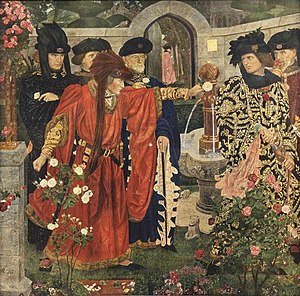
The Wars of the Roses, known at the time and for more than a century after as the Civil Wars, were a series of Civil Wars fought over control of the English throne in the mid-to-late fifteenth century, fought between supporters of two rival Cadet branchesof the royal House of Plantagenet : Lancaster and York. The wars extinguished the male lines of the two dynasties, leading to the Tudor Family inheriting the Lancastrian claim. Following the war, the Houses of Tudor and York were united, creating a new royal Dynasty, thereby resolving the rival claims.
The conflict had its roots in the wake of the Hundred Years’ War and its emergent socio-economic troubles, which weakened the prestige of the English monarchy, unfolding structural problems of bastard feudalism and the powerful duchies created by Edward III, and the mental infirmity and weak rule of Henry VI, which revived interest in the Yorkist claim to the throne by Richard of York. Historians disagree over which of these factors were the main catalyst for the wars.
The wars began in 1455 when Richard of York captured King Henry VI in battle and was appointed Lord Protector by Parliament, leading to an uneasy peace. Fighting resumed four years later. Yorkists, led by Warwick the Kingmaker, recaptured Henry, but Richard was killed in 1460, leading to the claim by his son, Edward. The Yorkists lost custody of Henry the following year but destroyed the Lancastrian army, and Edward was crowned three months later in June 1461. Resistance to Edward’s rule continued but was defeated in 1464, leading to a period of relative peace.
In 1469, Warwick withdrew his support for Edward due to opposition against the king’s foreign policy and choice of bride, and changed to the Lancastrian claim, leading to a renewal in fighting. Edward was briefly deposed and fled to Flanders the following year, and Henry was reinstalled as king. Henry’s renewal in reign was short-lived however, as the Lancastrians suffered decisive defeats in battle in which Warwick and Henry’s heir were killed, Henry was reimprisoned, and much of the Lancastrian nobility were either killed, executed, or exiled. Shortly afterwards, Edward reassumed the throne, after which Henry either died or was assassinated on Edward’s order. Edward ruled unopposed and England enjoyed a period of relative peace until his death twelve years later in 1483. Edward’s twelve-year-old son reigned for 78 days as Edward V until he was deposed by his uncle, Richard III. Richard assumed the throne under a cloud of controversy, particularly the disappearance of Edward IV’s two sons, sparking a short-lived but major revolt and triggering a wave of desertions of prominent Yorkists to the Lancastrian cause. In the midst of the chaos, Henry Tudor, son of Henry VI’s half-brother, returned from exile with an army of English, French, and Breton troops. Henry defeated and killed Richard at Bosworth Field in 1485, assumed the throne as Henry VII, and married Elizabeth of York, the eldest daughter and sole heir of Edward IV, thereby uniting the rival claims.
The Earl of Lincoln then put forward Lambert Simnel as an impostor Edward Plantagenet, a potential claimant to the throne. Lincoln’s army was defeated and Lincoln himself killed at Stoke Field in 1487, ending the wars. Henry never faced any further serious internal military threats to his reign. In 1490, Perkin Warbeck claimed to be Richard of Shrewsbury, Edward IV’s second son and rival claimant to the throne, but was executed before any rebellion could be launched.
The House of Tudor ruled Englanduntil 1603. The reign of the tudor dynasty saw the strengthening of the prestige and power of the English monarchy, particularly under Henry 8 and ElizabethI, and the end of the medeival period of England which subsequently saw the dawn of the English Renaissance. Historian John Guy argued that “England was economically healthier, more expansive, and more optimistic under the Tudors” than at any time since the Roman occupation.
Benefits of Surya Namaskar
In Surya Namaskar, Surya refers to “the sun,” and Namaskar means “bowing down in respect.” This has been the most popular yogic kriyas for many decades now, as it combines 12 yoga asanas in a yogic sequence. Practicing Surya Namaskar daily helps in balancing three constituents of your body, i.e., Kapha, Pitta, and Vata, which will help you lead your life in a greater way and influence your creativity and intuitive abilities. It’s simple yet powerful poses are what make it possible for people of all age groups and all sizes to perform it, anytime, anywhere.

Benefits of Surya Namaskar
1) Helps lose weight
Surya namaskar at a fast pace serves as an effective cardiovascular workout. It includes poses that stretch the abdominal region which is helpful in burning the extra fat layer around the belly. Hence, it is effective in losing weight.
2) Improves overall flexibility
Along with the spine, the entire body experiences deep stretches while performing Surya Namaskar. It expands and contracts most of the muscles and keeps the body flexible and agile.
3) Relieves gastrointestinal issues
Surya Namaskar stimulates the digestive tract due to alternate stretching and contraction of abdominal muscles and organs. It keeps the digestive and gastrointestinal issues at bay.
4) Cures insomnia
Surya Namaskar includes a set of 12 poses along with synchronized breath that calms the mind and ensures sound sleep.
5) Regulates and eases the menstrual cycle
Females experiencing irregularity in their menses or pain or discomfort before or during menstruation find Surya namaskar quite relieving.
6) Lowers blood sugar levels
Surya namaskar involves poses that stimulate heart muscles and act as a natural remedy for controlling blood pressure. It regulates the blood sugar level keeping the heart healthy.
7) Helps getting rid of anxiety, stress, and depression
The deep breathing involved in Surya namaskar poses draws oxygen to the brain which brings the state of calm. Along with the nervous system, it benefits the endocrine system, especially the thyroid gland which uplifts the mood and fights against anxiety and depression.
8) Increases the focus and concentration power
As already mentioned that the benefits of Surya Namaskar are not limited to physical health as it also relaxes the mind. Therefore, the physical postures along with breath regulation in Surya Namaskar are helpful in increasing awareness levels along with enhancing the concentration power of the brain.
Conclusion
Various studies have shown how beneficial Surya Namaskar is for uplifting the overall health. Therefore, doing few rounds of Surya Namaskar before starting your hectic regular routine is a must if you want to live life to the fullest.
So, next time you wake up to start your day, consider how much productive you could be if you added Surya Namaskar to your daily routine.
7 Fun Things to Do in Snow & Winters
Facing another snow day with the children? With schools closed and additional snow predicted, it can be hard to come up with ways to keep the kids entertained, however we’re here to assist.
1.Do Sledging:
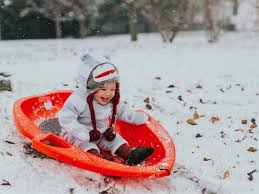
Sledging is that the final snow day activity thus it’ topping our list of things to try to once it snows; head to the native park, realize an enormous hill and sledge you’re thanks to the bottom! you’ll obtain sleds from biggest supermarkets, otherwise you can get artistic by making an attempt to create your own. larger kids can love bigger hills to choose up additional speed, while very little ones will get a style of the action on smaller hills. Why not have a race to envision who can win? simply take care to not crash into different sludgers in action.
2.Build a snow man or a snow dog:
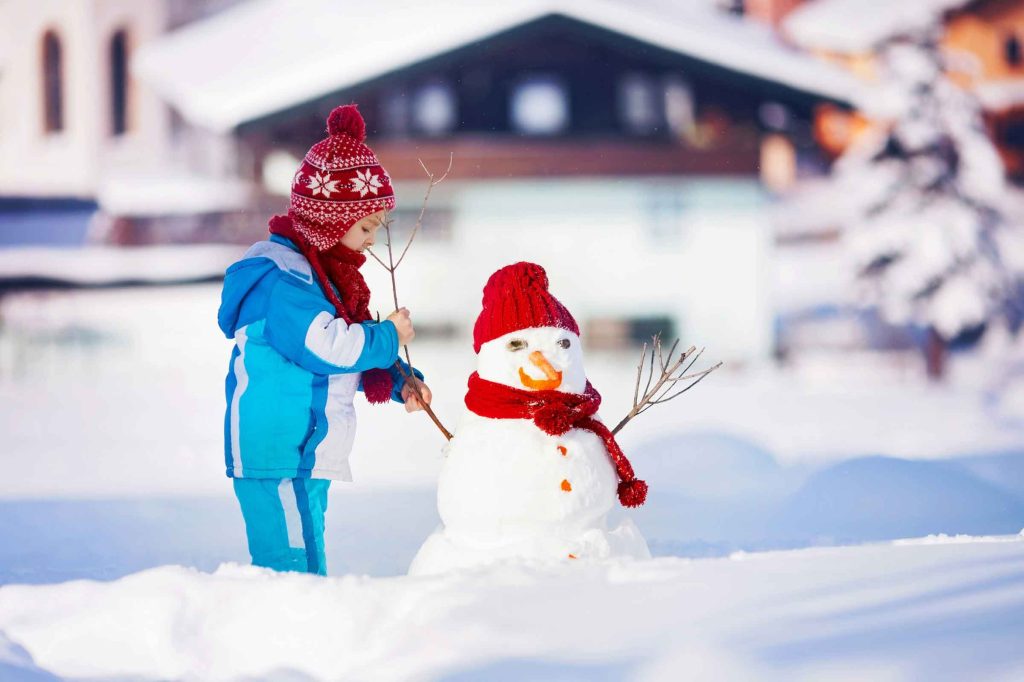
within the known words of Anna, does one need to create a snowman? excellent on days once there’s various snow, begin by rolling snow to create your base. make certain to pack it in tight thus it doesn’t crumble, and keep adding thereto to create it as huge as you can! opt for whether or not to possess 2 or 3 layers, then end with some accessories. Send the children off in search of sticks for arms and also the excellent carrot nose, before finishing with a scarf. Don’t forget to require a picture.
3.Try arts and crafts:
Another good thing to try to on a snowy day within the home is to urge artistic with some arts and crafts for kids. Our journal is packed with ideas, from gardens to bathroom roll creatures and rescuing toys from ice – perfect throughout this huge chill.

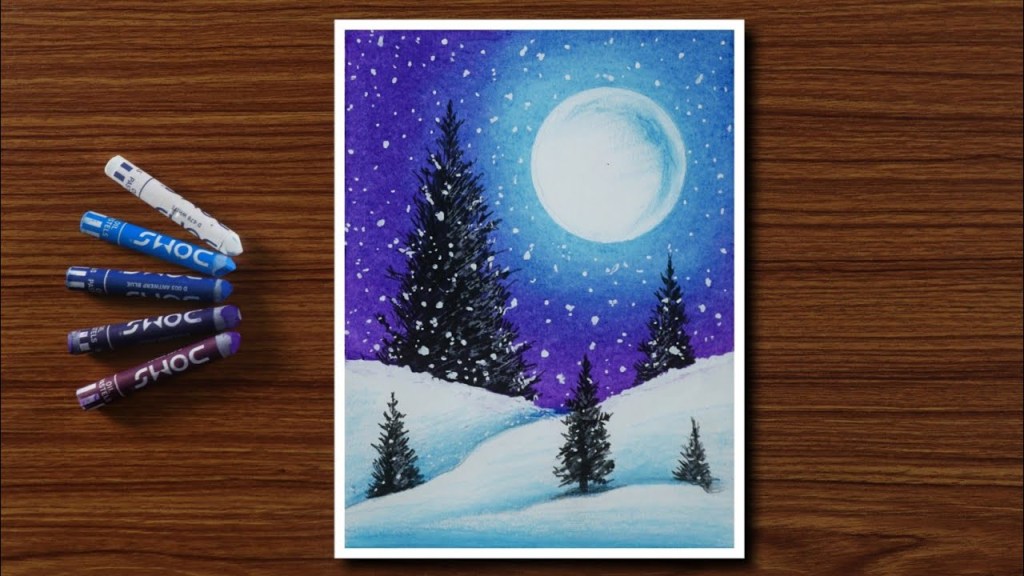
4.Snow paintings: You’ve all detected the old saying ‘don’t eat yellow snow’, however why not have a go at making some yourself mistreatment food coloring? Fill a twig bottle with cold water (hot water will soften the snow!) and add in an exceedingly few drops of food coloring. Then, let your youngsters loose to form a snow masterpiece that’s dead safe. build as many colors as you prefer and see what they’ll come back up with.
5.Make hot chocolate: typically, the simplest factor concerning snow isn’t having to depart the house and face the cold! Raid the cabinets and prepare some delicious drinkables (follow our handy real hot chocolate formula for ideas), then prime with marshmallows for a true treat. move into a DVD, laden Netflix and find comfortable on the couch with various blankets to stay warm. you may even strive building a mini fort mistreatment blankets – it’s the proper thanks to weather the snow storm.

6.Make homespun playdough: Ran out of playdough for your artistic snowy day activities? No ought to go outside, you’ll make some yourself! All you wish is a few cornstarch, some conditioner and a few food coloring, and you’ll prepare your very own playdough at home! Get an enormous bowl and pour in starch (imagine what proportion playdough you would like to finish up with to urge a thought of quantities). Add conditioner and blend together, you will ought to add additional conditioner as you attend get the correct consistency – it ought to be very pliable and really smooth. Add a couple of drops of food coloring to allow it a touch of vibrancy, and you’re all set.

7.Plan a dream list to visit this year:
Plan a dream list of days’ intent on visit this year: Let’ bring our list of things to try to once it snows to a detailed by dreaming of family adventures within the year ahead. This wintry weather may have ruined set ups to go to your favorite attractions this weekend, however why not pay the time designing an entire year of adventures instead? You’ll realize over 6,000 attractions on our site, serving to you to plan for days out close to home and any afield. Get the children concerned and plan your dream days out list – allow us to apprehend which of them you’re most trying forward to visiting! Play. Run, jump, sing, dance. nearly anything you’ll do within you can do outside.
THE HUNDRED YEARS WAR:
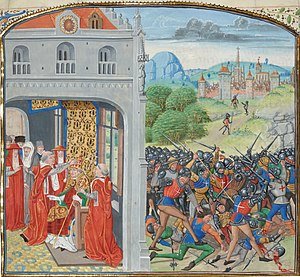
Hundred Years’ War, intermittent struggle between England and France in the 14-15th century over a series of disputes, including the question of the legitimate succession to the French crown. The struggle involved several generations of English and French claimants to the crown and actually occupied a period of more than 100 years. By convention the war is said to have started on May 24, 1337, with the confiscation of the English-held duchy of Guyenne by French King Philip6. This confiscation, however, had been preceded by periodic fighting over the question of English fiefs in France going back to the 12th century. In the first half of the 14th century, France was the richest, largest, and most populous kingdom of western Europe. It had, moreover, derived immense prestige from the fame and exploits of its monarchs, especially Louis IX, and it had grown powerful through the loyal service given by its administrators and officials. England was the best organized and most closely integrated western European state and the most likely to rival France, because the Holy Roman Empire was paralyzed by deep divisions. In these circumstances, serious conflict between the two countries was perhaps inevitable, but its extreme bitterness and long duration were more surprising. The length of the conflict can be explained, however, by the fact that a basic struggle for supremacy was exacerbated by complicated problems, such as that of English territorial possessions in France and disputed succession to the French throne; it was also prolonged by bitter litigation, commercial rivalry, and greed for plunder.
CAUSES OF HUNDRED YEARS WAR:
The problem of English lands in France
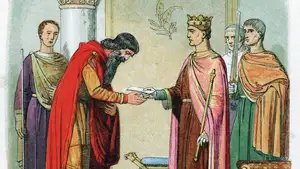
The complicated political relationship existing between France and England in the first half of the 14th century ultimately derived from the position of William the Conqueror, the first sovereign ruler of England who also held fiefs on the continent of Europe as a vassal of the French king. The natural alarm caused to the Capetian kings by their overmighty vassals, the dukes of Normandy, who were also kings of England, was greatly increased in the 1150s. Henry Plantagenet, already duke of Normandy (1150) and count of Anjou (1151), became not only duke of Aquitaine in 1152—by right of his wife, Eleanor of Aquitaine, recently divorced from Louis VII of France—but also king of England, as Henry II, in 1154.
First Hundred Years’ War,” was ended by the Treaty of Paris between Henry III of England and Louis IX of France, which was finally ratified in December 1259. First Hundred Years’ War,” was ended by the Treaty of Paris between Henry III of England and Louis IX of France, which was finally ratified in December 1259.The duchy was overrun again (1324–25) by the forces of Charles of Valois. Even so, both sides had intermittently been seeking a solution to this troublesome problem. Edward II and Philip V had tried to solve it by the nomination of seneschals or governors for Guyenne who were acceptable to them both, and the appointment of the Genoese Antonio Pessagno and later of Amaury de Craon to this post proved successful for a time. A similar expedient was adopted by the appointment (1325) of Henri de Sully, who held the office of butler in the French royal household and was a friend of Edward II. In the same year, Edward renounced the duchy in favour of his son, the future Edward III. This solution, which avoided the awkwardness of requiring one king to do homage to another, was unfortunately of short duration, because the new duke of Guyenne returned almost immediately to England (September 1326) to dethrone his father (1327).
Published by Ayisha Shabana M…..
The Pros and Cons of Drones (UAVs)
What is Drone technology ?
By definition, drones are unmanned aerial vehicles that are operated and navigated by a smartphone or a remote control.
As per records, the earliest version of drones was launched in 1849. Since then, drones have primarily been used for military purposes. Only a few years ago, the miniaturization of drones allowed different businesses to start utilizing drone technology.
Now, the drone industry is rapidly expanding. Drone technology is increasingly being used by organizations to manage their business and deliver services. In the near future drones may be used to deliver items and services. With this new technology, drones have their own set of benefits and drawbacks.

Pros of drone technology
- Drones are used in a various sectors. They go to places that people find difficult to get. For example, they can be used to quickly deliver medicines in hilly areas.
- During natural disasters, drones can be used to deliver food. Not only can drones be used to distribute food, but they may also be used to locate and rescue those who are stuck. Drones can thereby save lives.
- They can also be used in agriculture to disperse seeds, pollinate flowers, and identify crop diseases, and so on.
- They can reduce human workload by performing monotonous chores such as delivering goods, sowing seeds, and so on.
- Drones are extremely useful in substituting humans for working in dangerous places such as mining.
- Drones are being used in the military. By replacing humans, they can prevent or reduce the loss of life during wars.
- They can also be used to provide internet access in remote areas.
- Drones can replace various jobs, especially those that are monotonous. However, the good news is that drone technology is generating a lot more jobs in different sectors.
- Drones are cost-effective. Many people who buy drones for personal use, for example, use them to take aerial shots. Taking aerial pictures used to be quite expensive before drones were affordable to the general people.
Cons of drone technology
- Drones are vulnerable to cyber-attacks.
- It’s possible that they’ll crash with flights.
- Drones can be misused to stalk people, vandalize homes and engage in a variety of other anti-social behaviour. There have been numerous instances where drones have posed a security threat.
Conclusion
Unmanned Aerial Vehicles (UAVs) have a wide range of applications. Drones have the potential to transform a variety of industries. Many industries, including agriculture, construction, mining, and filmmaking, are already using them.
 Track2Training
You must be logged in to post a comment.