The Sharabha Avatar

Sharabha is an avatar of Lord Shiva which is not commonly known. This is considered as the most powerful appearance taken by Shiva to protect the universe. His manifestation as Sharabeshwara was to dominate over the fierce embodiment of Lord Vishnu as Narasimha which was the combination of half human and half lion. The objective of Vishnu’s incarnation was to save his favorite devotee prince Prahalada from the demon king Hiranyakashipu who was his father too. After killing him, Narasimha seemed to be very furious in nature. He created an awful situation in the Universe by roaring dreadfully and continuously. By foreseeing the negative outcome of this, other Gods and sub-gods sought help from Mahadeva who then decided to take the Sharaba form to pacify the angry Narasimha and convert him to normal Vishnu.

The Sharaba form of Shiva was the structural blend of human, animal and bird with gigantic as well as blistering look. It had so many hands, claws and legs, and almost resembled a huge dragon. The entangled tresses in the body highlighted the ferocity of the structure to a greater extend. In the head there was a massive crest which looked like a dome. There were well spread wings on the back side of the body with a long tail. The extremely sharp incisors in the mouth and inflexible claws were its main weapons. Its thunder like voice created echo in the environments and was horrible to hear. It had three eyes which were glowing like fire balls. Its teeth and lips were well formed and can be seen properly. It produced awful hissing sounds throughout.

Narasimha is often visualized as having a human torso and lower body, with a lion face and claws. This image is widely worshiped in deity form by a significant number of Vaishnava groups. Vishnu assumed this form on top of Himvat Mountain (Harivamsa). He is known primarily as the ‘Great Protector’ who specifically defends and protects his devotees in times of need. Vishnu is believed to have taken the avatar to destroy the demon king Hiranyakashipu. The Puranas describe Lord Narasimha deva’s pastime of killing the demon, saying that the Lord consumed every drop of Hiranyakasipu’s blood, then wore the demon’s mangled body as a garland to make sure that none of the demon’s physical remains made contact with the universe.

So how did lord Narasimha died?

After the destruction, Prahlada, Laksmi and various demigods attempted to soothe the Lord’s anger, but without success. At first Lord Shiva took the form of Veerabhadra and asked Narasimha to cool down. But Narasimha ignored this appeal. So he himself transformed to colossal Sharabha which outclassed Narasimha both in structure and power. Then Sharabha lifted Narasimha with its long tail and was about to throw him. Narasimha realized this and prayed Sharabha to forgive him with beautiful epithets, which later became the Ashtothra (108 Names) of the victorious Lord.

Lord Shiva then revealed to all the Devas that: “To annihilate the Asura, Lord Narasimha came, and to appease Lord Narasimha, I have come as Sarabeswara. Be aware that we are both one and the same like water and water, milk and milk, ghee and ghee, both inseparable and to be worshipped as one”.

Lord Shiva ensured the recovery of Lord Vishnu from his ferocious nature and hence did not hurt him. As a mark of respect to Lord Shiva, Narasimha removed the skin of lion from his body and presented to Sharabeshwaramurti. Thus the incarnation as Sharabha by Lord Shiva pacified the Narasimha manifestation of Lord Vishnu. This embodiment of Shiva is referred as Sarabeswara. In Shiva temples idols of two Sharabheswara are found at the entrance of sanctum sanctorum. He embraced Sri Narasimha, cooled Him down and made Him accessible to all beings. This Sri Sharabhesvara is Lord Shiva’s universal Omkara form.

While numerous temple deities, painted images and sastric references are found to Lord Shiva’s Sharabha form, the major Puranas like Srimad Bhagavatam do not mention the Sharabha form of Lord Shiva. Likewise, no mention appears to have been made in the Upa Puranas like the Narasimha Purana, or other Upanishads associated with Sri Narasimha dev. Rather, they stop at the point in the lila pastime with the destruction of Hiranyakasipu and the pacification of the Lord’s anger by Bhakta Prahlad and the demigods and goddesses.

Although the post-destruction pastimes are not mentioned in the primary shastra, there are many references found to Shiva Sharabha and to Lord Narasimha deva’s own Sharabha Form – Gandaberunda. Included amongst them are references to Sri Narasimha’s Form as Gandaberunda, a rare two-headed bird incarnation worshipped in South India, as well as to versions of a pastime wherein Shiva Sharabha actually fought with and killed Lord Narasimha dev. Some have concluded that this incarnation of Shiva was simply created by a group of South Indian Shaivites as a means to position Shiva as being greater than Vishnu, and that question seems left to the discussions of academics and pandits.

In the Atharva Veda, the tenth of thirty-one Upanishads is the Sharabha Upanishad, which glorifies Lord Shiva in his fierce Sharabha manifestation. Verse 3 of this Upanishad states that Maheswarah took the form of Sharabha and killed Narasimha.


HISTORY OF COMPUTER

What is computer?

A computer is a programmable electronic device that accepts data, performs mathematical and logical processes as directed quickly, and displays the outcomes. There are many distinct kinds of computers, including mainframes, desktop and laptop computers, tablets, and cellphones.

The Basic components of a computer Hardware:

1.CPU(central processing unit)

2.RAM(Random Access Memory)

3.ROM(Read Only Memory)

4.Mother board

5.Moniter

6.Mouse

1.Cental Processing Unit:

The part of a computer that obtains and executes instructions is called the central processing unit (CPU). A CAD system’s CPU can be thought of as its brain. It is made up of a control unit, a number of registers, and an arithmetic and logic unit (ALU). The term “processor” is frequently used to refer to the CPU.

2.Random Access Memory:

A computer’s short-term memory, or RAM (random access memory), is where the data that the processor is presently using is kept. RAM memory capacity is essential for system performance since your computer can access RAM memory data more faster than data on a hard drive, SSD, or other long-term storage device.

3.Read Only Memory:

A type of computer storage called read-only memory, or ROM, contains non-volatile, permanent data that typically may only be read from, not written to. The software that enables a computer to boot up or regenerate each time it is turned on is stored in the ROM.

4.Mother Board:

The primary printed circuit board in all-purpose computers and other expanding systems is called a motherboard. It provides connectors for additional peripherals and retains and enables communication between many of the critical electronic parts of a system, including the memory and central processing unit.

5.Monitor:

A computer monitor is an output device that displays information in pictorial or textual form. A discrete monitor comprises a visual display, support electronics, power supply, housing, electrical connectors, and external user controls.

6.Mouse:

A computer mouse is a tiny, movable object that you can use to operate a variety of things. Most mouse types have two buttons, while some may also have a wheel positioned in the middle of the buttons. The majority of mouse models utilise the computer’s power and a cable connection to connect to it. Wireless mouse come in a few varieties.

versions of a computer:

On the basis of data handling capabilities. Three types of versions are there. they are

1.Analog computers.

2.Digital computers

3.Hybrid computers

1.Analog computers:

Definition:

A computer that uses continually changing components, such as mechanical, electrical, hydraulic, etc. is known as an analogue computer. They originally saw use in the 1950s and 1960s. They employ continuous values rather than discrete ones. These computers therefore operate on an analogue signal.

2.Digital computers:

Definition:

A digital electronic computer is a type of computer that is both an electrical computer and a digital computer, according to computer science. Digital electronic computers include devices like the Apple Macintosh, the IBM PC, and contemporary smartphones.

3.Hybrid computer:

Definition:

Hybrid computers are computers that exhibit features of analog computers and digital computers. The digital component normally serves as the controller and provides logical and numerical operations, while the analog component often serves as a solver of differential equations and other mathematically complex problems. 

History of computer:

An abacus was one of the earliest and most well-known tools. The first mechanical computer was then being developed by Charles Babbage, the inventor of computers, in 1822. Finally, he created an analytical engine, a general-purpose computer, in 1833.

Top ten Universities Proving MBA

There many universities in the world and some of them have earned reputation of global standard.

Every year, many students plan to study abroad at top-ranked universities. The decision of selecting top-ranked universities in the world for your higher studies plays an important role in your academic and professional quest. You will get the best education with lots of international exposure at top universities. The ranking of the universities is measured through their global reputation, academics, teaching performance, research opportunities, etc. This article will bring a comprehensive list of top universities in the world as well as the popular study destinations for abroad study.

Are you looking for the world’s top universities? Following is the list of top universities in the world ranked by QS World University Ranking 2023 and Times Higher Education Ranking 2023.

List of Top 10 Universities in the World

UniversitiesQS World University Rank 2023THE World University Rank 2023
Massachusetts Institute of Technology15
University of Cambridge2=3
Stanford University3=3
University of Oxford41
Harvard University52
California Institute of Technology66
Imperial College London610
UCL822
ETH Zurich9=11
University of Chicago1013

Harvard University

Ranked among the top universities in the world, Harvard University is one of the oldest universities in the USA founded in 1636. Almost 30% of the total students are from over 150 countries in the world. Some of the popular majors offered by Harvard are Computer Science, History, Social Sciences, Biological Sciences, Law, and Mathematics. Harvard University’s acceptance rate is 5%, so it is difficult for international students to get into this university.

Massachusetts Institute of Technology

Massachusetts Institute of Technology is a private university based in Cambridge, Massachusetts. This top-ranked university in the world and founded in 1861 to provide the best research program to students. Sloan School of Management and School of Engineering are some of its highly ranked graduate schools. Apart from this, its popular programs include Chemistry, Physics, Mathematics, Psychology, and Economics. The acceptance rate of MIT is 7.3% because of which the Massachusetts Institute of Technology admissions are selective. 

Stanford University

Stanford University is a private research university founded in 1891. This university is placed among the top 5 universities in the world. The students to faculty ratio of Stanford is 7:1 better than other universities in the world. Stanford University is located in the heart of Northern California’s Silicon Valley, which is home to top tech giants and multinational companies like Yahoo!, Google, Microsoft, and Hewlett-Packard.

California Institute of Technology

California Institute of Technology is among the best university to study engineering in USA. It is the leading private university in the world. Caltech has five institutes namely Beckman Institute, Kavli Nanoscience Institute, Rosen Bioengineering Center, Tianqiao and Chrissy Chen Institute for Neuroscience, and the Resnick Sustainability Institute. Caltech is known for offering excellent science and engineering-related programs in the USA.

University of Cambridge

The University of Cambridge is the world’s fourth oldest and most respected university with its origin going back to 1209. The research university is the second-oldest English-speaking University. Cambridge specializes in offering high-quality education in social sciences, arts, humanities and sciences, and engineering. It is extremely difficult to get into Cambridge and share the experience of studying with some of the brightest minds.

Popular Universities among Top 100 in the World

UniversitiesTHE World University Rank 2023QS World University Rank 2023
Columbia University, US=1122
University of Pennsylvania1413
Rockefeller UniversityNANA
Johns Hopkins University, US1524
Cornell University, US2020
University of California – Los Angeles Campus2144
University of Michigan, Ann Arbor2325
Duke University, US2550
Northwestern University, US=2632

Note: The order of the universities is not based on their rankings.

As we see Universities in USA dominate in top-ranked universities in the world. Therefore, we can conclude that the USA is the top study destination in the world followed by the United Kingdom (UK). The regular contenders Australia and Canada have proved their mettle in the field of higher education. In addition, Singapore has emerged as the top-most study destination for international students in Asia. China is also emerging as a preferred destination for international students.

Factors for Calculating World University Ranking

1. Academic reputation (40%)

2. Employer reputation (10%)

3. Faculty/student ratio (20%)

4. Citations per faculty (20%)

5. International student ratio (5%)

6. International faculty ratio (5%)

THE ROLE OF WOMEN IN SOCIETY

In every nation on earth, women are the primary kid and elder caretakers. Worldwide studies show that women take the lead in assisting the family in adjusting to new realities and problems as a society’s economy and political structure change.

These are the fundamental building blocks of society; they form a family, which in turn forms a home, which in turn forms a society, which in turn forms a nation. Hence, from giving birth and caring for a child throughout their entire life, women contribute in many different ways.

They are portraying a professional, a competent housewife, and a proud mother and daughter. In the past, women were only thought of as caring for the home and young children. Yet these days, people work in many industries to discover their hidden skills as well as to get independence and make money for themselves

Women’s role as a family guide:

The success of sustainable development and family life depends on women. The different roles that women play in the family include those of wife, head of the household, administrator, manager of finances, and last but not least, mother.

women’s role in education system:

Women with education can contribute significantly to society’s socioeconomic growth. Inequalities and disparities are eliminated through education as a way to regain one’s standing both inside and outside of one’s family. It is essential to women’s empowerment, prosperity, growth, and wellbeing.

In addition to encouraging their girl children’s education, educated women are better able to guide their entire family. Moreover, educated women can contribute to population increase and a decline in infant mortality.

women’s role in politics:

In terms of the percentage of women in Parliament, India comes in twenty-first from the bottom. In India, women have served as president, prime minister, and chief ministers of several different states. Women have long been elected by Indian people to various state legislative bodies and the national parliament.

As a working women:

Working women typically view their employment favourably because it has a significant impact on their status. Notwithstanding the impact that stress and family issues play, employment inevitably improves her status, boosts her feeling of self-worth, and gives her higher psychological well-being.

Women’s role in sports:

Sports have long been recognised for their beneficial effects on young girls’ and women’s liberation. Sports participation can help dispel gender stereotypes, boost women’s and girls’ self-esteem, and promote the growth of leadership and strategic thinking abilities.

The role of women in society:

1.A women should be given equal opportunities i socially and economically.

2.Because they are women, they must always be respected and never treated with disrespect.

3.Schooling should be made available for the girls in the rural area

4.Women should be headstrong and believe in them. They must voice their option without any fear.

5.During the middle ages, the women’s position in the society became inferior as compared to men, and the condition of the deteriorated.

6.We should remember the contribution of woman leaders and have a positive attitude towards woman controlling the government.

To what extent globalization has influenced the core of cultural diversity in India?

Globalization has become an increasingly influential force in shaping the world we live in today. Its impact can be seen in every aspect of our lives, from the way we communicate to the products we buy. India, with its rich cultural diversity, has also been significantly influenced by globalization. The question that arises is to what extent has globalization influenced the core of cultural diversity in India?

India has always been a diverse country, with a rich tapestry of cultures, traditions, and languages. Globalization has undoubtedly had an impact on this diversity, both positive and negative. On the one hand, it has led to the spread of Indian culture and traditions across the world, as well as the adoption of foreign cultures in India. On the other hand, it has also led to the erosion of some traditional cultural practices and values.

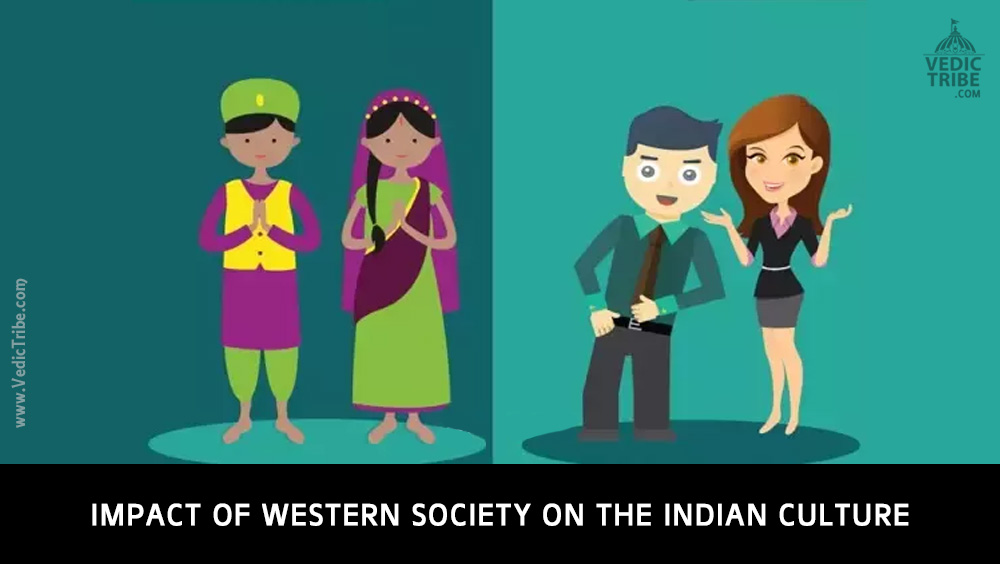
One of the most significant impacts of globalization on India’s cultural diversity has been the spread of Western culture. The influence of Western culture can be seen in the way people dress, the music they listen to, and the food they eat. The rise of globalization has led to the proliferation of Western-style malls and fast-food chains in India, leading to the displacement of traditional markets and food vendors. This has led to concerns about the homogenization of cultures, as traditional practices and values are replaced by Western ones.

Globalization has also had a significant impact on the entertainment industry in India. Bollywood, India’s film industry, has become increasingly global in its outlook. It has led to the spread of Indian cinema across the world, with Bollywood films becoming popular in countries such as the United States, China, and Japan. This has helped to promote Indian culture and traditions across the world.

Bollywood as a means of globalization

However, the rise of globalization has also led to the erosion of some traditional cultural practices in India. The spread of Western values and lifestyles has led to a decline in traditional practices such as joint families, arranged marriages, and the caste system. This has led to concerns about the loss of cultural identity and the impact of globalization on India’s social fabric.

Traditional way of farming

In conclusion, globalization has undoubtedly had an impact on India’s cultural diversity. While it has led to the spread of Indian culture across the world, it has also led to the erosion of some traditional cultural practices and values. The challenge for India is to find a balance between embracing the benefits of globalization and preserving its rich cultural diversity. It is essential to recognize the importance of preserving traditional practices and values while also embracing the opportunities that globalization presents. India’s cultural diversity is a source of its strength, and it is important to ensure that it remains an integral part of its identity in a globalized world.

How clean energy is the order of the day?

The world is rapidly moving towards a clean energy revolution. As concerns about climate change and the impact of greenhouse gas emissions on the environment continue to grow, governments, businesses, and individuals are increasingly turning to clean energy sources such as wind, solar, and hydropower.

Hydropower

Clean energy is the order of the day because it is essential to combat climate change. Fossil fuels such as coal, oil, and natural gas are the primary sources of energy for the world. However, their use has led to the emission of carbon dioxide and other greenhouse gases that contribute to global warming and climate change. The transition to clean energy is critical to reducing these emissions and mitigating their impact on the environment.

Clean energy is also becoming increasingly cost-competitive. In the past, renewable energy sources were more expensive than traditional fossil fuels. However, as technology has improved, the cost of renewable energy has decreased significantly, making it a more affordable and viable option for many countries.

Countries using clean energy

The benefits of clean energy go beyond environmental and economic advantages. It also has social benefits. Many communities around the world do not have access to reliable electricity, and the use of traditional fossil fuels such as kerosene for lighting and cooking can have serious health implications. The use of clean energy sources such as solar and wind can provide these communities with reliable and clean energy, improving their health and quality of life.

Renewable sources of energy

The transition to clean energy is not without its challenges. The infrastructure required to support clean energy is still developing, and the intermittency of some renewable sources such as solar and wind can make it challenging to maintain a stable energy supply. However, with continued investment in research and development, these challenges can be overcome.

Research on clean energy

Governments, businesses, and individuals all have a role to play in the transition to clean energy. Governments can provide incentives and policy frameworks to encourage investment in clean energy sources, while businesses can invest in research and development and the deployment of renewable energy systems. Individuals can make lifestyle changes such as reducing energy consumption and investing in rooftop solar panels.

Government of India supporting clean energy

In conclusion, clean energy is the order of the day. It is essential to combat climate change, reduce greenhouse gas emissions, and improve access to energy for all communities around the world. The transition to clean energy is not without its challenges, but with continued investment and commitment from governments, businesses, and individuals, we can build a cleaner, healthier, and more sustainable future for ourselves and future generations.

Is boredom only a perspective?

What is the most ridiculous thing you’ve ever done to pass time?

Depressed musician vintage drawing by The British Library is licensed under CC-CC0 1.0

Francis Bacon , the famous English philosopher once said “I don’t think there is any truth. There are only points of view. Boredom, for example, is a point of view. So is total exaltation.” well if that is the case we have been viewing boredom all wrong! For most people, boredom is a dreaded feeling we all try to avoid at all costs. it’s that moment we are stuck in a meeting or in traffic, and we feel like our brain is slowly turning to mush. but according to Francis Bacon, its all just a matter of perspective. boredom is a point of view which means we can choose to see it in a different light.

What is boredom?

Boredom is a universal experience that we all encounter. It’s that feeling of restlessness, dissatisfaction, and the disinterest that creeps in every now and then when we have nothing to do or when we are doing something that fails to engage us. While boredom is a common human experience it’s also a complex and multifaceted emotion that has intrigued psychologists for decades. While most people view boredom as a negative emotion, it can also be seen as a signal that something is amiss in our lives. For example if we are bored at work it could mean that we need more challenging projects or that our values and interest don’t align with our work anymore. As Salvador Dali one said “Boredom is the mother of all creativity.” Boredom can motivate us to seek out new experiences, learn new things or make changes to our environment.

What causes boredom?

There are many factors that leads to the feeling of boredom, including

Monotony: Doing the same thing over and over again can quickly lead to boredom. This is especially true when the activities lack novelty and variation.

Lack of challenge: When a task is too easy or doesn’t require much effort, it can fail to engage us and lead to boredom.

Lack of control: When we feel that we have no control over our situation we may feel helpless and disengaged leading to boredom.

Understimulation: When we are not receiving enough sensory input, we may feel bored. this happens in situations where there is little to no stimulation like waiting in line or sitting in traffic.

Overstimulation: When we are overstimulated we become bored as our brains become overwhelmed and desensitized to the stimuli.

The Effects of boredom

While boredom may seem like an harmless emotion, it can have significant effect on our health and well-being. Chronic boredom has been linked to a range of negative outcomes like anxiety, depression, substance abuse and also many health problems. So one of the main problem of boredom is that it can lead to negative coping strategies like eating too much food, drugs or alcohol. These behaviors can give you temporary relief but can lead to long term negative consequences.

Ways to alleviating boredom

Engage in new activities: One way to compact boredom is to try new activities that challenges your brain. This keeps our brains busy and alleviate boredom.

Set Goals: Setting goals can give us a sense of direction, which helps alleviate boredom

Practice mindfulness: Practices such as meditation can help us be more present and engaged in the movement, which can alleviate boredom

Finding meaning: Find the meaning and purpose in every activity we do. The question we should ask ourselves is “why are we dong this activity right now?” or “How does it benefit me in the long run?” Once we know the answer we are likely to be more engaged in what we do and feel less bored.

Take breaks: Continuously working for hours can make us fell drained or overwhelmed, this can lead to loss of motivation and boredom. So sometimes taking brakes from an activity can recharge our batteries and we will be able to come back to it with renewed energy and interest.

Boredom is a very common human experience that can have significant impact on our mental and physical wellbeing. But by understanding the cause and effect of boredom we can develop strategies to alleviate it and lead more fulfilling lives.

So there you have it Folks. boredom and total exaltation are just points of view, according to Francis Bacon. While we may not be able to achieve total exaltation all the time, but with proper strategies we certainly can find ways to make the most of our moments of boredom and cultivate moments of joy and creativity. After all life is too short to be bored all the time!