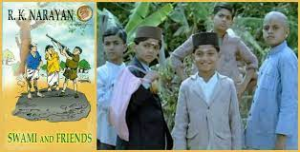
Swami and Friends-Themes

           In Swami and Friends by R.K. Narayan we have the theme of disobedience, conflict, control, authority, power, rebellion and independence. Narrated in the third person by an unnamed narrator the reader realises after reading the story that Narayan may be exploring the theme of disobedience.Jul 18, 2018

    The protagonist of the story is a 10-year-old boy. He is an unconstrained, indiscreet, wicked but then also an exceptionally honest child. His character is a kid in the fullest feeling of the world. How he grows up, his mischiefs which made his family irritated, his wonder, growing pains and innocence and many aspects are being portrayed in the novel. He lives in a universe of bossy grown-ups. He is a student at Albert Mission School. It is a British established school where importance is given to Christianity and English education.

     One of the most watershed moments in the novel is the time when Rajam joins the school and he becomes friend with Swami. That was a life-changing stage for him. But later he breaks his friendship due to some reasons.

      Everyone can relate R.K. Narayan’s account of childhood games and friendship. It’s an age where friendship is more important than family and more urgent than school. Also, holidays are heaven on earth during those days. The author effectively sketches those days through Swami and Friends.

The Innocence of Youth is the fundamental theme of Swami and FriendsSwaminathan and his friends are 10-years-old at the beginning of the book, and are prone to all the typical behaviors of young children: they are fascinated with toys; they daydream in class; they take their families for granted, and they disdain schoolwork. Rather than plotting or planning out their adventures with deliberate intention, these boys participate in the risk-taking and spontaneous mischief characteristic of young children. At their youthful age, they are not yet fully equipped to understand the world around them, the class differences that already work to inevitably divide them, or to understand the repercussions of their actions. For example, Swaminathan does not understand why an angry mob gathers after the arrest of the Indian politician Gauri Sankar in Chapter Twelve, and he cannot anticipate the consequences of shattering his headmaster’s windows with a rock. In running away, he does not understand that in doing so he might miss the M.C.C. match and irrevocably damage his friendship with Rajam. These are but a few cases that illustrate the central theme of Swami and Friends, where youthful innocence wrestles with increasing tension against worldly complexity and conflict..

This thesis entitled “Myth of Innocence and Purity of Childhood in R. K. Narayan’s novel Swami and Friends” examines how childhood not only embodies fun and laughter, purity and innocence but also equally self centeredness, snobbery, vanity, callousness, cruelty and jealousy that can be seen among adults. It also assesses the novel critically and brings the hidden realities of childhood days into light that children are also not free from vices. Narayan, with the skillful use of humour, tries to capture the world of children as reflected in the growing up of Swaminathan and his companions, and their adventure and misadventure in the mythical town of ‘Malgudi.’ By providing the realistic glimpse of childhood, Narayan shows that children also have contrary qualities and are not free from multiple human natures as can be found in grown up people. As Narayan he writes in his autobiography—My Days, those children are capable of performing greater cunning activities than grown up and he beautifully puts this belief in Swami and Friends.

The Political and the Personal Under British Colonial Rule                  

Set in a fictional town in south India circa 1930, Swami and Friends is defined by the pressures and complexities of British colonial rule over India. While the book’s events revolve around common childhood trials and tribulations, the personal experiences of the protagonist and his friends are colored by their political context, even when the characters themselves have little understanding of it. By examining British colonial rule through the lens of an ordinary boy’s relatable…

Education and Oppression

Difficulty within educational settings is one of Swami’s constant conflicts throughout the novel. Rather than simply depicting the ordinary childhood struggles of homework and unfair teachers, Narayan uses these familiar obstacles to enact a smaller version of the colonial oppression that suffuses the book. For Swami, school is a place of both growth and restriction, where rigid rules come into conflict with Swami’s nuanced inner life. Throughout, Narayan’s depictions of Swami’s school days add…

The Fluidity of Identity

            Although little more than a year passes over the course of Swami’s story, his identity and those of his friends change and develop many times throughout the novel. By demonstrating how malleable his characters’ essential traits and roles are, Narayan casts doubt on the idea of objectively “true” identity, instead seeming to argue that even core characteristics like goodness and badness can be changed and chosen according to the desires of individuals and groups…

Innocence, Family, and Growing Up

Just as Swami’s story reveals the somewhat illusory nature of personal identity, so too does it slowly strip away conventional notions of childhood innocence. While Swami seems at first to embody the quintessential idea of a carefree child, his growth over the course of the novel shows that even children of his young age are burdened by serious concerns and real-world threats. Narayan demonstrates this gradual loss of innocence in large part through his…

Just as Swami’s story reveals the somewhat illusory nature of personal identity, so too does it slowly strip away conventional notions of childhood innocence. While Swami seems at first to embody the quintessential idea of a carefree child, his growth over the course of the novel shows that even children of his young age are burdened by serious concerns and real-world threats. Narayan demonstrates this gradual loss of innocence in large part through his portrayal of Swami’s relationships with the members of his immediate family, which grow increasingly complicated and less protective over the course of the story.

At the start of the novel, Swami is almost wholly dependent on his family. He blithely takes them for granted while also calling on them to support his whims and desires, and their firm but kind presence grounds the seeming innocence that Swami enjoys in the early chapters. Swami’s mother and father, though strict at times, offer him safety and resources to pursue his academic and social goals. Even when Swami meets Rajam, whom he views as a role model, he still requires his father’s room and his mother’s cooking in order to host Swami at his home. Thanks to his parents’ help, the visit goes well, and Swami feels independent in his friendship with Rajam even as he relies on his family to support it. Swami’s Granny, whom he considers unsightly and senile but nevertheless loveable, also offers him unquestioning comfort. She affirms Swami’s stories even when they are implausible, and although she tells him stories from the family’s past, Swami dismisses her words as “old unnecessary stories.” Swami views his relationship with his grandmother as simply “snug and safe,” but Narayan makes clear that this perception relies on Swami’s ability to ignore the more complex, challenging stories that his grandmother wishes to tell. In describing the conflict between Swami and his headmaster at the mission school, Narayan hints again at the deeper reality that underlies Swami’s outwardly innocent reliance on his family. After Swami brings in his father’s letter complaining about Ebenezer’s treatment of Swami, the Mission School Headmaster scolds Ebenezer but then tells Swami that he was “foolish to go to [his] father about this matter.” The headmaster requests that Swami turn to him instead of his father about future problems, foreshadowing the novel’s later events in which Swami’s father is powerless to protect him.

As the novel progresses, Swami’s feeling of security with his family begins to erode, as both he and the reader discover evidence that his innocent trust in his own safety may have been an illusion all along. When Swami’s mother gives birth to an unnamed baby boy, Swami is initially indifferent to his new brother, calling him “hardly anything.” But as time passes, Swami realizes that the baby is now the center of the household. Although Swami soon comes to love his brother, he is also forced to admit that he is no longer the sole focus of his parents’ and grandmother’s love and attention. Around the same time, Swami notices that his father has changed to become “fussy and difficult.” His father begins to take a more active role in making Swami study for his exams, and Swami resents the realization that his father’s role is not only to protect him but also to pressure him toward growth. In the middle of the novel, Swami enters into a conflict with the son of a coachman who tricks Swami into giving him money. This episode in particular illustrates the tension between Swami’s youthful innocence and his dawning knowledge of the genuine danger of the world around him. The episode begins with Swami’s intense desire to get a hoop, a childish wish based only on a love for simple play. However, that innocent impulse soon transforms into a violent conflict with the coachman’s sonMani beats Swami in an attempt to get the boy’s attention and then, when they confront him, his neighbors throw rocks and chase them off with dogs. Most significantly of all, Swami encounters the son again while visiting his father’s luxurious club, but finds that his father is oblivious to the danger. He decides to “seek protection” by telling his father, but quickly reverses his choice, deciding that “his father had better not know anything about the coachman’s son, however serious the situation might be.” As Swami moves away from his father’s protection, Narayan demonstrates more forcefully that Swami’s family is not truly the refuge that it initially appears to be.

By the novel’s conclusion, Swami has experienced the genuine danger of the world around him and, at the same time, come to realize the limitations of his family’s ability to comfort him and keep him safe. Through this process Narayan shows that Swami shares in the universal realities common to all coming-of-age stories, even within the unique sociopolitical context of India under English colonial rule.

After Swami and his friends form their cricket team, Swami discovers that his grandmother does not know what cricket is. Although he is upset by her “appalling ignorance,” he is nonetheless patient with her because he remembers his recent, irrational fear that “she was going to die in a few minutes” because he refused to bring her a lemon. Swami’s shift toward caring for his grandmother and her feelings marks a reversal of his previous belief that his family are the ones responsible for him. When Swami goes missing, a chapter from his father’s perspective reveals that he is completely powerless to find Swami and, given that Swami actually ran away, save him from himself. His father’s desolation and inability to alter the situation underscores the fact that Swami must now take responsibility for himself, rather than relying innocently on his family. When Swami is rescued by Mr. Nair, he is initially confused and calls the man Father. He is unable to understand his situation, thinking: “Who was this man? Was he Father? If he was not, why was he there? Even if he was, why was he there? Who was he?” This internal breakdown of Swami’s ability to comprehend his father’s role in his life represents a moment of profound growth in Swami’s self-efficacy and maturity. Later, he laments that he forgot to say goodbye to the Officer, hinting at the core truth that one cannot appreciate childhood simplicity until it is gone. Swami still lives with his family at the novel’s end, but he has lost the illusion that his life there is innocent or free of worry.

swami and friends-SYMBOLISM

Swami’s Cap

Swami’s cap becomes important to the story as he begins to develop a political consciousness. Swami thinks little of his clothes until the night that he and Mani stumble on a protest against British oppression, and Swami realizes that some of his clothing may be made by British manufacturers at the expense of Indian craftspeople. When a bystander suggests that he is “wearing a foreign cap,” Swami is ashamed and throws the cap into the fire—his first act in support of Indian liberation. However, the cap also comes to symbolize Swami’s naivete about political matters. The next morning, Swami thinks not of his devotion to Indian independence, but of the anger his father will feel when he sees that the cap is missing. Then, even after his intense experience at the protest, Swami continues to view his fledging political activity through the narrow lens of his own self-interest, telling his father that the cap was burned by someone else in the crowd rather than owning up to his own actions. Finally, Swami’s father informs him that the cap was Indian-made all along, undermining Swami’s passionate destruction of what he believed to be a symbol of England. The cap thus underscores Narayan’s point that Swami’s actions are tied to a political context even when he is only able to engage with that context in a childish, haphazard way.

            Swami’s cap represents his good but misguided and uninformed intentions, which often lead him to trouble. He destroys his cap in a fit of anti-colonial anger, believing it to be English-made. His father later corrects him, revealing it was actually an Indian-made cap, leading to Swami getting in trouble with his father and later, with his school.

Cricket

The game of cricket is the story’s most potent symbol of the complex way that English colonization plays out in the lives of Swami and his friends. As a quintessentially English activity, cricket is closely tied to England’s presence in India, but instead of rejecting it for its oppressive associations, Swami and his friends—particularly team captain Rajam—embrace the game as a means of gaining self-determination, dominance over opponents, and interpersonal connection. This paradoxical pursuit demonstrates the ways in which colonized peoples like Swami and his friends must necessarily adapt to the influences of the colonizer, even embracing aspects of the oppressive culture and subverting them into mechanisms of liberation. However, the friends’ cricket team has both positive and negative effects in Swami’s life; it initially helps him put aside his political differences with Rajam, but it also tears apart their friendship when Swami misses the crucial match. Through this symbol, Narayan seems to recognize the unstable and sometimes dangerous role that even the appealing aspects of colonizing nations play in the lives of the colonized.

Not only is cricket a reminder of the colonial influence of Britain in India, it is also a symbol of competition, and on the cricket field is where Rajam and Swami actually come to a head. Rajam uses a threat against their friendship in order to control Swami’s behavior, but Swami cannot help but feel that it is wrong to skip school so that they can compete. The match represents Rajam’s emotionally desperate understanding of “victory” as an important goal. Cricket highlights the conflict between Rajam and Swami and heightens the stakes, ultimately leading to them breaking up.

     Cricket is a symbol of Swami’s friendships, especially with Rajam. Swami enjoys cricket and works hard at it, just as he enjoys his friendship with Rajam and works hard to maintain it, much in the way he devotes time to practice. When Swami misses the the first match, he and Rajam both take it as a personal slight, rather than one against the team as a whole.

The Book of Fairy Tales

Swami’s somewhat surprising choice of a book of fairy tales by Hans Christian Andersen as a going-away present for Rajam acts as a symbol for the crossroads of maturity at which the two boys find themselves. Swami has struggled to enjoy reading through the novel, while Rajam has excelled at it, so Swami’s sensitivity to the kind of present that Rajam would appreciate demonstrates the way that he has begun learning to think outside of himself and his own desires. However, the fact that the book includes fairy tales rather than true facts indicates that the boys’ reality is still largely shaped by fantasy. Even as Swami is forced to face the painful fact that Rajam is moving away without repairing his friendship with Swami, he relies on the power of a book of imagined realities to bridge the gap between them. Finally, Swami thinks that the book is too full of “unknown, unpronounceable English words” for him to ever understand it himself, again hinting that mysterious foreign influence is present in every corner of his life, even the parts that concern fantasy rather than reality.

Geography (Symbol)

Geography is one of the subjects that Swami and his classmates learn at school, and they spend a lot of time memorizing the capitals of foreign countries and copying maps. His friend Mani spends many hours copying maps of Europe, India, and Africa in preparation for their exams. Learning geography is an important part in their colonial education in orienting and knowing the world, with Europe at the center. The setting of the novel, the town of Malgudi, is fictional, however, and thus Narayan refuses to map the village.

The Protest (Symbol)

The protest can be argued to represent many things, but first and foremost, it symbolizes the frustration that exists in India because of the colonial presence of the British who dominate the nation as a second-class society. The British represent the broken forces that exist among closed-minded people with economic interests. Among the problems is that India has become chronically poor because its resources are drained by the British.

Escape 

        Escape is a motif that continually resurfaces as Swami escapes from the headmaster in the Albert Mission School and then later at the Board High School. Escape is Swami’s usual method of dealing with difficult or painful situations, but he often ends up getting lost, or in a worse situation than before.

The Cane (Symbol)

         When the headmaster of Swami’s school rejects his request to leave early for his cricket game, Swami becomes angry and throws his cane out of the window. This demonstration is a symbol because the action represents the value of the moment in Swami’s real life. The stick becomes a symbol of freedom because the stick goes where Swami wants to go—outside of the walls and hierarchal order of school.


Fire-Eyed

  1. K. Narayan writes, “He shuddered at every thought of school: that dismal yellow building; the fire-eyed Vedanayagam, his class teacher” (3). The emblematic fire-eyedness renders the class teacher an uncompromising individual who will not bear disruptive behavior from his students. Accordingly, he arouses dread in his students due to the authoritarian persona which his eyes indicate.

Tail

Swami’s old friends, who feel like they have been abandoned by Swami, begin calling him “tail.” A “tail” is a long thing that attaches itself to an ass or a dog, as he learns in Chapter 4.

Broken Window Panes

The headmaster’s office window panes, and their shattering, are one of the more concrete symbols of the book. After Swaminathan destroys the window, his future is permanently changed though he does not know it at the time. The broken glass serves to represent that Swaminathan has defied the established order, causing a break that he cannot repair, and crossing a point of no return…

Swami’s younger brother represents his relationship to his family, without the distractions or impediments of school, class…

Swami and friends- CHARACTER ANALYSIS

Swami

Swami is the ten-year-old protagonist of the novel. Swami is a schoolboy living in 1930, in the fictional town of Malgudi in the South of India under British colonial rule. At the start of the novel, Swami is a typical child who seems outwardly innocent, with only trivial concerns such as homework, impressing his classmates, and avoiding disappointing his father. Swami is considered average among his friends, neither especially clever nor stupid, brave nor cowardly. He is generally good-natured and gets along well with his peers and family, although he can be arrogant or deceitful at times, and is easily swept up in the plans and enthusiasms of others. As the novel progresses, Swami becomes more aware of his own identity and political consciousness and begins to define himself more in terms of his friendships and national identity than his family relationships. Swami is also a naturally good cricket bowler and prides himself on being nicknamed “Tate,” after a famous cricket player.

Swami is the central character of the plot. He is also the protagonist of the play. As a child, he goes to school where he does not like studies and gets bored easily. He is an honest boy of seven but, on the other hand, he also does not hesitate telling lies to his father. He loves his granny’s stories. He is good at cricket and is nicknamed “Tate.” He saw the revolution phase of Indian independence. Later in the course of the novel, he became bolder and socially prominent.

       The protagonist of the novel Swaminathan (Swami) is a school going boy. He belongs to a South Indian middle-class family. His family comprises of his grandmother, mother, father, and mother. In the initial trenches of the story, his younger brother was born. He epitomizes the innocence of a youth mischievousness that childhood necessitates.

            The plot of Swami and Friends revolves around Swaminathan, the central protagonist, who initially typifies the innocence of youth and all the mischievousness that childhood entails. He prefers cricket to school, takes his family for granted, and attempts to play out childhood fantasies in the often reckless games and stunts he pursues with his shifting group of friends. Initially coming across as passive and timid–more likely to follow than to lead the crowd (as we witness in the mob scene of Chapter 12)–and overshadowed amongst his peers by the more self-assured Mani and Rajam, Swaminathan, however, becomes bolder and more socially prominent over the course of the novel. The most vital player on the cricket team, it is ultimately, Swaminathan, and not Rajam or Mani that holds the key to M.C.C.’s victory. And though his rebellion against the headmaster results in childish flight, he openly and boldly defies the central authority figure of his school without waiting for Rajam’s support, and without the support of an angry mob to fuel his courage. While the novel centers on a brief period in Swaminathan’s life, in this brief journey, we witness the revolutionary change happening in India, and the subtle revolution of character and understanding that takes place within Swaminathan…

Rajam

Rajam is the son of the Police Superintendent and one of Swami’s closest friends. Rajam is new to Swami’s school at the start of the novel, and initially Swami and Mani view him as an enemy due to his quick wits, fine clothes, and fearless nature. However, Rajam quickly becomes friends with Rajam and Swami and acts as their ringleader for the remainder of the novel. Rajam does well in school and is liked by most of his classmates, and he draws confidence from his father’s prominent position (Rajam’s father is the Police Superintendent), although it also causes him to oppose the political activity that his friends support. Rajam sometimes bullies his friends and acquaintances, but more often he unites them and urges them toward new goals, most notably the formation of a cricket team. Swami loves and admires Rajam but comes into conflict with him, first because Swami supports political action that opposes Rajam’s father, and later because he doesn’t live up to his promise on Rajam’s cricket team. Rajam is so angry at Swami for missing the cricket match that he stops speaking to him, and it is unclear at the novel’s end whether the two friends have reconciled.

Rajam is the new kid at the Albert Mission School and is Swami’s rival turned best friend. Rajam is good at studies, speaks English “like a European,” and is the son of the police superintendent, which gives him more attention and status at school. He is witty and fearless in nature and naturally assumes authority in social settings. It is his idea to start a cricket team. The character of Rajam: Rajam was the guy with an endearing personality. He is smarter and grown-up than Mani. He believes in self-respect. Rajam is very sincere in academics. He likes assisting or helping his friends in academics. Mani possesses a propensity for domination amongst every one of his age but Rajat didn’t feel that within him. In fact, Rajam tries to put forward a hand for friendship with Mani. He wanted to settle the enmity with Mani and this signify the nobility Rajam has got with him.

Mani

Known as “the Mighty Good-For-Nothing,” Mani is Swami’s other closest friend. Mani is a fearless troublemaker who never does his homework, sleeps in class, and frequently resorts to violence to solve his problems. However, he is also a loyal and affectionate friend, and Swami is proud to be allied with him. Mani often plays a supporting role in Swami and Rajam’s friendship, though at the end of the novel it is Mani, rather than Swami, who takes on the role of Rajam’s best friend. Mani lives with a frightening uncle, but little else is known about his family or background.

    Another close friend of Swami, Mani is described as the “Mighty Good-For-Nothing.” He is a bold and strong figure in his class. He is not good at studies and purposefully slacks off, but he likes fighting and no one dares to challenges him, even the teachers. Mani likes to dominate the whole class and also bully some of his classmates.

Swami’s Father

Swami’s father, W.T. Srinivasan, is an imposing figure who works at the courts and is usually strict with Swami. Swami sometimes feels afraid of his father, but at other times he turns to him for help and support. Swami’s father encourages Swami to study hard and helps him with homework and, notably, provides Swami with a study space within his own room. Late in the novel, Swami’s father reveals that his concern for Swami’s wellbeing outweighs his frustrations with his son, as shown when he searches for Swami all night and welcomes him home without punishment.

Swaminathan’s father is a lawyer by profession. He is stern and authoritarian, but caring. He worries about his son’s studies and encourages him to study hard. Sometimes he is overly strict, but later in the novel he also shows his concern for the well-being of his son.

Swami’s Mother

Swami’s mother appears in the novel only occasionally, usually in the context of providing Swami with something he wants or backing him up in an argument with his father. She is presented as a mild woman who is mostly concerned with her family and managing the household. She loves Swami deeply and also gives birth to a baby boy, Swami’s brother, who occupies her attention for much of the novel.

Swaminathan’s mother is in charge of the house and cares for Swami both materially and emotionally. She defends Swami in his arguments with his father. However, her appearances are occasional. She is the character that Swami misses the most when he runs away from the house.

Swami’s Grandmother / Granny Quotes in Swami and Friends

Swami’s paternal grandmother, whom he calls Granny, is an old woman who lives with Swami and his mother and father. Swami views Granny as ancient and sometimes embarrassing, but she is also a source of comfort and security during times of change, particularly when Swami’s brother is born. Granny sometimes tries to tell Swami stories about the family’s past, but he usually refuses to listen, indicating his preoccupation with his own present concerns. Swami grows more concerned with Granny’s needs over the course of the story, beginning to see himself as a caretaker for her and making more of an effort to meet her needs.

        Granny is described as a sweet and sleepy lady whom Swami will often go to and tell stories about his day. She is a religious woman. She tells Swami the stories of her past. Her relationship with Swami changes throughout the novel.

        Swami’s grandmother was a short and fat and a slightly bent woman. She was a notably a religious woman. She had inner beauty intact with her rather than physical. She was not an attractive woman as she herself says she wasn’t pretty. He lived with her in his childhood days. He describes her as a good friend of his. She used to wake him up during the school days and prepare breakfast for him. After the breakfast is being done his grandmother hand over the pen, wooden slate, and earthen ink-pot to him. While Swami attended school his grandmother would study the scriptures in the temple which his nearby his school

Swami’s Brother

Swami’s unnamed baby brother is born midway through the novel. While Swami at first thinks little of his brother, he soon grows fond of him and admires how quickly he learns and grows. Swami’s brother also presents a unique challenge to Swami, in that he occupies the family’s attention and makes it so that Swami is no longer the sole focus of his parents’ and grandmother’s affection.

            He is the only sibling to Swami. He is born midway through the novel. He captures the prime attention of his family. Swami too cares for his little brother. However, this character has no major role as he remains a child throughout the novel.

Rajam’s Father

Rajam’s father is the Police Superintendent and acts as a powerful figure in the community. Swami and Mani are initially very excited to be associated with the Police Superintendent through their new friend Rajam, and Swami is impressed with the luxury of his household. Later, Rajam’s father becomes a symbol of political conflict when Swami witnesses him ordering the police force to violently break up the crowd of protesters. However, Rajam’s father remains kind in person to Rajam and his friends, and plays an important role in rescuing Swami at the novel’s conclusion.

Somu

Somu is one of Swami’s friends from the Mission School. He is the class monitor and gets along well with everyone, students and teachers, although he does not excel academically. Swami thinks of Somu as the “uncle of the class.” When Somu treats Swami unkindly, the experience is one of the first times that Swami is forced to admit that the people around him are more complex than he might have guessed. Later in the novel, Somu disappears from the group of friends after failing an exam, and thus not being promoted to the next grade.

        Somu is Swami’s school friend from the Albert Mission School. He is the monitor of Swami’s class and carries himself with an easy and confident air. Swami calls him the “uncle of the class.”

Sankar

Sankar is one of Swami’s friends from the Mission School, known as “the most brilliant boy of the class.” Swami admires Sankar’s intelligence and relies on him for guidance at school. Sankar eventually leaves Malgudi when his father is transferred to a new town, and although he writes to Rajam and his friends intend to reply, they fall out of touch after realizing that they don’t have Sankar’s new address.

     A classmate of Swami, Sankar is known as the “the most brilliant boy of the class.” Swami admires Sankar’s intellect and takes his guidance. Later, he leaves Malgudi as his father is transferred to another town.

Mission School Headmaster

The Mission School Headmaster is a primary antagonist for Swami in the novel’s early chapters. Although he confronts Ebenezar about his mistreatment of Swami, he also calls Swami foolish for telling his father what happened in scripture class and asks Swami to rely only on him in the future. Later, the headmaster’s intimidating interrogation of the students who participated in the protest goads Swami into renouncing the Mission School and ultimately transferring to the Board School. However, in comparison to the abhorrent Board School Headmaster, Swami eventually comes to think of the Mission School Headmaster as dignified and respectable.

Mr. Ebenezar

Mr. Ebenezar is the fanatical Christian scripture teacher at the Mission School. Although Swami and his friends sometimes finds his classes amusing, he uses his lectures to degrade Hinduism and argue for the superiority of Christianity. After Swami reports Ebenezar’s behavior, the Mission School Headmaster scolds the teacher, but ultimately it seems that Ebenezar is allowed to carry on teaching as before. Later, Ebenezar appears only as a benign figure in the school crowd, one who Swami even comes to view fondly after his troubles at the Board School.

         He is Swami’s scripture teacher at the Albert Mission School. He is a Christian fanatic and degrades Swami’s religion, Hinduism, and considers Christianity superior to other religions. Later, he is scolded by the headmaster of the school.

The Coachman

The unnamed coachman is an acquaintance of Swami’s who promises to help him acquire a toy hoop in exchange for money. He claims to be able to turn copper coins into silver, but it becomes clear that he is lying to Swami in order to get his coins. The coachman’s son also becomes a menacing presence to Swami after this episode. Swami’s experiences with the coachman are an early example of his increasing acquaintance with the evils and dangers of the world.

The Coachman’s Son

The coachman’s son is a young boy who begins to taunt and threaten Swami after his father successfully scams Swami out of his money. Rajam forms a plan in which Mani will kidnap the son with Swami’s help, but the plan goes awry when the son tricks Mani and runs away with his toy top. Soon thereafter, Swami discovers during a visit to his father’s club that the coachman’s son works at the club, and Swami is overcome with fear that the son will attack him. This episode is one of the first instances in which Swami feels that his father is not able to protect him from harm.

Karrupan

Karrupan is a young boy who is bullied by RajamMani, and Swami while out driving his cart. The three friends harass Karrupan and pretend to be government agents, frightening the boy before sending him on his way. The behavior of Swami and his friends toward Karrupan demonstrates their internalization of the colonized state’s brutal power structures.

Samuel (or The Pea)

Also nicknamed “The Pea,” Samuel is Swami’s classmate and friend. Both Swami and the Pea are close friends until the Pea changes his school. Both remain friends as they both play cricket together. He is the only Christian friend of Swami.


Dr. Kesavan

Dr. Kesavan is a physician whom Swami goes to in an effort to get a medical certificate saying he can miss school drill practice in order to go to cricket. Dr. Kesavan laughs at Swami’s self-diagnosis of delirium and pronounces him healthy, but says that he will talk to the Board School Headmaster to get Swami excused from drill practice. However, Dr. Kesavan does not talk to the headmaster at all, which leads to Swami’s punishment and eventual departure from school. Swami curses Dr. Kesavan for lying, and this episode is another of Swami’s formative experiences of betrayal.

Ranga

Ranga is the cart man who finds Swami unconscious after his night wandering lost in the wilderness. He rescues Swami by bringing him to Mr. Nair, thinking himself too simple to know what to do. Ranga is one of few peasant characters in the novel, and notably, Swami knows little of his role in the rescue and does not think to thank him later.

Mr. Nair

Mr. Nair is the District Forest Officer who helps Swami return home after being lost. Swami initially confuses him with his own father, indicating the sense of loss and disorientation that Swami undergoes as he matures. Later, Swami feels guilty for forgetting to say goodbye to Mr. Nair and worries that he did not show appropriate gratitude for his role, again drawing a parallel between Mr. Nair and Swami’s actual father. However, Mr. Nair also lies to Swami about the day of the week, presumably to keep him calm, and causes him not to realize he is missing the cricket match until it is already over.

SWAMI AND FRIENDS TITLE SIGNIFICANCE

The central theme of the novel is growing up of young Swami. He is a spontaneous, impulsive, mischievous and yet a very innocent child. His character is a child in the fullest sense of the world. Through Swami’s eyes the reader gets to peak in to the pre-independence days in South India. The life portrayed in the novel is accurate in its description of the colonial days – the uprisings, the rebellions, the contempt and the reverence the natives had for their subjugator, together with varied elements that have become one, such as cricket and education.

     Unlike many colonial and post-colonial writers Narayan does not directly attack or criticize the colonial system, although elements of gentle criticism and irony directed towards the colonial system, are scattered through out Swami and Friends and all his other novels. He has rather directed his creativity at depicting the life of the people at the time. It is almost as if he is charmed by these unsophisticated and simple, yet eccentric people and their lives. It is unclear if he refrained from an all out attack on the British colonial system out of choice or reverence. But it seems at this point in his career, (and during this particular point of India’s history), when he is starting out as an author, he would write to the English speaking audience in India and for the vast audience abroad. Hence it would be folly to attack the very system that would sustain him as a novelist, his career of choice. Asked about why he was unbothered about the prevailing political crisis and other happenings during the time, Narayan replied in an interview thus ” When art is used as a vehicle for political propaganda, the mood of comedy, the sensitivity to atmosphere, the probing of psychological factors, the crisis of the individual soul and its resolution and above all the detached observation which constitutes the stuff of fiction is forced into the background.” Beyond this, he also had tremendous regard for the English language and literature as an aesthetic past time, and was not blind to its value in that regard.

      The absence of criticism on the colonial system maybe also due to the fact that Narayan simply believed the colonizer and the colonized could live together in harmony, benefiting each other. Most Englishmen and the natives certainly seem to do so in his novels, such as Mr Retty (Swami and Friends) and Matheison (Waiting for the Mahatma). The rice mill owner Mr Retty was “the most Indianized of the ‘Europeans’….and was the mystery man of the place: nobody could say who he was or where he had come from: he swore at his boy and his customers in perfect Tamil and always moved about in shirt, shorts and sandaled feet.” Mr Matheison feels strongly for Indians and considers himself Indian. “You see, it is just possible I am as much attached to this country as you are.” Only Mr Brown seems to be the ‘black sheep’ in this regard. His Western mind is only capable of “classifying, labeling and departmentalizing…” And the gentle criticism and irony directed towards him was in the same way directed towards his fellow countrymen. In his mind British or Indian, they were all human beings with prejudices, follies, errors, kindness and goodness, each in varying degrees.

and Friends is an Indian book written in English published in 1935. The work was the first novel ever published by the famous Indian author R. K. Narayan. Narayan’s friend, Graham Greene, recommended his manuscript to a publisher, and it was finally published by Hamish Hamilton in 1935. The original title of Swami and Friends was Swami the Tate, but it was changed during the publishing process to Swami and Friends likely so that it could have more literary identification with Rudyard Kipling’s Stalky & Co (1899) and thus appear more marketable as part of a sub-genre of English schoolboy fiction. The novel is the first of a trilogy of novels. The second is entitled The Bachelor of Arts and the third The English Teacher. The trilogy, which counts among his earlier fiction, focuses largely on problematic social practices, such as the institution of schooling and culture of punishme

Main thing is “Friendship” and how kids react differently to the different situations. I love the story. Swami is a little boy who has a good heart but little bit a coward. Think it’s same for all the kids in that age. Swami loves his friends and ready to anything for them but his cowardliness and bad temper made the trick every time. Anyway think the most important thing in that story is simpleness. Swami is a normal boy who can find in every country and every time. He doesn’t have anything special but I think the author should give him a chance. Though he is a good cricket player he hasn’t got a chance to show it to others and it seems the only special skill he has.

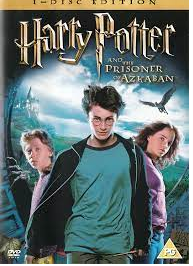
Harry Potter and The Prisoner of Azkaban

Harry Potter and the Prisoner of Azkaban What’s Up With the Title?

By J.K. Rowling

         Third Person (Limited)

    The third installment in the Harry Potter series, Harry Potter and the Prisoner of Azkaban is written from the point-of-view of 13 year-old Harry Potter. The title refers to convicted criminal, Sirius Black, who has escaped Azkaban, a wizard prison.

In the series, this was the first title that mentions a person rather than an object. This title also stands out for being the most misleading in the series thus far… which happens to be really fitting. Azkaban is largely a mystery story (with elements of fantasy and Bildungsroman – a fancy German word for a coming-of-age story). The title helps set up the mystery elements of the novel from the get go – who is this prisoner? What did he do, and what does he want now?

                               Of course, just when we, and Harry, think we have the whole thing figured out, the novel throws us for a loop and we learn that we were wrong about everything. The Prisoner of Azkaban (as in, the character, not the title) isn’t the real villain of the story at all. Consider our minds blown.

          This title also ties in two more of the book’s major themes – family and the past. As we learn more about the prisoner, one Sirius Black, we start to get an entire story-within-the-story – a history of the conflict with Voldemort, a crash course in the lives of James and Lilly Potter, and the strong family ties that Harry, one of the most famous orphan characters of all time, still has in the wizarding world. The Prisoner of Azkaban starts to work as a kind of metonym, which is a fancy way of saying a word or short phrase that stands for an entire concept or idea (try busting that one out on your next AP exam!). The Prisoner here stands for the entire first war with Voldemort and the ways in which Harry’s personal history is closely linked to that conflict.

              HARRY POTTER AND THE PRISONER OF AZKABAN

              HARRY POTTER AND THE PRISONER OF   AZKABAN

1.Who is the protagonist in Harry Potter and the Prisoner of Azkaban?

          Harry Potter, “The Boy Who Lived,” the savior of the wizarding world and the only living wizard to defeat Lord Voldemort, is the protagonist of J. K. Rowlings series of novels.Oct 5, 2020

  1. What character traits does Harry Potter have?

Harry- Brave, Quick Thinking, Witty, Honourable, Self-Reliant, Confident, Instinctive and extremely stubborn/strong willed/determined. Harry is often at the front line and will protect who he loves. He fights for the good of the wizarding world and is determined to kill the man who killed his parents.

  1. What is the Prisoner of Azkaban about?

          Harry Potter’s (Daniel Radcliffe) third year at Hogwarts starts off badly when he learns deranged killer Sirius Black (Gary Oldman) has escaped from Azkaban prison and is bent on murdering the teenage wizard. While Hermione’s (Emma Watson) cat torments Ron’s (Rupert Grint) sickly rat, causing a rift among the trio, a swarm of nasty Dementors is sent to protect the school from Black. A mysterious new teacher helps Harry learn to defend himself, but what is his secret tie to Sirius Black?

4 Who is the bad guy in Harry Potter and the Prisoner of Azkaban?

. After reuniting with his best friends Ron Weasley and Hermione Granger, Harry learns that Sirius Black, a convicted supporter of the dark wizard Lord Voldemort, has escaped Azkaban prison and intends to kill him.

What is the main conflict in Harry Potter and the Prisoner of Azkaban?


major conflict The major conflict is the search to catch Sirius Black, an escaped convict from the wizard prison Azkaban, to protect Harry from him, and for Harry to come to terms with Black’s supposed role in his own parents’ death.

Why is the Prisoner of Azkaban the best?

Why was Prisoner of Azkaban widely considered the best of the Harry Potter films? POA was my favorite book, and when I watched the movie, I immediately loved it. The music and emotional scenes are awesome, as well as some awesome cinematography, such as showing the Whomping Willow while seasons changed.


Where is Hogwarts in Harry Potter?

Hogwarts School of Witchcraft and Wizardry was the British wizarding school, located in the Scottish Highlands. It accepted magical students from Great Britain and Ireland for enrolment.

What happens in Harry Potter Prisoner of Azkaban?

After reuniting with his best friends Ron Weasley and Hermione Granger, Harry learns that Sirius Black, a convicted supporter of the dark wizard Lord Voldemort, has escaped Azkaban prison and intends to kill him. … Draco exaggerates his injury, and his father Lucius Malfoy later has Buckbeak sentenced to death.

What is the moral of Harry Potter?

One of the morals of the story is that you never know what you are capable of until you try. Harry was faced with extraordinary circumstances, and he was able to rise to the challenge. He found reserves of bravery within himself, as well as special abilities. Harry Potter had no idea that he was a wizard, of course.

How old was Emma Watson Prisoner of Azkaban?

When “Prisoner of Azkaban” bowed, Emma Watson was 14, Daniel Radcliffe was 13 and Rupert Grint was 15.Jun 4, 2014

What year is Prisoner of Azkaban set in?


Harry Potter and the Prisoner of Azkaban

December 1993 – Harry receives the Marauders’ Map from Fred and George Weasley. June 1994 – Harry Potter discovers Sirius Black and finds out he’s innocent, rescues him but loses Peter Pettigrew.AprA 30, 2020


Why is Prisoner of Azkaban so different?


 Harry potter and the prisoner of azkaban seems a bit different because it was directed by another director. Chris Columbus directed the first two movies(philosopher’s stone and chamber of secrets) keeping the theme and direction as close as possible to the books. … So the first two movies and Goblet of Fire seems same.

Harry Potter and The Prisoner of Azkaban-Themes

  • The Injustice of Legal Systems. This book makes several moral attacks on a legal system that is controlled by men like Lucius Malfoy who bully people until he gets his way. …
  • The Duality of Life. …
  • The Importance of Loyalty

.

Good vs. Evil

In The Prisoner of Azkaban, Harry begins to understand that the world is not divided into a simple binary of good versus evil or people who do only good things or only bad things. Harry and his friends are thirteen now, breaching adulthood, and the new cast of significant characters forces them to question their ideas of cut-and-dry, black-and-white morality.

A shining example of this new perspective is when Harry challenges Snape’s claims that his father, James Potter, was “exceedingly arrogant.” Harry tells Snape to shut up. He says, “I know the truth, all right? He saved your life! Dumbledore told me! You wouldn’t even be here if it wasn’t for my dad!” (p. 284-285). But Snape has another side of the story. He says, “Have you been imagining some act of glorious heroism? Then let me correct you—your saintly father and his friends played a highly amusing joke on me that would have resulted in my death if your father hadn’t got cold feet at the last moment. There was nothing brave about what he did. He was saving his own skin as much as mine” (p. 285). Harry has to account for this new information and consider the idea that his father, who died while Harry was still an infant, and who he only knew through photos and the stories told by those closest to him, might not be as perfect as he thought he was. His idealized vision of his father is suddenly challenged by a plausible story of someone who he loathes, Professor Snape.

Fear

   The feeling of fear assumes a physical form with the introduction of Dementors, creatures who feed on hope and happiness and instill fear in anyone they approach. Once Harry encounters a Dementor, they become his greatest fear (as demonstrated by the fact that the Boggart turns into a Dementor when Harry faces it). The fact that Harry’s greatest fear is a Dementor attack means that his greatest fear is that which instills fear—in other words, he fears “fear itself,” as the popular adage goes.

            The ominous and omnipresent Dementors are Rowling’s way of introducing a more tangible and adult version of the fear and trauma that Harry has endured in his life. Voldemort, though notably not present in the novel, looms in the distance; Harry, for the first time, must confront the night his parents died and the complex betrayals that led to the tragedy. At the same time, the Patronus charm is introduced as a way to physically combat the Dementors; Patronuses are inherently good, light things, battling fear and darkness and giving Harry a power he had not previously possessed. Since Patronuses can only be powered by the happiest of memories, it is easy to see what Rowling is saying, here: you won’t sink into despair or lose yourself in fear if you remember the happy, light things in your life that motivate you to keep fighting.

Friendship and Loyalty

       This third installment of the Harry Potter series introduces a major conflict between Ron and Hermione, which ignites before the school year even begins. Ron’s rat Scabbers has been ill, and Hermione decides to buy a pet cat after it attacks Ron in the pet store. Throughout the book, Hermione is forced to be the voice of reason, keeping Harry’s safety her top priority, while Ron and Harry would rather focus on having a good time, going to Hogsmeade, and flying on the best and fasted broom ever made. Hermione constantly reminds Harry that he shouldn’t be leaving the castle, threatens to tell McGonagall about the Marauder’s Map, and does tell McGonagall about the Firebolt sent to Harry without any indication of who sent it.

Harry and Ron shun Hermione for much of the novel, which increases her anxiety—already heightened by her inordinate workload. Hagrid calls the boys to his cabin for tea and reminds them that they should value their friend more than rats and broomsticks, and tells them that even with all her homework, Hermione made time to help him prepare for Buckbeak’s trial (something that Harry and Ron promised they would do, too, and forgot).

Friendship and Growing Up. Harry Potter and the Prisoner of Azkaban introduces the reader to two generations of friendships: those between Harry and his friends in the present day, and those between Harry’s father, James, and James’s crew while they were students at Hogwarts.Feb 23, 2019

The Injustice of Legal Systems

   This book makes several moral attacks on a legal system that is controlled by men like Lucius Malfoy who bully people until he gets his way. Due to liability and general xenophobia, Buckbeak is sentenced to execution for harming Malfoy, when every reader saw that Malfoy deserved to be scratched. Furthermore, once Black is caught, only Dumbledore believes that he is innocent, since nobody else cares to listen to a story supported by no evidence other than the words of Hermione and Harry. Cornelius Fudge even says at one point how bad losing track of Black will look for the Ministry of Magic. None of these are fair choices; they are just easy ones. A third choice involving this injustice is the assumption that Crookshanks killed Scabbers. This assumption was supported by evidence. In the cases of this story, the big people are framed, and yet the system won’t bother to notice.

The Duality of Life

        As shown by Lupin, who spends much of his time as a respectable professor, and then another part as a man-eating werewolf, we understand that everything is capable of having two sides. We see this again when Black is innocent, Hermione begins breaking rules, and Buckbeak’s execution is reversed through a simple intrusion through time. Nothing in these stories is ever what it seems; everything stands in a position to surprise. In Harry Potter and the Prisoner of Azkaban, every story has two sides, and in a world where time may change, we have to believe that both of them can be true.

The Importance of Loyalty

         The reason Harry feels such personal hatred toward Black is the thought that he betrayed his best friend, James Potter. When it turns out that Pettigrew had done it instead, Lupin and Black turn snarling on him. “YOU SHOULD HAVE DIED!” Black yells at him, “DIED RATHER THAN BETRAY YOUR FRIENDS, AS WE WOULD HAVE DONE FOR YOU!” Harry finds himself facing Black in the first place because he went down the Whomping Willow to rescue Ron. One of the greatest and most repeated messages in this series is summed up by Hagrid’s sobering advice to Harry and Ron in chapter fourteen: “I thought you two’d value yer friend more’n broomsticks or rats.” Human relationships are the core of this book.

Friendship and Growing Up

            Harry Potter and the Prisoner of Azkaban introduces the reader to two generations of friendships: those between Harry and his friends in the present day, and those between Harry’s father, James, and James’s crew while they were students at Hogwarts. By exploring the contours of the different friendship generations and how the friendships evolve over time, the book positions how a person treats their friends as an indicator of maturity and selflessness—or as an indicator of a lack thereof.

            For much of the novel, Hermione finds herself at odds with Ron and Harry. Ron is understandably angry when Hermione chooses to adopt Crookshanks, an orange cat intent on murdering his rat, Scabbers, while both boys are beside themselves when Hermione tells Professor McGonagall about the Firebolt broom that Harry receives mysteriously at Christmas. For Hermione, particularly in the case of the Firebolt, her close friendships with Ron and Harry are worth sacrificing in order to keep the two safe and healthy (she suspects the Firebolt came from Sirius Black, whom they believe at that point is trying to kill Harry). This suggests that at times, being a good friend means going against a friend’s wishes with the understanding that, eventually, the angry friend will appreciate the gesture and concern. However, for most of the novel, this concept is lost on Harry and Ron. Instead, they blame Hermione for their misery and refuse to speak to her, which means that Hermione is alone and effectively friendless at a time in her life when, thanks to her use of the Time-Turner, she could really use camaraderie. Eventually, Hagrid takes it upon himself to talk to the boys about Hermione and their treatment of her. He disappointedly tells them that he’d hoped they’d know enough to prioritize friendships over objects, which is the kick that Harry and Ron need to make up with Hermione and move in the direction of a more mature view of friendships and relationships.

The novel explores these ideas in a slightly different way in the case of James Potter, Sirius Black, Remus Lupin, and Peter Pettigrew, who are adults or deceased in the present but attended Hogwarts a generation before the trio. Lupin was allowed to attend Hogwarts in spite of the fact that he’s a werewolf–in the wizarding world, werewolves are shunned and experience discrimination, as they’re believed to be subhuman and dangerous. The Shrieking Shack and an accompanying tunnel, guarded by the Whomping Willow, were constructed so he had a safe place to transform every month, and Lupin’s true identity was kept secret from the student body. Lupin’s friends, however, became understandably curious about where and why he disappeared every month. When they learned the truth, rather than shunning him, they set out to figure out how to turn themselves into Animagi, humans who can transform into animals at will.

         Because of the dangers associated with turning oneself into an Animagus, Lupin sees this as the ultimate sacrifice on the part of his friends–they could’ve died or suffered permanent damage had things gone wrong, let alone the fact that attempting the transition without Ministry supervision is illegal. However, at the time, this also appeared to be the ultimate act of friendship. James, Sirius, and Peter weren’t in danger around the werewolf Lupin in their animal forms, which enabled them to turn Lupin’s horrifying monthly transformation into something exciting, fun, and, most importantly, something he didn’t have to go through alone. With friends, the experience became bearable.

It’s important to note that in the novel’s present, Lupin and Sirius acknowledge that what they did as teens was shockingly dangerous and immature of them–their gallivanting could have easily resulted in Lupin biting someone, while becoming Animagi in the first place represented a similarly dangerous lack of judgment. In the present, Harry and Ron’s choice to ignore and be mean to Hermione comes across as stubbornly immature to both the reader and the adults in the trio’s lives. By offering the adults’ mature perspective on their own teenage friendships, however, the novel offers the hope that Harry and Ron will one day recognize their immaturity at this point in time. In the same vein, the progress that the friends do make in this regard over the course of their third year acts as proof that they are well on their way to growing up, developing adult relationships, and acquiring increasingly more mature critical thinking skills.

Tell tale Heart by Edgar Allan Poe

This story by Edgar Allan Poe, is a psychological story. It is an ambiguous investigation of a man’s paranoia. The story shows how the narrator stalks his victim as if he was an intelligent animal. There are times when Poe shows us that his character is worse than a beast as when he tortures the old man and slowly kills him. What makes the story more shocking is that the narrator tries to justify his actions, until he is finally caught.

The story begins with the narrator admitting that he is a very nervous person, whose senses are sharpened as a result of this nervousness. He can hear the smallest sounds even from heaven, hell and earth that normal people cannot hear. It is this over sensitivity that plays an important role in the story. Though he suffers from paranoia, he tells us that he is not mad. His actions on the other hand, prove otherwise. For example- the reason for which he wishes to kill the old man itself is stupid- he wants to kill him because he has a ‘vulture-like blue eye’ that scares him. Although he loves the old man as a person, he is obsessed with his eye, and is always planning out ways to kill him.

This whole plan to murder someone because of an eye shows us, that he is indeed mad. But the narrator goes on to say that one must not call this obsession madness, but rather, they must look at how wisely, and cleverly he plans the whole deed. Every night at twelve o’clock for 7 days, he would slowly open the door gently, and quietly enter the room. Because he is so careful, he sometimes takes up to an hour to go in. After that he would slowly open the lantern and let the light fall on the man’s face. But so far, when the light fell on his face, the eye was closed. So he let him live and pretended to continue their friendship as if nothing had happened.

On the eighth night, however, there is a change. When the narrator opens the lantern, he makes a sound that wakes up the old man.  Because of the darkness, the old man cannot see anyone in the room. Though he sees that no one moves, he cannot go back to sleep. He has become like the narrator, paranoid, and seems to hear every little sound. As the old man lies awake, the narrator decides it is time to check once again, and so he comes out of the dark, and opens the lantern. The light falls on the man’s ‘vulture-eye’, and this makes him angry ad violent. In this state of madness he can hear the sound of a beating heart. It is here that we have our first ambiguity about ‘whose heart does he hear?’ It is a well known fact that in moments of stress and fear one’s own heartbeat increases so rapidly that we feel every beat. So, does the narrator hear his own heart beat or the old man’s?

As he waits, the heartbeat seems to become louder. Afraid that this sound will wake the neighbours the narrator drags the old man to the floor and suffocates him with the mattress. When he is dead, he narrator is happy that the eye will not torment him anymore. He cuts up the body into pieces and hides it under the floor boards of the room itself. As he does this he is very happy. He has succeeded.

But just as he finished his work the door bell rings at 4 A.M. The police were there to investigate some noises that the neighbours heard coming from the house. The narrator lets them in, completely sure that they cannot suspect him as he has not left any evidence. He even leads them to the old man’s room, in a fit of madness, and asks them to sit there and have a drink with him.

But all the time, the narrator can hear the beating sound of a heart, growing louder and louder in his ears. He wonders how the policemen cannot hear anything- and if they are only pretending they cannot hear it. He becomes more and more paranoid, and his common sense too leaves him. Eventually the guilt of what he had done, makes him shout out that he killed the old man and buried his body parts in the room.

The story is a study of character. But it is also a story of horror and suspense. The actions and the images used are scary and are meant to evoke horror. This kind of story is of the genre called Gothic, a style of writing that was very famous during the 18th and 19th centuries. Poe is one of the most famous Gothic story writers. Gothic writing is characterised by concepts like  darkness, death and dying, alienation and isolation, madness, violence, horror and inhumanity  in the behaviour of one person toward another or within an individual himself. In Tell Tale Heart, the narrator is the character whose actions are a representation of these concepts. ‘Darkness’ is both literal (the room is dark when the killing happens) and metaphorical ( his mind is full of darkness/evil). It is in darkness that the narrator kills the old man, using such violent means (suffocation) bringing into the story the concept of Death and Dying.

Alienation and isolation too have both literal and symbolic meanings – the two men are both alone in their home; they are separated from society because the man is old, and the narrator has mental issues. The most important element of the Gothic though, is the element of violence, horror and inhumanity. The narrator first plays with the old man (inhumanity), arouses his fear and paranoia, and only then kills him using the most violent of means – suffocation. To make matters worse, he laughs while cutting up the body and burying it in the same room. But, according to Poe, all these actions are the result of madness and psychotic behaviour. This behaviour makes the narrator dangerous as his thoughts and his actions are unpredictable and without sense.

Yet he is a character with a guilty conscience that shows itself in his hearing of the beating heart- not that of the old man, but his own, telling us that he feels excited to kill the old man, but is also guilty. It forces him to confess to betray his own actions to the police.

Little Girls Wiser Than Men by Leo Tolstoy

Leo Tolstoy is a Russian author, a master of realistic fiction and one of the world’s greatest novelists. He is best known for his two longest works, War and Peace and Anna Karenina. Tolstoy is the embodiment of nature and pure vitality, others saw him as the incarnation of the world’s conscience, but for almost all who knew him or read his works, he was not just one of the greatest writers who ever lived but a living symbol of the search for life’s meaning.

In Little Girls Wiser Than Men by Leo Tolstoy we have the theme of connection, friendship, fear, conflict, shame and control. Narrated in the third person by an unnamed narrator the reader realises from the beginning of the story that Tolstoy may be exploring the theme of connection. Both Akoulya and Malasha share a connection with each other something that Tolstoy may be highlighting through not only the fact that the girls are playing in the puddle together but also through how both girls are dressed. They are both wearing frocks that they do not wish to get dirty as they know that their mothers will scold them. It is also interesting that Malasha is afraid of how deep the puddle will be. Symbolically this may be important as the unknown depth of the puddle mirrors the unknown depths that Akoulya and Malasha’s parents will go to in order to resolve the dispute that occurs. Despite the incident of Malasha accidentally splashing Akoulya’s frock it would seem that the whole village is in uproar over something that seems to be very minor. This may be important as Tolstoy may be suggesting that at times people can get heated and hostile with others over minor or silly things. Which is very much the case in the story.

It may also be important that Tolstoy never names any of the parents as he could be suggesting that all parents have the ability to react as those in the story do. Regardless of what village, town, city or country they may live in. Parents will protect their own child and react negatively at times. Something that happens when Akoulya’s mother strikes Malasha on the neck. It is Akoulya’s mother’s reaction which escalates the situation and when the matter is not resolved by Akoulya and Malasha’s mothers their fathers intervene. While those in the village look on in amazement. If anything both sets of parents are acting more childish than Akoulya and Malasha. Yet at the time they do not recognise this due to the fact that they are angry over what has happened. Which again the reader must remember has been a minor incident that does not deserve the hostility the issue is being given. The fact that Akoulya’s mother strikes Malasha might also suggest that Akoulya’s mother has gone too far. She is basing her decision to hit Malasha on the fact that Akoulya has told her mother that what Malasha has done was done on purpose. When the reality is it was an accident.

The fact that tempers are heated throughout the story and the fact that the truth of what has happened is lost on everyone might also be important. As Tolstoy may be suggesting that people when angry can forget about the root cause of an argument. Rather than asking Malasha did she deliberately splash Akoulya’s frock everybody beings to argue and fight with one another. Believing one side of the story (Akoulya’s). It is also interesting that the only two people who seems to be practical in the story are Akoulya who cleans her frock and Akoulya’s grandmother by being the voice of reason. Everybody else is lost in an argument that does not need to happen. Nobody has been injured or hurt. All that has happened is that Akoulya’s frock has accidentally being dirtied by the water from the puddle. Throughout the story most of the characters are in conflict with one another and because they have lost control do not understand how minor the incident of the water on Akoulya’s frock is.

The end of the story is also interesting as both Akoulya and Malasha continue to play with each other despite the fact that everyone else is fighting with one another. Not only does this further suggest that both girls have a common bond or connection but it may also serve to highlight that the girls will not let the incident of the splashed water on Akoulya’s frock end their friendship. Despite everything they still remain friends. However the same can not necessarily be said for Akoulya and Malasha’s parents. It is only when Akoulya’s grandmother intervenes that both girls’ parents realise they are in the wrong. A petty argument between two friends has long been forgotten by the girls yet the men in the village very nearly came to blows over the incident. Tolstoy highlighting how quickly a minor incident can escalate into something more serious. It is also through the grandmother’s character that those who were about to physically fight each other realise that there is shame in what they are doing. Not only are they not setting a good example for their children but they are prepared to fight their neighbour. When the reality is that nobody has been hurt and there is no need to fight one another. Both sets of parents would do well to learn from Akoulya and Malasha. Just as they continue to remain as friends despite what has happened. So too should the parents. Rather than being quick to judge as Akoulya’s mother does Tolstoy might be suggesting it would be better for people to step back before they react.

SUMMER VACATION -KAMALA DAS

Kamala Das is an Indian poet in English  well known  author in Malayalam from Kerala. She is  one of the most prominent feminist voices in the postcolonial era. On account of her extensive contribution to the poetry in our country, she earned the label ‘The Mother of Modern Indian English Poetry’. Some of her notable works in English are the novel Alphabet of Lust (1977), the collection of short stories Padmavati the Harlot and other stories (1992) and a compilation of her poetry Summer in Calcutta (1973).

Ammu, a small girl who talks of a village, which she visits during her summer vacation, is the narrator of the story ‘Summer Vacation’. It is her grandmother’s place. Ammu lost her mother. She is worried if her grandmother, Muthassi who is sixty-eight years old also would die and leave her. The story interweaves the bonding, affinity and affection between Ammu and Muthassi who belong to an upper class and the other mothers and their children who belong to the lower classes.

The various themes in the story are childhood, nostalgia, motherhood, fear of separation from loved ones and caste discrimination. The story opens with a description of a Nyaval tree. The narrator uses adjectives like “emaciated”, “bent” and “shrivelled up branches” to describe the tree, which work as foregrounding devices to show that Muthassi is growing old. The motherless Ammu looks at her ageing grandmother as a figure of her mother. She is worried if her grandmother would also die like her mother. Das thus brings out the fears, anxieties and insecurities in Ammu that come as filters between their close bonding. On the other hand, we see acceptance and matured outlook towards life and death in Muthassi.

Kamala Das draws out the theme of motherhood in different ways. She depicts the pride of the mother of simply owning a child through the words and actions of Bharati. The unruly, insensitive nature of the illiterate women is evident when a woman with greying hair takes pity on Ammu and says, ‘Poor Child! How can she know? Just think of her fate. So very sad” in response to Bharati when she says, “No one loves a child more than its own mother does.” In their house, Muthassi asks Ammu to have her snacks in the kitchen itself. When Ammu asks if she can have her milk with others in the ‘Tekkini’, she bluntly replies, “No, That’s the way I want it done. That’s all”. Thus, Muthassi turns out to be a protective mother who does not want the child to be hurt in anyway.

Another interesting woman character through whom we can see a different way of raising up a child is Nani Amma, a maid who belongs to the lower strata of the society. Das compares the various attitudes of women towards motherhood and gives a detailed account of their mother-daughter relationships. Nani Amma is a woman who pounds rice at homes for her living. She has a five-year old daughter Amini. Class discrimination is seen when Muthassi says that she can’t allow her to come and grind whenever she wants money. Ammu who is of the same age as Amini just observes how Nani Amma caresses her daughter, which she feels she lacks in her own life.

Social hierarchy in terms of economy is evident when Nani Amma says, “We are poor people child and you are rich” in a shaky voice when Ammu accuses her of stealing the tamarind.

When it is time for Ammu to leave the place, she feels even more distanced from her grandmother. Death is a recurring theme in the story. Ammu is worried about death and the fear lingers in her heart about Muthassi. Despite the differences in caste and status, the love of the mother for her child is undying. The theme of motherhood and fear of death of our loved ones are evident from these characters in the story.

Little Girls Wiser Than Men

Leo Tolstoy is a Russian author, a master of realistic fiction and one of the world’s greatest novelists. He is best known for his two longest works, War and Peace and Anna Karenina. Tolstoy is the embodiment of nature and pure vitality, others saw him as the incarnation of the world’s conscience, but for almost all who knew him or read his works, he was not just one of the greatest writers who ever lived but a living symbol of the search for life’s meaning.

In Little Girls Wiser Than Men by Leo Tolstoy we have the theme of connection, friendship, fear, conflict, shame and control. Narrated in the third person by an unnamed narrator the reader realises from the beginning of the story that Tolstoy may be exploring the theme of connection. Both Akoulya and Malasha share a connection with each other something that Tolstoy may be highlighting through not only the fact that the girls are playing in the puddle together but also through how both girls are dressed. They are both wearing frocks that they do not wish to get dirty as they know that their mothers will scold them. It is also interesting that Malasha is afraid of how deep the puddle will be. Symbolically this may be important as the unknown depth of the puddle mirrors the unknown depths that Akoulya and Malasha’s parents will go to in order to resolve the dispute that occurs. Despite the incident of Malasha accidentally splashing Akoulya’s frock it would seem that the whole village is in uproar over something that seems to be very minor. This may be important as Tolstoy may be suggesting that at times people can get heated and hostile with others over minor or silly things. Which is very much the case in the story.

It may also be important that Tolstoy never names any of the parents as he could be suggesting that all parents have the ability to react as those in the story do. Regardless of what village, town, city or country they may live in. Parents will protect their own child and react negatively at times. Something that happens when Akoulya’s mother strikes Malasha on the neck. It is Akoulya’s mother’s reaction which escalates the situation and when the matter is not resolved by Akoulya and Malasha’s mothers their fathers intervene. While those in the village look on in amazement. If anything both sets of parents are acting more childish than Akoulya and Malasha. Yet at the time they do not recognise this due to the fact that they are angry over what has happened. Which again the reader must remember has been a minor incident that does not deserve the hostility the issue is being given. The fact that Akoulya’s mother strikes Malasha might also suggest that Akoulya’s mother has gone too far. She is basing her decision to hit Malasha on the fact that Akoulya has told her mother that what Malasha has done was done on purpose. When the reality is it was an accident.

The fact that tempers are heated throughout the story and the fact that the truth of what has happened is lost on everyone might also be important. As Tolstoy may be suggesting that people when angry can forget about the root cause of an argument. Rather than asking Malasha did she deliberately splash Akoulya’s frock everybody beings to argue and fight with one another. Believing one side of the story (Akoulya’s). It is also interesting that the only two people who seems to be practical in the story are Akoulya who cleans her frock and Akoulya’s grandmother by being the voice of reason. Everybody else is lost in an argument that does not need to happen. Nobody has been injured or hurt. All that has happened is that Akoulya’s frock has accidentally being dirtied by the water from the puddle. Throughout the story most of the characters are in conflict with one another and because they have lost control do not understand how minor the incident of the water on Akoulya’s frock is.

The end of the story is also interesting as both Akoulya and Malasha continue to play with each other despite the fact that everyone else is fighting with one another. Not only does this further suggest that both girls have a common bond or connection but it may also serve to highlight that the girls will not let the incident of the splashed water on Akoulya’s frock end their friendship. Despite everything they still remain friends. However the same can not necessarily be said for Akoulya and Malasha’s parents. It is only when Akoulya’s grandmother intervenes that both girls’ parents realise they are in the wrong. A petty argument between two friends has long been forgotten by the girls yet the men in the village very nearly came to blows over the incident. Tolstoy highlighting how quickly a minor incident can escalate into something more serious. It is also through the grandmother’s character that those who were about to physically fight each other realise that there is shame in what they are doing. Not only are they not setting a good example for their children but they are prepared to fight their neighbour. When the reality is that nobody has been hurt and there is no need to fight one another. Both sets of parents would do well to learn from Akoulya and Malasha. Just as they continue to remain as friends despite what has happened. So too should the parents. Rather than being quick to judge as Akoulya’s mother does Tolstoy might be suggesting it would be better for people to step back before they react.

The Diamond Necklace- Guy de Maupassants

Guy de Maupassant’s short story “The Necklace” was first published in the Paris newspaper “Le Gaulois” on February 17, 1884, and he was successfully incorporated into “Tales of Night,” his 1885 collection of short stories. “Like most Maupassant short fiction, it was an instantaneous achievement, and it has become his most widely read and anthologized story” Smith Christopher. TheDiamond Necklace describes Madame Loisel as beautiful and born into an average family. She is unsatisfied with her impoverished life and decides to borrow a diamond necklace from a former rich friend to fulfill her happiness. Maupassant presents the theme that one should be true to one’s self trough his use of situational irony by which he tells the story of Madame Loisel.

Maupassant describes Mathilde’s external conflicts in the story “The Necklace.” Though she is “pretty” and “charming”(1), she does not appreciate anything in life. She feels her life should have been blessed with wealth. Although her husband works at a ministry of education as a minor clerk, the money he is bringing to his wife is not enough for the kind of life Mathilde has always dreamed of. For instance, her vision is to “live in a mansion, dinning in famous restaurants, and dance among the riches” (1). She is embarrassed of her poor lifestyle, and decides not to invite any of her former friends who become rich to her home. Therefore, she suffers enormously because her whole life has been based on deficiency of luxury. The love of her husband Charles and the efforts he makes to keep his family healthy is not enough to please Mathilde. However, she happens to be a self-centered person who cares only about her appearance, instead of being thankful for the love of her husband. The author analyzes Mathilde’s internal conflicts in the story. She is unhappy and miserable. She is disappointed in herself because she thinks she deserves more than she has. Mathilde appears to be a round person; although she is attractive and pretty, she also seems depressed because of the lack of money. She is a dynamic person; she is not content with herself because her husband is not well off financially. Otherwise, she would be a cheerful person if her husband was wealthy.

Guy de Maupassant describes the characters’ verbal irony in the story; Monsieur Loisel makes an effort to invite his wife to a ball dance because he thinks she would be pleased to get out of the house. However, Mathilde chooses to reject her husband’s invitation by saying, “Give your invitation to some colleague whose wife has a more suitable gown than I”(2). She concerned more about her look and what others might think of her. Still, she convinces her husband to take money out of their life savings to buy a lovely dress for the occasion. Mathilde’s irony in the story is discontentment because she does not have anything to wear with the dress; she realizes she needs a jewel to look her best, so she will not appear as poor as she is among the women at the ministry. Furthermore, Mathilde goes to her former friend to borrow one of her diamond necklaces, which she loses unexpectedly. In the story “The Necklace,” the situational irony occurs when Mathilda sacrifices her life for years to work twice as hard to repay the loan they take to return the necklace. She loses her beauty; “she looks older, and there are traces of gray in her hair”(4). She ruins her husband and her life by not making a smart choice, and her selfishness causes her family’s pain. Nevertheless, the dramatic irony happens when she comes to learn the diamond necklace she loses is an imitation. The resolution of the story reveals that Mathilde realizes she made a fool of herself for not telling her friend exactly what had happened to the necklace. Therefore, she wastes her husband’s and her time for nothing to replace something that was not even real.

The writer points out the theme of the story as Malthilde cares only about her appearance, and her greed puts her through so much suffering in life. She should appreciate the sacrifice that her husband makes for her to buy the dress. Her attention is to “dance joyfully with everyone, intoxicates with pleasure, and to be on a cloud of happiness”(3). She does not worry too much about her husband’s feeling toward his happiness. However, she comes to discover the diamond necklace she borrows from Madame Forestier is missing, her husband Monsieur Loisel sympathetically helps her look for the necklace. Moreover, he sacrifices everything he can in his life to help his wife replace the necklace. She confidently lies to Madame Loisel about the necklace. Possibly, if she has told the truth, all the pain and misery could have been avoided. Besides all the pain she puts Monsieur Loisel through, Mathilde wishes she married a wealthy man, but she is “a poor girl with no dowry to offer” (2). Money and material things have stopped her to improve the living she desires. As a result, she loses her beauty and works harder to replace a necklace that is fake.

TEST OF TRUE LOVE

The short story, Test of True Love is a romantic story about a young lieutenant Blandford and lady, Hollis Meynell, who had fallen in love with each other. The author shows us the possibility of existence of a real strong relationships even though a great distances and the fact that two people can be very close to each other even having never seen each other. The young lieutenant Blandford would do anything just to win the love of Meynell and he serves during the war time, while once he faced some witty notes in the book he had been reading. They were made by a woman, whom he contacted later and who has had the power to reach inside of him through writing and renew his strength even from a far. They have been in touch during thirteen years. “YEA, THOUGH I WALK THROUGH THE VALLEY OF THE SHADOW OF DEATH, I SHALL FEAR NO EVIL” This sentence strengthened Blandford and gave him courage whenever he feared. This time the woman, who was 30, supported the lieutenant and they both trusted their true inner feelings and instincts. Now the tall young lieutenant was waiting for this woman in Grand Central Station and worried a lot. They knew about each other only from their own words. The first woman he saw was a beautiful lady, wearing a green suit but she had no red rose on her jacket, as it was in their agreement to identify each other. Then he turned around and a woman well past forty appeared to be the one he had been waiting for. However, the lieutenant behaves like a real man and doesn’t escape from the place or pretense to be somebody else. She tells him the truth that the girl he was waiting for is the one he had seen some minutes ago. The message provided by the author is that the real love can exist even in incredible conditions. The fact that two people had been in touch for such a long time and who had never met before, but finally can share a mutual feeling and emotions can prove it. The writer accomplishes this message to the reader through the use of the setting, tone and each individual character in the story. Although the setting is used to describe the atmosphere, the tone is used effectively to communicate the complete and compelling feeling and emotion to the reader. The author uses a clear image of every character. The young lieutenant is shown from the very introduction of the story. The description of the Blandford’s states includes a mixture of emotions and feelings. By drawing all attention to the lieutenant, the reader is immediately given a clear image of Lieutenant Blandford, standing anxiously waiting to meet the woman who he has never seen but claims to love To better show us the emotions of lieutenant and the drama of the situation the author uses the value of time and place. Throughout the story, the author brings the reader out of the station to places that the lieutenant has recalled thinking of this woman. The author stretches the time by retrospect. Time plays a very important role throughout the story, to show how could the time stretch while waiting an important event in your life. The whole story is set on a time schedule as the author begins the story by saying, “Six minutes to six”, and the author creates a feeling of uncertainty for the lieutenant. The time lasts eternity. The figure of the lieutenant is the reflection of many common features which is common to a real man. He’s brave (he participates in battles and combats), here his remembrance of the fight should be mentioned when his plane had been caught in the midst of a pack of Zeros. He is honest as well, and responsible – he was on time at the place of the appointment. However, the lady, Hollis Meynell, quite cunning or even sly, because one can’t approve of her trick she played with a young lieutenant. It’s cruel to examine another person’s feeling in the way she did. But after her final test to Blandford she was sure, that he is a real man, noble, honest and responsible. The atmosphere of the story changes with every line from anxiety, uncertainty and uneasiness to the disappointment (for some seconds). The author accomplishes such instant change in the mood of the story by having the lieutenant meet a woman that he did not expect to meet. As soon as the author has the reader convinced that the mood has changed from excitement to sadness, he once again effectively changes the mood, changing the story head over heels. The author uses a suspenseful tone and it grips the reader’s attention throughout the whole story, the effect makes the reader waiting anxiously from the first line to the end. By doing this, the author creates a feeling of excitement as the reader realizes something exciting is about to happen and this is a real mastery.

Harry Potter and the Prisoner Of Azkaban-Symbolism

In Harry Potter and the Prisoner of Azkaban, J.K. Rowling uses symbols in form of creatures presented in the story. For example, a large black dog which was the animagus form of Sirius Black. A dog is a symbol of loyalty, but the black dog was presented in the story as an omen of death.

  • Hermione’s Time-Turner (Symbol) Hermione’s Time-Turner, which takes the form of a small hourglass on a golden necklace chain, symbolizes the precious value of time. …
  • The Grim (symbol) …
  • Mystery (Motif) …
  • Dementors (Symbol) …
  • The Rat (symbol)

What do dementors symbolize?

            When a Dementor From ‘Harry Potter’ Lives in Your Mind. I forget where I read it or heard it, but the dementors in “Harry Potter” are the embodiment of J.K. Rowling’s depression. A depression that makes you feel cold and numb and sucks all the happiness out of the world.

Dementors Are A Metaphor For Depression

       They’re hopeless, horrible creatures who literally suck the life out of their victims, leaving them as empty shells; they drain happiness from the atmosphere, and they’re completely immortal.

In Harry Potter and the Prisoner of Azkaban, J.K. Rowling uses symbols in form of creatures presented in the story. For example, a large black dog which was the animagus form of Sirius Black. A dog is a symbol of loyalty, but the black dog was presented in the story as an omen of death.

Names

              Almost all of the names in the Harry Potter series are significant. Sirius Black means, virtually, Black Dog; the name Remus Lupin has its origins in the Latin word wolf, and in a co-founder of Rome, Remus, who was suckled by a wolf. Take also, for example, Lucius Malfoy: the “mal” in numerous languages is rooted in the word “bad,” and his first name, Lucius, is similar to Lucifer. Other names, like Dumbledore, have actual definitions—in this case, bumblebee in old English. One can liken this to Dumbledore, who is an ancient, wise wizard who works well and hard to sustain his community, the “hive” of Hogwarts. Professor Trelawney’s first name is Sibyll, the ancient prophet of mythology. Furthermore, Padfoot, Moony, Wormtail, and Prongs all are indicative of the animal they represent.

Quidditch as a social indicator

         The Quidditch game between Gryffindor and Slytherin represents each of the teams perfectly. The Slytherins attempt to injure Harry the week before the game, and when the day of the match arrives, they play a dirty game, knocking players from their broomsticks during the game, grabbing Gryffindor heads and broomsticks instead of simply the balls. The Slytherins fly poorly on very good broomsticks (bought by Malfoy’s father so that Malfoy could play on the team). Futhermore, the Slytherin team is not integrated at all: they have a team of only boys, unlike the Gryffindor team, compiled of seven highly skilled, well-practiced girls and boys, flying on a full array of differently-priced broomsticks. Gryffindor plays fairly but retaliates hard, and Harry beats Malfoy to the Snitch, despite Malfoy’s many efforts to halt Harry’s progress.

Harry Potter and the Prisoner Of Azkaban -Character Descriptions

  • Harry Potter
  • James Potter
  • Lily Potter
  • Ron Weasley
  • Hermione Granger
  • Voldemort
  • Remus Lupin
  • Sirius Black
  • Hagrid
  • Peter Pettigrew
  • Albus Dumbledore
  • The Dursleys
  • Sybill Trelawney
  • Aunt Marg

Harry Potter

The hero and protagonist, Harry is a twelve-year-old boy with messy hair and glasses who became famous within the wizard community by surviving the curse of a powerful wizard. Harry frequently finds himself entangled in dangerous adventures but he always lives to tell the tale. Harry’s character represents good intentions, innocence, and the fantasies of childhood. Harry Potter, “The Boy Who Lived,” the savior of the wizarding world and the only living wizard to defeat Lord Voldemort, is the protagonist of J. K. Rowlings series of novels. In this third installment, Harry heads back to Hogwarts with the threat of an escaped convict, Sirius Black, who according to the Ministry of Magic wants nothing more than to add Harry to his long list of alleged murder victims.

Lily Potter

Harry’s mother who sacrificed herself to save Harry from Voldemort; Harry can hear her screams when Dementors are near.

James Potter

Harry’s father, also killed by Voldemort; his animagi stag becomes the shape of Harry’s patronus. One of the creators of the Marauder’s Map.

Ron Weasley

Ron is one of Harry’s best friends and is his partner in crime. Ron comes from a huge wizarding family, the Weasleys. What they lack in wealth, they make up for in love and kindness. Ron’s relationship with Harry is sometimes strained by the notion that he is merely a “sidekick,” and he falls short of his friend’s talent and athleticism on the quidditch field. But Ron is always loyal and courageous when he needs to be.

Ron is tall, red-haired, and from a respected but poor family. Ron is one of Harry’s two best friends at Hogwarts. He is loyal to Harry, and belligerent to their enemy, Malfoy. Ron uses experience and a process of trial-and-error to solve most mysteries. Ron’s character is often overshadowed by Harry’s, but Ron always manages to succeed.

Hermione Granger

Hermione Granger is Hogwarts’ cleverest pupil and Harry’s other best friend. She learns spells easily and is always the first to solve problems and crack mysteries. Hermione’s academic ambitions play a prominent role in this book, because she requires the use of a time-turner to take more classes than is possible in the normal constraints of time. Her time-turner serves a higher purpose at the end of the book when she and Harry go back in time to save innocent lives.

            Hermione is always the top student in her class. She is clever and well-read. Most spells come easily to her and remain in her encyclopedic mind.. However, she is in principle a rule-follower, and so in this story she often alienates Harry and Ron by reporting or threatening to report them to Professor McGonagall, in cases such as Harry’s gift of the Firebolt, or his possession and use of the Marauder’s map.

Voldemort

Once a student who attended Hogwarts fifty years prior to Harry’s time, Voldemort molded himself into the most powerful dark wizard the world has ever seen. Twelve years before, he killed Harry’s parents and tried to kill Harry, only to have his curse backfire and render him powerless. It is generally believed that Sirius Black turned Harry’s parents over to Voldemort, although in truth, Peter Pettigrew is guilty.

     Voldemort. Once a student who attended Hogwarts fifty years prior to Harry’s time, Voldemort molded himself into the most powerful dark wizard the world has ever seen. Twelve years before, he killed Harry’s parents and tried to kill Harry, only to have his curse backfire and render him powerless.

Remus Lupin

Remus Lupin is the newly appointed teacher of Defense against the Dark Arts at Hogwarts. He quickly becomes a favorite teacher among students for his “hands-on” approach, teaching the students to cast spells instead of having them use their textbooks. Since he was a boy, Lupin has suffered from being a werewolf. He was best friends with Harry’s dad at Hogwarts, and together with James Potter, Sirius Black, and Peter Pettigrew, created the Marauder’s Map.

Lupin is the new Defense Against the Dark Arts teacher, and he is very competent and likeable. He teaches Harry how to defend himself against Dementors, but he is forced to leave Hogwarts at the end of the year on account of his being a werewolf. He is one of the creators of the Marauder’s Map.

Sirius Black

Sirius Black is the titular prisoner of Azkaban who is wrongly accused and convicted of causing Peter Pettigrew’s death and the death of thirteen Muggles. Harry learns over the course of the novel that Sirius Black was his father’s childhood best friend, the best man at his parent’s wedding, and his own godfather. Sirius is also an Animagus and is able to transform into a black dog at will.

  Once James Potter’s best friend, now an escaped convict from the wizard prison Azkaban, Black is suspected to be the cause of twelve Muggle deaths as well as the indirect cause of the deaths of Harry’s parents. He is a threat on the frontier of this story, one of the premier good wizards turned bad, although in the end he is revealed to be innocent in addition to being Harry’s godfather. Also, Black is able to transform himself at will into Padfoot, a large black dog that Harry mistakes for the Grim. One of the creators of the Marauder’s Map.

Hagrid

The gamekeeper at Hogwarts and a good friend of Harry’s, Hagrid is a giant, hairy man with an inimitable accent, and he has a great liking for strange and dangerous creatures. In this book, he is the defender of Buckbeak, a hippogriff that is placed on trial for injuring Draco Malfoy.

Peter Pettigrew

Peter Pettigrew was a childhood friend of James Potter, Lupin, and Sirius Black. He is an Animagus and can turn into a rat at will. The particular rat he turns into happened to fall into the hands of the Weasleys twelve years ago, after he framed Sirius for selling the Potters out to Voldemort and killing thirteen Muggles.

The fourth in the group of friends that included James Potter, Sirius Black, and Remus Lupin, Pettigrew betrayed Lily and James, turning their whereabouts over the Voldemort, then blowing up a dozen Muggles, framing Black and turning himself into a rat so that he could escape. Another of the creators of the Marauder’s Map. Disguised as Scabbers, he has lived many years as Ron’s pet rat.

Albus Dumbledore

The impish, seemingly all-knowing Headmaster of Hogwarts. Dumbledore is beyond upset by the fact that Dementors are patrolling the grounds of his school, but he recognizes that they are a necessary evil to maintain the safety of his pupils.

Dumbledore, the headmaster of Hogwarts, is a wise, powerful, elderly man with a long silver beard, and he is one of the most impressive characters Harry has ever met. He has a calm, secretive demeanor and is extremely intuitive, tolerant, and trustworthy.

The Dursleys

Uncle Vernon, Aunt Petunia, and Harry’s cousin Dudley make up the Dursleys of Number 4 Privet Drive. The Dursleys are Harry’s only living relatives, and they are Muggles who hate everything having to do with magic and forbid Harry from talking about the wizarding world. Harry’s life with the Dursley’s is miserable, but he’s forced to live there every summer. Uncle Vernon is a beefy drill salesman, Aunt Petunia is a stay-at-home gossip, and Dudley is a spoiled, gluttonous teenager who enjoys nothing more than watching his dad verbally abuse Harry.

Sybill Trelawney

Trelawney is the professor of Divination at Hogwarts. She teaches students the imprecise art of seeing the future, reading palms and tea leaves, and gazing into crystal balls. The narration suggests strongly that Trelawney lacks the “inner eye” until the end, when she appears to have a real prophecy. The catch is that she doesn’t actually remember having the prophecy.

Aunt Marge

Vernon Dursley’s visiting sister; a loud, beefy, nasty-tempered Muggle woman who adores attack dogs and enjoys insulting Harry and his late parents.

Harry Potter and the Prisoner of Azkaban

Harry Potter and the Prisoner of Azkaban What’s Up With the Title?

By J.K. Rowling

         Third Person (Limited)

    The third installment in the Harry Potter series, Harry Potter and the Prisoner of Azkaban is written from the point-of-view of 13 year-old Harry Potter. The title refers to convicted criminal, Sirius Black, who has escaped Azkaban, a wizard prison.

In the series, this was the first title that mentions a person rather than an object. This title also stands out for being the most misleading in the series thus far… which happens to be really fitting. Azkaban is largely a mystery story (with elements of fantasy and Bildungsroman – a fancy German word for a coming-of-age story). The title helps set up the mystery elements of the novel from the get go – who is this prisoner? What did he do, and what does he want now?

                               Of course, just when we, and Harry, think we have the whole thing figured out, the novel throws us for a loop and we learn that we were wrong about everything. The Prisoner of Azkaban (as in, the character, not the title) isn’t the real villain of the story at all. Consider our minds blown.

          This title also ties in two more of the book’s major themes – family and the past. As we learn more about the prisoner, one Sirius Black, we start to get an entire story-within-the-story – a history of the conflict with Voldemort, a crash course in the lives of James and Lilly Potter, and the strong family ties that Harry, one of the most famous orphan characters of all time, still has in the wizarding world. The Prisoner of Azkaban starts to work as a kind of metonym, which is a fancy way of saying a word or short phrase that stands for an entire concept or idea (try busting that one out on your next AP exam!). The Prisoner here stands for the entire first war with Voldemort and the ways in which Harry’s personal history is closely linked to that conflict.

Harry Potter and the Prisoner of Azkaban What’s Up

with the Ending?

            Harry Potter books tend to follow a certain formula, which is cool to consider. They start off with Harry’s birthday. And they end with Harry returning to the Dursleys’ house for yet another summer. The ending of this book is no exception to this format. After yet another adventure, Harry and his BFFs journey home on the Hogwarts Express, and Harry manages to sneak in another “gotcha!” moment when he reunites with the Dursleys. This year it’s “Oh, did I forget to mention that my godfather is an escaped convict?” Good times, Harry.

                   However, this ending does stand out a bit from the previous two books in that Harry now has new family members in his life and a connection to his parents that he didn’t have before. Sirius’s letter to Harry at the end points to how things are going to be changing for Harry in the future – he’s connected not only to his past but to the entire wizarding world more fully now (through his knowledge and through his ties to Remus Lupin and Sirius). The ending of this novel fittingly sets the stage for the more adult novels to come in the series.

In Swami and Friends by R.K. Narayan we have the theme of disobedience, conflict, control, authority, power, rebellion and independence. Narrated in the third person by an unnamed narrator the reader realises after reading the story that Narayan may be exploring the theme of disobedience.Jul 18, 2018

The protagonist of the story is a 10-year-old boy. He is an unconstrained, indiscreet, wicked but then also an exceptionally honest child. His character is a kid in the fullest feeling of the world. How he grows up, his mischiefs which made his family irritated, his wonder, growing pains and innocence and many aspects are being portrayed in the novel. He lives in a universe of bossy grown-ups. He is a student at Albert Mission School. It is a British established school where importance is given to Christianity and English education.

One of the most watershed moments in the novel is the time when Rajam joins the school and he becomes friend with Swami. That was a life-changing stage for him. But later he breaks his friendship due to some reasons.

Everyone can relate R.K. Narayan’s account of childhood games and friendship. It’s an age where friendship is more important than family and more urgent than school. Also, holidays are heaven on earth during those days. The author effectively sketches those days through Swami and Friends.


The Innocence of Youth is the fundamental theme of Swami and FriendsSwaminathan and his friends are 10-years-old at the beginning of the book, and are prone to all the typical behaviors of young children: they are fascinated with toys; they daydream in class; they take their families for granted, and they disdain schoolwork. Rather than plotting or planning out their adventures with deliberate intention, these boys participate in the risk-taking and spontaneous mischief characteristic of young children. At their youthful age, they are not yet fully equipped to understand the world around them, the class differences that already work to inevitably divide them, or to understand the repercussions of their actions. For example, Swaminathan does not understand why an angry mob gathers after the arrest of the Indian politician Gauri Sankar in Chapter Twelve, and he cannot anticipate the consequences of shattering his headmaster’s windows with a rock. In running away, he does not understand that in doing so he might miss the M.C.C. match and irrevocably damage his friendship with Rajam. These are but a few cases that illustrate the central theme of Swami and Friends, where youthful innocence wrestles with increasing tension against worldly complexity and conflict..


This thesis entitled “Myth of Innocence and Purity of Childhood in R. K. Narayan’s novel Swami and Friends” examines how childhood not only embodies fun and laughter, purity and innocence but also equally self centeredness, snobbery, vanity, callousness, cruelty and jealousy that can be seen among adults. It also assesses the novel critically and brings the hidden realities of childhood days into light that children are also not free from vices. Narayan, with the skillful use of humour, tries to capture the world of children as reflected in the growing up of Swaminathan and his companions, and their adventure and misadventure in the mythical town of ‘Malgudi.’ By providing the realistic glimpse of childhood, Narayan shows that children also have contrary qualities and are not free from multiple human natures as can be found in grown up people. As Narayan he writes in his autobiography—My Days, those children are capable of performing greater cunning activities than grown up and he beautifully puts this belief in Swami and Friends.

The Political and the Personal Under British Colonial Rule                  

Set in a fictional town in south India circa 1930, Swami and Friends is defined by the pressures and complexities of British colonial rule over India. While the book’s events revolve around common childhood trials and tribulations, the personal experiences of the protagonist and his friends are colored by their political context, even when the characters themselves have little understanding of it. By examining British colonial rule through the lens of an ordinary boy’s relatable…

Education and Oppression

Difficulty within educational settings is one of Swami’s constant conflicts throughout the novel. Rather than simply depicting the ordinary childhood struggles of homework and unfair teachers, Narayan uses these familiar obstacles to enact a smaller version of the colonial oppression that suffuses the book. For Swami, school is a place of both growth and restriction, where rigid rules come into conflict with Swami’s nuanced inner life. Throughout, Narayan’s depictions of Swami’s school days add…

 The Fluidity of Identity

Although little more than a year passes over the course of Swami’s story, his identity and those of his friends change and develop many times throughout the novel. By demonstrating how malleable his characters’ essential traits and roles are, Narayan casts doubt on the idea of objectively “true” identity, instead seeming to argue that even core characteristics like goodness and badness can be changed and chosen according to the desires of individuals and groups…

Innocence, Family, and Growing Up

Just as Swami’s story reveals the somewhat illusory nature of personal identity, so too does it slowly strip away conventional notions of childhood innocence. While Swami seems at first to embody the quintessential idea of a carefree child, his growth over the course of the novel shows that even children of his young age are burdened by serious concerns and real-world threats. Narayan demonstrates this gradual loss of innocence in large part through his…


Just as Swami’s story reveals the somewhat illusory nature of personal identity, so too does it slowly strip away conventional notions of childhood innocence. While Swami seems at first to embody the quintessential idea of a carefree child, his growth over the course of the novel shows that even children of his young age are burdened by serious concerns and real-world threats. Narayan demonstrates this gradual loss of innocence in large part through his portrayal of Swami’s relationships with the members of his immediate family, which grow increasingly complicated and less protective over the course of the story.

At the start of the novel, Swami is almost wholly dependent on his family. He blithely takes them for granted while also calling on them to support his whims and desires, and their firm but kind presence grounds the seeming innocence that Swami enjoys in the early chapters. Swami’s mother and father, though strict at times, offer him safety and resources to pursue his academic and social goals. Even when Swami meets Rajam, whom he views as a role model, he still requires his father’s room and his mother’s cooking in order to host Swami at his home. Thanks to his parents’ help, the visit goes well, and Swami feels independent in his friendship with Rajam even as he relies on his family to support it. Swami’s Granny, whom he considers unsightly and senile but nevertheless loveable, also offers him unquestioning comfort. She affirms Swami’s stories even when they are implausible, and although she tells him stories from the family’s past, Swami dismisses her words as “old unnecessary stories.” Swami views his relationship with his grandmother as simply “snug and safe,” but Narayan makes clear that this perception relies on Swami’s ability to ignore the more complex, challenging stories that his grandmother wishes to tell. In describing the conflict between Swami and his headmaster at the mission school, Narayan hints again at the deeper reality that underlies Swami’s outwardly innocent reliance on his family. After Swami brings in his father’s letter complaining about Ebenezer’s treatment of Swami, the Mission School Headmaster scolds Ebenezer but then tells Swami that he was “foolish to go to [his] father about this matter.” The headmaster requests that Swami turn to him instead of his father about future problems, foreshadowing the novel’s later events in which Swami’s father is powerless to protect him.

As the novel progresses, Swami’s feeling of security with his family begins to erode, as both he and the reader discover evidence that his innocent trust in his own safety may have been an illusion all along. When Swami’s mother gives birth to an unnamed baby boy, Swami is initially indifferent to his new brother, calling him “hardly anything.” But as time passes, Swami realizes that the baby is now the center of the household. Although Swami soon comes to love his brother, he is also forced to admit that he is no longer the sole focus of his parents’ and grandmother’s love and attention. Around the same time, Swami notices that his father has changed to become “fussy and difficult.” His father begins to take a more active role in making Swami study for his exams, and Swami resents the realization that his father’s role is not only to protect him but also to pressure him toward growth. In the middle of the novel, Swami enters into a conflict with the son of a coachman who tricks Swami into giving him money. This episode in particular illustrates the tension between Swami’s youthful innocence and his dawning knowledge of the genuine danger of the world around him. The episode begins with Swami’s intense desire to get a hoop, a childish wish based only on a love for simple play. However, that innocent impulse soon transforms into a violent conflict with the coachman’s sonMani beats Swami in an attempt to get the boy’s attention and then, when they confront him, his neighbors throw rocks and chase them off with dogs. Most significantly of all, Swami encounters the son again while visiting his father’s luxurious club, but finds that his father is oblivious to the danger. He decides to “seek protection” by telling his father, but quickly reverses his choice, deciding that “his father had better not know anything about the coachman’s son, however serious the situation might be.” As Swami moves away from his father’s protection, Narayan demonstrates more forcefully that Swami’s family is not truly the refuge that it initially appears to be.

By the novel’s conclusion, Swami has experienced the genuine danger of the world around him and, at the same time, come to realize the limitations of his family’s ability to comfort him and keep him safe. Through this process Narayan shows that Swami shares in the universal realities common to all coming-of-age stories, even within the unique sociopolitical context of India under English colonial rule.

After Swami and his friends form their cricket team, Swami discovers that his grandmother does not know what cricket is. Although he is upset by her “appalling ignorance,” he is nonetheless patient with her because he remembers his recent, irrational fear that “she was going to die in a few minutes” because he refused to bring her a lemon. Swami’s shift toward caring for his grandmother and her feelings marks a reversal of his previous belief that his family are the ones responsible for him. When Swami goes missing, a chapter from his father’s perspective reveals that he is completely powerless to find Swami and, given that Swami actually ran away, save him from himself. His father’s desolation and inability to alter the situation underscores the fact that Swami must now take responsibility for himself, rather than relying innocently on his family. When Swami is rescued by Mr. Nair, he is initially confused and calls the man Father. He is unable to understand his situation, thinking: “Who was this man? Was he Father? If he was not, why was he there? Even if he was, why was he there? Who was he?” This internal breakdown of Swami’s ability to comprehend his father’s role in his life represents a moment of profound growth in Swami’s self-efficacy and maturity. Later, he laments that he forgot to say goodbye to the Officer, hinting at the core truth that one cannot appreciate childhood simplicity until it is gone. Swami still lives with his family at the novel’s end, but he has lost the illusion that his life there is innocent or free of worry.

 

swami and friends-SYMBOLISM

Swami’s Cap

Swami’s cap becomes important to the story as he begins to develop a political consciousness. Swami thinks little of his clothes until the night that he and Mani stumble on a protest against British oppression, and Swami realizes that some of his clothing may be made by British manufacturers at the expense of Indian craftspeople. When a bystander suggests that he is “wearing a foreign cap,” Swami is ashamed and throws the cap into the fire—his first act in support of Indian liberation. However, the cap also comes to symbolize Swami’s naivete about political matters. The next morning, Swami thinks not of his devotion to Indian independence, but of the anger his father will feel when he sees that the cap is missing. Then, even after his intense experience at the protest, Swami continues to view his fledging political activity through the narrow lens of his own self-interest, telling his father that the cap was burned by someone else in the crowd rather than owning up to his own actions. Finally, Swami’s father informs him that the cap was Indian-made all along, undermining Swami’s passionate destruction of what he believed to be a symbol of England. The cap thus underscores Narayan’s point that Swami’s actions are tied to a political context even when he is only able to engage with that context in a childish, haphazard way.

Swami’s cap represents his good but misguided and uninformed intentions, which often lead him to trouble. He destroys his cap in a fit of anti-colonial anger, believing it to be English-made. His father later corrects him, revealing it was actually an Indian-made cap, leading to Swami getting in trouble with his father and later, with his school.


Cricket

The game of cricket is the story’s most potent symbol of the complex way that English colonization plays out in the lives of Swami and his friends. As a quintessentially English activity, cricket is closely tied to England’s presence in India, but instead of rejecting it for its oppressive associations, Swami and his friends—particularly team captain Rajam—embrace the game as a means of gaining self-determination, dominance over opponents, and interpersonal connection. This paradoxical pursuit demonstrates the ways in which colonized peoples like Swami and his friends must necessarily adapt to the influences of the colonizer, even embracing aspects of the oppressive culture and subverting them into mechanisms of liberation. However, the friends’ cricket team has both positive and negative effects in Swami’s life; it initially helps him put aside his political differences with Rajam, but it also tears apart their friendship when Swami misses the crucial match. Through this symbol, Narayan seems to recognize the unstable and sometimes dangerous role that even the appealing aspects of colonizing nations play in the lives of the colonized.


Not only is cricket a reminder of the colonial influence of Britain in India, it is also a symbol of competition, and on the cricket field is where Rajam and Swami actually come to a head. Rajam uses a threat against their friendship in order to control Swami’s behavior, but Swami cannot help but feel that it is wrong to skip school so that they can compete. The match represents Rajam’s emotionally desperate understanding of “victory” as an important goal. Cricket highlights the conflict between Rajam and Swami and heightens the stakes, ultimately leading to them breaking up.

Cricket is a symbol of Swami’s friendships, especially with Rajam. Swami enjoys cricket and works hard at it, just as he enjoys his friendship with Rajam and works hard to maintain it, much in the way he devotes time to practice. When Swami misses the the first match, he and Rajam both take it as a personal slight, rather than one against the team as a whole.


The Book of Fairy Tales

Swami’s somewhat surprising choice of a book of fairy tales by Hans Christian Andersen as a going-away present for Rajam acts as a symbol for the crossroads of maturity at which the two boys find themselves. Swami has struggled to enjoy reading through the novel, while Rajam has excelled at it, so Swami’s sensitivity to the kind of present that Rajam would appreciate demonstrates the way that he has begun learning to think outside of himself and his own desires. However, the fact that the book includes fairy tales rather than true facts indicates that the boys’ reality is still largely shaped by fantasy. Even as Swami is forced to face the painful fact that Rajam is moving away without repairing his friendship with Swami, he relies on the power of a book of imagined realities to bridge the gap between them. Finally, Swami thinks that the book is too full of “unknown, unpronounceable English words” for him to ever understand it himself, again hinting that mysterious foreign influence is present in every corner of his life, even the parts that concern fantasy rather than reality.

Geography (Symbol)

Geography is one of the subjects that Swami and his classmates learn at school, and they spend a lot of time memorizing the capitals of foreign countries and copying maps. His friend Mani spends many hours copying maps of Europe, India, and Africa in preparation for their exams. Learning geography is an important part in their colonial education in orienting and knowing the world, with Europe at the center. The setting of the novel, the town of Malgudi, is fictional, however, and thus Narayan refuses to map the village.

The Protest (Symbol)

The protest can be argued to represent many things, but first and foremost, it symbolizes the frustration that exists in India because of the colonial presence of the British who dominate the nation as a second-class society. The British represent the broken forces that exist among closed-minded people with economic interests. Among the problems is that India has become chronically poor because its resources are drained by the British.

Escape

Escape is a motif that continually resurfaces as Swami escapes from the headmaster in the Albert Mission School and then later at the Board High School. Escape is Swami’s usual method of dealing with difficult or painful situations, but he often ends up getting lost, or in a worse situation than before.

The Cane (Symbol)

When the headmaster of Swami’s school rejects his request to leave early for his cricket game, Swami becomes angry and throws his cane out of the window. This demonstration is a symbol because the action represents the value of the moment in Swami’s real life. The stick becomes a symbol of freedom because the stick goes where Swami wants to go—outside of the walls and hierarchal order of school.


Fire-Eyed

  1. K. Narayan writes, “He shuddered at every thought of school: that dismal yellow building; the fire-eyed Vedanayagam, his class teacher” (3). The emblematic fire-eyedness renders the class teacher an uncompromising individual who will not bear disruptive behavior from his students. Accordingly, he arouses dread in his students due to the authoritarian persona which his eyes indicate.

Tail

Swami’s old friends, who feel like they have been abandoned by Swami, begin calling him “tail.” A “tail” is a long thing that attaches itself to an ass or a dog, as he learns in Chapter 4.


Broken Window Panes

The headmaster’s office window panes, and their shattering, are one of the more concrete symbols of the book. After Swaminathan destroys the window, his future is permanently changed though he does not know it at the time. The broken glass serves to represent that Swaminathan has defied the established order, causing a break that he cannot repair, and crossing a point of no return…


Swami’s younger brother represents his relationship to his family, without the distractions or impediments of school, class…


Swami and friends- CHARACTER ANALYSIS

Swami

Swami is the ten-year-old protagonist of the novel. Swami is a schoolboy living in 1930, in the fictional town of Malgudi in the South of India under British colonial rule. At the start of the novel, Swami is a typical child who seems outwardly innocent, with only trivial concerns such as homework, impressing his classmates, and avoiding disappointing his father. Swami is considered average among his friends, neither especially clever nor stupid, brave nor cowardly. He is generally good-natured and gets along well with his peers and family, although he can be arrogant or deceitful at times, and is easily swept up in the plans and enthusiasms of others. As the novel progresses, Swami becomes more aware of his own identity and political consciousness and begins to define himself more in terms of his friendships and national identity than his family relationships. Swami is also a naturally good cricket bowler and prides himself on being nicknamed “Tate,” after a famous cricket player.

          Swami is the central character of the plot. He is also the protagonist of the play. As a child, he goes to school where he does not like studies and gets bored easily. He is an honest boy of seven but, on the other hand, he also does not hesitate telling lies to his father. He loves his granny’s stories. He is good at cricket and is nicknamed “Tate.” He saw the revolution phase of Indian independence. Later in the course of the novel, he became bolder and socially prominent.

The protagonist of the novel Swaminathan (Swami) is a school going boy. He belongs to a South Indian middle-class family. His family comprises of his grandmother, mother, father, and mother. In the initial trenches of the story, his younger brother was born. He epitomizes the innocence of a youth mischievousness that childhood necessitates.

The plot of Swami and Friends revolves around Swaminathan, the central protagonist, who initially typifies the innocence of youth and all the mischievousness that childhood entails. He prefers cricket to school, takes his family for granted, and attempts to play out childhood fantasies in the often reckless games and stunts he pursues with his shifting group of friends. Initially coming across as passive and timid–more likely to follow than to lead the crowd (as we witness in the mob scene of Chapter 12)–and overshadowed amongst his peers by the more self-assured Mani and Rajam, Swaminathan, however, becomes bolder and more socially prominent over the course of the novel. The most vital player on the cricket team, it is ultimately, Swaminathan, and not Rajam or Mani that holds the key to M.C.C.’s victory. And though his rebellion against the headmaster results in childish flight, he openly and boldly defies the central authority figure of his school without waiting for Rajam’s support, and without the support of an angry mob to fuel his courage. While the novel centers on a brief period in Swaminathan’s life, in this brief journey, we witness the revolutionary change happening in India, and the subtle revolution of character and understanding that takes place within Swaminathan…


Rajam

Rajam is the son of the Police Superintendent and one of Swami’s closest friends. Rajam is new to Swami’s school at the start of the novel, and initially Swami and Mani view him as an enemy due to his quick wits, fine clothes, and fearless nature. However, Rajam quickly becomes friends with Rajam and Swami and acts as their ringleader for the remainder of the novel. Rajam does well in school and is liked by most of his classmates, and he draws confidence from his father’s prominent position (Rajam’s father is the Police Superintendent), although it also causes him to oppose the political activity that his friends support. Rajam sometimes bullies his friends and acquaintances, but more often he unites them and urges them toward new goals, most notably the formation of a cricket team. Swami loves and admires Rajam but comes into conflict with him, first because Swami supports political action that opposes Rajam’s father, and later because he doesn’t live up to his promise on Rajam’s cricket team. Rajam is so angry at Swami for missing the cricket match that he stops speaking to him, and it is unclear at the novel’s end whether the two friends have reconciled.


Rajam is the new kid at the Albert Mission School and is Swami’s rival turned best friend. Rajam is good at studies, speaks English “like a European,” and is the son of the police superintendent, which gives him more attention and status at school. He is witty and fearless in nature and naturally assumes authority in social settings. It is his idea to start a cricket team. The character of Rajam: Rajam was the guy with an endearing personality. He is smarter and grown-up than Mani. He believes in self-respect. Rajam is very sincere in academics. He likes assisting or helping his friends in academics. Mani possesses a propensity for domination amongst every one of his age but Rajat didn’t feel that within him. In fact, Rajam tries to put forward a hand for friendship with Mani. He wanted to settle the enmity with Mani and this signify the nobility Rajam has got with him.


Mani

Known as “the Mighty Good-For-Nothing,” Mani is Swami’s other closest friend. Mani is a fearless troublemaker who never does his homework, sleeps in class, and frequently resorts to violence to solve his problems. However, he is also a loyal and affectionate friend, and Swami is proud to be allied with him. Mani often plays a supporting role in Swami and Rajam’s friendship, though at the end of the novel it is Mani, rather than Swami, who takes on the role of Rajam’s best friend. Mani lives with a frightening uncle, but little else is known about his family or background.

Another close friend of Swami, Mani is described as the “Mighty Good-For-Nothing.” He is a bold and strong figure in his class. He is not good at studies and purposefully slacks off, but he likes fighting and no one dares to challenges him, even the teachers. Mani likes to dominate the whole class and also bully some of his classmates.


Swami’s Father

Swami’s father, W.T. Srinivasan, is an imposing figure who works at the courts and is usually strict with Swami. Swami sometimes feels afraid of his father, but at other times he turns to him for help and support. Swami’s father encourages Swami to study hard and helps him with homework and, notably, provides Swami with a study space within his own room. Late in the novel, Swami’s father reveals that his concern for Swami’s wellbeing outweighs his frustrations with his son, as shown when he searches for Swami all night and welcomes him home without punishment.

Swaminathan’s father is a lawyer by profession. He is stern and authoritarian, but caring. He worries about his son’s studies and encourages him to study hard. Sometimes he is overly strict, but later in the novel he also shows his concern for the well-being of his son.

Swami’s Mother

Swami’s mother appears in the novel only occasionally, usually in the context of providing Swami with something he wants or backing him up in an argument with his father. She is presented as a mild woman who is mostly concerned with her family and managing the household. She loves Swami deeply and also gives birth to a baby boy, Swami’s brother, who occupies her attention for much of the novel.

Swaminathan’s mother is in charge of the house and cares for Swami both materially and emotionally. She defends Swami in his arguments with his father. However, her appearances are occasional. She is the character that Swami misses the most when he runs away from the house.


Swami’s Grandmother / Granny Quotes in Swami and Friends

Swami’s paternal grandmother, whom he calls Granny, is an old woman who lives with Swami and his mother and father. Swami views Granny as ancient and sometimes embarrassing, but she is also a source of comfort and security during times of change, particularly when Swami’s brother is born. Granny sometimes tries to tell Swami stories about the family’s past, but he usually refuses to listen, indicating his preoccupation with his own present concerns. Swami grows more concerned with Granny’s needs over the course of the story, beginning to see himself as a caretaker for her and making more of an effort to meet her needs.

Granny is described as a sweet and sleepy lady whom Swami will often go to and tell stories about his day. She is a religious woman. She tells Swami the stories of her past. Her relationship with Swami changes throughout the novel.

Swami’s grandmother was a short and fat and a slightly bent woman. She was a notably a religious woman. She had inner beauty intact with her rather than physical. She was not an attractive woman as she herself says she wasn’t pretty. He lived with her in his childhood days. He describes her as a good friend of his. She used to wake him up during the school days and prepare breakfast for him. After the breakfast is being done his grandmother hand over the pen, wooden slate, and earthen ink-pot to him. While Swami attended school his grandmother would study the scriptures in the temple which his nearby his school

Swami’s Brother

Swami’s unnamed baby brother is born midway through the novel. While Swami at first thinks little of his brother, he soon grows fond of him and admires how quickly he learns and grows. Swami’s brother also presents a unique challenge to Swami, in that he occupies the family’s attention and makes it so that Swami is no longer the sole focus of his parents’ and grandmother’s affection.

He is the only sibling to Swami. He is born midway through the novel. He captures the prime attention of his family. Swami too cares for his little brother. However, this character has no major role as he remains a child throughout the novel.

Rajam’s Father

Rajam’s father is the Police Superintendent and acts as a powerful figure in the community. Swami and Mani are initially very excited to be associated with the Police Superintendent through their new friend Rajam, and Swami is impressed with the luxury of his household. Later, Rajam’s father becomes a symbol of political conflict when Swami witnesses him ordering the police force to violently break up the crowd of protesters. However, Rajam’s father remains kind in person to Rajam and his friends, and plays an important role in rescuing Swami at the novel’s conclusion.

Somu

Somu is one of Swami’s friends from the Mission School. He is the class monitor and gets along well with everyone, students and teachers, although he does not excel academically. Swami thinks of Somu as the “uncle of the class.” When Somu treats Swami unkindly, the experience is one of the first times that Swami is forced to admit that the people around him are more complex than he might have guessed. Later in the novel, Somu disappears from the group of friends after failing an exam, and thus not being promoted to the next grade.

Somu is Swami’s school friend from the Albert Mission School. He is the monitor of Swami’s class and carries himself with an easy and confident air. Swami calls him the “uncle of the class.”

Sankar

Sankar is one of Swami’s friends from the Mission School, known as “the most brilliant boy of the class.” Swami admires Sankar’s intelligence and relies on him for guidance at school. Sankar eventually leaves Malgudi when his father is transferred to a new town, and although he writes to Rajam and his friends intend to reply, they fall out of touch after realizing that they don’t have Sankar’s new address.

A classmate of Swami, Sankar is known as the “the most brilliant boy of the class.” Swami admires Sankar’s intellect and takes his guidance. Later, he leaves Malgudi as his father is transferred to another town.

Mission School Headmaster

The Mission School Headmaster is a primary antagonist for Swami in the novel’s early chapters. Although he confronts Ebenezar about his mistreatment of Swami, he also calls Swami foolish for telling his father what happened in scripture class and asks Swami to rely only on him in the future. Later, the headmaster’s intimidating interrogation of the students who participated in the protest goads Swami into renouncing the Mission School and ultimately transferring to the Board School. However, in comparison to the abhorrent Board School Headmaster, Swami eventually comes to think of the Mission School Headmaster as dignified and respectable.

Mr. Ebenezar

Mr. Ebenezar is the fanatical Christian scripture teacher at the Mission School. Although Swami and his friends sometimes finds his classes amusing, he uses his lectures to degrade Hinduism and argue for the superiority of Christianity. After Swami reports Ebenezar’s behavior, the Mission School Headmaster scolds the teacher, but ultimately it seems that Ebenezar is allowed to carry on teaching as before. Later, Ebenezar appears only as a benign figure in the school crowd, one who Swami even comes to view fondly after his troubles at the Board School.


He is Swami’s scripture teacher at the Albert Mission School. He is a Christian fanatic and degrades Swami’s religion, Hinduism, and considers Christianity superior to other religions. Later, he is scolded by the headmaster of the school.


The Coachman

The unnamed coachman is an acquaintance of Swami’s who promises to help him acquire a toy hoop in exchange for money. He claims to be able to turn copper coins into silver, but it becomes clear that he is lying to Swami in order to get his coins. The coachman’s son also becomes a menacing presence to Swami after this episode. Swami’s experiences with the coachman are an early example of his increasing acquaintance with the evils and dangers of the world.

The Coachman’s Son

The coachman’s son is a young boy who begins to taunt and threaten Swami after his father successfully scams Swami out of his money. Rajam forms a plan in which Mani will kidnap the son with Swami’s help, but the plan goes awry when the son tricks Mani and runs away with his toy top. Soon thereafter, Swami discovers during a visit to his father’s club that the coachman’s son works at the club, and Swami is overcome with fear that the son will attack him. This episode is one of the first instances in which Swami feels that his father is not able to protect him from harm.

Karrupan

Karrupan is a young boy who is bullied by RajamMani, and Swami while out driving his cart. The three friends harass Karrupan and pretend to be government agents, frightening the boy before sending him on his way. The behavior of Swami and his friends toward Karrupan demonstrates their internalization of the colonized state’s brutal power structures.


Samuel (or The Pea)


Also nicknamed “The Pea,” Samuel is Swami’s classmate and friend. Both Swami and the Pea are close friends until the Pea changes his school. Both remain friends as they both play cricket together. He is the only Christian friend of Swami.


Dr. Kesavan

Dr. Kesavan is a physician whom Swami goes to in an effort to get a medical certificate saying he can miss school drill practice in order to go to cricket. Dr. Kesavan laughs at Swami’s self-diagnosis of delirium and pronounces him healthy, but says that he will talk to the Board School Headmaster to get Swami excused from drill practice. However, Dr. Kesavan does not talk to the headmaster at all, which leads to Swami’s punishment and eventual departure from school. Swami curses Dr. Kesavan for lying, and this episode is another of Swami’s formative experiences of betrayal.

Ranga

Ranga is the cart man who finds Swami unconscious after his night wandering lost in the wilderness. He rescues Swami by bringing him to Mr. Nair, thinking himself too simple to know what to do. Ranga is one of few peasant characters in the novel, and notably, Swami knows little of his role in the rescue and does not think to thank him later.

Mr. Nair

Mr. Nair is the District Forest Officer who helps Swami return home after being lost. Swami initially confuses him with his own father, indicating the sense of loss and disorientation that Swami undergoes as he matures. Later, Swami feels guilty for forgetting to say goodbye to Mr. Nair and worries that he did not show appropriate gratitude for his role, again drawing a parallel between Mr. Nair and Swami’s actual father. However, Mr. Nair also lies to Swami about the day of the week, presumably to keep him calm, and causes him not to realize he is missing the cricket match until it is already over.


SWAMI AND FRIENDS TITLE SIGNIFICANCE

The central theme of the novel is growing up of young Swami. He is a spontaneous, impulsive, mischievous and yet a very innocent child. His character is a child in the fullest sense of the world. Through Swami’s eyes the reader gets to peak in to the pre-independence days in South India. The life portrayed in the novel is accurate in its description of the colonial days – the uprisings, the rebellions, the contempt and the reverence the natives had for their subjugator, together with varied elements that have become one, such as cricket and education.

Unlike many colonial and post-colonial writers Narayan does not directly attack or criticize the colonial system, although elements of gentle criticism and irony directed towards the colonial system, are scattered through out Swami and Friends and all his other novels. He has rather directed his creativity at depicting the life of the people at the time. It is almost as if he is charmed by these unsophisticated and simple, yet eccentric people and their lives. It is unclear if he refrained from an all out attack on the British colonial system out of choice or reverence. But it seems at this point in his career, (and during this particular point of India’s history), when he is starting out as an author, he would write to the English speaking audience in India and for the vast audience abroad. Hence it would be folly to attack the very system that would sustain him as a novelist, his career of choice. Asked about why he was unbothered about the prevailing political crisis and other happenings during the time, Narayan replied in an interview thus ” When art is used as a vehicle for political propaganda, the mood of comedy, the sensitivity to atmosphere, the probing of psychological factors, the crisis of the individual soul and its resolution and above all the detached observation which constitutes the stuff of fiction is forced into the background.” Beyond this, he also had tremendous regard for the English language and literature as an aesthetic past time, and was not blind to its value in that regard.

The absence of criticism on the colonial system maybe also due to the fact that Narayan simply believed the colonizer and the colonized could live together in harmony, benefiting each other. Most Englishmen and the natives certainly seem to do so in his novels, such as Mr Retty (Swami and Friends) and Matheison (Waiting for the Mahatma). The rice mill owner Mr Retty was “the most Indianized of the ‘Europeans’….and was the mystery man of the place: nobody could say who he was or where he had come from: he swore at his boy and his customers in perfect Tamil and always moved about in shirt, shorts and sandaled feet.” Mr Matheison feels strongly for Indians and considers himself Indian. “You see, it is just possible I am as much attached to this country as you are.” Only Mr Brown seems to be the ‘black sheep’ in this regard. His Western mind is only capable of “classifying, labeling and departmentalizing…” And the gentle criticism and irony directed towards him was in the same way directed towards his fellow countrymen. In his mind British or Indian, they were all human beings with prejudices, follies, errors, kindness and goodness, each in varying degrees.

and Friends is an Indian book written in English published in 1935. The work was the first novel ever published by the famous Indian author R. K. Narayan. Narayan’s friend, Graham Greene, recommended his manuscript to a publisher, and it was finally published by Hamish Hamilton in 1935. The original title of Swami and Friends was Swami the Tate, but it was changed during the publishing process to Swami and Friends likely so that it could have more literary identification with Rudyard Kipling’s Stalky & Co (1899) and thus appear more marketable as part of a sub-genre of English schoolboy fiction. The novel is the first of a trilogy of novels. The second is entitled The Bachelor of Arts and the third The English Teacher. The trilogy, which counts among his earlier fiction, focuses largely on problematic social practices, such as the institution of schooling and culture of punishme

Main thing is “Friendship” and how kids react differently to the different situations. I love the story. Swami is a little boy who has a good heart but little bit a coward. Think it’s same for all the kids in that age. Swami loves his friends and ready to anything for them but his cowardliness and bad temper made the trick every time. Anyway think the most important thing in that story is simpleness. Swami is a normal boy who can find in every country and every time. He doesn’t have anything special but I think the author should give him a chance. Though he is a good cricket player he hasn’t got a chance to show it to others and it seems the only special skill he has.


Harry Potter and The Prisoner of Azkaban

HARRY POTTER AND THE PRISONER OF   AZKABAN


1.Who is the protagonist in Harry Potter and the Prisoner of Azkaban?


Harry Potter, “The Boy Who Lived,” the savior of the wizarding world and the only living wizard to defeat Lord Voldemort, is the protagonist of J. K. Rowlings series of novels.Oct 5, 2020

  1. What character traits does Harry Potter have?


Harry- Brave, Quick Thinking, Witty, Honourable, Self-Reliant, Confident, Instinctive and extremely stubborn/strong willed/determined. Harry is often at the front line and will protect who he loves. He fights for the good of the wizarding world and is determined to kill the man who killed his parents.

  1. What is the Prisoner of Azkaban about?


Harry Potter’s (Daniel Radcliffe) third year at Hogwarts starts off badly when he learns deranged killer Sirius Black (Gary Oldman) has escaped from Azkaban prison and is bent on murdering the teenage wizard. While Hermione’s (Emma Watson) cat torments Ron’s (Rupert Grint) sickly rat, causing a rift among the trio, a swarm of nasty Dementors is sent to protect the school from Black. A mysterious new teacher helps Harry learn to defend himself, but what is his secret tie to Sirius Black?

4 Who is the bad guy in Harry Potter and the Prisoner of Azkaban?

. After reuniting with his best friends Ron Weasley and Hermione Granger, Harry learns that Sirius Black, a convicted supporter of the dark wizard Lord Voldemort, has escaped Azkaban prison and intends to kill him.


What is the main conflict in Harry Potter and the Prisoner of Azkaban?

major conflict The major conflict is the search to catch Sirius Black, an escaped convict from the wizard prison Azkaban, to protect Harry from him, and for Harry to come to terms with Black’s supposed role in his own parents’ death.


Why is the Prisoner of Azkaban the best?

Why was Prisoner of Azkaban widely considered the best of the Harry Potter films? POA was my favorite book, and when I watched the movie, I immediately loved it. The music and emotional scenes are awesome, as well as some awesome cinematography, such as showing the Whomping Willow while seasons changed.


Where is Hogwarts in Harry Potter?

Hogwarts School of Witchcraft and Wizardry was the British wizarding school, located in the Scottish Highlands. It accepted magical students from Great Britain and Ireland for enrolment.


What happens in Harry Potter Prisoner of Azkaban?

After reuniting with his best friends Ron Weasley and Hermione Granger, Harry learns that Sirius Black, a convicted supporter of the dark wizard Lord Voldemort, has escaped Azkaban prison and intends to kill him. … Draco exaggerates his injury, and his father Lucius Malfoy later has Buckbeak sentenced to death.


What is the moral of Harry Potter?

One of the morals of the story is that you never know what you are capable of until you try. Harry was faced with extraordinary circumstances, and he was able to rise to the challenge. He found reserves of bravery within himself, as well as special abilities. Harry Potter had no idea that he was a wizard, of course.


How old was Emma Watson Prisoner of Azkaban?

When “Prisoner of Azkaban” bowed, Emma Watson was 14, Daniel Radcliffe was 13 and Rupert Grint was 15.Jun 4, 2014


What year is Prisoner of Azkaban set in?

Harry Potter and the Prisoner of Azkaban

December 1993 – Harry receives the Marauders’ Map from Fred and George Weasley. June 1994 – Harry Potter discovers Sirius Black and finds out he’s innocent, rescues him but loses Peter Pettigrew.AprA 30, 2020


Why is Prisoner of Azkaban so different?


Harry potter and the prisoner of azkaban seems a bit different because it was directed by another director. Chris Columbus directed the first two movies(philosopher’s stone and chamber of secrets) keeping the theme and direction as close as possible to the books. … So the first two movies and Goblet of Fire seems same.


Harry Potter and The Prisoner of Azkaban-Themes

  • The Injustice of Legal Systems. This book makes several moral attacks on a legal system that is controlled by men like Lucius Malfoy who bully people until he gets his way. …
  • The Duality of Life. …
  • The Importance of Loyalty

.

Good vs. Evil

In The Prisoner of Azkaban, Harry begins to understand that the world is not divided into a simple binary of good versus evil or people who do only good things or only bad things. Harry and his friends are thirteen now, breaching adulthood, and the new cast of significant characters forces them to question their ideas of cut-and-dry, black-and-white morality.

A shining example of this new perspective is when Harry challenges Snape’s claims that his father, James Potter, was “exceedingly arrogant.” Harry tells Snape to shut up. He says, “I know the truth, all right? He saved your life! Dumbledore told me! You wouldn’t even be here if it wasn’t for my dad!” (p. 284-285). But Snape has another side of the story. He says, “Have you been imagining some act of glorious heroism? Then let me correct you—your saintly father and his friends played a highly amusing joke on me that would have resulted in my death if your father hadn’t got cold feet at the last moment. There was nothing brave about what he did. He was saving his own skin as much as mine” (p. 285). Harry has to account for this new information and consider the idea that his father, who died while Harry was still an infant, and who he only knew through photos and the stories told by those closest to him, might not be as perfect as he thought he was. His idealized vision of his father is suddenly challenged by a plausible story of someone who he loathes, Professor Snape.

Fear

The feeling of fear assumes a physical form with the introduction of Dementors, creatures who feed on hope and happiness and instill fear in anyone they approach. Once Harry encounters a Dementor, they become his greatest fear (as demonstrated by the fact that the Boggart turns into a Dementor when Harry faces it). The fact that Harry’s greatest fear is a Dementor attack means that his greatest fear is that which instills fear—in other words, he fears “fear itself,” as the popular adage goes.

The ominous and omnipresent Dementors are Rowling’s way of introducing a more tangible and adult version of the fear and trauma that Harry has endured in his life. Voldemort, though notably not present in the novel, looms in the distance; Harry, for the first time, must confront the night his parents died and the complex betrayals that led to the tragedy. At the same time, the Patronus charm is introduced as a way to physically combat the Dementors; Patronuses are inherently good, light things, battling fear and darkness and giving Harry a power he had not previously possessed. Since Patronuses can only be powered by the happiest of memories, it is easy to see what Rowling is saying, here: you won’t sink into despair or lose yourself in fear if you remember the happy, light things in your life that motivate you to keep fighting.


Friendship and Loyalty

This third installment of the Harry Potter series introduces a major conflict between Ron and Hermione, which ignites before the school year even begins. Ron’s rat Scabbers has been ill, and Hermione decides to buy a pet cat after it attacks Ron in the pet store. Throughout the book, Hermione is forced to be the voice of reason, keeping Harry’s safety her top priority, while Ron and Harry would rather focus on having a good time, going to Hogsmeade, and flying on the best and fasted broom ever made. Hermione constantly reminds Harry that he shouldn’t be leaving the castle, threatens to tell McGonagall about the Marauder’s Map, and does tell McGonagall about the Firebolt sent to Harry without any indication of who sent it.

Harry and Ron shun Hermione for much of the novel, which increases her anxiety—already heightened by her inordinate workload. Hagrid calls the boys to his cabin for tea and reminds them that they should value their friend more than rats and broomsticks, and tells them that even with all her homework, Hermione made time to help him prepare for Buckbeak’s trial (something that Harry and Ron promised they would do, too, and forgot).


Friendship and Growing Up. Harry Potter and the Prisoner of Azkaban introduces the reader to two generations of friendships: those between Harry and his friends in the present day, and those between Harry’s father, James, and James’s crew while they were students at Hogwarts.Feb 23, 2019

The Injustice of Legal Systems

This book makes several moral attacks on a legal system that is controlled by men like Lucius Malfoy who bully people until he gets his way. Due to liability and general xenophobia, Buckbeak is sentenced to execution for harming Malfoy, when every reader saw that Malfoy deserved to be scratched. Furthermore, once Black is caught, only Dumbledore believes that he is innocent, since nobody else cares to listen to a story supported by no evidence other than the words of Hermione and Harry. Cornelius Fudge even says at one point how bad losing track of Black will look for the Ministry of Magic. None of these are fair choices; they are just easy ones. A third choice involving this injustice is the assumption that Crookshanks killed Scabbers. This assumption was supported by evidence. In the cases of this story, the big people are framed, and yet the system won’t bother to notice.

The Duality of Life

As shown by Lupin, who spends much of his time as a respectable professor, and then another part as a man-eating werewolf, we understand that everything is capable of having two sides. We see this again when Black is innocent, Hermione begins breaking rules, and Buckbeak’s execution is reversed through a simple intrusion through time. Nothing in these stories is ever what it seems; everything stands in a position to surprise. In Harry Potter and the Prisoner of Azkaban, every story has two sides, and in a world where time may change, we have to believe that both of them can be true.


The Importance of Loyalty

The reason Harry feels such personal hatred toward Black is the thought that he betrayed his best friend, James Potter. When it turns out that Pettigrew had done it instead, Lupin and Black turn snarling on him. “YOU SHOULD HAVE DIED!” Black yells at him, “DIED RATHER THAN BETRAY YOUR FRIENDS, AS WE WOULD HAVE DONE FOR YOU!” Harry finds himself facing Black in the first place because he went down the Whomping Willow to rescue Ron. One of the greatest and most repeated messages in this series is summed up by Hagrid’s sobering advice to Harry and Ron in chapter fourteen: “I thought you two’d value yer friend more’n broomsticks or rats.” Human relationships are the core of this book.

Friendship and Growing Up

Harry Potter and the Prisoner of Azkaban introduces the reader to two generations of friendships: those between Harry and his friends in the present day, and those between Harry’s father, James, and James’s crew while they were students at Hogwarts. By exploring the contours of the different friendship generations and how the friendships evolve over time, the book positions how a person treats their friends as an indicator of maturity and selflessness—or as an indicator of a lack thereof.

For much of the novel, Hermione finds herself at odds with Ron and Harry. Ron is understandably angry when Hermione chooses to adopt Crookshanks, an orange cat intent on murdering his rat, Scabbers, while both boys are beside themselves when Hermione tells Professor McGonagall about the Firebolt broom that Harry receives mysteriously at Christmas. For Hermione, particularly in the case of the Firebolt, her close friendships with Ron and Harry are worth sacrificing in order to keep the two safe and healthy (she suspects the Firebolt came from Sirius Black, whom they believe at that point is trying to kill Harry). This suggests that at times, being a good friend means going against a friend’s wishes with the understanding that, eventually, the angry friend will appreciate the gesture and concern. However, for most of the novel, this concept is lost on Harry and Ron. Instead, they blame Hermione for their misery and refuse to speak to her, which means that Hermione is alone and effectively friendless at a time in her life when, thanks to her use of the Time-Turner, she could really use camaraderie. Eventually, Hagrid takes it upon himself to talk to the boys about Hermione and their treatment of her. He disappointedly tells them that he’d hoped they’d know enough to prioritize friendships over objects, which is the kick that Harry and Ron need to make up with Hermione and move in the direction of a more mature view of friendships and relationships.


The novel explores these ideas in a slightly different way in the case of James Potter, Sirius Black, Remus Lupin, and Peter Pettigrew, who are adults or deceased in the present but attended Hogwarts a generation before the trio. Lupin was allowed to attend Hogwarts in spite of the fact that he’s a werewolf–in the wizarding world, werewolves are shunned and experience discrimination, as they’re believed to be subhuman and dangerous. The Shrieking Shack and an accompanying tunnel, guarded by the Whomping Willow, were constructed so he had a safe place to transform every month, and Lupin’s true identity was kept secret from the student body. Lupin’s friends, however, became understandably curious about where and why he disappeared every month. When they learned the truth, rather than shunning him, they set out to figure out how to turn themselves into Animagi, humans who can transform into animals at will.


Because of the dangers associated with turning oneself into an Animagus, Lupin sees this as the ultimate sacrifice on the part of his friends–they could’ve died or suffered permanent damage had things gone wrong, let alone the fact that attempting the transition without Ministry supervision is illegal. However, at the time, this also appeared to be the ultimate act of friendship. James, Sirius, and Peter weren’t in danger around the werewolf Lupin in their animal forms, which enabled them to turn Lupin’s horrifying monthly transformation into something exciting, fun, and, most importantly, something he didn’t have to go through alone. With friends, the experience became bearable.

It’s important to note that in the novel’s present, Lupin and Sirius acknowledge that what they did as teens was shockingly dangerous and immature of them–their gallivanting could have easily resulted in Lupin biting someone, while becoming Animagi in the first place represented a similarly dangerous lack of judgment. In the present, Harry and Ron’s choice to ignore and be mean to Hermione comes across as stubbornly immature to both the reader and the adults in the trio’s lives. By offering the adults’ mature perspective on their own teenage friendships, however, the novel offers the hope that Harry and Ron will one day recognize their immaturity at this point in time. In the same vein, the progress that the friends do make in this regard over the course of their third year acts as proof that they are well on their way to growing up, developing adult relationships, and acquiring increasingly more mature critical thinking skills.


Harry Potter and the Prisoner Of Azkaban-Symbolism

In Harry Potter and the Prisoner of Azkaban, J.K. Rowling uses symbols in form of creatures presented in the story. For example, a large black dog which was the animagus form of Sirius Black. A dog is a symbol of loyalty, but the black dog was presented in the story as an omen of death.

  • Hermione’s Time-Turner (Symbol) Hermione’s Time-Turner, which takes the form of a small hourglass on a golden necklace chain, symbolizes the precious value of time. …
  • The Grim (symbol) …
  • Mystery (Motif) …
  • Dementors (Symbol) …
  • The Rat (symbol)

What do dementors symbolize?

When a Dementor From ‘Harry Potter’ Lives in Your Mind. I forget where I read it or heard it, but the dementors in “Harry Potter” are the embodiment of J.K. Rowling’s depression. A depression that makes you feel cold and numb and sucks all the happiness out of the world.

Dementors Are A Metaphor For Depression

They’re hopeless, horrible creatures who literally suck the life out of their victims, leaving them as empty shells; they drain happiness from the atmosphere, and they’re completely immortal.


In Harry Potter and the Prisoner of Azkaban, J.K. Rowling uses symbols in form of creatures presented in the story. For example, a large black dog which was the animagus form of Sirius Black. A dog is a symbol of loyalty, but the black dog was presented in the story as an omen of death.


Names

Almost all of the names in the Harry Potter series are significant. Sirius Black means, virtually, Black Dog; the name Remus Lupin has its origins in the Latin word wolf, and in a co-founder of Rome, Remus, who was suckled by a wolf. Take also, for example, Lucius Malfoy: the “mal” in numerous languages is rooted in the word “bad,” and his first name, Lucius, is similar to Lucifer. Other names, like Dumbledore, have actual definitions—in this case, bumblebee in old English. One can liken this to Dumbledore, who is an ancient, wise wizard who works well and hard to sustain his community, the “hive” of Hogwarts. Professor Trelawney’s first name is Sibyll, the ancient prophet of mythology. Furthermore, Padfoot, Moony, Wormtail, and Prongs all are indicative of the animal they represent.

Quidditch as a social indicator


The Quidditch game between Gryffindor and Slytherin represents each of the teams perfectly. The Slytherins attempt to injure Harry the week before the game, and when the day of the match arrives, they play a dirty game, knocking players from their broomsticks during the game, grabbing Gryffindor heads and broomsticks instead of simply the balls. The Slytherins fly poorly on very good broomsticks (bought by Malfoy’s father so that Malfoy could play on the team). Futhermore, the Slytherin team is not integrated at all: they have a team of only boys, unlike the Gryffindor team, compiled of seven highly skilled, well-practiced girls and boys, flying on a full array of differently-priced broomsticks. Gryffindor plays fairly but retaliates hard, and Harry beats Malfoy to the Snitch, despite Malfoy’s many efforts to halt Harry’s progress.


Harry Potter and the Prisoner Of Azkaban -Character Descriptions

  • Harry Potter
  • James Potter

  • Lily Potter

  • Ron Weasley

  • Hermione Granger

  • Voldemort

  • Remus Lupin

  • Sirius Black

  • Hagrid

  • Peter Pettigrew

  • Albus Dumbledore

  • The Dursleys

  • Sybill Trelawney

  • Aunt Marg


Harry Potter

The hero and protagonist, Harry is a twelve-year-old boy with messy hair and glasses who became famous within the wizard community by surviving the curse of a powerful wizard. Harry frequently finds himself entangled in dangerous adventures but he always lives to tell the tale. Harry’s character represents good intentions, innocence, and the fantasies of childhood. Harry Potter, “The Boy Who Lived,” the savior of the wizarding world and the only living wizard to defeat Lord Voldemort, is the protagonist of J. K. Rowlings series of novels. In this third installment, Harry heads back to Hogwarts with the threat of an escaped convict, Sirius Black, who according to the Ministry of Magic wants nothing more than to add Harry to his long list of alleged murder victims.

Lily Potter

Harry’s mother who sacrificed herself to save Harry from Voldemort; Harry can hear her screams when Dementors are near.

James Potter

Harry’s father, also killed by Voldemort; his animagi stag becomes the shape of Harry’s patronus. One of the creators of the Marauder’s Map.

Ron Weasley

Ron is one of Harry’s best friends and is his partner in crime. Ron comes from a huge wizarding family, the Weasleys. What they lack in wealth, they make up for in love and kindness. Ron’s relationship with Harry is sometimes strained by the notion that he is merely a “sidekick,” and he falls short of his friend’s talent and athleticism on the quidditch field. But Ron is always loyal and courageous when he needs to be.

Ron is tall, red-haired, and from a respected but poor family. Ron is one of Harry’s two best friends at Hogwarts. He is loyal to Harry, and belligerent to their enemy, Malfoy. Ron uses experience and a process of trial-and-error to solve most mysteries. Ron’s character is often overshadowed by Harry’s, but Ron always manages to succeed.

Hermione Granger

Hermione Granger is Hogwarts’ cleverest pupil and Harry’s other best friend. She learns spells easily and is always the first to solve problems and crack mysteries. Hermione’s academic ambitions play a prominent role in this book, because she requires the use of a time-turner to take more classes than is possible in the normal constraints of time. Her time-turner serves a higher purpose at the end of the book when she and Harry go back in time to save innocent lives.

Hermione is always the top student in her class. She is clever and well-read. Most spells come easily to her and remain in her encyclopedic mind.. However, she is in principle a rule-follower, and so in this story she often alienates Harry and Ron by reporting or threatening to report them to Professor McGonagall, in cases such as Harry’s gift of the Firebolt, or his possession and use of the Marauder’s map.

Voldemort

Once a student who attended Hogwarts fifty years prior to Harry’s time, Voldemort molded himself into the most powerful dark wizard the world has ever seen. Twelve years before, he killed Harry’s parents and tried to kill Harry, only to have his curse backfire and render him powerless. It is generally believed that Sirius Black turned Harry’s parents over to Voldemort, although in truth, Peter Pettigrew is guilty.

Voldemort. Once a student who attended Hogwarts fifty years prior to Harry’s time, Voldemort molded himself into the most powerful dark wizard the world has ever seen. Twelve years before, he killed Harry’s parents and tried to kill Harry, only to have his curse backfire and render him powerless.

Remus Lupin

Remus Lupin is the newly appointed teacher of Defense against the Dark Arts at Hogwarts. He quickly becomes a favorite teacher among students for his “hands-on” approach, teaching the students to cast spells instead of having them use their textbooks. Since he was a boy, Lupin has suffered from being a werewolf. He was best friends with Harry’s dad at Hogwarts, and together with James Potter, Sirius Black, and Peter Pettigrew, created the Marauder’s Map.

Lupin is the new Defense Against the Dark Arts teacher, and he is very competent and likeable. He teaches Harry how to defend himself against Dementors, but he is forced to leave Hogwarts at the end of the year on account of his being a werewolf. He is one of the creators of the Marauder’s Map.

Sirius Black

Sirius Black is the titular prisoner of Azkaban who is wrongly accused and convicted of causing Peter Pettigrew’s death and the death of thirteen Muggles. Harry learns over the course of the novel that Sirius Black was his father’s childhood best friend, the best man at his parent’s wedding, and his own godfather. Sirius is also an Animagus and is able to transform into a black dog at will.

Once James Potter’s best friend, now an escaped convict from the wizard prison Azkaban, Black is suspected to be the cause of twelve Muggle deaths as well as the indirect cause of the deaths of Harry’s parents. He is a threat on the frontier of this story, one of the premier good wizards turned bad, although in the end he is revealed to be innocent in addition to being Harry’s godfather. Also, Black is able to transform himself at will into Padfoot, a large black dog that Harry mistakes for the Grim. One of the creators of the Marauder’s Map.

Hagrid

The gamekeeper at Hogwarts and a good friend of Harry’s, Hagrid is a giant, hairy man with an inimitable accent, and he has a great liking for strange and dangerous creatures. In this book, he is the defender of Buckbeak, a hippogriff that is placed on trial for injuring Draco Malfoy.

Peter Pettigrew

Peter Pettigrew was a childhood friend of James Potter, Lupin, and Sirius Black. He is an Animagus and can turn into a rat at will. The particular rat he turns into happened to fall into the hands of the Weasleys twelve years ago, after he framed Sirius for selling the Potters out to Voldemort and killing thirteen Muggles.

The fourth in the group of friends that included James Potter, Sirius Black, and Remus Lupin, Pettigrew betrayed Lily and James, turning their whereabouts over the Voldemort, then blowing up a dozen Muggles, framing Black and turning himself into a rat so that he could escape. Another of the creators of the Marauder’s Map. Disguised as Scabbers, he has lived many years as Ron’s pet rat.

Albus Dumbledore

The impish, seemingly all-knowing Headmaster of Hogwarts. Dumbledore is beyond upset by the fact that Dementors are patrolling the grounds of his school, but he recognizes that they are a necessary evil to maintain the safety of his pupils.

Dumbledore, the headmaster of Hogwarts, is a wise, powerful, elderly man with a long silver beard, and he is one of the most impressive characters Harry has ever met. He has a calm, secretive demeanor and is extremely intuitive, tolerant, and trustworthy.

The Dursleys

Uncle Vernon, Aunt Petunia, and Harry’s cousin Dudley make up the Dursleys of Number 4 Privet Drive. The Dursleys are Harry’s only living relatives, and they are Muggles who hate everything having to do with magic and forbid Harry from talking about the wizarding world. Harry’s life with the Dursley’s is miserable, but he’s forced to live there every summer. Uncle Vernon is a beefy drill salesman, Aunt Petunia is a stay-at-home gossip, and Dudley is a spoiled, gluttonous teenager who enjoys nothing more than watching his dad verbally abuse Harry.

Sybill Trelawney

Trelawney is the professor of Divination at Hogwarts. She teaches students the imprecise art of seeing the future, reading palms and tea leaves, and gazing into crystal balls. The narration suggests strongly that Trelawney lacks the “inner eye” until the end, when she appears to have a real prophecy. The catch is that she doesn’t actually remember having the prophecy.

Aunt Marge

Vernon Dursley’s visiting sister; a loud, beefy, nasty-tempered Muggle woman who adores attack dogs and enjoys insulting Harry and his late parents.


Harry Potter and The Prisoner of Azkaban-Title Significance

Harry Potter and the Prisoner of Azkaban What’s Up With the Title?

By J.K. Rowling

         Third Person (Limited)

The third installment in the Harry Potter series, Harry Potter and the Prisoner of Azkaban is written from the point-of-view of 13 year-old Harry Potter. The title refers to convicted criminal, Sirius Black, who has escaped Azkaban, a wizard prison.

In the series, this was the first title that mentions a person rather than an object. This title also stands out for being the most misleading in the series thus far… which happens to be really fitting. Azkaban is largely a mystery story (with elements of fantasy and Bildungsroman – a fancy German word for a coming-of-age story). The title helps set up the mystery elements of the novel from the get go – who is this prisoner? What did he do, and what does he want now?

Of course, just when we, and Harry, think we have the whole thing figured out, the novel throws us for a loop and we learn that we were wrong about everything. The Prisoner of Azkaban (as in, the character, not the title) isn’t the real villain of the story at all. Consider our minds blown.

This title also ties in two more of the book’s major themes – family and the past. As we learn more about the prisoner, one Sirius Black, we start to get an entire story-within-the-story – a history of the conflict with Voldemort, a crash course in the lives of James and Lilly Potter, and the strong family ties that Harry, one of the most famous orphan characters of all time, still has in the wizarding world. The Prisoner of Azkaban starts to work as a kind of metonym, which is a fancy way of saying a word or short phrase that stands for an entire concept or idea (try busting that one out on your next AP exam!). The Prisoner here stands for the entire first war with Voldemort and the ways in which Harry’s personal history is closely linked to that conflict.

Harry Potter and the Prisoner of Azkaban What’s Up

with the Ending?


Harry Potter books tend to follow a certain formula, which is cool to consider. They start off with Harry’s birthday. And they end with Harry returning to the Dursleys’ house for yet another summer. The ending of this book is no exception to this format. After yet another adventure, Harry and his BFFs journey home on the Hogwarts Express, and Harry manages to sneak in another “gotcha!” moment when he reunites with the Dursleys. This year it’s “Oh, did I forget to mention that my godfather is an escaped convict?” Good times, Harry.

However, this ending does stand out a bit from the previous two books in that Harry now has new family members in his life and a connection to his parents that he didn’t have before. Sirius’s letter to Harry at the end points to how things are going to be changing for Harry in the future – he’s connected not only to his past but to the entire wizarding world more fully now (through his knowledge and through his ties to Remus Lupin and Sirius). The ending of this novel fittingly sets the stage for the more adult novels to come in the series.


“Easy Ways to Avoid an Argument”

“Easy Ways to Avoid an Argument”

Arguments never help people to solve a problem or reach a compromise. Arguments always implicate tension and reciprocal irritation, which aggravates misunderstanding between the parties and turn things into great problemsArguments can be like storms – enough bad ones over a long period of time and it can really start to weather away at things

The author in this essay gives three situations to avoid an argument. Once he went to an ice cream shop with his child and demanded for 3 liters of ice cream for which the girl in the shop said ‘Do you know how hard it is to scoop three liters?’ She wanted to question that girl but instead she understood the situation that it was too rush and she was the only girl to serve everybody. The girl felt comfort and relaxed by her words. So the author avoided the situation of an argument. The author gives three techniques in which we can avoid an argument and she calls them as ‘Tongue Fu’.

Handle hassles with humour:

The author once happens to see a tall young man walking in San Francisco Airport. People around him were laughing because his T-Shirt says ‘No I am not a Basket ball player’ and at the back it was ‘Are you a Jockey?’ The author chased him and asked for which the tall man said that he has a whole drawer full at home. The author was surprised to hear this. But the tall man said that one should not bother what others say about him and if he finds that they are making fun of him then to sometimes few catchy quotations or cartoons are put on to change the attitude of the people.

When people complain, don’t explain:

The author says there are situation where we come across complaints in that situation we should not start explaining otherwise it will lead to argument. Like when somebody is ringing to the office and complaining about the catalogue, instead of explaining about the delay its better say sorry and till them that you will get to them back soon. Another example is a man was waiting an appointment with the doctor at 3 o’clock. But when it was time he got angry and started shouting. But the receptionist replied him in a polite voice and convinced him.

Exit gracefully:

In a dinner table there was an argument about the highways. The father-in-law does not like and the son-in-law said it is good to have highways. The father-in-law does not like and he existed from the dinner table.

Another example, there was a talk going on between the author and his friends regarding the election and each one was favouring his own favourite party. When they asked the opinion of the author, the author didn’t say anything and came out of that place. Thus the author says one can avoid argument if he remembers these three steps in life because ‘A spoken word flies; you won’t catch it’. It is waste of time only. So we have to avoid fruitless arguments.

SHORT STORY AND SOME WRITERS

Origin of short story

Origins. The evolution of the short story first began before humans could write. … Consequently, many of the oldest narratives in the world, such as the ancient Babylonian tale the Epic of Gilgamesh, are in verse.

                           The earliest versions of the American short story can be traced back to Germany where writers such Heinrich von Kleist, E.T.A. Hoffmann, and Ludwig Tieck were popularizing a hybrid narrative art form that combined the sketch and the tale

The father of the short story                   

Guy de Maupassant

Biography   of Guy de Maupassant, Father of the Short Story. Esther Lombardi, M.A., is a journalist who has covered books and literature for over twenty years

EVOLUTION OF GENRE:

       Genre is a style or category of art, music, or literature. As an author, genre controls what you write and how you write it. It describes the style and focus of the novel you write. Genres give you blueprints for different types of stories.Jan 15, 2016

    Books form a genre when, according to their readers, they contain a sufficient number of similar words to take them together as a group in contrast to books that do not have a sufficient number of those similar words. … The way in which the words are distributed over books may indicate their genre– specific value.

               The earliest recorded systems of genre in Western history can be traced back to Plato and Aristotle. Gérard Genette, a French literary theorist author of The Architext, describes Plato as creating three Imitational genres: dramatic dialogue, pure narrative, and epic (a mixture of dialogue and narrative).

ENGLISH SHORT STORY WRITERS:

        1 .Anton Chekhov. Chekhov wrote from every point of view: men,     women, old, young, and rich, poor. ..

         2. Katherine Mansfield. Her stories are very mysterious to me. …

         3. Isaac Babel. Babel was a master of compression. …

         4. Mavis Gallant. She is just a consummate stylist. …

         5. John Cheever. …

         6, James Baldwin. …

         7. Deborah Eisenberg. …

         8. Roberto Bolaño.

Anton Chekhov

Anton Pavlovich Chekhov was a Russian playwright and short-story writer who is considered to be among the greatest writers of short fiction in history. His career as a playwright produced four classics, and his best short stories are held in high esteem by writers and critics.

            Chekhov had at first written stories to earn money, but as his artistic ambition grew, he made formal innovations which have influenced the evolution of the modern short story


  Katherine Mansfield

     Kathleen Mansfield Murry 14 October 1888 – 9 January 1923) was a prominent modernist writer who was born and brought up in New Zealand. She wrote short stories and poetry under the pen name Katherine Mansfield. When she was 19, she left colonial New Zealand and settled in England, where she became a friend of D. H. LawrenceVirginia WoolfOttoline Morrell and others in the orbit of the Bloomsbury Group. Mansfield was diagnosed with extrapulmonary tuberculosis in 1917 and she died in France aged 34.


      Isaac Babel

           Isaac Emmanuilovich Babel (Russian:  13 July  1 July] 1894 – 27 January 1940) was a Russian writer, journalist, playwright, and literary translator. He is best known as the author of Red CavalryStory of My Dovecote and The Odessa Tales—stories from the life of Jewish gangsters from Odessa led by Benya Krik (prototype – Mishka Yaponchik. He has been acclaimed as “the greatest prose writer of Russian Jewry”. Babel was arrested by the NKVD on 15 May 1939 on fabricated charges of terrorism and espionage, and executed on 27 January 1940.


A


Mavis Gallant

            Mavis Leslie de Trafford GallantCC, née Young (11 August 1922 – 18 February 2014), was a Canadian writer who spent much of her life and career in France. Best known as a short story writer, she also published novels, plays and essays.


  John Cheever

                  John William Cheever (May 27, 1912 – June 18, 1982) was an American novelist and short story writer. He is sometimes called “the Chekhov of the suburbs. “His fiction is mostly set in the Upper East Side of Manhattan, the Westchester suburbs, old New England villages based on various South Shore towns around Quincy, Massachusetts, where he was born, and Italy, especially Rome. His short stories included “The Enormous Radio“, “Goodbye, My Brother”, “The Five-Forty-Eight“, “The Country Husband”, and “The Swimmer“, and he also wrote four novels, comprising The Wapshot Chronicle (National Book Award, 1958), The Wapshot Scandal (William Dean Howells Medal, 1965), Bullet Park (1969), Falconer (1977) and a novella Oh What a Paradise It Seems (1982).

James Baldwin

           James Arthur Baldwin (August 2, 1924 – December 1, 1987) was an American novelistplaywrightessayistpoet, and activist. His essays, as collected in Notes of a Native Son (1955), explore intricacies of racial, sexual, and class distinctions in Western society, most notably in regard to the mid-twentieth-century United States. Some of Baldwin’s essays are book-length, including The Fire Next Time (1963), No Name in the Street (1972), and The Devil Finds Work (1976). An unfinished manuscriptRemember This House, was expanded and adapted for cinema as the Academy Award–nominated documentary film I Am Not Your Negro (2016). One of his novels, If Beale Street Could Talk, was adapted into an Academy-Award-winning dramatic film of the same name in 2018, directed and produced by Barry Jenkins.

Deborah Eisenberg

Eisenberg was born in Winnetka, Illinois. Her family was Jewish.[2] She grew up in suburban Chicago, Illinois, and moved to New York City in the late 1960s. Eisenberg has written five collections of stories: Transactions in a Foreign Currency (1986), Under the 82nd Airborne (1992), All Around Atlantis (1997), Twilight of the Superheroes (2006), and Your Duck Is My Duck (2018). Ben Marcus, reviewing Twilight of the Superheroes for The New York Times Book Review, called Eisenberg “one of the most important fiction writers now at work. This work is great.”[6] Her first two story collections were republished in one volume as The Work (So Far) of Deborah Eisenberg (1997).[7] Her first four collections were subsequently reprinted in The Collected Stories of Deborah Eisenberg (2010).[8]

Roberto Bolaño

Roberto Bolaño Ávalos (Spanish: [roˈβeɾto βoˈlaɲo ˈaβalos] ( listen); 28 April 1953 – 15 July 2003) was a Chilean novelist, short-story writer, poet and essayist. In 1999, Bolaño won the Rómulo Gallegos Prize for his novel Los detectives salvajes (The Savage Detectives), and in 2008 he was posthumously awarded the National Book Critics Circle Award for Fiction for his novel 2666, which was described by board member Marcela Valdes as a “work so rich and dazzling that it will surely draw readers and scholars for ages”.[1] The New York Times described him as “the most significant Latin American literary voice of his generation”

RESOUCE BRITANNICA:

 The short story is usually concerned with a single effect conveyed in only one or a few significant episodes or scenes. The form encourages economy of setting, concise narrative, and the omission of a complex plot; character is disclosed in action and dramatic encounter but is seldom fully developed. Despite its relatively limited scope, though, a short story is often judged by its ability to provide a “complete” or satisfying treatment of its characters and subject.

Before the 19th century the short story was not generally regarded as a distinct literary form. But although in this sense it may seem to be a uniquely modern genre, the fact is that short prose fiction is nearly as old as language itself. Throughout history humankind has enjoyed various types of brief narratives: jests, anecdotes, studied digressions, short allegorical romances, moralizing fairy tales, short myths, and abbreviated historical legends. None of these constitutes a short story as it has been defined since the 19th century, but they do make up a large part of the milieu from which the modern short story emerged.

Tell tale Heart by Edgar Allan Poe

This story by Edgar Allan Poe, is a psychological story. It is an ambiguous investigation of a man’s paranoia. The story shows how the narrator stalks his victim as if he was an intelligent animal. There are times when Poe shows us that his character is worse than a beast as when he tortures the old man and slowly kills him. What makes the story more shocking is that the narrator tries to justify his actions, until he is finally caught.

The story begins with the narrator admitting that he is a very nervous person, whose senses are sharpened as a result of this nervousness. He can hear the smallest sounds even from heaven, hell and earth that normal people cannot hear. It is this over sensitivity that plays an important role in the story. Though he suffers from paranoia, he tells us that he is not mad. His actions on the other hand, prove otherwise. For example- the reason for which he wishes to kill the old man itself is stupid- he wants to kill him because he has a ‘vulture-like blue eye’ that scares him. Although he loves the old man as a person, he is obsessed with his eye, and is always planning out ways to kill him.

This whole plan to murder someone because of an eye shows us, that he is indeed mad. But the narrator goes on to say that one must not call this obsession madness, but rather, they must look at how wisely, and cleverly he plans the whole deed. Every night at twelve o’clock for 7 days, he would slowly open the door gently, and quietly enter the room. Because he is so careful, he sometimes takes up to an hour to go in. After that he would slowly open the lantern and let the light fall on the man’s face. But so far, when the light fell on his face, the eye was closed. So he let him live and pretended to continue their friendship as if nothing had happened.

On the eighth night, however, there is a change. When the narrator opens the lantern, he makes a sound that wakes up the old man.  Because of the darkness, the old man cannot see anyone in the room. Though he sees that no one moves, he cannot go back to sleep. He has become like the narrator, paranoid, and seems to hear every little sound. As the old man lies awake, the narrator decides it is time to check once again, and so he comes out of the dark, and opens the lantern. The light falls on the man’s ‘vulture-eye’, and this makes him angry ad violent. In this state of madness he can hear the sound of a beating heart. It is here that we have our first ambiguity about ‘whose heart does he hear?’ It is a well known fact that in moments of stress and fear one’s own heartbeat increases so rapidly that we feel every beat. So, does the narrator hear his own heart beat or the old man’s?

As he waits, the heartbeat seems to become louder. Afraid that this sound will wake the neighbours the narrator drags the old man to the floor and suffocates him with the mattress. When he is dead, he narrator is happy that the eye will not torment him anymore. He cuts up the body into pieces and hides it under the floor boards of the room itself. As he does this he is very happy. He has succeeded.

But just as he finished his work the door bell rings at 4 A.M. The police were there to investigate some noises that the neighbours heard coming from the house. The narrator lets them in, completely sure that they cannot suspect him as he has not left any evidence. He even leads them to the old man’s room, in a fit of madness, and asks them to sit there and have a drink with him.

But all the time, the narrator can hear the beating sound of a heart, growing louder and louder in his ears. He wonders how the policemen cannot hear anything- and if they are only pretending they cannot hear it. He becomes more and more paranoid, and his common sense too leaves him. Eventually the guilt of what he had done, makes him shout out that he killed the old man and buried his body parts in the room.

The story is a study of character. But it is also a story of horror and suspense. The actions and the images used are scary and are meant to evoke horror. This kind of story is of the genre called Gothic, a style of writing that was very famous during the 18th and 19th centuries. Poe is one of the most famous Gothic story writers. Gothic writing is characterised by concepts like  darkness, death and dying, alienation and isolation, madness, violence, horror and inhumanity  in the behaviour of one person toward another or within an individual himself. In Tell Tale Heart, the narrator is the character whose actions are a representation of these concepts. ‘Darkness’ is both literal (the room is dark when the killing happens) and metaphorical ( his mind is full of darkness/evil). It is in darkness that the narrator kills the old man, using such violent means (suffocation) bringing into the story the concept of Death and Dying.

Alienation and isolation too have both literal and symbolic meanings – the two men are both alone in their home; they are separated from society because the man is old, and the narrator has mental issues. The most important element of the Gothic though, is the element of violence, horror and inhumanity. The narrator first plays with the old man (inhumanity), arouses his fear and paranoia, and only then kills him using the most violent of means – suffocation. To make matters worse, he laughs while cutting up the body and burying it in the same room. But, according to Poe, all these actions are the result of madness and psychotic behaviour. This behaviour makes the narrator dangerous as his thoughts and his actions are unpredictable and without sense.

Yet he is a character with a guilty conscience that shows itself in his hearing of the beating heart- not that of the old man, but his own, telling us that he feels excited to kill the old man, but is also guilty. It forces him to confess to betray his own actions to the police.


The Fawn by Khushwant Singh

The short Story, The Fawn was written The Fawn by the famous Indian Short Story writer, Khushwant Singh. Known famously for his wit and comical satire, this is a story that speaks of his love and empathy for nature and its inhabitants. It is also a scathing indictment of man and his so called humanity.

By contrasting the maternal feelings of the doe with the murderous desire of the hunter, Singh is trying to show us how sometimes man is worse than an animal itself.

The main characters of the story are two hunters who have gone for a weekly hunt to the village, so that they can get away from the monotony of a busy city life. The narrator feels that all his actions are ruled by the watch and so finds it impossible to live his life to the fullest. He has come hunting , not to kill, but just to enjoy the beauty of nature and the peaceful country life.

The other hunter, however, is much more involved in hunting. He has a terrible family life in the city, having being forced to take care of a number of step mothers, brothers and sisters, whom he hates. The frustration he feels in his personal life finds an outlet in hunting. The anger and hate that he cannot show towards his family, he shows on the animals he hunts. He hunts only for sport, and does not feel any sadness or empathy for nature.

The two hunters had planned to hunt birds, but unfortunately there were no more as another party had been there before them. So they decided to hunt deer. But because of the location of the deer on an open field they were easily seen, and the deer all ran away. Their expedition began at dawn, yet it was only in the afternoon that they actually got a chance to shoot something. As they were walking by a forest, a doe ran into their path. But it stopped halfway and turned around as if waiting for something. The other hunter realised that there was a fawn nearby, and so they waited patiently. Suddenly, a fawn appeared walking unsteadily on its legs. The hunter fired 2 shots and wounded the fawn. But he did not stop there. He also took out a razor blade and cut the fawn’s throat, killing it.

All this was seen by the doe, who began to follow the hunters as they went back to their car with the fawn’s body. It was dusk, and though they were sharing a drink, the other hunter was well aware of the doe. Suddenly the narrator hears a shot and looks to the boot of the car, where the fawn’s head was hanging out, and saw that the mother had also been shot. The other hunter wasted no time in repeating his ritual of cutting the throat, with a great deal of happiness.

Thus Singh shows us how human beings behave towards animals. They look at nature and its inhabitants as only a source of fun. They are meant to be higher beings than animals because of their humanity, but unfortunately, they are more inhuman than human.

Little Girls Wiser Than Men by Leo Tolstoy

Leo Tolstoy is a Russian author, a master of realistic fiction and one of the world’s greatest novelists. He is best known for his two longest works, War and Peace and Anna Karenina. Tolstoy is the embodiment of nature and pure vitality, others saw him as the incarnation of the world’s conscience, but for almost all who knew him or read his works, he was not just one of the greatest writers who ever lived but a living symbol of the search for life’s meaning.

In Little Girls Wiser Than Men by Leo Tolstoy we have the theme of connection, friendship, fear, conflict, shame and control. Narrated in the third person by an unnamed narrator the reader realises from the beginning of the story that Tolstoy may be exploring the theme of connection. Both Akoulya and Malasha share a connection with each other something that Tolstoy may be highlighting through not only the fact that the girls are playing in the puddle together but also through how both girls are dressed. They are both wearing frocks that they do not wish to get dirty as they know that their mothers will scold them. It is also interesting that Malasha is afraid of how deep the puddle will be. Symbolically this may be important as the unknown depth of the puddle mirrors the unknown depths that Akoulya and Malasha’s parents will go to in order to resolve the dispute that occurs. Despite the incident of Malasha accidentally splashing Akoulya’s frock it would seem that the whole village is in uproar over something that seems to be very minor. This may be important as Tolstoy may be suggesting that at times people can get heated and hostile with others over minor or silly things. Which is very much the case in the story.

It may also be important that Tolstoy never names any of the parents as he could be suggesting that all parents have the ability to react as those in the story do. Regardless of what village, town, city or country they may live in. Parents will protect their own child and react negatively at times. Something that happens when Akoulya’s mother strikes Malasha on the neck. It is Akoulya’s mother’s reaction which escalates the situation and when the matter is not resolved by Akoulya and Malasha’s mothers their fathers intervene. While those in the village look on in amazement. If anything both sets of parents are acting more childish than Akoulya and Malasha. Yet at the time they do not recognise this due to the fact that they are angry over what has happened. Which again the reader must remember has been a minor incident that does not deserve the hostility the issue is being given. The fact that Akoulya’s mother strikes Malasha might also suggest that Akoulya’s mother has gone too far. She is basing her decision to hit Malasha on the fact that Akoulya has told her mother that what Malasha has done was done on purpose. When the reality is it was an accident.

The fact that tempers are heated throughout the story and the fact that the truth of what has happened is lost on everyone might also be important. As Tolstoy may be suggesting that people when angry can forget about the root cause of an argument. Rather than asking Malasha did she deliberately splash Akoulya’s frock everybody beings to argue and fight with one another. Believing one side of the story (Akoulya’s). It is also interesting that the only two people who seems to be practical in the story are Akoulya who cleans her frock and Akoulya’s grandmother by being the voice of reason. Everybody else is lost in an argument that does not need to happen. Nobody has been injured or hurt. All that has happened is that Akoulya’s frock has accidentally being dirtied by the water from the puddle. Throughout the story most of the characters are in conflict with one another and because they have lost control do not understand how minor the incident of the water on Akoulya’s frock is.

The end of the story is also interesting as both Akoulya and Malasha continue to play with each other despite the fact that everyone else is fighting with one another. Not only does this further suggest that both girls have a common bond or connection but it may also serve to highlight that the girls will not let the incident of the splashed water on Akoulya’s frock end their friendship. Despite everything they still remain friends. However the same can not necessarily be said for Akoulya and Malasha’s parents. It is only when Akoulya’s grandmother intervenes that both girls’ parents realise they are in the wrong. A petty argument between two friends has long been forgotten by the girls yet the men in the village very nearly came to blows over the incident. Tolstoy highlighting how quickly a minor incident can escalate into something more serious. It is also through the grandmother’s character that those who were about to physically fight each other realise that there is shame in what they are doing. Not only are they not setting a good example for their children but they are prepared to fight their neighbour. When the reality is that nobody has been hurt and there is no need to fight one another. Both sets of parents would do well to learn from Akoulya and Malasha. Just as they continue to remain as friends despite what has happened. So too should the parents. Rather than being quick to judge as Akoulya’s mother does Tolstoy might be suggesting it would be better for people to step back before they react.

SUMMER VACATION -KAMALA DAS

Kamala Das is an Indian poet in English  well known  author in Malayalam from Kerala. She is  one of the most prominent feminist voices in the postcolonial era. On account of her extensive contribution to the poetry in our country, she earned the label ‘The Mother of Modern Indian English Poetry’. Some of her notable works in English are the novel Alphabet of Lust (1977), the collection of short stories Padmavati the Harlot and other stories (1992) and a compilation of her poetry Summer in Calcutta (1973).

Ammu, a small girl who talks of a village, which she visits during her summer vacation, is the narrator of the story ‘Summer Vacation’. It is her grandmother’s place. Ammu lost her mother. She is worried if her grandmother, Muthassi who is sixty-eight years old also would die and leave her. The story interweaves the bonding, affinity and affection between Ammu and Muthassi who belong to an upper class and the other mothers and their children who belong to the lower classes.

The various themes in the story are childhood, nostalgia, motherhood, fear of separation from loved ones and caste discrimination. The story opens with a description of a Nyaval tree. The narrator uses adjectives like “emaciated”, “bent” and “shrivelled up branches” to describe the tree, which work as foregrounding devices to show that Muthassi is growing old. The motherless Ammu looks at her ageing grandmother as a figure of her mother. She is worried if her grandmother would also die like her mother. Das thus brings out the fears, anxieties and insecurities in Ammu that come as filters between their close bonding. On the other hand, we see acceptance and matured outlook towards life and death in Muthassi.

Kamala Das draws out the theme of motherhood in different ways. She depicts the pride of the mother of simply owning a child through the words and actions of Bharati. The unruly, insensitive nature of the illiterate women is evident when a woman with greying hair takes pity on Ammu and says, ‘Poor Child! How can she know? Just think of her fate. So very sad” in response to Bharati when she says, “No one loves a child more than its own mother does.” In their house, Muthassi asks Ammu to have her snacks in the kitchen itself. When Ammu asks if she can have her milk with others in the ‘Tekkini’, she bluntly replies, “No, That’s the way I want it done. That’s all”. Thus, Muthassi turns out to be a protective mother who does not want the child to be hurt in anyway.

Another interesting woman character through whom we can see a different way of raising up a child is Nani Amma, a maid who belongs to the lower strata of the society. Das compares the various attitudes of women towards motherhood and gives a detailed account of their mother-daughter relationships. Nani Amma is a woman who pounds rice at homes for her living. She has a five-year old daughter Amini. Class discrimination is seen when Muthassi says that she can’t allow her to come and grind whenever she wants money. Ammu who is of the same age as Amini just observes how Nani Amma caresses her daughter, which she feels she lacks in her own life.

Social hierarchy in terms of economy is evident when Nani Amma says, “We are poor people child and you are rich” in a shaky voice when Ammu accuses her of stealing the tamarind.

When it is time for Ammu to leave the place, she feels even more distanced from her grandmother. Death is a recurring theme in the story. Ammu is worried about death and the fear lingers in her heart about Muthassi. Despite the differences in caste and status, the love of the mother for her child is undying. The theme of motherhood and fear of death of our loved ones are evident from these characters in the story.

Little Girls Wiser Than Men

Leo Tolstoy is a Russian author, a master of realistic fiction and one of the world’s greatest novelists. He is best known for his two longest works, War and Peace and Anna Karenina. Tolstoy is the embodiment of nature and pure vitality, others saw him as the incarnation of the world’s conscience, but for almost all who knew him or read his works, he was not just one of the greatest writers who ever lived but a living symbol of the search for life’s meaning.

In Little Girls Wiser Than Men by Leo Tolstoy we have the theme of connection, friendship, fear, conflict, shame and control. Narrated in the third person by an unnamed narrator the reader realises from the beginning of the story that Tolstoy may be exploring the theme of connection. Both Akoulya and Malasha share a connection with each other something that Tolstoy may be highlighting through not only the fact that the girls are playing in the puddle together but also through how both girls are dressed. They are both wearing frocks that they do not wish to get dirty as they know that their mothers will scold them. It is also interesting that Malasha is afraid of how deep the puddle will be. Symbolically this may be important as the unknown depth of the puddle mirrors the unknown depths that Akoulya and Malasha’s parents will go to in order to resolve the dispute that occurs. Despite the incident of Malasha accidentally splashing Akoulya’s frock it would seem that the whole village is in uproar over something that seems to be very minor. This may be important as Tolstoy may be suggesting that at times people can get heated and hostile with others over minor or silly things. Which is very much the case in the story.

It may also be important that Tolstoy never names any of the parents as he could be suggesting that all parents have the ability to react as those in the story do. Regardless of what village, town, city or country they may live in. Parents will protect their own child and react negatively at times. Something that happens when Akoulya’s mother strikes Malasha on the neck. It is Akoulya’s mother’s reaction which escalates the situation and when the matter is not resolved by Akoulya and Malasha’s mothers their fathers intervene. While those in the village look on in amazement. If anything both sets of parents are acting more childish than Akoulya and Malasha. Yet at the time they do not recognise this due to the fact that they are angry over what has happened. Which again the reader must remember has been a minor incident that does not deserve the hostility the issue is being given. The fact that Akoulya’s mother strikes Malasha might also suggest that Akoulya’s mother has gone too far. She is basing her decision to hit Malasha on the fact that Akoulya has told her mother that what Malasha has done was done on purpose. When the reality is it was an accident.

The fact that tempers are heated throughout the story and the fact that the truth of what has happened is lost on everyone might also be important. As Tolstoy may be suggesting that people when angry can forget about the root cause of an argument. Rather than asking Malasha did she deliberately splash Akoulya’s frock everybody beings to argue and fight with one another. Believing one side of the story (Akoulya’s). It is also interesting that the only two people who seems to be practical in the story are Akoulya who cleans her frock and Akoulya’s grandmother by being the voice of reason. Everybody else is lost in an argument that does not need to happen. Nobody has been injured or hurt. All that has happened is that Akoulya’s frock has accidentally being dirtied by the water from the puddle. Throughout the story most of the characters are in conflict with one another and because they have lost control do not understand how minor the incident of the water on Akoulya’s frock is.

The end of the story is also interesting as both Akoulya and Malasha continue to play with each other despite the fact that everyone else is fighting with one another. Not only does this further suggest that both girls have a common bond or connection but it may also serve to highlight that the girls will not let the incident of the splashed water on Akoulya’s frock end their friendship. Despite everything they still remain friends. However the same can not necessarily be said for Akoulya and Malasha’s parents. It is only when Akoulya’s grandmother intervenes that both girls’ parents realise they are in the wrong. A petty argument between two friends has long been forgotten by the girls yet the men in the village very nearly came to blows over the incident. Tolstoy highlighting how quickly a minor incident can escalate into something more serious. It is also through the grandmother’s character that those who were about to physically fight each other realise that there is shame in what they are doing. Not only are they not setting a good example for their children but they are prepared to fight their neighbour. When the reality is that nobody has been hurt and there is no need to fight one another. Both sets of parents would do well to learn from Akoulya and Malasha. Just as they continue to remain as friends despite what has happened. So too should the parents. Rather than being quick to judge as Akoulya’s mother does Tolstoy might be suggesting it would be better for people to step back before they react.

The Diamond Necklace- Guy de Maupassants

Guy de Maupassant’s short story “The Necklace” was first published in the Paris newspaper “Le Gaulois” on February 17, 1884, and he was successfully incorporated into “Tales of Night,” his 1885 collection of short stories. “Like most Maupassant short fiction, it was an instantaneous achievement, and it has become his most widely read and anthologized story” Smith Christopher. TheDiamond Necklace describes Madame Loisel as beautiful and born into an average family. She is unsatisfied with her impoverished life and decides to borrow a diamond necklace from a former rich friend to fulfill her happiness. Maupassant presents the theme that one should be true to one’s self trough his use of situational irony by which he tells the story of Madame Loisel.


Maupassant describes Mathilde’s external conflicts in the story “The Necklace.” Though she is “pretty” and “charming”(1), she does not appreciate anything in life. She feels her life should have been blessed with wealth. Although her husband works at a ministry of education as a minor clerk, the money he is bringing to his wife is not enough for the kind of life Mathilde has always dreamed of. For instance, her vision is to “live in a mansion, dinning in famous restaurants, and dance among the riches” (1). She is embarrassed of her poor lifestyle, and decides not to invite any of her former friends who become rich to her home. Therefore, she suffers enormously because her whole life has been based on deficiency of luxury. The love of her husband Charles and the efforts he makes to keep his family healthy is not enough to please Mathilde. However, she happens to be a self-centered person who cares only about her appearance, instead of being thankful for the love of her husband. The author analyzes Mathilde’s internal conflicts in the story. She is unhappy and miserable. She is disappointed in herself because she thinks she deserves more than she has. Mathilde appears to be a round person; although she is attractive and pretty, she also seems depressed because of the lack of money. She is a dynamic person; she is not content with herself because her husband is not well off financially. Otherwise, she would be a cheerful person if her husband was wealthy.


Guy de Maupassant describes the characters’ verbal irony in the story; Monsieur Loisel makes an effort to invite his wife to a ball dance because he thinks she would be pleased to get out of the house. However, Mathilde chooses to reject her husband’s invitation by saying, “Give your invitation to some colleague whose wife has a more suitable gown than I”(2). She concerned more about her look and what others might think of her. Still, she convinces her husband to take money out of their life savings to buy a lovely dress for the occasion. Mathilde’s irony in the story is discontentment because she does not have anything to wear with the dress; she realizes she needs a jewel to look her best, so she will not appear as poor as she is among the women at the ministry. Furthermore, Mathilde goes to her former friend to borrow one of her diamond necklaces, which she loses unexpectedly. In the story “The Necklace,” the situational irony occurs when Mathilda sacrifices her life for years to work twice as hard to repay the loan they take to return the necklace. She loses her beauty; “she looks older, and there are traces of gray in her hair”(4). She ruins her husband and her life by not making a smart choice, and her selfishness causes her family’s pain. Nevertheless, the dramatic irony happens when she comes to learn the diamond necklace she loses is an imitation. The resolution of the story reveals that Mathilde realizes she made a fool of herself for not telling her friend exactly what had happened to the necklace. Therefore, she wastes her husband’s and her time for nothing to replace something that was not even real.


The writer points out the theme of the story as Malthilde cares only about her appearance, and her greed puts her through so much suffering in life. She should appreciate the sacrifice that her husband makes for her to buy the dress. Her attention is to “dance joyfully with everyone, intoxicates with pleasure, and to be on a cloud of happiness”(3). She does not worry too much about her husband’s feeling toward his happiness. However, she comes to discover the diamond necklace she borrows from Madame Forestier is missing, her husband Monsieur Loisel sympathetically helps her look for the necklace. Moreover, he sacrifices everything he can in his life to help his wife replace the necklace. She confidently lies to Madame Loisel about the necklace. Possibly, if she has told the truth, all the pain and misery could have been avoided. Besides all the pain she puts Monsieur Loisel through, Mathilde wishes she married a wealthy man, but she is “a poor girl with no dowry to offer” (2). Money and material things have stopped her to improve the living she desires. As a result, she loses her beauty and works harder to replace a necklace that is fake.

TEST OF TRUE LOVE


The short story, Test of True Love is a romantic story about a young lieutenant Blandford and lady, Hollis Meynell, who had fallen in love with each other. The author shows us the possibility of existence of a real strong relationships even though a great distances and the fact that two people can be very close to each other even having never seen each other. The young lieutenant Blandford would do anything just to win the love of Meynell and he serves during the war time, while once he faced some witty notes in the book he had been reading. They were made by a woman, whom he contacted later and who has had the power to reach inside of him through writing and renew his strength even from a far. They have been in touch during thirteen years. “YEA, THOUGH I WALK THROUGH THE VALLEY OF THE SHADOW OF DEATH, I SHALL FEAR NO EVIL” This sentence strengthened Blandford and gave him courage whenever he feared. This time the woman, who was 30, supported the lieutenant and they both trusted their true inner feelings and instincts. Now the tall young lieutenant was waiting for this woman in Grand Central Station and worried a lot. They knew about each other only from their own words. The first woman he saw was a beautiful lady, wearing a green suit but she had no red rose on her jacket, as it was in their agreement to identify each other. Then he turned around and a woman well past forty appeared to be the one he had been waiting for. However, the lieutenant behaves like a real man and doesn’t escape from the place or pretense to be somebody else. She tells him the truth that the girl he was waiting for is the one he had seen some minutes ago. The message provided by the author is that the real love can exist even in incredible conditions. The fact that two people had been in touch for such a long time and who had never met before, but finally can share a mutual feeling and emotions can prove it. The writer accomplishes this message to the reader through the use of the setting, tone and each individual character in the story. Although the setting is used to describe the atmosphere, the tone is used effectively to communicate the complete and compelling feeling and emotion to the reader. The author uses a clear image of every character. The young lieutenant is shown from the very introduction of the story. The description of the Blandford’s states includes a mixture of emotions and feelings. By drawing all attention to the lieutenant, the reader is immediately given a clear image of Lieutenant Blandford, standing anxiously waiting to meet the woman who he has never seen but claims to love To better show us the emotions of lieutenant and the drama of the situation the author uses the value of time and place. Throughout the story, the author brings the reader out of the station to places that the lieutenant has recalled thinking of this woman. The author stretches the time by retrospect. Time plays a very important role throughout the story, to show how could the time stretch while waiting an important event in your life. The whole story is set on a time schedule as the author begins the story by saying, “Six minutes to six”, and the author creates a feeling of uncertainty for the lieutenant. The time lasts eternity. The figure of the lieutenant is the reflection of many common features which is common to a real man. He’s brave (he participates in battles and combats), here his remembrance of the fight should be mentioned when his plane had been caught in the midst of a pack of Zeros. He is honest as well, and responsible – he was on time at the place of the appointment. However, the lady, Hollis Meynell, quite cunning or even sly, because one can’t approve of her trick she played with a young lieutenant. It’s cruel to examine another person’s feeling in the way she did. But after her final test to Blandford she was sure, that he is a real man, noble, honest and responsible. The atmosphere of the story changes with every line from anxiety, uncertainty and uneasiness to the disappointment (for some seconds). The author accomplishes such instant change in the mood of the story by having the lieutenant meet a woman that he did not expect to meet. As soon as the author has the reader convinced that the mood has changed from excitement to sadness, he once again effectively changes the mood, changing the story head over heels. The author uses a suspenseful tone and it grips the reader’s attention throughout the whole story, the effect makes the reader waiting anxiously from the first line to the end. By doing this, the author creates a feeling of excitement as the reader realizes something exciting is about to happen and this is a real mastery.

Short story

Origin of short story Origins. The evolution of the short story first began before humans could write. … Consequently, many of the oldest narratives in the world, such as the ancient Babylonian tale the Epic of Gilgamesh, are in verse. The earliest versions of the American short story can be traced back to Germany where writers such Heinrich von Kleist, E.T.A. Hoffmann, and Ludwig Tieck were popularizing a hybrid narrative art form that combined the sketch and the tale The father of the short story                    Guy de Maupassant Biography   of Guy de Maupassant, Father of the Short Story. Esther Lombardi, M.A., is a journalist who has covered books and literature for over twenty years EVOLUTION OF GENRE: Genre is a style or category of art, music, or literature. As an author, genre controls what you write and how you write it. It describes the style and focus of the novel you write. Genres give you blueprints for different types of stories.Jan 15, 2016 Books form a genre when, according to their readers, they contain a sufficient number of similar words to take them together as a group in contrast to books that do not have a sufficient number of those similar words. … The way in which the words are distributed over books may indicate their genre– specific value. The earliest recorded systems of genre in Western history can be traced back to Plato and Aristotle. Gérard Genette, a French literary theorist author of The Architext, describes Plato as creating three Imitational genres: dramatic dialogue, pure narrative, and epic (a mixture of dialogue and narrative). Features Of  A Short Story     What is a Short Story? short story is a short piece of fiction aiming at unity of characterization, theme and effect. It aims to produce a single narrative effect with the greatest economy of means and utmost emphasis. Did you know that modern short story writers tend to base their narratives on their own experience? Here the focus is much more on the less spectacular aspects of life, on the significance underlying what is apparently trivial. The result of such perceptive writing is to reveal the subtleties of the human mind and of human behaviour.   What makes a good short story?
  • A short story is a piece of prose fiction which can be read at a single sitting.
  • It ought to combine matter-of-fact description with poetic atmosphere.
  • It ought to present a unified impression of temper, tone, colour, and effect.
  • It mostly shows a decisive moment of life.
  • There is often little action, hardly any character development, but we get a snapshot of life.
Its plot is not very complex (in contrast to the novel), but it creates a unified impression and leaves us with a vivid sensation rather than a number of remembered facts. There is a close connection between the short story and the poem as there is both a unique union of idea and structure.   Short Story feautures Setting — The time and location in which a story takes place is called the setting.  For some stories the setting is very important, while for others it is not.  There are several aspects of a story’s setting to consider when examining how setting contributes to a story (some, or all, may be present in a story): Place – geographical location.  Where is the action of the story taking place? Time – When is the story taking place? (historical period, time of day, year, etc) Weather conditions – Is it rainy, sunny, stormy, etc? Social conditions – What is the daily life of the characters like? Does the story contain local colour (writing that focuses on the speech, dress, mannerisms, customs, etc. of a particular  place)? Mood or atmosphere – What feeling is created at the beginning of the story?  Is it bright and cheerful or dark and frightening? Plot — The plot is how the author arranges events to develop his basic idea;  It is the sequence of events in a story or play.  The plot is a planned, logical series of events having a beginning, middle, and end.  The short story usually has one plot so it can be read in one sitting.  There are five essential parts of plot: Introduction /Orientation– The beginning of the story where the characters and the setting is revealed. A narrative work beginning in medias res (Classical Latin, means  “into the middle of things”) opens in the midst of the plot Often, exposition is bypassed and filled in gradually, through dialogue, flashbacks or description of past events. Rising Action – This is where the events in the story become complicated and the conflict in the story is revealed (events between the introduction and climax). Climax – This is the highest point of interest and the turning point of the story.  The reader wonders what will happen next; will the conflict be resolved or not? Falling action – The events and complications begin to resolve themselves.  The reader knows what has happened next and if the conflict was resolved or not (events between climax and denouement). Resolution / Denouement – This is the final outcome or untangling of events in the story. Generally, it is helpful to consider the climax as a three-fold phenomenon: the main character receives new information
  • accepts this information (realizes it but does not necessarily agree with it)
  • acts on this information (makes a choice that will determine whether or not he/she gains his objective).
Conflict—   Conflict is also essential to the plot.  Without conflict there is no plot.  It is the opposition of forces which ties one incident to another and makes the plot move.  Conflict is not merely limited to open arguments, rather it is any form of opposition that faces the main character. Within a short story there may be only one central struggle, or there may be one dominant struggle with many minor ones. Did you know that there are two types of conflict?  They are … 1)  External – A struggle with a force outside one’s self. 2)  Internal – A struggle within one’s self; a person must make some decision, overcome pain, quiet their temper, resist an urge, etc. Conflict can also occur in the following situations:
  • Man vs. Man (physical) – The leading character struggles with his physical strength against other men, forces of nature, or animals.
  • Man vs. Circumstances (classical) – The leading character struggles against fate, or the circumstances of life facing him/her.
  • Man vs. Society (social) – The leading character struggles against ideas, practices, or customs of other people.
  • Man vs. Himself/Herself (psychological) – The leading character struggles with himself/herself; with his/her own soul, ideas of right or wrong, physical limitations, choices, etc.
  Characters   Character — There are two meanings for the word character:
  • The person in a work of fiction.
  • The characteristics of a person.
Persons in a work of fiction – Antagonist and Protagonist Short stories use few characters.  One character is clearly central to the story with all major events having some importance to this character – he/she is the PROTAGONIST.  The opposer of the main character is called the ANTAGONIST. The Characteristics of a Person – In order for a story to seem real to the reader its characters must seem real.  Characterization is the information the author gives the reader about the characters themselves.  Characters are convincing if they are:  consistent, motivated, and life-like (resemble real people) Can you guess how does the author reveal a character? Well, it is done in several ways through:
  1. a) his/her physical appearance
  2. b) what he/she says, thinks, feels and dreams
  3. c) what he/she does or does not do
  4. d) what others say about him/her and how others react to him/her
Characters can be …
  1. Individual – round, many sided and complex personalities.
  2. Developing – dynamic, many sided personalities that change, for better or worse, by the end of the story.
  3. Static – Stereotype, have one or two characteristics that never change and are emphasized e.g. brilliant detective, drunk, scrooge, cruel stepmother, etc.
  Point of View   Point of view, is defined as the angle from which the story is told.
  • Innocent Eye – The story is told through the eyes of a child (his/her judgment being different from that of an adult) .
  • Stream of Consciousness – The story is told so that the reader feels as if they are inside the head of one character and knows all their thoughts and reactions.
  • First Person – The story is told by the protagonist or one of the characters who interacts closely with the protagonist or other characters (using pronouns I, me, we, etc).  The reader sees the story through this person’s eyes as he/she experiences it and only knows what he/she knows or feels.
  • Omniscient– The author can narrate the story using the omniscient point of view. He can move from character to character, event to event, having free access to the thoughts, feelings and motivations of his characters and he introduces information where and when he chooses.  There are two main types of omniscient point of view:
  1. a) Omniscient Limited – The author tells the story in third person (using pronouns they, she, he, it, etc). We know only what the character knows and what the author allows him/her to tell us. We can see the thoughts and feelings of characters if the author chooses to reveal them to us.
  2. b) Omniscient Objective – The author tells the story in the third person. It appears as though a camera is following the characters, going anywhere, and recording only what is seen and heard.  There is no comment on the characters or their thoughts. No interpretations are offered.  The reader is placed in the position of spectator without the author there to explain.  The reader has to interpret events on his own.
  Theme Theme — The theme in a piece of fiction is its controlling idea or its central insight.  It is the author’s underlying meaning or main idea that he is trying to convey.  The theme may be the author’s thoughts about a topic or view of human nature.  The title of the short story usually points to what the writer is saying and he may use various figures of speech to emphasize his theme, such as: symbol, allusion, simile, metaphor, hyperbole, or irony.   Some simple examples of common themes from literature, TV, and film are: Things are not always as they appear to be. Love is blind. Believe in yourself. People are afraid of change. Don’t judge a book by its cover.    

Water Sources Management

Major treats:

  • A weed is a plant considered undesirable in a particular situation, “a     plant in the wrong place”. Examples commonly are plants unwanted in human-controlled settings, such as farm fieldsgardenslawns, and parksTaxonomically, the term “weed” has no botanical significance,

         In this recent years this river is overcrowded by the growth of weeds which cannot be destroyed easily .This weeds also served as a home to the mosquitoes which in turn invited the diseases in our home.

 Types of lake weeds

                       They are rooted in the bottom, but stems, foliage and flowers extend above the water surface like Cattail (Typha spp.), Besharam (Ipomea carnea), Common reed (Phragmites communis), American lotus (Nelumbo lutea), Water lily (Nymphaea odorata), Pickerel weed (Pontederia cordata), Arrowhead (Sagittaria spp.), Purple

Negative effects of weeds in water systems:

             The plants cause tremendous loss of water from water bodies like lakes and dams through evapotranspiration. Aquatic weeds have been found to severely reduce the flow capacity of drainage and irrigation canals thereby reducing the availability of water to the farmer’s field.

       A few examples of broadleaf weeds are clover, dandelion, and purslane. Some examples of grassy type weeds are nutsedge, pampas grass, and bermuda grass. Weeds can be further divided into annuals, biennials, and perennials.

 Sustainable methods:

         Chemicals:

            Herbicide spray or granules that are applied to the water or area following specific instructions.

      Effective at targeting specific weeds

    Less labor intensive

DREDGING:

A machine that displaces (and depending on the type, can remove) sediment layers.

   Moves the sediment thereby removing seeds, roots, and plants

   Removes a mucky bottom

   Can increase water depth

Deweeding Organization:

       To save the river from being polluted and being harmed there are methods that can be followed

The de-weeding drive undertaken by the public works department (PWD) recently at the Uyyakondan canal in the city to prevent mosquito menace, has escalated the maintenance cost by 12% than last year, with officials attributing it to the rapid growth of water hyacinth and waste water being let into the canal.

    To overcome such a situation the young volunteers can come front and organize a team to help to save the river from being lost off.

  • Garbage disposal:

River of garbage:

                          Trash can travel throughout the world’s rivers and oceans, accumulating on beaches and within gyres. … It is transported by rivers to the ocean, where it moves with the currents, and is often eaten by birds and fish, concentrating toxic chemicals in their tissues, and filling their stomachs, causing them to starve.

And also this river is now polluted by throwing garbage into it. This once again paves way for diseases and also affects the organisms that lives in it and fed with it.

The effects of illegal dumping:

A common method of illegal dumping is throwing garbage directly into a river or stream, this causes oceanic pollution and leads to the death of marine life. Waste that is dumped illegally often contains dangerous and toxic substances, which soak in all the oceanic oxygen.

            “Plastic can have a damaging impact on underwater life. Large pieces can trap animals but smaller pieces can be in advertently eaten. “Once digested, plastic can release toxic chemicals which are then passed through the food chain. These toxic chemicals, in high doses, could harm the health of wildlife.”

Sewage treatment:

   NOWADAYS this river is flowing along with the garbage in it which makes it more badly and useless for this the people in my locality can come up in collecting funds and help in promoting and restoring it. And also they can associate a team to clean up the river in order to save our resource.

WHO IS RESPONSIBLE?            

   If no government agency has the responsibility or resources to clean up the banks of a stream or its littered streambed, then it is the responsibility of nongovernmental organizations and private citizens to do so. There are many opportunities for private citizens to participate in river and stream cleanups. For example, the U.S. Environmental Protection Agency sponsors an “Adopt-a-Watershed” program. Many states have “green team” or “stream team” opportunities, such as Vermont’s Green-Up Day and Northern California’s Riverwat.

        Volunteers who participate in stream cleanups often report a rewarding experience. In addition to providing an aesthetic and environmental benefit, cleanups reconnect citizens and the community to the waterways that have been a vital part of the nation’s history and culture.

            Research has shown than people are more likely to behave in ways that preserve our waterways if they are clean in the first place. If a stream bank or shoreline already has litter, people are more likely to continue littering. Individuals can take the initiative by cleaning up streamside trash and by disposing of trash properly.

Success measured by Money or Mental Strength?

Is Success measured by money or mental strength?

   Success can be said as the outcome of our efforts in simple terms. If a person is Successful he will be at a stage where he cannot replace such feeling. Many persons used to surf to become successful rather finding his/her   own way to become successful and now let me say it in brief.

  • To become successful first choose your passion or the field in which you wanted to be successful.
  • Then think of the ways to achieve it.
  • Now prioritize your works.
  • Time Management is one of the keys to become Successful.
  • Set your goal.
  • Work hard until you achieve it.
  • Overcome your fears, Obstacles and everything that stops you.
  • And Now the most important thing NEVER EVER GIVE UP

  Success measured by Money:

What is money for?

              Money is the basic commodity that helps you to run a life. So each and everyone should remember that money is only to satisfy your needs not your feelings.Everytime when you are successful you will experience a sort of feeling that money cannot repay it. So if a person is Successful with his/her money he will not get the happiness of Success.

How hard is Success?

Success is tough no matter how you slice it. With so many people vying and competing in what many label as a zero-sum game, achieving any semblance of grand-scale success has become monumentally difficult. And it will only get harder as the years wear on.

why isn’t it easy?

Success is knowing what to do and actually doing it. Failure is knowing what to do and not doing it. Most of us actually know what to do but for some reason, fear perhaps or whatever, we just don’t do itWhat makes achieving success difficult? Answer: Achieving academic success is difficult for me because of a lack of self-discipline. I need to change my study habits to overcome my lack of self-discipline. Achieving academic success needs organization, time management, prioritization, concentration, and motivatio

  Success by Mental Strength:

                        If a person desires to be successful and goes to any extent for it he is a person of strong mental strength. It’s because only such person with mental strength will work for it and only such person explores its pleasure .Thus Money cannot replace your feelings and only Success is measured by mental strength.

   To be a person of strong mental strength a person should be him/her self and must be concerned about his mind and soul because these keep you strong. Also yoga’s, Meditation can be done to improve it.  

       Unlike others we must be unique in finding a way for our success. Most of the successful people say that Time Management is very important to become successful. It’s because when you manage your time you can improve yourself rather running behind the clock. The teenagers must also be energetic and active instead of being lazy. To become successful to must work and go for any positive extent to achieve it.

“Success depends less on strength of Body than upon Mind and Character”

                                                                                                        -Arnold Palmer

The Epic Of Gilgamesh

Abridgement:

Literary history-Character Analysis-Two versions of this epic- Similarities between this epic and the bible-Symbols-Moral Themes-Contribution-Conclusion

Literary history:

The Epic of Gilgamesh ( is an epic poem from ancient Mesopotamia, regarded as the earliest surviving notable literature and the second oldest religious text, after the Pyramid Texts. The literary history of Gilgamesh begins with five Sumerian poems about Bilgamesh (Sumerian for “Gilgamesh”), king of Uruk, The first surviving version of this combined epic, is known as the “Old Babylonian” version dates to the 18th century BCE and is titled after its incipit, The later Standard Babylonian version compiled

Character Analysis:

The Major characters in this epic are…

  • Gilgamesh
  • Enkidu
  • Humbaba
  • shamath
  • Ishtar

GILGAMESH

 King of Uruk, the strongest of men, Two-thirds god and one-third mortal, and the perfect example of all human virtues. He is A brave warrior, fair judge, ambitious builder

ENKIDU

Companion and friend of Gilgamesh. Hairy-bodied and muscular, Enkidu was raised by animals. Enkidu looks much like Gilgamesh and is almost his physical equal. He aspires to be Gilgamesh’s rival but instead becomes his soul mate. he gods punish Gilgamesh and Enkidu by giving Enkidu a slow, painful, inglorious death for killing the demon Humbaba and the Bull of Heaven.

HUMBABA

 The fearsome demon who guards the Cedar Forest forbidden to mortals. He is the prime example of awesome natural power and danger. His mouth is fire, he roars like a flood, and he breathes death, much like an erupting volcano

ISHTAR

 The goddess of love and fertility, as well as the goddess of war. Ishtar is frequently called the Queen of Heaven. Though she can be unpredictable at times, she is a nurturing mother figure, and other times she is spiteful and cruel. She is the patroness of Uruk, where she has a temple.

SHAMHAT

Shamhat   is a temple prostitute. By sleeping with Enkidu, she begins the process of bringing him into civilization.

UTNAPISHTIM,

Utnapishtim, also called the Distant One, is the only man to attain immortality. It was a gift from the gods in exchange for his obedience during the Great Flood. Although he’s old and wise, Utnapishtim is also demanding and impatient of Gilgamesh’s quest.

Two versions

From the diverse sources found, two main versions of the epic have been partially reconstructed: the Standard Babylonian version, or He who saw the deep, and the Old Babylonian version, or Surpassing all other kings.

Standard Babylonian version

      The Standard Babylonian version has different opening words, or incipit, from the older version. The older version begins with the words “Surpassing all other kings”, while the Standard Babylonian version has “He who saw the deep” (“deep” referring to the mysteries of the information brought back by Gilgamesh from his meeting with Utnapishtim) about Ea, the fountain of wisdom. Gilgamesh was given knowledge of how to worship the gods, why death was ordained for human beings, what makes a good king, and how to live a good life. The story of Utnapishtim, the hero of the flood myth, can also be found in the Babylonian epic

Old Babylonian versions

This version of the epic, called in some fragments surpassing all other kings, is composed of tablets and fragments from diverse origins and states of conservation. It remains incomplete in its majority, with several tablets missing and big lacunae in those found. They are named after their current location or the place where they were found.          

Similarities between this epic and the bible:

In this Epic, the gods create Enkidu, who runs wild with the animals in the open country, as a companion for Gilgamesh.  There are particularly interesting similarities between the Garden of Eden story in Genesis and the story of Enkidu’s movement from nature to culture and civilization. In both stories, a woman is responsible for the transition of a man who had once eaten and drunk with the animals to a state of estrangement from nature. Once Enkidu is rejected by the animal world, the woman Shamhat gives him clothing and teaches him to drink beer and eat bread—all technological developments that separate humans from animals.

Symbols:

Gilgamesh is rich in religious symbolism. Religious rituals in Mesopotamia involved sacrifices, festivals, sex, dream interpretation, and shamanic magic, all of which appear in the story. Enkidu’s hirsuteness symbolizes the natural, uncivilized state.

Moral themes:

The Epic of Gilgamesh has several moral themes, but the main theme is that love is a motivating force. Other moral themes in this epic are the inevitability of death and the danger of dealing with the gods. The love within the friendship of Enkidu and Gilgamesh inspires both of them to be better men in different ways

Fear, not grief, is the reason why Gilgamesh seeks immortality. Enkidu’s death thrusts Gilgamesh into the depths of despair but more importantly it forces him to acknowledge his own mortality.

Contribution:

Through his struggle to find meaning in life, Gilgamesh defied death and, in doing so, becomes the first epic hero in world literature. The grief of Gilgamesh, and the questions his friend’s death evoke, resonate with every human being who has wrestled with the meaning of life in the face of death

 “What you seek you shall never find. For when the Gods made man, they kept immortality to themselves”. A penny for your thoughts….

Water Sources Management

Major treats:

  • A weed is a plant considered undesirable in a particular situation, “a     plant in the wrong place”. Examples commonly are plants unwanted in human-controlled settings, such as farm fieldsgardenslawns, and parksTaxonomically, the term “weed” has no botanical significance,

In this recent years this river is overcrowded by the growth of weeds which cannot be destroyed easily .This weeds also served as a home to the mosquitoes which in turn invited the diseases in our home.

Types of lake weeds

They are rooted in the bottom, but stems, foliage and flowers extend above the water surface like Cattail (Typha spp.), Besharam (Ipomea carnea), Common reed (Phragmites communis), American lotus (Nelumbo lutea), Water lily (Nymphaea odorata), Pickerel weed (Pontederia cordata), Arrowhead (Sagittaria spp.), Purple


Negative effects of weeds in water systems:

The plants cause tremendous loss of water from water bodies like lakes and dams through evapotranspiration. Aquatic weeds have been found to severely reduce the flow capacity of drainage and irrigation canals thereby reducing the availability of water to the farmer’s field.

A few examples of broadleaf weeds are clover, dandelion, and purslane. Some examples of grassy type weeds are nutsedge, pampas grass, and bermuda grass. Weeds can be further divided into annuals, biennials, and perennials.


 Sustainable methods:

Chemicals:

Herbicide spray or granules that are applied to the water or area following specific instructions.

Effective at targeting specific weeds

Less labor intensive


DREDGING:

A machine that displaces (and depending on the type, can remove) sediment layers.

Moves the sediment thereby removing seeds, roots, and plants

Removes a mucky bottom

Can increase water depth


Deweeding Organization:

To save the river from being polluted and being harmed there are methods that can be followed

The de-weeding drive undertaken by the public works department (PWD) recently at the Uyyakondan canal in the city to prevent mosquito menace, has escalated the maintenance cost by 12% than last year, with officials attributing it to the rapid growth of water hyacinth and waste water being let into the canal.

To overcome such a situation the young volunteers can come front and organize a team to help to save the river from being lost off.


  • Garbage disposal:

River of garbage:

Trash can travel throughout the world’s rivers and oceans, accumulating on beaches and within gyres. … It is transported by rivers to the ocean, where it moves with the currents, and is often eaten by birds and fish, concentrating toxic chemicals in their tissues, and filling their stomachs, causing them to starve.

And also this river is now polluted by throwing garbage into it. This once again paves way for diseases and also affects the organisms that lives in it and fed with it.

The effects of illegal dumping:

A common method of illegal dumping is throwing garbage directly into a river or stream, this causes oceanic pollution and leads to the death of marine life. Waste that is dumped illegally often contains dangerous and toxic substances, which soak in all the oceanic oxygen.

Plastic can have a damaging impact on underwater life. Large pieces can trap animals but smaller pieces can be in advertently eaten. “Once digested, plastic can release toxic chemicals which are then passed through the food chain. These toxic chemicals, in high doses, could harm the health of wildlife.”

Sewage treatment:

NOWADAYS this river is flowing along with the garbage in it which makes it more badly and useless for this the people in my locality can come up in collecting funds and help in promoting and restoring it. And also they can associate a team to clean up the river in order to save our resource.

WHO IS RESPONSIBLE?

If no government agency has the responsibility or resources to clean up the banks of a stream or its littered streambed, then it is the responsibility of nongovernmental organizations and private citizens to do so. There are many opportunities for private citizens to participate in river and stream cleanups. For example, the U.S. Environmental Protection Agency sponsors an “Adopt-a-Watershed” program. Many states have “green team” or “stream team” opportunities, such as Vermont’s Green-Up Day and Northern California’s Riverwat.

Volunteers who participate in stream cleanups often report a rewarding experience. In addition to providing an aesthetic and environmental benefit, cleanups reconnect citizens and the community to the waterways that have been a vital part of the nation’s history and culture.

Research has shown than people are more likely to behave in ways that preserve our waterways if they are clean in the first place. If a stream bank or shoreline already has litter, people are more likely to continue littering. Individuals can take the initiative by cleaning up streamside trash and by disposing of trash properly.

Success measured by Money or Mental Strength?

Is Success measured by money or mental strength?

Success can be said as the outcome of our efforts in simple terms. If a person is Successful he will be at a stage where he cannot replace such feeling. Many persons used to surf to become successful rather finding his/her   own way to become successful and now let me say it in brief.

  • To become successful first choose your passion or the field in which you wanted to be successful.
  • Then think of the ways to achieve it.
  • Now prioritize your works.
  • Time Management is one of the keys to become Successful.
  • Set your goal.
  • Work hard until you achieve it.
  • Overcome your fears, Obstacles and everything that stops you.
  • And Now the most important thing NEVER EVER GIVE UP


Success measured by Money:

What is money for?

Money is the basic commodity that helps you to run a life. So each and everyone should remember that money is only to satisfy your needs not your feelings.Everytime when you are successful you will experience a sort of feeling that money cannot repay it. So if a person is Successful with his/her money he will not get the happiness of Success.

How hard is Success?

Success is tough no matter how you slice it. With so many people vying and competing in what many label as a zero-sum game, achieving any semblance of grand-scale success has become monumentally difficult. And it will only get harder as the years wear on.

why isn’t it easy?

Success is knowing what to do and actually doing it. Failure is knowing what to do and not doing it. Most of us actually know what to do but for some reason, fear perhaps or whatever, we just don’t do it

What makes achieving success difficult?
Answer: Achieving academic success is difficult for me because of a lack of self-discipline. I need to change my study habits to overcome my lack of self-discipline. Achieving academic success needs organization, time management, prioritization, concentration, and motivatio

  Success by Mental Strength:

If a person desires to be successful and goes to any extent for it he is a person of strong mental strength. It’s because only such person with mental strength will work for it and only such person explores its pleasure .Thus Money cannot replace your feelings and only Success is measured by mental strength.

To be a person of strong mental strength a person should be him/her self and must be concerned about his mind and soul because these keep you strong. Also yoga’s, Meditation can be done to improve it.

Unlike others we must be unique in finding a way for our success. Most of the successful people say that Time Management is very important to become successful. It’s because when you manage your time you can improve yourself rather running behind the clock. The teenagers must also be energetic and active instead of being lazy. To become successful to must work and go for any positive extent to achieve it.


“Success depends less on strength of Body than upon Mind and Character”

                                                                                                        -Arnold Palmer

The Epic Of Gilgamesh

Abridgement:

Literary history-Character Analysis-Two versions of this epic- Similarities between this epic and the bible-Symbols-Moral Themes-Contribution-Conclusion

Literary history:

The Epic of Gilgamesh ( is an epic poem from ancient Mesopotamia, regarded as the earliest surviving notable literature and the second oldest religious text, after the Pyramid Texts. The literary history of Gilgamesh begins with five Sumerian poems about Bilgamesh (Sumerian for “Gilgamesh”), king of Uruk, The first surviving version of this combined epic, is known as the “Old Babylonian” version dates to the 18th century BCE and is titled after its incipit, The later Standard Babylonian version compiled

Character Analysis:

The Major characters in this epic are…

  • Gilgamesh
  • Enkidu
  • Humbaba
  • shamath
  • Ishtar


GILGAMESH

King of Uruk, the strongest of men, Two-thirds god and one-third mortal, and the perfect example of all human virtues. He is A brave warrior, fair judge, ambitious builder


ENKIDU

Companion and friend of Gilgamesh. Hairy-bodied and muscular, Enkidu was raised by animals. Enkidu looks much like Gilgamesh and is almost his physical equal. He aspires to be Gilgamesh’s rival but instead becomes his soul mate. he gods punish Gilgamesh and Enkidu by giving Enkidu a slow, painful, inglorious death for killing the demon Humbaba and the Bull of Heaven.

HUMBABA

The fearsome demon who guards the Cedar Forest forbidden to mortals. He is the prime example of awesome natural power and danger. His mouth is fire, he roars like a flood, and he breathes death, much like an erupting volcano

ISHTAR

The goddess of love and fertility, as well as the goddess of war. Ishtar is frequently called the Queen of Heaven. Though she can be unpredictable at times, she is a nurturing mother figure, and other times she is spiteful and cruel. She is the patroness of Uruk, where she has a temple.

SHAMHAT

Shamhat   is a temple prostitute. By sleeping with Enkidu, she begins the process of bringing him into civilization.

UTNAPISHTIM,

Utnapishtim, also called the Distant One, is the only man to attain immortality. It was a gift from the gods in exchange for his obedience during the Great Flood. Although he’s old and wise, Utnapishtim is also demanding and impatient of Gilgamesh’s quest.


Two versions

From the diverse sources found, two main versions of the epic have been partially reconstructed: the Standard Babylonian version, or He who saw the deep, and the Old Babylonian version, or Surpassing all other kings.

Standard Babylonian version

The Standard Babylonian version has different opening words, or incipit, from the older version. The older version begins with the words “Surpassing all other kings”, while the Standard Babylonian version has “He who saw the deep” (“deep” referring to the mysteries of the information brought back by Gilgamesh from his meeting with Utnapishtim) about Ea, the fountain of wisdom. Gilgamesh was given knowledge of how to worship the gods, why death was ordained for human beings, what makes a good king, and how to live a good life. The story of Utnapishtim, the hero of the flood myth, can also be found in the Babylonian epic

Old Babylonian versions

This version of the epic, called in some fragments surpassing all other kings, is composed of tablets and fragments from diverse origins and states of conservation. It remains incomplete in its majority, with several tablets missing and big lacunae in those found. They are named after their current location or the place where they were found.

Similarities between this epic and the bible:

In this Epic, the gods create Enkidu, who runs wild with the animals in the open country, as a companion for Gilgamesh.  There are particularly interesting similarities between the Garden of Eden story in Genesis and the story of Enkidu’s movement from nature to culture and civilization. In both stories, a woman is responsible for the transition of a man who had once eaten and drunk with the animals to a state of estrangement from nature. Once Enkidu is rejected by the animal world, the woman Shamhat gives him clothing and teaches him to drink beer and eat bread—all technological developments that separate humans from animals.

Symbols:

Gilgamesh is rich in religious symbolism. Religious rituals in Mesopotamia involved sacrifices, festivals, sex, dream interpretation, and shamanic magic, all of which appear in the story. Enkidu’s hirsuteness symbolizes the natural, uncivilized state.

Moral themes:

The Epic of Gilgamesh has several moral themes, but the main theme is that love is a motivating force. Other moral themes in this epic are the inevitability of death and the danger of dealing with the gods. The love within the friendship of Enkidu and Gilgamesh inspires both of them to be better men in different ways

Fear, not grief, is the reason why Gilgamesh seeks immortality. Enkidu’s death thrusts Gilgamesh into the depths of despair but more importantly it forces him to acknowledge his own mortality.

Contribution:

Through his struggle to find meaning in life, Gilgamesh defied death and, in doing so, becomes the first epic hero in world literature. The grief of Gilgamesh, and the questions his friend’s death evoke, resonate with every human being who has wrestled with the meaning of life in the face of death

 “What you seek you shall never find. For when the Gods made man, they kept immortality to themselves”. A penny for your thoughts….


the Gift of the MagI

SETTING:   The story takes place in New York during the Christmas holiday season

PLOT:          A poor, young married couple who don’t have enough money to buy each other Christmas gifts. As The Gift of the Magi unfolds, both sell their most prized possession to pay for a gift for the other

CONFLICT:  In “The Gift of the Magi,” the main conflict is that Della does not have enough money saved to buy the gift she thinks Jim deserves.

CHARACTERS:   In “The Gift of the Magi” the major characters are Jim and Della, and Madame Sofronie as a minor character

POINT OF VIEW:   third person limited

SYMBOLISM:  Gold, a metal, is a symbol of earthly kingship. Thus the gifts were given in recognition of Jesus’s importance within the Christian story. In “The Gift of the Magi,” the magi symbolize wisdom.

THEME:  Della Young and Jim Young’s deep love for each other is the central theme of “The Gift of the Magi.

Initially the story starts with Della,a lovable creature counting down her money to buy a wedding gift for her husband.The story then moves on describing her beauty which cannot be made sufficient even with millions of eyes.Her hair is the most beauty of all gliding like a falls from a mountain.Meanwhile the author also describes their financial status by saying their rent they had to pay.Meanwhile Della and Jim both are very curious to surprise each other for their  anniversary,but still their only problem is their financial status.But still their love is untiring which is ready to do anything for their loved ones.Della is very fond of her hair,Jim is also fond of a watch which he had received from his father though the watch doesn’t have strap Jim would always take it with him.When it was about to the anniversary nearing the both had no money but finally they didn’t give up.They decided to sell whatever they have  very precious.So as of the case of Della she went to sell her hair and so she did but still she had some fear when she came home that her husband wouldn’t like her new hairstyle.On the other hand Jim sold his watch dial.Her is where the twist evolves when these couple purchases gift for the other one.Jim buys a beautiful comb thinking of her wife’s magnanimous hair.Della buys a watch strap for her husband’s strapless dial.Both were about  to surprise each other with gifts by evening.Della is very much nervous thinking of her husband’s reaction.While Jim   returns home he;s already late.This is when the couple both reveals their gift.Finally  both of their gifts were of something that says that love doesn’t need only gifts to show but then the love here is very pure to the fullest that they even sacrificed their precious things.Gold, a metal, is a symbol of earthly kingship. Thus the gifts were given in recognition of Jesus’s importance within the Christian story. In “The Gift of the Magi,” the magi symbolize wisdom.Della Young and Jim Young’s deep love for each other is the central theme of “The Gift of the Magi.

                                                                     “Love lies in Giving Up Too”

Gift of Magi

SETTING:   The story takes place in New York during the Christmas holiday season          

PLOT:          A poor, young married couple who don’t have enough money to buy each other Christmas gifts. As The Gift of the Magi unfolds, both sell their most prized possession to pay for a gift for the other

CONFLICT:  In “The Gift of the Magi,” the main conflict is that Della does not have enough money saved to buy the gift she thinks Jim deserves.

CHARACTERS:   In “The Gift of the Magi” the major characters are Jim and Della, and Madame Sofronie as a minor character

POINT OF VIEW:   third person limited

SYMBOLISM:  Gold, a metal, is a symbol of earthly kingship. Thus the gifts were given in recognition of Jesus’s importance within the Christian story. In “The Gift of the Magi,” the magi symbolize wisdom.

THEME:  Della Young and Jim Young’s deep love for each other is the central theme of “The Gift of the Magi.

Initially the story starts with Della,a lovable creature counting down her money to buy a wedding gift for her husband.The story then moves on describing her beauty which cannot be made sufficient even with millions of eyes.Her hair is the most beauty of all gliding like a falls from a mountain.Meanwhile the author also describes their financial status by saying their rent they had to pay.Meanwhile Della and Jim both are very curious to surprise each other for their  anniversary,but still their only problem is their financial status.But still their love is untiring which is ready to do anything for their loved ones.Della is very fond of her hair,Jim is also fond of a watch which he had received from his father though the watch doesn’t have strap Jim would always take it with him.When it was about to the anniversary nearing the both had no money but finally they didn’t give up.They decided to sell whatever they have  very precious.So as of the case of Della she went to sell her hair and so she did but still she had some fear when she came home that her husband wouldn’t like her new hairstyle.On the other hand Jim sold his watch dial.Her is where the twist evolves when these couple purchases gift for the other one.Jim buys a beautiful comb thinking of her wife’s magnanimous hair.Della buys a watch strap for her husband’s strapless dial.Both were about  to surprise each other with gifts by evening.Della is very much nervous thinking of her husband’s reaction.While Jim   returns home he;s already late.This is when the couple both reveals their gift.Finally  both of their gifts were of something that says that love doesn’t need only gifts to show but then the love here is very pure to the fullest that they even sacrificed their precious things.Gold, a metal, is a symbol of earthly kingship. Thus the gifts were given in recognition of Jesus’s importance within the Christian story. In “The Gift of the Magi,” the magi symbolize wisdom.Della Young and Jim Young’s deep love for each other is the central theme of “The Gift of the Magi.

“Love lies in Giving Up Too”


A woman is a country’s fate, do not put her life at stake.

A Warm Greetings to all of my readers.This is totally gonna be about Women’s role in the society.Role doesn’t mean only to her personal life’s commitments here it’s also about her growth physically and the hindrances that she has had experiencing

A women in the society should Desire her life and life to the fullest as up to her limitations. There were days where a girl  is born it’s taken granted that she must live her life in order to please others. Her Carrier Aspirations, her Goals are things that are absolutely unimportant for her Family. Teaching her Household Works, making her Marriage holds greater significance in their minds. Luckily this situation has changed a little bit in the current world today!!

Infancy:

A Girl is by birth undergoes problems like when she was born in an Orthodox Family it is her starting issue attempt that she face in her like but unfortunately it’s a bad sign because such people aren’t been or being ready to accept a girl child was born, As they think that if the child born is a girl baby the family has to spend at her dowry. But instead of worrying about the gender of the child born they should thank god for giving such a pleasure in life and their family. Because children are the Gift and the Reward from God.So we should be  grateful for that.

Puberty:

As of this case a girl has to be more conscious as of this society. AS because a girl should be fully aware as because to safeguard her intimacy and privacy. It may be slight abnormal or unusual because it’s very important to know all about the world one she attains her puberty. She should be very conscious about her RELATIONSHIPS…Girls and even boys should be given a sex educational programme in their medium of learning as because if they are well aware of it there’s no problem in every aspects and meanwhile they will also learn about their life’s purposes and Relationships.

Sexual maturation (reproductive age):

As of our Indian Culture this is the period where she goes from her own  family to a new family. She begins to live her like in a different manner accordingly to her family where  gets married and now speaking about this particular stage this makes her to get into Intimate Relationship with her life partner. She enjoys every pleasure in her life but sometimes she may also get into stress.

Climacteric period

Climacteric is the period of life starting from the decline in ovarian activity until after the end of ovarian function. According to the definition, the period includes peri-menopause, menopause and post-menopause.

Post-climacteric (elderly) years:

In some women, hot flashes and other symptoms attributed to menopause persist for many years after the cessation of menses. The frequency and severity of such symptoms and response to hormone therapy in older women have not been well documented. Here she becomes a kind of stressed and depressed and goes to many emotional feelings.

As these are kind of sample of about the women’s difficulties in her personal life. Now let’s see bout the challenges and hindrances that she face towards their life socially and technically.

To say about the social hindrances she face this aspect in every moment and in every fields as because as in the case of schools/colleges  she face the gender differences if not taught  her importance towards the future it’s of no doubt that her male classmates don’t be able to accept her as a fellow respectable student. This is the first beginning of her issue.

Next if she goes to a work there more domination more than the thing before as because there is where she comes to face issues of inequality, domination and so on that  pushes her back of her courage and confidence.

Technical Hindrances is not very sure but it’s possible in the case that depends on the way of how you were brought up. This is very known hindrance as of a girl virtual world especially during these pandemic situations in the case of a girl of her graduation of university/colleges. As because right from our schooling some may not be well known about the gadgets. But as of now as everything is changing technical  it makes her to get a little bit tough as she has to learn everything new if she’s not known to those.

Especially parents of teenagers should give her hope that she does not feel deprived. Some parents’ think those usage of gadgets aren’t teaching good values but instead certain sessions should be arranged to make them aware of the benefits of technology. Teenagers especially a girl child gets certain low self-esteem as their parents always blame at her technology usage. There are the main reason that the teenager is unaware of it.

Equality:

Another great revolution would be possible for every women is only when women are given equal rights and most of all this is not becoming common in our day to day live as because of every growing technology.But then there exists some strain which is caused by certain social evils.

Solutions:

All these can’t be solved if at all a woman becomes herself courage and call up every woman to become strong well enough to face the world. As a Teenager my personal suggestion would be  is to have a daring spirit,Passions,Self-Motivation, Self Confidence and so on everything.If all these are achieved in life then it’s of no doubt that a day you are surely gonna rock the world and that day would be totally yours.

“BE THE CHANGE THAT YOU WISH TO SEE THE WORLD”-Mahatma Gandhi

Every teenager must work accordingly to this so that it ultimately reflects upon the society. Thus I am clear that as of this current situations women’s are getting motivated by these organisations that highlights on women’s strength and courage.If only the world gets to start by now it would reach up the destiny which has to be achieved.

A Very Indian Poem in English-By Nizzim Ezekiel

Hello Readers!

Today it’s going be about an excellent literary work piece ” A Very Indian Poem in English “by Nizzim Ezekiel.For clear overview here is the abridgment.

Author Introduction-Poem Introduction-summary

Author Introduction:

Nissim Ezekiel was an Indian Jewish poet, actor, playwright, editor and art critic. He was a foundational figure in postcolonial India’s literary history, specifically for Indian Poetry in English

     Nissim Ezekiel is quite unique among Indian poets writing in English in so far as he is an Indian Jew of Bene-Israel origin. Ezekiel was born in Mumbai in 1924 and educated there. He later studied Philosophy at Birkbeck College, London. He stayed in England from 1948 to 1952 where according to his own view ‘philosophy, poverty and poetry’ shared his basement room. In 1982, he was awarded with the Sahitya Academi 

Poem Introduction:

                   The poem Very Indian Poem in Indian English, written in a   very light vein is an ‘Indian poem’ because the poet looks at the world around him through the eyes of a typical middle-class Indian. Apparently the speaker, the ‘I’ of the poem is literate but not highly educated. Here, the persona is voicing his opinions to a visitor.

Summary:

                          In this poem the author Nizzim Ezekiel is very much    worried about the world, going into a situation where there’s no peace at all. He says that he has come to speak for peace and nonviolence. He is much hesitated and even frustrated that the people even can’t find their own way and reports that if at all they couldn’t find their right path they aren’t following the great motif of such a splendid leader like Mahatma Gandhi.

           He is much thoughtful about the modern and the ancient culture. He says that he can give score for the ancient culture and wisdom  more than 100% or even he can give them 200%.But when he speaks about the modern culture he says that the people are being so terrible and inhuman saying that it’s a fashionable. Thus it’s quite clear that he was an Middle class writer who doesn’t wants to show his decorum anymore.

         He also says the evil witty deed of a murderer that he noticed at the newspaper that he read. From this he insists us reading newspaper is a vital thing to know the world around you. He wants the world to be reborn with all goodness in the hearts and souls of Human Beings. He says a nice advice to everyone to be patient to your family so that it ultimately reflects up to the society. He says that all the men in the world are his brothers nameless of what culture, race, and religion and so on…

              He also says that Tolerance should be practiced like him. It’s because as we all are humans we do have the nature of performing mistakes. He says at the end about the parting of the reader and the writer that he misses our company. Thus Nizzim Ezekiel is quite a very humorous people who brings all moment very soulful.

A Very Indian Poem in English-By Nizzim Ezekiel

Hello Readers!

Today it’s going be about an excellent literary work piece ” A Very Indian Poem in English “by Nizzim Ezekiel.For clear overview here is the abridgment.

Author Introduction-Poem Introduction-summary


Author Introduction:

Nissim Ezekiel was an Indian Jewish poet, actor, playwright, editor and art critic. He was a foundational figure in postcolonial India’s literary history, specifically for Indian Poetry in English

Nissim Ezekiel is quite unique among Indian poets writing in English in so far as he is an Indian Jew of Bene-Israel origin. Ezekiel was born in Mumbai in 1924 and educated there. He later studied Philosophy at Birkbeck College, London. He stayed in England from 1948 to 1952 where according to his own view ‘philosophy, poverty and poetry’ shared his basement room. In 1982, he was awarded with the Sahitya Academi

Poem Introduction:

The poem Very Indian Poem in Indian English, written in a   very light vein is an ‘Indian poem’ because the poet looks at the world around him through the eyes of a typical middle-class Indian. Apparently the speaker, the ‘I’ of the poem is literate but not highly educated. Here, the persona is voicing his opinions to a visitor.

Summary:

In this poem the author Nizzim Ezekiel is very much    worried about the world, going into a situation where there’s no peace at all. He says that he has come to speak for peace and nonviolence. He is much hesitated and even frustrated that the people even can’t find their own way and reports that if at all they couldn’t find their right path they aren’t following the great motif of such a splendid leader like Mahatma Gandhi.

He is much thoughtful about the modern and the ancient culture. He says that he can give score for the ancient culture and wisdom  more than 100% or even he can give them 200%.But when he speaks about the modern culture he says that the people are being so terrible and inhuman saying that it’s a fashionable. Thus it’s quite clear that he was an Middle class writer who doesn’t wants to show his decorum anymore.

He also says the evil witty deed of a murderer that he noticed at the newspaper that he read. From this he insists us reading newspaper is a vital thing to know the world around you. He wants the world to be reborn with all goodness in the hearts and souls of Human Beings. He says a nice advice to everyone to be patient to your family so that it ultimately reflects up to the society. He says that all the men in the world are his brothers nameless of what culture, race, and religion and so on…

He also says that Tolerance should be practiced like him. It’s because as we all are humans we do have the nature of performing mistakes. He says at the end about the parting of the reader and the writer that he misses our company. Thus Nizzim Ezekiel is quite a very humorous people who brings all moment very soulful.

A woman is a country’s fate, do not put her life at stake.

A Warm Greetings to all of my readers.This is totally gonna be about Women’s role in the society.Role doesn’t mean only to her personal life’s commitments here it’s also about her growth physically and the hindrances that she has had experiencing


A women in the society should Desire her life and life to the fullest as up to her limitations. There were days where a girl  is born it’s taken granted that she must live her life in order to please others. Her Carrier Aspirations, her Goals are things that are absolutely unimportant for her Family. Teaching her Household Works, making her Marriage holds greater significance in their minds. Luckily this situation has changed a little bit in the current world today!!


Infancy:

A Girl is by birth undergoes problems like when she was born in an Orthodox Family it is her starting issue attempt that she face in her like but unfortunately it’s a bad sign because such people aren’t been or being ready to accept a girl child was born, As they think that if the child born is a girl baby the family has to spend at her dowry. But instead of worrying about the gender of the child born they should thank god for giving such a pleasure in life and their family. Because children are the Gift and the Reward from God.So we should be  grateful for that.


Puberty:

As of this case a girl has to be more conscious as of this society. AS because a girl should be fully aware as because to safeguard her intimacy and privacy. It may be slight abnormal or unusual because it’s very important to know all about the world one she attains her puberty. She should be very conscious about her RELATIONSHIPS…Girls and even boys should be given a sex educational programme in their medium of learning as because if they are well aware of it there’s no problem in every aspects and meanwhile they will also learn about their life’s purposes and Relationships.


Sexual maturation (reproductive age):

As of our Indian Culture this is the period where she goes from her own  family to a new family. She begins to live her like in a different manner accordingly to her family where  gets married and now speaking about this particular stage this makes her to get into Intimate Relationship with her life partner. She enjoys every pleasure in her life but sometimes she may also get into stress.


Climacteric period

Climacteric is the period of life starting from the decline in ovarian activity until after the end of ovarian function. According to the definition, the period includes peri-menopause, menopause and post-menopause.


Post-climacteric (elderly) years:

In some women, hot flashes and other symptoms attributed to menopause persist for many years after the cessation of menses. The frequency and severity of such symptoms and response to hormone therapy in older women have not been well documented. Here she becomes a kind of stressed and depressed and goes to many emotional feelings.

As these are kind of sample of about the women’s difficulties in her personal life. Now let’s see bout the challenges and hindrances that she face towards their life socially and technically.

To say about the social hindrances she face this aspect in every moment and in every fields as because as in the case of schools/colleges  she face the gender differences if not taught  her importance towards the future it’s of no doubt that her male classmates don’t be able to accept her as a fellow respectable student. This is the first beginning of her issue.

Next if she goes to a work there more domination more than the thing before as because there is where she comes to face issues of inequality, domination and so on that  pushes her back of her courage and confidence.

Technical Hindrances is not very sure but it’s possible in the case that depends on the way of how you were brought up. This is very known hindrance as of a girl virtual world especially during these pandemic situations in the case of a girl of her graduation of university/colleges. As because right from our schooling some may not be well known about the gadgets. But as of now as everything is changing technical  it makes her to get a little bit tough as she has to learn everything new if she’s not known to those.

Especially parents of teenagers should give her hope that she does not feel deprived. Some parents’ think those usage of gadgets aren’t teaching good values but instead certain sessions should be arranged to make them aware of the benefits of technology. Teenagers especially a girl child gets certain low self-esteem as their parents always blame at her technology usage. There are the main reason that the teenager is unaware of it.


Equality:

Another great revolution would be possible for every women is only when women are given equal rights and most of all this is not becoming common in our day to day live as because of every growing technology.But then there exists some strain which is caused by certain social evils.


Solutions:

All these can’t be solved if at all a woman becomes herself courage and call up every woman to become strong well enough to face the world. As a Teenager my personal suggestion would be  is to have a daring spirit,Passions,Self-Motivation, Self Confidence and so on everything.If all these are achieved in life then it’s of no doubt that a day you are surely gonna rock the world and that day would be totally yours.


“BE THE CHANGE THAT YOU WISH TO SEE THE WORLD”-Mahatma Gandhi


Every teenager must work accordingly to this so that it ultimately reflects upon the society. Thus I am clear that as of this current situations women’s are getting motivated by these organisations that highlights on women’s strength and courage.If only the world gets to start by now it would reach up the destiny which has to be achieved.